

Business
Senate gives NNPC auditors one week to explain ₦210 trillion unreconciled accounts
Senate gives NNPC auditors one week to explain ₦210 trillion unreconciled accounts
The Senate Public Accounts Committee (SPAC) has given the external auditors of the Nigerian National Petroleum Company Limited (NNPC Ltd.) a one-week ultimatum to submit documents explaining more than ₦210 trillion recorded as receivables and payables in the company’s audited financial statements.
The directive followed a heated investigative hearing on Wednesday, during which lawmakers insisted that auditors who certified the accounts must provide detailed evidence to support the figures presented in the financial statements.
The committee ordered the auditors to produce comprehensive schedules and audit working papers explaining approximately ₦107 trillion listed as receivables and another ₦103 trillion recorded as payables in NNPC Ltd.’s audited accounts.
The auditors had requested two weeks to retrieve the documents, arguing that the schedules formed part of their audit working papers. However, the committee rejected the request and instead granted them just one week to comply.
Chairman of the committee, Senator Ibrahim Dankwambo, questioned why auditors who had already signed off on the financial statements required additional time to produce documents supporting the figures.
“If you already have the figures in your working papers, why do you need to go back before presenting them to this committee?” Dankwambo asked.
The auditors maintained that NNPC Ltd. remained their client and should be responsible for explaining the disputed figures. They also argued that the committee had previously agreed that officials of the national oil company would provide clarifications on the financial entries.
However, members of the committee rejected that position, stressing that external auditors are professionally responsible for defending the audit opinions they issue after certifying financial statements.
READ ALSO:
- EFCC returns recovered assets worth millions to Australian woman defrauded in romance scam
- Mary Habila: NYCN gives David Umahi seven days to resign, threatens nationwide protest
- Sanwo-Olu Tours Flood-hit Lagos Communities, Orders Urgent Drainage Works, Long-term Fixes
Senator Abdul Ningi reminded the auditors that the National Assembly has constitutional powers to compel any individual or organisation to produce documents required for legislative oversight and investigations.
Also speaking, Senator Patrick Ndubueze questioned the credibility of the audit exercise, warning that failure to provide supporting schedules could cast doubt on whether the audit was conducted in accordance with accepted professional standards.
The committee also expressed dissatisfaction with previous explanations offered by NNPC Ltd., which attributed the figures largely to joint venture (JV) cash call transactions and related obligations. Lawmakers noted that those explanations failed to reconcile the receivables and payables or clearly identify the transactions, counterparties and calculations supporting the entries.
Former Edo State Governor and Senator, Adams Oshiomhole, argued that although NNPC Ltd. now operates as a limited liability company under the Petroleum Industry Act (PIA), it remains wholly owned by the Federal Government and cannot rely on commercial confidentiality to withhold information from Parliament.
According to Oshiomhole, institutions managing public assets are fully accountable to Nigerians through the National Assembly and must cooperate with legislative oversight.
Responding to concerns that the Senate was alleging financial misappropriation, Dankwambo clarified that the committee had not stated that the ₦210 trillion was missing or stolen.
He explained that the issue before the committee is that the huge receivables and payables remain unreconciled and insufficiently explained, making it necessary for the auditors to provide documentary evidence supporting the figures contained in the audited accounts.
The ongoing investigation forms part of the Senate’s broader review of audit queries arising from NNPC Ltd.’s audited financial statements covering multiple financial years. The Public Accounts Committee has been examining observations raised by the Office of the Auditor-General for the Federation, particularly those relating to financial reporting, asset management and accounting practices within the national oil company.
The committee subsequently directed the auditors to return within one week with detailed audit schedules, working papers and supporting documents explaining every component of the ₦107 trillion receivables and ₦103 trillion payables, warning that failure to comply could attract further legislative action.
Senate gives NNPC auditors one week to explain ₦210 trillion unreconciled accounts








Auto
FG Moves to Expand CNG Vehicle Production, Targets Cheaper Transport Fares
FG Moves to Expand CNG Vehicle Production, Targets Cheaper Transport Fares
The Federal Government has stepped up efforts to strengthen Nigeria’s automotive industry and promote more affordable transportation through collaboration with local vehicle manufacturers, following visits to two manufacturing facilities in Anambra State.
Board members of the National Automotive Design and Development Council (NADDC) inspected the facilities of Innoson Vehicle Manufacturing (IVM) in Nnewi and Kojo Motors Auto Assembly in Umunya to assess their production capacity, identify operational challenges and explore ways to support indigenous manufacturers.
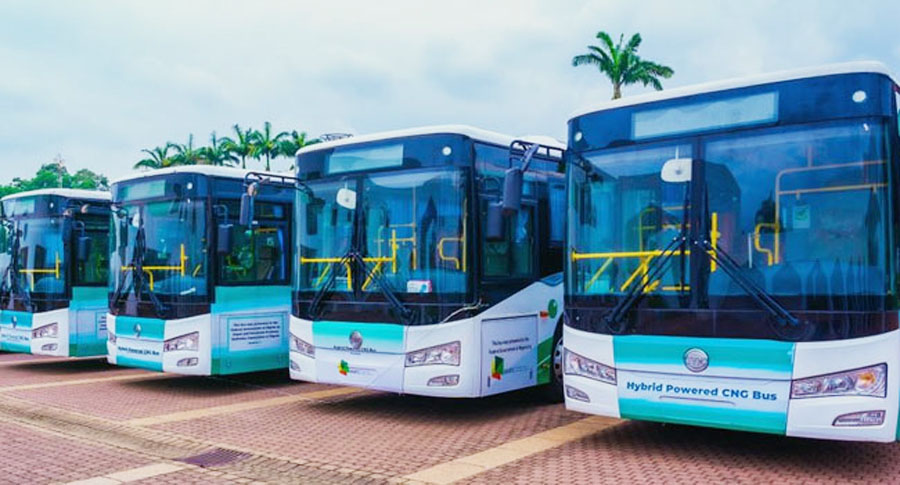
The visit comes amid the Federal Government’s drive to expand the use of compressed natural gas (CNG) and electric vehicles as alternatives to petrol-powered transportation, with the aim of reducing operating costs and making public transport more affordable.
The manufacturers welcomed the government’s new policy directing ministries, departments and agencies (MDAs) to patronise locally manufactured vehicles, saying it could increase demand for their products and strengthen domestic production.
Secretary to the Government of the Federation, George Akume, had issued a circular directing government establishments to purchase vehicles from local manufacturers.
Managing Director of Innoson Vehicle Manufacturing, Chief Innocent Chukwuma, said he was encouraged by the government’s emphasis on CNG, describing the fuel as an important option for sustaining Nigeria’s automotive industry amid rising petrol and diesel costs.
Chukwuma disclosed that the company had dedicated its newest large-scale facility to producing CNG-powered trucks and electric vehicles.
READ ALSO:
- 2027: Adeleke’s Camp Promises 1.5 Million Votes for Tinubu in Osun
- APC Expands Tinubu’s Campaign Council, Names Wike, Adeleke, Soludo
- 2027: Tompolo Unveils 57 Tinubu Campaign Vehicles, Warns Lagosians Against 2023 Repeat
He said wider adoption of CNG could help lower transportation and operating costs while supporting local industrial growth and creating employment opportunities.
The industrialist also called for stronger backward integration in the automotive sector, arguing that manufacturers should focus on producing components that Nigeria has the capacity to manufacture competitively.
At the Umunya facility, the executive director of Kojo Motors, Chinedu Oguegbo, said the company was concentrating on commercial vehicles designed for Nigeria’s transport needs.
He said the company had begun benefiting from the government’s local vehicle procurement policy but had faced challenges arising from the sharp depreciation of the naira and exchange-rate fluctuations.
Oguegbo added that the company was developing its natural gas facility, which he expected to become operational in the future. He also expressed optimism that the company’s Omma Bus brand could eventually be exported to international markets.
NADDC Director-General Oluwemimo Joseph said the inspection was intended to give the council first-hand knowledge of the challenges confronting local vehicle manufacturers.
He explained that the council was reviewing existing policies and working on proposed legislation to improve the operating environment for the industry.
According to him, information gathered during the visits would help the council develop measures to address manufacturers’ concerns and identify vehicle components that could be produced locally.
Joseph said Nigeria had numerous small and medium-sized enterprises capable of supplying components to the automotive industry, adding that stronger partnerships could create new business opportunities and reduce dependence on imported parts.
He also acknowledged concerns about the effect of imported used vehicles on local manufacturers, noting that the council was considering measures to address the competitive disadvantages faced by domestic producers.
NADDC Chairman, Chief Emma Eneukwu, said the council was advocating legislation to protect local vehicle manufacturers from the influx of imported used cars.
He argued that local producers needed a more supportive policy environment to compete effectively and expand production.
The Federal Government’s broader CNG and electric mobility programme is designed to reduce transport costs by encouraging the deployment of vehicles powered by alternative energy sources. However, the impact on passenger fares will depend on the availability of vehicles, refuelling infrastructure, operating costs and the extent to which transport operators pass savings on to commuters.
The Anambra visits form part of efforts to strengthen local manufacturing, encourage investment and improve the availability of vehicles for Nigeria’s public transportation system. While the collaboration could support cheaper transport over time, the visits did not announce a specific new fare reduction or implementation timetable.
FG Moves to Expand CNG Vehicle Production, Targets Cheaper Transport Fares
Business
NNPC Petrol Discount: Motorists Must Download App to Save ₦66 Per Litre
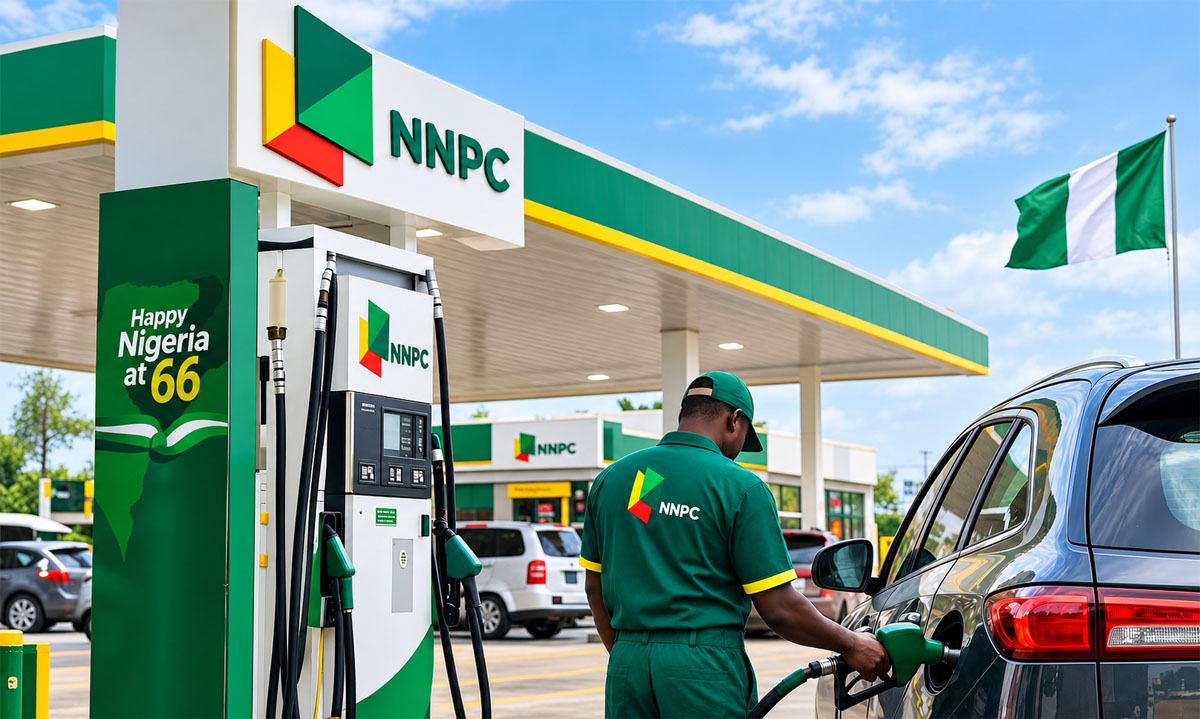
The Nigerian National Petroleum Company Limited (NNPC) has made access to its ₦66-per-litre petrol discount conditional on customers downloading its mobile application and paying digitally, meaning motorists who pay directly at the pump may have to pay the higher displayed price.
Checks at NNPC retail outlets in Abuja showed that petrol was selling for ₦1,405 per litre for customers paying directly at the pump, while motorists using the company’s mobile application paid ₦1,339 per litre, according to a report by Saturday PUNCH published on October 10, 2026.
The difference of ₦66 per litre means motorists must complete the required digital payment process to benefit from the discount. The price reduction is not automatically applied to customers paying directly at the pump.
A fuel attendant at the NNPC mega station along Obasanjo Way in Abuja reportedly confirmed that customers had to download the application and pay through it to qualify for the lower price. Similar arrangements were observed at other NNPC outlets in the Federal Capital Territory.
The payment condition has raised questions about access to the relief initiative, particularly for motorists who prefer cash transactions or do not have smartphones, reliable internet access or experience using mobile payment applications.
READ ALSO:
- Panama Earthquake: 27 Injured as Powerful 7.7-Magnitude Tremor Damages Hundreds of Buildings
- EFCC Wins ₦132m Money Laundering Case as Court Orders Forfeiture of Lagos Properties
- Hardship: ACF Gives Tinubu Three Months to Deliver Relief, Demands Clear Timelines
NNPC introduced the petrol discount on October 1, 2026, as part of activities marking Nigeria’s 66th Independence Anniversary. The company subsequently announced that the offer would continue until October 31, 2026, at its retail stations nationwide.
The company said the initiative was intended to provide temporary relief to households and businesses facing rising fuel costs amid increases in global crude oil prices linked to tensions and conflict in the Middle East.
The Federal Government also announced a 30-day relief measure under which NNPC Retail would forgo its retail profit margin and sell petrol at cost. Finance Minister and Coordinating Minister of the Economy, Taiwo Oyedele, said the intervention was designed to cushion the impact of rising fuel prices on Nigerians, particularly vulnerable households and commercial transport operators.
NNPC has maintained that the discount is a temporary relief measure and does not represent a return to the petrol subsidy regime.
However, requiring motorists to use a mobile application to access the price reduction means that customers’ ability to benefit depends on their access to and use of the approved digital payment channel.
For commercial drivers and other frequent petrol buyers, the difference could add up over time. A motorist purchasing 20 litres, for example, would save ₦1,320 at the discounted rate compared with the higher price reported at the Abuja outlets.
The discount also carries a financial cost for NNPC. According to Saturday PUNCH, the company could forgo an estimated ₦4.62 billion in gross revenue if its average monthly petrol sales qualified for the reduction.
The observed prices in Abuja do not necessarily represent the pump price at every NNPC station nationwide, as retail prices may vary by location and prevailing supply conditions.
Motorists intending to benefit from the offer before its scheduled end on October 31 should confirm the payment requirements at participating NNPC stations and ensure they are using the company’s approved application.
The initiative comes as Nigerians continue to face pressure from petrol prices and the resulting effects on transport fares, food distribution, household expenses and business operating costs.
NNPC Petrol Discount: Motorists Must Download App to Save ₦66 Per Litre
Business
Fitch Gives Tinubu Fresh Economic Boost as Nigeria’s Outlook Turns Positive
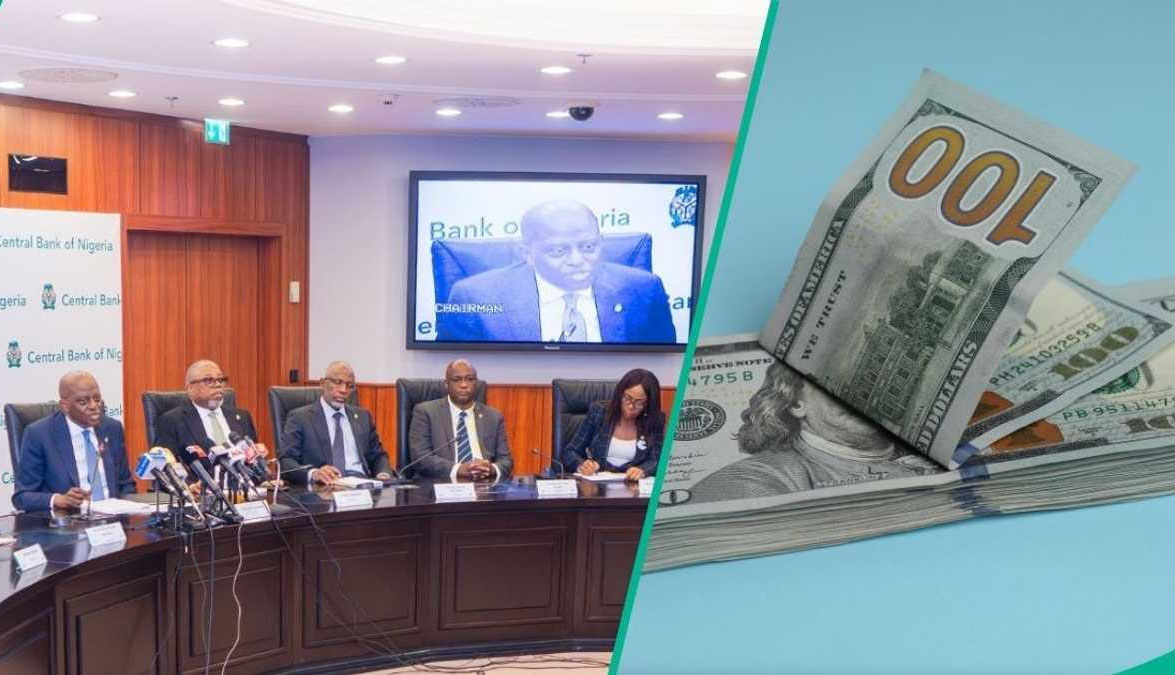
Fitch Ratings has revised Nigeria’s economic outlook from stable to positive, citing improvements in foreign exchange reserves, monetary policy, exchange rate reforms and moderating inflation under President Bola Ahmed Tinubu.
The international credit rating agency announced the decision on Friday, October 9, 2026, while affirming Nigeria’s long-term issuer default ratings at ‘B’. The revised outlook signals the possibility of a future credit rating upgrade if the country sustains its economic reforms and strengthens its financial position.
The Federal Government disclosed the development on Saturday through the Minister of Finance and Coordinating Minister of the Economy, Taiwo Oyedele, who described the assessment as an endorsement of the administration’s economic reform programme.
Fitch’s decision reflects growing confidence in Nigeria’s macroeconomic policy framework and external financial position. The agency also expressed confidence that the government would maintain its reform momentum despite the approach of the 2027 general elections.
One of the key factors behind the positive outlook is the significant improvement in Nigeria’s foreign exchange reserves, which reportedly reached $54.9 billion as of September 25, 2026, compared with approximately $32 billion in mid-April 2024.
Fitch attributed the increase to stronger activity in the formal foreign exchange market, portfolio investment inflows, higher export receipts and remittances from Nigerians living abroad.
The agency projected that Nigeria’s current account surplus would reach 6.4 per cent of gross domestic product (GDP) in 2026. It also expects foreign exchange reserves to cover approximately 6.3 months of current external payments by the end of the year, providing a stronger buffer against external economic shocks.
READ ALSO:
- Ronaldo Hits 980th Career Goal as Al-Nassr Win After Portugal Fallout
- Osun: Family Questions Police Suicide Claim After Man Dies in Cell
- ‘You Copied My Idea Poorly, Like a Dull Student’ – Atiku Fires at Tinubu Over Petrol Discount
Nigeria’s economic growth prospects also informed the revised outlook. Fitch forecast that the country’s real GDP would expand by 4.3 per cent in 2026, up from 4.0 per cent in 2025, with growth expected to remain above four per cent in 2027 and 2028.
The agency expects non-oil activities to remain a major driver of economic expansion, reflecting the importance of sectors beyond crude oil to Nigeria’s long-term economic prospects.
On inflation, Fitch projected average annual inflation of 15.4 per cent in 2026, significantly below the levels recorded in 2024. It attributed the expected moderation partly to greater stability in the naira and the effects of restrictive monetary policy.
However, the agency cautioned that inflation would remain high compared with countries with similar credit ratings, meaning that the cost of living and pressure on household budgets would continue to pose challenges.
Developments in the oil sector also contributed to the improved assessment. Fitch reported that crude oil production, excluding condensates, increased by 10 per cent quarter-on-quarter in the second quarter of 2026, while output reportedly met Nigeria’s OPEC target of 1.5 million barrels per day from May.
The expansion of domestic refining capacity, particularly the ramp-up of the Dangote refinery and the rehabilitation of other facilities, has also helped reduce reliance on imported refined petroleum products and associated foreign exchange demand.
The Federal Government attributed the improved outlook to major policy decisions introduced under Tinubu, including the removal of the petrol subsidy, foreign exchange market reforms and changes to the tax system.
Oyedele said the administration would continue implementing the reforms to reduce Nigeria’s cost of borrowing, attract private investment and encourage job creation.
The government also pledged to sustain a transparent, market-reflective foreign exchange regime, improve tax administration, strengthen debt management and increase non-oil revenue.
Despite the positive assessment, Fitch identified several risks that could limit Nigeria’s economic progress. These include weak governance indicators, dependence on hydrocarbons, persistent inflation, security challenges and low government revenue relative to the size of the economy.
The agency also projected that Nigeria’s general government fiscal deficit would widen to 3.6 per cent of GDP in 2026 amid spending pressures. Although tax reforms could improve revenue collection, implementation challenges may limit the gains.
Fitch forecast that general government debt would average 32 per cent of GDP between 2026 and 2028, below the 56 per cent median for countries in the ‘B’ rating category.
The positive outlook does not amount to an immediate upgrade of Nigeria’s credit rating. Rather, it indicates that Fitch could raise the rating in the future if economic reforms continue, macroeconomic stability improves and fiscal pressures ease.
The latest assessment follows other positive developments in Nigeria’s credit standing in 2026. S&P Global Ratings upgraded Nigeria’s rating from ‘B-’ to ‘B’ in May, while Moody’s Ratings revised its outlook on the country to positive in August, according to the Federal Government.
For the Tinubu administration, the latest Fitch decision provides an important boost to its economic reform agenda. However, the ultimate test will be whether improvements in economic indicators translate into tangible benefits for Nigerians through lower inflation, stronger purchasing power, increased employment and sustainable business growth.
Fitch Gives Tinubu Fresh Economic Boost as Nigeria’s Outlook Turns Positive
-
 metro3 days ago
₦8.7bn Erosion-Control Budget Gap Raises Questions as Anambra Gullies Expand
-
 Politics2 days ago
Obi Positioning for SGF Role Under Atiku’s ADC Ticket – Sowore
-

 metro2 days ago
How Bandits Demand ₦300m Ransom for Abducted Kaduna Couple, Baby in Viral Video
-

 metro2 days ago
Child Soldiers, Baby Factories: US Raises Alarm Over Official Complicity in Nigeria
-
 News3 days ago
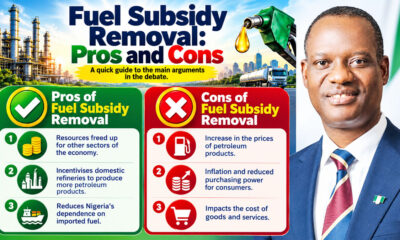
Fuel Subsidy May Ease Hardship Today, But Could Cripple Nigeria’s Economy Tomorrow — FG
-

 Politics2 days ago
Okonkwo Alleges Return of Subsidy, Accuses NNPC of Plotting Trillions in ‘Lost Profit’
-
 metro3 days ago
2027 Elections: Atiku Demands Names of INEC Ballot Printers, Questions Secret Contracts
-

 metro2 days ago
How Military Air Strike Crushed ISWAP Attack Plot, Killed Over 40 Fighters in Borno