
News
Soldiers killing: How my house was ransacked by troops – Edwin Clark
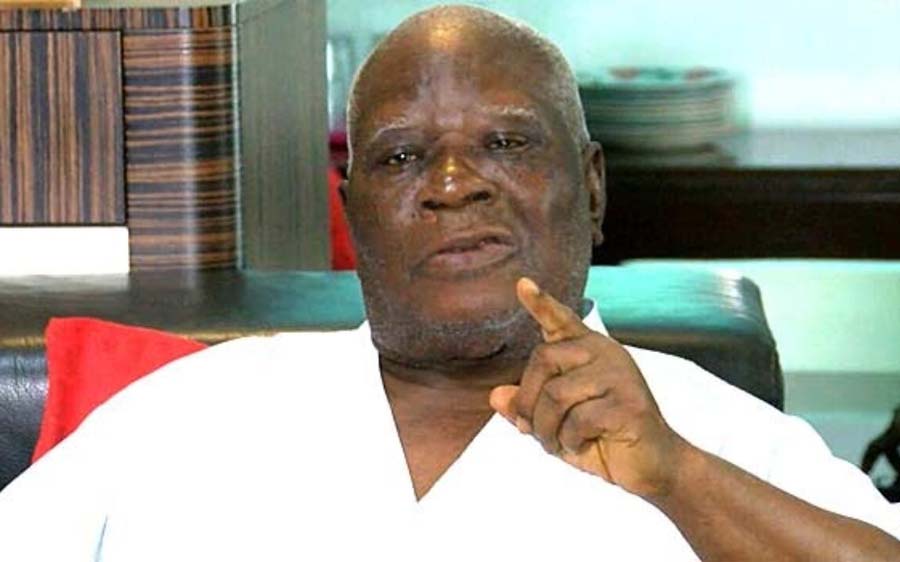
Soldiers killing: How my house was ransacked by troops – Edwin Clark
Chief Edwin Clark, an elder statesman and National Leader of the Pan-Niger Delta Forum (PANDEF), has criticized a military attack on his country residence in Kiagbodo Local Government Area, Delta State, in response to the recent killing of soldiers in the state.
In a statement issued on Tuesday, he described how he was bombarded with calls for military personnel to invade his rural residence in search of a suspect linked to the deaths of 17 troops in Okuama.
The Ijaw leader claimed that someone, later identified as the Commanding Officer of the Nigerian Army’s Division in Port Harcourt, the capital of Rivers State, apologized on behalf of the army for the raid.
According to him, the military guys arrived in five trucks laden with approximately 30 to 40 armed soldiers, while flying drones were stationed within the grounds.
Clark said: “Some of them went to the buildings behind the main house and broke all the doors that were locked. They matched out my staff living in those buildings, including lecturers at the university, and made them to `sit on bare ground.
“They also broke into my late brother, Ambassador Akporode Blessing Clark’s house. He served this country internationally in various capacities, including as Nigeria’s Permanent Representative to the United Nations and Permanent Secretary in the Ministry of Foreign Affairs, as both of us share the same premises. They brought out his son almost naked, as the young man was taking a bath when they stormed the house.
READ ALSO:
- El-Rufai set to dump APC, visits Gowon after meeting SDP leaders
- We must treat kidnappers as terrorists, says Tinubu
- CBN jacks up interest rate amid soaring inflation
“All their phones were seized. The people had to identify themselves, and they told them (soldiers) whose house it was before they asked for my telephone number, which they said they would pass to their ‘oga’ before they all departed.
“One would have expected that at this juncture, a call could have been put to the Governor of Delta State to inform him of what happened.”
The elder statesman said the incident was “beyond coincidence” but a source of concern.
He recounted a similar raid on his Abuja home on September 4, 2018, describing the authorisation of such raids as “disrespectful and unlawful”, having served the country nearly 70 years in different capacities.
“I want to end this write-up by addressing all concerned with what I told President Muhammadu Buhari when my security details were withdrawn. If I die today as a result of a natural occurrence, it will be a joyful celebration. But if my death is linked to any dubious means by some overzealous state actors, no one can tell how far the fire will rage. This is not a threat. It is an acknowledgement of God’s mercies on me,” Clark added.
Also, the 17 army personnel killed in Delta State are to be buried today at the National Cemetery in Abuja.
Army’s spokesperson Maj.-Gen. Onyema Nwachukwu, who announced it yesterday, said President Bola Tinubu would attend the burial, slated for 3 p.m.
The names of the four officers are: Lt.-Col. A. H. Ali, Major Safa, Major D. E. Obi, and Captain U. Zakari.
The 13 soldiers are: Staff Sergeant Yahaya Saidu, Corporal Yahaya Danbaba, Corporal Kabir Bashir, Lance Corporals Bulus Haruna, Sole Opeyemi, Bello Anas, Haman Peter, and Ibrahim Abdullahi.
The rest are: Privates Alhaji Isah, Clement Francis, Abubakar Ali, Ibrahim Adamu, and Adamu Ibrahim.
Also, the member representing Southern Ijaw Federal Constituency of Bayelsa State in the House of Representatives, Rodney Ebikebina Ambaiowei, has called for caution and professionalism in the handling of the killing of 17 soldiers in Okuama community of Delta State.
Addressing reporters yesterday at the National Assembly in Abuja, he said: “I am aware that the Nigerian Army has the capacity to gather intelligence within a short period. The execution of such intelligence reports should be done with utmost caution to minimise collateral damage to innocent and law abiding citizens.
“I say this, bearing in mind the invasion and carnage that took place in Odi in November 1999 following the killing of some soldiers and policemen which remains fresh in our memories. Caution and professionalism must be the watch word to forestall unpleasant and regrettable consequences in the approach to bringing the culprits to book.”
Soldiers killing: How my house was ransacked by troops – Edwin Clark








News
INEC May Adjust 2027 Election Dates Over Ramadan Concerns
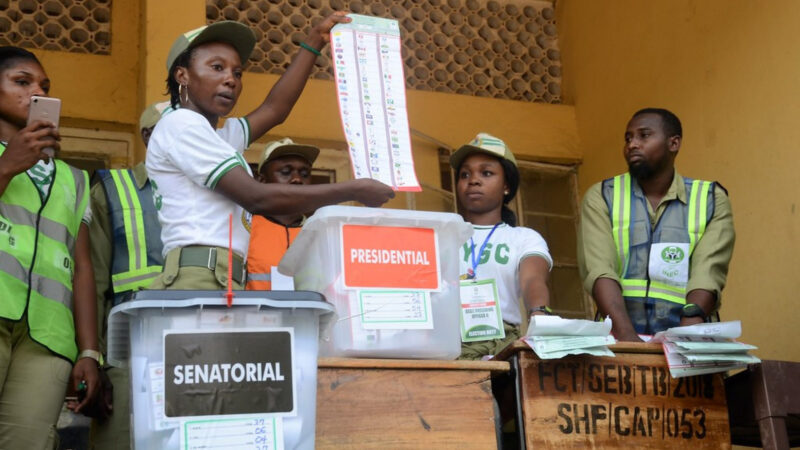
INEC May Adjust 2027 Election Dates Over Ramadan Concerns
The Independent National Electoral Commission (INEC) has acknowledged growing concerns over the timing of the 2027 general elections, which currently coincide with the holy month of Ramadan, and said it may seek legislative intervention if necessary to ensure full electoral participation.
In a statement released on Friday, INEC National Commissioner and Chairman of the Information and Voter Education Committee, Mohammed Kudu Haruna, said the commission is sensitive to public concerns and is consulting with stakeholders on possible adjustments to the election timetable.
The commission explained that the current schedule, developed in strict compliance with the Constitution of the Federal Republic of Nigeria, 1999 (as amended), the Electoral Act, 2022, and INEC’s own Guidelines and Regulations for the Conduct of Elections, 2022, sets Saturday, February 20, 2027, for the presidential and National Assembly elections, and Saturday, March 6, 2027, for the governorship and State Houses of Assembly elections. Party primaries are slated for May 22 to June 20, 2026.
READ ALSO:
- Man Allegedly Kills Brother in Rivers Over Witchcraft Accusation
- Regina Daniels Gifts Mother Two Luxury SUVs in Emotional Surprise
- El-Rufai Alleges Ribadu Ordered Arrest, Says Intercepted Calls Exposed Plot
However, INEC noted that these dates overlap with Ramadan, a period of fasting, prayer, and religious observances for Muslims, which could affect voter turnout and participation, particularly in predominantly Muslim areas. The commission emphasized that any adjustment to the timetable will remain consistent with constitutional and statutory requirements.
“The commission wishes to assure the public that it remains sensitive to all legitimate concerns that may impact electoral participation and the overall conduct of elections. In view of these representations, INEC is currently undertaking consultations and may, where necessary, seek appropriate legislative intervention,” the statement read.
Several political figures have already expressed concerns. Former Vice President Atiku Abubakar called on INEC to reconsider the February 20 date, citing potential disruption of voting during Ramadan. Former presidential aide Bashir Ahmad also urged the commission to review the schedule to avoid disenfranchisement of Muslim voters.
The commission reaffirmed its commitment to conducting transparent, credible, and inclusive elections. It promised to keep the public informed of any adjustments to the election timetable arising from consultations with political parties, civil society, and religious stakeholders.
The debate over the 2027 election schedule highlights the challenges of balancing constitutional timelines with religious and cultural sensitivities, underscoring the importance of ensuring accessible and fair elections for all Nigerians.
INEC May Adjust 2027 Election Dates Over Ramadan Concerns
News
2027 General Elections: INEC Announces February 20 for Presidential Poll
2027 General Elections: INEC Announces February 20 for Presidential Poll
The Independent National Electoral Commission (INEC) has officially fixed February 20, 2027 for Nigeria’s presidential and National Assembly elections, while governorship and State Houses of Assembly elections will be held on March 6, 2027.
INEC Chairman, Joash Ojo Amupitan, announced the dates on Friday during a media parley at the Commission’s national headquarters in Abuja, describing the move as the formal commencement of the 2027 general elections process.
According to the INEC chairman, the release of the Notice of Election and the comprehensive timetable complies with provisions of the 1999 Constitution of Nigeria and the Electoral Act 2022, which require the Commission to publish election notices ahead of the polls.
“It is with a deep sense of constitutional responsibility and commitment to democratic consolidation that the Commission today formally releases the Notice of Election and the Timetable and Schedule of Activities for the 2027 General Elections,” he stated, adding that any earlier unofficial announcements of election dates were misleading and did not originate from INEC.
READ ALSO:
- EFCC Nabs Three in Borno Over Viral ₦500 Naira Mutilation Video
- Omokri Accuses El-Rufai of Rights Abuses During Kaduna Governorship
- Lagos Motor Fair, Autoparts Expo to begin March 17, targeting Investment, Industry Growth
Amupitan disclosed that the tenure of the President, Vice President, governors, and deputy governors — except in off-cycle states — will expire on May 28, 2027, while the National and State Assemblies will be dissolved on June 8, 2027. He noted that the timeline provides sufficient room for political parties to conduct primaries, submit nomination forms, and organise campaigns in line with electoral regulations. Campaigns, he added, must end 24 hours before election day, as stipulated by law.
The INEC boss warned political parties to strictly comply with the approved schedule, stressing that the Commission would enforce the law where necessary. “Political parties are strongly advised to strictly adhere to the timelines. The Commission will not hesitate to enforce compliance with the law,” he said.
He also reaffirmed INEC’s commitment to deploying technology to enhance transparency in the 2027 general elections, updating the national voters’ register, strengthening collaboration with security agencies, and expanding voter education nationwide.
Calling for peaceful conduct, Amupitan urged political parties to organise credible primaries, shun violence and inflammatory rhetoric, and uphold internal democracy. He also appealed to candidates, supporters, civil society groups, the media, and citizens to play constructive roles throughout the electoral cycle.
“As we commence this national exercise, I assure Nigerians that the Commission is fully prepared and determined to deliver elections that reflect the sovereign will of the people,” he added.
With the formal release of the INEC 2027 election timetable, stakeholders are now expected to begin full-scale preparations for Nigeria’s next general elections.
2027 General Elections: INEC Announces February 20 for Presidential Poll
News
INEC Seeks N1.04 Trillion for 2027 Elections, Operational Needs – Amupitan
INEC Seeks N1.04 Trillion for 2027 Elections, Operational Needs – Amupitan
The Independent National Electoral Commission (INEC) has requested a total of ₦1.04 trillion from the Federal Government of Nigeria to fund off-cycle elections this year, the 2027 general election, and its operational activities in 2026, subject to approval by the National Assembly of Nigeria.
The request was made by INEC Chairman Prof. Joash Amupitan while defending the commission’s spending proposal before the Joint Committee on Electoral Matters of the National Assembly. Amupitan urged lawmakers to grant timely approval and release of funds, warning that delays could hamper preparations for upcoming elections.
According to the INEC chairman, the commission is seeking ₦873.778 billion for the 2027 general election and ₦171 billion for its 2026 operational activities. The 2026 allocation covers Federal Capital Territory (FCT) area council elections, by-elections scheduled for next week, and the Ekiti and Osun governorship elections slated for June and September.
READ ALSO:
- Alake: Killers of Mining Marshal Will Face Full Wrath of the Law
- Lagos Police Launch Manhunt for Suspect in Brutal Ajah Murder
- Lookman Shines as Atlético Madrid Hammer Barcelona 4-0
Breakdown of the 2027 Election Budget
The N873.778 billion earmarked for the 2027 general election includes:
- ₦379.748 billion for operational costs
- ₦92.317 billion for administrative expenses
- ₦209.206 billion for technology
- ₦154.905 billion for election capital costs
- ₦42.608 billion for miscellaneous expenses
For the N171 billion proposed for 2026 operations, Amupitan said:
- ₦109 billion would cover personnel costs
- ₦18.7 billion for overheads
- ₦42.63 billion for election conduct
- ₦1.4 billion for capital expenditure
He noted that the budget was prepared in line with Section 3(3) of the Electoral Act 2022, which mandates submission of election budgets at least one year before a general election.
Calls for Timely Fund Release and Dedicated Network
Amupitan criticized the envelope system of budgeting, describing it as unsuitable for INEC’s operational needs that often require urgent interventions. He appealed for a bulk release of funds, highlighting the need for a dedicated communication network to enhance accountability and transparency during elections.
“If we have our own network, Nigerians can hold us responsible for any hitch,” he said.
Lawmakers Back INEC’s Proposal
Senator Adams Oshiomhole argued that no government agency should impose the envelope budgeting system on INEC, emphasizing that full release of funds is critical for smooth election preparations. Similarly, House member Billy Osawaru called for the budget to be placed on first-line charge, allowing the commission access to all funds immediately.
Following deliberations, the joint committee approved a one-time release of INEC’s annual budget and pledged to consider increasing allowances for National Youth Service Corps (NYSC) members deployed for election duties. The proposed increase would cost ₦32 billion, equating to ₦125,000 per corps member.
Senator Simon Lalong, chairman of the Senate Committee on Electoral Matters, assured INEC of lawmakers’ support, pledging close collaboration to ensure a successful 2027 election. House Committee chairman Bayo Balogun also promised legislative backing but cautioned INEC against overpromising, citing prior misrepresentations about real-time uploads to the INEC Result Viewing (IReV) portal, which was never provided for in the Electoral Act but only in INEC regulations.
The approval of the commission’s budget and operational requests is expected to enhance election preparedness, technological deployment, and transparency ahead of the 2027 general elections, while addressing logistical and operational challenges that have hampered past polls.
INEC Seeks N1.04 Trillion for 2027 Elections, Operational Needs – Amupitan

-

 metro2 days ago
IKEDC Sets Feb 20 Deadline for Customers to Submit Valid IDs or Face Disconnection
-
 Education2 days ago
Supreme Court Affirms Muslim Students’ Right to Worship at Rivers State University
-

 metro1 day ago
Lagos Police Launch Manhunt for Suspect in Brutal Ajah Murder
-

 News1 day ago
Aso Rock Goes Solar as Tinubu Orders National Grid Disconnection
-

 Business2 days ago
Naira Could Trade Below ₦1,000/$ With Dangote Refinery at Full Capacity — Otedola
-

 metro3 days ago
Kwara, Katsina Bloodshed: TMC Condemns Attacks, Dismisses ‘Jihadist Preacher’ Claims
-

 metro2 days ago
Army University Professor Dies in Boko Haram Captivity After Nearly One Year
-

 International2 days ago
Trump Halts Minnesota Immigration Crackdown After Fatal Shootings, Protests