
News
Southern governors call for urgent national dialogue
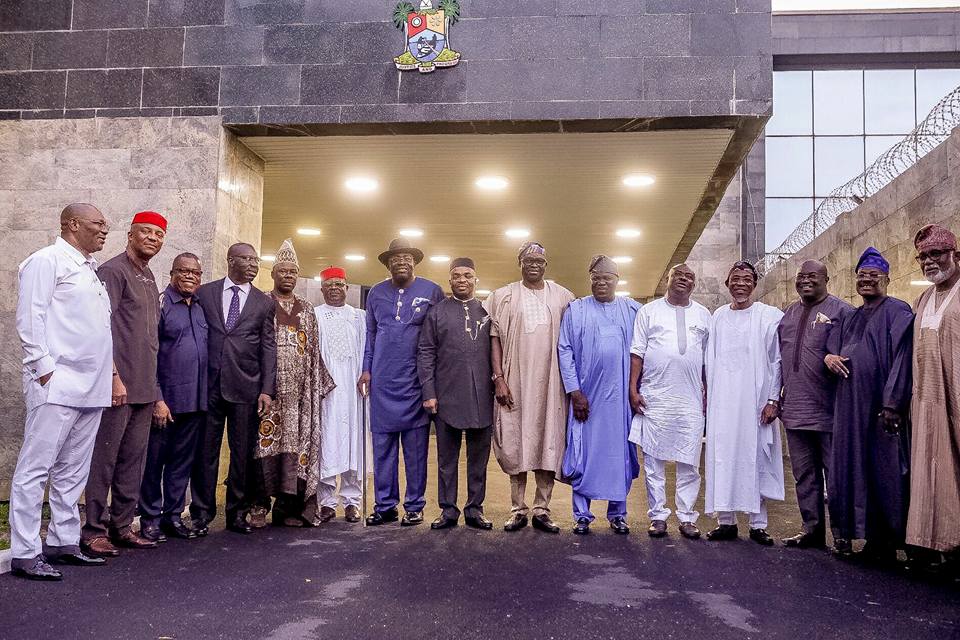
Governors of the 17 southern states have joined those clamouring for the convocation of a national dialogue “as a matter of urgency.”
They took the position at their meeting in Asaba, the Delta State capital on Tuesday, which was attended by 13 governors and two deputy governors who represented their governors. Two governors, Adegboyega Oyetola (Osun), who is in Saudi Arabia for the lesser hajj, and Ben Ayade (Cross River) were absent.
It was the first such meeting since the President Muhammadu Buhari dispensation. Hitherto, the governors met along their geo-political groups.
Other decision taken include the need for “urgent and bold steps” to restructure the country; the need for President Muhammadu to address the nation on the growing insecurity in the country and how he plans to arrest it and the enforcement of the ban on open grazing in the South, including preventing movement of cows “on foot” from the North.
The communiqué of the meeting was read by Ondo State Governor Rotimi Akeredolu, who was nominated by his colleagues after the session which lasted for one hour, 30 minutes between 1.30 and 3pm.
They recommended that in deference to the sensitivities of the various peoples of the country, there was a need to review appointments into Federal Government agencies (including security agencies) to reflect federal character as Nigeria’s overall population is heterogenous.
The communiqué said the governors “agreed that the progress of the nation require that urgent and bold steps be taken to restructure the Nigerian federation, leading to the evolution of state police, review of revenue formula in favour of sub-nationals and creation of other institutions which will legitimately advance our commitment to and practice of true federalism.
“The meeting recommended that in view of widespread agitation among various people for better inclusiveness in existing governance arrangements, the Federal Government should convoke a national dialogue as a matter of urgency.”
The meeting further resolved that open grazing be banned across Southern Nigeria, due to the menace posed by armed herders and its impact on food security.
It added that the Southern States would enforce the ban on open grazing, including cattle movement by foot and urged the Federal Government to support willing states to develop alternative livestock breeding systems.
They vowed to keep the unity of Nigeria on the basis of equity, justice and peaceful co-existence.
The communiqué also resolved to foster cooperation among the Southern states.
It expressed concern over the gridlock on the Oshodi/Apapa expressway in Lagos and the chokehold it has exerted on the nation’s economy, being the sole outlet from Apapa Wharf.
The governors recommended the activation and establishment of ports in other states of the federation to create new jobs and promote socio-economic activities in the country.
The governors expressed concern on the economic implications of another lockdown on the country, and suggested greater coordination and cooperation between Federal and state governments in evolving strategies for dealing with the pandemic.
Also yesterday, the Federal Government outlined some measures it has adopted to halt the security menace.
National Security Adviser Maj.-Gen. Babagana Monguno (rtd), Chief of Defence Staff Gen. Lucky Irabor and Inspector General of Police Baba Usman gave an insight into some of the new measures.
They spoke at the end of the third meeting of the National Security Council (NSC) – the third in 11 days – presided over by President Buhari.
Monguno said the President had given directive on how to deal with enablers of crime and the need to find quick response with a view to mitigating the growing threats to society.
He added: “Specifically, issues of drug abuse as propellants for crime, how to make the criminal justice system much more effective, as well as looking at issues of unemployment, which of course, the Federal Executive Council had given an approval, through previous memos on how to get 100 million people out of poverty, that was also discussed. Then, again, the lack of an effective crime reporting system.
“Again, the President has given direction on how to make these things effective. Already, the NCC has been given certain instructions on how to deal with this, but Council has agreed that the level of insecurity in the country, especially in the last one month, is something that has to be addressed with the immediacy that it requires.”
Acting IG Usman, said President Buhari had approved new security measures for combating the situations in the Southeast and Southsouth regions.
Baba, who like the NSA refused to disclose details of the new instructions and plans for combating the situations, however, appealed to the public to assist the security in achieving success.
“We have some measures which we have outlined and have been approved by the Council and we’ll see how we can change the narrative within the quickest possible means to restore law and order and restore peace in that area”, he said.
Gen. Irabor said Council had been briefed on the activities of the armed forces so far and had considered their various needs.
“No doubt, far-reaching decisions were made. The Council was pleased with the actions and of course, the prayers that were made, which Council has also graciously undertaken to look into.
“These, of course, have to do with manpower development, training and equipment issues, and thankfully, the glow on my face should, of course, give you an indication as to the graciousness of the National Security Council, in relation to the briefings that we’ve given in this regard and I believe that going forward, we shall be translating that and it will have some great impact on the security disposition across the country”, he said.







News
Group Accuses Ogun Govt of Plot to Transfer Public Schools to Political Allies
Group Accuses Ogun Govt of Plot to Transfer Public Schools to Political Allies
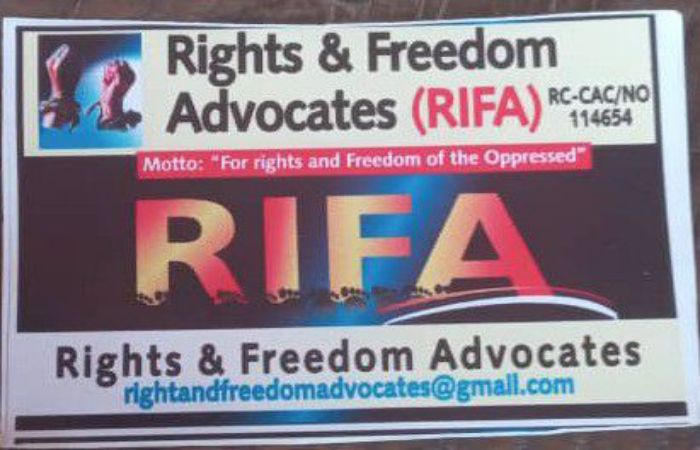
A civic group, Rights and Freedom Advocates (RIFA), has accused the Ogun State Government of planning to unlawfully transfer ownership of public schools to private individuals and political associates, describing the alleged move as “unconstitutional” and “a form of stealing by proxy.”
The allegation was contained in a press statement issued by the group’s president, Luqman Soliu, on April 13, 2026, in response to reports that the state government had decided to “return” some public schools to former owners or affiliated organisations.
RIFA, however, dismissed the claim of “returning” schools, insisting that the policy under consideration amounts to the “donation of public schools to cronies of government officials.”
According to the group, such a move would amount to abuse of public trust and a violation of constitutional provisions guiding the management of state assets.
“What Ogun State government plans to do is not return of public schools but donation or stealing by proxy of public schools,” the statement said, adding that the alleged plan is “dubious and fraudulent.”
READ ALSO:
- Trump Claims 158 Iranian Ships Destroyed as US Enforces Naval Blockade in Gulf Region
- Wike Denies ADC Was Blocked From Using Eagle Square for Convention
- Judge Dismisses Trump’s $10bn Defamation Suit Against WSJ Over Epstein Report
The organisation argued that the schools in question have undergone significant public investment over the years and should remain fully under government ownership, warning that any attempt to transfer them outside public control would amount to mismanagement of state resources.
RIFA further contended that some of the schools had previously been acquired by the government from private owners who were compensated at the time of takeover, stressing that reopening ownership claims could set a “dangerous precedent.”
The group also criticised the justification for the alleged plan, suggesting it could be linked to political patronage. It alleged that government officials may be attempting to reward political allies with public assets instead of investing in new educational infrastructure.
It warned that such actions, if carried out, could undermine access to affordable education, particularly for students from low-income families who depend on public schools.
RIFA further referenced past transitions in the state’s education sector, recalling previous administrations that undertook reforms in public schools, and argued that the focus should be on improving infrastructure rather than altering ownership structures.
The group urged the state government to abandon any plan that could be interpreted as privatising or reallocating public educational assets without broad stakeholder consultation.
It also called on civil society organisations, education stakeholders, and the public to closely monitor developments to ensure accountability in the management of public property.
The Ogun State Government has not yet issued an official response to the allegations at the time of filing this report.
Group Accuses Ogun Govt of Plot to Transfer Public Schools to Political Allies
News
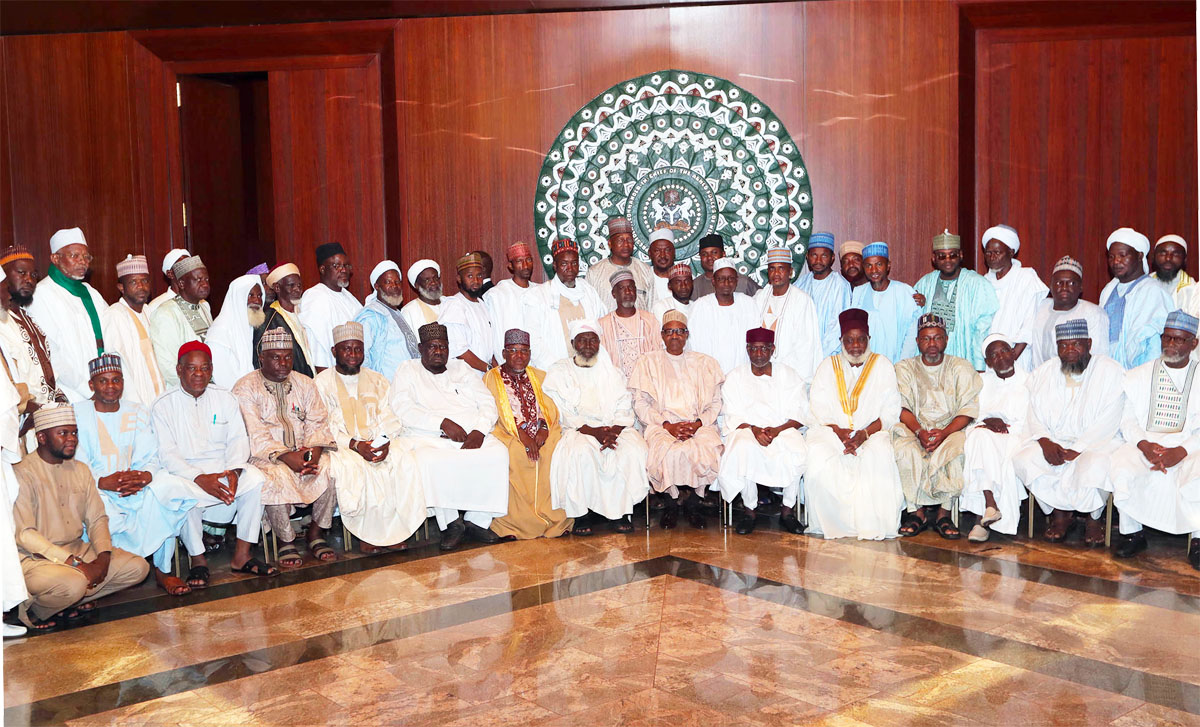
Shari’ah Council Denies Viral Prayer Claim, Reiterates Call for INEC Chairman’s Removal
Shari’ah Council Denies Viral Prayer Claim, Reiterates Call for INEC Chairman’s Removal
The Supreme Council for Shari’ah in Nigeria (SCSN) has distanced itself from viral social media reports alleging that it directed Muslims to embark on special prayers seeking the removal of the Chairman of the Independent National Electoral Commission (INEC), describing the claims as false, misleading, and politically motivated.
In a statement issued by its Secretary-General, Nafiu Baba Ahmed, the council said the reports circulating online did not originate from the organisation and should be disregarded by the public.
According to the SCSN, at no time did it instruct Muslims to organise prayers targeted at INEC or its leadership, stressing that the content being shared was fabricated with the intent to misinform Nigerians and create unnecessary tension.
“The fabrications are clearly intended to drag the Council into partisan political contestation and undermine national stability,” the statement said.
The council urged members of the public, especially the Muslim community and media organisations, to rely only on verified and official communication channels to avoid the spread of misinformation.
READ ALSO:
- Trump Claims 158 Iranian Ships Destroyed as US Enforces Naval Blockade in Gulf Region
- Wike Denies ADC Was Blocked From Using Eagle Square for Convention
- Judge Dismisses Trump’s $10bn Defamation Suit Against WSJ Over Epstein Report
While firmly denying the prayer directive, the SCSN reaffirmed its earlier position that the INEC chairman should either resign or be relieved of his duties. It said its stance is based on concerns it has consistently raised about leadership conduct and institutional neutrality.
The council alleged that its position is informed by what it described as actions and dispositions that suggest prejudice against Islam and Muslims, referencing concerns it said were contained in a widely circulated legal brief.
It argued that leadership of a sensitive national institution such as INEC must uphold strict neutrality, fairness, and public trust, warning that any perceived bias could undermine national cohesion and electoral credibility.
Reiterating its non-partisan status, the SCSN stressed that it remains committed to promoting justice, equity, and peaceful coexistence across religious and ethnic lines in Nigeria.
The organisation further cautioned against attempts to politicise its activities, insisting it would not be drawn into partisan disputes or used as a tool for political agendas.
“The Council will not allow itself to be drawn into the murky waters of partisan politics,” it added.
The development comes amid rising online misinformation trends in Nigeria, where religious and political statements are frequently misrepresented on social media, prompting calls for greater public caution and responsible information sharing.
The SCSN concluded by reaffirming its commitment to a peaceful and inclusive society where all citizens can practice their faith freely without discrimination or fear.
Shari’ah Council Denies Viral Prayer Claim, Reiterates Call for INEC Chairman’s Removal
News
Relief for Nigerian Doctors as FG Begins CONMESS Arrears Payment
Relief for Nigerian Doctors as FG Begins CONMESS Arrears Payment
The Federal Government has commenced the payment of long-awaited doctors’ salary arrears in Nigeria, offering relief to members of the Nigerian Association of Resident Doctors (NARD) after months of delays tied to the Consolidated Medical Salary Structure (CONMESS) review.
The association confirmed the development in an official communication signed by its Publicity and Social Secretary, Abdulmajid Ibrahim, noting that disbursement is already underway across various institutions.
According to NARD, the salary arrears payment covers between one and six months for affected doctors, with many members already confirming receipt. The association described the development as a significant step toward resolving lingering welfare concerns in Nigeria’s health sector.
“The leadership of NARD is pleased to inform all members that payment of the outstanding 25/35 CONMESS review arrears has commenced,” the statement read, highlighting progress on the implementation of the revised salary structure.
READ ALSO:
- OAU Students Begin 72-Hour Lecture Boycott Over Transport Crisis
- Ghanaian Footballer Dominic Frimpong Shot Dead in Berekum Chelsea Bus Attack
- Man Allegedly Kills Two Sisters, Five-Year-Old Daughter in Ondo
Despite the progress, NARD disclosed that the August component of the arrears is currently experiencing minor administrative delays. The association explained that the issue is being addressed and that payments for that period may take an additional one to two weeks to be completed.
Doctors who are yet to receive their payments have been urged to remain patient, as the Federal Government continues the phased disbursement nationwide.
The CONMESS review, which determines salary scales and allowances for medical and dental practitioners in public hospitals, has long been a source of tension between doctors and the government. Delays in implementing the structure and settling arrears have, in the past, triggered industrial actions by NARD, disrupting healthcare services across the country.
Resident doctors—who form a critical part of Nigeria’s tertiary healthcare system—have repeatedly raised concerns over poor welfare, unpaid salaries, and challenging working conditions. These issues have contributed significantly to the rising brain drain in Nigeria’s health sector, with many professionals relocating abroad in search of better opportunities.
Industry observers note that the loss of medical personnel has worsened Nigeria’s already strained doctor-to-patient ratio, placing additional pressure on healthcare facilities nationwide.
The commencement of the payment of doctors’ arrears is therefore seen as a strategic move by the Federal Government to stabilise the sector, improve morale among healthcare workers, and avert potential industrial unrest.
NARD further advised members who experience any discrepancies after the disbursement process to channel complaints through their respective institutions for prompt resolution.
Reaffirming its commitment, the association commended members for their patience and resilience, assuring them that efforts to improve welfare conditions will continue.
Relief for Nigerian Doctors as FG Begins CONMESS Arrears Payment

-
 metro3 days ago
JUST IN: FG Publishes List of 48 Individuals, Groups Linked to Terrorism Financing in Nigeria
-

 metro2 days ago
BREAKING: Troops Arrest 15-Year-Old Linked to Killing of Gen Braimah in Borno
-

 metro3 days ago
42-Year-Old Married Woman Declared Missing Found in Hotel with Man
-

 Politics3 days ago
2027: Oyo APC Governorship Aspirant Saheed Oladele Resigns From Party
-
 metro3 days ago
ADC Threatens Civil Disobedience To Force INEC Chairman To Resign
-

 metro2 days ago
Fayose Warns Makinde May Query Olubadan Over Absence at Ibadan Coronation Event
-
 metro2 days ago
Zulum Defends NAF Airstrike, Says Jilli Market Closed Five Years Ago
-
 metro2 days ago
BREAKING: 56 Killed in Accidental Bombing at Borno–Yobe Border Market