

Africa
Sudan cholera outbreak kills 172 in one week
Sudan cholera outbreak kills 172 in one week
A cholera outbreak has killed over 170 people across Sudan in one week, health authorities said Tuesday, amid a collapse of basic infrastructure after over two years of brutal war.
In a statement, Sudan’s health ministry reported more than 2,700 infections and 172 deaths within one week, with 90 percent of cases concentrated in Khartoum state.
In recent weeks, the capital’s water and electricity supply has been severely disrupted by drone strikes blamed on the paramilitary Rapid Support Forces (RSF), at war with the army since April 2023.
Cases were also reported in the country’s south, centre and north.
Cholera is endemic to Sudan, but outbreaks have become far worse and more frequent since the war broke out, wrecking already fragile water, sanitation and health infrastructure.
Last Tuesday, the ministry said 51 people had died of cholera out of more than 2,300 reported cases over the past three weeks, 90 percent of them in Khartoum state.
The RSF this month launched drone strikes across Khartoum, including on three power stations, before being completely pushed out of their last holdout positions in the capital last week.
The strikes knocked the electricity and subsequently the local water network out of service, according to Doctors Without Borders (MSF), forcing residents to turn to unsafe water sources.
READ ALSO:
- Go and get me Anambra, you’ve my full backing, Tinubu tells Ukachukwu
- Ground rent: We demand apology for this rascality, FIRS tells FCTA
- VeryDarkMan inciting Nigerians against us – NAFDAC
“Water treatment stations no longer have electricity and cannot provide clean water from the Nile,” Slaymen Ammar, MSF’s medical coordinator in Khartoum, said in a statement.
Bashir Mohamed, a resident of Omdurman, part of greater Khartoum, told AFP his family has been without electricity for nearly two weeks.
“We now fetch water directly from the Nile, buying it from donkey carts that bring it in barrels,” he said.
– Lying on hospital floors –
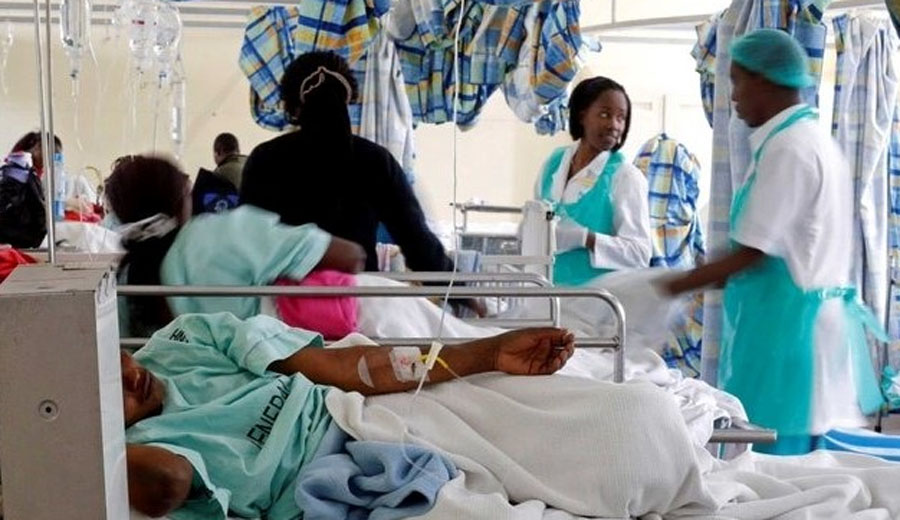
According to a doctor at Omdurman’s Al-Nao hospital, the capital’s main functioning health facility, residents have resorted to “drinking untreated Nile water, after the shutdown of water pumping stations”, which he said “is the main reason for the rapid spread” of cholera.
Medics in the already overwhelmed hospital are struggling to keep pace with the outbreak, and the local emergency response room (ERR) has issued a call for more volunteers.
“The number of patients exceeds the hospital’s capacity,” a member of the ERR told AFP, requesting anonymity for their safety.
“There are not enough medical staff. Some patients are lying on the floors in hospital corridors,” he added.
Cholera, an acute diarrhoeal illness caused by ingesting contaminated water or food, can kill within hours if untreated.
Yet it is easily preventable and treatable when clean water, sanitation and timely medical care are available.
Sudan’s already fragile healthcare system has been pushed to “breaking point” by the war, according to the World Health Organization.
Up to 90 percent of the country’s hospitals have at some point been forced to close because of the fighting, according to the doctors’ union, with health facilities regularly stormed, bombed and looted.
The war, now in its third year, has killed tens of thousands, displaced 13 million and created the world’s largest displacement and hunger crisis.
Sudan cholera outbreak kills 172 in one week







Africa
FBI Raids Ghana Scam Centre, Detains Over 130 in $10m Fraud Probe
FBI Raids Ghana Scam Centre, Detains Over 130 in $10m Fraud Probe
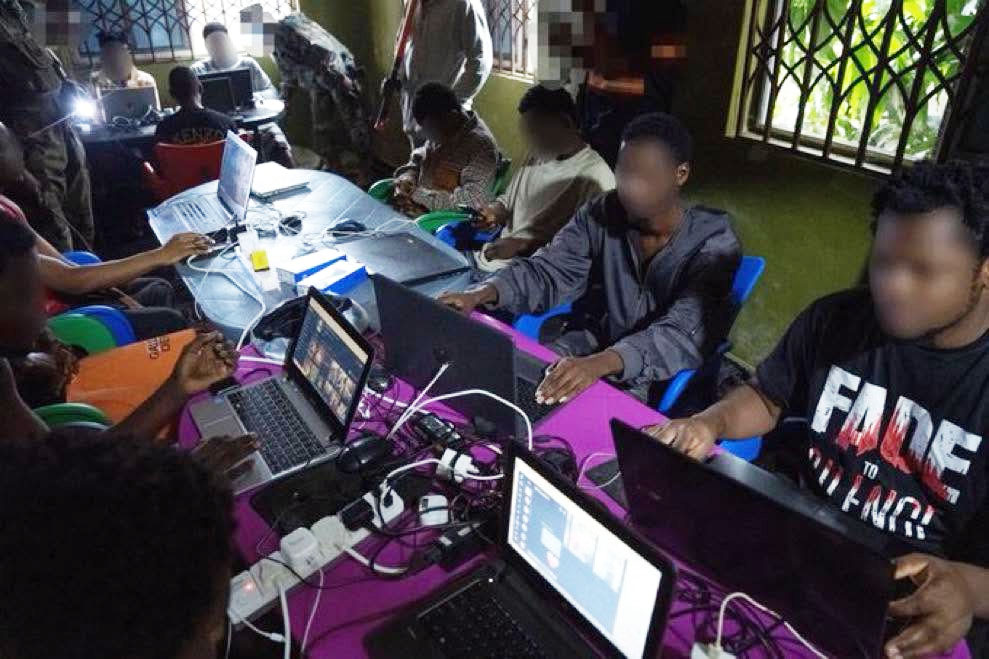
The Federal Bureau of Investigation (FBI) has raided a suspected scam centre in Ghana, detaining more than 130 people and uncovering nearly $10 million in identified losses linked to an international fraud operation targeting Americans.
The operation, carried out under the FBI’s Operation Blackout, also led to the seizure of more than 300 electronic devices, while investigators identified 89 victims, FBI Director Kash Patel said.
Patel announced the operation on Thursday, saying the Ghana raid was part of the FBI’s wider campaign against transnational scam networks operating through so-called scam compounds.
However, the FBI has not classified everyone detained as a suspected fraudster.
Patel specifically said the more than 130 people arrested or detained included victims who are expected to be repatriated to their home countries, suggesting that some people found at the facility may have been trafficked into the operation rather than involved in running the scams.
The FBI has not disclosed the exact location of the Ghana operation, the identities or nationalities of those detained, or the Ghanaian agencies that participated in the raid.
It also remains unclear how many of those detained will face criminal charges in Ghana or possible prosecution or extradition proceedings in the United States.
Patel said the investigation was continuing, warning that scam compounds are increasingly being used to target American citizens and inflict substantial financial losses.
READ ALSO:
- Court Grants Alleged Fake JAMB Registrar N50m Bail, Sets Strict Conditions
- NESREA to Honour Lagos Baale After Dramatic Rescue of Endangered Sea Turtle
- How Six Members of a Family Were Murdered in Oyo
The Ghana operation is the latest action under Operation Blackout, which the FBI says is targeting organised fraud networks around the world.
According to Patel, the broader operation has so far resulted in roughly $17 billion in assets seized, hundreds of alleged scammers arrested and thousands of trafficked workers freed.
More than 10,000 Americans have also reportedly been warned before losing money, with the FBI estimating that about $670 million in losses were prevented.
The Ghana raid comes amid growing concern over the international expansion of online fraud and scam compounds, with law-enforcement agencies increasingly reporting links between cyber-enabled fraud and human trafficking.
In such operations, workers can be recruited through false employment offers and allegedly transported or coerced into participating in online fraud against victims in other countries.
Ghana has previously cooperated with U.S. authorities in investigations involving transnational fraud.
In July 2026, Ghanaian national Frederick Kumi, also known as Abu Trica, was extradited to the United States after being arrested in Ghana in December 2025. U.S. prosecutors accused him of participating in a romance-fraud network that allegedly targeted more than 80 elderly Americans and caused losses exceeding $8 million.
The extradition involved cooperation between Ghanaian authorities and several U.S. and Ghanaian law-enforcement bodies, including the FBI’s Legal Attaché Office in Accra.
The latest FBI operation also comes as international enforcement agencies increase pressure on scam networks operating outside traditional fraud hotspots in Southeast Asia.
The FBI has not released further details about the Ghana raid, and the investigation remains ongoing.
The bureau is expected to provide additional information as investigators establish the roles of those detained and determine which individuals, if any, will face prosecution.
Those accused of criminal offences are presumed innocent unless proven guilty in court.
FBI Raids Ghana Scam Centre, Detains Over 130 in $10m Fraud Probe
Africa
Zimbabwe Tycoon Wicknell Chivayo, Wife Among Six Killed in Helicopter Crash
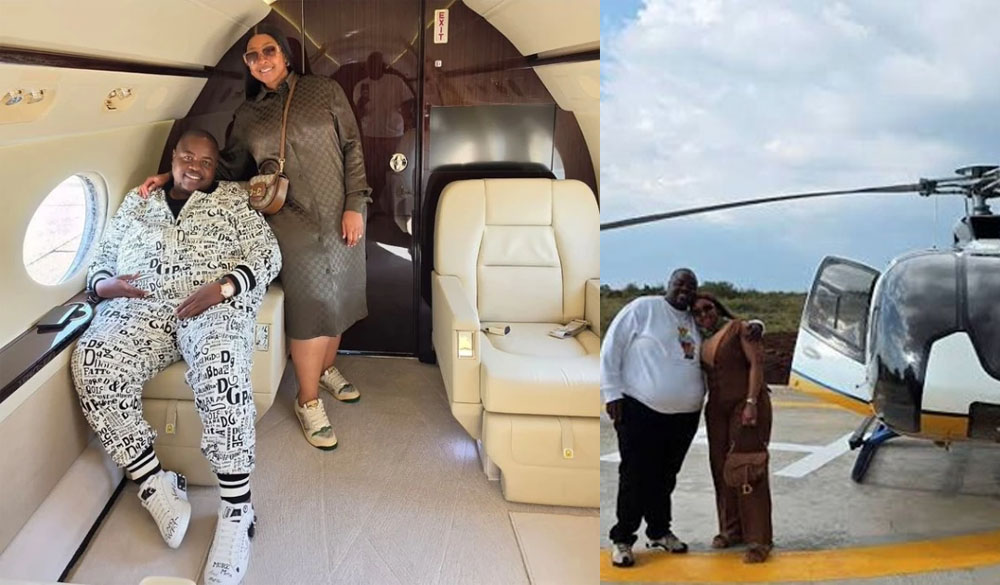
Zimbabwe Tycoon Wicknell Chivayo, Wife Among Six Killed in Helicopter Crash
Zimbabwean businessman Wicknell Chivayo and his wife, Lucy Muteke, have been killed in a helicopter crash that claimed six lives in Marondera Rural, east of the Zimbabwean capital, Harare.
The crash occurred at about 5pm local time on Wednesday, September 30, 2026, with the helicopter carrying six people, including Chivayo, his wife and two pilots.
Family spokesperson Herbert Chivayo confirmed the deaths, while Zimbabwean authorities said there were no survivors.
The aircraft came down in the Marondera area, about 72 kilometres east of Harare, before catching fire. Emergency responders and investigators were deployed to the scene after the crash.
Zimbabwean aviation authorities said preliminary information indicated that fuel spilled after the impact before a fire broke out. However, officials stressed that the information did not establish what caused the helicopter to crash.
READ ALSO:
- Tinubu Returns After 30 Days in Europe, Says ‘I’m Healthy and Ready to Work’
- NMDPRA Moves Against Fuel Pump Fraud, Threatens Licence Revocation
- $2.1m Land Suit: Court Orders Wike’s Son to Produce American Passport
The cause of the crash remains under investigation, with aviation officials and other investigators examining the wreckage and circumstances surrounding the incident.
Police said the bodies were badly burned in the post-crash fire, making formal identification necessary. Forensic specialists were subsequently involved in the identification and investigation process.
Chivayo, 43, was one of Zimbabwe’s most prominent and publicly visible businessmen. He was known for his high-profile lifestyle, philanthropy and extensive social-media presence, where he frequently displayed luxury cars, properties and other expensive possessions.
He also maintained close links with senior political figures in Zimbabwe, including President Emmerson Mnangagwa.
READ ALSO:
- Tinubu Returns After 30 Days in Europe, Says ‘I’m Healthy and Ready to Work’
- NMDPRA Moves Against Fuel Pump Fraud, Threatens Licence Revocation
- $2.1m Land Suit: Court Orders Wike’s Son to Produce American Passport
His business activities and political connections had previously attracted public scrutiny, including allegations relating to government contracts and political financing. Chivayo denied wrongdoing in connection with such allegations.
News of his death triggered reactions across the region, with political and business figures expressing condolences to his family.
Kenyan President William Ruto was among those who mourned Chivayo, describing the Zimbabwean businessman as a friend.
The crash has generated significant attention in Zimbabwe because of Chivayo’s prominence and his public profile, but authorities have not attributed the accident to any specific mechanical, weather or human factor.
Investigators are expected to examine the aircraft, flight circumstances, weather conditions, pilot actions and other available evidence as they work to determine what caused the fatal helicopter crash.
Authorities have not announced a final finding on the cause of the accident.
Zimbabwe Tycoon Wicknell Chivayo, Wife Among Six Killed in Helicopter Crash
Africa
South Africa: 27 Killed, 26 Injured in Separate Mass Shootings
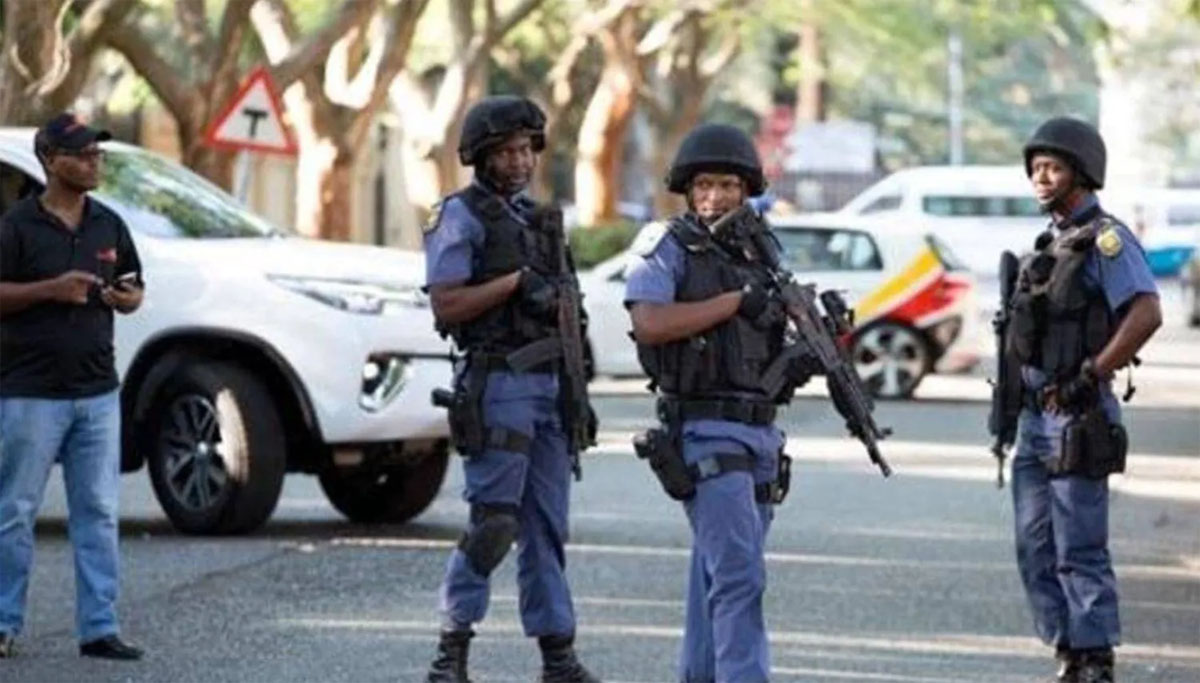
South Africa: 27 Killed, 26 Injured in Separate Mass Shootings
At least 27 people have been killed and 26 others injured in two separate mass shootings in South Africa, with police launching investigations and manhunts for the attackers.
The shootings occurred within hours of each other in Gauteng and Western Cape provinces, with the first attack reported at a tavern in Wedela, southwest of Johannesburg, on Saturday night, followed by another shooting at an entertainment venue in Lwandle, near Cape Town, in the early hours of Sunday.
In Wedela, police said gunmen opened fire on patrons at a tavern at about 9:30 p.m. on Saturday.
The South African Police Service (SAPS) said 17 people were killed in the attack, comprising 13 men and four women.
At least 15 people were also injured and taken to medical facilities for treatment.
According to the police, the attackers were armed with AK-47 rifles and pistols. They allegedly opened fire on people outside the tavern before entering the premises and continuing the shooting.
READ ALSO:
- Abuja Police Arrest Woman, Two Hotel Workers Over Man’s Body Dumped Under Bridge
- Bauchi Police Arrest 26-Year-Old Man Over Rape Of 50-Year-Old Woman
- 2027: Lawal Challenges Wike To Clarify Allegiance Over Rainbow Coalition
The gunmen also reportedly searched some patrons and took their mobile phones before escaping in two unidentified vehicles.
Police have launched a manhunt for the suspects, while investigations are ongoing to establish the motive for the attack and identify those responsible.
A few hours later, another shooting occurred at an entertainment venue in Lwandle, a township near Cape Town.
Police said gunmen entered the venue, which also operates as a shisanyama, a popular South African establishment serving grilled meat, at about 1:46 a.m. on Sunday and opened fire on people inside.
The attack left 10 people dead and 11 others injured.
Five victims reportedly died at the scene, while five others later died after being taken to medical facilities.
Western Cape police commissioner Lieutenant General Sizakhele Dyantyi established a multidisciplinary investigative team led by serious violent crime detectives to investigate the attack and pursue the perpetrators.
No arrests had been announced in connection with either shooting at the time of the latest police updates.
The two incidents came days after another deadly shooting in KwaMakhutha, south of Durban, where 11 people were killed and three others injured at a house party.
The KwaZulu-Natal attack occurred on Tuesday night, September 22, according to police.
Authorities said some of the victims were known to Crime Intelligence in connection with alleged illegal activities, although investigators had not established a definitive motive. Police said a possible conflict between rival groups was among the lines of inquiry.
The three shootings have renewed concerns over gun violence in South Africa, particularly deadly attacks involving groups of armed suspects.
However, authorities have not established any connection between the shootings in Wedela, Lwandle and KwaMakhutha. Investigations into the individual incidents remain ongoing.
South Africa: 27 Killed, 26 Injured in Separate Mass Shootings
-
 metro3 days ago
Ondo Air Tragedy: Soldiers, Families Among 32 Killed In NAF Crash
-

 metro3 days ago
Gunmen Open Fire At Lagos Bus Stop, Kill NURTW Member, Injure Three
-
 metro3 days ago
Ogun Crash: Nine Die As Bus Collides With Truck On Ijebu-Ode-Ore Road
-

 metro3 days ago
UCH CMD: After Decades Without Muslim, Agunbiade Demands Fair Chance
-
![[UPDATED] 20 NYSC Prospective Corps Members Freed After Seven Days in Captivity](https://newstrends.ng/wp-content/uploads/2026/10/20-NYSC-Prospective-Corps-Members-Freed-After-Seven-Days-in-Captivity-400x240.jpg)
![[UPDATED] 20 NYSC Prospective Corps Members Freed After Seven Days in Captivity](https://newstrends.ng/wp-content/uploads/2026/10/20-NYSC-Prospective-Corps-Members-Freed-After-Seven-Days-in-Captivity-80x80.jpg) metro23 hours ago
metro23 hours ago[UPDATED] 20 NYSC Prospective Corps Members Freed After Seven Days in Captivity
-
 metro3 days ago
Supreme Council For Sharia Secretary-General Nafiu Baba-Ahmed Dies
-

 International3 days ago
Kemi Badenoch: I Don’t Want Migrants Turning UK Into Nation Of ‘Little Ghettos’
-
 metro2 days ago
Seven Years With Parkinson’s: Man Seeks N65m for Brain Surgery in Türkiye