

International
Switzerland to extend work visa quotas for foreign workers in 2025

Switzerland to extend work visa quotas for foreign workers in 2025
Switzerland has announced plans to extend its work visa quotas for foreign workers in 2025 as part of efforts to address labour shortages in key sectors.
The Swiss Federal Council revealed that up to 8,500 highly skilled workers from non-EU countries will be eligible to work in the country under the same system as in 2024.
According to TravelBiz, the decision is designed to help Swiss businesses fill critical job vacancies by ensuring continued access to skilled talent from outside the European Union (EU) and the European Free Trade Association (EFTA).
Work visa quotas for 2025
Reports inform that Switzerland will maintain its current work visa quotas in 2025, allowing the recruitment of foreign workers in two main categories:
- 4,500 B Residence Permits: These permits are for long-term skilled workers and allow them to live and work in Switzerland for extended periods.
- 4,000 L Short-Term Residence Permits: These permits are for temporary work assignments, with stays lasting up to one year.
The Swiss Federal Council’s decision drive to support businesses struggling to find skilled workers and to meet demand in sectors experiencing labour shortages.
READ ALSO:
- S/Africa offers Nigerians 5-year visa policy without passport
- Tax Reforms Bills: Tinubu warns Kwankwaso against ethnic sentiment
- Naira sells for N1,725/$ at parallel market
Why Switzerland keeps quotas steady
Switzerland’s decision to keep work visa quotas steady indicates a measured approach to immigration. While skilled foreign workers are recognized as crucial for economic growth, the Swiss government emphasizes the need for regulated immigration.
Reports inform that the country’s key objectives include:
- Supporting Economic Needs: The quota system helps Swiss companies address labour shortages by attracting skilled foreign workers.
- Prioritizing Domestic and EU/EFTA Workers: Swiss employers are required to first seek qualified talent from Switzerland and the EU/EFTA before hiring from third countries.
By maintaining these quotas, Switzerland is ensuring that its labour market remains balanced and that foreign workers complement, rather than compete with, the local workforce.
Utilization of Work Quotas in Recent Years
According to TravelBiz, Switzerland has not been using all of its work visas for foreign workers. In 2023, only 78% of the available permits were issued, and by November 2024, around 63% of the permits had been filled.
This is because companies must first try to hire local workers or those from the EU/EFTA before hiring from outside those areas, which makes it harder to meet the eligibility requirements for foreign workers.
Visa options for foreign workers
For foreign workers considering opportunities in Switzerland, there are two main types of permits:
- B Residence Permit: This permit is for skilled workers who have secured long-term employment in Switzerland. It is renewable annually and provides stability for both the worker and their family.
- L Short-Term Permit: The L permit is for workers in temporary or project-based roles. It is typically valid for up to one year, with the possibility of extension depending on job duration.
Switzerland to extend work visa quotas for foreign workers in 2025









International
Trump’s $5,000 Dividend: Big Cash Promise Raises $1.2tn Funding Question

Trump’s $5,000 Dividend: Big Cash Promise Raises $1.2tn Funding Question
With America’s crucial midterm elections looming, President Donald Trump has dangled a potentially massive financial windfall before voters, promising a $5,000 “dividend” for every adult US citizen if Republicans retain control of Congress—a pledge that could cost the government more than $1.2 trillion and is already raising questions over how the ambitious giveaway would be funded.
Trump unveiled the proposal as Republicans gear up for the November midterm elections, linking the proposed cash payment directly to a GOP victory in both chambers of Congress.
The President has argued that booming economic activity and revenue generated by his administration’s policies, particularly tariffs, would provide the resources for the payments.
But the scale of the promise has immediately put the spotlight on the numbers: with roughly 240 million adult Americans potentially eligible, a $5,000 payment could carry a price tag of about $1.2 trillion, far exceeding current tariff revenues.
More importantly, the proposed dividend is not yet an approved government payment. Congress would have to pass legislation authorising the scheme and determine its eligibility rules and funding mechanism.
The proposal therefore leaves Trump with a politically potent election-year promise—and Congress with a potentially trillion-dollar bill if Republicans emerge from the midterms with control of the legislature.
“If the Republicans win the House of Representatives and the United States Senate… I will issue a dividend to every adult citizen in the United States of America for $5,000,” Trump said.
The White House subsequently formally promoted the proposal as a $5,000 cash payment to every adult American citizen, describing it as a way for Americans to share in what the administration says are the benefits of its economic policies.
Trump compared the proposed payment to a dividend distributed by a successful company to its shareholders, arguing that Americans should benefit directly from the country’s economic gains.
He also indicated that the money would have to be spent within the United States, potentially directing a huge injection of cash into the domestic economy.
GOP victory condition
The proposed dividend, however, is tied directly to the outcome of the November midterm elections.
Trump’s promise is conditional on Republicans maintaining control of both the House of Representatives and the Senate.
That has given the proposal an unmistakable political dimension, coming as the Republican Party prepares for a difficult midterm contest in which control of Congress is at stake.
READ ALSO:
- Sanwo-Olu Joins Dangote as Historic N2.15tn Refinery IPO Opens on Nigerian Exchange
- Shehu Buba Submits Himself To DSS Over Banditry Allegations
- No Lives Lost as Responders Contain Dual Fire Outbreaks Across Lagos
Trump has insisted that the proposed payments are affordable and has dismissed concerns about the government’s ability to finance them.
But the proposal has immediately run into a major hurdle: Congressional approval.
House Speaker Mike Johnson has said legislation would be required before the government could make the payments, contradicting any suggestion that Trump could simply order the money to be distributed.
Over $1 trillion price tag
The size of the proposed programme is enormous.
Depending on the final eligibility requirements and the number of recipients, estimates put the total cost at between $1.2 trillion and $1.35 trillion.
That would make the proposed dividend one of the largest direct cash-transfer programmes in American history.
The Committee for a Responsible Federal Budget has estimated that giving $5,000 to every adult citizen could cost more than $1.2 trillion and substantially increase the federal deficit.
The organisation warned that such a programme would come on top of an already substantial US budget deficit and could worsen the country’s debt position.
The United States has already crossed the $40 trillion national debt threshold, according to recent reports, adding to concerns among fiscal conservatives about another massive federal spending commitment.
Where will the money come from?
The source of the money remains one of the biggest unanswered questions.
Trump has pointed to the strength of the economy and the revenue generated by his administration’s tariff policies.
Vice President JD Vance has also discussed tariff revenue as a potential source of funding, although the amount required for the proposed payments is substantially larger than the revenue generated by tariffs so far.
Commerce Secretary Howard Lutnick has offered another potential source, suggesting that part of the funding could come from a new visa programme.
But questions remain over whether these sources could generate enough money to finance a $5,000 payment to every eligible adult.
The scale of the challenge is illustrated by the mathematics: a $5,000 payment to roughly 240 million adult US citizens would require around $1.2 trillion.
Economists raise inflation concerns
Beyond the funding question, economists and fiscal policy analysts have raised concerns about what could happen if more than $1 trillion were injected into the economy.
Because recipients would receive large cash payments that could be spent on goods and services, economists warn that the programme could increase consumer demand and potentially add to inflationary pressure.
Critics also argue that borrowing to finance the payments would further increase the federal government’s debt burden and place upward pressure on interest rates.
Trump, however, has rejected the criticism and maintained that the payments would be affordable because of what he describes as unprecedented economic growth and revenue generation.
He has also rejected suggestions that the proposal amounts to an attempt to influence voters ahead of the midterms.
Not yet an approved payment
Despite the excitement generated by the announcement, the proposed $5,000 dividend is not currently an approved government payment.
There is no enacted law giving American adults an automatic entitlement to the money.
Congress would have to authorise the programme, establish eligibility requirements and determine how it would be financed before payments could be made.
There is also uncertainty over exactly who would qualify.
Trump initially described the beneficiaries as every adult US citizen, while subsequent comments from members of his administration have raised questions about whether higher-income Americans could be excluded.
Another Trump cash-payment promise
The proposal is also drawing attention because it follows earlier Trump proposals for direct payments to Americans.
Trump previously floated the idea of a $2,000 tariff-funded dividend, but that payment has not been distributed.
The new $5,000 proposal is considerably larger and would represent a major expansion of the direct-payment concept.
Trump has nevertheless doubled down on the latest promise, arguing that his administration’s economic policies have created sufficient resources to return money directly to Americans.
For now, however, the “Trump Dividend” remains a political promise rather than a guaranteed cheque.
Its implementation would depend on the outcome of the midterm elections, subsequent congressional action, agreement on funding and the final rules governing who would receive the money.
Trump’s $5,000 Dividend: Big Cash Promise Raises $1.2tn Funding Question
International
US Judge Blocks Trump Visa Rules for Foreign Students, Journalists
US Judge Blocks Trump Visa Rules for Foreign Students, Journalists
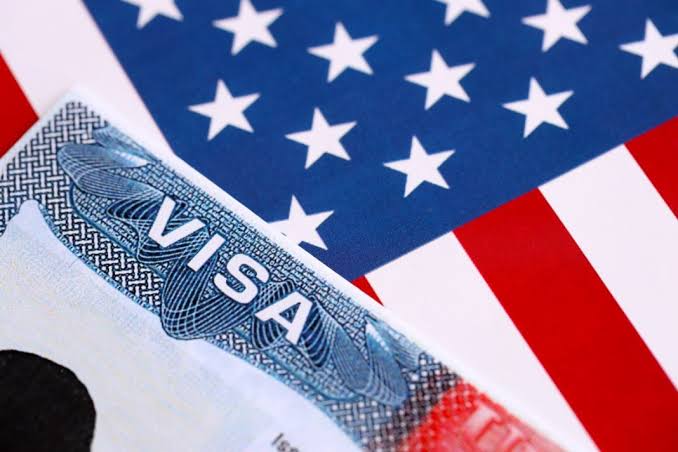
A new Trump administration policy aimed at placing tighter time limits on foreign students and journalists in the United States has been put on hold by a federal court.
The decision came from US District Judge F. Dennis Saylor on Monday, hours before the Department of Homeland Security was expected to begin enforcing the new rules.
The policy would have replaced the long-standing system that allows international students to remain in the US for the duration of their approved studies. Instead, most student visa holders would have been given a fixed period of up to four years and would then need to seek an extension.
Foreign journalists would also have faced shorter periods of stay. The proposed limit was 240 days, while Chinese journalists would have been restricted to 90 days, subject to possible extensions.
Universities, educators and journalists challenged the policy in court, arguing that the changes could disrupt education, research and media work.
READ ALSO:
- 2027: Northern Lecturers Back Tinubu, ASUU Disowns Endorsement
- ‘I Was Never the Chosen One’ — Dembele Responds to Mbappe
- Police Arrest Mother Over Alleged Brutal Abuse of 7-Year-Old Girl in Anambra
Saylor has now temporarily stopped DHS from putting the rules into effect. He did not make a final ruling on the wider legal challenge and has scheduled another hearing for October 2.
In his ruling, the judge questioned whether DHS had properly explained the need for such a major change. He also expressed concern that visa extension decisions could become highly discretionary, leaving foreign students, researchers and journalists with limited options if their applications were rejected.
Saylor further criticised the administration’s national security justification, describing it as exceptionally weak and questioning whether less restrictive measures had been considered.
The ruling means the new restrictions will not take effect for now. The case will continue in court as the Trump administration defends the policy.
The US hosted more than 1.1 million international students during the 2023-24 academic year, making it the world’s leading destination for international education.
US Judge Blocks Trump Visa Rules for Foreign Students, Journalists
International
China Denies Supplying Iran Intelligence Linked to Attack That Killed US Troops
China Denies Supplying Iran Intelligence Linked to Attack That Killed US Troops
China has rejected as “groundless” reports that Chinese entities supplied Iran with satellite imagery of a US military base in Jordan before and after an Iranian missile attack that killed three American troops in July.
The denial followed a report by The Wall Street Journal, which cited unnamed US officials as saying that Iran obtained high-resolution satellite images of the Muwaffaq Salti Air Base in Jordan, where US forces are stationed, from Chinese entities.
The July 17 Iranian missile attack on the base killed three US Army soldiers and injured four others, according to US officials cited in the report.
The US officials reportedly linked the satellite imagery to the Iranian attack but did not identify the Chinese entities involved. Importantly, the report did not accuse the Chinese government of directly ordering, coordinating or facilitating the strike.
Chinese officials have rejected the allegation and demanded evidence, maintaining that Beijing complies with international law and opposes what it described as unfounded accusations.
The development has nevertheless raised fresh questions in Washington over the growing strategic relationship between China and Iran, particularly amid the wider US-Iran conflict and continuing tensions between Washington and Beijing.
The report said the satellite images were obtained before and after the attack, potentially giving Iran detailed information about the military facility and helping it assess the impact of its strikes.
READ ALSO:
- Police Arrest Mother Over Alleged Brutal Abuse of 7-Year-Old Girl in Anambra
- King’s College Concession: 115 Unity Colleges Shut as Education Workers Defy FG
- Petrol Price Hits N1,450/Litre as Middle East Crisis Pushes Oil Above $108
US officials have previously expressed concern about China’s technological and satellite-related links with Iran. Washington sanctioned three China-based satellite companies in May over allegations that they supported Iran’s military operations.
The latest report has intensified scrutiny of the role of commercial and private Chinese entities in providing technology or imagery that could potentially enhance Iran’s military capabilities.
However, US President Donald Trump has sought to play down the significance of the latest allegations.
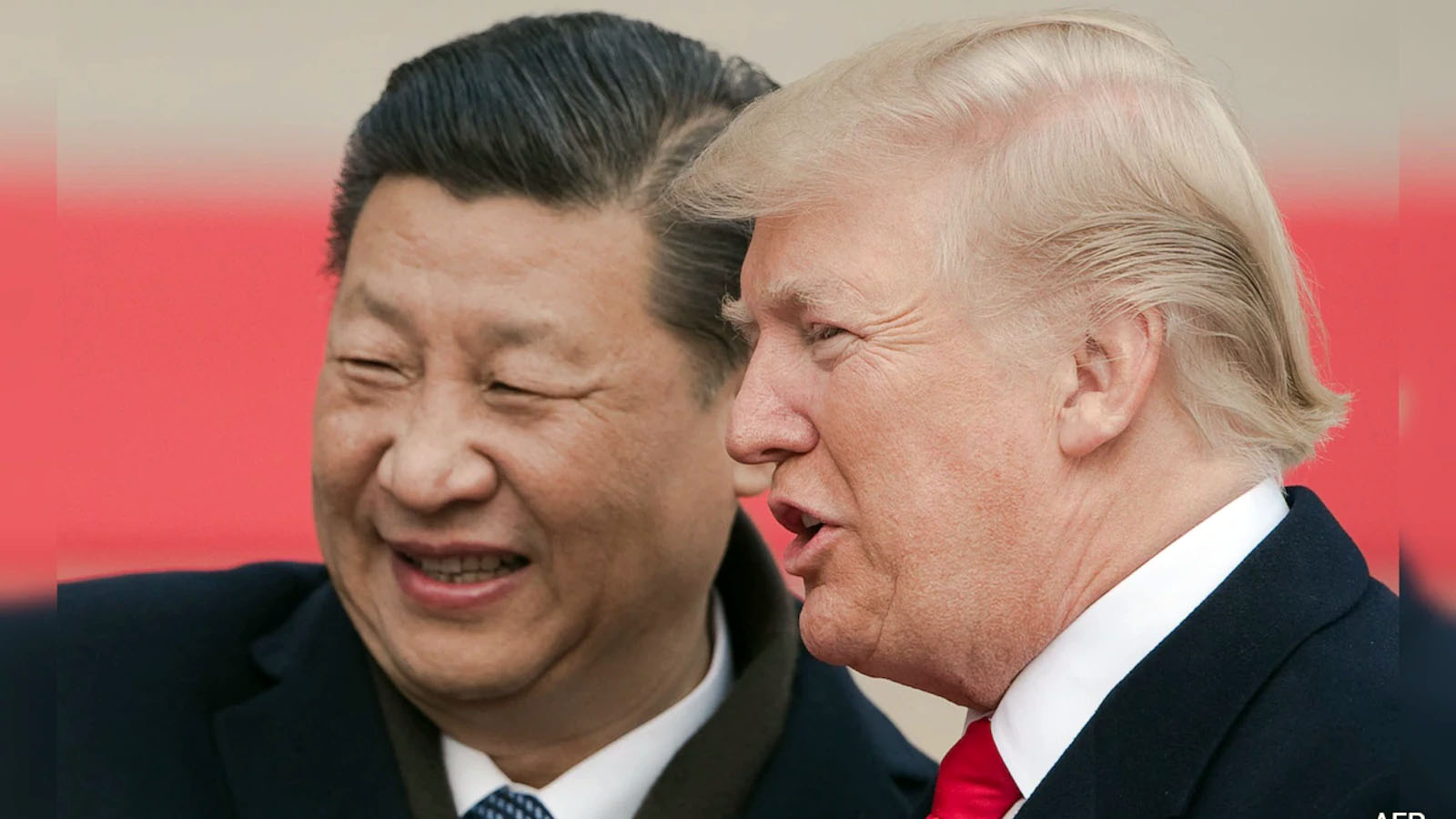
Speaking to reporters aboard Air Force One on Sunday, Trump was asked whether he would raise the issue with Chinese President Xi Jinping during their expected meeting in the United States.
Rather than directly addressing whether Beijing should be held responsible, Trump compared Chinese intelligence-gathering activities with those of the United States.
Trump also maintained that he has a good relationship with Xi, saying the Chinese leader had behaved reasonably well and that Washington and Beijing had likewise conducted themselves reasonably.
The comments come as the United States and China attempt to manage several areas of tension, including trade, technology, national security and China’s relationship with Iran.
The allegations are particularly sensitive because the reported transfer of imagery occurred before an attack that resulted in the deaths of American service members.
The Iran missile strike in Jordan was part of the broader conflict involving Iran and the United States, which has increasingly drawn in regional actors and raised concerns about the security of American military personnel and facilities across the Middle East.
The Wall Street Journal report, according to Reuters, could not immediately be independently verified. It also did not establish that Chinese authorities themselves provided the imagery or that Beijing had prior knowledge of the Iranian attack.
The distinction is significant because evidence that individual Chinese companies or entities supplied commercial satellite imagery would not, by itself, establish direct involvement by the Chinese government.
The controversy comes ahead of a potential meeting between Trump and Xi, with the two leaders expected to meet in the United States on September 24, although Beijing had not officially confirmed the meeting as of Monday.
China’s denial and Trump’s decision to downplay the allegation could help prevent the issue from becoming a major diplomatic confrontation ahead of the anticipated meeting.
For now, the central question remains whether Chinese commercial entities provided the imagery to Iran and, if so, what information was transferred and whether it materially contributed to the Iranian operation that killed the three US troops.
The allegations are likely to remain under scrutiny as Washington assesses the extent of Chinese support for Iran and its possible implications for US military operations in the Middle East.
China Denies Supplying Iran Intelligence Linked to Attack That Killed US Troops
-
 Business3 days ago
Dangote: ₦525 Refinery Shares Could Rise to ₦10,000
-
 News2 days ago
SERAP Threatens Legal Action Over ₦126bn INEC Electoral Funds
-

 metro3 days ago
MURIC fires back at Peter Obi: Forget Sallah ceremony, free Nigerian Muslims
-

 metro3 days ago
Abia Police Arrest Father, Three Others Over Alleged Attempt to Sell 16-Month-Old Daughter
-
 International3 days ago
Trump Tells Supporters to ‘Cheat Like Hell’ Ahead of US Election
-
 Politics2 days ago
Five Islamic Clerics Abducted After Tinubu Re-Election Prayer At Yari’s Zamfara Residence
-

 metro3 days ago
FG Targets 2 Million Creative Jobs by 2030
-

 Auto3 days ago
Jetour Takes Award-Winning Dashing, Other SUVs to Abuja