

Health
Tinubu approves 25 new cancer treatment machines, FG begins wider cancer-care expansion

Tinubu approves 25 new cancer treatment machines, FG begins wider cancer-care expansion
President Bola Ahmed Tinubu has approved the procurement of 25 additional linear accelerators between 2027 and 2029 as part of the Federal Government’s efforts to expand cancer treatment capacity and strengthen cancer control in Nigeria.
The Minister of State for Health and Social Welfare, Dr Iziaq Salako, disclosed this on Tuesday in Abuja during a meeting of the National Cancer Control Plan (NCCP) Technical Working Group and Global Advisory Council.
Salako said the approval was part of a three-year plan to increase access to radiotherapy and other specialised cancer services across the country.
“Recently, President Bola Tinubu approved that between 2027 and 2029, the country should procure an additional 25 linear accelerators. We are executing a three-year plan to achieve this,” the minister said.
Linear accelerators, commonly known as LINACs, are machines used in radiotherapy to deliver high-energy radiation to cancer cells while limiting damage to surrounding healthy tissue. Their availability is critical to the treatment of many cancer patients requiring radiation therapy.
The planned procurement comes under the Federal Government’s National Cancer Control Plan 2026–2030, which seeks to reduce cancer incidence, illness and deaths while improving access to prevention, early detection, diagnosis, treatment and supportive care.
Salako said Nigeria continued to face a significant cancer burden, with many patients presenting at health facilities when their diseases had already reached advanced stages.
He identified inadequate infrastructure, shortages of skilled healthcare workers and limited funding among the challenges affecting cancer treatment and care in the country.
READ ALSO:
- Soso Soberekon Offers Peter Okoye N500m to Fight Twin Brother Paul in Boxing Match
- University Student Stabbed to Death Over Alleged £3,000 Debt, Fake Rolex
- ‘Don’t Let My Sick Daughter Die in Nigeria’ — Nigerian US Army Woman Begs Trump
The minister said the government was therefore pursuing a comprehensive cancer-control strategy that places equal emphasis on prevention, early detection, treatment, research, workforce development and partnerships.
Prevention, he said, remains a major priority of the administration.
Salako noted that President Tinubu had approved the inclusion of Human Papillomavirus (HPV) vaccination in Nigeria’s routine immunisation programme.
“The President particularly continues to emphasise prioritising prevention. That is why one of the very first things he did was to approve that routinely, HPV vaccination should be part of our immunisation schedule,” he said.
HPV vaccination is an important public-health intervention because persistent infection with certain HPV types can cause cervical cancer and other cancers.
Salako added that the Federal Government was also working to strengthen hepatitis vaccination, expand cervical cancer screening and integrate screening services into primary healthcare facilities across the country.
“Prevention is better and cheaper than cure,” he said.
Beyond prevention, the government is also expanding specialised treatment infrastructure.
Salako disclosed that construction of six Cancer Centres of Excellence had commenced, with three already completed and work progressing on the remaining centres.
The centres are expected to improve access to specialised oncology services across Nigeria’s six geopolitical zones and reduce the pressure on existing cancer-treatment facilities.
The minister also inaugurated the Blood Cancer Consortium following the donation of equipment and other resources aimed at strengthening pathology laboratories and improving the diagnosis and management of blood cancers.
The President of the Nigerian Cancer Society, Prof. Abidemi Omonisi, commended the Federal Government for adopting a more coordinated approach to tackling cancer.
READ ALSO:
- Death Toll Rises to 132 as 7.4-Magnitude Earthquake Devastates Western Colombia
- How Enugu Abduction Led to Recovery of 4 AK-47 Rifles, 133 Ammunition – Army
- ‘I Acted Out of Patriotism’ — Army Colonel Ma’aji Breaks Silence, Explains Why He Plotted Coup Against Tinubu
Omonisi identified fragmented interventions among government agencies, development partners, researchers and other stakeholders as one of the challenges that had affected previous cancer-control efforts.
He said the NCCP Technical Working Group was helping to address the problem by bringing together government institutions, researchers, clinicians, development partners, cancer organisations, patients and other stakeholders under a common national framework.
According to him, stronger international partnerships and greater engagement with Nigerians in the diaspora could improve cancer research, technology transfer, workforce development and access to advanced cancer-care services.
Earlier, the Chair of the NCCP Technical Working Group, Prof. Folakemi Odedina, said the group had moved from planning to implementation.
She said the initiative had united government institutions, academics, patients, advocates, survivors, industry players and international partners around a common national cancer-control agenda.
Odedina said work was progressing across several areas, including cancer prevention, early detection, treatment, survivorship, palliative care, research, clinical trials, workforce development and digital health.
She added that the Global Advisory Council was providing expertise in cancer prevention and treatment, genomics, implementation science, workforce development, data management and artificial intelligence.
Odedina said efforts were also underway to strengthen Nigeria’s oncology clinical trials ecosystem and improve patients’ access to innovative treatment options.
“We intend to produce trained people, stronger institutions in Nigeria, better research, expanded clinical trials, improved technologies, greater access to care, and ultimately better outcomes for Nigerian cancer patients,” she said.
She, however, stressed that expanding medical treatment alone would not guarantee better outcomes if patients could not afford other costs associated with cancer care.
According to her, patients may also require support for transportation, nutrition and accommodation during treatment, particularly when specialised services are unavailable close to their communities.
Also speaking, Prof. Taofeek Owonikoko, Global Advisory Council Director at the University of Maryland Greenebaum Cancer Centre, said the partnership would strengthen coordination between Nigerian institutions and international cancer organisations.
He said the framework would help ensure that international interventions were aligned with Nigeria’s national priorities rather than operating independently.
Owonikoko described the ambition of achieving a cancer-free Nigeria by 2030 as a long-term goal that would require sustained investment in healthcare systems, research, infrastructure and treatment strategies.
“I’m very convinced that the 2030 cancer-free Nigeria is not going to be a slogan.
“While we may not make Nigeria cancer-free in 2030, I think we would have created the tools, the platform and the strategies that will ensure that we eventually become cancer-free,” he said.
Dr Lewis Roberts of Mayo Clinic Comprehensive Cancer Centre called for increased attention to liver, pancreatic and biliary tract cancers across Africa.
“Liver cancer is one of the major causes of cancer deaths in Africa. Across the continent, it’s the number three cause of death from cancer,” Roberts said.
He advocated stronger screening programmes, improved identification and treatment of viral hepatitis cases and wider vaccination coverage to reduce the incidence of liver cancer.
The Federal Government’s broader cancer strategy also places emphasis on research, cancer surveillance, data collection, digital health and the development of a specialised workforce capable of providing modern oncology services.
The NCCP 2026–2030 is designed to bring together federal and state governments, healthcare professionals, researchers, patients, survivors, civil society organisations, development partners and international institutions in a coordinated national response to cancer.
The government’s planned procurement of 25 additional linear accelerators, construction of six Cancer Centres of Excellence, expansion of screening programmes and strengthening of pathology and research facilities are therefore part of a wider attempt to improve Nigeria’s cancer-care system.
However, stakeholders say sustained funding, reliable infrastructure, adequate staffing and affordable access to treatment will remain essential if the new investments are to translate into better outcomes for people living with cancer.
The meeting reviewed progress under the National Cancer Control Plan and examined further strategies for strengthening coordinated action on cancer prevention, early detection, diagnosis, treatment, research and survivorship care across Nigeria.
Tinubu approves 25 new cancer treatment machines, FG begins wider cancer-care expansion









Health
WHO Declares Nigeria Ebola-Free, 52 Contacts Remain Under Surveillance

WHO Declares Nigeria Ebola-Free, 52 Contacts Remain Under Surveillance
The World Health Organisation has declared Nigeria free of active Ebola cases after the evacuation of country’s lone confirmed patient to Switzerland.
Health authorities however continue to monitor 52 contacts to prevent a possible spread of the deadly disease.
The WHO Regional Director for Africa, Dr Mohamed Janabi, announced this in a statement posted on his verified X handle on Monday, confirming that Nigeria would retain responsibility for monitoring 52 contacts, while Switzerland would take over the patient’s continued medical care and follow up with her husband.
Janabi said the patient was clinically stable after Nigerian medical teams successfully managed her through the acute phase of the illness and stabilised her condition before her evacuation.
“Nigeria is now Ebola-free following the evacuation of the index patient to Switzerland,” he said.
He added that Nigeria would maintain close follow-up of the 52 contacts, while Switzerland would assume responsibility for the continued management of the patient and the monitoring of contact number 53, her husband.
The development follows an earlier confirmation by the Nigeria Centre for Disease Control and Prevention that the country had recorded an imported Ebola case involving a patient from Uganda.
Following the confirmation, the NCDC placed 53 contacts under surveillance in Abuja as part of measures to track possible exposure and prevent further transmission.
Although the evacuation of the patient has removed the confirmed case from Nigeria, health authorities are expected to sustain surveillance of the identified contacts in line with established public health protocols.
The monitoring exercise remains critical to ensuring that any potential emergence of symptoms among those exposed is detected promptly and managed appropriately.
Ebola is a severe and often fatal disease that can spread through direct contact with the blood and other bodily fluids of an infected person or someone who has died from the disease.
Public health authorities typically rely on early detection, contact tracing, isolation and appropriate medical care to contain outbreaks and prevent further transmission.
With the index patient now receiving continued care in Switzerland, Nigeria’s immediate focus remains on monitoring the 52 contacts and ensuring that the outbreak does not lead to further infections.
Health
NAFDAC Busts Illegal Herbal Factory in Lagos, Arrests Manager Over Fake Registration Number
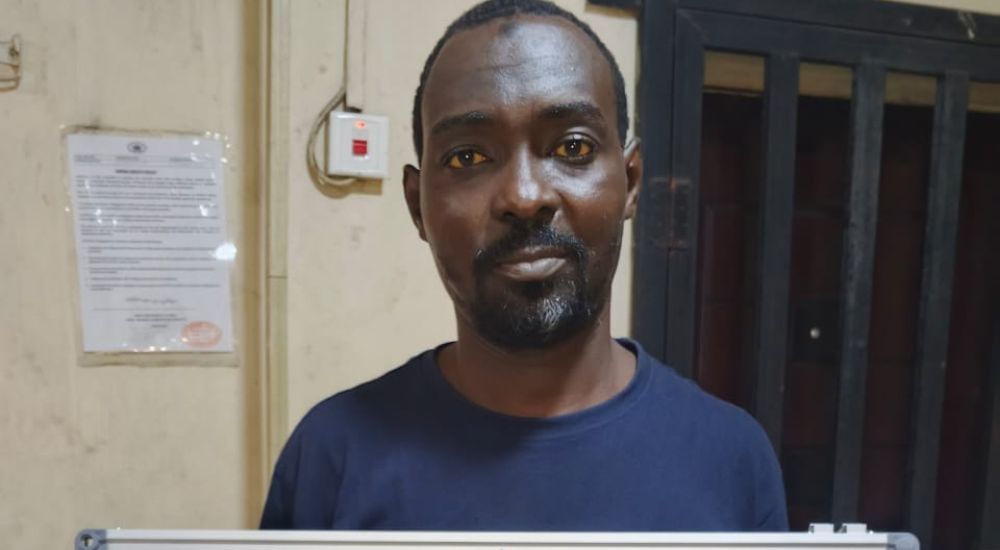
LAGOS — The National Agency for Food and Drug Administration and Control (NAFDAC) has uncovered a suspected illegal herbal product manufacturing facility in Agege, Lagos State, and arrested its manager over the alleged use of a falsified registration number on herbal products.
The agency disclosed the development on Wednesday, October 21, 2026, following an investigation triggered by a report published by The Guardian on October 10 concerning herbal products allegedly carrying fake NAFDAC registration numbers.
According to NAFDAC, its investigative team conducted surveillance before discovering three variants of Asheitu Adams Bitters bearing registration number A7-1827L.
However, checks through the agency’s NAFDAC Automated Product Administration and Monitoring System (NAPAMS) revealed that the registration number belonged to Greentol Cough Syrup, rather than the herbal bitters.
The agency said the discovery confirmed the fraudulent use of the registration number on the products.
During the operation, the company’s managing director and chief executive officer was reportedly absent, while the manager was arrested for further interrogation as investigations continued.
The Sun identified the arrested manager as 39-year-old Abdullazeez Saidu from Kano State. NAFDAC had not announced any court charges against him as of Wednesday.
READ ALSO:
- NELFUND Warns Schools: Student Loans Are Voluntary, Not Compulsory
- ‘I Never Asked Them to Abandon Loved Ones’ — Obi Clarifies Diaspora Remarks
- FG Confirms Ebola Case in Abuja, Identifies 44 Contacts
The agency urged members of the public to provide credible information about suspected illegal manufacturing activities to help strengthen enforcement efforts and protect consumers from potentially unsafe products.
NAFDAC provided the following channels for reporting suspected violations: its call centre numbers, 0800-1-623322 and 0700-1-623322, and the email address reforms@nafdac.gov.ng.
The discovery comes amid a series of enforcement operations by the agency against suspected counterfeit and adulterated products in Lagos and other parts of the country.
On October 14, NAFDAC reported uncovering a suspected facility at the International Trade Fair Complex in Lagos where expired alcoholic and non-alcoholic beverages were allegedly being repackaged for sale. The agency also reported seizures of suspected counterfeit alcoholic drinks in other operations.
The latest operation highlights concerns about the misuse of regulatory registration numbers, which consumers often rely on when assessing whether products have been registered for sale in Nigeria.
NAFDAC has repeatedly urged consumers to verify product registration details and report suspicious products or manufacturing activities.
The agency’s investigation into the Agege facility is ongoing, and further details about the products recovered, their distribution and any potential health effects have not been publicly disclosed.
NAFDAC Busts Illegal Herbal Factory in Lagos, Arrests Manager Over Fake Registration Number
Health
FG Confirms Ebola Case in Abuja, Identifies 44 Contacts

FG Confirms Ebola Case in Abuja, Identifies 44 Contacts
The Federal Government has confirmed a case of Ebola virus disease (EVD) in the Federal Capital Territory (FCT), Abuja, after laboratory tests returned positive for a woman who recently arrived in Nigeria from Uganda.
The Coordinating Minister of Health and Social Welfare, Professor Muhammad Ali Pate, announced the development on Tuesday, October 20, 2026, saying health authorities had identified 44 close contacts and commenced contact tracing to prevent further transmission.
According to the minister, the patient was admitted to a private hospital in Abuja, where she received medical attention for several days before the infection was confirmed. She is currently in isolation and receiving medical care.
The Federal Ministry of Health and Social Welfare is coordinating the response with the Nigeria Centre for Disease Control and Prevention (NCDC), the FCT Health Services Secretariat and other relevant authorities.
Public health teams are tracing and monitoring people who may have been exposed to the patient, including healthcare workers, other patients, caregivers and people who travelled with her.
The government said surveillance had been intensified, while the hospital where the woman received treatment was receiving support to strengthen infection prevention and control measures.
The minister urged public and private healthcare facilities across Nigeria to remain on high alert and promptly identify, isolate and report suspected cases to the appropriate public health authorities.
READ ALSO:
- Breaking: Afenifere Leader Pa Fasoranti Dies at 100
- Army Major, Soldiers Killed in ISWAP Ambush in Yobe State
- Chaos in Abeokuta as Algerian Fans Attack Coach, Vandalise Stadium After Rangers Defeat
Healthcare workers were also directed to maintain strict infection prevention and control practices to reduce the risk of exposure and protect patients and medical personnel.
Pate appealed to Nigerians to remain calm, vigilant and cooperative with health officials, stressing that early detection and prompt reporting were essential to containing the infection.
He noted that Nigeria had successfully contained an Ebola outbreak in 2014 and had experience and public health systems to respond to the current situation.
The government also urged anyone contacted during the tracing exercise, including passengers who may have travelled with the patient, to provide the necessary information and comply with official public health guidance.
Ebola virus disease is a serious illness that can spread through direct contact with the blood or other body fluids of an infected person who has developed symptoms, or through contaminated objects and materials.
Symptoms may include fever, severe weakness, headache, vomiting and diarrhoea. The incubation period ranges from two to 21 days.
Anyone who believes they may have been exposed and subsequently develops symptoms should contact public health authorities for guidance and avoid close contact with others while awaiting advice.
The NCDC operates a toll-free call centre on 6232, available 24 hours a day, seven days a week, for information and reports of suspected cases.
Nigeria’s latest case comes amid a wider Ebola outbreak affecting parts of Africa, including the Democratic Republic of the Congo and countries in East Africa. The NCDC had previously warned of the risk of imported infections and strengthened national preparedness measures.
The Federal Government said investigations and contact tracing were continuing, with further updates expected through the NCDC and the Presidential Task Force on Ebola Virus Disease.
Authorities have urged the public to rely on verified information, follow official health advice and avoid spreading unconfirmed reports as efforts continue to contain the infection.
FG Confirms Ebola Case in Abuja, Identifies 44 Contacts
-
 metro2 days ago
Court Orders Final Forfeiture Of 48 Properties Worth N212bn Linked To Malami
-

 metro2 days ago
Ogbomosoland Grand Chief Imam, Sheikh Teliat Ayilara II, Marks Five Years in Office
-

 International2 days ago
US Lawmakers to Hold Fresh Hearing on Nigeria’s Insecurity, Christian Killings
-

 News2 days ago
Tinubu’s Chicago Varsity Certificate Row: Omokri Challenges Journalists to Verify Fresh Allegations
-

 Auto2 days ago
After-Sales Support Will Define Future of Nigeria’s Auto Industry – Carloha Marketing Chief
-

 News1 day ago
BREAKING: Manchester United Sack Michael Carrick After Disastrous Start to Season
-

 metro2 days ago
Two Arrested as Police Recover ₦600,000, Nine Phones in Kano Robbery
-

 Sports2 days ago
Tinubu Rewards Flamingos With ₦100m Each After Historic World Cup Triumph