

Auto
Toyota to thrill with latest Sequoia, Tundra, e-bZ4X @ Chicago show Feb 12

Excitement is in the air for Toyota enthusiasts as they await with bated breath the unveiling of the latest models from the leading world’s automaker on Saturday February 12.
A latest report from Toyota Motor Corporation obtained from its website on Tuesday indicates that the automaker would display an array of new vehicles at the Chicago Auto Show taking place February 12 – 21 at McCormick Place, Chicago.
It listed the new vehicles coming to the show as the all-new 2023 Sequoia, 2022 Tundra Capstone and the all-electric 2023 bZ4X.
This year, guests will get a closer look at 59 vehicles in a 44,980 square-foot display, featuring new and upgraded vehicle features.
For the first time in Chicago, guests can get behind the wheel of the 2022 Tundra on the Toyota Track adjacent to the Toyota display in the South Exhibit Hall.
Drives will be available daily between 10am and 9:30pm (closing at 8pm February 21) during the show.
Guests will ride with a professional driver and will experience multiple surfaces to showcase the off-road upgrades and capabilities found on the new Tundra.
Toyota says its Drive Centre requires a valid driver’s licence and guests must wear a mask.
Available in summer 2022, the all-new 2023 Sequoia is ready to make its mark and elevate the full-size segment with luxurious comfort, impressive technology and breath-taking performance from an efficient new hybrid powertrain, the report says.
Toyota’s largest SUV will feature a powerful twin-turbo V6 hybrid i-FORCE MAX powertrain. First unveiled on Tundra, this exceptional hybrid produces 437 horsepower and 583 lb.-ft. of torque.
The three-row SUV is rooted in a modern body-on-frame chassis with a fully boxed frame, providing excellent handling, supreme comfort and impressive capability.

Sequoia features an independent front suspension and adopts a new rack-mounted electronic power steering system for improved steering feel. A modern multi-link rear suspension is employed out back to offer a smooth ride and create opportunity to add the available Load-Leveling Rear Height Control Air Suspension and Adaptive Variable Suspension (AVS) for those looking to tow regularly. Sequoia offers up to an impressive 9,000-pound maximum towing capacity, a nearly 22 per cent increase over the prior generation.
It will be available in five grades that include SR5, Limited, Platinum, TRD Pro and the new-to-Sequoia Capstone grade.
Sequoia’s new multimedia system will include a large 8-inch or available 14-inch touchscreen that controls the all-new Toyota Audio Multimedia system with sight, touch and voice activation.
The all-new 2022 Toyota Tundra is said to be rooted in quality, durability and reliability.
Designed, engineered and assembled in the US, there is no question this is the toughest, most capable, most advanced Tundra to date, says Toyota.
Now in its third generation, Tundra has improved upon its predecessors thanks to key improvements, including two new powertrains that are more powerful and more efficient than the outgoing engine, improved towing and payload capability, an all-new designed multimedia system and a cabin with creature comforts the entire family will love.

The recently announced Tundra Capstone grade provides a premium collection of features and upgrades for those looking to elevate their truck experience.
The luxurious grade includes the largest wheels ever offered on a Tundra with standard 22-inch chrome rims and includes unique styling features, such as a distinctive grille, chrome mirror caps, chrome “Tundra” tailgate inserts and chrome trim accents. The premium interior experience includes standard semi-aniline leather-trimmed seats in a Capstone only black-and-white color combination.
Other features include a panoramic moonroof, a leather trimmed heated steering wheel and a standard 14-inch multimedia touchscreen display with new sight, touch and voice activation.

Capstone is reportedly powered by the impressive new i-FORCE MAX hybrid powertrain that produces 437 horsepower and 583 lb.-ft. of torque.
The i-FORCE MAX is said to rely on a twin-turbo V6 engine but features a unique motor generator within the bell housing between the engine and 10-speed automatic transmission designed to provide maximum performance and maximum efficiency. Resting on a new fully boxed, high-strength-steel frame, Capstone has a maximum towing capacity of 10,340 pounds.
Toyota also brings its new all-electric SUV to the Windy City, which represents the first of a global series of battery-electric vehicles under Toyota’s “beyond Zero” brand umbrella.
The bZ4X is built on the new e-TNGA BEV-dedicated platform and offers a new AWD system that provides impressive driving performance both on- and off-road with a manufacturer-estimated range of up to 250 miles per charge for XLE front-wheel drive models.
The sleek SUV offers hi-tech and emotional design inside and out and is loaded with intuitive tech features. The bZ4X is projected to go on sale in later this year.


Auto
Naija Driver 2026: Online CBT Screening Holds today

Naija Driver 2026: Online CBT Screening Holds today
LAGOS, NIGERIA — The race to identify Nigeria’s safest and most skilled drivers enters a decisive phase today, Saturday, October 17, as registered candidates nationwide prepare for the 11am online computer-based test (CBT) screening of the inaugural Nigerian Drivers Challenge, Naija Driver 2026.
The organisers have urged candidates to log in prepared, with a functional laptop or desktop computer, webcam and reliable internet connection, warning that smartphones and tablets will not be supported for the 20-minute, 40-question examination.
Auto
Tesla’s Flying Roadster Rekindles Race to Put Cars in the Sky
Tesla’s Flying Roadster Rekindles Race to Put Cars in the Sky
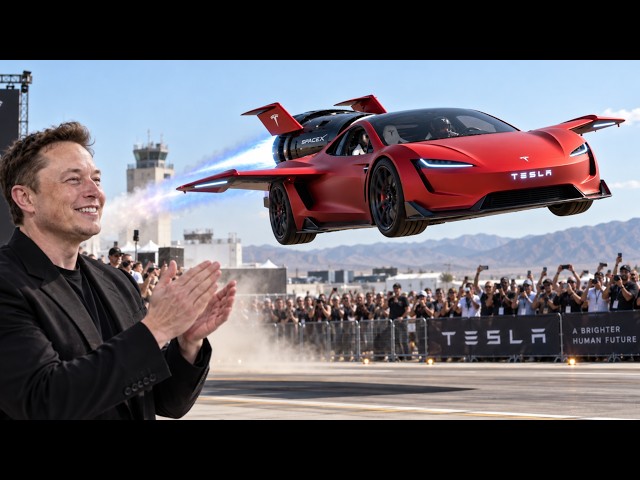
Tesla chief executive Elon Musk has brought the prospect of putting cars in the sky back to the spotlight with the unveiling of the company’s Roadster sports car. The demonstration, staged at a SpaceX facility in Texas, has reignited the debate over whether flying cars could fundamentally change how people and goods move—or whether they will remain expensive technological curiosities for wealthy enthusiasts.
Analysts note that getting a vehicle briefly off the ground is not the same as developing a practical aircraft that can transport people safely over meaningful distances, land in confined spaces and remain usable on ordinary roads.
And that is where the real challenge begins.
At the centre of the latest excitement is Tesla’s next-generation Roadster, a high-performance electric sports car equipped with technology developed in collaboration with SpaceX, Musk’s aerospace company.
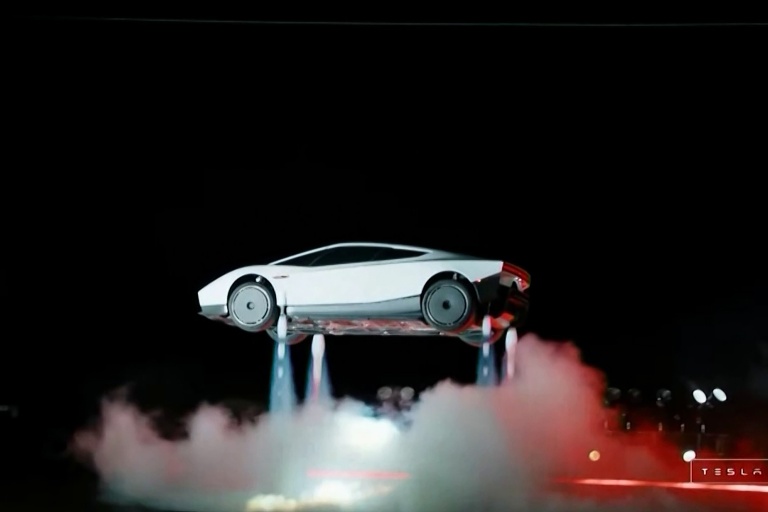
During the October 15 demonstration in Texas, the vehicle performed a series of dramatic manoeuvres, including launching into the air, flipping and landing, using a system of compressed-air thrusters. Tesla also showcased a suction-based system that allowed it to perform an extraordinary stunt on a ramp. The company claims the car can accelerate from zero to 60 miles per hour in less than a second.
The spectacle was designed to demonstrate what happens when automotive engineering meets rocket technology. Musk described the project as a collaboration between what he called the world’s best car company and the world’s best rocket company.
However, the demonstration did not establish that the Roadster can sustain conventional flight, travel long distances through the air or operate as an everyday flying vehicle.
That distinction is central to the debate.
The vehicle’s production is planned for 2028, but the promised timeline, technical capabilities and regulatory pathway remain matters to watch. Tesla has previously revised its Roadster production schedules, making the latest target one that prospective buyers will need to treat cautiously.
For now, the Roadster is better understood as a demonstration of extraordinary engineering ambition than proof that flying cars are ready to transform daily commuting.
The technology is already taking shape
Tesla is not alone in pursuing the dream of personal flight. Across the aerospace and automotive industries, companies are developing vehicles that can take off and land vertically, potentially eliminating the need for conventional runways.
These machines are commonly known as electric vertical take-off and landing aircraft, or eVTOLs. Depending on their design, they use multiple electric propellers, rotors or other lifting systems to rise vertically before transitioning into forward flight.
Unlike a conventional flying car that must also function as a road vehicle, many eVTOLs are designed primarily as aircraft. Their intended uses include urban air taxis, airport transfers, medical transport and short-distance passenger services.
READ ALSO:
- NAPTIP Raises Alarm as Parents Allegedly Trade Children for Sex, Arrests Woman in Abuja
- Troops Crush Lakurawa Enclave in Sokoto, Kill Fighters, Destroy Terrorist Camps
- Kaduna Kidnapping: Couple, Six-Month-Old Baby Regain Freedom After Nine Days in Captivity
One of the companies pursuing a road-and-air vehicle is California-based Alef Aeronautics. Its Model A project uses distributed propellers to lift the vehicle, illustrating a different approach from Tesla’s rocket-assisted demonstration.
The wider industry is also attracting regulatory attention. In the United States, the Federal Aviation Administration has established rules covering pilot qualifications and operations for powered-lift aircraft, creating a framework for the introduction of new types of vertical-flight transportation. Certification of individual aircraft and safe integration into airspace remain essential steps.
The implication is significant: flying transportation is no longer merely an imaginative concept. But the most practical early applications may be specialised aircraft operating along defined routes, rather than private cars routinely switching between roads and skies.
Why building a flying car is so difficult
The biggest obstacle is not simply making a vehicle leave the ground. It is combining the conflicting requirements of a road car and an aircraft without compromising either.
A car must be sturdy enough to withstand collisions, potholes and the daily stresses of road use. It needs a chassis, crash-protection structures, tyres, suspension and other components that add weight.
An aircraft must be designed around weight, lift, stability, energy efficiency and control. Every extra kilogram can affect how much energy is needed to take off and remain airborne.
Combining the two creates a difficult engineering compromise.
A flying car must also manage the transition between ground travel and flight. Engineers have to ensure that the vehicle remains stable as it lifts off, changes direction and returns to the ground. A failure during that transition could have catastrophic consequences.
The Tesla demonstration offers a glimpse of what thrust technology can achieve, but a brief airborne manoeuvre does not answer the harder questions about sustained flight, passenger safety, weather resistance, emergency landing and repeated everyday use.
Battery performance presents another challenge for electric flying vehicles. Taking off vertically demands considerable power, while maintaining safe flight requires sufficient energy reserves. Designers must balance passenger capacity, range, payload and operating costs.
Then comes the question of price. A machine carrying sophisticated aviation systems, advanced batteries and road-safety equipment is unlikely to match the cost of an ordinary family car in its early years.
READ ALSO:
- IPOB Reaches Out to Hausa, Northern Groups in Fresh Push for Biafra Referendum
- MURIC Warns EFCC Over Atiku Probe, Says Timing Could Heighten Political Tension
- ToluwaniSings’ Final Hours: Aide Reveals Desperate Search Across 8 Hospitals
These challenges explain why the first commercially successful flying vehicles may be aircraft that serve specific transport needs, rather than universal replacements for cars.
Will flying cars end traffic congestion?
The promise of flying cars is particularly attractive in cities such as Lagos where road congestion consumes hours of people’s lives and imposes substantial economic costs.
In principle, moving some journeys into the air could shorten travel times between distant urban centres, business districts, airports and industrial locations. Electric air taxis could offer faster alternatives for passengers willing to pay a premium.
Yet the idea that everyone will soon fly above traffic is less convincing.
Cities cannot allow thousands of privately operated aircraft to take off and land wherever their owners choose. Flight paths, separation distances, weather conditions, emergency procedures and air-traffic management would all have to be coordinated.
Landing infrastructure is another constraint. Even aircraft capable of vertical take-off need suitable places to land, recharge or refuel, undergo maintenance and accommodate passengers.
For flying cars that are also road-legal, owners would still need somewhere to park and drive. A vehicle that takes off from one location but cannot land safely near its destination may offer little practical advantage.
Noise could also become a concern, particularly for residents living near vertiports and frequently used flight corridors.
Consequently, the first generation of urban flying transport is more likely to resemble a carefully managed air-taxi network than an unrestricted skyway for private motorists.
Could flying cars become affordable?
Cost may ultimately determine whether flying vehicles transform transportation or remain a luxury reserved for a small group of buyers.
Early models are likely to carry substantial costs associated with advanced engineering, certification, insurance, maintenance and specialised training. Even when a vehicle can be operated without a conventional runway, its aviation-related requirements will distinguish it from an ordinary car.
The more promising business model may therefore involve shared use.
Instead of buying an expensive flying vehicle, passengers could book an air taxi for particular journeys. Operators could spread the cost of aircraft, maintenance and infrastructure across multiple trips.
As manufacturing scales up and technology improves, some costs may fall. But cheaper batteries and more efficient motors alone will not resolve every challenge involving certification, safety, infrastructure and public acceptance.
Tesla’s Roadster could still influence the industry by attracting attention to new propulsion technologies and encouraging competition. Its immediate significance, however, is more likely to be technological and symbolic than a mass-market transportation breakthrough.
What does the future hold for Nigeria?
For Nigeria, the emergence of flying vehicles presents both opportunities and questions.
Lagos offers an obvious illustration of the problem such technology seeks to address. Heavy congestion along major routes, including the Lekki-Epe corridor and key approaches to the island business districts, creates demand for faster and more predictable transport options.
Abuja, with its expanding urban footprint and relatively long journeys between some residential, administrative and commercial districts, could also eventually find specialised aerial mobility useful.
Potential applications extend beyond executive travel. Subject to safety, cost and regulatory approval, future vertical-flight aircraft could support emergency medical transfers, time-sensitive cargo delivery and connections between airports and business centres.
But Nigeria would need more than imported aircraft to develop a sustainable flying-mobility ecosystem.
The country would require appropriate aviation regulations, trained personnel, reliable charging or energy infrastructure, approved landing facilities, maintenance capabilities and effective airspace coordination. Affordability would be especially important in a market where many commuters depend on public transport and conventional road-based mobility.
The Nigerian Civil Aviation Authority would have a crucial role in determining how emerging aircraft technologies could be certified and operated locally, in line with applicable national requirements and international aviation standards.
There may also be opportunities for local engineering firms, technology companies and transport operators to participate in infrastructure development, maintenance and specialised mobility services.
Nevertheless, the business case would have to be demonstrated. A flying taxi that saves time but costs many times more than a road journey would initially serve a limited market.
For Nigeria, the most realistic starting point may be specialised commercial operations, rather than privately owned flying cars becoming a common sight over major cities.
The flying car remains an intriguing glimpse of the future—one with the potential to reshape mobility, but not yet a replacement for the familiar car on the road.
Tesla’s Flying Roadster Rekindles Race to Put Cars in the Sky
Auto
OMAA Unveils Three CNG, Electric Buses, Offers 48-Month Vehicle Finance
OMAA Unveils Three CNG, Electric Buses, Offers 48-Month Vehicle Finance
…Introduces ₦890,000 monthly payment plan as Nigerian mobility firm marks sixth anniversary
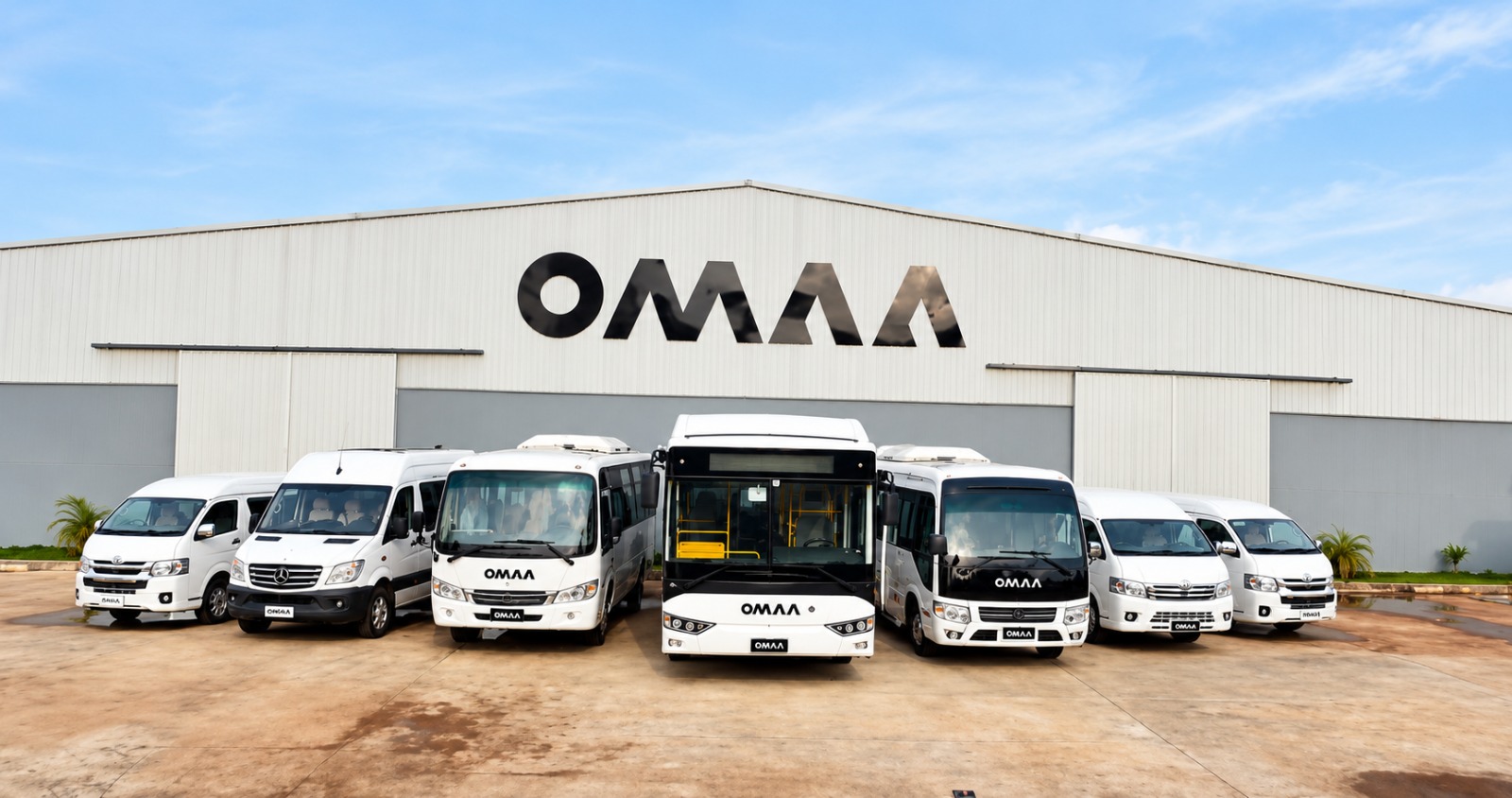
Nigerian vehicle and energy company, OMAA, has unveiled three passenger vehicle models in compressed natural gas (CNG) and battery-electric variants, alongside a financing scheme offering repayment periods of up to 48 months to help transport operators and corporate organisations expand their fleets.
The new models — OMAA U3 minibus, K7 bus and V12 high-capacity city bus — are designed to serve different segments of the passenger transport market, from urban shuttles and institutional transport to large-scale mass transit operations.
The announcement, which coincides with the company’s sixth anniversary, also marks the introduction of OMAA Finance, a programme developed in partnership with Nigerian financial institutions to ease the burden of upfront vehicle acquisition costs.
Under the scheme, advertised monthly payments start from ₦890,000 for the OMAA U3 minibus, with an initial deposit of 10%. Financing terms, however, will depend on eligibility requirements, repayment tenure and the customer’s equity contribution.
The company has also opened pre-orders for the three models, giving prospective buyers the option of choosing between CNG and battery-electric powertrains according to their routes, operating costs and access to the necessary energy infrastructure.
Speaking on the development, OMAA’s Managing Director, Chinedu Oguegbu, said the launch reflected the company’s commitment to local automotive manufacturing and the expansion of cleaner, more affordable transport solutions.
“Six years ago, we set out to demonstrate that commercial vehicles could be assembled in Nigeria and powered by cleaner, more affordable energy. Today, the introduction of the OMAA U3, K7 and V12 in both CNG and electric variants, alongside our vehicle financing programme, represents another significant step towards that vision,” Oguegbu said.
He explained that the company’s objective extended beyond supplying vehicles to helping operators manage running costs, access after-sales support and build sustainable transport businesses.
“By combining locally supported servicing, parts availability and structured financing, we are creating opportunities for schools, hospitals, corporate organisations and mass transit operators to expand their fleets with greater confidence,” he added.
Three models target different market segments
The new lineup covers a broad range of passenger transportation needs.
The OMAA U3 is a 12-to-15-seater minibus designed for urban and intercity transport operators, institutional shuttle services and businesses requiring compact passenger vehicles.
The K7, with a capacity of 23 to 30 passengers, targets staff transportation, school bus services, corporate fleets and medium-capacity passenger routes.
The V12, the largest of the three models, is configured to accommodate between 43 and 70 passengers. It is designed for mass transit operators and businesses serving routes with high passenger demand.
All three models are offered in CNG and battery-electric configurations, allowing fleet owners to evaluate alternative powertrains based on fuel or electricity costs, vehicle utilisation, maintenance requirements and access to refuelling or charging facilities.
The dual-powertrain strategy comes as transport operators increasingly explore ways to manage energy expenses and improve the economics of commercial vehicle operations.
Special-purpose vehicles broaden applications
Beyond passenger buses, OMAA is offering special-purpose vehicle configurations based on the same platforms.
The options include cargo vans, ambulances, VIP transport vehicles and airport shuttles, extending the potential applications of the company’s vehicle range to logistics, healthcare, corporate mobility and airport transportation.
The use of common vehicle platforms could also help fleet owners streamline maintenance, spare-parts management and technical training, particularly where organisations operate different vehicle configurations.
Finance scheme targets high acquisition costs
OMAA Finance is a central component of the company’s strategy to lower the barriers to commercial vehicle ownership.
By spreading acquisition costs over repayment periods of up to four years, the programme is intended to help operators preserve working capital while expanding or renewing their fleets.
The advertised starting monthly payment of ₦890,000 for the U3, subject to a 10% initial deposit, provides an entry point for prospective buyers. The actual cost of financing will depend on the applicable terms, including the vehicle price, deposit, interest and other charges, where applicable.
The company is also promoting a total cost of ownership (TCO) approach, which considers not only the purchase price but also energy consumption, servicing, spare parts and other expenses incurred throughout a vehicle’s operating life.
According to OMAA, the combination of structured financing, local servicing support and spare-parts availability is intended to help customers plan operating expenses and make more informed fleet investment decisions.
However, the potential savings will vary according to the vehicle selected, financing conditions, energy prices, mileage, maintenance costs and the availability of suitable CNG refuelling or electric charging infrastructure.
Six years of operations
Headquartered in Umunya, Anambra State, with offices in Lagos, Abuja and Accra, OMAA operates in Nigeria and Ghana, serving fleet operators, institutions and businesses.
The latest launch builds on the company’s six-year operating history and its efforts to combine local vehicle assembly, alternative energy solutions and financing options in the commercial mobility market.
For transport operators contending with rising operating expenses and the high cost of fleet expansion, the new models and financing arrangements offer additional options for acquiring passenger vehicles.
The initiative’s long-term impact, however, will depend on the vehicles’ performance under local operating conditions, the accessibility and affordability of financing, reliable after-sales support and the availability of the infrastructure required to sustain CNG and electric mobility.
With the latest unveiling, OMAA is seeking to position itself beyond vehicle supply, offering an integrated commercial mobility proposition that combines vehicle acquisition, alternative energy choices, maintenance support and financing.
-

 metro1 day ago
₦130m Toyota Tundra Wrecked: Lagos Dealer Questions Police Over Suspect’s Release
-

 News1 day ago
₦200m Fake Alcohol Packaging Uncovered as NAFDAC Raids Aba Market
-

 metro2 days ago
Borno Woman Jailed Two Years for Sexual Exploitation of 16-Year-Old Girl
-

 metro2 days ago
Outrage as Residents Scoop Groundnut Oil From Lagos Tanker Crash Scene
-
 Sports1 day ago
Real Madrid Demand Tebas’ Exit After Explosive Nazi Propaganda Row
-

 Politics2 days ago
Shettima Attacks Atiku Over Tinubu Remarks, Questions Subsidy Plan
-

 Politics2 days ago
2027: We Know How to Stop Tinubu From Getting Second Term – Momodu
-

 metro2 days ago
Former Senator Bello Mandiya Found Dead in Bathroom Three Days After Fall