
International
Trump peace plan ‘ignores interests of Palestinian people’, Hamas official tells BBC

Trump peace plan ‘ignores interests of Palestinian people’, Hamas official tells BBC
A senior Hamas figure has told the BBC that the group is likely to reject Donald Trump’s peace plan for Gaza, saying it “serves Israel’s interests” and “ignores those of the Palestinian people”.
The figure said that Hamas is unlikely to agree to disarming and handing over their weapons – a key condition of Trump’s plan.
Hamas is also said to object to the deployment of an International Stabilisation Force (ISF) in Gaza, which it views as a new form of occupation.
Israeli Prime Minister Benjamin Netanyahu accepted Trump’s plan during White House talks on Monday. Hamas has not yet given an official response.
Qatar’s foreign ministry has said Hamas is studying the White House proposal “responsibly”.
A senior Palestinian official with knowledge of Hamas talks told the BBC they involve the group’s leadership both inside and outside of Gaza.
The group’s military commander in the territory, Ez al-Din al-Haddad, is thought to be determined to keep fighting rather than accept the plan on offer. Hamas figures outside Gaza have recently found themselves sidelined in discussions as they do not have direct control over the hostages.
Hamas talks, which are expected to take several days, also include other Palestinian factions.
The armed group Palestinian Islamic Jihad (PIJ), which took part in the 7 October attack and previously held some Israeli hostages, rejected the plan on Tuesday.
For Hamas, a key sticking point is thought to be that the plan requires them to hand over all of the hostages in one go – giving away their only bargaining chip.
READ ALSO:
- Remote workers, influencers will pay tax under new law — Oyedele
- No religion under siege in Nigeria, Tinubu declares
- Chelsea beat Mourinho’s Benfica 1-0 in UCL
Even with Donald Trump’s backing for the plan, there is a lack of trust that Israel will not resume its military operations once it has received the hostages – particularly after it attempted to assassinate Hamas leadership in Doha earlier this month, in defiance of the US.
Additionally, a map of Gaza shared by the Trump administration shows what appears to be a planned buffer zone along Gaza’s southern border with Egypt. It is unclear how this would be administered, but if Israel is involved it is also likely to be a point of contention.
Further, since agreeing to the plan on Monday evening, Netanyahu has appeared to push back on several of the terms it outlines.
In a video shared on X, he insists that the Israeli military would be able to remain in parts of Gaza and that Israel said it would “forcibly resist” a Palestinian state.
This goes against the terms of Trump’s framework, which stipulates complete withdrawal of Israeli forces and says that once the plan is complete there may be a “credible pathway to Palestinian self-determination and statehood”.
Within Gaza, Palestinians were broadly supportive of the plan, but only because it would lead to an end to the war.
Resident Khadar Abu Kweik told the BBC: “The American plan has bad clauses, but I support it because it will stop the war and get rid of Hamas. Even if the devil himself brought a plan to end this hell we are living in, I would support it.”
Palestinian journalist Fathi Sabah said: “A Hamas rejection, god forbid, would mean giving Netanyahu a green light to continue the war with American and Western backing, to destroy what remains of Gaza and the central region.”
“The people of Gaza cannot bear that. They are devastated, exhausted, desperate and hopeless,” he said.
“They want a ceasefire now, not tomorrow, at any cost, even though they know the plan serves Netanyahu’s interests, is full of pitfalls, and does not reflect their aspirations,” he added.
The Israeli military launched a campaign in Gaza in response to the Hamas-led attack on southern Israel on 7 October 2023, in which about 1,200 people were killed and 251 others were taken hostage.
At least 66,097 people have been killed in Israeli attacks in Gaza since then, according to the territory’s Hamas-run health ministry.
In August, a UN-backed body confirmed that famine was taking place in Gaza City. Earlier this month, a UN commission of inquiry concluded that Israel had committed genocide in Gaza – which Israel strongly rejects.
Trump peace plan ‘ignores interests of Palestinian people’, Hamas official tells BBC
BBC









International
Trump Halts Minnesota Immigration Crackdown After Fatal Shootings, Protests
Trump Halts Minnesota Immigration Crackdown After Fatal Shootings, Protests
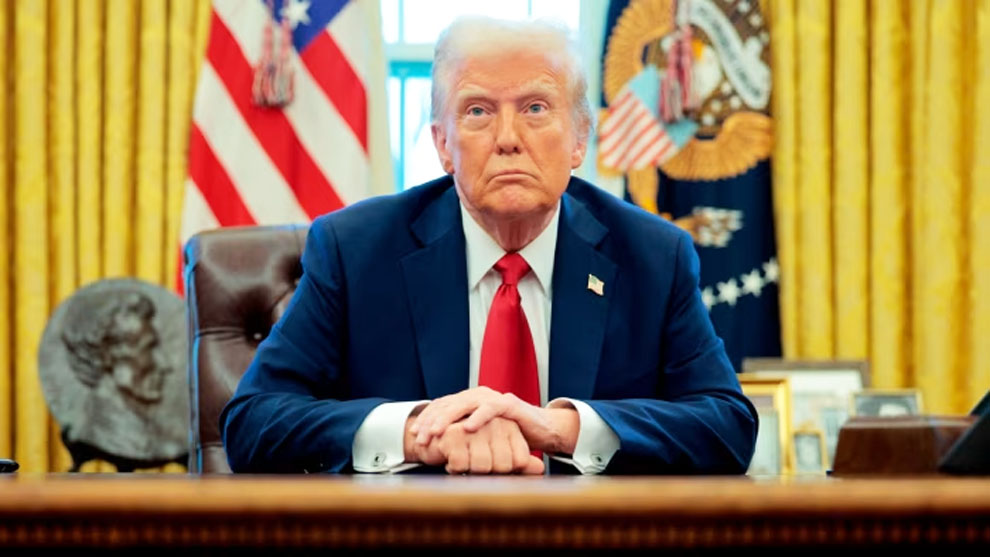
The Trump administration has officially halted Operation Metro Surge, a controversial immigration enforcement operation in Minnesota, following widespread protests, political backlash, and the deaths of two U.S. citizens. The decision was announced by Tom Homan, the U.S. “border czar,” who confirmed that President Donald Trump approved ending the monthslong crackdown.
Operation Metro Surge, launched in December 2025, focused on the Minneapolis–St. Paul metropolitan area, deploying nearly 3,000 federal immigration officers at its peak. The operation aimed to detain undocumented immigrants, which the Department of Homeland Security (DHS) described as targeting “criminal illegal aliens.” However, reports indicate that many detainees had no criminal records, including children and U.S. citizens, raising concerns about the operation’s scope and fairness.
- Army University Professor Dies in Boko Haram Captivity After Nearly One Year
- MURIC Calls Proposed US Sanctions on Nigerian Muslims ‘Lopsided’
- Supreme Court Affirms Muslim Students’ Right to Worship at Rivers State University
The crackdown drew intense public opposition after anti-ICE protesters Renée Good and Alex Pretti were fatally shot during separate incidents in Minneapolis. The shootings intensified calls for accountability and prompted local and national criticism of federal enforcement tactics.
In a statement, Homan said, “I have proposed and President Trump has concurred that this surge operation conclude.” He noted that a drawdown of federal personnel had already begun, with a smaller contingent remaining temporarily to transition operations and coordinate with local authorities.
During the operation, DHS reported over 4,000 arrests, though critics highlighted the disproportionate impact on communities and families, emphasizing the humanitarian and civil liberties concerns arising from the surge.
Minnesota officials, including Governor Tim Walz and Minneapolis Mayor Jacob Frey, welcomed the decision, calling the operation an overreach that harmed communities and strained trust between law enforcement and residents. Civil rights groups also praised the halt but urged comprehensive immigration reforms to prevent future abuses.
The end of Operation Metro Surge marks a significant development in the national debate over immigration enforcement, sanctuary policies, and federal authority, highlighting the challenge of balancing border security with human rights and community safety.
Trump Halts Minnesota Immigration Crackdown After Fatal Shootings, Protests
International
Russia Escalates Digital Control with Attempted WhatsApp Block

Russia Escalates Digital Control with Attempted WhatsApp Block
WhatsApp has accused the Russian government of trying to completely block its messaging service in the country, a move aimed at steering users toward the state-backed app MAX. The Meta-owned platform said the effort, reported on February 12, 2026, threatens over 100 million users and undermines private, encrypted communication in Russia.
In a statement, WhatsApp said: “Today the Russian government attempted to fully block WhatsApp in an effort to drive people to a state-owned surveillance app. Trying to isolate over 100 million users from private and secure communication … can only lead to less safety for people in Russia. We continue to do everything we can to keep users connected.”
READ ALSO:
- Tumbler Ridge Massacre: Canada Investigates Shooter’s Mental Health, Police History
- Ex-Acting AGF Nwabuoku Admits Diverting N868.4 Million to Private Firms
- Kwankwasiyya Urges US Congress to Drop Kwankwaso’s Name from Bill
The attempt is part of a broader crackdown on foreign tech platforms in Russia. Authorities have previously restricted access to Facebook, Instagram, and targeted other services like Telegram. Reports indicate that Roskomnadzor, Russia’s communications regulator, removed WhatsApp from its national internet directory, forcing users to rely on VPNs to access the platform. Critics warn that such measures are designed to expand state surveillance and control over digital communication.
The government is actively promoting MAX, a domestic “super-app” similar to China’s WeChat, which combines messaging with other services. Rights advocates caution that the push toward MAX could compromise privacy protections that platforms like WhatsApp provide. Meanwhile, Kremlin officials have indicated that WhatsApp and other restricted apps could be restored if Meta complies with local data storage and regulatory laws.
WhatsApp’s statement emphasizes that the company will continue to work to keep its service accessible where possible, but the attempted block highlights Russia’s ongoing effort to enforce digital sovereignty and shift users toward state-controlled technology platforms.
Russia Escalates Digital Control with Attempted WhatsApp Block
International
Tumbler Ridge Massacre: Canada Investigates Shooter’s Mental Health, Police History
Tumbler Ridge Massacre: Canada Investigates Shooter’s Mental Health, Police History
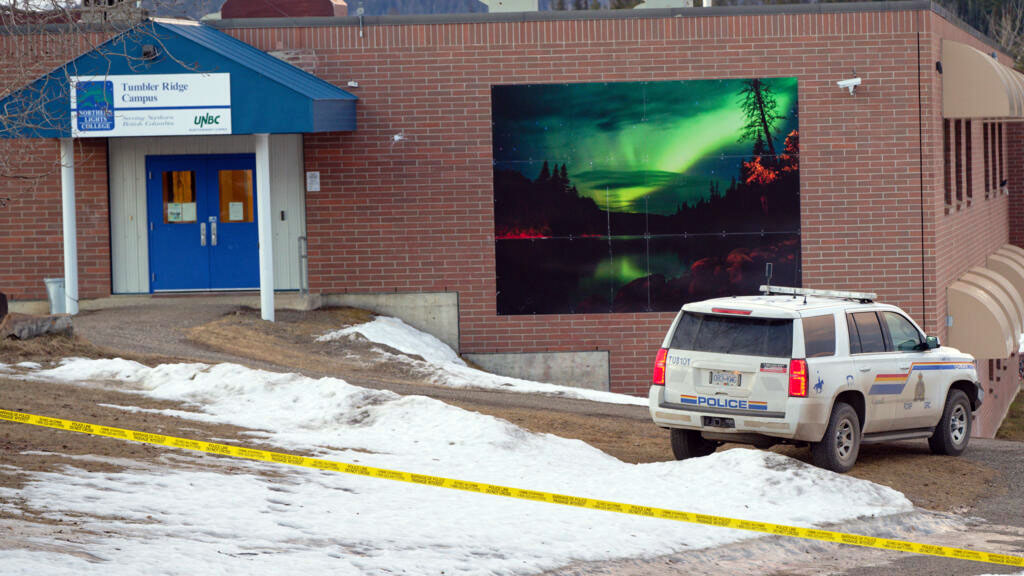
Canadian authorities are intensifying investigations into the mental health history and prior police interactions of Jesse Van Rootselaar, the 18-year-old who carried out a deadly mass shooting in the remote mining town of Tumbler Ridge, British Columbia, on February 10, 2026. The tragedy has left the small community in mourning and raised national questions about gun control, mental health support, and law enforcement interventions.
According to RCMP Deputy Commissioner Dwayne McDonald, authorities are still unclear on the motive behind the attack, which is one of the deadliest school shootings in Canadian history. Van Rootselaar, a transgender woman who had dropped out of Tumbler Ridge Secondary School four years ago, first killed her mother and stepbrother before opening fire at the school, where she shot six more victims. The shooter later took her own life at the scene.
Investigators have confirmed that Van Rootselaar was known to police and had previous interactions with the public health system due to mental health concerns. Authorities are reviewing prior incidents, including earlier firearms seizures and her lapsed gun licence, to understand how warning signs were addressed before the massacre. British Columbia Premier David Eby said officials are working with the health system to determine “what interactions may have taken place” in the past.
READ ALSO:
- Ex-Acting AGF Nwabuoku Admits Diverting N868.4 Million to Private Firms
- Kwankwasiyya Urges US Congress to Drop Kwankwaso’s Name from Bill
- Liverpool Edge Sunderland 1-0 to Halt Impressive Home Streak
The victims include a 39-year-old female teacher and five students aged 12 and 13, with one child, 12-year-old Maya Gebala, in critical condition after trying to lock herself and classmates in a library during the attack. First responders arrived within minutes, but the scale of the violence left the tight-knit community of about 2,700 residents reeling. Hundreds gathered for a candlelight vigil to honour those killed and injured.
Prime Minister Mark Carney addressed parliament, describing Tumbler Ridge as a resilient, compassionate community of miners, teachers, and construction workers, and emphasised the need to learn from the tragedy. Flags across Canada have been lowered to half-staff for seven days in remembrance of the victims. Britain’s King Charles and Queen Camilla also expressed shock and sorrow over the massacre.
Schools in the area will remain closed for the remainder of the week as authorities continue their investigation into Van Rootselaar’s mental health background, police interactions, and access to firearms, seeking to understand how similar tragedies can be prevented in the future.
Tumbler Ridge Massacre: Canada Investigates Shooter’s Mental Health, Police History

-

 News3 days ago
Oyo Muslims Reaffirm Loyalty to Sultan on Islamic Matters — Grand Chief Imam
-

 metro18 hours ago
IKEDC Sets Feb 20 Deadline for Customers to Submit Valid IDs or Face Disconnection
-

 Education18 hours ago
Supreme Court Affirms Muslim Students’ Right to Worship at Rivers State University
-

 metro3 days ago
Former NAHCON Chief Explains Why He Stepped Down, Denies Conflicts
-

 Business2 days ago
Dangote Refinery Slashes Petrol Price to ₦774, Ends PMS Bonus Window
-

 metro2 days ago
Kwara, Katsina Bloodshed: TMC Condemns Attacks, Dismisses ‘Jihadist Preacher’ Claims
-

 Business20 hours ago
Naira Could Trade Below ₦1,000/$ With Dangote Refinery at Full Capacity — Otedola
-

 News3 days ago
Lagos Announces Four-Week Partial Closure of Lagos-Abeokuta Expressway