
International
Trump Signals Push for Iran Deal as Israel Expresses Doubt
Trump Signals Push for Iran Deal as Israel Expresses Doubt
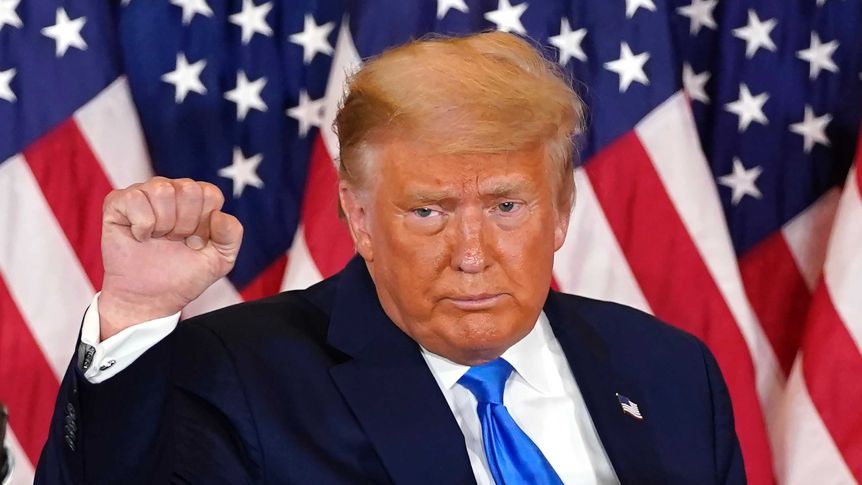
U.S. President Donald Trump is reportedly determined to reach a diplomatic agreement with Iran aimed at de-escalating hostilities in the Middle East, according to three senior Israeli officials who spoke on condition of anonymity.
The officials said that while Trump appears committed to negotiations, they remain skeptical that Iran would agree to U.S. demands in any renewed round of talks, which they noted previously collapsed on February 28 amid rising tensions linked to the broader U.S.-Israel confrontation with Iran.
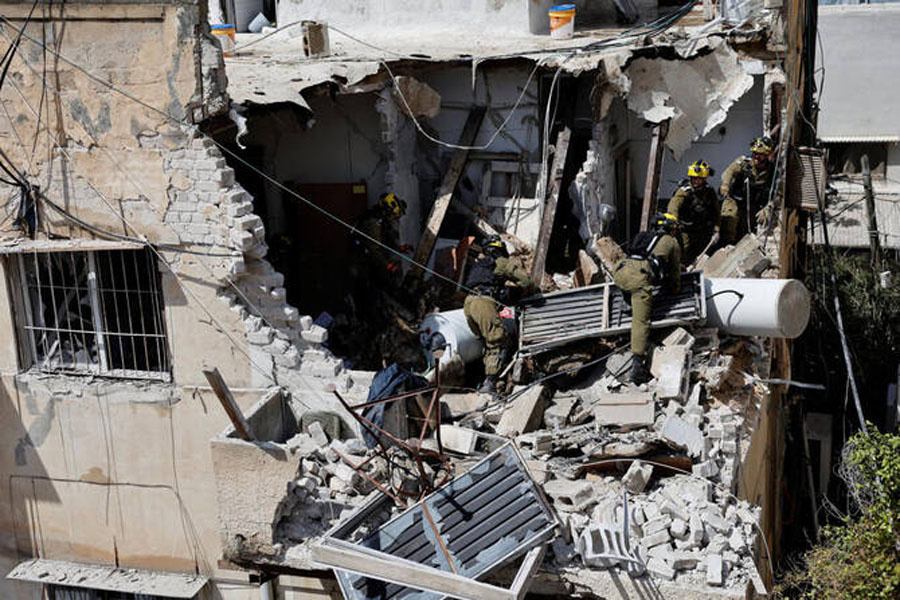
Israeli soldiers inspect the site of a damaged building following barrages of Iranian missiles, amid the U.S.-Israeli conflict with Iran, in Tel Aviv, Israel, March 22, 2026. REUTERS/Amir Cohen
They added that any potential agreement would likely include strict limitations on Iran’s nuclear program as well as its ballistic missile capabilities—longstanding points of contention between Washington and Tehran.
Trump had earlier indicated on social media that the United States and Iran had engaged in what he described as “very good and productive” discussions toward achieving a “complete and total resolution of hostilities in the Middle East.” However, Iranian authorities quickly pushed back on that claim, stating that no formal negotiations had taken place.
Iranian officials have repeatedly denied engaging in direct talks with the United States, maintaining that any diplomatic engagement must occur under conditions that respect Iran’s sovereignty and national interests. In response to Trump’s remarks, Iranian parliamentary speaker Mohammad Bagher Qalibaf dismissed the claims as misinformation, suggesting they were intended to influence global financial and oil markets.
READ ALSO:
- Corps Member’s Death: NYSC Inspector Gets Bail, Remanded Pending Conditions
- Fatal Truck Crash in Ibadan Leaves Multiple Dead, Several Injured
- El-Rufai Remains in Custody as Court Adjourns Bail Hearing
The conflicting narratives come as the regional conflict continues to intensify. Reports indicate that missiles struck central Tel Aviv on Tuesday, as Iran sustained its attacks targeting Israeli territory and, in some instances, Gulf Arab states. The exchanges mark one of the most serious escalations in recent months, raising concerns about wider regional instability.
Meanwhile, Trump has reportedly delayed a deadline requiring Iran to reopen the strategic Strait of Hormuz for international shipping or face potential airstrikes on its power infrastructure. The strait remains a critical global energy chokepoint, and any disruption could have significant implications for oil supply and global markets. The temporary delay was seen as a move to allow space for diplomacy, even as tensions remain high.
The situation has heightened fears of a broader conflict, particularly amid warnings that strikes on energy infrastructure could affect electricity supply across Iran and neighboring Gulf countries. Analysts have also cautioned that any damage to desalination plants or nuclear facilities could trigger severe humanitarian and environmental consequences.
Israeli Prime Minister Benjamin Netanyahu has signaled that military operations will continue despite ongoing discussions about a possible ceasefire. “There’s more to come,” he said, indicating that Israel intends to sustain pressure on Iran and its regional allies, including Lebanon-based groups.
Iran’s Foreign Minister Abbas Araghchi has meanwhile been engaged in a series of diplomatic consultations with counterparts across several countries, including Azerbaijan, Egypt, Oman, Pakistan, Russia, South Korea, Türkiye, and Turkmenistan. These discussions are part of broader efforts by Tehran to rally international support and manage the geopolitical fallout from the ongoing conflict.
As diplomatic signals remain inconsistent and military activity continues, uncertainty persists over whether renewed negotiations between the United States and Iran will materialize or lead to any meaningful breakthrough. Israeli officials remain doubtful, arguing that deep disagreements over nuclear restrictions, missile programs, and sanctions relief continue to stand in the way of a comprehensive agreement.
Trump Signals Push for Iran Deal as Israel Expresses Doubt








International
Japan Announces Largest Oil Reserve Release as Hormuz Crisis Deepens
Japan Announces Largest Oil Reserve Release as Hormuz Crisis Deepens
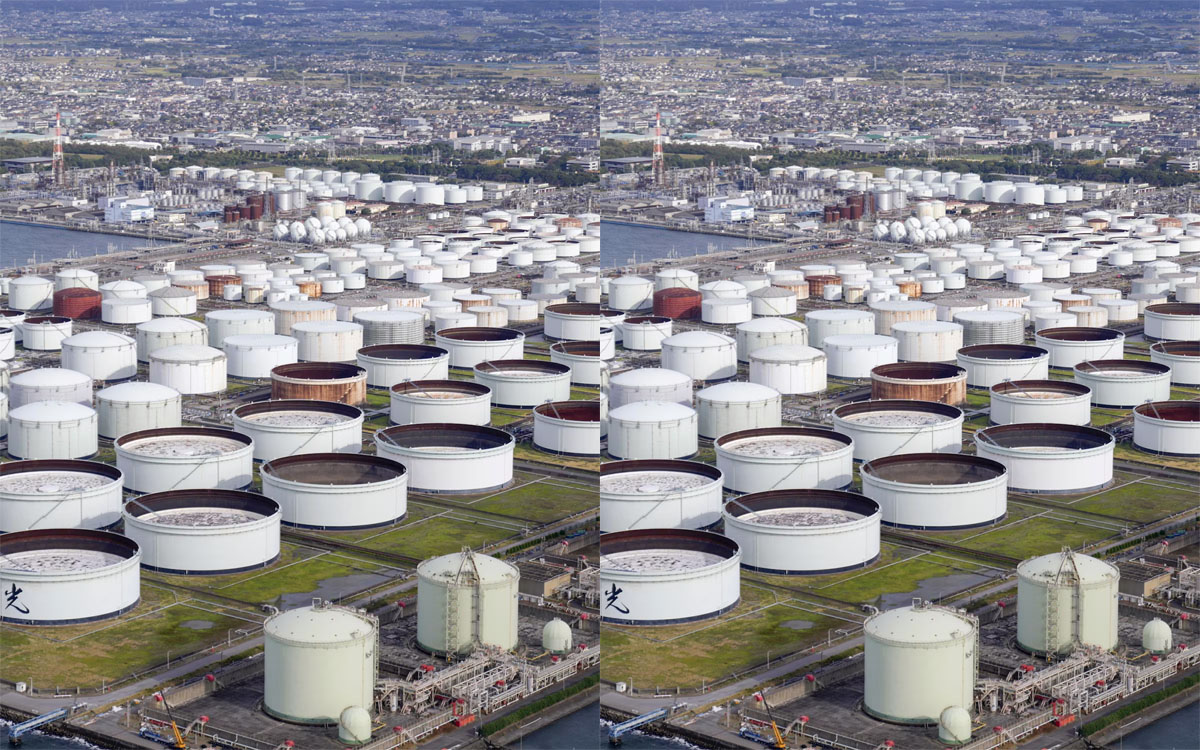
Japan is set to begin its largest-ever release of oil from strategic reserves, as the government moves to shield its economy from potential supply shocks linked to the escalating conflict involving the United States, Israel, and Iran.
Prime Minister Sanae Takaichi announced that Tokyo will start releasing state-owned crude reserves later this week, expanding earlier measures that tapped private-sector stockpiles. The decision reflects growing concern that instability in the Middle East could disrupt tanker traffic through the Strait of Hormuz, a vital corridor for global energy supplies.
Japan had already approved the release of oil equivalent to about 15 days of private-sector reserves. The latest move will significantly scale up that intervention, with a total of roughly 80 million barrels—about 45 days of domestic demand—to be made available to refiners. Officials say this is 1.8 times larger than the emergency release carried out after the 2011 Fukushima disaster.
The decision comes as global markets remain volatile due to fears that the ongoing conflict could choke off a major share of the world’s oil supply. The Strait of Hormuz handles a substantial portion of global crude exports, and any prolonged disruption could trigger severe price spikes and supply shortages worldwide.
Japan remains particularly vulnerable. The country imports over 90 percent of its crude oil from the Middle East, making it highly exposed to geopolitical shocks in the region. As of late last year, Japan held an estimated 470 million barrels in total reserves, equivalent to about 254 days of domestic consumption, providing a critical buffer against supply disruptions.
READ ALSO:
- Iran Fires Fresh Missile Wave at Israel as Explosion Rocks Jerusalem
- Elumelu Celebrates Birthday with Fresh Commitment to Empower 3,200 African Entrepreneurs
- Iran Denies US Talks as Trump Claims Progress on War Resolution
In addition to drawing down reserves, Tokyo is coordinating closely with the International Energy Agency (IEA) and other partner countries, which have discussed coordinated releases to stabilize global oil markets amid the crisis.
Despite pressure from Donald Trump for Japan to take a more active security role in the region, including deploying maritime forces, Takaichi declined, citing constitutional limitations. Japan’s pacifist postwar constitution restricts overseas military operations, particularly in high-risk zones such as the Strait of Hormuz.
Takaichi emphasized that stability in the Middle East is critical not only for Japan but for the global economy, adding that Tokyo will continue to pursue diplomatic engagement with international partners to reduce tensions and ensure the safety of key shipping routes.
To cushion the domestic impact of rising energy costs, the Japanese government has also introduced fuel subsidies, aiming to cap gasoline prices at around ¥170 per litre (approximately $1.10). This follows a surge in retail fuel prices to a record ¥190.8 per litre, driven by global supply concerns.
Meanwhile, authorities are working to calm public anxiety after reports of panic buying, particularly of household essentials like toilet paper. The Ministry of Economy, Trade and Industry has urged consumers to avoid hoarding, warning that misinformation on social media could trigger unnecessary shortages.
Officials stressed that nearly all toilet paper sold in Japan is domestically produced using recycled materials, making it largely independent of Middle Eastern imports. Industry groups have also reassured the public that production capacity remains stable and can be ramped up if needed.
The government’s warning echoes past crises—including the COVID-19 pandemic and the 1973 oil shock—when panic buying disrupted supply chains despite adequate production levels.
While the record oil release is expected to provide short-term relief, analysts caution that sustained stability will depend on developments in the Middle East, particularly the security of the Strait of Hormuz and the trajectory of ongoing diplomatic efforts.
Japan Announces Largest Oil Reserve Release as Hormuz Crisis Deepens
International
Iran Fires Fresh Missile Wave at Israel as Explosion Rocks Jerusalem
Iran Fires Fresh Missile Wave at Israel as Explosion Rocks Jerusalem
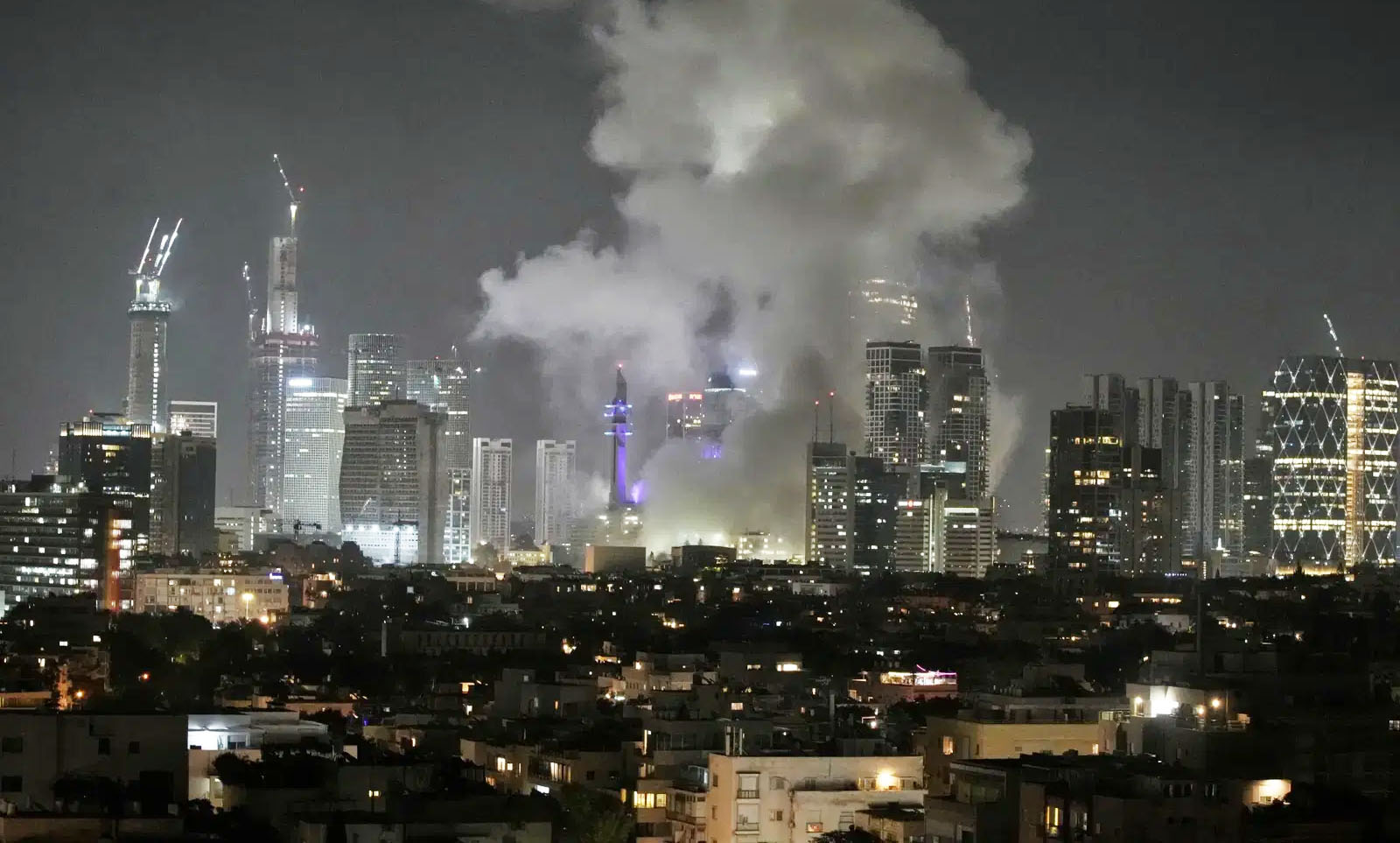
Iran launched another round of missiles toward Israel early Tuesday, with a loud explosion reported over Jerusalem and a building hit in northern Israel, marking a renewed escalation in the ongoing conflict.
Iran’s state broadcaster, Islamic Republic of Iran Broadcasting (IRIB), announced the attack, stating on its Telegram channel that a “new wave of missiles” had been fired at what it described as “occupied territories.” It further claimed that some of the missiles penetrated Israeli air defence systems, signaling continued pressure on Israel’s interception capabilities.
Moments after the announcement, the Israel Defense Forces (IDF) confirmed the incoming threat, saying it had detected multiple missile launches from Iran and activated its air defence systems to intercept them. Sirens sounded across several مناطق, forcing residents to seek shelter.
READ ALSO:
- Elumelu Celebrates Birthday with Fresh Commitment to Empower 3,200 African Entrepreneurs
- Iran Denies US Talks as Trump Claims Progress on War Resolution
- Beijing Warns Military Force Could Worsen Hormuz Crisis
Emergency responders from Magen David Adom reported that a building in northern Israel was damaged in the earlier wave of strikes, though no fatalities were recorded. The incident has heightened concerns over civilian safety as attacks intensify.
The latest barrage forms part of a broader pattern of repeated Iranian missile attacks in recent days, targeting multiple locations across Israel. Despite Israel’s advanced, multi-layered air defence systems, some missiles have managed to evade interception or cause damage through debris and fragmentation, raising questions about evolving tactics and weapon systems in the conflict.
Since the war began in late February, Israeli emergency authorities say thousands of people have been treated for injuries and trauma, with casualties recorded from successive missile strikes. The continued attacks have disrupted daily life and increased pressure on emergency services across the country.
The renewed strikes come amid ongoing diplomatic uncertainty. While the United States has suggested that talks with Iran are underway to reduce hostilities, Tehran has consistently denied any direct negotiations, even as military operations continue on both sides.
The sustained missile exchanges underscore the fragile and volatile nature of the conflict, with analysts warning that further escalation could destabilize the region, disrupt global energy markets, and increase the risk of a broader war in the Middle East.
Iran Fires Fresh Missile Wave at Israel as Explosion Rocks Jerusalem
International
Strait of Hormuz Crisis: Trump Says Talks With Iran Advancing Toward Settlement
Strait of Hormuz Crisis: Trump Says Talks With Iran Advancing Toward Settlement
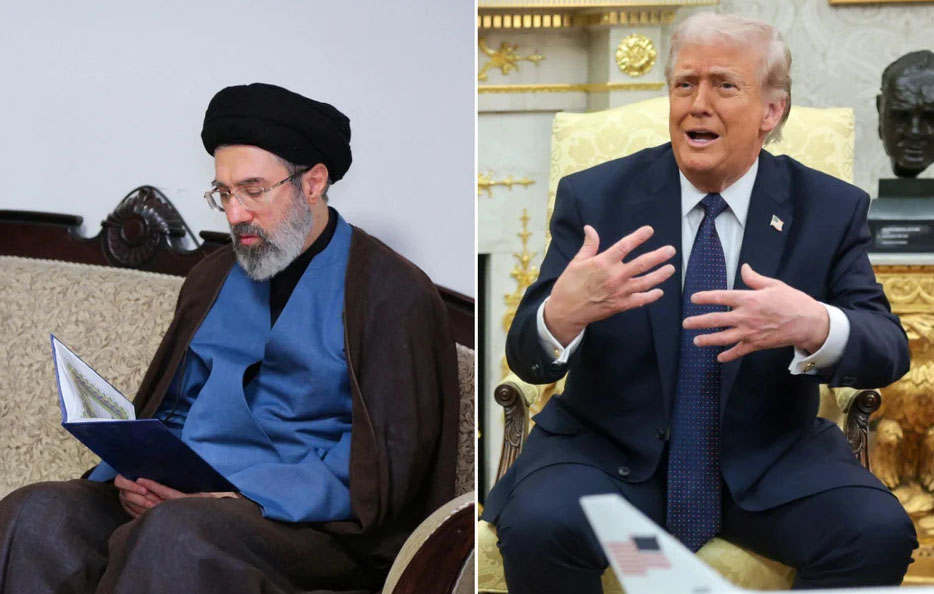
United States President Donald Trump has confirmed that Washington and Tehran are engaged in negotiations aimed at ending the three-week-old conflict in the Middle East, marking the first acknowledgment of high-level contact since the war began on February 28.
Trump said both sides have held two days of what he described as “very good and productive conversations,” adding that discussions would continue throughout the week, including scheduled phone engagements. He indicated that the talks are part of a broader effort toward what he called a “complete and total resolution of hostilities” between the two countries.
According to the US President, the negotiations are not limited to ending the war but also include efforts to address the reopening of the strategic Strait of Hormuz, a critical global shipping route that carries a significant share of the world’s crude oil supply. The waterway has been heavily affected by the ongoing conflict, with disruptions contributing to volatility in global energy markets.
Trump revealed that he had instructed the Pentagon to delay planned strikes on Iranian energy infrastructure for five days, subject to the success of the ongoing discussions. He described the pause as an opportunity to allow diplomatic efforts to progress while avoiding further escalation.
The announcement has had immediate economic implications, with global markets reacting positively to the possibility of de-escalation. Oil prices dropped sharply following the news, while stock markets recorded gains as investors responded to signs that tensions may ease and shipping routes could stabilize.
READ ALSO:
- Iran Denies US Talks as Trump Claims Progress on War Resolution
- Beijing Warns Military Force Could Worsen Hormuz Crisis
- NDDC Opens Applications for 2026/2027 Foreign Postgraduate Scholarship Programme
Trump also noted that the United States had previously issued a 48-hour warning to Iran to reopen the Strait of Hormuz or face possible military action targeting its power infrastructure. The deadline was set to expire before the postponement was announced.
Despite the optimism expressed by the US President, Iranian officials have strongly rejected the characterization of ongoing negotiations. The Iranian Foreign Ministry, through statements reported by state-linked outlets including the semiofficial Mehr News Agency, insisted that no direct talks are taking place between Tehran and Washington.
Iranian officials have maintained that any efforts to resolve the conflict must begin with the cessation of US and allied military actions. They have also outlined conditions that include guarantees against future attacks and compensation for damages—terms that remain significant obstacles to any potential agreement.
Iranian Foreign Ministry spokesperson Esmaeil Baqaei reiterated that Tehran’s position has not changed, emphasizing that regional intermediaries may be involved in de-escalation efforts, but no formal negotiations with the United States are underway.
The conflicting narratives highlight ongoing uncertainty in the diplomatic landscape, even as regional and international actors push for a resolution to prevent further escalation. Countries such as Oman have been actively working behind the scenes to facilitate dialogue and ensure safe passage through the Strait of Hormuz, while European leaders have also expressed support for renewed diplomatic engagement.
Beyond the geopolitical implications, the crisis continues to impact global oil supply chains, inflation, and fuel prices. Analysts warn that sustained disruptions in the Strait of Hormuz could push oil prices significantly higher if shipping routes are not restored in the near term.
The situation also remains complex due to broader strategic concerns, including Iran’s nuclear program and regional military dynamics. While Trump indicated that discussions include nuclear-related issues, no formal agreement has been confirmed, and both sides continue to present differing accounts of the status of talks.
For now, the temporary pause in military action and the continuation of discussions offer a cautious window for diplomacy, though analysts and observers remain divided on whether the current momentum will lead to a lasting breakthrough or further escalation.
Strait of Hormuz Crisis: Trump Says Talks With Iran Advancing Toward Settlement

-

 Entertainment2 days ago
Baba Ijesha Speaks Out After Prison Release, Denies Sexual Assault Conviction
-

 metro3 days ago
Ozoro Festival Controversy: 15 Suspects Arrested, Community Denies Rape Claims
-

 metro2 days ago
Over 150 Bandits Reportedly Die in Sokoto Water Accident
-

 metro5 hours ago
Fatal Truck Crash in Ibadan Leaves Multiple Dead, Several Injured
-

 Entertainment2 days ago
Abiodun Ayoyinka Rebrands as Bondu Alaska Amid Papa Ajasco Identity and Brand Dispute
-

 Education1 day ago
Mock UTME 2026: JAMB Warns No-Show Candidates, Extends Exam Duration to Four Hours
-

 News2 days ago
Nigerian Army Opens Portal for 91st Regular Recruits Intake
-

 metro3 days ago
Jehovah’s Witnesses Update Blood Transfusion Policy to Allow Own Blood Use