

International
UK Threatens to Expel 27 Israeli Diplomats as Jerusalem Consulate Standoff Escalates
UK Threatens to Expel 27 Israeli Diplomats as Jerusalem Consulate Standoff Escalates
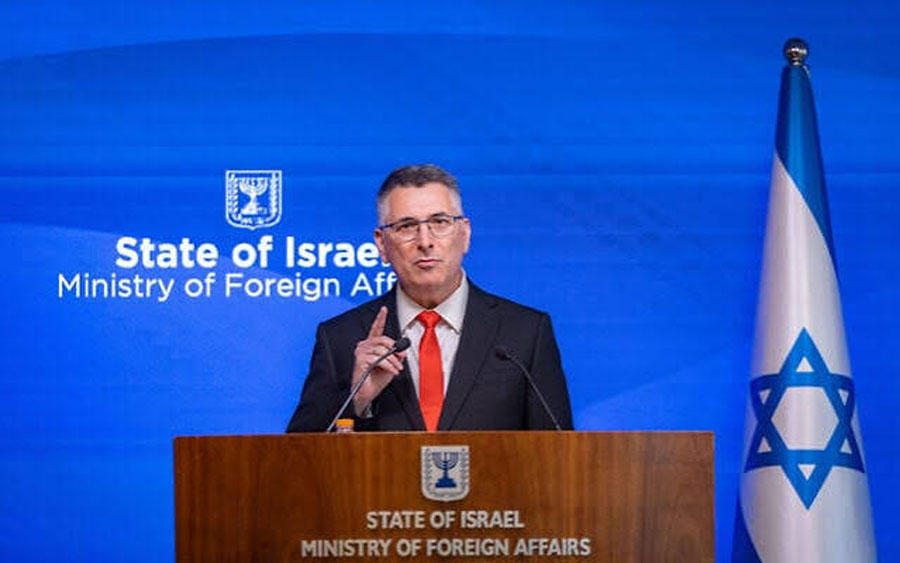
The UK-Israel diplomatic crisis has escalated to its most dangerous level in decades, with Britain threatening to expel 27 Israeli diplomats if Israel proceeds with its plan to shut down the British consulate in East Jerusalem this Thursday. The extraordinary standoff—sparked by UK sanctions on illegal Israeli settlements—now threatens to sever one of the West’s most strategically important bilateral relationships. According to reports confirmed by The Jerusalem Post and The New Arab, British Ambassador to Israel Simon Walters personally delivered the warning to Israeli officials: for every British diplomat forced out of the East Jerusalem consulate, London will expel one Israeli diplomat from its embassy in London. With 27 British staff members facing expulsion, Israel’s London embassy—which has already been without an ambassador since September 2025—could be effectively gutted. The UK Foreign Office declined to comment on the reported threat, while Israeli diplomatic sources told The Jerusalem Post there was “no reason for us to address speculation regarding decisions other countries might make in the future.”
Behind the scenes, UK National Security Adviser Jonathan Powell made a quiet visit to Israel last week in a desperate attempt to prevent the closure, three sources told Reuters. The talks failed to produce an agreement to keep the consulate open, and the British government did not disclose the visit.
The confrontation traces back to September, when UK Foreign Secretary Ed Miliband announced sweeping trade sanctions on goods from illegal Israeli settlements in the occupied West Bank. In a dramatic statement to Parliament, Miliband accused the Israeli government of turning a “blind eye” to what he called “ethnic cleansing” by settler terrorists. “The British government agrees that there is ethnic cleansing of Palestinians in areas of the West Bank, perpetrated by settler terrorists,” Miliband said. “All too often the Israeli government has turned a blind eye to this, and worse members of it have made statements and taken actions to support the forced displacement of Palestinians.” The UK settlement sanctions, announced in coordination with France and Canada, will ban imports from illegal settlements and target companies and individuals providing “construction, infrastructure, financing, or real estate for settlement expansion.” According to the House of Commons Library, the measures will take effect within six to nine months, with the import ban applied geographically based on settlement postcodes. Britain specifically cited the Israeli government-backed E1 settlement project—which would effectively sever the West Bank from East Jerusalem—as a key factor undermining the two-state solution.
READ ALSO:
- President Tinubu Mourns 32 NAF Personnel in Ondo Jet Crash, Orders Immediate Probe
- Tragedy Strikes FMC: Medical Director Loses Two Daughters—A Doctor and a Pharmacist—Within 48 Hours
- BREAKING: Many Feared Dead as Helicopter Crashes in Ondo Community
Israeli Foreign Minister Gideon Sa’ar announced a series of countermeasures on September 8, calling the UK sanctions “morally distorted” and accusing Britain’s ruling Labour Party of interfering in Israel’s upcoming October 27 general election. The Israeli retaliation included closing the British Consulate General in East Jerusalem within 30 days, removing British representatives from the US-led International Gaza Support Center in Kiryat Gat, ending British participation in training Palestinian Authority security forces in Ramallah, and barring 12 British officials deemed “anti-Israel” from entering Israel, including 11 MPs and a lawyer. Sa’ar framed the measures as a necessary response to what he called a “hostile Labour government.” “Israel has nothing against the British people,” he said. “Unfortunately, a hostile Labour Government is in office, systematically acting against the State of Israel, and it has left us with no choice but to finally respond.”
The British Consulate General in East Jerusalem is not a routine diplomatic post. Established in 1838—110 years before the founding of Israel—it operates separately from the UK embassy in Tel Aviv and handles relations with Palestinians in East Jerusalem, the West Bank, and Gaza. The consulate is located in the Sheikh Jarrah neighborhood. The UK, like most of the international community, does not recognize Israeli sovereignty over East Jerusalem, which Israel occupied in 1967 and later annexed in a move not recognized internationally.
The UK sanctions on Israel have drawn fierce criticism from within the British Jewish community. Chief Rabbi Sir Ephraim Mirvis called the measures a “dark day for British Jews,” warning they could “embolden those, at home and abroad, who use hatred as a weapon against Jews.” Miliband, who describes himself as a “proud British Jew,” rejected the chief rabbi’s claim directly. Asked on BBC Radio 4 whether Mirvis was wrong, Miliband replied: “Yes, I am saying I don’t agree with the chief rabbi, somebody over whom I have great respect.” He added: “Anyone who holds British Jews, or indeed Jews around the world, responsible for the actions of the Israeli government is engaging in antisemitism, pure and simple.” The Board of Deputies of British Jews said it followed the announcement with “deep regret,” warning that deteriorating UK-Israel relations could “further inflame community tensions.”
The standoff has been further inflamed by domestic political developments in Britain. On Sunday, the UK Green Party voted to declare Zionism a form of racism, passing the motion by 1,022 votes to 813 at its annual conference. Israel’s foreign ministry declared the resolution “a clear antisemitic text” and announced that Foreign Minister Sa’ar was barring Green Party leader Zack Polanski from entering Israel. Israeli President Isaac Herzog called the Green Party decision “a disgrace,” while Labour Party chair Bridget Phillipson described it as “shameful.”
With the consulate closure deadline set for Thursday, both sides appear entrenched. Israel’s Foreign Ministry has confirmed the consulate will close “as announced.” Two sources told Reuters that while talks were still ongoing, an agreement before the deadline was unlikely. If Israel proceeds and the UK follows through on its threat, the expulsion of 27 Israeli diplomats would mark an unprecedented rupture in British-Israeli relations. Israel’s embassy in London has already been without an ambassador since September 2025. The loss of 27 additional diplomats would effectively gut the mission. A Western diplomat told The Guardian that the closure would set a “dangerous precedent” for the status of diplomatic missions monitoring the status quo in Jerusalem, emphasizing that the UK does not recognize Israeli sovereignty over the city under international law. The coming days will determine whether this UK-Israel diplomatic crisis escalates further—or whether a last-minute compromise can pull both nations back from the brink.
UK Threatens to Expel 27 Israeli Diplomats as Jerusalem Consulate Standoff Escalates











International
2026 Nobel Prize: Three Scientists Win Medicine Award for Optogenetics

2026 Nobel Prize: Three Scientists Win Medicine Award for Optogenetics
American scientist Karl Deisseroth, German scientists Peter Hegemann and Georg Nagel have won the 2026 Nobel Prize in Physiology or Medicine for discoveries that led to optogenetics, a technology that allows scientists to control the activity of nerve cells using light.
The Nobel Assembly at Karolinska Institutet announced the award on Monday, October 5, recognising the trio for their discoveries concerning light-gated ion channels and optogenetics.
Their work has transformed neuroscience, giving researchers a highly precise way to switch individual nerve cells on or off and study how the brain controls functions such as movement, memory, emotions and behaviour.
The breakthrough began with research into how microscopic algae respond to light. Peter Hegemann studied the light-sensitive mechanisms of algae in the 1990s, while Georg Nagel helped demonstrate that a light-sensitive protein known as channelrhodopsin could function as an ion channel.
Their work showed that light could be used to trigger electrical activity in cells. The discovery eventually provided the foundation for optogenetics, which combines genetics and optics to manipulate specific cells with pulses of light.
READ ALSO:
- Temi Nkem Wins N160m BBNaija Season 11 Grand Prize
- Nigeria — My Country of Destiny
- Ex-APC Women Leader Found Dead With Throat Slit in Bauchi
- Supreme Court Ruling: INEC Moves to Clarify Fate of 2027 Candidates
Karl Deisseroth, a neuroscientist at Stanford University, subsequently demonstrated that the technology could be used in nerve cells. His research showed that light-sensitive proteins could be introduced into neurons and used to control their activity.
The technique has since become an important research tool worldwide. Scientists can genetically make selected populations of neurons sensitive to light and then use precisely delivered light to activate or silence them.
The Nobel Assembly said optogenetics has made it possible to switch individual nerve cells on or off in a living brain, allowing researchers to investigate the complex networks underlying brain function.
Beyond basic research, the technology is also being investigated for potential medical applications. Researchers are exploring optogenetic approaches to restore vision in people affected by certain forms of blindness, while other studies are examining whether the technology could contribute to future treatments for neurological disorders.
Deisseroth is based at Stanford University in the United States, while Hegemann is affiliated with Humboldt University of Berlin and Nagel with the University of Würzburg in Germany.
The three laureates will share the 2026 Nobel Prize award of 12 million Swedish kronor.
The Nobel Prize in Physiology or Medicine traditionally opens the annual Nobel announcements, with the prizes for physics, chemistry, literature, peace and economic sciences following during Nobel week.
The 2026 medicine award highlights a scientific breakthrough that has fundamentally changed how researchers study the brain, particularly their ability to examine the role of specific nerve cells with unprecedented precision.
2026 Nobel Prize: Three Scientists Win Medicine Award for Optogenetics
International
Israeli Forces Reportedly Destroy School, Burn Homes in Southern Lebanon
Israeli Forces Reportedly Destroy School, Burn Homes in Southern Lebanon
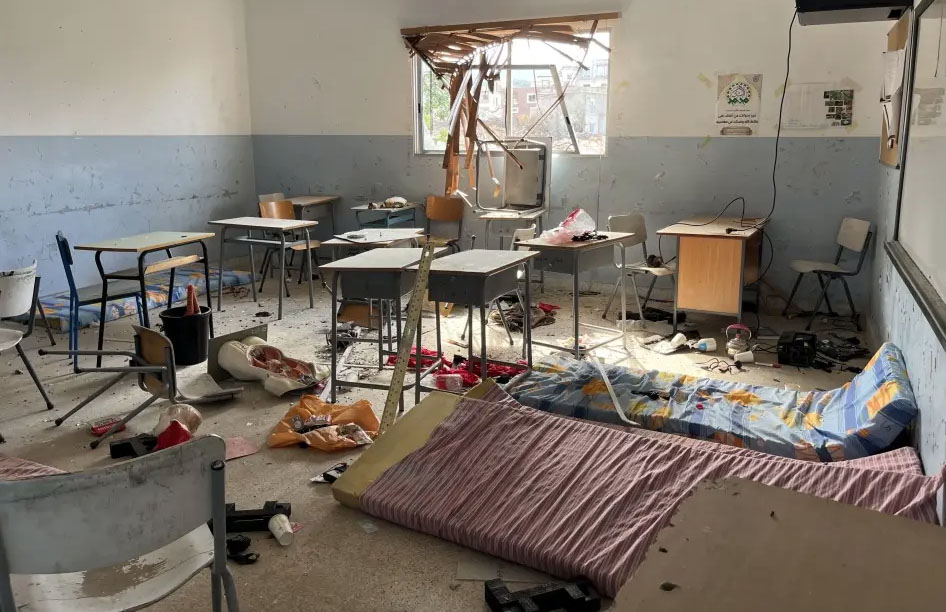
Israeli forces reportedly destroyed a school and set fire to several homes in southern Lebanon as military operations, including airstrikes, artillery fire and demolitions, continued across the region.
The reported incident occurred in Houla, in the Marjayoun district, where Lebanese media said Israeli troops placed explosives inside the Jabal Amel Intermediate School before detonating them.
Local reports said the school was destroyed in an early-morning blast, while further demolitions were reportedly followed by fires in residential buildings in the town.
The reports could not be independently verified, and the Israeli military had not immediately provided a specific response to the allegations concerning the school and homes.
The reported destruction in Houla came amid wider Israeli military operations in southern Lebanon.
Lebanon’s National News Agency reported artillery fire around Khiam, while Tallouseh and Bani Hayyan were also reportedly targeted. Airstrikes were reported in Bani Hayyan and Kfar Tibnit, while artillery fire affected areas around Mayfadoun and Zawtar al-Sharqiyah.
READ ALSO:
- Nine Zamfara Lawmakers Dump APC for ADC Ahead of 2027
- Temi Nkem Wins N160m BBNaija Season 11 Grand Prize
- Nigeria — My Country of Destiny
Further demolitions and explosions were also reported in parts of southern Lebanon, including Beit Yahoun, Qantara and Mansouri.
The latest developments have renewed concerns over damage to civilian infrastructure in southern Lebanon, particularly schools and residential buildings.
The reported destruction of the Houla school comes against a wider backdrop of disruption to education in the region. Previous reporting has indicated that dozens of schools in Lebanon have been damaged or destroyed during the conflict, while thousands of students have been displaced from their communities.
The latest military activity is also occurring amid continuing tensions along the Israel-Lebanon border, despite diplomatic efforts aimed at reducing hostilities.
Israel has previously said its military operations in southern Lebanon are intended to counter Hezbollah infrastructure and security threats near the border. Lebanese authorities and Hezbollah have disputed aspects of Israel’s military activities and their justification.
The United Nations Interim Force in Lebanon (UNIFIL) continues to monitor developments and maintain contact with the parties as part of efforts to prevent further escalation.
The renewed violence has added to concerns over the safety of civilians in southern Lebanon, where communities have already experienced displacement and extensive damage to homes and public infrastructure.
As tensions persist, the situation remains volatile, with further military activity potentially threatening efforts to maintain calm along the border.
Israeli Forces Reportedly Destroy School, Burn Homes in Southern Lebanon
International
Over 70 Killed as Fighting Intensifies Around Yemen’s Taiz
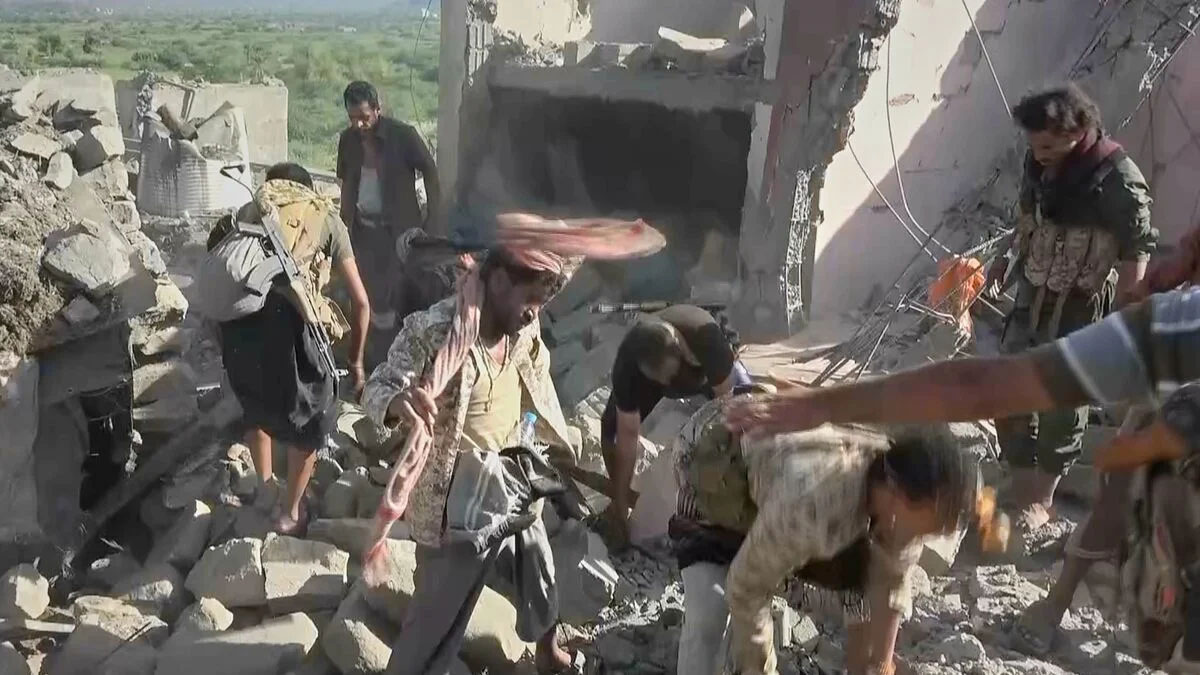
Over 70 Killed as Fighting Intensifies Around Yemen’s Taiz
More than 70 people have been killed in fighting in and around Yemen’s southwestern Taiz province over the past 24 hours, as clashes between Houthi fighters and forces aligned with the internationally recognised government intensify.
Sources from both sides cited by AFP reported that 34 government troops were killed, including 20 in neighbouring Lahj province, while Houthi military sources said 39 of their fighters were killed in clashes across Taiz and areas bordering Lahj. The figures could not be independently verified.
The escalation comes after Houthi forces reportedly cut a key supply route linking Taiz with Aden, the interim seat of Yemen’s internationally recognised government. Security and military sources said the Houthis took control of the Al-Safiya area and a police station there, bringing traffic along the route to a halt and effectively tightening their encirclement of Taiz city.
Taiz city itself remains under the control of government-aligned forces, but the city has been surrounded from several directions by Houthi forces for years. The latest advances have increased pressure on the city’s remaining supply lines and raised concerns about access to food, medicine and other essential goods.
The renewed fighting has also focused attention on the strategic importance of Taiz. The city sits between Yemen’s northern and southern regions and provides important links to the Red Sea coast, making control of the area significant for military movements and supply routes.
READ ALSO:
- Nine Zamfara Lawmakers Dump APC for ADC Ahead of 2027
- Temi Nkem Wins N160m BBNaija Season 11 Grand Prize
- Nigeria — My Country of Destiny
The escalation comes as Yemen’s internationally recognised government launches a broader military offensive against the Houthis.
President of the Presidential Leadership Council Rashad al-Alimi announced the start of military operations aimed at retaking territory held by the Houthis and extending government authority across the country.
The announcement followed recent Houthi gains along Yemen’s Red Sea coast and around the Bab el-Mandeb Strait, a strategically important maritime passage connecting the Red Sea with the Gulf of Aden.
The latest escalation marks a major deterioration after several years of relative calm. Yemen’s conflict began in its current form after the Houthis seized the capital, Sanaa, in 2014, prompting a Saudi-led military intervention the following year.
The renewed fighting has already worsened the country’s humanitarian crisis. More than 145,000 people have reportedly been displaced amid the latest escalation, while food insecurity and limited access to healthcare remain major concerns. The World Food Programme has also warned of severe food needs in Taiz, with a large proportion of households in accessible areas struggling to meet basic food requirements.
The conflict has also taken on a wider regional dimension, with Saudi Arabia backing Yemen’s internationally recognised government and the Houthis aligned with Iran.
The latest battlefield developments around Taiz could therefore have wider implications for Yemen’s civil war, humanitarian access and security around the Bab el-Mandeb shipping corridor.
For now, Taiz remains a major flashpoint as government forces seek to reopen supply routes and push back the Houthi advance, while the Houthis attempt to consolidate their positions around the strategically important city.
Over 70 Killed as Fighting Intensifies Around Yemen’s Taiz
-

 metro2 days ago
NYSC Kidnap: Abductors Demand N950m for 19 Prospective Corps Members in Imo
-

 Politics3 days ago
2027: Oshiomhole Dares Opposition Over ₦500 Petrol Promise, Says APC Will Take Argument to Nigerians
-

 metro2 days ago
N500 Petrol, Wage Award: Public Sector Workers Begin Warning Strike
-

 metro2 days ago
Amaechi: Tinubu’s Policies Made My Mother’s Drugs Unaffordable
-

 metro2 days ago
‘I Thought I Was Dead’ — Hairstylist’s Daring Escape From Kidnappers After Benin-Ore Ambush
-

 metro2 days ago
Tension as Kidnappers Threaten to Kill Abducted Oyo Corps Members
-

 Politics2 days ago
Wike to Amaechi: What Did You Bring to Rivers After 24 Years in Power?
-

 Entertainment3 days ago
Less Than Four Months After Wedding, Jarvis Threatens Peller With Lawsuit Over Second-Wife Plan