
International
US storms kill at least 21 on Memorial Day weekend
US storms kill at least 21 on Memorial Day weekend
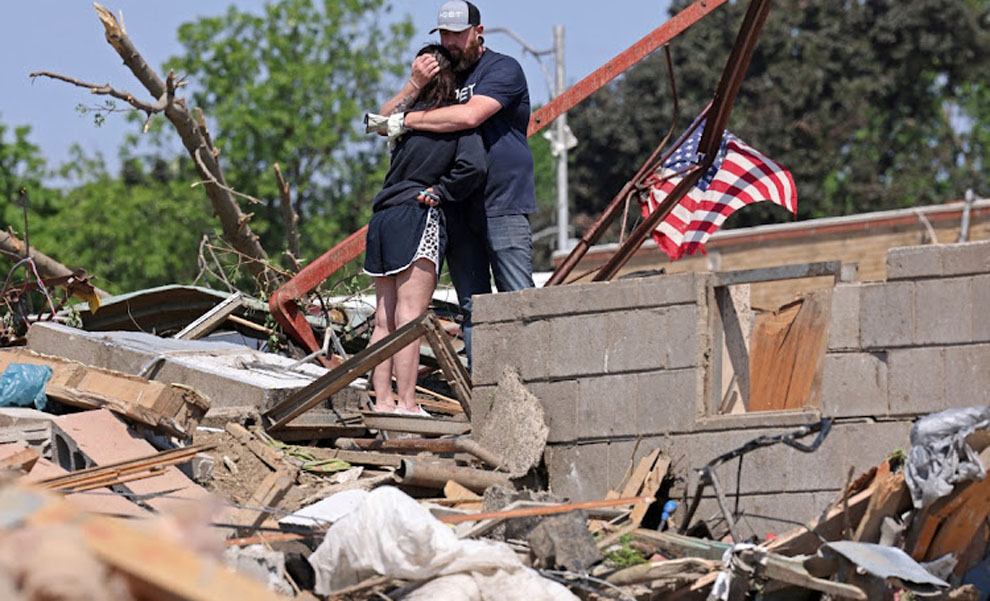
Tornado-spawning thunderstorms that swept the Southern Plains and the Ozark Mountains on Monday afternoon killed at least 21 people across four US states and wrecked hundreds of buildings, as forecasters warned of more severe weather.
The death toll over the three-day Memorial Day holiday weekend included at least eight fatalities in Arkansas, seven in Texas, four in Kentucky, and two in Oklahoma, according to tallies by state emergency authorities.
A severe thunderstorm watch was issued for parts of New Jersey, New York, and Pennsylvania until Monday evening, the National Weather Service said. More than 30 million people in the Northeast were under watch, anticipating the storms to move to that part of the East Coast.
Kentucky Governor Andy Beshear declared a state of emergency early on Monday. The weather service, which opened a new tab, issued a severe thunderstorm watch for the Atlanta area and other parts of Georgia and for several western South Carolina counties until at least Monday afternoon.
“It was a tough night for our people,” Beshear posted on social media platform X on Monday. He later said in a press briefing that devastating storms had hit almost the entire state. The storms damaged 100 state highways and roads, officials said.
READ ALSO:
- Ronaldo breaks Saudi League goalscoring record
- Mohbad: #ArrestWunmiNow trends online
- Soldier arrested for stealing ammunition in Borno
At least seven people perished – including a 2-year-old and a 5-year-old from a family – and nearly 100 were injured on Saturday night when a powerful tornado struck communities in North Texas near the Oklahoma border, Governor Greg Abbott told a Sunday news conference.
Late on Sunday, Arkansas Governor Sarah Huckabee Sanders said at least eight people died in her state after the storms. An Arkansan suffering from chronic obstructive pulmonary disease died due to a lack of oxygen when the power went out.
President Joe Biden offered condolences for the lives lost when he spoke on Monday with Oklahoma Governor Kevin Stitt and Governors Abbott and Sanders, the White House said.
The Federal Emergency Management Agency was on the ground conducting damage assessments with state and local counterparts, the White House said, adding that Biden had directed federal agencies to provide support as needed.
Hundreds of thousands of Americans were without power on Monday due to the weather, according to the PowerOutage.US tracking website. In Kentucky alone, more than 160,000 customers lacked electricity.
In some areas, restoring power could take days, Kentucky Governor Beshear said in a news briefing.
The weather service warned that additional storms would move through the Ohio and Tennessee valleys, bringing damaging winds, large hail, and more tornadoes, as well as heavy downpours capable of triggering flash floods.
The latest extreme weather came just days after a powerful tornado ripped through an Iowa town, killing four people, and more tornadoes touched down in Texas last week.
The United States is preparing for what government forecasters have described as a potentially “extraordinary” 2024 Atlantic hurricane season that will begin next Saturday.
US storms kill at least 21 on Memorial Day weekend










International
Rising Debt, Oil Shock Could Trigger Global Slowdown, IMF Warns
Rising Debt, Oil Shock Could Trigger Global Slowdown, IMF Warns
The International Monetary Fund (IMF) has warned that rising global debt, persistent oil price shocks, and escalating geopolitical tensions in the Middle East could significantly weaken the world economy, with total public debt projected to reach 100 per cent of global GDP by 2029.
The warning was contained in the IMF’s latest Fiscal Monitor report, which highlighted growing fiscal vulnerabilities across both advanced and developing economies as high interest rates, weak revenue growth, and rising borrowing costs continue to strain government budgets worldwide.
The Fund said the combination of energy price volatility, increasing debt servicing costs, and geopolitical instability is placing governments under mounting pressure, especially in emerging and developing economies that rely heavily on imported energy.
The IMF projected that global public debt rose to 93.9 per cent of GDP in 2025, up from 92 per cent in 2024, and is expected to rise further to 100 per cent by 2029, marking the highest level since the aftermath of World War II. It further warned that debt could continue increasing beyond that level, potentially reaching 102.3 per cent of GDP by 2031 if current trends persist.
According to the report, rising debt levels are being driven by structural spending pressures such as ageing populations, climate-related investments, higher defence and security spending, and increasing interest payments. Interest costs alone now account for nearly 3 per cent of global GDP, compared to about 2 per cent four years ago, significantly reducing fiscal flexibility for many governments.
READ ALSO:
- 2026 JAMB UTME: Over 2.2 Million Candidates Face Stricter Rules, CBT Reforms Begin
- 2027: Pro-Jonathan Group Launches Campaign Urging Goodluck Jonathan to Run
- 2027: Kwara APC Stakeholders Back Bolarinwa as Kwara South Gains Political Momentum
The IMF also cautioned that prolonged disruptions in global oil supply, driven by escalating Middle East tensions, could push crude oil prices above $100 per barrel through 2027, increasing the risk of a global economic slowdown or recession. Energy market instability, the Fund noted, remains one of the fastest channels through which geopolitical shocks impact inflation, trade, and household living costs.
The report also warned governments against introducing broad-based fuel subsidies in response to rising energy prices. Director of the IMF’s Fiscal Affairs Department, Rodrigo Valdés, said such policies distort market signals and could worsen global energy imbalances.
Instead, he recommended targeted cash transfers to vulnerable households, arguing that energy prices must reflect real supply conditions to allow for proper market adjustment.
Valdés stressed that while governments face political pressure to shield citizens from rising fuel costs, suppressing prices could delay necessary demand adjustments and worsen long-term instability in energy markets.
The IMF further highlighted emerging risks in global debt markets, including the growing influence of non-traditional investors such as hedge funds, which may be less stable during periods of financial stress. It also pointed to declining debt maturities, which increase countries’ vulnerability to short-term interest rate fluctuations and refinancing risks.
Additional fiscal pressures identified in the report include rising security expenditures, climate change adaptation costs, and increased debt servicing obligations, all of which are limiting governments’ ability to build fiscal buffers.
The Fund also warned that global trade fragmentation, political instability, and potential market corrections in fast-growing sectors such as artificial intelligence could further tighten global financial conditions and slow economic growth.
Despite these risks, the IMF stressed that the world is not yet in a full-blown debt crisis. However, it warned that delays in implementing fiscal reforms could lead to more severe economic corrections in the future.
“We’re not at a crisis point, but the more countries delay adjustment measures, the steeper the eventual correction,” Valdés said.
The IMF urged governments to begin implementing credible medium-term fiscal consolidation plans, improve revenue mobilisation, and ensure more efficient public spending once immediate economic pressures ease, stressing that restoring fiscal buffers is essential for long-term stability.
Rising Debt, Oil Shock Could Trigger Global Slowdown, IMF Warns
International
Over 250 Feared Dead as Migrant Boat Capsizes En Route to Malaysia

Over 250 Feared Dead as Migrant Boat Capsizes En Route to Malaysia
More than 250 migrants, including Rohingya refugees and Bangladeshi nationals, are feared dead after a crowded boat capsized in the Andaman Sea, according to the United Nations High Commissioner for Refugees and the International Organization for Migration.
The vessel, described as a wooden trawler, reportedly departed from Bangladesh en route to Malaysia before it sank last week due to heavy winds, rough seas, and overcrowding, highlighting the dangers associated with irregular migration routes in Southeast Asia.
The exact time of the incident remains unclear, but on April 9, a Bangladesh-flagged vessel rescued nine survivors who had been “clinging to drums and wooden debris” to stay afloat. According to coast guard officials, the migrants had left Bangladesh on April 4 “in search of a better life” before their boat was caught in a storm around April 7 or 8.
Survivors were later picked up in the early hours of April 11 by the motor tanker Meghna Pride, which was travelling towards Indonesia. They were subsequently handed over to Bangladeshi authorities after being transferred to a coast guard vessel.
READ ALSO:
- Presidency Slams Aregbesola Over Tinubu Criticism, Takes Swipe at Buhari Era
- Dembélé Brace Sends PSG Past Liverpool Into UCL Semi-Finals
- Police Arrest 33 Suspects Over Kwara Church Attack
One of the survivors, Rafiqul Islam, said he spent about 36 hours drifting at sea, recounting the harrowing ordeal and the desperation that pushed him to embark on the journey in search of economic opportunities in Malaysia.
Reports indicate that survivors saw dozens of people struggling in the water, but authorities say the exact number of passengers remains unknown, with no confirmed trace of the missing victims or the wreckage so far.
The tragedy is closely tied to the ongoing Rohingya crisis, which has forced hundreds of thousands to flee Myanmar since a military crackdown in 2017. Denied citizenship and facing systemic persecution, many Rohingya have taken refuge in overcrowded camps in Cox’s Bazar, Bangladesh, where poor living conditions and limited humanitarian support continue to drive risky migration attempts.
Malaysia remains a preferred destination due to perceived economic opportunities and cultural ties, but the journey is often deadly. Boats used for such trips are typically overcrowded, unsafe, and lack basic necessities, leading to frequent maritime disasters.
In a joint statement, the UN agencies warned that the incident underscores the consequences of protracted displacement, worsening humanitarian conditions, and lack of durable solutions for refugees.
They also noted that ongoing violence in Myanmar’s Rakhine State has diminished hopes of safe return, forcing many to risk their lives at sea.
The agencies called on the international community to increase support for refugees and address the root causes of displacement, stressing the need for safe, voluntary, and dignified return pathways for the Rohingya.
The latest disaster adds to a growing list of deadly migrant boat tragedies in the region, raising fresh concerns about human trafficking networks, border policies, and humanitarian response gaps across Southeast Asia.
Over 250 Feared Dead as Migrant Boat Capsizes En Route to Malaysia
International
World Leaders Gather in Paris Over Strait of Hormuz Crisis

World Leaders Gather in Paris Over Strait of Hormuz Crisis
Prime Minister Keir Starmer and French President Emmanuel Macron will this Friday co-host an emergency international summit in Paris aimed at securing the reopening of the Strait of Hormuz, following escalating tensions that have disrupted one of the world’s most critical energy corridors.
The announcement by Downing Street comes amid growing global concern over the closure of the narrow maritime passage, which connects the Persian Gulf to the Arabian Sea and serves as a vital route for nearly a fifth of the world’s oil supply.
Rising Tensions and Global Impact
The crisis surrounding the Strait of Hormuz has intensified in recent days, with heightened military posturing and reported threats to commercial shipping raising fears of a broader regional conflict. Although officials have yet to publicly confirm the precise trigger for the disruption, analysts point to ongoing geopolitical friction involving Iran and Western allies.
Energy markets have already begun reacting, with oil prices experiencing volatility amid fears of prolonged supply disruptions. Industry experts warn that any sustained blockage could trigger inflationary pressures globally, affecting fuel prices, manufacturing, and food supply chains.
Focus of the Paris Summit
Diplomatic sources indicate that the Paris summit will bring together leaders from Europe, the Middle East, and key global stakeholders, including representatives from maritime security alliances.
Top on the agenda will be:
- Immediate de-escalation of tensions in the Gulf
- Coordinated naval security to protect commercial vessels
- Diplomatic engagement with regional actors
- Frameworks to guarantee long-term stability in the waterway
READ ALSO:
- Arise News Yet to Confirm Reported Suspension of Rufai Oseni
- MURIC Urges Security Agencies to Protect JAMB Candidates, Exam Centres Nationwide
- Court Grants Bail to El-Rufai in ICPC Corruption Case
A joint UK-French statement emphasized the urgency of collective action, noting that “freedom of navigation is essential to global economic stability.”
Strategic Importance of the Strait
The Strait of Hormuz remains one of the most geopolitically sensitive chokepoints in the world. At its narrowest, it is just about 33 kilometers wide, yet it handles massive daily shipments of crude oil and liquefied natural gas from major producers such as Saudi Arabia, Iraq, and the United Arab Emirates.
Any disruption to this route not only threatens energy security but also risks drawing in global powers with strategic interests in the region.
International Reactions
Several governments have expressed support for the initiative by Keir Starmer and Emmanuel Macron, describing the summit as a critical step toward preventing further escalation.
The United Nations has also called for restraint and dialogue, urging all parties to prioritize diplomatic solutions over confrontation.
Outlook
While expectations remain cautious, diplomats say the summit could serve as a turning point in easing tensions and restoring safe passage through the Strait. However, much will depend on the willingness of key regional actors to engage constructively.
With global markets on edge and geopolitical risks mounting, Friday’s meeting in Paris is being closely watched as a test of international cooperation in the face of a rapidly evolving crisis.
World Leaders Gather in Paris Over Strait of Hormuz Crisis

-

 metro1 day ago
Arise News Yet to Confirm Reported Suspension of Rufai Oseni
-

 metro9 hours ago
Tension in Osogbo as Protesters Demand Respect for Court Judgments in LG Dispute
-

 metro2 days ago
Fresh Boko Haram Attack Leaves Colonel, Six Soldiers Dead in Borno
-

 International3 days ago
Trump Sparks Global Outrage After Calling Pope Leo XIV “Weak, Terrible”
-

 News2 days ago
FG Opens Application for Second Cohort of TVET Programme to Tackle Unemployment
-

 metro3 days ago
Fake Image of Governor Alia Bowing to Sultan Sparks Controversy, Palace Reacts
-

 Politics3 days ago
2027: Tinubu Knows Opposition Playbook, Always Ahead — Festus Keyamo
-

 International1 day ago
World Leaders Gather in Paris Over Strait of Hormuz Crisis