

News
US to Withdraw 200 Troops from Nigeria as Counterterrorism Mission Winds Down
US to Withdraw 200 Troops from Nigeria as Counterterrorism Mission Winds Down
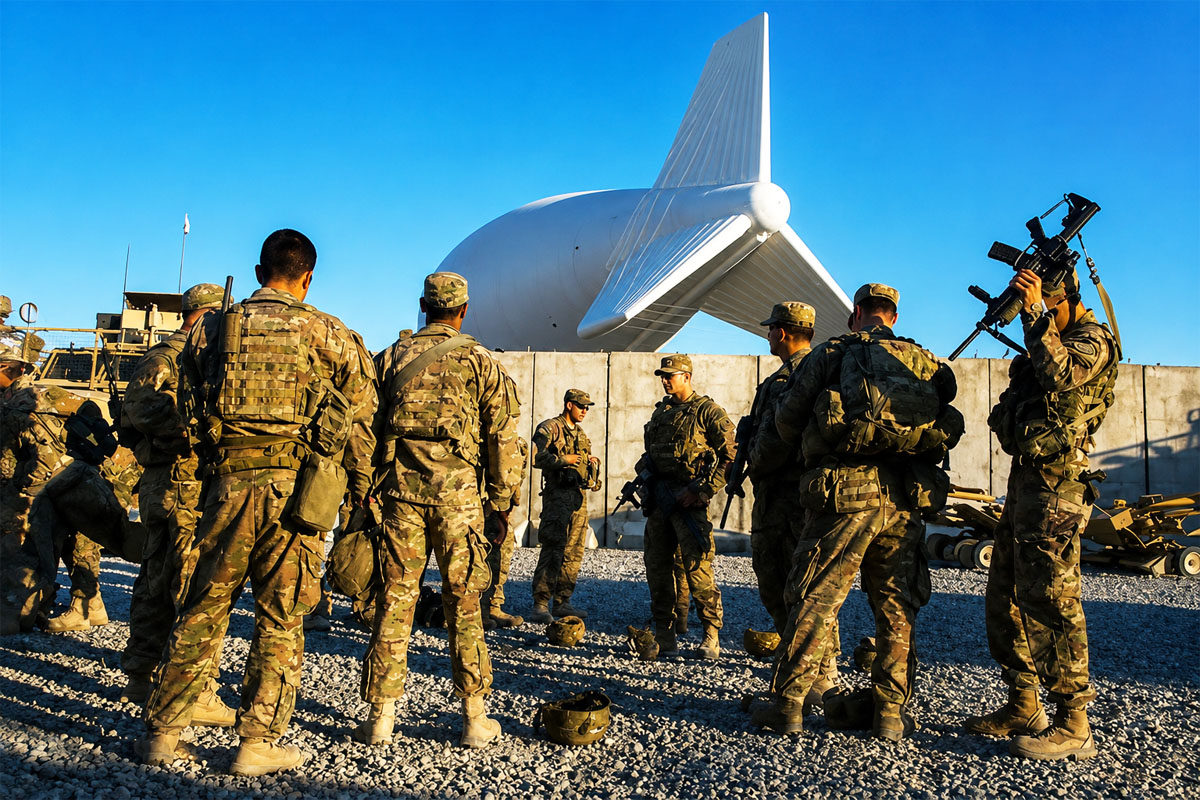
The United States is preparing to withdraw approximately 200 troops deployed to Nigeria earlier this year to support the fight against Islamist militants, as its counterterrorism mission in the country winds down. The withdrawal is expected to be completed by late September, according to a report by The New York Times citing US military officials. However, the departure of the larger contingent will not end US security cooperation with Nigeria, as smaller teams of military trainers and intelligence analysts are expected to remain in the country.
The US troops were deployed to northeastern Nigeria in February following an agreement between Washington and Abuja to strengthen cooperation against terrorist groups. The deployment followed US airstrikes in Nigeria’s Sokoto State in late December 2025, which President Donald Trump described as “powerful and deadly” strikes against Islamic State targets. Nigerian officials confirmed at the time that the country had provided intelligence for those strikes as part of ongoing security collaboration with the US. According to a US official who spoke to Reuters in February, approximately 200 American soldiers were sent to train Nigerian forces combating extremist groups, augmenting a smaller number of US personnel already on the ground. The deployment came amid pressure from Washington on Nigeria to act against militants in the country’s northwest, following Trump’s criticism that Nigeria had failed to protect Christians from attacks. The focus of the mission was on intelligence support, training, and counterterrorism operations, rather than establishing a permanent US combat presence in Nigeria.
READ ALSO:
- “Son of a Nobody”: VeryDarkMan Fires Back at Falana, Defends NBA Conference Invite
- EFCC extradites two Nigerians to US over alleged sextortion linked to teen deaths
- Troops Neutralise Over 21 Boko Haram, ISWAP Terrorists in Adamawa Precision Strike
US and Nigerian officials have described the relatively small deployment as highly effective, particularly in improving intelligence sharing and supporting operations against Islamic State militants. The mission culminated in May with a major operational success. On May 15, US and Nigerian forces carried out a joint operation that killed Abu Bilal al-Minuki, described by US officials as the “global number two” leader of the Islamic State. Nigerian President Bola Tinubu confirmed the operation, stating that joint forces had struck al-Minuki’s residence in the Lake Chad Basin, killing the wanted militant and several of his deputies. Trump praised the mission as “carefully planned and extremely complex,” adding that the US had informants tracking al-Minuki’s movements. Following al-Minuki’s death, on May 17, Nigerian and US forces conducted multiple airstrikes in northeastern Borno State, killing more than 20 Islamic State militants who had been observed gathering and moving in the area. The US Africa Command stated that no American or Nigerian personnel were injured in those strikes, and that the operations had weakened the group’s ability to threaten US and allied security. US officials have described the Nigeria deployment as a potential model for future American security operations in Africa, based on a smaller and temporary military footprint focused on specific objectives. The operation against al-Minuki significantly weakened the group’s leadership in Nigeria and beyond, according to military assessments.
Despite the reported gains, terrorist attacks and other forms of insecurity have continued across Nigeria. Recent weeks have seen deadly assaults by gunmen in multiple parts of the country, as well as attacks on military installations in the northeast. The wider security situation encompasses a complex mix of threats, including attacks by Boko Haram and Islamic State West Africa Province, banditry, kidnappings, communal violence, and other armed conflicts. Nigeria has repeatedly maintained that the country’s insecurity is complex and cannot be attributed to a single cause. While the US withdrawal is underway, military cooperation between Washington and Abuja is expected to continue through intelligence sharing and training provided by the smaller US teams that remain in Nigeria.
US to Withdraw 200 Troops from Nigeria as Counterterrorism Mission Winds Down











News
Obasanjo Backs Higher Oil Derivation, Says 13% Is Only the Beginning
Obasanjo Backs Higher Oil Derivation, Says 13% Is Only the Beginning
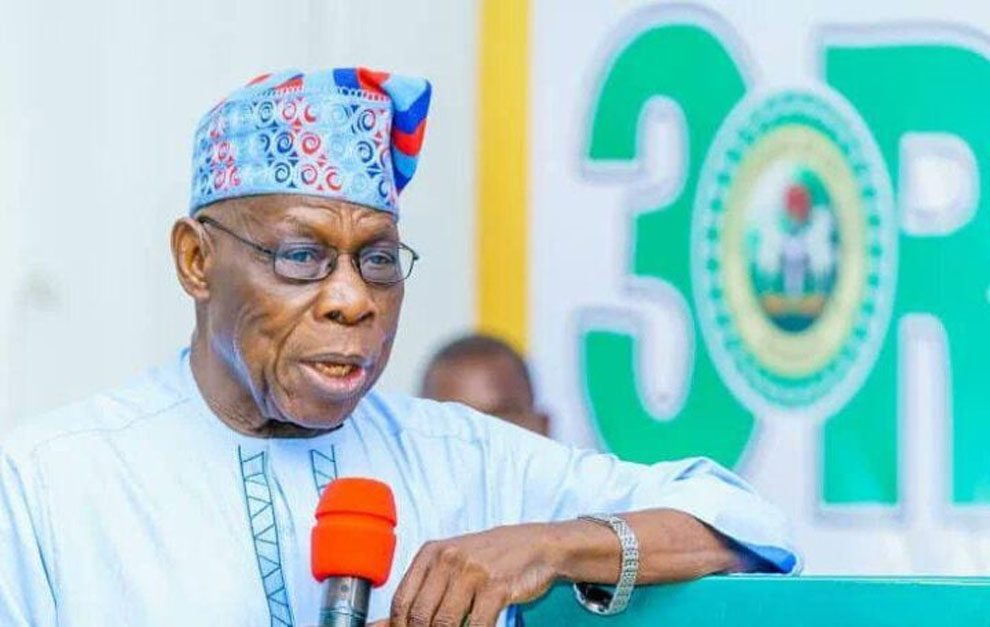
Former President Olusegun Obasanjo has backed calls for an increase in the 13 per cent oil derivation fund allocated to oil-producing states, saying the existing arrangement should be regarded as a starting point rather than a final settlement.
Obasanjo made the position known on Monday during the inauguration of the Crude Distillation Unit (CDU) of the $1 billion Azikel Refinery at Obunagha in Yenagoa Local Government Area of Bayelsa State.
Addressing Bayelsa State Governor Douye Diri, the former president acknowledged that oil-producing states and communities had yet to receive what he considered a fair share of the benefits from the exploitation of their natural resources.
“You are right that the states and oil-producing communities have not got a fair deal so far. Thirteen per cent is the beginning. You can continue to talk,” Obasanjo said.
His remarks reinforced renewed demands for a review of Nigeria’s revenue-sharing arrangement, particularly from the Niger Delta, where crude oil production has remained central to the national economy.
Under the existing constitutional framework, oil-producing states receive at least 13 per cent of revenue accruing to the Federation Account directly from natural resources, in line with the principle of derivation.
However, the allocation has remained a source of debate, with stakeholders in the oil-producing region arguing that the revenue does not adequately address the environmental damage, infrastructure challenges and economic difficulties associated with petroleum exploration.
Diri also criticised the existing arrangement, insisting that communities where crude oil is extracted should have a greater say in how the resources are managed and how the resulting wealth is distributed.
READ ALSO:
- How Bandits Demand ₦300m Ransom for Abducted Kaduna Couple, Baby in Viral Video
- 2027 Elections: Atiku Demands Names of INEC Ballot Printers, Questions Secret Contracts
- ₦8.7bn Erosion-Control Budget Gap Raises Questions as Anambra Gullies Expand
The governor argued that the region had endured years of agitation over what residents perceive as an imbalance between the resources extracted from their communities and the benefits they receive.
He also faulted the Land Use Act, arguing that the distinction between state control of surface resources and Federal Government control of resources beneath the ground places oil-producing communities at a disadvantage.
Diri maintained that the Niger Delta was not demanding exclusive ownership of the proceeds from petroleum production but wanted to become a more active participant in decisions affecting the industry.
“We do not want to take all to ourselves. We just want to be co-players in determining how it is done. Thirteen per cent is not enough for the states,” he said.
The governor urged young people in Bayelsa to acquire relevant technical and professional skills to benefit from industrial investments, including the refinery project.
He warned that the presence of major oil and gas facilities would have limited benefits for local communities if residents lacked the expertise needed to secure employment and participate in their operations.
The refinery project, owned by Azikel Petroleum under the Azikel Group, is expected by its promoters to produce about 2.5 million litres of petrol and two million litres of diesel daily, alongside other petroleum products, when completed.
The installation of the crude distillation unit marks a significant stage in the development of the facility, whose foundation was laid by Obasanjo about eight years ago.
The former president commended Azikel Group President, Azibapu Eruani, for sustaining the project and urged him to complete the refinery within the next 12 months.
Obasanjo also acknowledged the contributions of the African Finance Corporation and the African Export-Import Bank (Afreximbank), calling for continued support to bring the investment to completion.
He praised Diri for supporting the project and commended the Bayelsa government for what he described as the productive use of the state’s available revenue.
Eruani said the refinery was conceived to position Bayelsa and the wider Niger Delta as active participants in the petroleum industry rather than merely suppliers of crude oil.
He expressed confidence that the project would support industrialisation, create economic opportunities and strengthen local participation in the oil and gas value chain.
The refinery initiative comes amid continuing debates over resource control, revenue allocation and development in the Niger Delta, with calls for oil-producing communities to receive greater economic benefits from the natural resources extracted from their territories.
Obasanjo Backs Higher Oil Derivation, Says 13% Is Only the Beginning
News
FG Approves Upward Review of Feeding Allowance for NYSC Members
FG Approves Upward Review of Feeding Allowance for NYSC Members
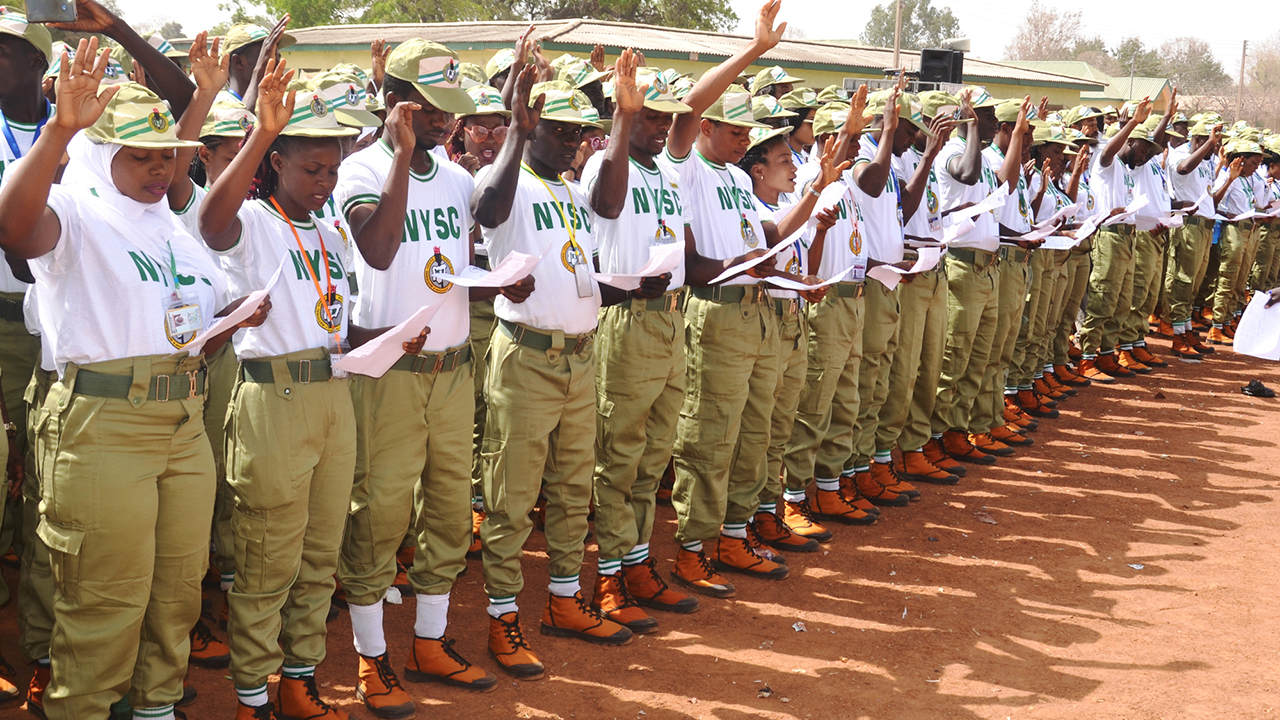
Abuja — The Federal Government has approved an increase in the feeding allowance for members of the National Youth Service Corps (NYSC) during their orientation course, with implementation scheduled to commence in 2027.
The Director-General of the NYSC, Brigadier General Olakunle Nafiu, disclosed this while addressing the 2026 Batch C Stream One corps members at the NYSC Orientation Camp in Obubra, Cross River State.
According to the DG, the Budget Office has already been formally notified of the upward review of the allowance. However, the specific monetary value of the increment was not disclosed during the announcement.
READ ALSO:
- Fuel Subsidy May Ease Hardship Today, But Could Cripple Nigeria’s Economy Tomorrow — FG
- Petrol Price Hike Hits Abuja as MRS, AA Rano, Others Raise Rates Despite FG’s Discount Plan
- Kano Police Explain Blockade of ‘Tinubu Must Go’ Meeting
The approval comes amid persistent calls for improved welfare for corps members, particularly regarding the feeding and general upkeep provided during the mandatory three-week orientation exercise.
Beyond the financial announcement, Brigadier General Nafiu used the platform to counsel the corps members on financial responsibility. He advised them to spend wisely and cultivate a strong savings habit, stressing the importance of prudent resource management during their service year and beyond.
The DG’s visit to the Obubra camp was part of a broader tour to assess the welfare and conditions of corps members currently undergoing orientation across the country.
While the 2027 implementation timeline suggests a waiting period for the current batch, the approval signals the government’s intent to adjust the allowances in line with current economic realities. Further details regarding the exact amount and the modalities for the disbursement are expected to be communicated by the NYSC Directorate in due course.
FG Approves Upward Review of Feeding Allowance for NYSC Members
News
Fuel Subsidy May Ease Hardship Today, But Could Cripple Nigeria’s Economy Tomorrow — FG
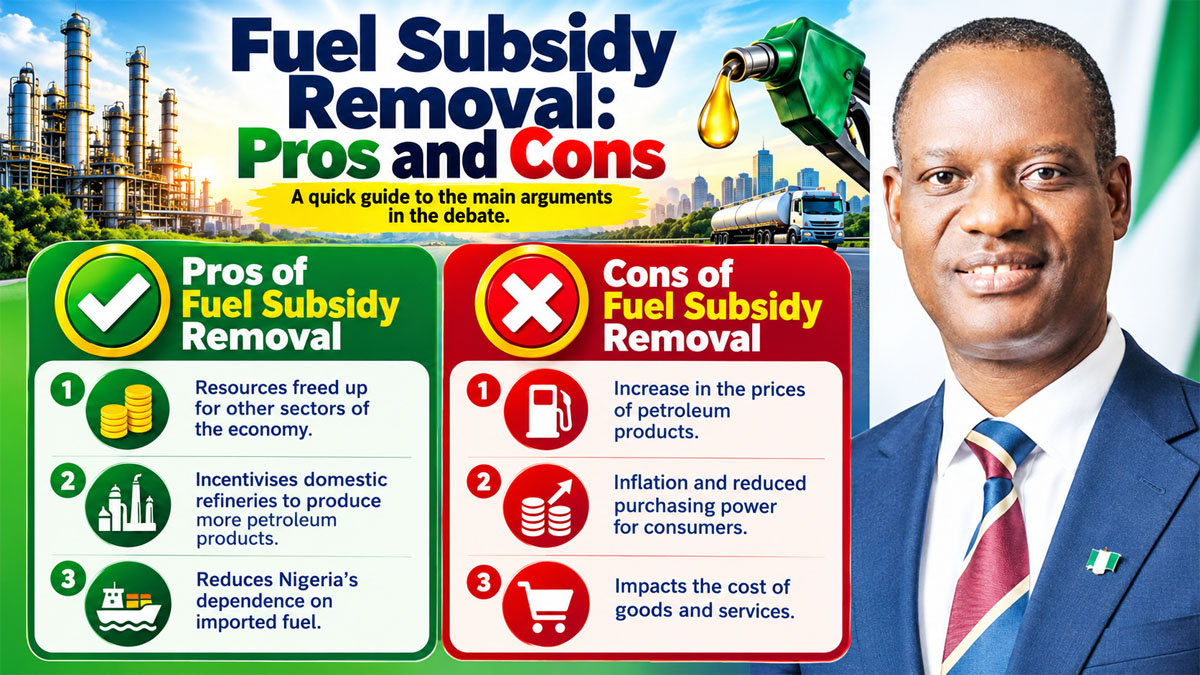
The Federal Government has warned that restoring petrol subsidy could provide temporary relief to Nigerians but expose the country to severe fiscal pressure in the long run, as rising fuel prices continue to deepen the cost-of-living crisis.
Finance Minister Taiwo Oyedele has estimated that a return to petrol subsidy could cost Nigeria more than ₦20 trillion annually, arguing that the financial burden could undermine government spending on infrastructure, healthcare, education and other essential services.
The warning comes amid growing public concern over the impact of rising petrol prices, transportation fares, food costs and business operating expenses on households and enterprises across the country.
For millions of Nigerians, cheaper petrol could offer immediate relief by reducing transportation and distribution costs. However, the government maintains that a blanket subsidy would place enormous pressure on public finances and could weaken the gains expected from the removal of fuel subsidies in 2023.
Oyedele said the scale of Nigeria’s petrol consumption makes a return to the policy particularly expensive. He has argued that subsidising petrol would divert substantial public resources from other priorities and potentially increase borrowing requirements.
READ ALSO:
- Petrol Price Hike Hits Abuja as MRS, AA Rano, Others Raise Rates Despite FG’s Discount Plan
- Kano Police Explain Blockade of ‘Tinubu Must Go’ Meeting
- Xenophobia: Nigeria Evacuates 111 More Citizens From South Africa as Returnees Hit 2,037
The government’s position is that the resources saved through fuel subsidy removal can be redirected towards infrastructure, social services and development programmes. However, the immediate benefits of those savings remain a major concern for citizens facing higher daily expenses.
The debate has intensified as the government explores alternative measures to cushion the effects of rising fuel prices without restoring a nationwide subsidy.
One of the proposed interventions is a temporary petrol discount at NNPC retail outlets, intended to provide short-term relief to motorists and other consumers. The government has maintained that the arrangement is different from a blanket subsidy because it involves a reduction in the company’s retail profit margin rather than direct government payments.
Other measures announced or proposed by the government include support for vulnerable households, wider adoption of compressed natural gas (CNG), and interventions aimed at moderating fuel costs and easing pressure on businesses.
However, the effectiveness of these measures will depend on how widely the benefits reach consumers and whether any reduction in petrol prices translates into lower transport fares and the cost of goods and services.
Critics of the current approach argue that the hardship facing households requires more immediate and measurable relief. They contend that increased government revenue from subsidy removal must translate into visible improvements in living standards, public services and economic opportunities.
The policy debate therefore centres on how to balance immediate relief with long-term economic stability. While subsidised petrol could reduce the price paid at filling stations, the ultimate cost to the country would depend on the subsidy rate, consumption levels, funding arrangements and wider economic effects.
For Nigeria, the challenge is to protect households and businesses from the effects of rising energy costs without placing an unsustainable burden on public finances.
Targeted assistance, better public transportation, investment in domestic energy supply and transparent deployment of public revenue could help cushion the impact of high fuel prices while limiting the risks associated with a universal subsidy.
Ultimately, the question is not simply whether cheaper petrol would ease hardship today, but whether the country can provide meaningful relief without creating financial pressures that could worsen economic conditions tomorrow.
Fuel Subsidy May Ease Hardship Today, But Could Cripple Nigeria’s Economy Tomorrow — FG
-

 metro2 days ago
Tension in Kano as Phone Traders Confront Chinese Sellers Over Cheaper Phones
-
 metro3 days ago
Police Launch Manhunt After Fresh Attacks, Kidnappings Rock Four Nigerian States
-

 metro3 days ago
EFCC Wins ₦132m Money Laundering Case as Court Orders Forfeiture of Lagos Properties
-
 Business3 days ago
NNPC Petrol Discount: Motorists Must Download App to Save ₦66 Per Litre
-

 Entertainment2 days ago
‘My Wife Fed Actresses I Was Dating Despite Knowing About Our Affairs’ – Yinka Quadri
-
 Politics3 days ago
INEC Raises Alarm Over Fake APC Result Naming Okorocha, Seeks DSS, Police Probe
-

 Sports3 days ago
Ronaldo Hits 980th Career Goal as Al-Nassr Win After Portugal Fallout
-
 metro3 days ago
Hardship: ACF Gives Tinubu Three Months to Deliver Relief, Demands Clear Timelines