
She also advised parents to provide psychological therapy for children susceptible to anxiety, depression or suicide for failing an examination, explaining that such children needed extra counselling and support.

UTME candidates need support not blame, psychologists tell parents
Seasoned mental health professionals have stated that students affected by the glitches and mass failure in the 2025 Unified Tertiary Matriculation Examination need counselling support and reassurance, not blame.
They noted that the situation experienced during the exams and with the results have left many students devastated, with some expressing feelings of hopelessness and failure.
They warned that without timely psychological intervention, some candidates could spiral into depression or suicidal ideation, as witnessed in a recent tragic case involving a teenage girl who reportedly took her life after receiving poor UTME results.
The psychologists further called for a comprehensive review of the current exam system in Nigeria, stating how a lack of systemic support, poorly structured exam schedules, digitalisation challenges, and insufficient parental involvement have created overwhelming stress for students.
In separate interviews with PUNCH Healthwise, the experts criticised the rushed exam resit timelines, poor digital infrastructure and logistics, and a lack of support systems that leave students vulnerable, asserting that the students should not be blamed for the glitches.
The psychologists advocated a more empathetic, data-driven, and streamlined approach to exam administration, along with greater psychological support for students.
The UTME is a critical prerequisite for admission into tertiary institutions in Nigeria. It tests candidates in four subjects, including the compulsory Use of English, with the other three drawn from their proposed field of study.
PUNCH Healthwise reports that the 2025 UTME, which took place from April 24th to May 5th, 2025, and the results were released on May 9.
READ ALSO:
The result showed that 1.5 million candidates who sat for the exam scored below 200 out of the maximum 400 marks, indicating a dismal pass rate.
Following widespread complaints from students, teachers, school administrators, and parents, the Registrar of the Joint Admissions and Matriculation Board, Prof Ishaq Oloyede, admitted that technical glitches had affected the scores of some candidates in the just-concluded UTME.
The mass failure has sparked blame from many parents, guardians, and educationists, some of whom accused students of underperforming due to excessive time spent on social media and overreliance on artificial intelligence tools for learning.
Commenting on the matter, a Clinical Psychologist at the Department of Psychiatry, Lagos University Teaching Hospital, Idi-Araba, Juliet Ottoh, stated that students whose results were affected by the glitch should not be blamed for the system failure.
She stated that such students needed supportive psychotherapy to ensure they understood that the fault was not theirs and prevent them from dealing with emotional trauma that could lead to long-term mental health consequences.
Ottoh further noted that due to the large number of students affected many of the students may not be able to get professional counselling therapy, urging parents, guardians and teachers to provide such services to prevent the students from feeling disappointed in themselves.
The psychiatrist also stated that the country still lacked adequate technological infrastructures that would ensure the smooth conduct of examinations online.
She said, “If we can upgrade our system to ensure we get it right and the system is not to blame for any errors or failures, that would be better. But I don’t think we’ve gotten to that point where external examinations should entirely be placed on CBT.”
Ottoh called on JAMB to ensure better preparedness and reassure the public that better measures would be put in place to prevent a recurrence of the last exam.
READ ALSO:
The clinical psychologist advised students and parents, “What we don’t have control over, we don’t have power over it. What they have power over is to study and go for the exam.
“If there are glitches in the system, they don’t have the power to regulate it. So, they should just put in their best, study, prepare for the exam, and let’s see what the system has in place for them. Parents should support their children, JAMB should improve on their technology.”
For her part, a Developmental Child Psychologist & Clinical Director at Nuture Child Development Clinic, Mabel Okereafor, stated that preparing and passing a major examination like UTME was like a major life event that could make one anxious and stressed.
She noted that the pressure from parents, peers and school further increased the desire to succeed and move to the next level.
The developmental child psychologist, however, noted that factors such as inadequate preparation, lack of proper sleep and support system, loss of appetite, poor self-esteem and the distance to the examination venues could affect such students’ performances.
Okereafor said, “So as a nation, I think we can do better in terms of streamlining the process. Before you want to go digital, the process itself should be streamlined. Why should the child have to leave their state of residence to go and write exams in a far place and put their lives at risk, being disconnected from family and all of those things? I don’t think that’s being properly thought out.
“I would expect that digitalising the platform is one of those instruments and strategies that we may be looking at to minimise such occurrences. Then we’re talking about glitches and all of those things happening. We need to re-evaluate that process and see how we can streamline it. When we streamline that process, we get the children to write the exams in their environments. If we say we want to go digital, it can be done.
“So as a nation, if we are serious about these things and we want children to do well, the timelines, the structure, the support system that we have put in place for children to do exams and to succeed in those exams, I don’t think we’ve done that.”
She urged parents to provide support and build the resilience of their children during examination periods.
“As parents, we need to begin to look at how to build their resilience, how to help children understand that exams are not an end in themselves, that even when you fail an exam, your life must not end.
“As families, as parents, as school counsellors, we need to always reiterate those things and step back on that pressure that we put on children and make them feel like once they fail an exam, that’s the end of the world. So children need to hear that frequently,” the child psychologist said.
She also advised parents to provide psychological therapy for children susceptible to anxiety, depression or suicide for failing an examination, explaining that such children needed extra counselling and support.


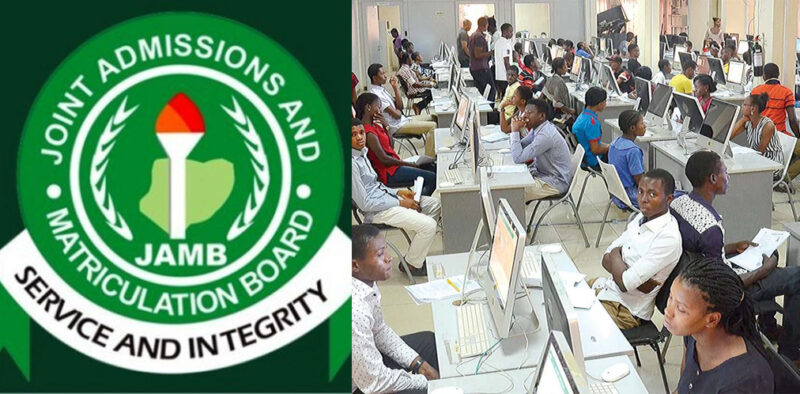
JAMB Releases 2026 UTME Mock Results, Delists Over 20 CBT Centres
The Joint Admissions and Matriculation Board (JAMB) has released the 2026 UTME Mock results, following the nationwide mock examination conducted on Saturday, March 28, 2026. The announcement was made on Tuesday by JAMB spokesperson Fabian Benjamin, providing candidates with guidance on how to check their results. According to the board, a total of 224,597 candidates registered for the mock UTME, with 152,586 candidates successfully sitting for the test across 989 Computer-Based Test (CBT) centres nationwide. Candidates can check their scores by sending the keyword “MOCKRESULT” via SMS to 55019 or 66019 using the same SIM number used during UTME registration.
In a significant move to maintain exam integrity, JAMB also announced the delisting of over 20 CBT centres that faced operational challenges during the mock exam. The affected centres experienced server failures, power outages, and delayed test sessions, which disrupted the examination for many candidates. The board clarified that these centres will remain ineligible for future UTME exercises until they meet the required technical and infrastructure standards.
READ ALSO:
JAMB further issued a stern warning against fraudsters claiming to manipulate mock or main UTME scores, particularly on messaging platforms like WhatsApp. The board emphasised that such claims are criminal, cautioning candidates that any involvement could result in cancellation of registration, withholding of results, or withdrawal of scores even after the main exam. Candidates were urged to rely solely on official communication channels for information regarding the UTME.
The main 2026 UTME is scheduled to begin on Thursday, April 16, 2026. JAMB encouraged candidates to use the mock results as an opportunity to assess their readiness, identify areas for improvement, and familiarise themselves with the Computer-Based Test (CBT) system. While mock scores do not contribute to final UTME results, they offer valuable insights for performance improvement and preparation ahead of the main examination.
JAMB continues to emphasise the importance of exam integrity, accurate registration details, and adherence to official guidelines to ensure a smooth, credible, and fair UTME process for all candidates.
JAMB Releases 2026 UTME Mock Results, Delists Over 20 CBT Centres
WAEC Releases 2026 WASSCE Timetable for School Candidates
The West African Examinations Council (WAEC) has officially released the 2026 West African Senior School Certificate Examination (WASSCE) timetable for school candidates across its member countries. The final international schedule, shared on WAEC’s official X (formerly Twitter) handle, provides students with a clear roadmap for exam preparation, ensuring they can plan their revision and practical work effectively.
According to the timetable, the 2026 WASSCE will commence on Tuesday, April 21, 2026, and conclude on Friday, June 19, 2026, spanning nearly nine weeks of examinations. The exams will kick off with Foods and Nutrition 3 (Practical) Planning Session and Home Management 3 (Practical) Planning Session, marking the start of both practical and theory assessments.
The timetable covers core subjects such as English Language and Mathematics, which are compulsory for all candidates, as well as a broad range of elective papers in sciences, arts, humanities, vocational, and technical subjects. Key science subjects include Biology, Chemistry, and Physics, while elective options span Economics, Government, Geography, Metalwork, and Applied Technology.
READ ALSO:
WAEC advised all candidates to carefully check the timetable, confirm their exam dates with school authorities, and ensure they arrive at examination centres fully equipped with approved materials. The council also encouraged students to use the timetable to avoid subject clashes, prepare for both written and practical assessments, and manage study time efficiently.
The WASSCE is a crucial qualification for secondary school students in English-speaking West Africa, serving as the gateway for university and tertiary institution admissions. The exam is conducted annually in WAEC member countries, including Nigeria, Ghana, Liberia, Sierra Leone, and The Gambia, and is recognised as a key academic milestone in the region.
With the release of the 2026 timetable, students, parents, and school authorities now have a complete guide to plan study schedules, revision sessions, and exam strategies, helping ensure candidates are well-prepared to succeed.
WAEC Releases 2026 WASSCE Timetable for School Candidates
WAEC Releases 2026 Computer-Based WASSCE Results, See Details Checking Procedure
The West African Examinations Council (WAEC) has officially released the results of the 2026 Computer-Based West African Senior School Certificate Examination (CB-WASSCE) for private candidates, marking another milestone in its transition to digital assessment.
The examination body announced on Friday that candidates who participated in the first series of the computer-based examination can now access their results, with full access expected to be activated within hours of the release.
In a statement accompanying the announcement, WAEC noted that the adoption of the Computer-Based Testing (CBT) format has significantly enhanced the speed and efficiency of result processing, eliminating many of the delays traditionally associated with manual marking systems.
A preliminary analysis of the results indicates a modest improvement in candidates’ overall performance. According to data released by the council, about 32.72 per cent of candidates obtained a minimum of five credits, including English Language and Mathematics, a key benchmark for academic and career advancement in Nigeria.
WAEC attributed the improvement to increased candidate preparedness, improved examination administration, and the deployment of technology-driven assessment methods.
Despite the gains recorded, the council disclosed that a number of results have been withheld due to allegations of examination malpractice. WAEC stated that investigations are ongoing and assured that appropriate actions would be taken upon conclusion of the review process.
The council reiterated its commitment to maintaining the integrity and credibility of its examinations, warning candidates and stakeholders against engaging in any form of malpractice.
The release of the 2026 CB-WASSCE results underscores WAEC’s broader strategy to modernize its examination system through the adoption of digital technology. The move is expected to improve transparency, reduce human error, and enhance the overall efficiency of the examination process across member countries.
WAEC has provided a straightforward process for candidates to access their results online. Candidates are advised to follow the steps below:
Candidates who encounter delays are advised to remain patient, as access may be staggered due to high traffic on the portal.
WAEC further urged candidates to keep their result-checking details secure and avoid sharing sensitive information with unauthorized persons to prevent fraud.
The council reaffirmed its commitment to continuous innovation in examination delivery, assuring stakeholders that the transition to computer-based testing will further strengthen the credibility of its certificates across the globe.



Funke Akindele, Toyin Abraham Spark Reactions Over Alleged Snub at Iyabo Ojo’s Premiere


Jos Attack: Plateau Govt Declares 48-Hour Curfew After Deadly Assault


WAEC Releases 2026 WASSCE Timetable for School Candidates


Lagos NURTW Chairman Sego Distributes Exotic Cars, Luxury Items to Cabinet Members (Video)


UK Raises Visa Costs, Tightens Immigration Rules From April 8


Iran Threatens US-Linked Universities in Middle East Amid Escalating Tensions


From Royal Wedding to Courtroom War: Gana’s Son, Wife in Explosive Split


Motoring World marks 30 years, set to rally industry leaders in Lagos


