

metro
Vote buying: Two PDP chieftains jailed two years

Two chieftains of the Peoples Democratic Party in Bauchi State, Saleh Hussaini Gamawa and Aminu Umar Gadiya, have been convicted by a Federal High Court of Bauchi and sentenced to two-year imprisonment for offences that bordered on conspiracy and money laundering to the tune of N142,460,000.00.
Justice Hassan Dikko convicted the duo on March 2, while ruling on the two counts brought against the defendants by the Economic and Financial Crimes Commission.
The defendants were first arraigned on June 4, 2018 and re-arraigned on October 16, 2018 on a two counts for allegedly receiving over N142 million to influence the outcome of the 2015 presidential elections in Bauchi State.
Count one of the charge read, “That you, Saleh Hussaini Gamawa and Aminu Umar Gadiya, all members of the Finance and Funds Disbursement Committee of the Peoples’ Democratic Party (PDP) 2015 General Elections, and in such capacities sometimes in March, 2015 in Bauchi State within the jurisdiction of this Honorable Court did agree amongst yourselves to commit an offence, to wit; Conspiracy to accept cash payment exceeding the threshold provided by law, thereby committed an offence contrary to Section 18(a) and punishable under Section 16(2) (b) of the Money Laundering (Prohibition) Act, 2012( as amended) now No.1, 2012”.
READ ALSO:
- North would have retained power after Buhari if not for Obi – Wike
- UNILAG announces new resumption date
- ‘223 insurgents surrendered, 300 killed’ in multiple ISWAP, Boko Haram clashes
Count two read, “That you, Sale Hussaini Gamawa and Aminu Umar Gadiya, all members of the of the Finance and Funds Disbursement Committee of the peoples ‘Democratic Party (PDP) 2015 General Elections, and in such capacities sometimes in March, 2015 in Bauchi State within the jurisdiction of this Honourable Court did accept cash payment of N142,460,000.00 ( One Hundred and Forty Two Million, Four Hundred and Sixty Thousand Naira) from the Directorate of Finance, Bauchi State PDP Campaign Organization exceeding the required threshold of cash payment, thereby committed an offence contrary to Section 1, 16(1)(d) and punishable under Section 16(2)(b) of the Money Laundering (Prohibition) Act, 2011 (as amended) now No.1, 2012.”
The defendants had pleaded not guilty to the charges, setting the stage for the case to proceed to full trial. In the course of trial, the prosecution presented one witness and tendered documents marked as Exhibits A1, A2 and A3. Both defendants testified in their respective defence.
At the close of evidence, the final written addresses were filed, exchanged and adopted on January 17, 2023, with the prosecution asking the court to convict the defendants as charged. The defence, on the other hand, submitted that the evidence presented against the defendant by the prosecution was not credible and urged the court to discharge and acquit the defendants. Justice Dikko then reserved judgment for March 2, 2023.
In the well-considered judgment that lasted more than three hours, Justice Dikko reviewed the facts of the case and the submissions of counsel and arrived at the conclusion that the prosecution proved the cases against the defendants beyond reasonable doubt on count one and convicted them as charged. He however discharged and acquitted the 2nd defendant on count two.
Justice Dikko said, “The fact that the defendants in this instant case endorsed exhibit A1, A2 and A3 to receive cash to the tune of N142,460,,000.00, well in excess of the legal threshold designated by law, there can be no other conclusion but that the defendants conspired to so commit the offence and I am satisfied beyond reasonable doubt. It is rather astonishing that in the defence of the count, the defendants completely disregarded the damaging evidence of exhibits A1,A2,and A3, lying right before the Court. I therefore find the 1st and 2nd defendants guilty of conspiracy as charged in court one and are accordingly convicted”.
READ ALSO:
- BREAKING: Gunmen invade Abuja Estate, kidnap pastor, wife, three children, 10 other residents
- Tinubu will rule till 2031, then hand over to a Northerner – Joe Igbokwe
- Train crash: My vehicle suddenly developed fault, says driver, undergoes drug test
On Count Two, he said, “I have relied almost entirely on Exhibits A1, A2 and A3, and a close scrutiny of the Exhibits demonstrates that the 1st defendant, Saleh Hussaini Gamawa received N105, 840,000.00 in Exhibit A1, N27, 650,000.00 in Exhibit A2 and N8, 970,000.00 in Exhibit A3, summing up to N142,460,000.00, all in the presence of, or witnessed by the 2nd defendant Aminu Umar Gadiya. The content of these documents leaves no one in doubt as to who received the money, that is Saleh Hussaini Gamawa (1st defendant) who is a natural person from the Bauchi State PDP Campaign Organization (Director of Finance) which is not a designated financial institution, and for the purpose of payment to participants during the National and Presidential Elections.
“The offence under Section 1 of the Money Laundering (Prohibition) Act, 2012 is one of strict liability. The fact of the payment or receipt of cash in excess of the threshold alone is sufficient to ground a conviction as can be noticed in the exhibits before this court and again, I am satisfied beyond reasonable doubt. Consequently, I find the 1srt defendant guilty of the count and is accordingly convicted. The 2nd defendant is hereby discharged and acquitted on this count””.
In his allocutus, the 1st defendant urged the court to be lenient and temper justice with mercy. “I have a large family which includes the family of my elder brother who turned blind and cannot fend for his family; they look up to me for sustenance, since the beginning of this case neither the political party nor the Government came to my rescue, thus I urge the court to forgive me”, he stated.
The 2nd defendant also pleaded for leniency, arguing that he is a retiree and had not benefited from the money.
Before sentencing the defendants, Justice Dikko acknowledged their pleas for leniency but insisted that they must be punished to serve as deterrent to others.
“I consider your pleas that you have family who will suffer in your absence thus I will be lenient, however your offences must be punished appropriately to deter others in the society from perpetrating same,” he said.
He consequently sentenced the 1st and 2nd defendants to 2 years imprisonment at the Bauchi Correction Service or a fine of N3,000,000.00 each in lieu of imprisonment on count one; while the 1st defendant bagged a further two years imprisonment or a fine of N3,000,000.00 in lieu of imprisonment on count two.
The sentences are to run concurrently from March 2, 2023.







metro
A Son Wouldn’t Have Done Better — Dangote Speaks on Daughters, Succession
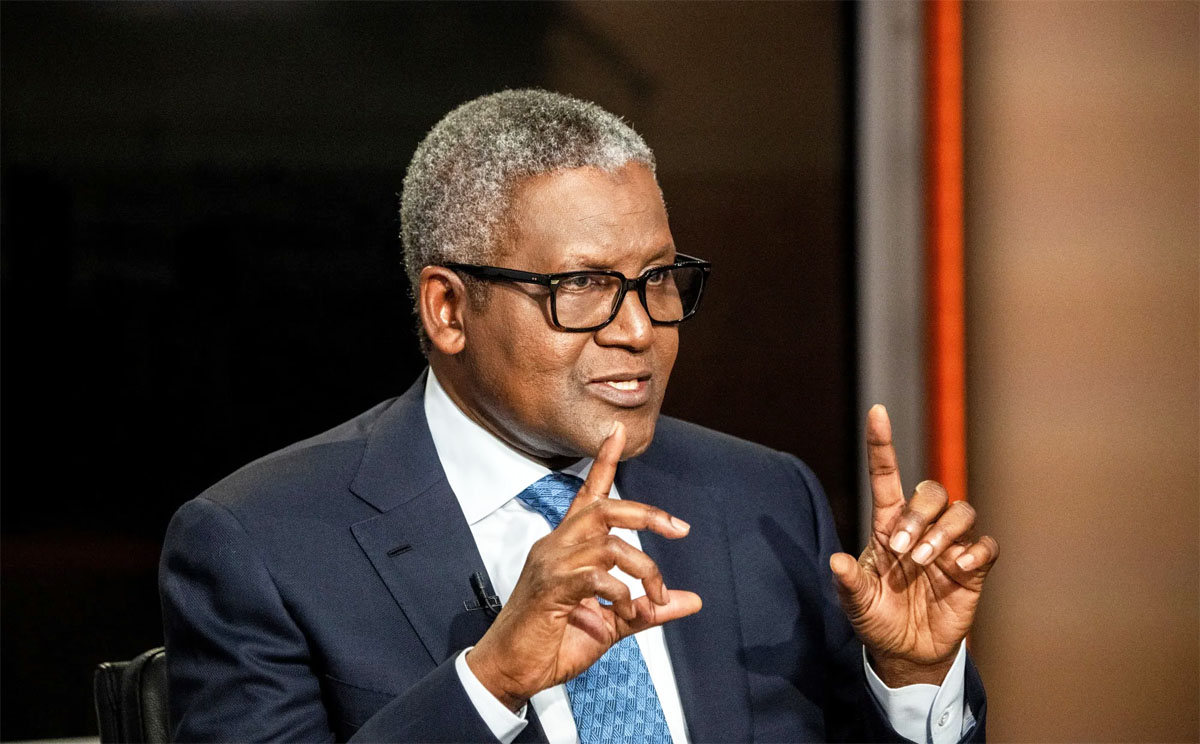
A Son Wouldn’t Have Done Better — Dangote Speaks on Daughters, Succession
Africa’s richest man and President of Dangote Industries Limited, Aliko Dangote, has said having a son is not a priority for him, stressing that he is proud of the achievements of his three daughters and does not believe a male heir would necessarily have performed better.
Dangote made the disclosure in an interview with Arise News, where he was asked about family, succession and whether he wished to have a son who could eventually carry on his name and business legacy.
The billionaire said he was content with his three daughters and did not consider having a male child necessary for the continuation of his legacy.
Dangote said he believes his daughters have performed exceptionally well and that he would not assume a son would have achieved more simply because of his gender.
“I don’t think a son would have done better than the three daughters I have,” he said.
The remarks have drawn attention because Dangote has built one of Africa’s largest privately controlled business empires, with interests spanning cement, fertiliser, sugar, salt, petrochemicals, refining, logistics and other industrial sectors.
His three daughters — Mariya, Halima and Fatima Dangote — have increasingly become associated with the family’s business and philanthropic interests, making their roles relevant to discussions about the future of the conglomerate.
The billionaire’s position also challenges the traditional expectation that a family-owned business of such scale should be inherited or controlled primarily by a male successor.
Rather than focusing on the gender of a potential heir, Dangote’s comments indicate an emphasis on competence, responsibility and the ability to preserve and develop the family’s legacy.
The issue of succession planning has become increasingly important for the Dangote business empire as the group expands into new areas and some of its major assets move into a new phase of development.
READ ALSO:
- 2027: APC Governors Reject Wike’s Rainbow Coalition, Insist on Party Loyalty
- Sanwo-Olu Joins Dangote as Historic N2.15tn Refinery IPO Opens on Nigerian Exchange
- Shehu Buba Submits Himself To DSS Over Banditry Allegations
One of the most significant developments is the planned public offering involving the Dangote Petroleum Refinery, which has become the flagship investment of Dangote’s industrial expansion in Nigeria.
The refinery, located in the Lekki area of Lagos, has a processing capacity of about 700,000 barrels of crude oil per day and began commercial operations in 2024.
The facility has transformed Dangote’s business interests by giving the group a major position in Nigeria’s petroleum-refining industry while reducing dependence on imported refined petroleum products.
The refinery is also at the centre of an ambitious initial public offering (IPO) aimed at raising additional capital and broadening ownership of the business.
The development could mark an important transition for one of Dangote’s most valuable assets, with the billionaire seeking to raise funds for further expansion while retaining significant control.
Beyond his commercial interests, Dangote’s succession arrangements also include a major philanthropic component.
His family has agreed to dedicate one-third of his estate to philanthropy, with the Aliko Dangote Foundation expected to play a central role in managing the charitable component of his legacy.
The foundation has supported initiatives in areas including healthcare, nutrition, education and humanitarian assistance, making philanthropy an important part of Dangote’s public legacy.
The decision to commit a substantial portion of his estate to charitable causes means that his succession plans are not limited to determining who will control his business interests.
It also establishes a framework for using part of his wealth to support social and humanitarian programmes beyond the commercial activities of the Dangote Group.
The combination of business succession and philanthropy could therefore shape how Dangote’s legacy is preserved long after his active involvement in the group.
His daughters’ growing prominence within the family’s affairs is particularly significant against this background.
Rather than waiting for the emergence of a male heir, the family’s current direction suggests that the next generation of leadership can be built around the capabilities of existing heirs.
READ ALSO:
- No Lives Lost as Responders Contain Dual Fire Outbreaks Across Lagos
- ‘I Was Never the Chosen One’ — Dembele Responds to Mbappe
- Plateau Attacks: Gunmen Kill Passengers, 13 Dead Across Three LGAs
Dangote’s comments also reflect a broader shift in attitudes towards family business succession, particularly among major African business families where traditional expectations have often placed greater emphasis on male inheritance.
For the businessman, however, gender does not appear to be the determining factor in assessing his children’s ability to carry forward his achievements.
His three daughters have established themselves in different areas of the family’s business and philanthropic interests, giving them experience that could become increasingly valuable as the conglomerate enters its next phase.
The succession question is particularly relevant because Dangote has spent decades building the group from a trading operation into a diversified industrial conglomerate with investments across Africa.
The Dangote Group is now one of Nigeria’s most prominent corporate organisations, with its operations contributing significantly to the country’s manufacturing, employment, export and industrial sectors.
The Dangote Refinery has added another strategic dimension to the group, particularly as Nigeria seeks to strengthen domestic refining capacity and reduce its reliance on imported petroleum products.
Its expansion, alongside the group’s existing cement and fertiliser businesses, means that decisions about future ownership and management will have implications beyond the Dangote family.
Dangote’s latest remarks therefore provide an insight into how he views the relationship between family, succession and legacy.
His message is that having a son is not necessary to secure the future of his name or business empire, particularly when his daughters have already demonstrated their capacity and commitment.
As the Dangote Group enters another period of expansion and restructuring, attention is likely to remain focused on the roles of his daughters, the future ownership of major assets and the implementation of the family’s philanthropic commitments.
For Dangote, the measure of succession appears to be less about whether the next generation includes a male heir and more about whether those entrusted with his legacy can preserve its value, expand its impact and use part of it to benefit society.
A Son Wouldn’t Have Done Better — Dangote Speaks on Daughters, Succession
metro
Five Nigerians Face Up To 100 Years In US Over $6m Romance Scam
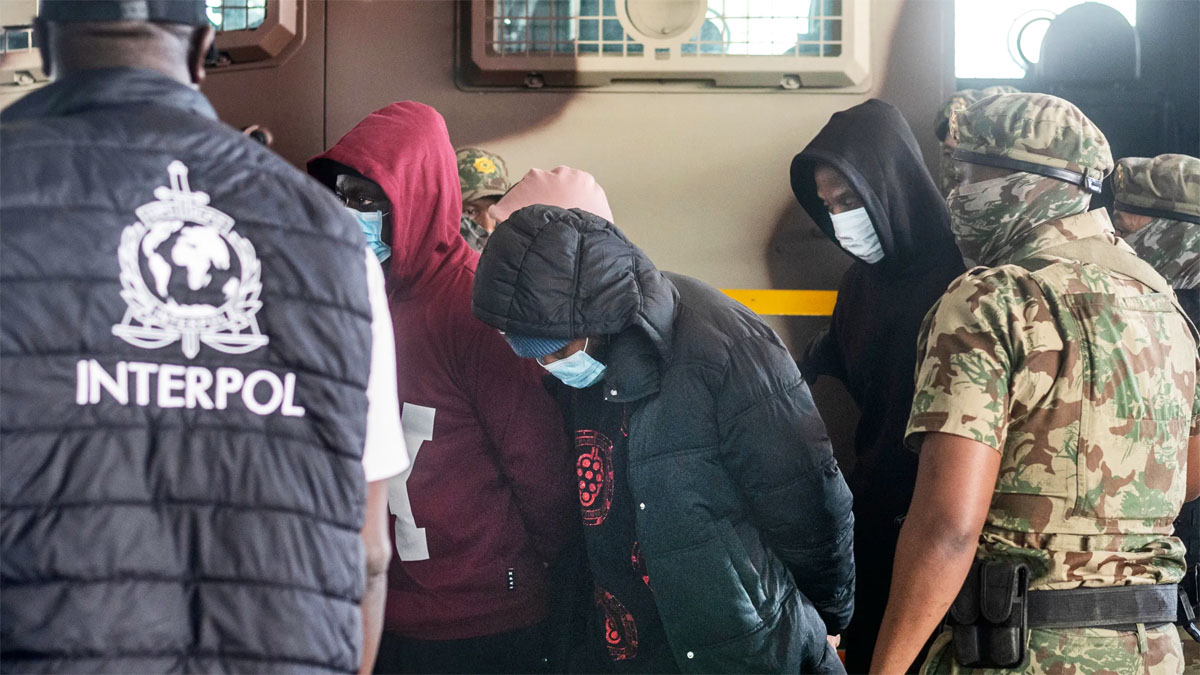
Five Nigerians Face Up To 100 Years In US Over $6m Romance Scam
Five Nigerian nationals extradited from South Africa to the United States are facing federal fraud and money-laundering charges over an alleged $6 million online romance scam targeting more than 100 people in the United States.
The five men were among six Nigerian nationals extradited from South Africa on September 11, 2026, after being arrested in Cape Town in 2021 following a request from US authorities.
The five defendants named in the US federal case are Perry Osagiede, 57; Franklyn Edosa Osagiede, 42; Osariemen Eric Clement, 40; Collins Owhofasa Otughwor, 42; and Musa Mudashiru, 38.
US prosecutors allege that the men were prominent members of the Cape Town Zone of the Neo Black Movement of Africa, popularly known as Black Axe, and participated in an organised fraud operation that ran for years.
The sixth Nigerian extradited alongside them has been identified in South African reports as Prince Ibeabuchi Mark, but he is not among the five defendants named in the US federal indictment currently at the centre of the case.
The extradition followed a lengthy legal process after the suspects were arrested in Cape Town in 2021. They were eventually handed over to US authorities, including officials from the Federal Bureau of Investigation (FBI) and the US Secret Service, for prosecution.
The defendants were scheduled to appear before US District Judge Michael A. Shipp at the federal court in Trenton, New Jersey.
According to US prosecutors, the alleged operation was active between 2011 and 2021 and used online relationships, false identities and other deceptive methods to obtain money from victims.
The alleged romance scam involved the suspects presenting themselves online as potential romantic partners and developing relationships with victims before asking them for financial assistance.
READ ALSO:
- ‘I Was Never the Chosen One’ — Dembele Responds to Mbappe
- Plateau Attacks: Gunmen Kill Passengers, 13 Dead Across Three LGAs
- 2027: Northern Lecturers Back Tinubu, ASUU Disowns Endorsement
Prosecutors allege that the victims were often given elaborate explanations for why money was needed, including supposed business problems, construction projects, medical emergencies, accidents, taxes, inheritance difficulties and other financial crises.
In some instances, the alleged fraudsters reportedly persuaded victims to send not only cash but also electronic devices and other valuable items.
The alleged operation also involved advance-fee fraud and business email compromise, according to US authorities.
Investigators allege that money obtained from victims was moved through different bank accounts and business arrangements in an attempt to conceal the proceeds and transfer them to South Africa.
The victims reportedly included retirees, businesspeople and other individuals who were allegedly manipulated through prolonged online relationships.
South African authorities said more than 100 women were allegedly defrauded of more than 100 million South African rand, estimated at about $6.2 million.
The alleged scale of the scheme has drawn attention to the increasingly international nature of cyber-enabled financial crime, in which perpetrators, victims, financial accounts and criminal proceeds can be located in different countries.
US prosecutors have also alleged that members of the group used multiple aliases and online identities in communicating with victims.
Perry Osagiede, whom prosecutors describe as an alleged founder and leader of the Cape Town Zone, is accused of using several aliases, while other defendants are also alleged to have operated under assumed names.
The prosecution further alleges that the accused held leadership positions within the alleged Black Axe structure in South Africa while participating in the fraud schemes.
The charges against the five men include conspiracy to commit wire fraud and conspiracy to commit money laundering.
READ ALSO:
- Sanwo-Olu Joins Dangote as Historic N2.15tn Refinery IPO Opens on Nigerian Exchange
- Shehu Buba Submits Himself To DSS Over Banditry Allegations
- No Lives Lost as Responders Contain Dual Fire Outbreaks Across Lagos
Perry Osagiede, Franklyn Edosa Osagiede and Osariemen Eric Clement are additionally facing individual wire-fraud charges.
Perry Osagiede, Franklyn Edosa Osagiede and Collins Owhofasa Otughwor are also charged with aggravated identity theft.
The potential penalties are significant.
Each wire-fraud conspiracy or wire-fraud charge carries a maximum sentence of 20 years in prison under US law, while the money-laundering conspiracy charge also carries a maximum sentence of 20 years.
The aggravated identity-theft charges carry a mandatory additional two-year prison term, which must be served consecutively to any other sentence imposed.
This means that the defendants could collectively face a maximum exposure of up to 100 years in prison if convicted on the applicable charges.
However, the 100-year figure is a statutory maximum and does not mean the defendants have been sentenced to 100 years.
Any eventual sentence would depend on the outcome of the trial, the specific counts on which a defendant is convicted and the applicable US sentencing rules.
The case is part of a broader international effort to disrupt criminal networks accused of conducting online financial fraud across borders.
The Black Axe network has been identified by international law-enforcement agencies as a transnational organised crime network linked to cyber-enabled fraud and other criminal activities.
The extradition also highlights cooperation between South Africa, the United States, the FBI, the US Secret Service and international law-enforcement agencies in pursuing suspects accused of operating across national borders.
The men were arrested in South Africa in 2021, meaning the case has taken several years to reach the US courts.
Their extradition now allows the US judicial system to determine whether prosecutors can prove the allegations against them beyond the required legal standard.
The development comes as US and international authorities intensify efforts against romance scams, which have become a major form of online financial fraud.
Such scams typically involve perpetrators establishing emotional relationships with victims online before inventing emergencies or financial problems to persuade them to transfer money.
US authorities have repeatedly warned that victims can be targeted for extended periods before realising that the person with whom they have established an online relationship may not be who they claimed to be.
The prosecution of the five Nigerians therefore represents not only a major fraud case but also another example of how law-enforcement agencies are pursuing alleged cybercrime networks beyond the countries where their victims live.
Despite the seriousness of the allegations, the five defendants remain legally presumed innocent unless and until they are convicted by a US court.
The case will now proceed through the American federal justice system, where prosecutors are expected to present evidence supporting the allegations contained in the indictment.
Five Nigerians Face Up To 100 Years In US Over $6m Romance Scam
metro
Shehu Buba Submits Himself To DSS Over Banditry Allegations

Shehu Buba Submits Himself To DSS Over Banditry Allegations
Senator Shehu Buba Umar, representing Bauchi South Senatorial District, has submitted himself to the Department of State Services (DSS), the Nigeria Police Force and the Defence Intelligence Agency (DIA) for investigation following allegations linking him to banditry, kidnapping and terrorism financing.
Buba, who is the Peoples Redemption Party (PRP) governorship candidate in Bauchi State for the 2027 election, said he took the step to allow competent security agencies to investigate the allegations and establish the facts.
The senator made the disclosure in Bauchi on Monday, September 14, 2026, while addressing journalists on the allegations that have recently resurfaced on social media and other public platforms.
Buba strongly denied sponsoring, financing, arming, facilitating or supporting bandits, terrorists, kidnappers or any other criminal organisation.
He said his legal team, led by Senior Advocate of Nigeria and former Nigerian Bar Association President Yakubu Chonoko Maikyau, had formally written to the DSS, DIA and Police to make him available for questioning and investigation.
The senator also challenged anyone who claims to possess evidence linking him to criminal activities to submit such evidence to the appropriate security agencies instead of circulating allegations on social media.
He said he was ready to cooperate fully with investigators and would face prosecution if a competent investigation established a prima facie case against him.
The allegations against Buba resurfaced following claims made online by a man identified as Hassan Husseini, who alleged that the senator maintained relationships with suspected bandits and had hosted criminal elements at his residence.
READ ALSO:
- No Lives Lost as Responders Contain Dual Fire Outbreaks Across Lagos
- ‘I Was Never the Chosen One’ — Dembele Responds to Mbappe
- Plateau Attacks: Gunmen Kill Passengers, 13 Dead Across Three LGAs
Husseini further alleged that individuals linked to notorious bandit leader Dogo Gide were brought to Abuja for specialised training allegedly facilitated by one of Buba’s aides.
The claims have not been established as facts by any security agency or court, and Buba has rejected them as defamatory and politically motivated.
The senator also alleged that some of the photographs, videos and other materials being circulated against him had been manipulated or taken out of context.
Buba said the controversy was not entirely new, maintaining that similar allegations had surfaced as far back as 2024.
He recalled an earlier controversy involving people he sponsored for a religious pilgrimage to Saudi Arabia, saying the beneficiaries had been recommended by traditional rulers in his constituency.
According to Buba, some of those sponsored for the pilgrimage were later arrested after returning to Nigeria, leading to questions about their identities and alleged connections to criminal activities.
The senator said he had no knowledge of any criminal links involving the individuals when he approved the sponsorship.
He also disclosed that he petitioned the Nigeria Police Force in September 2025 over allegations and materials he said were being circulated to damage his reputation.
Buba said five suspects were subsequently arraigned before the Federal High Court in Abuja on allegations including criminal conspiracy, cyberstalking, criminal defamation, advance-fee fraud and extortion.
READ ALSO:
- 2027: Northern Lecturers Back Tinubu, ASUU Disowns Endorsement
- ‘I Was Never the Chosen One’ — Dembele Responds to Mbappe
- Police Arrest Mother Over Alleged Brutal Abuse of 7-Year-Old Girl in Anambra
He said the case remains before the court and that he would refrain from making comments that could interfere with the judicial process.
Buba also referred to a September 7, 2026 petition seeking Interpol intervention over one of the individuals his legal team believes is connected with the allegations.
He said copies of relevant submissions had been forwarded to the National Security Adviser, Chief of Defence Intelligence, Chief of Defence Staff and Minister of Defence.
The senator argued that his former role as chairman of the Senate Committee on National Security and Intelligence naturally brought him into regular contact with military, intelligence and other security officials.
He suggested that some of those legitimate interactions, particularly discussions concerning banditry, terrorism, kidnapping and other security threats, could have been misrepresented as evidence of relationships with criminal groups.
Buba was removed as chairman of the Senate Committee on National Security and Intelligence in November 2025 and subsequently became chairman of the Senate Committee on Livestock and Animal Husbandry.
The allegations have also taken on a political dimension because Buba is preparing to contest the 2027 Bauchi governorship election.
The senator was previously a member of the All Progressives Congress (APC) but left the party after withdrawing from its governorship primary process. He subsequently joined the Peoples Redemption Party (PRP) and emerged as the party’s governorship candidate in May 2026.
The PRP has defended Buba and rejected the allegations linking its candidate to banditry and kidnapping.
The party described the claims as an attempt to damage Buba’s reputation and undermine his political campaign ahead of the 2027 election.
It challenged anyone with credible evidence against the senator to submit it to law enforcement agencies for investigation and prosecution rather than rely on unverified allegations.
Buba has also appealed to his supporters to remain calm and avoid threats, insults or attacks against those making the allegations.
He said his decision to submit himself for investigation was not an attempt to secure preferential treatment but a demonstration of his willingness to allow the appropriate institutions to establish the truth.
For now, the allegations against Buba remain unproven. There has been no reported finding by the DSS, Police or DIA establishing that the senator sponsored or financed banditry, terrorism or kidnapping.
His decision to make himself available for investigation gives the security agencies an opportunity to independently examine the allegations, assess the authenticity and context of the materials being circulated and determine whether there is evidence of criminal conduct.
The outcome could have significant political implications as the 2027 Bauchi governorship election draws closer, particularly because Buba is seeking to lead the state on the PRP platform.
Shehu Buba Submits Himself To DSS Over Banditry Allegations
-

 metro3 days ago
MURIC fires back at Peter Obi: Forget Sallah ceremony, free Nigerian Muslims
-
 News2 days ago
SERAP Threatens Legal Action Over ₦126bn INEC Electoral Funds
-
 International3 days ago
Trump Tells Supporters to ‘Cheat Like Hell’ Ahead of US Election
-
 Politics2 days ago
Five Islamic Clerics Abducted After Tinubu Re-Election Prayer At Yari’s Zamfara Residence
-

 Auto3 days ago
Jetour Takes Award-Winning Dashing, Other SUVs to Abuja
-

 Business3 days ago
Dangote raises petrol price 6.7% to N1,350/litre
-
 Opinion2 days ago
‘Tinubu Will Win Again in 2027’ — Charismatic Bishops’ Secretary
-

 News3 days ago
Police Arrest Woman Over Alleged Drug Trafficking in Delta