
Education
WASSCE 2025 worst in five years, 38% candidates pass English, Maths

WASSCE 2025 worst in five years, 38% candidates pass English, Maths
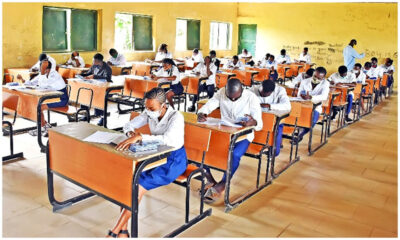
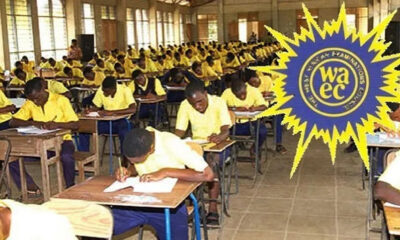
The West African Senior School Certificate Examination (WASSCE) results were on Monday released.
The details show that of the 1,969,313 candidates who sat for the examination, only 754,545 candidates, representing 38.32%, obtained credits and above in a minimum of five subjects, including English Language and Mathematics.
In the 2024 WASSCE, 72.12% of candidates obtained credits and above in a minimum of five subjects, including English Language and Mathematics. This year’s results showed a significant decline in performance, with only 38.32% of candidates achieving the same feat.
A total of 1,973,365 candidates from 23,554 recognised secondary schools across Nigeria registered for the major examination.
Out of these, 1,969,313 candidates actually sat for the examination. Notably, the examination was not limited to Nigeria, as candidates from schools in Benin Republic, Côte d’Ivoire, and Equatorial Guinea, where the Nigerian curriculum is used, also participated.
Speaking at a press briefing in Lagos on Monday, the Head of Nigeria National Office, West African Examinations Council, WAEC, Dr Amos Dangut, stated that the Council withheld the results of 192,089 candidates, representing 9.75% of the total number of candidates who sat for the WASSCE for various cases of examination malpractice.
Dangut explained that in comparison with the previous year’s results, there was a 33.8% decrease in performance. In the 2024 WASSCE, 72.12% of candidates obtained credits and above in a minimum of five subjects, including English Language and Mathematics.
This year’s results showed a significant decline in performance, with only 38.32% of candidates achieving the same feat.
The breakdown
A breakdown of the results showed that out of the 1,969,313 candidates, only 754,545, representing 38.32% had credits in five subjects and above including English Language and Mathematics.
Out of the figure, 347,192 (46.01%) were male candidates, while 407,353 (53.99%) were females.
Also, the results of 192,089 candidates, representing 9.75% of the total number of candidates who sat for the examination were withheld due to various reported cases of examination malpractice.
According to Dangut, the results were withheld due to: Increased use of cell phones in the examination hall despite the existing ban; and organised cheating in some schools, among others.
He said, “All cases are being investigated and reports will be presented to the appropriate Committee of the Council for consideration and final decisions; Affected candidates will be communicated through their various schools; and candidates can now call for redress of their malpractice cases if they so wish.
Commenting on the stance of the body on examination malpractice, Dangut stated, “The Council will continue to sanction all cases of examination malpractice. Schools, supervisors, teachers, and candidates perpetrating this evil are not helping the educational system. WAEC is calling for all hands to be on deck to sanitise the system. “
The WAEC boss also told journalists that: “WASSCE for School Candidates 2025 results are being uploaded on the results website. Candidates should, after checking the result online, apply for their Digital certificate, which will be released forty-eight (48) hours thereafter.
“Candidates who have fulfilled their financial obligations to the Council can access their results on the Council’s results website: www.waecdirect.org, within the next twelve hours. Copies of the Result Listing will be sent to schools shortly.
“I need not restate the fact that the results of candidates who are sponsored by states indebted to the Council will not be released now until payment is made. We appeal to the concerned to do the needful to enable the affected schools/candidates to access their results.
“The Result Checker PIN and Serial Number required by candidates to check their results online are contained on the Candidate’s Smart Identity Card issued and used during the conduct of the examination. Hard copies of certificates of candidates whose results have been fully processed and released will be ready within the next 90 days, counting from today.
Dangut also highlighted significant improvements in the conduct of WASSCE for special needs candidates.








Education
JAMB Debunks 2026 UTME Postponement Rumour, Issues Fraud Warning
JAMB Debunks 2026 UTME Postponement Rumour, Issues Fraud Warning
The Joint Admissions and Matriculation Board (JAMB) has dismissed reports claiming that the 2026 Unified Tertiary Matriculation Examination (UTME) has been postponed, describing the circulating notice as fake, malicious, and misleading.
In a statement released on Saturday, the board urged candidates to disregard the false information, stressing that it did not originate from JAMB and should not be taken seriously.
“Our attention has been drawn to the malicious press release stating that the 2026 UTME has been postponed. The general public, particularly candidates, are hereby informed that the press release is fake and did not emanate from us. Kindly disregard it. All activities on the 2026 UTME continue as scheduled,” the board stated.
READ ALSO:
- Gunmen Kill Three in Jos Community Hours After Tinubu Visit
- Amnesty International Condemns Wike Over ‘Violent Remark’ Against Journalist
- Pastor Found Dead in Guest House After Night Out With Married Female Church Member
JAMB reaffirmed that the 2026 UTME exam dates remain unchanged, with the nationwide examination set to hold from April 16 to April 25, 2026 at accredited Computer-Based Test (CBT) centres.
The clarification comes after the 2026 UTME mock examination held on March 28 experienced technical issues in several CBT centres, which led to confusion and speculation about a possible postponement. According to JAMB, 224,597 candidates registered for the mock exam, while 152,586 successfully sat for the test across 989 CBT centres nationwide. The board disclosed that over 20 CBT centres have been delisted due to technical failures, as part of efforts to ensure a smooth and credible main examination. JAMB assured candidates that lessons from the mock exercise would be used to improve system performance and prevent disruptions during the main UTME.
The board also raised concerns over fraudulent messages circulating online, especially on WhatsApp, where individuals falsely claim they can boost or manipulate UTME scores. JAMB warned that such claims are criminal and deceptive, stressing that any candidate found engaging in such activities risks disqualification, cancellation of registration, or withholding of results.
JAMB advised candidates to rely only on official updates from the board and avoid spreading or believing unverified information that could cause panic. The examination body reiterated its commitment to delivering a credible, transparent, and technology-driven UTME, urging candidates to remain focused as the examination approaches.
JAMB Debunks 2026 UTME Postponement Rumour, Issues Fraud Warning
Education
Ghana Sweeps Top Three Positions in 2025 WASSCE, Outshining Nigeria, Others
Ghana Sweeps Top Three Positions in 2025 WASSCE, Outshining Nigeria, Others
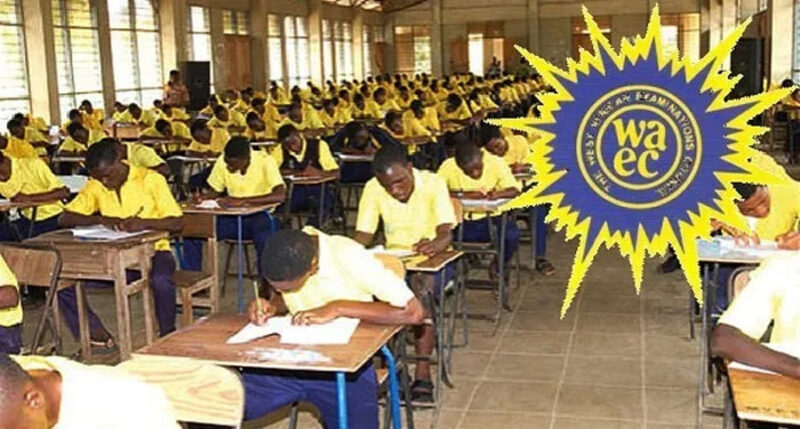
Ghanaian students have once again demonstrated outstanding academic excellence in the 2025 West African Senior School Certificate Examination (WASSCE) for School Candidates, claiming the top three ranks across the five participating countries. The achievement was highlighted during the 74th Annual Council Meeting of the West African Examinations Council (WAEC), held from March 24 to 28, 2026, in Accra, Ghana.
Out of 2,612,830 candidates from Ghana, Nigeria, The Gambia, Liberia, and Sierra Leone, three students from Ghana recorded the highest cumulative scores, confirming the country’s leading position in regional education.
Miss Huda Suglo Suleman emerged as the overall best candidate in West Africa, also receiving the prestigious Augustus Bandele Oyediran Award for her top performance. She was closely followed by Miss Paula Adzo Elinam Sowu in second place and Miss Matthea Aba Andoh in third.
READ ALSO:
- Tinubu Approves 1,000 Forest Guards, Orders 5,000 CCTV Cameras to Boost Security in Plateau
- EFCC Seeks Permanent Forfeiture of 57 Properties Linked to Ex‑AGF Malami
- Heavy Security Deployed at INEC Headquarters Abuja Amid Planned ADC Protest
Ghana’s Vice President, Jane Opoku-Agyemang, representing President John Dramani Mahama, praised WAEC for its 74 years of promoting educational standards and regional cooperation. However, she and other officials raised concerns about the rise in examination malpractice, which they warned could undermine the credibility of the council’s work.
During the meeting, Professor Ernest K. Davis, Ghana’s Chief Government Nominee, was elected Vice Chairman of WAEC for a one-year term, succeeding Liberia’s Amos Armah Fully. The council also honored Professor William Asomaning as a Distinguished Friend of the Council for his contributions to education in the region.
The Ghana Minister of Education, Haruna Iddrisu, represented by Deputy Minister Dr. Clement Apaak, emphasized the role of WASSCE in building intellectual and practical skills for national development. He also confirmed Ghana’s return to the international WASSCE starting from the 2026 examination cycle.
The 2025 WASSCE results underscore Ghana’s dominance in regional academic performance, setting a benchmark for other countries, including Nigeria, which aims to improve its own outcomes in future exams. The 75th WAEC Annual Council Meeting is scheduled to be hosted by Nigeria in March 2027, continuing the rotational tradition among member states.
Ghana Sweeps Top Three Positions in 2025 WASSCE, Outshining Nigeria, Others
Education
Tinubu Govt Unveils National Laureate Prize to Reward Best Theses

Tinubu Govt Unveils National Laureate Prize to Reward Best Theses
The Federal Government of Nigeria, under President Bola Ahmed Tinubu, has launched the Nigeria National Laureate Annual Prize Programme, a landmark initiative designed to reward outstanding student research across tertiary institutions nationwide. The programme aims to elevate academic excellence, research innovation, and intellectual achievement to the forefront of national recognition.
According to a statement from the Federal Ministry of Education, students whose dissertations and theses demonstrate exceptional scholarly quality and commercial viability will receive significant cash prizes and national recognition. Winners will be celebrated as National Laureates, reflecting the country’s commitment to fostering research-driven development.
The awards are structured as follows:
- Undergraduate dissertation winners: ₦5 million
- Master’s thesis winners: ₦10 million
- Doctoral (PhD) thesis winners: ₦20 million
Announcing the programme, Education Minister Tunji Alausa described it as a strategic national intervention aimed at reshaping Nigeria’s educational incentives. He stressed that the initiative underscores the importance of research as a driver of industrialisation and national development, ensuring that students’ academic efforts are matched with prestige and financial reward.
READ ALSO:
- Foreign Intelligence Operations Behind Recent Nigeria Killings – Gumi
- Arise News Anchor Ikokwu Quits Journalism, Joins Politics
- EFCC Pushes for Sule Lamido Retrial Before Former Judge
“By elevating our students to the status of celebrated National Laureates, we are ensuring that the rigour of research and academic excellence is matched with the highest level of national prestige and financial reward,” Alausa said, adding that theses should be viewed as potential blueprints for national progress, not merely graduation requirements.
The programme will be fully financed by the Nigeria Education Repository and Databank (NERD) and its strategic partners, ensuring sustainability without additional pressure on public funds. Oversight is provided by a 10-member National Laureate Prize Committee, chaired by Prof. Abubakar Sambo, with representatives from the Nigerian Academy of Sciences, Nigerian Academy of Letters, National Universities Commission (NUC), National Board for Technical Education (NBTE), TETFund, and other academic bodies.
The call for entries will commence in May 2026, with evaluations taking place between June and September, and winners to be honoured at the National Laureate Gala in Abuja in November 2026. The initiative also highlights sustainability and innovation, ensuring that research contributes meaningfully to Nigeria’s knowledge economy.
Officials say the programme encourages students to pursue groundbreaking research that can directly impact policy, technology, and industry, while boosting Nigeria’s global academic reputation.
Tinubu Govt Unveils National Laureate Prize to Reward Best Theses

-

 metro2 days ago
Pastor Found Dead in Guest House After Night Out With Married Female Church Member
-

 metro3 days ago
Tinubu Approves 1,000 Forest Guards, Orders 5,000 CCTV Cameras to Boost Security in Plateau
-

 Health2 days ago
Men Encouraged to Ejaculate More to Reduce Prostate Cancer Risk
-

 International3 days ago
Iran Announces ‘Bounty’ on US Pilots After Claiming Downing of Fighter Jet
-

 Politics1 day ago
Adeleke’s Aide Anisu Resigns, Defects to APC
-

 Politics2 days ago
Wike: PDP Not Financially Ready for 2027 Presidential Election
-

 Sports3 days ago
UEFA Threatens to Strip Italy of Euro 2032 Hosting Rights
-

 International16 hours ago
Netanyahu Condemns ‘Christian Persecution’ in Nigeria in Easter Message