

News
We have not received £4.2m Ibori loot: Delta govt

The Delta State government has denied reports that it has received the £4.2m Ibori loot from the federal government.
The Accountant General of the Federation, Ahmed Idris on Tuesday, 25 May 2021, told the House of Reps ad-hoc Committee on Assessment and Status of all recovered loots movable and immovable assets that the federal government had returned the looted money to Delta state.
The Chief Press Secretary to the Delta State Governor, Olisa Ifeajika while denying the statement by Idris, said the state is yet to see the said amount reflect in its account.
Ifeajika made this known at Government House Asaba while reacting to the Accountant General’s claim.
He appreciated the willingness of the Federal Government to refund the money to the state and promised that the Delta State government will inform the public whenever the state receives the money.
The Accountant-General had mentioned that Delta State had been refunded the £4.2m Ibori loot recovered from the United Kingdom government while giving an account to the Adejoro Adeogun, reps ad-hoc house committee on how the Federal Government spent the recovered loot from 2002 till date.

News
2027: Appeal Court Threatens Sanctions Against Officials Who Manipulate Election Petitions
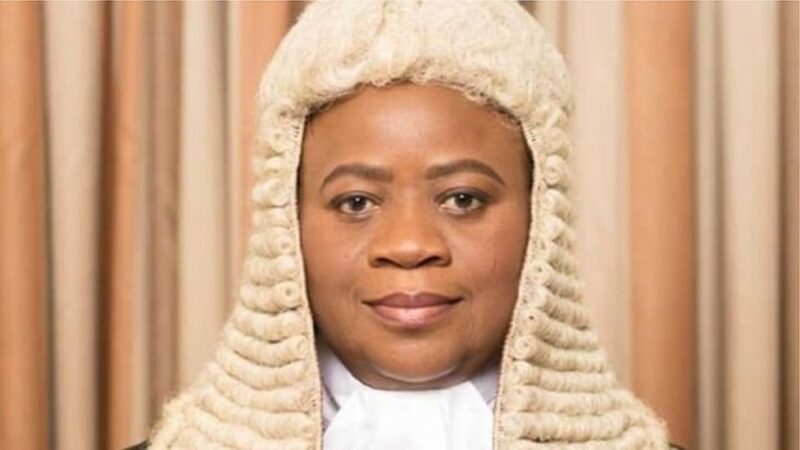
2027: Appeal Court Threatens Sanctions Against Officials Who Manipulate Election Petitions
ABUJA – The Court of Appeal has warned election petition tribunal secretaries and registry officials against corruption, bribery, manipulation of court records and other fraudulent practices capable of undermining the credibility of the 2027 general elections.
The President of the Court of Appeal, Justice Monica Dongban-Mensem, gave the warning in Abuja on Monday, November 16, 2026, stressing that the judiciary would not hesitate to sanction any official found compromising the integrity of election petition proceedings.
Dongban-Mensem spoke at the opening of a two-day capacity-building workshop for election petition tribunal registry staff held at the Body of Benchers, Abuja.
The workshop, themed “Modern Registry Practices for Effective Election Petition Tribunal Administration”, was organised to prepare tribunal officials for the administrative and legal demands of handling electoral disputes arising from the forthcoming presidential, National Assembly, governorship and state Houses of Assembly elections.
The Court of Appeal president cautioned participants against treating their appointments as opportunities for personal enrichment, insisting that their conduct would be closely scrutinised by Nigerians.
She described the assignment as a call to national service and urged the officials to protect the reputation of the judiciary by maintaining the highest standards of professional integrity.
“Your integrity and that of the Tribunal and its members are in the public searchlight,” she said, warning them not to allow themselves to be used as instruments to truncate the judicial process.
Dongban-Mensem further advised tribunal secretaries to familiarise themselves with the Electoral Act 2026 and the Election Petition Tribunal Proceedings Practice Direction 2026 to avoid being misled or manipulated by interested parties.
She explained that the registry was a critical component of the tribunal system, responsible for receiving and filing petitions, serving court processes, issuing hearing notices, preparing proceedings and safeguarding judicial records.
According to her, efficient registry administration requires accurate documentation, electronic filing, reliable case management systems, proper archiving and strict compliance with statutory deadlines.
READ ALSO:
- Viral Video Claims Late Pastor Will Rise From Dead On Seventh Day As Church Holds Vigil
- 2027: Tinubu Has Already Won, Fayose Declares, Says Political System Favours Incumbent
- Makinde Has No Right to Demand Tinubu’s Resignation, Reuben Abati Declares
She recalled that Sections 285(1) and (2) of the 1999 Constitution, as amended, empower the President of the Court of Appeal to constitute election petition tribunals across the 36 states and the Federal Capital Territory.
She also cited Section 134(3)(a) and (b) of the Electoral Act 2026, which provides for the constitution of tribunals at least 30 days before an election and the opening of their registries seven days before polling.
Also speaking, the Chief Registrar of the Court of Appeal, Umar Bangari, warned tribunal officials against backdating court documents, colluding with litigants or lawyers, tampering with case files and leaking confidential information.
He specifically cautioned against manipulating filing dates to accommodate petitions submitted outside statutory deadlines, giving litigants or their lawyers advance copies of court processes and disclosing draft rulings or confidential panel deliberations.
Bangari said the credibility of election petition tribunals depended substantially on the integrity and professionalism of registry personnel, whose administrative decisions could affect the outcome of electoral disputes.
He identified integrity, strict adherence to timelines, effective communication and professionalism as essential requirements for officials handling election petitions.
“A single administrative lapse, delayed endorsement, or misplaced process can occasion a damaging miscarriage of justice,” he warned.
The Chief Registrar said any tribunal secretary found collaborating with political parties, candidates or legal practitioners to manipulate proceedings would face serious consequences.
He, however, disclosed that the court would recognise and reward officials who demonstrated outstanding commitment, diligence and professionalism in carrying out their responsibilities.
Bangari further revealed that the Chief Justice of Nigeria, Justice Kudirat Kekere-Ekun, had inaugurated 375 judicial officers drawn from trial courts across the 36 states and the FCT to serve on the election petition tribunals.
He described the workshop as a continuation of preparations for the tribunals, with training sessions covering the Electoral Act, the Judicial Electoral Manual 2026, electronic case management, record-keeping and statutory deadlines for filing and serving court processes.
Earlier, the Acting Deputy Chief Registrar in charge of the Election Petition Tribunal Unit, Maitumbi Altine, disclosed that the Court of Appeal was upgrading its Election Petition Tribunal Case Management System to address concerns about conflicting decisions delivered by different tribunals.
She said the court had reviewed the 2022 edition of the Judicial Electoral Manual and produced an updated 2026 edition to guide tribunal officials.
According to her, the upgraded electronic system would enable tribunal decisions to be scanned and uploaded into a central database, allowing judicial officers to consult previous decisions when handling similar legal issues.
She also outlined a code of conduct requiring tribunal secretaries to submit regular reports to the Election Petition Tribunal Unit and provide weekly updates through the electronic reporting platform.
The officials were warned against soliciting gratification from lawyers, litigants or members of the public, granting media interviews without authorisation and releasing official documents or confidential information without approval.
The warnings come as the judiciary intensifies preparations for the 2027 general elections, with the Court of Appeal seeking to strengthen the integrity, transparency and efficiency of the electoral dispute resolution process.
The presidential and National Assembly elections are scheduled for January 16, 2027, while governorship and State Houses of Assembly elections are scheduled for February 6, 2027.
The court’s position underscores the importance of impartial tribunal administration, particularly as political parties and candidates prepare to challenge election results through legally established processes.
2027: Appeal Court Threatens Sanctions Against Officials Who Manipulate Election Petitions
News
Makinde Has No Right to Demand Tinubu’s Resignation, Reuben Abati Declares

Makinde Has No Right to Demand Tinubu’s Resignation, Reuben Abati Declares
ABUJA — Veteran journalist and former presidential spokesperson, Dr Reuben Abati, has criticised Oyo State Governor, Seyi Makinde, over his comments concerning President Bola Ahmed Tinubu, insisting that the governor has no authority to compel the President to resign.
Abati, who made the remarks during a discussion on ARISE Television’s The Morning Show, described Makinde’s position as a personal political opinion, arguing that it carries no power to force the President out of office.
The exchange comes amid growing political disagreements between members of the opposition and the ruling All Progressives Congress (APC) as political activities ahead of the 2027 general elections gather momentum.
Makinde’s Campaign Calls for Tinubu’s Withdrawal
The controversy followed a statement by the Makinde-Daura Presidential Campaign Organisation, which urged Tinubu to withdraw from the 2027 presidential contest.
The organisation warned that the President’s continued re-election ambition could worsen Nigeria’s political tensions and existing socioeconomic difficulties.
READ ALSO:
- Regulatory Violations: NSCDC Seals Seven Security Firms, Arrests 13 Guards in Delta
- Bahrain Under Attack as Iran Targets US Military Installation With Drones
- Chatham House Protest: UK-Based Lawyer Alleges Anti-Amupitan Demonstrators Were Paid Actors
It also argued that the President should demonstrate statesmanship by allowing Nigerians to determine the country’s political direction through a free, fair and credible election.
Makinde, who is seeking the presidency on the platform of the Allied Peoples Movement (APM), has increasingly positioned himself as an opposition challenger to Tinubu ahead of the 2027 polls.
Abati Questions Timing of Makinde’s Demand
Reacting to the development, Abati argued that Makinde’s call was unlikely to influence the President’s political plans, particularly with the election approaching.
The ARISE TV presenter also pointed to what he described as the political momentum of the APC, suggesting that asking an incumbent president to withdraw from the race at that stage was beside the point.
His comments have added another dimension to the growing political exchanges between the ruling party and opposition figures ahead of the 2027 presidential election.
The development underscores the intensifying debate over Tinubu’s re-election ambition, with opposition politicians questioning his administration’s performance while APC supporters continue to defend his political agenda.
The comments were made during ARISE Television’s Morning Show, as reported by Daily Post on November 16, 2026. Daily Post Nigeria +1
Makinde Has No Right to Demand Tinubu’s Resignation, Reuben Abati Declares
News
Bandits Kill Abducted Daughter of Former Kaduna LG Chairman After 68 Days in Captivity

KADUNA – Bandits have reportedly killed Mary, one of the three daughters of Hon. Aaron Bako, the immediate past Chairman of Kachia Local Government Area of Kaduna State, after holding her captive for 68 days.
Mary was reportedly murdered on Sunday, November 15, 2026, following her abduction alongside her mother and two sisters from their residence in Kateri, a community along the Kaduna-Abuja Expressway.
The family was abducted on September 8, 2026, when armed bandits reportedly stormed their residence and whisked the victims away to an undisclosed location.
According to the report published by Linda Ikeji’s Blog, Mary’s body was later found along the Kachia-Awon Road, bearing apparent gunshot wounds.
Her death has added to the family’s ordeal, as her mother and two other daughters are still being held captive by the abductors.
READ ALSO:
- 2027: How We’ll Defeat Tinubu — Amaechi Reveals ADC’s Strategy
- 2027: Suspected Thugs Attack Kwankwaso’s Convoy in Kano, Injure Supporters
- Eight Dead in New York Building Collapse as Nigerian Landlord’s Troubling Past Emerges
The incident reportedly occurred after 68 days in captivity, leaving Bako’s family facing further uncertainty over the fate of the three remaining abductees.
The report did not disclose whether the kidnappers had made any ransom demands or whether negotiations were ongoing for the release of the surviving captives.
The killing has renewed concerns about kidnapping and armed banditry in southern Kaduna, particularly along communities and highways vulnerable to attacks by criminal groups.
The family is now left mourning Mary while hoping for the safe return of her mother and two sisters, who remain in the hands of their abductors.
Bandits Kill Abducted Daughter of Former Kaduna LG Chairman After 68 Days in Captivity
-

 Politics3 days ago
Peter Obi, NDC in Fresh Storm as Keyamo Gives Dickson 48 Hours Over Old National Anthem, Raises Secession Alarm
-

 metro3 days ago
Kwankwaso’s Daughter, Kano Governor’s Wife, Files for Divorce, Offers to Refund Dowry
-

 metro3 days ago
“I Cheated Because I’m Human Too” — Divorced Restaurant Owner Accuses Ex-Husband of Sleeping With Over 16 Women
-

 Business2 days ago
OPay Faces ₦994m Regulatory Fines Over Money Laundering, Terrorism Financing Breaches
-

 metro2 days ago
Tragedy: “I Suffered With This Man When He Had Nothing” — Woman Who Begged Alleged Rival To Leave Her Family Dies At 39
-

 metro18 hours ago
Goodluck Jonathan’s Second Wife, Ayima, to Unveil Memoir ‘Gold Dust’ in Abuja at 50
-

 Business21 hours ago
Petrol Prices Crash as Dangote Refinery, NNPCL, MRS Adjust Rates Nationwide
-

 metro3 days ago
Pastor Remanded Over Viral Video of Toluwanisings’ Corpse After Failed Attempt to Raise Singer From Dead