

Politics
Why we will work against Atiku in 2027 – Bauchi gov’s son

Why we will work against Atiku in 2027 – Bauchi gov’s son
Shamsu Bala, son of Bauchi State Governor Bala Mohammed, has publicly accused former Vice President Atiku Abubakar of undermining his father’s bid for reelection in 2023—alleging that the time has come to “settle scores.”
In a post shared on social media Saturday, Mr. Bala expressed strong disapproval of Atiku’s approach toward reconciliation ahead of the 2027 elections, stating that the presidential hopeful remains indifferent toward mending ties with the governor.
“He (Atiku) didn’t work for us in the 2023 election; he worked for Air Marshal (the governorship candidate of the All Progressives Congress, Abubakar Sadiq). He deployed elites in Bauchi to fight us, and we narrowly won the election,” Mr. Bala wrote in Hausa.
He added: “Now he is taking us for granted, he doesn’t value us as humans, he is showing us that we are too small to call for reconciliation.”
Although he didn’t name those involved, his remarks appear to allude to certain Bauchi political heavyweights. In early 2023, Governor Mohammed directed the Bauchi Emirate Council to strip veteran politician Bello Kirfi of his traditional title of Wazirin Bauchi over alleged disloyalty. Kirfi, a former minister and close ally of Atiku, is seen by some as one of the elites mentioned by the governor’s son.
READ ALSO:
- 2027: Buhari loyalists, CPC threaten to leave APC, Tinubu worries
- FG stabilises grid with additional 700MW
- Those spraying perfume in armpit, private parts risk cancer – Shehu Sani
Another key figure, former Speaker of the House of Representatives Yakubu Dogara, supported Atiku’s presidential run but did not back Governor Mohammed’s reelection.
Despite the tensions, Atiku secured a strong showing in Bauchi during the 2023 presidential election, defeating his closest rival, Bola Tinubu of the APC, by more than 100,000 votes. Atiku garnered 426,607 votes compared to Tinubu’s 316,694.
Mr. Bala’s comments surfaced shortly after Atiku paid a visit to former President Muhammadu Buhari in Kaduna—a move widely interpreted as part of ongoing coalition-building efforts ahead of the 2027 election.
The comments sparked concern among PDP loyalists. Party supporter and social media influencer Abdulaziz Na’ibi-Abubakar responded to the post by urging reconciliation between the two camps. “We hope that Atiku and Governor Bala Mohammed reconcile their differences to keep the PDP on track,” he stated.
Governor Mohammed had previously challenged Atiku during the PDP’s 2022 presidential primaries before shifting focus to secure a second term as governor. As chairman of the PDP Governors’ Forum, he remains a central figure in the party’s internal politics and is speculated to still harbor presidential ambitions.
Why we will work against Atiku in 2027 – Bauchi gov’s son
(PREMIUM TIMES)







Politics
‘You Copied My Idea Poorly, Like a Dull Student’ – Atiku Fires at Tinubu Over Petrol Discount
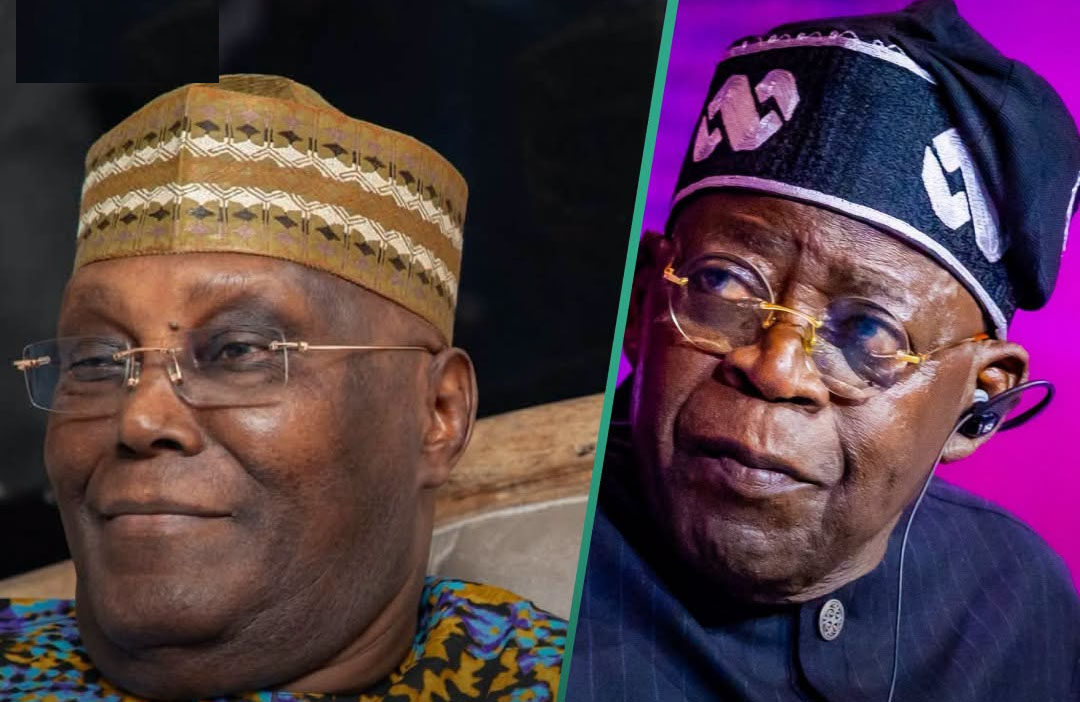
Former Vice-President Atiku Abubakar has accused President Bola Ahmed Tinubu of poorly copying his proposed petrol production subsidy plan, arguing that the Federal Government’s 30-day fuel discount offers only temporary relief from rising petrol prices.
Atiku, the presidential candidate of the African Democratic Congress (ADC), said the administration had borrowed his idea but failed to adopt the broader measures he believes could sustainably reduce fuel costs and ease the burden on Nigerians.
Lambasting the President, Atiku likened him to a student who copied another person’s examination answer without understanding it.
“Bola, you have borrowed the idea but missed the lesson. You had a production subsidy and reduced it to a 30-day gesture,” he said.
He added: “You copied my production subsidy proposal. There is nothing wrong with that. You stripped away the part that makes it work and handed Nigerians a 30-day discount. Where is the rest of the answer, Bola?”
Atiku maintained that his production subsidy proposal was designed to support locally refined petroleum products and reduce costs for households, transport operators and businesses. He questioned what would happen when the temporary discount expires, warning that Nigerians could remain exposed to high transportation costs, rising food prices and increased business expenses.
READ ALSO:
- Mary Ugwoma’s Death: Husband Denies Abuse, Cites Brain Haemorrhage Report
- ‘Lunatic Can’t Preside Over Nigeria’: Wike Fires Back at Amaechi
- Robbery Horror: Suspect Admits Stabbing Couple, Reveals Attempted Assault on Their Daughter
The dispute follows the Federal Government’s introduction of a temporary petrol discount through Nigerian National Petroleum Company Limited (NNPC) retail outlets. The measure was announced to cushion consumers against rising fuel prices amid elevated international crude oil costs.
NNPC said the discount would run until October 31, 2026, although the initiative was not presented as a uniform pump-price reduction across the country.
The Tinubu administration has rejected claims that the measure represents a return to the former petrol subsidy regime, which ended in May 2023. Finance Minister and Coordinating Minister of the Economy, Taiwo Oyedele, described the initiative as a temporary intervention rather than a restoration of the previous system of government-funded subsidies.
The Presidency has explained that the arrangement involves a retail discount, with a seller reducing or foregoing part of its margin for a specified period. This differs from the former subsidy system, under which public funds covered part of the cost of petrol.
The government has maintained that it remains committed to market-based petroleum pricing. It had also challenged Atiku to explain the legal, fiscal and practical framework for his proposed production subsidy, citing provisions of the Petroleum Industry Act 2021 and Nigeria’s petroleum-pricing regulations.
Atiku’s criticism has renewed debate over whether a targeted production subsidy could provide more lasting relief than a temporary retail discount, and how such a policy would be funded without recreating the fiscal pressures associated with the former subsidy regime.
The dispute comes as political alignments intensify ahead of the 2027 general election, with Atiku using the issue to challenge the administration’s economic policies while the government defends its approach to fuel pricing.
‘You Copied My Idea Poorly, Like a Dull Student’ – Atiku Fires at Tinubu Over Petrol Discount
Politics
Keyamo Mocks Atiku Over Tinubu’s Presidency, Says Ex-VP Needs Mental Health Support
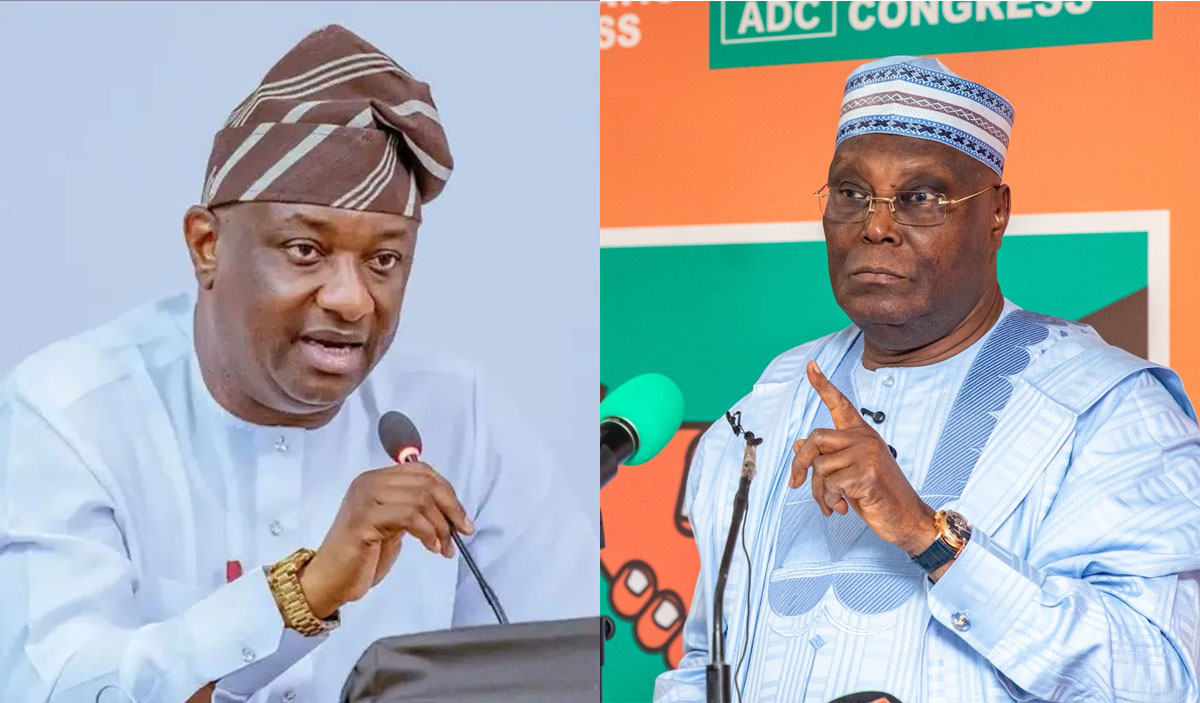
Minister of Aviation and Aerospace Development, Festus Keyamo, has launched a verbal attack on former Vice-President Atiku Abubakar, accusing him of bitterness over President Bola Ahmed Tinubu’s emergence as Nigeria’s leader and suggesting that the opposition politician needs mental health support.
Keyamo made the remarks on Friday, October 9, 2026, in response to Atiku’s criticism of the Federal Government’s proposed 30-day petrol price discount, which the former vice-president described as an inadequate response to the economic hardship facing Nigerians.
The minister alleged that Atiku’s repeated criticism of Tinubu reflected personal disappointment over his failure to become president after several attempts.
In a post on his verified X account, Keyamo described Atiku as a “pained and very bitter fellow” and argued that the former vice-president had struggled to accept Tinubu’s political success.
Keyamo also used the expression “agitated depression” to characterise Atiku’s alleged emotional state and urged people close to the former vice-president to offer him support.
However, the minister did not provide medical evidence to support his comments about Atiku’s mental health. His remarks were political allegations and should not be interpreted as a medical diagnosis.
Keyamo Compares Atiku’s Presidential Ambition With Tinubu’s Victory
In his response, Keyamo compared the political journeys of Tinubu and Atiku, recalling their respective positions during the administration of former President Olusegun Obasanjo.
At the time, Tinubu was governor of Lagos State, while Atiku served as vice-president.
Keyamo argued that although Atiku had pursued the presidency through several election cycles, Tinubu eventually won the office in the 2023 presidential election.
The minister attributed Tinubu’s emergence to political strategy, circumstances and what he described as divine intervention.
He also cited Ecclesiastes 9:11 from the Bible to argue that success does not always depend on strength or ability, but can also be influenced by timing and circumstances.
Keyamo urged Atiku’s associates not to encourage what he described as unproductive attacks on the President.
“We should all pity Atiku Abubakar rather than goad him on,” he wrote.
READ ALSO:
- ‘Lunatic Can’t Preside Over Nigeria’: Wike Fires Back at Amaechi
- Robbery Horror: Suspect Admits Stabbing Couple, Reveals Attempted Assault on Their Daughter
- NAFDAC Raises Alarm Over Toxic Pesticides in Beans, Seizes ₦800m Banned Chemicals
He further suggested that the former vice-president’s approach to political criticism could affect his support ahead of the 2027 general elections.
Atiku Faults Tinubu’s 30-Day Petrol Discount
The exchange followed Atiku’s criticism of the Federal Government’s proposed 30-day petrol price discount, which he argued would offer only temporary relief without resolving the deeper problems affecting households and businesses.
The former vice-president questioned the sustainability of the initiative, particularly what would happen when the 30-day period expired.
He argued that Nigerians needed durable measures to address high transportation costs, rising food prices and the broader cost-of-living crisis rather than a short-term intervention.
Atiku also called for attention to the underlying factors responsible for high petrol prices and the economic pressure experienced by citizens.
His criticism reflects the wider debate over the impact of the Tinubu administration’s economic reforms, particularly the removal of the petrol subsidy and its consequences for household purchasing power.
Supporters of the administration have defended its policies, while opposition figures have continued to question whether the measures have delivered sufficient relief to Nigerians.
Political Exchange Intensifies Ahead of 2027 Elections
The confrontation between Keyamo and Atiku comes as political parties and aspirants prepare for the next general elections.
Atiku, who is seeking the presidency under the African Democratic Congress (ADC), has continued to criticise the administration’s economic policies.
Keyamo, a prominent supporter of Tinubu, has defended the President and challenged opposition figures over their assessments of the government’s performance.
The latest exchange illustrates how disagreements over economic policy are increasingly accompanied by personal attacks among political figures.
While politicians are entitled to criticise government policies and challenge their opponents, claims about an individual’s mental health should not be presented as established facts without credible medical evidence.
With petrol prices, inflation, transportation costs and the cost of living remaining important public concerns, the effectiveness of the Federal Government’s economic interventions is likely to remain a major issue in political debate ahead of the 2027 elections.
Keyamo Mocks Atiku Over Tinubu’s Presidency, Says Ex-VP Needs Mental Health Support
Politics
‘Lunatic Can’t Preside Over Nigeria’: Wike Fires Back at Amaechi
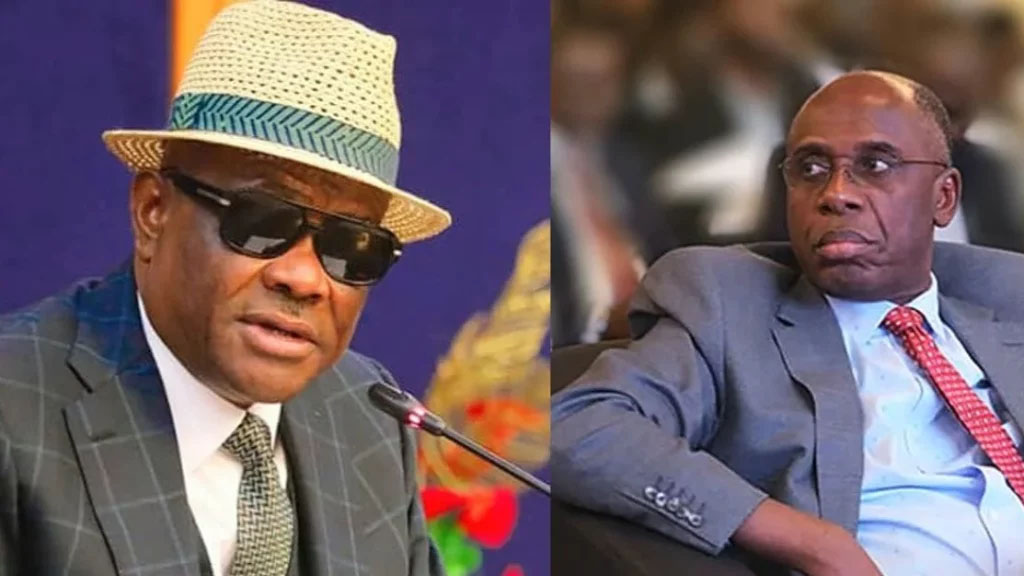
Minister of the Federal Capital Territory (FCT), Nyesom Wike, has launched a fresh verbal attack on former Rivers State governor Rotimi Amaechi, describing him as a “lunatic” and questioning his suitability to govern Nigeria following his remarks about supporters of President Bola Ahmed Tinubu.
Wike also warned that Amaechi could face difficulties campaigning in Rivers State if he continued to describe people intending to vote for Tinubu in the 2027 presidential election as thieves and mentally unstable.
The FCT minister made the remarks on Friday, October 9, 2026, while speaking with journalists in Abuja after meeting chairpersons of the six area councils in the Federal Capital Territory.
The confrontation followed Amaechi’s reported remarks during a political engagement in Edo State, where he criticised Tinubu’s supporters and said that only “thieves and mad people” would vote for the President.
Reacting, Wike accused the former governor of insulting Nigerians because of their political preferences, insisting that voters should be free to support any candidate without being subjected to personal attacks.
“A lunatic cannot preside over the affairs of this country! A known armed robber cannot!” Wike said.
He also challenged Amaechi’s description of Tinubu’s supporters as thieves, asking whether the remark was intended to include him and other Nigerians who support the President.
Wike further launched personal attacks against Amaechi, questioning his record in public office and urging journalists to investigate projects and financial transactions undertaken during his eight-year administration as Rivers State governor between 2007 and 2015.
Wike Threatens Opposition to Amaechi’s Rivers Campaign
The FCT minister warned that Amaechi could encounter resistance if he attempted to campaign in Rivers State while continuing to attack Tinubu’s supporters.
READ ALSO:
- Robbery Horror: Suspect Admits Stabbing Couple, Reveals Attempted Assault on Their Daughter
- NAFDAC Raises Alarm Over Toxic Pesticides in Beans, Seizes ₦800m Banned Chemicals
- 2027: Ekiti Driver Takes ₦3.5m Loan to Back Tinubu’s Re-election Bid
“If he continues along this line, it will be difficult for him to campaign in Rivers State. We will make it difficult for him,” Wike said.
He argued that politicians seeking public office should present their policies and programmes instead of insulting citizens who support rival candidates.
Wike also called on the Independent National Electoral Commission (INEC) to address what he described as offensive political campaign language.
He maintained that electoral campaigns should focus on issues affecting Nigerians, including economic conditions, security, infrastructure and public accountability, rather than personal insults.
The minister’s comments came amid preparations by political parties and aspirants for the 2027 general elections, with disagreements over Tinubu’s administration and the opposition’s political strategy becoming increasingly prominent.
Wike Questions Amaechi’s Record as Rivers Governor
Beyond the exchange over Tinubu’s supporters, Wike raised questions about projects and financial transactions associated with Amaechi’s tenure as Rivers governor.
He alleged that $39 million was paid for the Justice Karibi-Whyte Hospital project without the hospital being completed.
Wike also questioned a $10 million fumigation contract awarded to a Cuban company for mosquito control, arguing that the expenditure required further scrutiny.
He cited the ₦68 billion Port Harcourt monorail project, which he described as abandoned, and alleged that $308 million generated from the sale of state-owned gas turbines had been misappropriated.
The minister challenged journalists to investigate the allegations and demand explanations from the former governor.
Wike also referred to a judicial panel of inquiry and claimed that Amaechi had been indicted and subsequently lost an appeal at the Supreme Court.
However, the allegations concerning the projects, public funds and legal proceedings should be assessed against the relevant official records, inquiry findings and court judgments. Wike’s statements alone do not establish that wrongdoing occurred.
Political Tensions Rise Ahead of 2027 Elections
The latest exchange adds to the longstanding political rivalry between Wike and Amaechi, two former governors of Rivers State whose political differences have continued to attract national attention.
Their disagreement also reflects the wider contest over Tinubu’s leadership and the positions being taken by opposition figures ahead of the 2027 elections.
Amaechi, a member of the African Democratic Congress (ADC), has been critical of Tinubu, while Wike has continued to defend the President’s supporters against what he considers unfair political attacks.
The dispute has renewed questions about the tone of political debate in Nigeria and whether public figures can challenge opponents without disparaging voters who hold different views.
While politicians have the right to criticise candidates and their records, calls for accountability are best supported by verifiable evidence and specific policy arguments.
The response from Amaechi and any subsequent reaction from INEC could provide further context to the dispute as political activities intensify ahead of the next general election.
‘Lunatic Can’t Preside Over Nigeria’: Wike Fires Back at Amaechi
-
 metro2 days ago
[UPDATED] 20 NYSC Prospective Corps Members Freed After Seven Days in Captivity
-

 Africa2 days ago
FBI Raids Ghana Scam Centre, Detains Over 130 in $10m Fraud Probe
-

 metro3 days ago
Yayi, Adebule, Muslim Leaders, Others for Imodi-Ijebu Turbaning, ₦1bn Fundraiser
-
 metro2 days ago
EFCC Re-Arraigns Two Over Alleged £110,000 Money Laundering, ₦500m Fraud
-
metro1 day ago
How Parents Raised Millions to Free 20 Abducted NYSC Members
-
 News2 days ago
World Bank Raises Nigeria Growth Forecast, Demands More Jobs, Poverty Reduction
-

 metro2 days ago
NAF Crash: NYSC-Bound Graduate, Only Son, Among 25 Victims
-

 Sports2 days ago
Ronaldo Pays Emotional Tribute to Messi After Argentina Farewell