
Politics
Wike dismisses Turaki’s genocide claims, says Nigeria’s democracy not under threat
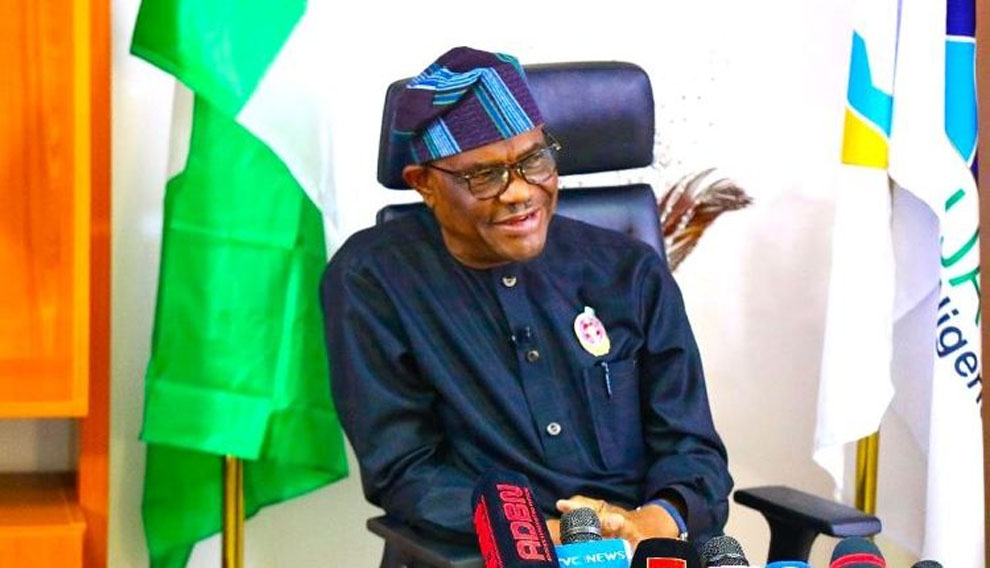
Wike dismisses Turaki’s genocide claims, says Nigeria’s democracy not under threat
Minister of the Federal Capital Territory, Nyesom Wike, has dismissed allegations by factional PDP National Chairman, Tanimu Turaki, that Nigeria’s democracy is in danger, describing the comments as “reckless, dangerous and misleading.”
Wike issued the rebuttal on Wednesday while receiving the Board and Management of the newly established South-South Development Commission (SSDC), led by Chairman Prince Chinudom Nwuche and Managing Director Usoro Akpabio, during a courtesy visit in Abuja.
Akpabio, a former FCT civil servant, said the delegation visited to strengthen institutional ties and enhance development collaboration with federal agencies.
Responding to journalists, Wike faulted Turaki’s televised allegation that Christians were facing genocide and that Nigeria required foreign intervention to preserve its democracy.
According to him, such claims amount to a national security threat and misrepresent Nigeria before the global community.
“Someone goes on national television claiming there is genocide against Christians. Essentially, you are telling the world that this government is committing genocide,” Wike said. “When security agencies invite him, people shout that they want to kill him. This is irresponsible rhetoric.”
READ ALSO:
- Lagos woman claims high infidelity among married women in Festac, Ago, Okota
- Police Seal PDP National Secretariat as Rival Factions Clash in Abuja
- Hackers target Dangote, Otedola in high-profile phone breach
He stressed that Nigeria’s democracy is stable, warning that the real danger lies in politicians who “deliberately stoke tension for personal gain.”
“You cannot fail to put your house in order and then blame others. Impunity cannot continue,” he added.
Turning to his guests, Wike advised the SSDC leadership to avoid political distractions and ensure disciplined execution of their mandate. He cautioned that many regional development commissions in the past collapsed due to corruption, divided loyalties and weak leadership.
“The development of your region depends on your commitment,” he said. “Don’t repeat the mistakes of agencies like the NDDC, where billions were spent with little to show.”
He urged the Commission to avoid duplicated projects, politically motivated contracts and negligence of community needs.
Wike noted that public service would attract political attacks but insisted that integrity must remain non-negotiable.
“Yes, you will step on toes, but I’m not afraid as long as I’m doing the right thing,” he stated.
He also warned the board to maintain unity and financial discipline, saying conflict often begins when funds are released.
“The moment ₦50 billion drops and someone spends it without approval, fights will start. Don’t let that be your legacy,” he cautioned.
Wike praised the credentials of the Commission’s leadership, urging them to deliver visible impact in line with the Renewed Hope Agenda.
Responding on behalf of the delegation, Akpabio assured the Minister of the Commission’s commitment to its mandate of driving development and strengthening its liaison with federal institutions.
Wike dismisses Turaki’s genocide claims, says Nigeria’s democracy not under threat





Politics
El‑Rufai Warns He Could Be Arrested Amid Rising Political Tensions

El‑Rufai Warns He Could Be Arrested Amid Rising Political Tensions
Former Kaduna State Governor Nasir El‑Rufai has raised alarm that he could be arrested at any time by Nigeria’s security agencies, claiming his outspoken criticism of the federal government and the alleged targeting of political opponents may make him a potential target. In an interview with BBC Hausa, El‑Rufai said that although he has not yet been detained, he believes his arrest is imminent, noting that several close associates have already been picked up by security forces. “About four people we worked with in Kaduna have been arrested; so it’s only a matter of time before they come for me too,” he said, highlighting what he described as political pressure and intimidation of opposition voices.
El‑Rufai alleged that the APC-led federal government is using security and anti-corruption agencies to intimidate dissenting politicians, forcing some to either defect to the ruling party or face punitive action. His remarks come amid heightened political tension in the country and follow the arrest and ongoing trial of former Attorney-General of the Federation Abubakar Malami, who faces charges including abuse of office — allegations he describes as politically motivated. Critics say selective targeting of opposition figures undermines democratic principles and escalates mistrust in governance, especially as Nigeria approaches the 2027 general elections. El‑Rufai’s warning has intensified debates about the independence of law enforcement agencies and their role in political matters.
READ ALSO:
- 2027 Polls: Christian Group Cautions Shari’a Council Over INEC Boycott Threat
- Starvation Cult Preacher Faces Expanded Murder, Terrorism Charges in Kenya
- Lagos Allocates 180 Shops to Displaced Alabarago Market Traders
Once a key figure in the APC, El‑Rufai has become a vocal critic of parts of the current administration. He claims that officials linked to his past administration have faced repeated investigations and detentions without formal charges, alleging these actions are politically motivated. In a confidential memo dated February 10, 2026, he stated that several former aides and associates had been detained and arraigned on what he called “phantom charges” designed to tarnish reputations and limit political competition.
While he insists he has committed no wrongdoing, El‑Rufai has called for due process and transparency, stressing that Nigeria’s political space must remain free from intimidation and unlawful targeting of opponents. His statement underscores growing concerns about political intimidation and the misuse of security agencies, highlighting the need for institutional independence and protection of opposition voices as the country navigates an increasingly charged political atmosphere.
El‑Rufai Warns He Could Be Arrested Amid Rising Political Tensions
Politics
Cubana Chief Priest Vows to Oppose Peter Obi in 2027 Presidential Race
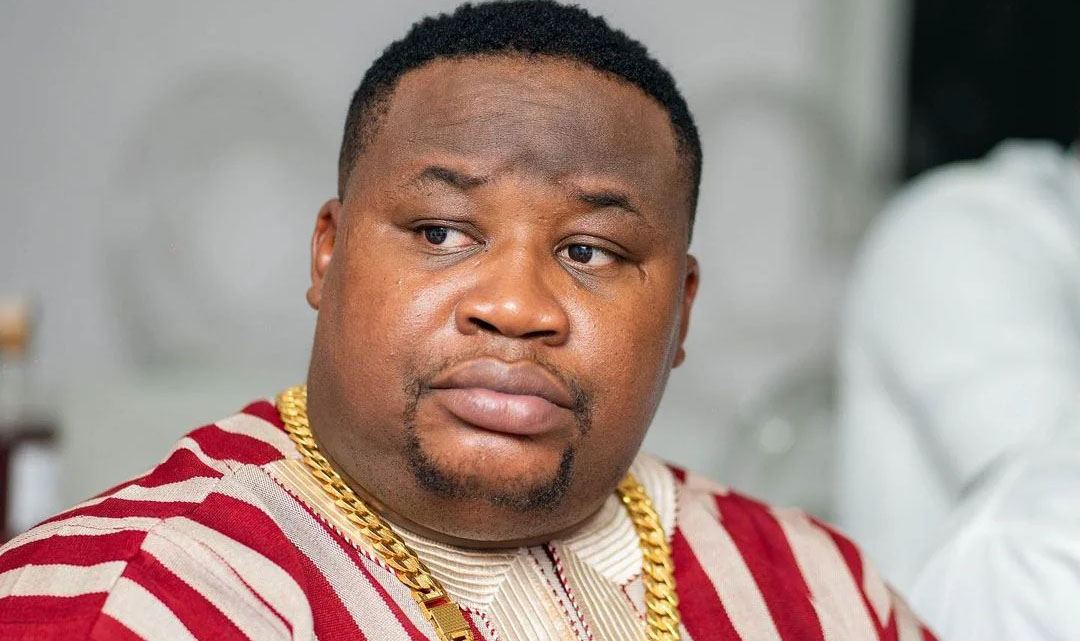
Cubana Chief Priest Vows to Oppose Peter Obi in 2027 Presidential Race
Popular Nigerian socialite and businessman Pascal Okechukwu, widely known as Cubana Chief Priest, has officially announced that he plans to oppose Peter Obi’s 2027 presidential bid, signaling a significant political shift from his previous support for the Labour Party candidate in the 2023 elections.
The revelation came during an interactive session with his followers on Instagram, where questions about his political alignment and involvement in the City Boy Movement (CBM), a key youth support group for President Bola Ahmed Tinubu, prompted a candid response. Cubana Chief Priest affirmed his opposition, stating, “Yes oh, hope say no be crime, because I worked for Obi last election even as special adviser to an APC governor.”
His announcement quickly generated mixed reactions on social media. Critics reminded him of past encounters with the Economic and Financial Crimes Commission (EFCC), noting that the government he now supports previously investigated him. He responded with confidence, declaring, “If you never go EFCC for Naija, you never make am.”
READ ALSO:
- US Lawmakers Introduce Bill to Sanction Kwankwaso, Miyetti Allah
- NAFDAC Clarifies: No Government Directive to Halt Sachet Alcohol Enforcement
- Suspected IED Explosion Rocks Bayelsa Secretariat, Police Arrest Suspect
The discussion also touched on regional development in the South-East, with commenters suggesting stronger unity could have helped Obi in 2023. Cubana Chief Priest replied sharply, urging supporters to back candidates of their choice and questioning the tangible impact of political arguments on regional progress.
Cubana Chief Priest’s shift coincides with another high-profile appointment: his close associate, Obi Cubana, was named South-East Director of the City Boy Movement, a move announced by Seyi Tinubu, son of President Bola Ahmed Tinubu. This development has fueled discussions on the growing influence of South-East businessmen and celebrities in Nigeria’s political landscape ahead of the 2027 elections.
Political analysts note that Cubana Chief Priest’s declaration underscores the increasing role of celebrities and social influencers in shaping voter sentiment, particularly among youth and urban populations, and highlights the interplay between entertainment, social media presence, and political mobilization.
As Nigeria moves closer to the 2027 general elections, Cubana Chief Priest’s public opposition to Peter Obi is likely to intensify political debates and influence early election dynamics, especially among supporters and detractors in key demographic groups.
Cubana Chief Priest Vows to Oppose Peter Obi in 2027 Presidential Race
Politics
El-Rufai: I Supported Tinubu Out of Party Principle, Not Friendship
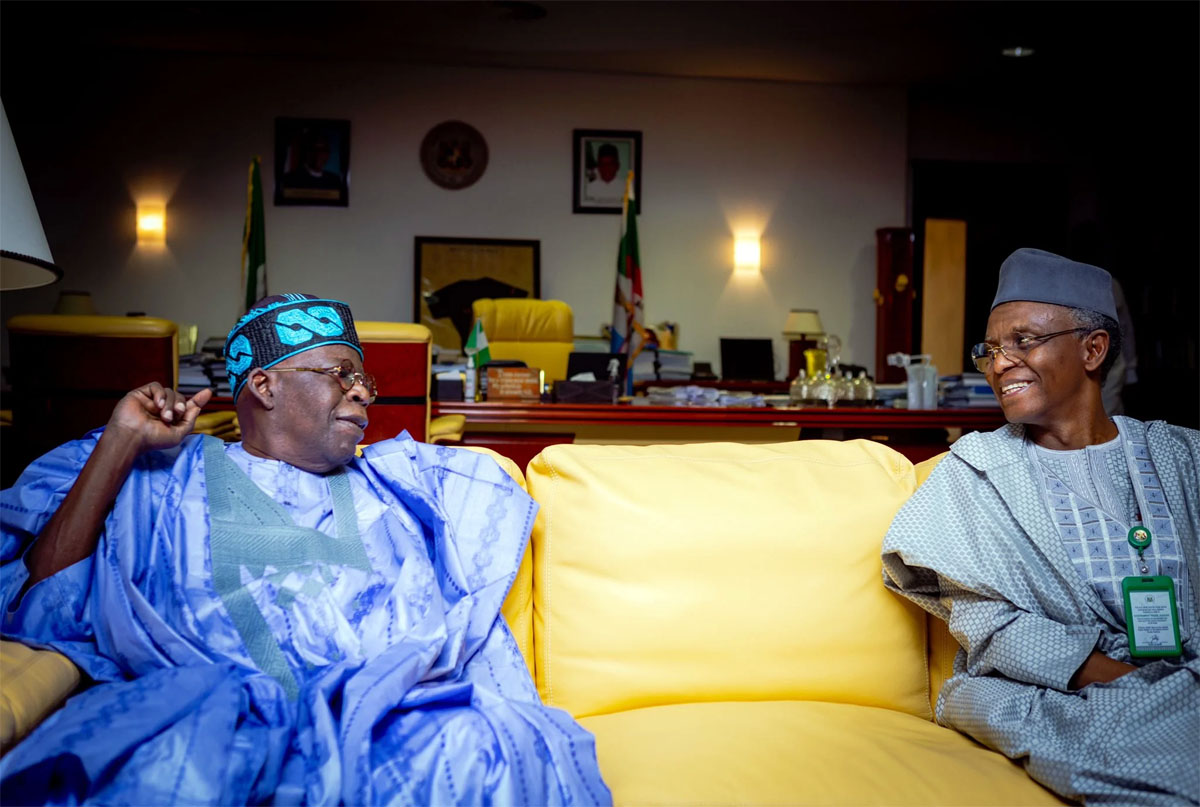
El-Rufai: I Supported Tinubu Out of Party Principle, Not Friendship
Former Kaduna State Governor Nasir El-Rufai has stated that he never had a personal or political relationship with President Bola Tinubu, insisting that their political paths were never destined to align.
El-Rufai, now a prominent figure in the African Democratic Congress (ADC), made the remarks in a television interview, dismissing claims that he and Tinubu were once friends or political allies.
“I think it’s important to make this clarification. There is an assumption that I was ever Tinubu’s friend. I was not. We never got along with Tinubu. We never had a personal relationship,” he said.
He explained that his support for Tinubu during the 2023 presidential election was not driven by personal loyalty but by political principle and party discipline within the All Progressives Congress (APC).
READ ALSO:
- Trump Approves Deployment of 200 U.S. Soldiers to Support Nigeria’s Fight Against Terrorists
- Atiku Rejects Mixed Result Transmission
- Two Siblings Arrested for Killing Elder Brother, Burying Him in Imo
“For me, Tinubu was initially just an aspirant of the party. I was approached by certain Islamic stakeholders from the South-West and asked to support the emergence of a South-West Muslim presidential candidate,” he added.
El-Rufai noted that his backing of Tinubu was rooted in an understanding within the APC that after eight years of former President Buhari, power would shift to the South-West, and that his commitment was strictly principle-driven, not personal.
He further stated that once Tinubu emerged as the party’s candidate, he fully worked to ensure APC’s victory, highlighting his belief in supporting the official party candidate, regardless of personal preference.
However, El-Rufai said that fundamental differences in values and governance philosophy eventually created a widening gap between him and Tinubu. “We didn’t fall out; we just couldn’t find areas of agreement,” he explained, underscoring their incompatible approaches to leadership and public service.
Political analysts suggest that El-Rufai’s remarks signal growing ideological divergence within APC and reflect his efforts to distinguish his ADC platform ahead of the 2027 general elections.
El-Rufai: I Supported Tinubu Out of Party Principle, Not Friendship

-
 News2 days ago
BREAKING: Tinubu Holds Reconciliation Meeting With Wike, Fubara, Rivers Leaders at Aso Rock
-

 Business3 days ago
BoI Gets CBN Approval to Launch Non‑Interest Banking Window in Nigeria
-

 metro2 days ago
Leadership Crisis at NAHCON as Chairman Abdullahi Saleh Usman Resigns
-
 News2 days ago
US Judge Orders FBI, DEA to Release Tinubu’s Criminal Records, Faults Delays
-

 News1 day ago
Oyo Muslims Reaffirm Loyalty to Sultan on Islamic Matters — Grand Chief Imam
-

 News2 days ago
OWN Calls for Immediate Resignation of INEC Chairman
-

 International2 days ago
US to Deport 18 More Nigerians on ‘Worst-of-the-Worst’ Criminal List (Full Names)
-
 Business2 days ago
Naira Posts Strong Comeback, Breaking Two‑Year High Against Dollar