

Politics
Wike’s anointed candidate, Siminialayi Fubara, declared Rivers governor-elect
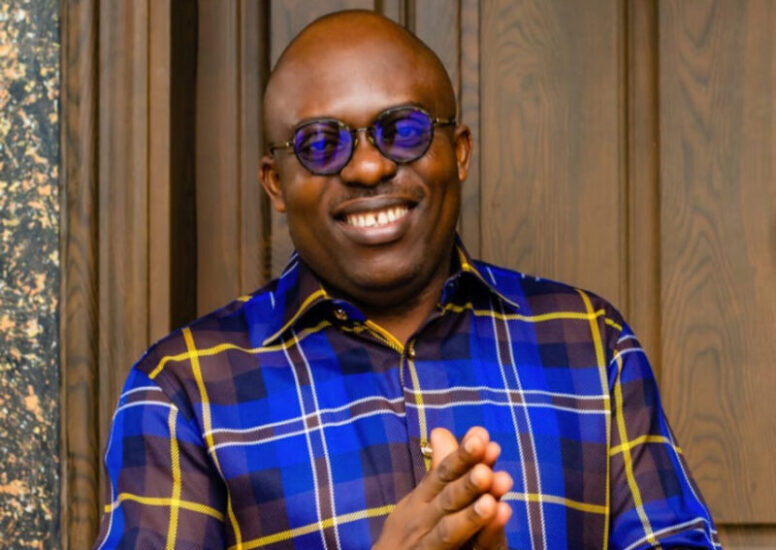
Siminialayi Fubara of the Peoples Democratic Party (PDP) has been declared the winner of the Rivers State governorship election.
The state returning officer, Professor Akpofure Rim-Rukeh, announced the result late Monday night at the end of the two days collation at the Independent National Electoral Commission (INEC) head Office in Port Harcourt.
The PDP candidate polled 302,614 votes to defeat his closet rival Tonye Cole of the All Progressives Congress (APC) who scored 95,274 votes while the Social Democratic Party (SDP) candidate, Senator Magnus Abe, and Labour Party (LP)’s Beatrice Itubo came a distant third and fourth with 46,981 and 22,224 votes respectively.
READ ALSO:
- PDP’s Dauda Lawal unseats Matawalle in Zamfara
- Hours after re-election, Sanwo-Olu approves salary increment for civil servants
- How Uba Sani of APC narrowly won Kaduna gov poll
Prof. Rim-Rukeh who is also the Vice Chancellor of the Federal University of Petroleum Resources said a total of 496,852 voters were accredited for the March 18 governorship election out of the 3,537,190 registered voters in the state.
He said of the 494,604 total votes cast, 483,934 were valid while 10,670 were rejected votes.
Other political party agents at the state collation centre rejected the results, alleging the figures were allocated.
Fubara was anointed by the incumbent Governor Nyesom Wike, who is in the last weeks of his two-term of eight years.







Politics
2027: Kwankwaso Signals Fuel Subsidy Comeback as NDC Vows to Crash Petrol Prices
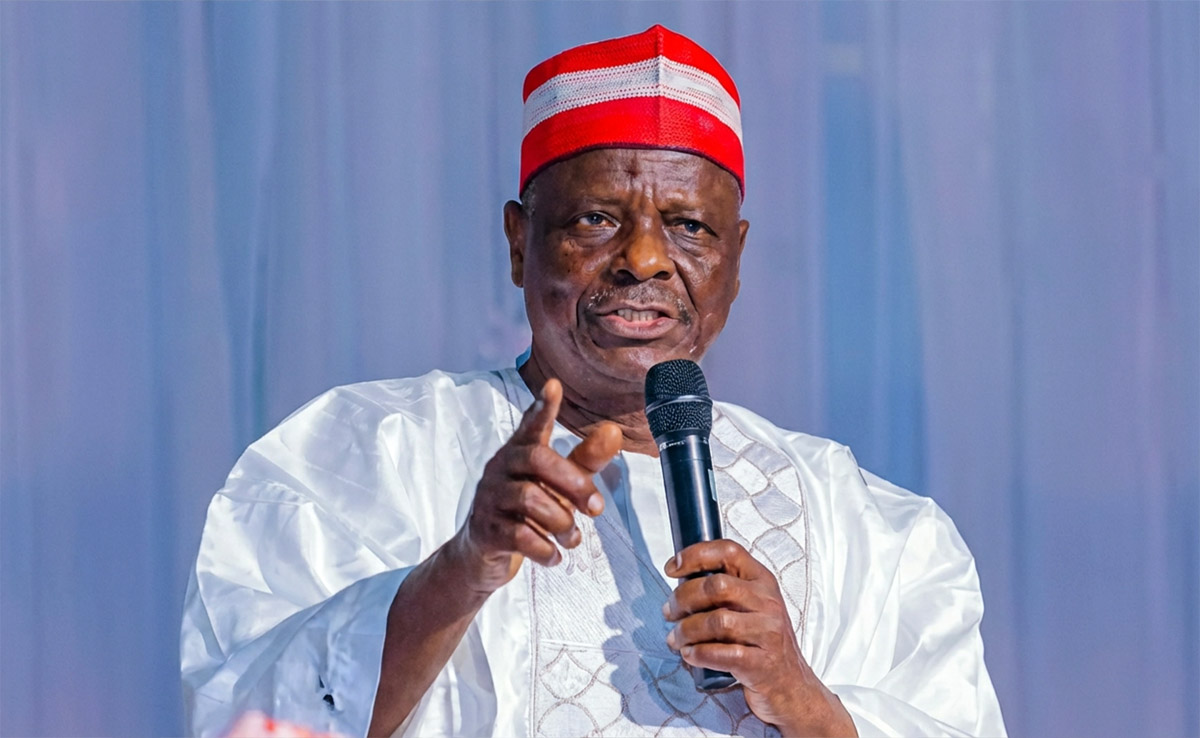
The Nigeria Democratic Congress (NDC) has signalled its willingness to consider restoring petrol subsidy if it wins the 2027 general election, with its vice-presidential candidate, Rabiu Musa Kwankwaso, promising to explore all necessary measures to reduce fuel prices and ease the economic hardship facing Nigerians.
Kwankwaso made the declaration during an interview on Channels Television’s Politics Today on Thursday, October 15, saying the party’s leadership was united on the need to make energy more affordable.
The former Kano State governor said he, the NDC presidential candidate, Peter Obi, and the party’s leader, Seriake Dickson, had aligned their positions on addressing the high cost of energy in the country.
According to Kwankwaso, the party would consider whatever measures were necessary to bring down petrol prices, including a possible return to fuel subsidy.
He argued that the cost of petrol had become a major burden on households and businesses, contributing to higher transportation fares, rising food prices and increased operating costs for companies.
The NDC candidate said an incoming government would need to examine available policy options to reduce the pressure on Nigerians, particularly low-income earners and small businesses struggling with the rising cost of living.
READ ALSO:
- NAF Deploys Pumps in Desperate Push to Recover Submerged Aircraft After Crash Killed 25
- Rivers Police Remove DPO as Suspected Cultists’ Outpost Renovation Sparks Probe
- Osun Murder: Three Arrested as Police Recover Weapons, Link Suspect to Earlier Killings
Kwankwaso also identified corruption and irregularities in the petroleum industry as issues that must be addressed to ensure Nigerians benefit from reforms in the sector.
He suggested that reducing waste and tackling abuses could help improve the management of public resources and support efforts to make petroleum products more affordable.
The comments reopen the debate over fuel subsidy removal, one of the most consequential economic decisions taken by President Bola Ahmed Tinubu, who announced the end of the policy during his inauguration on May 29, 2023.
The removal led to a sharp increase in petrol prices, with the effects spreading across transportation, food distribution, manufacturing and other sectors of the economy.
The Tinubu administration has defended the decision as part of broader economic reforms intended to reduce the government’s subsidy burden and redirect public funds towards other priorities. However, the resulting increase in living costs has remained a major concern for many Nigerians.
Kwankwaso’s statement suggests that the NDC would be prepared to revisit the policy if elected in 2027. However, the party has yet to publish a comprehensive framework explaining how a possible subsidy scheme would operate, how much it would cost or how the government would fund it without creating additional pressure on public finances.
Questions also remain about the proposed safeguards against corruption, the method of determining eligible beneficiaries and whether any intervention would involve a blanket subsidy or a more targeted arrangement.
The NDC’s position is expected to feature in the wider debate over economic policy ahead of the 2027 presidential election, as political parties outline their plans for addressing high petrol prices, inflation and the cost-of-living crisis.
For Nigerians facing elevated transportation and household expenses, the central issue will be whether the party can translate its promise of cheaper petrol into a practical, transparent and financially sustainable policy.
2027: Kwankwaso Signals Fuel Subsidy Comeback as NDC Vows to Crash Petrol Prices
Politics
Adeleke, Davido Face Backlash Over Tinubu’s 2027 Re-election Bid
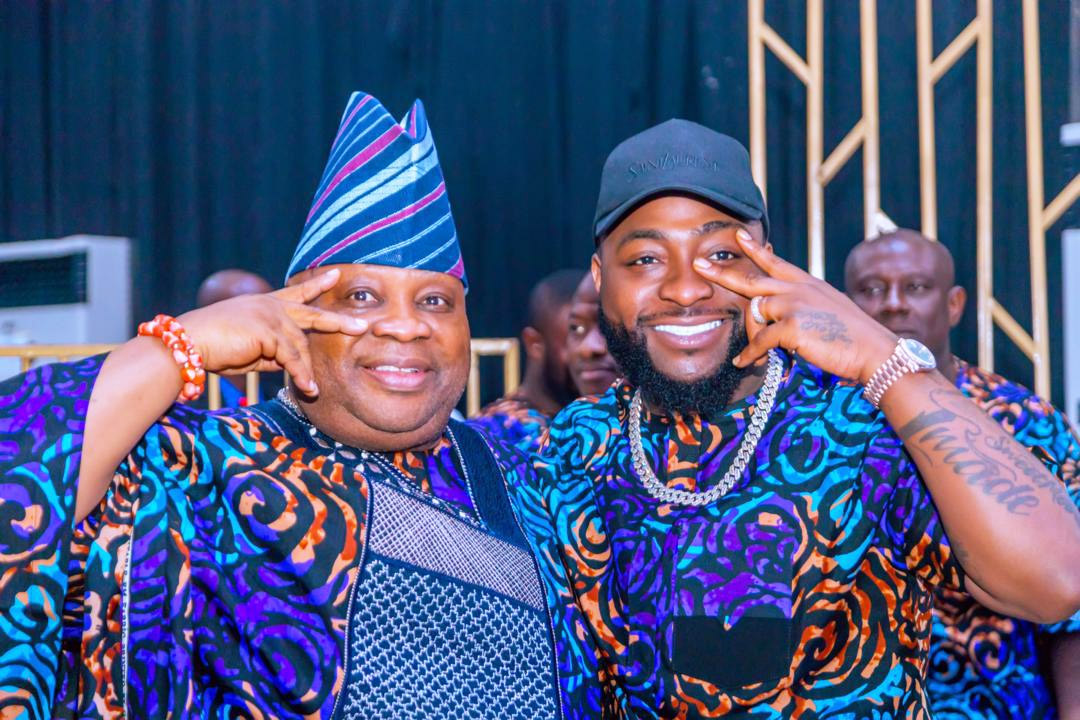
Adeleke, Davido Face Backlash Over Tinubu’s 2027 Re-election Bid
Osun State Governor Ademola Adeleke and his nephew, Afrobeats star David Adeleke, popularly known as Davido, have come under criticism on social media following renewed attention to the governor’s reported support for President Bola Tinubu’s 2027 re-election bid.
The controversy centres on the perceived contradiction between Davido’s earlier opposition to the All Progressives Congress (APC) in Osun State and his uncle’s subsequent political alignment with Tinubu ahead of the 2027 presidential election.
The backlash intensified after Davido’s earlier social media comments criticising APC supporters in Osun resurfaced, prompting some Nigerians to question whether the Adeleke family was applying different political standards at the state and federal levels.
During the build-up to the August 2026 Osun governorship election, Davido reportedly declared that anybody supporting the APC in the state was an “enemy of progress”. The singer had openly campaigned for his uncle, who contested the election on the platform of the Accord Party.
Adeleke subsequently won re-election, while his reported support for Tinubu’s second-term ambition has reopened debate about the political positions previously expressed by the governor and his nephew.
The governor’s reported involvement in Tinubu’s re-election campaign has attracted attention because of the fierce political contest between the Accord Party and the APC during the Osun governorship election.
Reports published on October 15 indicated that Adeleke had been named among the coordinators of Tinubu’s 2027 presidential campaign structure in Osun State. The development prompted renewed scrutiny of his political relationship with the president.
READ ALSO:
- ToluwaniSings’ Final Hours: Aide Reveals Desperate Search Across 8 Hospitals
- Real Madrid Demand Tebas’ Exit After Explosive Nazi Propaganda Row
- Terrorists Abduct Catholic Priest in Benue as Police Launch Rescue Operation
Adeleke had previously explained that his support for Tinubu was based partly on their shared Yoruba background and his desire to encourage the president to continue federal infrastructure projects in the South-West.
In an interview reported in August, the governor said his support was not the result of a prior agreement with the president. He also defended his engagement with Tinubu as an opportunity to discuss the development of Osun State.
The explanation has not ended the debate, with critics questioning how the governor’s current position aligns with the political messaging used to mobilise support for his re-election.
Reactions circulating on social media included accusations of political inconsistency, with some users arguing that the family had opposed the APC in Osun while appearing willing to support the party at the national level.
One commenter argued that supporters who stood behind Adeleke during the governorship contest deserved an explanation for the governor’s subsequent political alignment.
Another questioned the apparent difference between Davido’s earlier criticism of APC supporters in Osun and his uncle’s reported backing of Tinubu’s re-election bid.
Other commenters, however, framed the development as a reflection of the shifting alliances that characterise Nigerian politics, arguing that politicians frequently cooperate with former opponents when their interests converge.
The reactions reflect competing views about political loyalty, the expectations of supporters and the freedom of elected officials to make strategic decisions after an election.
Davido’s role in the controversy stems from his outspoken support for his uncle during the Osun governorship campaign. The singer had publicly criticised the APC and defended Adeleke’s administration, making his earlier posts a focal point of the latest debate.
With his uncle now associated with Tinubu’s 2027 re-election campaign, some social media users have called on the musician to clarify his position.
However, the criticism directed at Davido is largely linked to his previous public statements and his relationship with the governor. It should not be taken as evidence that the singer has changed his political position or endorsed Tinubu’s re-election.
The dispute highlights the challenges political figures may face when their alliances change after elections, particularly when their supporters have been mobilised around strong opposition to a rival party.
For Adeleke, the debate raises questions about how his support for Tinubu will be received by voters who backed him on the Accord Party platform.
For Davido, the resurfacing of his earlier comments illustrates how statements made during election campaigns can continue to shape public perceptions long after the polls have closed.
The development also comes amid growing political manoeuvring ahead of the 2027 general elections, when parties and political figures are expected to pursue alliances to strengthen their electoral prospects.
Ultimately, whether the controversy will affect the Adeleke family’s political standing in Osun remains uncertain. The online backlash, however, has brought the relationship between political loyalty, electoral promises and shifting alliances back into public debate.
The criticism quoted in this report represents the views of social media users, not established findings of wrongdoing. The available information does not establish that Adeleke or Davido personally insulted Osun voters or independently verify claims that people died specifically because of their political support for the governor.
Adeleke, Davido Face Backlash Over Tinubu’s 2027 Re-election Bid
Politics
Tinubu Speech Controversy: Reno Omokri Fires Back at Critics, Cites Live TV Footage

Former presidential aide Reno Omokri has challenged claims that President Bola Ahmed Tinubu’s speech at the inauguration of the All Progressives Congress (APC) Presidential Campaign Council was pre-recorded, pointing to television coverage and footage he said showed the President delivering the address at the event.
Omokri argued that the presence of journalists, reported live broadcasts and footage showing Tinubu moving to the podium contradicted suggestions that the speech had been recorded before the inauguration.
The controversy followed questions raised by human rights lawyer Chidi Odinkalu, who expressed doubts about the circumstances surrounding the President’s appearance in the video of the event. Odinkalu questioned the camera work and transitions in the footage and called for additional recordings to establish what happened at the venue.
Responding to the allegation, Omokri cited coverage by television stations, including Arise Television, as part of his argument that Tinubu attended the inauguration and delivered his address in person.
According to Omokri, the footage showed Tinubu rising from his seat in the Banquet Hall of the Presidential Villa, walking to the presidential podium bearing the Coat of Arms and delivering his speech as cameras followed his movements.
He also pointed to shots showing the President’s empty seat after he stood up, different camera angles capturing him at the podium and footage of his interactions with attendees.
READ ALSO:
- ₦200m Fake Alcohol Packaging Uncovered as NAFDAC Raids Aba Market
- ₦130m Toyota Tundra Wrecked: Lagos Dealer Questions Police Over Suspect’s Release
- Fani-Kayode Counters Keyamo, Defends Atiku Over Nigeria Airways Collapse
Omokri further referred to exchanges involving Tinubu and some participants, including Senator Abdul’aziz Abubakar Yari, whom he identified as the Director-General of the Presidential Campaign Council.
The former presidential aide maintained that these details undermined the allegation that the President’s address had been pre-recorded. However, his arguments about the footage should be distinguished from independently established facts about the event.
In a separate report published on October 15, 2026, Premium Times said it had independently confirmed that Tinubu was physically present at the inauguration. The report provided an additional basis for assessing claims about the President’s attendance, beyond Omokri’s response.
Odinkalu’s concerns centred on what he described as unusual transitions and production-style camera work in the video. He challenged the organisers to release footage showing Tinubu walking to the podium and a wide-angle view of the hall to help clarify the circumstances surrounding the address.
The competing accounts have made the original footage central to the dispute. While evidence of Tinubu’s physical presence would challenge claims that he was absent from the venue, questions about how the address was recorded, edited and broadcast must be assessed against the available footage and other verifiable evidence.
Omokri also criticised those questioning the speech, arguing that critics of the administration should focus on examining the substance of Tinubu’s address rather than disputing whether it was delivered live.
He described the speech as well received and said it highlighted the administration’s economic performance and achievements.
According to Omokri, Tinubu used the occasion to discuss Nigeria’s economic performance, including claims of sustained gross domestic product (GDP) growth above four per cent, 14 consecutive cycles of trade surpluses and Nigeria’s contribution to global economic growth in 2025.
Omokri also referred to claims about the performance of the Nigerian stock market, which he said had been described as the most profitable in the world, citing Bloomberg.
These economic figures and assessments were presented as part of Omokri’s defence of the President’s address. They require separate examination against the relevant economic data and reporting and should not be treated as independently verified merely because they were cited in the political exchange.
The former presidential aide argued that opposition figures should scrutinise the administration’s economic claims and present alternative assessments of its performance rather than focus on the recording controversy.
He accused critics of failing to provide what he considered a substantive response to the President’s address and described the pre-recording allegation as disappointing.
The dispute has brought renewed attention to Tinubu’s APC campaign council inauguration, the circumstances surrounding his address and the wider political debate over the administration’s record.
Tinubu Speech Controversy: Reno Omokri Fires Back at Critics, Cites Live TV Footage
-

 metro14 hours ago
₦130m Toyota Tundra Wrecked: Lagos Dealer Questions Police Over Suspect’s Release
-

 metro2 days ago
Money Rituals: Four Arrested in Kwara Over Suspected Human Parts
-

 News3 days ago
2027 Elections: INEC Reveals Why Pantami, Adebutu, Others Were Excluded
-

 metro2 days ago
Osogbo Cultism Crackdown: Six Suspects Arrested as Police Recover Drugs, Charms
-
 Politics3 days ago
2027: Adeleke’s Camp Promises 1.5 Million Votes for Tinubu in Osun
-

 News13 hours ago
₦200m Fake Alcohol Packaging Uncovered as NAFDAC Raids Aba Market
-
 Politics3 days ago
APC Expands Tinubu’s Campaign Council, Names Wike, Adeleke, Soludo
-
 International2 days ago
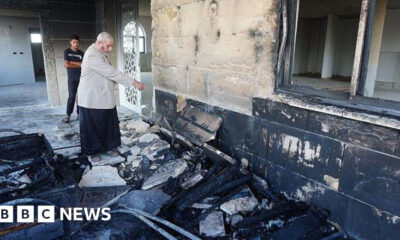
Outrage as Israeli Settlers Torch Mosque, Burn Vehicle in Occupied West Bank