

News
World leaders pay tribute to Gorbachev, last rare leader of USSR, who dies at 91

World leaders have paid tribute to Mikhail Gorbachev, the Soviet leader who oversaw the collapse of the USSR and lifted the Iron Curtain, marking a pivotal turning point in world history.
Gorbachev, Nobel prize winner, who ended the Cold War without bloodshed but failed to prevent the collapse of the Soviet Union, died on Tuesday at the age of 91, hospital officials in Moscow said.
The passing of Mikhail Gorbachev, the last leader of the Soviet Union and for many the man who restored democracy to then-communist-ruled European nations, was mourned Wednesday as the loss of a leader who changed the world and for a time gave hope for peace among the superpowers.
Here are some of the reactions to his death from across the world.
Russian President Vladimir Putin
Russia’s leader Vladimir Putin expressed his “deep sympathies” over Gorbachev’s death, Kremlin spokesman Dmitry Peskov told Russian news agencies.
“Tomorrow he will send a telegram of condolences to his family and friends,” said Peskov.
UN chief Antonio Guterres
Guterres in a statement praised Gorbachev as “a one-of-a-kind statesman who changed the course of history” and “did more than any other individual to bring about the peaceful end of the Cold War”.
The statement, which was posted on Twitter, said the world has lost “a towering global leader, committed multilateralist and tireless advocate for peace”.
French President Emmanuel Macron
Macron praised Gorbachev as a “man of peace” and sent his “condolences for the death of Mikhail Gorbachev, a man of peace whose choices opened up a path of liberty for Russians. His commitment to peace in Europe changed our shared history”.
US President Joe Biden
Biden hailed Gorbachev as a “rare leader” who made the world a safer place.
“These were the acts of a rare leader – one with the imagination to see that a different future was possible and the courage to risk his entire career to achieve it,” Biden said in a statement, referring to Gorbachev’s democratic reforms.
“The result was a safer world and greater freedom for millions of people. Mikhail Gorbachev was a man of remarkable vision,” Biden added.
EU chief Ursula von der Leyen
European Commission President Ursula von der Leyen hailed Gorbachev as a “trusted and respected leader” who “opened the way for a free Europe”.
His “crucial role” in bringing down the Iron Curtain, which symbolised the division of the world into communist and capitalist blocs, and ending the Cold War left a legacy “we will not forget”, she wrote on Twitter.
UK Prime Minister Boris Johnson
Outgoing Prime Minister Boris Johnson said he “always admired the courage and integrity” Gorbachev showed to bring the Cold War to a peaceful conclusion.
“In a time of Putin’s aggression in Ukraine, his tireless commitment to opening up Soviet society remains an example to us all,” he said in a Twitter post, referring to Moscow’s offensive in its former Soviet neighbour.
Japanese Prime Minister Fumio Kishida
Kishida noted Gorbachev’s important role in the reduction of nuclear weapons held by the Soviet Union and United States, saying he had made “great achievements.”
“Mr. Gorbachev, who possessed great strategic vision and decisive execution, played a very important role,” he said.
Gorbachev, the last Soviet president, forged arms reduction deals with the United States and partnerships with Western powers to remove the Iron Curtain that had divided Europe since World War Two and bring about the reunification of Germany.
But his internal reforms helped weaken the Soviet Union to the point where it fell apart, a moment that President Vladimir Putin has called the “greatest geopolitical catastrophe” of the twentieth century.
After decades of Cold War tension and confrontation, Gorbachev brought the Soviet Union closer to the West than at any point since World War Two.
“He gave freedom to hundreds of millions of people in Russia and around it, and also half of Europe,” said former Russian liberal opposition leader Grigory Yavlinsky. “Few leaders in history have had such a decisive influence on their time.”
But Gorbachev saw his legacy wrecked late in life, as the invasion of Ukraine brought Western sanctions crashing down on Moscow, and politicians in both Russia and the West began to speak of a new Cold War.
“Gorbachev died in a symbolic way when his life’s work, freedom, was effectively destroyed by Putin,” said Andrei Kolesnikov, senior fellow at the Carnegie Endowment for International Peace.
He will be buried in Moscow’s Novodevichy Cemetery next to his wife Raisa, who died in 1999, said Tass, citing the foundation that the ex-Soviet leader set up once he left office.
“We are all orphans now. But not everyone realizes it,” said Alexei Venediktov, head of a liberal media radio outlet that closed down after coming under pressure over its coverage of the Ukraine war.
When pro-democracy protests rocked Soviet bloc nations in communist Eastern Europe in 1989, Gorbachev refrained from using force – unlike previous Kremlin leaders who had sent tanks to crush uprisings in Hungary in 1956 and Czechoslovakia in 1968.
But the protests fuelled aspirations for autonomy in the 15 republics of the Soviet Union, which disintegrated over the next two years in chaotic fashion.
Gorbachev – who was briefly deposed in an August 1991 coup by party hardliners – struggled vainly to prevent that collapse.
“The era of Gorbachev is the era of perestroika, the era of hope, the era of our entry into a missile-free world … but there was one miscalculation: we did not know our country well,” said Vladimir Shevchenko, who headed Gorbachev’s protocol office when he was Soviet leader.
On becoming general secretary of the Soviet Communist Party in 1985, aged just 54, he had set out to revitalise the system by introducing limited political and economic freedoms, but his reforms spun out of control.
“He was a good man – he was a decent man. I think his tragedy is in a sense that he was too decent for the country he was leading,” said Gorbachev biographer William Taubman, a professor emeritus at Amherst College in Massachusetts.
-FRANCE 24 with AFP, AP and Reuters








News
MURIC Warns FG: Any Move Against Atiku Now Lacks Tact
MURIC Warns FG: Any Move Against Atiku Now Lacks Tact
The Muslim Rights Concern (MURIC) has warned the Federal Government against any move to arrest, interrogate or otherwise take action against former Vice-President Atiku Abubakar over a fresh petition before the Economic and Financial Crimes Commission, saying such a step at this time could send the wrong signal to Nigerians.
The warning came as the controversy over a renewed call for the EFCC to investigate allegations dating back to Atiku’s tenure as Vice-President intensified, with opposition figures and the petitioner trading sharply different arguments over the matter.
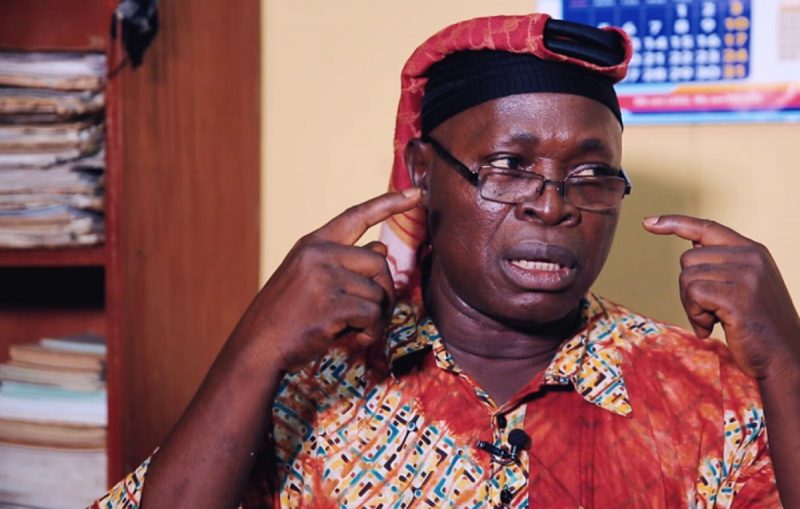
In a statement issued on Tuesday, September 22, 2026, MURIC Founder and Executive Director, Professor Ishaq Akintola, said the government should exercise caution, particularly with the 2027 general elections approaching.
According to MURIC, the renewed allegations have assumed greater sensitivity because Atiku is now the presidential candidate of the African Democratic Congress and a leading opposition figure.
“We warn that such an attempt at this point in time will send the wrong signal to Nigerians,” the group said, adding that with the 2027 elections “at the doorsteps,” the Federal Government should carefully consider the consequences of any action against the former Vice-President.
MURIC described any such move as lacking tact and “short” of emotional intelligence, while urging the government to avoid conduct that could create the impression that state institutions were being used against political opponents.
The organisation also warned against what it described as a damaging “body language” capable of portraying Nigeria as a “banana republic.”
MURIC said that although the country had already lost some ethical ground, its democratic values and norms remained important safeguards that should not be compromised.
“Our corporate image in the global community is sinking fast,” the group added.
READ ALSO:
- JAMB Allows Candidates to Change Lost SIM, Email Addresses
- How Nigerians Can Get Federal High Court Affidavit Online Without Visiting Court
- Plateau Violence: Several Killed as Fresh Attacks Trigger Mass Exodus
The statement followed renewed controversy over a petition by former House of Representatives member, Ehiozuwa Agbonayinma, asking the EFCC to revisit allegations concerning Atiku’s activities while he was Vice-President.
Reports indicate that the petition relates to allegations investigated by the EFCC between 2005 and 2006. Agbonayinma reportedly gave the anti-graft agency a 14-day ultimatum to act and threatened legal action if the commission failed to respond.
Former Senator Dino Melaye has strongly opposed the renewed petition, describing it as an attempt to “resurrect the dead.” Melaye argued that the matter had previously been dealt with and questioned the basis for bringing it back almost two decades later.
The dispute, however, has escalated beyond the original petition, with Agbonayinma hitting back at Melaye and challenging him to produce documentary evidence for his claim that the allegations had been investigated and dismissed.
In a statement reported on September 20, Agbonayinma insisted that he was asking the EFCC to perform its statutory responsibility and argued that the substance of the allegations should be addressed rather than his personality or political affiliation.
“You cannot defend Atiku Abubakar from an EFCC petition by attacking me,” Agbonayinma was quoted as saying, while urging the anti-graft agency to determine whether the allegations warranted further investigation.
The renewed controversy has also brought attention to the distinction between a petition seeking investigation and a finding of criminal guilt. The existence of a petition does not, by itself, establish that the person named in it committed an offence.
There is also a historical legal dimension to the allegations. Reports on the previous proceedings state that a Lagos State High Court set aside an EFCC administrative indictment against Atiku in December 2006, while no criminal conviction against him resulted from the allegations.
Atiku has continued to deny wrongdoing and has challenged anyone with credible evidence against him to present it through the appropriate legal channels.
Meanwhile, there was no confirmed announcement from the EFCC, as of the latest reports reviewed, that it had arrested Atiku or formally invited him over the fresh petition. A separate and more recent EFCC investigation reported on September 20 concerns individuals connected to allegations surrounding the Mambilla Power Project, which is distinct from the 2005–2006 allegations at the centre of the present political dispute.
The MURIC intervention has therefore added a fresh dimension to an increasingly heated political controversy, with the organisation urging the Federal Government to exercise restraint and protect public confidence in Nigeria’s democratic institutions.
With the 2027 elections approaching, the dispute over the renewed EFCC petition is expected to remain a significant political issue, particularly if the anti-graft agency decides to take further steps.
For MURIC, however, the timing of any action is crucial. The organisation wants the Federal Government to ensure that whatever steps are taken by law-enforcement agencies are grounded in due process and do not create the perception of political persecution.
The group’s central warning is that Nigeria must guard its democratic reputation and avoid actions that could further erode public confidence in its institutions at a particularly sensitive period in the nation’s political calendar.
MURIC Warns FG: Any Move Against Atiku Now Lacks Tact
News
NiMet Predicts Thunderstorms, Rain Across Nigeria Till Wednesday

NiMet Predicts Thunderstorms, Rain Across Nigeria Till Wednesday
The Nigerian Meteorological Agency (NiMet) has predicted thunderstorms and rainfall across several parts of Nigeria from Monday to Wednesday.
The agency, in its weather outlook released on Sunday, also warned that strong winds could occur ahead of thunderstorms in some areas.
For Monday, NiMet expects thunderstorms and light rain over parts of Taraba and Kebbi during the morning. Later in the day, moderate rainfall is expected across several areas in the North-East, Kaduna, Taraba and Kebbi.
In the North-Central region, parts of Niger State could experience thunderstorms and light rain in the morning, while most parts of the region may record thunderstorms with moderate rainfall by afternoon or evening.
The southern states are also expected to experience wet conditions. NiMet forecasts cloudy skies in the morning, with isolated thunderstorms and light rain over parts of Bayelsa, Rivers, Akwa Ibom and Cross River. More thunderstorms and light rain are expected later in the day.
Tuesday and Wednesday Forecast
On Tuesday, the northern region is expected to have patches of cloud in the morning, with thunderstorms and light rain possible in parts of Taraba.
By afternoon or evening, most parts of the region could experience thunderstorms accompanied by moderate rain.
In the North-Central, parts of the Federal Capital Territory, Niger, Nasarawa and Plateau states are expected to receive thunderstorms and moderate rainfall later in the day.
Southern areas, including parts of Ebonyi, Enugu, Abia and the South-South, may also experience thunderstorms and light rain.
NiMet expects more widespread rainfall on Wednesday, particularly across northern and North-Central states. Borno, Bauchi, Gombe, Kaduna, Adamawa and Taraba are among the areas listed for morning thunderstorms and moderate rain.
The agency also forecasts thunderstorms and moderate rainfall across much of the South later on Wednesday.
NiMet advised residents to secure loose objects and take precautions against strong winds. Motorists were urged to avoid driving during heavy rainfall, while residents were advised to disconnect electrical appliances during thunderstorms and stay away from tall trees.
Airline operators were also advised to obtain airport-specific weather information when planning flights.
NiMet Predicts Thunderstorms, Rain Across Nigeria Till Wednesday
News
Working People United Celebrates Oluremi Tinubu at 66, Commends Her Humanitarian Efforts

Working People United Celebrates Oluremi Tinubu at 66, Commends Her Humanitarian Efforts
Civic organisation Working People United has congratulated Nigeria’s First Lady, Senator Oluremi Tinubu, on her 66th birthday, praising her contributions to humanitarian services, education, healthcare and the empowerment of vulnerable Nigerians.
Oluremi Tinubu celebrates her 66th birthday on Monday, September 21, 2026, with messages of goodwill coming from individuals and organisations across the country.
In a congratulatory message issued on Sunday, National Coordinator-General of Working People United, Prince Williams Akporeha, described the First Lady’s years of public service as an important part of her contribution to Nigerian society.
Akporeha said the organisation recognised Oluremi Tinubu’s continued involvement in programmes designed to improve the welfare of children, women, young people and underserved communities.
He particularly highlighted her advocacy and interventions in education, healthcare access, youth development and economic empowerment, saying such initiatives were directed at addressing challenges faced by ordinary Nigerians.
According to the group, the First Lady’s humanitarian activities have focused on providing practical support to communities and creating opportunities for people who might otherwise have limited access to social and economic resources.
Working People United also commended Oluremi Tinubu’s interest in family welfare and children’s development, describing those areas as important to the long-term development of the country.
The organisation said efforts to strengthen access to basic education and healthcare, particularly at the grassroots, remained critical to improving the quality of life of Nigerians.
It also praised initiatives aimed at providing young people with skills and economic opportunities, noting that youth empowerment could help reduce vulnerability and expand participation in the economy.
Akporeha urged the First Lady to sustain her advocacy for vulnerable Nigerians as she begins another year of her life.
READ ALSO:
- ‘Join the Hunt’ — Soludo Urges Igbos to Strategically Align Ahead of 2027
- 18 Suspects Transferred to US Over 2021 Killing of Haitian President Moïse
- My Heart Has Always Been Home With You — Tinubu’s Powerful Message to Oluremi at 66
He said the organisation was joining Nigerians across the country to celebrate Oluremi Tinubu and acknowledge what it described as her commitment to humanitarian service.
Working People United wished the First Lady good health, wisdom, strength and fulfilment as she continues her public responsibilities and supports initiatives focused on the welfare of Nigerians.
The group also expressed hope that her birthday would provide an opportunity to renew attention to issues affecting children, women, young people and low-income families, particularly in education, healthcare and economic empowerment.
Oluremi Tinubu, a former senator representing Lagos Central Senatorial District, has been involved in public service and humanitarian activities for several years.
As First Lady, she has continued her intervention programmes through the Renewed Hope Initiative (RHI), which has focused on areas including education, health, agriculture, social investment and economic empowerment.
Her recent programmes have included support for women, vulnerable households, students, farmers, young people and families affected by economic hardship.
The birthday messages therefore come as the First Lady continues her public engagements and humanitarian programmes across different parts of Nigeria.
Working People United Celebrates Oluremi Tinubu at 66, Commends Her Humanitarian Efforts
-
 metro2 days ago
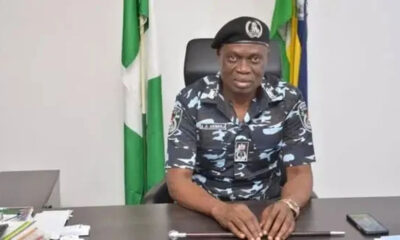
Oyo Police: Student Who Died by Suicide Was Charged With Assault, Not ₦8,000 Debt
-
 Entertainment3 days ago
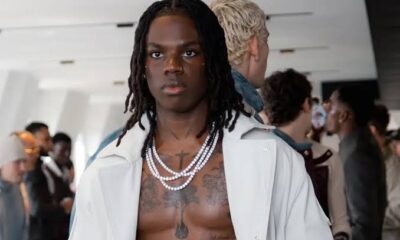
“She Wanted to Stay Single”: Rema Opens Up About Rejection That Inspired Hit Song ‘Oh No’
-

 metro3 days ago
Niger Miners’ Deaths: Families Demand Compensation, Justice for Victims
-
 metro3 days ago
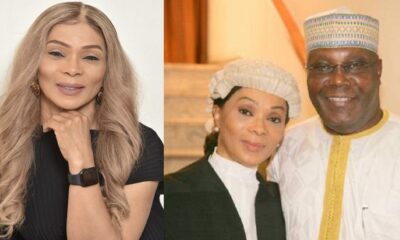
Mambilla: ICC Raises Questions Over $500,000 Payment to Atiku’s Former Wife
-
 International16 hours ago
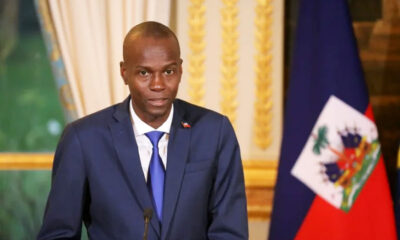
18 Suspects Transferred to US Over 2021 Killing of Haitian President Moïse
-

 Auto2 days ago
Abuja Demand Rises as Jetour Brings X70 Plus Experience to FCT
-
 Politics2 days ago
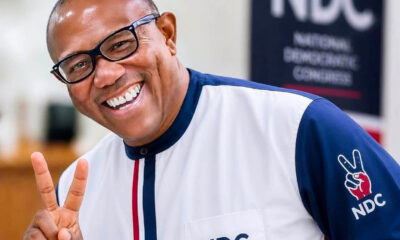
2027: NDC Predicts Wider Obi Victory Over Tinubu in Lagos
-

 metro2 days ago
Irreconcilable Developments: Wedding Cancelled 24 Hours Before Ceremony