
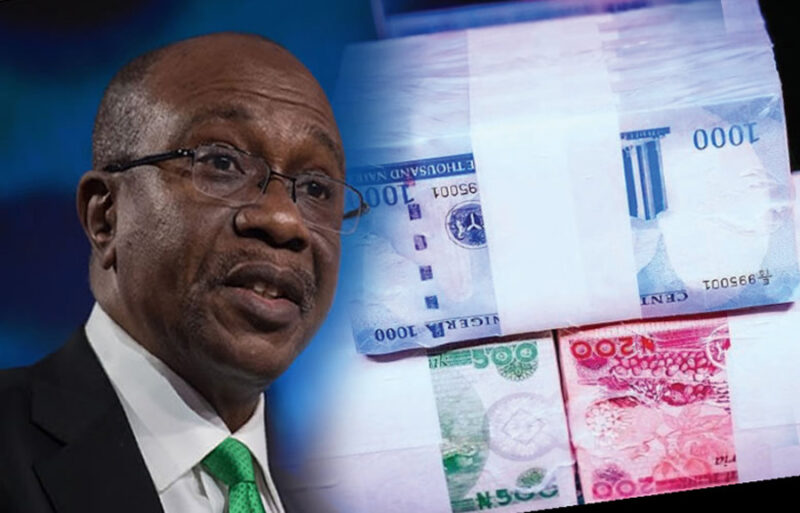
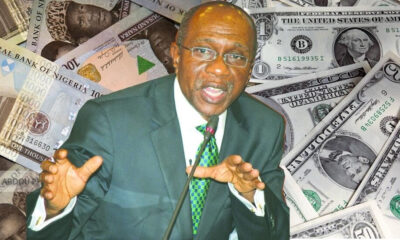
If there was any government official that has kept millions of Nigerians on their knees for the past nine years or thereabouts, it definitely has to be the suspended Central Bank of Nigeria (CBN) Governor, Godwin Emefiele.
metro
10 unforgivable sins committed by Emefiele
10 unforgivable sins committed by Emefiele
Emefiele has been suspended by President Tinubu with immediate effect and the possibility of him returning to the CBN is almost non-existent.
Emefiele finally met what might appear to be his waterloo on Friday, June 10, 2023, when the presidential hammer landed on his ever-shining, but delicate head.
In a not-so-shocking development, President Bola Tinubu dropped the axe on Emefiele who had caught the figure of a pariah in some sort, largely due to the excruciating effects of his many ill-thought-out, poorly-executed fiscal and monetary policies on Nigerians.
The reactions that have trailed the controversial CBN governor’s suspension so far suggested that President Tinubu may jolly well have ended the reign of economic terror and wanton financial servitude most Nigerians were subjected to in the last decade.
When the news broke on Friday night, you could hear a national sigh of relief, so silent, but still audible enough to reverberate across the country. It was one of such very rare occasions when Nigerians collectively agreed on a course of action.
Such was the kind of impact Emefiele had on the nation. He was not only one of the longest-serving government appointees but also held a position that was crucial to the economic prosperity and survival of Africa’s most populous country and its citizens.
READ ALSO:
But, his stint will be etched in the annals of history as the one that ushered Africa’s biggest economy into the worst economic phase in its over 60 years of nationhood.
Having been privileged to serve under three different presidents, one would imagine that Emefiele will exit office amid pumps and pageantry, but the reverse is clearly the case.
Below are 10 reasons Nigerians may never forgive Emefiele
1 Naira plunged to an all-time low: Under Emefiele’s watch, the nation’s currency suffered a great deal. The naira, which was exchanging for ₦190 to one United States dollar before he assumed office in 2014, sank to an all-time low, trading at over ₦750 at the parallel market as of Friday.
2 Encouraged forex arbitrage and round-tripping: Against advice by experts, including the International Monetary Fund (IMF) and the World Bank, that the naira should be allowed to find its true value, the suspended CBN governor spent trillions of naira trying to defend the currency but to no success.
He also created a window for Importers and Exporters to access dollars at subsidised rates in a bid to keep inflation at bay. While the answer to whether the intervention was successful or otherwise is still blowing in the wind, what is in no doubt is the price discrepancy it created in the market.
As a result of this, some unscrupulous elements who are opportune to access forex in the I&E window smiled to the banks at the expense of the Nigerian masses by profiting heavily from currency arbitrage and round-tripping.
3 Banned Crypto trading: Arguably, the biggest blow Emefiele dealt the young population was his decision to prohibit banks from dealing in cryptocurrencies or facilitating payments for cryptocurrency exchanges in Nigeria in 2021.
Justifying his decision to ban cryptocurrency-related transactions in the country, he claimed that digital currency was being used for money laundering and terrorism, adding that the use of cryptocurrencies in Nigeria is a direct contravention of existing law.
READ ALSO:
Though the apex bank promised to bring up a regulatory policy framework for the implementation of cryptocurrencies in the country, not much has been heard about that since.
4 Accused a website of causing naira devaluation: Perhaps the most ridiculous act from an apex bank governor anywhere in the world. Frustrated by his failure to rescue the falling naira, in September 2021, Emefiele accused AbokiFX of economic sabotage.
The online platform is famous for publishing daily foreign exchange rates in the parallel market and is a popular reference point for traders. But, the suspended CBN governor said, by publishing speculative black market rates, the platform and its founder, Oniwinde Adedotun, were influencing the naira value.
5 Dabbled into politics: If his sins were to be ranked, this particular one will take the top spot. In a very surprising move and against the rules of his office, Emefiele decided in his wisdom that he wanted to succeed President Muhammadu Buhari as Nigeria’s president.
Even though he never came out to declare this ambition, pictures emerged online of campaign vehicles painted with his image on them. Also, a group of All Progressives Congress (APC) supporters purchased the party’s presidential expression of interest and nomination forms in his name.
As criticisms grew about his inordinate ambition, Emefiele approached the court to seek clarification on whether he is eligible to contest for president without resigning his position as the CBN governor. The court ruled against him.
6 Introduced Naria re-colouration and cashless policy: Reeling from his failed presidential bid, Emefiele decided to get back at the politicians who he believed thwarted his dream and sold the dummy of naira redesign and cashless policy to the former President.
READ ALSO:
- LASUTH debunks Tinubu’s ownership of its medical laboratory
- Missing children from deadly plane crash found alive after 40-day search
- Manchester City are Champions of Europe, complete legendary treble
Against the expectations of many Nigerians, the purported naira redesign later turned out to be a mere recolouration as the affected notes still retained their old designs with just a little colour variation.
However, his intention became clearer as we approached the last general elections. What was meant to be a cash swap later turned to cash confiscation as Nigerians were denied access to their money, leading to protests and chaos in several states across the country.
7 Alleged Terrorism financing: While this still remains in the realm of speculation, several reports have alleged that the Department of State Services (DSS) has established a link between the embattled banker and terror financing in the country. He was accused of funding the activities of the proscribed pro-Biafra group, IPOB and other such groups in the country.
8 Refused to pay Paris Club refund: Emefiele has a pending case before Justice Inyang Ekwo of the Abuja Federal High Court over his refusal to effect payment of $53 million judgement debt arising from the Paris Club refunds.
The suspended CBN governor was initially invited to appear before the court on January 18, 2023, to explain his refusal to obey a valid order for payment of a $70m debt.
Emefiele has only released $17 million, leaving $53 million in unpaid debt.
9 Failed to tame raging inflation: Despite spending trillions of naira in form of interventions to bring down inflation, Emefiele successfully failed in this singular task as inflation surged to an 18-year high from 9% in 2014 to 22% in 2023.
10 Illegally printing money: Emefiele was also accused of printing money for the federal government to the tune of ₦22 trillion, an action considered to be illegal for an apex bank.
10 unforgivable sins committed by Emefiele
Pulse








metro
Foreign Intelligence Operations Behind Recent Nigeria Killings – Gumi
Foreign Intelligence Operations Behind Recent Nigeria Killings – Gumi
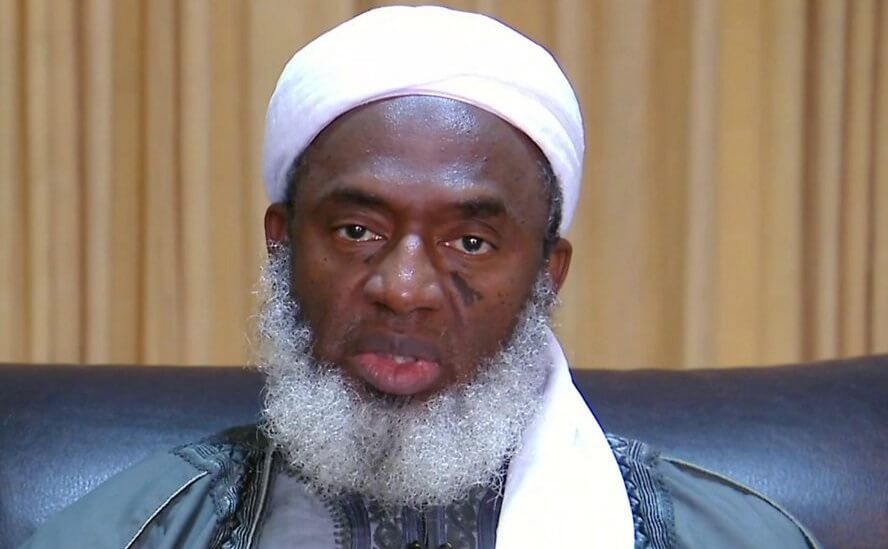
Prominent Islamic cleric Sheikh Ahmad Abubakar Gumi has raised alarms over the pattern of recent killings in Nigeria, suggesting that the violence may be linked to clandestine foreign intelligence operations, rather than purely domestic issues.
Gumi made the allegation in a Facebook post on Tuesday, just two days after the Palm Sunday attack on Gari Ya Waye community in Angwan Rukuba, Jos North, Plateau State, which left more than 20 residents dead and several others injured. He condemned the shedding of innocent blood, stressing that the attacks “have nothing to do with religion”.
“The pattern suggests a clandestine foreign intelligence operation. Many unscrupulous Nigerians are willing to serve as foot soldiers for these mercenaries,” Gumi wrote. He cited previous violent incidents, including the March 16, 2026, coordinated bomb blasts in Maiduguri, which killed at least 23 people and injured over 100, and the Palm Sunday killings in Jos, highlighting the complexity and coordination of these attacks.
READ ALSO:
- Arise News Anchor Ikokwu Quits Journalism, Joins Politics
- EFCC Pushes for Sule Lamido Retrial Before Former Judge
- NAFDAC Raises Alarm Over Fake Cerelac Mixed Fruits, Wheat in Lagos
Gumi warned against reliance on foreign involvement in Nigeria’s security architecture, urging the government to seek support only from benign superpowers for satellite intelligence and military equipment while strengthening domestic security capabilities. He emphasized the need for Nigeria to develop self-sufficient strategies that respect the country’s sovereignty and human lives.
The cleric prayed for the quick recovery of the injured and comfort for families who lost loved ones. He also warned that external interference in Nigeria’s security affairs could exacerbate tensions, especially in conflict-prone regions such as the Middle Belt and North East.
While Gumi’s claims have sparked discussion, security agencies have not verified any foreign intelligence involvement, and some officials continue to attribute the attacks to domestic armed groups and criminal networks. Nevertheless, his statement has reignited debate over the role of external actors in Nigeria’s security challenges and the need for innovative, homegrown solutions.
Foreign Intelligence Operations Behind Recent Nigeria Killings – Gumi
metro
EFCC Pushes for Sule Lamido Retrial Before Former Judge
EFCC Pushes for Sule Lamido Retrial Before Former Judge
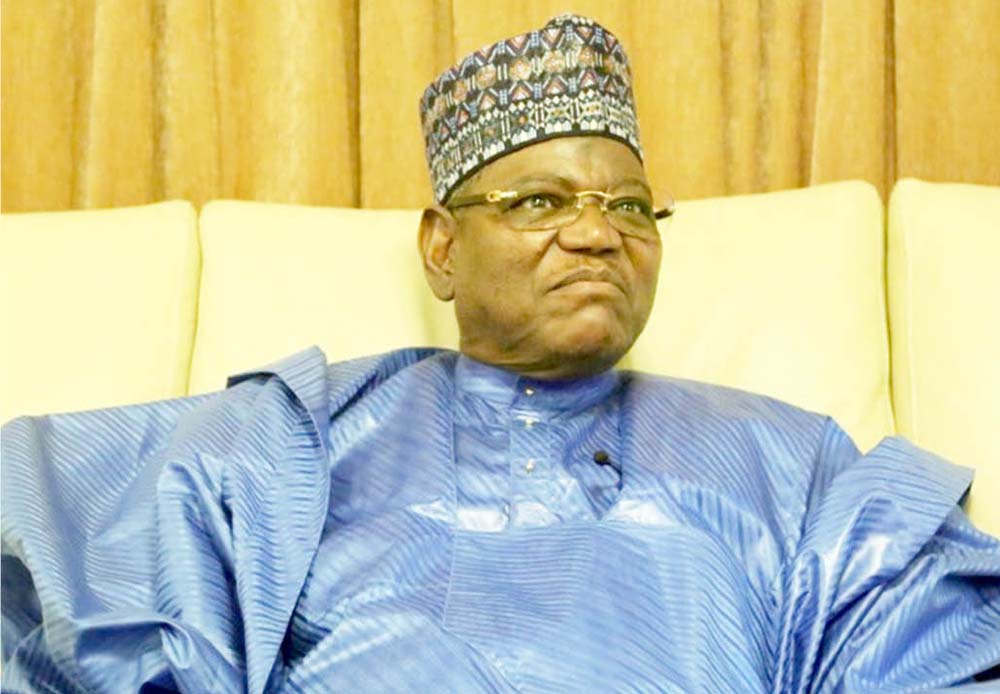
The Economic and Financial Crimes Commission (EFCC) has reiterated its demand for the retrial of former Jigawa State governor, Sule Lamido, insisting that the case be concluded by the original trial judge, Justice Ijeoma Ojukwu.
At the resumed proceedings before Justice Peter Lifu of the Federal High Court in Abuja, EFCC counsel, Chile Okoroma (SAN), informed the court that the commission had formally written to the Chief Judge, Justice John Tsoho, seeking a fiat to enable Justice Ojukwu—now serving in the Calabar division—to return and conclude the long-running trial.
Okoroma explained that the request was in compliance with the directive of the Supreme Court of Nigeria, which had earlier ordered a retrial of the defendants. He emphasised that the prosecution had already made substantial progress in the case, having called at least 17 witnesses, and argued that justice would be best served if the same judge continues the matter.
According to him, the EFCC is currently awaiting an official response from the Chief Judge regarding the request.
Counsel to the defendants, Joe Agi (SAN), did not oppose the application for adjournment, paving the way for the court to defer proceedings.
READ ALSO:
- NAFDAC Raises Alarm Over Fake Cerelac Mixed Fruits, Wheat in Lagos
- Lamine Yamal Fires Back: “Mocking Religion Makes You Ignorant, Racist”
- Power Crisis Looms as NLC Shuts AEDC, Protests Sack of 900 Workers
Justice Lifu subsequently adjourned the case to April 30, 2026, for re-arraignment or further proceedings, stating that the decision was made in the interest of justice.
The planned re-arraignment had earlier been stalled on March 13 due to the absence of Lamido and his co-defendants in court.
The development follows a major ruling by the Supreme Court of Nigeria on January 16, 2026, which ordered a fresh trial after overturning earlier decisions of the Court of Appeal.
A five-member panel of the apex court, in unanimous judgments, set aside the July 25, 2023 rulings of the appellate court, which had upheld a no-case submission by Lamido and others and struck out the 37-count charge on jurisdictional grounds.
In its lead judgment delivered by Justice Abubakar Umar, the Supreme Court reinstated the earlier decision of Justice Ojukwu, which dismissed the defendants’ no-case submission and directed them to enter their defence.
The EFCC’s case centres on allegations that Lamido, during his tenure as governor of Jigawa State between 2007 and 2015, abused his office and laundered funds obtained as kickbacks from contractors awarded state projects.
Other defendants in the case include his sons, Aminu and Mustapha Lamido, as well as Aminu Wada Abubakar and two companies—Bamaina Holdings Ltd and Speeds International Ltd.
Legal analysts note that the EFCC’s push for the original trial judge to continue the case is aimed at avoiding a fresh start (trial de novo), which could prolong the already protracted proceedings and require recalling witnesses.
The outcome of the Chief Judge’s decision on granting the fiat will determine whether the case proceeds seamlessly or restarts entirely before a new judge.
EFCC Pushes for Sule Lamido Retrial Before Former Judge
metro
Fresh Killings, Panic as Curfew Relaxation Backfires in Jos
Fresh Killings, Panic as Curfew Relaxation Backfires in Jos
Heightened tension has returned to parts of Jos on Wednesday following the relaxation of the 48-hour curfew earlier imposed by the Plateau State Government after the deadly attack in Angwan Rukuba.
The curfew was initially enforced in Jos North Local Government Area after gunmen stormed Angwan Rukuba on Sunday, killing no fewer than 28 residents in one of the latest outbreaks of violence in the state.
In a bid to restore normalcy, the state government announced a partial relaxation of the restriction. The Commissioner for Information and Communication, Hon. Joyce Lohya Ramnap, disclosed that residents would now be allowed to move freely between 7:00 a.m. and 3:00 p.m. daily, beginning Wednesday, April 1, 2026.
However, rather than easing tension, the development appears to have triggered fresh unrest.
Reports from multiple areas indicate that hoodlums and irate mobs took advantage of the relaxed curfew to unleash attacks on motorists, commuters, and passers-by, leading to widespread panic across the city.
READ ALSO:
- Driver of Emir Sanusi’s Wife Remanded Over Alleged ₦60 Million Jewellery Theft in Kano
- FIFA Confirms Iran Will Play 2026 World Cup Matches in United States
- Senate President Akpabio Declares Three Seats Vacant, Orders By‑Elections
A particularly disturbing incident occurred along the road leading to the Permanent Site of the University of Jos, where a young man was reportedly hacked to death by suspected hoodlums.
Eyewitnesses also reported that several vehicles were vandalised, with windscreens smashed in areas including Terminus, Bauchi Road, and Gangare. Other flashpoints identified include Farin Gada, Tina Junction, Chobe, and parts of the University of Jos axis.
The renewed violence paralysed commercial activities in affected areas, forcing banks, shops, and other businesses to shut down abruptly amid fears of escalation.
“We are scared to open our shops. We don’t know what might happen,” said Joy Bature, a trader at Terminus Market, reflecting the anxiety gripping residents.
Many residents have expressed frustration that the curfew relaxation, which was intended to provide relief and allow people to attend to daily needs, instead created a security vacuum exploited by criminal elements.
Meanwhile, the University of Jos Alumni Association has raised alarm over the deteriorating security situation, warning that students and staff are increasingly at risk.
In a statement signed by its Global President, Gad Peter Shamaki, the association called on the state government and security agencies to urgently strengthen security deployment across all university campuses, student hostels, surrounding residential areas, and major access roads.
The group emphasised the need for proactive measures to prevent further loss of lives and ensure the safety of the academic community.
Security agencies have reportedly intensified patrols in some affected areas, while residents continue to call for a review of the curfew framework to prevent further breakdown of law and order.
As of the time of filing this report, the Plateau State Government had not announced any further adjustments to the curfew, despite mounting concerns from residents and stakeholders.
Fresh Killings, Panic as Curfew Relaxation Backfires in Jos

-

 Entertainment2 days ago
Funke Akindele, Toyin Abraham Spark Reactions Over Alleged Snub at Iyabo Ojo’s Premiere
-
 metro3 days ago
Jos Attack: Plateau Govt Declares 48-Hour Curfew After Deadly Assault
-

 Education2 days ago
WAEC Releases 2026 WASSCE Timetable for School Candidates
-

 Auto2 days ago
Lagos NURTW Chairman Sego Distributes Exotic Cars, Luxury Items to Cabinet Members (Video)
-

 metro2 days ago
Cars Torched as South Africans Protest Alleged Nigerian ‘Igbo King’ Coronation
-
 News2 days ago
UK Raises Visa Costs, Tightens Immigration Rules From April 8
-

 Auto3 days ago
Motoring World marks 30 years, set to rally industry leaders in Lagos
-
 metro3 days ago
Debate as OPM Pastor Marries Autistic Man to Older Woman