

Politics
2023: APC lucky to have popular presidential candidate – Shittu

Former Minister of Communications, Alhaji Adebayo Shittu, said the ruling All Progressives Congress (APC) was very lucky to have a salable Presidential flagbearer for the 2023 election.
Shittu, who is the Director-General of Asiwaju Tinubu Presidential Campaign Organisation (ATPCO), made the statement at the inauguration of ‘Jagaban/Shettima Local Government Voluntary Representatives Forum’ and its First National Meeting, held in Abuja.
He said that the emergence of Tinubu as the presidential candidate of APC was the best thing that happened to the party in view of the current challenges bedeviling the country.
Shittu said the performances of Tinubu when he was the Lagos State Governor were enough testimony to convince Nigerians that ”he is the best candidate for presidency.”
READ ALSO:
- Atiku jets back to Nigeria to receive Shekarau into PDP
- Parents Lament, Threaten To Withdraw Kids As Schools Hike Fees
- Britain sends underwater drones to clear Ukrainian grain exports of mines
According to him, before Tinubu became the Lagos State Governor in 1999, the Internally Generated Revenue of the state was N700 million per month and within two years he turned it to N50 billion monthly.
He also said that Tinubu introduced compulsory free primary and secondary education in Lagos, including payment of West Africa Examination Council and National Examination Council (NECO) for all residents of Lagos, irrespective of ethic nationality without discrimination.
”I told a lot of our leaders that we are very lucky in All Progressives Congress (APC), because, we have a salable candidate.
”We are lucky, we have a salable candidate, as Director-General of Tinubu Campaign Organisation, I am excited by the enormous support that people are giving to Tinubu all over the country.
”More often than not, people struggle to belong as if the struggle is for ticket to go to paradise,” he said.
The ex-Minister commended the group for sacrificing their energy and resources to put together Tinubu support organizations with membership across the country.
Eagle





Politics
Atiku, Obi Unite in Fresh Bid to Unseat Tinubu as 2027 Election Campaign Heats Up
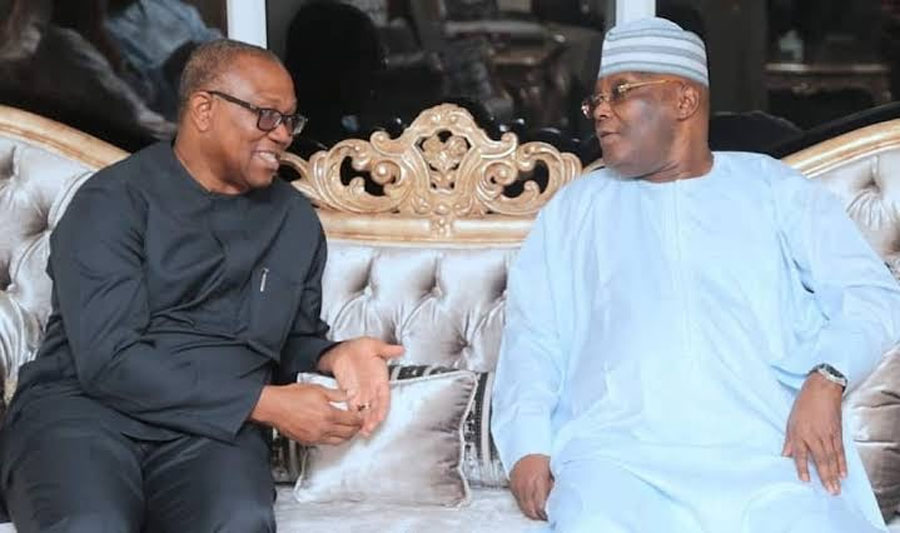
Atiku, Obi Unite in Fresh Bid to Unseat Tinubu as 2027 Election Campaign Heats Up
As Nigeria’s economic crisis deepens, opposition leaders launch coordinated attacks on President Bola Tinubu’s policies, foreign trips, and governance record—but internal coalition fractures threaten their unity
The 2027 Nigerian presidential election is rapidly taking shape as a battle of words, with key opposition figures Atiku Abubakar and Peter Obi launching coordinated attacks on President Bola Tinubu over what they describe as worsening economic hardship, misplaced priorities, and governance failures. The two former presidential candidates, who lead different political platforms—the African Democratic Congress (ADC) and the Nigeria Democratic Congress (NDC) respectively—have intensified their criticism of the current administration. Their latest offensive comes as President Tinubu embarks on another three-week holiday in Europe, a decision both leaders have questioned amid growing domestic challenges. Atiku and Obi are urging Nigerians to reject the incumbent administration at the polls, framing the 2027 election as a critical opportunity to change the country’s trajectory. However, their ability to present a united front remains complicated by internal political maneuvering and coalition fractures.
In a pointed statement released on Tuesday, Atiku Abubakar made it clear that his criticism of President Tinubu transcends political rivalry. The former vice president insisted that the central issue confronting Nigeria is not about personalities but about the inability of millions of citizens to afford basic necessities. “Tinubu, the issue is not Atiku. The issue is that Nigerians can no longer afford to live,” Atiku said. He accused the president of devoting a substantial portion of his recent social media statements to attacking economic positions without directly naming him. Atiku emphasized that his concern lies with ordinary Nigerians struggling with rising costs across multiple sectors, from food and transportation to education and healthcare. He insisted that the success of any economic policy should ultimately be measured by its tangible impact on the daily lives of ordinary citizens, not by macroeconomic indicators that bear no resemblance to the realities on the ground.
Atiku’s criticism centered on the government’s economic reforms, particularly the petrol subsidy removal policy. He pointed to Nigeria’s current fuel price of approximately N1,400 per litre, comparing it unfavorably with other oil-producing nations such as Saudi Arabia, Kuwait, Algeria, Angola, the United Arab Emirates, and Libya, where petrol sells at significantly lower rates—in Libya’s case, roughly N34 per litre despite that country’s political instability. “How did your celebrated reform leave Nigerians paying vastly more for fuel while enjoying a lower standard of human development?” Atiku asked. “That is not merely a pump-price debate. It is an affordability scandal.” The former vice president argued that high petrol prices affect virtually every aspect of the economy—transportation, agriculture, food distribution, manufacturing, and household expenses—because costs are passed through various stages of the supply chain before reaching consumers. He contended that this cascading effect means that ordinary Nigerians bear the brunt of policy decisions made without adequate consideration for their welfare.
READ ALSO:
- We were offered $3m to drop Tinubu records campaign — US firm
- NDA Releases 78th Regular Combatant Course Admission List, Sets Reporting Date
- Ogogo’s N25m Surfaces After Death, Ilaro Chief Imam Returns Actor’s Money
Atiku proposed an alternative approach through his Atiku Economic Recovery Plan (AERP) , which he said would reduce costs at their source rather than allow prices to rise before government intervention through palliatives. Under his proposal, Nigerian crude would be supplied for domestic refining under a capped, transparently budgeted framework, with refined products independently audited and monitored to ensure consumers benefit directly from lower fuel costs. He argued that reduced transportation costs would lower prices for food and manufactured goods, allowing families to retain more income for essentials like rent, education, and healthcare. “The economics is straightforward,” Atiku explained. “Reduce fuel costs and you reduce pressure on transportation. Reduce transportation costs and you reduce the cost of moving tomatoes, rice, yam, livestock and manufactured goods. Reduce those costs and more of a worker’s income remains available for food, rent, education and healthcare. That is structural relief.”
The Presidency has pushed back strongly against Atiku’s proposals. Critics within the administration accused the former vice president of policy inconsistency, noting that he previously supported subsidy removal. A Tinubu support group, the PBAT Door-to-Door Movement, slammed Atiku’s criticism, describing him as a “serial presidential contestant without direction.” They argued that Atiku’s proposal to return to a form of subsidy demonstrates a “serious ignorance on governance and economy” and represents an opportunistic reversal of his own previous positions. The administration maintained that its reforms, while painful in the short term, are necessary for long-term economic stability and growth, and that any return to subsidy would undermine the progress made so far.
Atiku also rejected the government’s reliance on the Nigerian Education Loan Fund (NELFUND) as evidence that education has become affordable under the current administration. “Celebrating NELFUND as proof that education has become affordable under your government is like setting school fees on fire and then boasting that you lent students a bucket of water,” Atiku said. “A student loan is not a scholarship. It is a liability.” He argued that his approach would focus on reducing the underlying cost of education while providing forgiveness for qualifying student debts, insisting that “education should open doors, not mortgage the future.” He further challenged the Federal Government to publish details supporting its claim that his proposed intervention could negatively affect NELFUND, workers’ salaries, or the minimum wage, demanding that Nigerians be shown, line by line, how a transparently budgeted subsidy tied to Nigerian crude and domestic refining would suddenly empty NELFUND or workers’ pay packets.
READ ALSO:
- ‘Rich Dad Poor Dad’ Author Robert Kiyosaki Reveals He Is $1.2 Billion in Debt
- Lagos Cleric, 74, Remanded Over Alleged Defilement of 9-Year-Old Granddaughter
- 2027: Atiku vows to review NELFUND, forgive qualifying student loans
Atiku also called for a comprehensive reconciliation of nearly N30 trillion identified across Federation Account revenues, deductions, savings, and transfers, as well as transparency over Import Duty Exemption Certificate approvals covering approximately N34 trillion worth of imports in 2025. He demanded clear explanations of what measurable improvements Nigerians received in return for the sacrifices associated with subsidy removal, questioning why relief measures were only being promised “in the next few weeks” as the 2027 election approaches. He accused the administration of offering what he described as “a temporary dose of political anaesthesia” after years of economic hardship, asking pointedly: “So when you suddenly announce that relief is coming ‘in the next few weeks,’ Nigerians are entitled to ask: Why now?”
Peter Obi, the NDC presidential candidate, launched a separate but complementary attack on President Tinubu’s leadership style, focusing particularly on the president’s frequent foreign trips and vacation habits. Obi expressed concern that President Tinubu had left the country for another holiday at a critical moment when Nigeria faces serious economic and security challenges, including parents unable to afford food for their children, families struggling with transportation costs, communities ravaged by insecurity, thousands of children unable to access education, and the reported abduction of approximately 600 Nigerians, predominantly women, children, and elderly persons, during Juma’at prayers in Niger State. “Yet, at this critical moment, the President has left the country for another holiday,” Obi said, contrasting the president’s absence with the daily struggles of ordinary Nigerians who have nowhere to escape from the nation’s mounting problems.
Obi raised concerns over reported government expenditure on presidential trips and related travel expenses, alleging that between June 2023 and April 2026, government expenditure on presidential travel amounted to approximately N37.64 billion, while President Tinubu reportedly spent approximately 261 days outside Nigeria during this period. In stark contrast, he claimed that only N36 million was released to the Federal Ministry of Health in 2025 despite a capital allocation of N218 billion. “This is the calamity befalling our country today,” Obi declared, arguing that a government that can spend billions on presidential travel while critical sectors remain underfunded should not be allowed to continue in office. He insisted that leadership is fundamentally about setting the right priorities and urged Tinubu to focus on addressing the challenges confronting Nigerians rather than repeatedly travelling abroad.
READ ALSO:
- Nollywood Actress Atinuke Kareem Dies After Brave Battle with Breast Cancer
- Two Teenagers Drown in Kaduna as Heavy Flooding Submerges Communities
- Nigeria’s Opposition Coalition Faces Critical Test as Key Leaders Skip Unity Summit
Obi advocated for greater patronage of domestic tourism, suggesting that Nigerian presidents should lead by example by vacationing within the country. “I look forward to a Nigeria where our President can vacation in Kano, Katsina, Sokoto, Cross River State, Bauchi, Ebonyi, and many other destinations across our country,” he said. He argued that tourism could create jobs and support multiple sectors including hospitality, transportation, agriculture, entertainment, crafts, and small businesses, while generating investment and foreign exchange. “Tourism creates jobs. It supports hospitality, transportation, agriculture, entertainment, crafts, and small businesses. It brings investment and foreign exchange and allows communities to benefit directly from their natural and cultural assets,” Obi explained. He criticized what he described as the practice of exporting Nigeria’s wealth while importing pleasures that could be enjoyed within the country, stating that “we cannot continue to export our wealth and import our pleasures while our own enormous potential remains neglected.”
Obi also referenced his partnership with Rabiu Musa Kwankwaso, whom he described as his running mate and partner in the opposition movement. “We deserve leadership that puts Nigeria first; leadership that cares and plans for a better Nigeria. That is the kind of leadership that the partnership between H.E. Rabiu Musa Kwankwaso and me will bring,” Obi said, presenting their alliance as a viable alternative to the current administration.
Despite the coordinated attacks on President Tinubu, the opposition coalition faces significant internal challenges. The reported “unification” of opposition figures is more complex than it appears, with public disagreements and strategic maneuvering among leaders. As of mid-2026, there were reports of public disputes within the African Democratic Congress (ADC) coalition, with accusations of being “regional players” and a lack of cohesion affecting the coalition’s credibility. In a significant development, Peter Obi and Rabiu Kwankwaso reportedly left the ADC coalition to join another opposition platform, the National Democratic Coalition (NDC) . This new alliance, dubbed the “OK Movement,” is seen as a direct challenge to Atiku Abubakar’s influence, a bid to reshape the opposition landscape for the 2027 election, and a reflection of the feud between Atiku and his former boss, Olusegun Obasanjo, who allegedly opposed Atiku’s presidential nomination and backed Obi.
Former Ekiti State Governor Ayo Fayose commented on the opposition’s challenges, noting that “Atiku has lost already; Obi has lost already” unless a “miracle” brings them together. He also noted that some in the North are aggrieved that Kwankwaso is deputizing for Obi, reflecting the regional and ethnic tensions that continue to complicate opposition politics in Nigeria. The ASHE Foundation think-tank argued that while Atiku is criticized for a U-turn on subsidy policy, his stance, along with Tinubu’s and Obi’s, is rooted in “neoliberal ideology” that fails the masses, advocating instead for a “social democracy” approach that prioritizes state subsidies to protect citizens and boost the economy. These ideological differences, combined with personal rivalries, present significant obstacles to any unified opposition campaign.
The next presidential election is scheduled for January 16, 2027. As of August 2026, commentators were already expressing strong confidence in President Tinubu’s re-election prospects while criticizing the preparedness of opposition figures. The success of any opposition bid will depend on resolving internal disputes among leaders, settling on a consensus candidate and clear platform, presenting a unified front to voters, developing credible alternatives to current policies, and mobilizing voters effectively across diverse regions. The 2027 election campaign is likely to be dominated by issues of economic recovery and cost of living, the fuel subsidy debate, security challenges, education and healthcare funding, foreign policy and Nigeria’s international standing, and governance transparency and anti-corruption efforts. For Nigerian voters, the choice will ultimately be between an administration that argues its painful reforms are necessary for long-term stability and an opposition that promises immediate relief and a different approach to governance—but whose internal divisions raise questions about its ability to deliver on its promises.
Atiku, Obi Unite in Fresh Bid to Unseat Tinubu as 2027 Election Campaign Heats Up
Politics
Nigeria’s Opposition Coalition Faces Critical Test as Key Leaders Skip Unity Summit
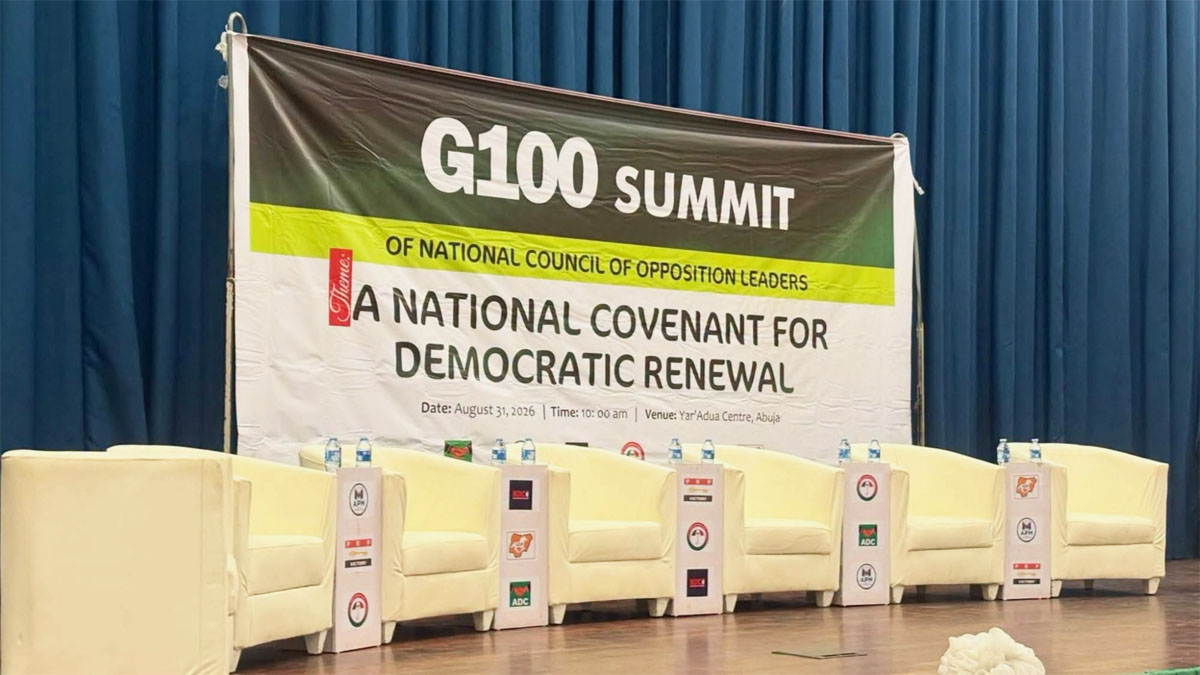
Nigeria’s Opposition Coalition Faces Critical Test as Key Leaders Skip Unity Summit
Atiku Abubakar and Peter Obi absent as G100 proposes four-year transition government to break APC’s hold on power
Nigeria’s much-anticipated opposition coalition may be stumbling at the first hurdle, as key presidential hopefuls stayed away from a landmark summit aimed at forging a united front against the ruling All Progressives Congress (APC) in the 2027 elections.
The G100 summit, held at the Shehu Musa Yar’Adua Centre in Abuja on August 31, 2026, brought together representatives of six opposition parties—the African Democratic Congress (ADC), Allied Peoples Movement (APM), National Democratic Congress (NDC), Peoples Democratic Party (PDP), Peoples Redemption Party (PRP), and Social Democratic Party (SDP)—to negotiate a framework for cooperation and the possibility of presenting a single presidential candidate.
However, the notable absence of Atiku Abubakar, the ADC presidential candidate, and Peter Obi, the NDC presidential candidate, has raised serious questions about the coalition’s viability and whether opposition leaders are genuinely prepared to set aside personal ambitions for the sake of unity.
Opening the summit, G100 leader and former APC National Vice Chairman Salihu Mohammed Lukman stressed that the initiative was aimed at preventing a repeat of the fragmentation that characterised the 2023 presidential election, where the opposition vote was split among multiple candidates. He recalled the negotiations that produced opposition unity ahead of the 2015 election, saying the lesson was not sentimental but “arithmetical.”
Lukman argued that opposition parties must first agree on the rules and structure of cooperation before negotiating positions and personalities. “Rules before outcomes. Table before seats,” he said, adding that what had been missing from previous opposition efforts was “not analysis” but “a table.” He stressed that the summit was not asking any party to dissolve or abandon its identity, nor demanding the immediate withdrawal of any presidential candidate. Rather, the parties were being asked to authorise machinery for developing a credible framework for cooperation, including a Central Leadership Committee, Publicity and Communication Committee, and Legal Committee.
READ ALSO:
- Lagos Businesswoman Stabbed to Death by Her Security Guard Just Two Weeks After Employment
- FBI confirms Tinubu was subject of US criminal investigation in 1990s
- 16-year-old in police custody over alleged killing of 20-year-old in Cross River
While Atiku and Obi were absent, other presidential candidates participated in the meeting, including Donald Duke of the PRP, Adewole Adebayo of the SDP, and Moses Olusoji of the Democratic Leadership Alliance, alongside national officers, lawmakers, and other opposition figures.
In a significant development, the Turaki-led faction of the Peoples Democratic Party (PDP) formally endorsed the G100 initiative, announcing its decision to join the opposition coalition. The faction’s National Publicity Secretary, Ini Ememobong, said the decision was driven by what he described as the “wailings of Nigerians groaning under the repressive Bola Tinubu APC-led Federal Government” and the need to cooperate with other credible political forces to unseat the incumbent at the federal level.
“Our participation is anchored on the promise that the process will be hinged on the philosophical underpinnings of transparency, equality, data-driven decisions and egalitarianism,” Ememobong quoted the faction’s National Chairman, Kabiru Tanimu Turaki, as saying. He added that any result “midwifed by these virtues will certainly offer Nigerians a credible leadership capable of alleviating the skyrocketing poverty and rising insecurity in the country.”
The summit proposed establishing five working groups to produce documents within four weeks for consideration at a second summit, including a National Covenant for Democratic Renewal, Single-Term Transition Charter, National Reform Programme, Framework for Opposition Unity, and Roadmap to a Common Presidential Candidate.
Among the proposals emerging from the opposition process is a single four-year transition arrangement, framed around a broader national reform programme. This proposal attempts to address two questions at once: who leads the coalition, and what happens after victory? However, it also raises a further question: would Nigerians vote for a candidate promising a four-year transition—or for one promising a conventional presidency?
Speaking at the summit, House of Representatives Minority Leader Frederick Agbedi urged opposition leaders to put aside personal ambitions and focus on removing the current government and rescuing the country from what he described as widespread suffering. “Nigeria is in pain. Nigeria is suffering,” he said, adding, “If we are united, what the APC did in 2015, we can repeat it.”
PRP National Chairman Hakeem Baba-Ahmed also endorsed the initiative, declaring, “No party alone can defeat APC,” while describing the coalition as a sign of hope for Nigerians. SDP National Chairman Sadiq Umar Gombe described the political situation as requiring an urgent national rescue effort and expressed confidence that Nigerians, particularly voters in northern Nigeria, would support a credible opposition alternative.
Lukman cautioned that the success of the coalition would depend less on declarations of unity than on the quality of the political architecture created to sustain it, stressing that neither the G100 nor the Minority Caucus was promoting any particular presidential candidate. “Our only interest is the one stated in the Doctrine we published on August 2 — that a democracy is sustained not merely by holding elections, but by the credible possibility of an alternative government,” he said.
In response to Atiku’s absence, his media aide Phrank Shaibu said the former vice president’s absence was “unavoidable” and should not be “mischievously interpreted as a boycott or lack of commitment to opposition unity.” Shaibu added that Atiku “is fully aligned with the objective of the summit and has made his position clear: Nigeria urgently needs a broad, disciplined and united opposition capable of ending the hardship, insecurity and economic mismanagement of the Tinubu administration in 2027.”
However, a source familiar with the discussions noted that the emergence of the G100 after various parties had already produced their presidential candidates could make negotiations particularly difficult, especially the argument on who will step down. “The argument is, who will be willing to step down at this point in time?” the source asked.
Lukman himself acknowledged that unity would require sacrifice, saying, “Someone in this hall will have to accept an outcome he/she did not want. That is what unity is.” He ended with an appeal: “The table is here. The chairs are here.”
As the 2027 contest gathers momentum, the coalition’s fate may ultimately depend on whether its leaders can answer the question that has defeated many of their predecessors: Can Nigeria’s opposition agree not only on who to remove, but also on who should lead and what should replace the incumbent government?
Nigeria’s Opposition Coalition Faces Critical Test as Key Leaders Skip Unity Summit
Politics
2027: Tinubu’s Policies Under Fire as NDC Pushes Opposition Unity
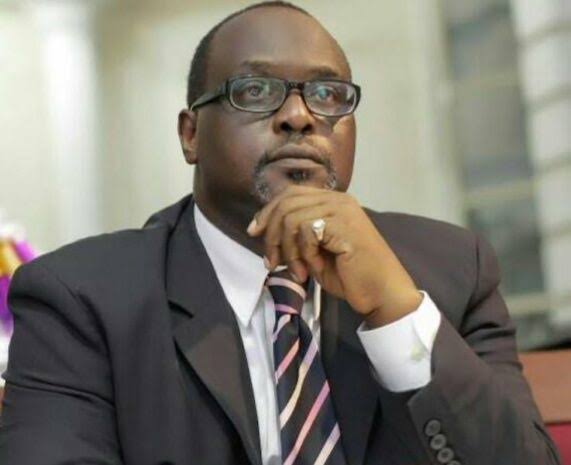
2027: Tinubu’s Policies Under Fire as NDC Pushes Opposition Unity
The administration of President Bola Tinubu came under renewed criticism on Tuesday as the Nigeria Democratic Congress (NDC) accused the Federal Government of pursuing economic policies that have deepened hardship, while insisting that opposition parties can still unite to offer Nigerians a credible alternative in the 2027 general election.
Ladipo Johnson, an NDC chieftain and the party’s senatorial candidate for Lagos Central, made the assertions while appearing on Frontline, a current affairs programme on Eagle 102.5 FM, Ilese-Ijebu.
Johnson rejected the description of the Tinubu administration as progressive, arguing that a genuinely progressive government should place greater emphasis on the welfare and purchasing power of citizens.
He questioned whether policies such as the removal of fuel and electricity subsidies, the floating of the naira and increased revenue generation had translated into better living conditions for Nigerians.
“Would you call President Tinubu’s administration a progressive administration?” Johnson asked, arguing that progressive governance should be “more welfaristic in nature.”
He also questioned the economic impact of the administration’s increase in the minimum wage, saying the nominal increase had been undermined by inflation and the declining value of the naira.
According to him, government policies should ultimately be judged by their outcomes rather than the number of initiatives announced.
“You can have a lot of initiatives, a lot of activities,” he said, stressing that “these policies are meant to achieve something. Don’t just do policy for the sake of policy.”
Johnson also faulted the simultaneous removal of fuel subsidy and floating of the naira, arguing that Nigerians were still struggling with the consequences.
He equally questioned the effectiveness of education financing without corresponding employment opportunities, citing the Nigerian Education Loan Fund (NELFUND) as an example. He argued that education policy should be linked to skills development and job creation.
On the political front, Johnson said opposition unity remained possible ahead of 2027 despite the absence of former Vice President Atiku Abubakar and Labour Party presidential candidate Peter Obi from Monday’s National Opposition Summit in Abuja.
He said the absence of prominent opposition figures should not be interpreted as a rejection of the idea, stressing that political parties must first negotiate and establish an acceptable framework.
According to him, opposition parties do not necessarily have to merge but could agree to support a common presidential candidate while retaining their individual identities.
“It is not just about getting rid of President Bola Tinubu or the APC. For us, in the NDC… it is about presenting something better,” he said.
Johnson also expressed confidence that increased voter participation in 2027 could work against the ruling All Progressives Congress (APC), arguing that widespread dissatisfaction could drive Nigerians to the polls.
Meanwhile, he says his senatorial ambition is centred on providing what he ddescribes as a stronger voice for Lagos Central, which includes major commercial and economic centres such as Apapa, Lagos Island, parts of Eti-Osa, Lagos Mainland and Surulere.
He identified his priorities as people, productivity, infrastructure, security, rule of law and governance.
Johnson said he would focus on legislation, oversight and using the “soft power” of the Senate to attract investment rather than promising projects outside the legislature’s constitutional responsibilities.
He also pledged quarterly town-hall meetings and a digital dashboard through which constituents could track bills, constituency projects and other legislative activities.
For Johnson, the 2027 contest will therefore be both a referendum on the Tinubu administration and an opportunity for the opposition to present Nigerians with what he described as a credible alternative.
-
 Education2 days ago
FG Opens N10 Billion TETFund Research Grant Applications — How Lecturers Can Apply
-
 Business3 days ago
Fuel subsidy removal: Falana demands accountability over N15.8tr resources, warns against ‘scam’ era
-
 metro1 day ago
Lagos Govt Warns Husbands: Forcing Sex on Wife Can Lead to Life Imprisonment
-

 Politics2 days ago
Mother Arrested for Smuggling ‘Colos’ to Son on Death Row in Ogun Prison
-
 metro2 days ago
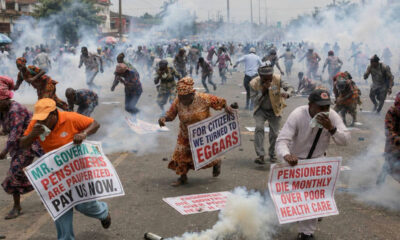
Lagos pensioners tear-gassed during protest as Sowore demands justice
-

 Politics2 days ago
Gunmen kill Kano APC chairman, two others in fresh Bebeji attack
-
 metro3 days ago
Nigerian Army X account hit in second military cyber breach in two weeks
-

 News1 day ago
Ilorin Youth Group Demands Disbandment of Iru-Ekun Over Alleged Obstruction of Tani-Olohun’s Arrest