
Politics
2023 presidency: Court to determine Atiku’s eligibility February 21
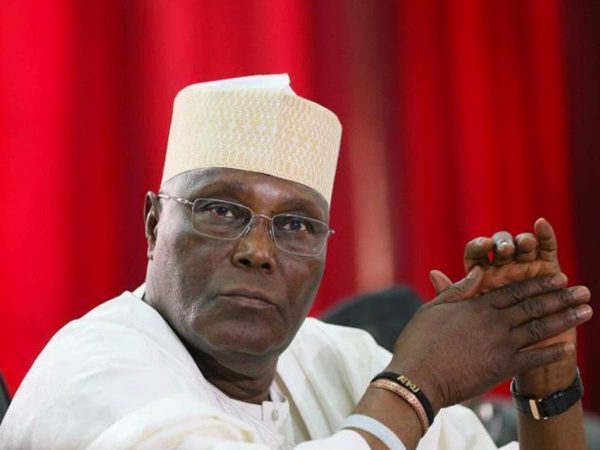
Former Vice-President Atiku Abubakar will on February 21, 2022 know if he is eligible to contest the presidential election in 2023, a Federal High Court sitting in Abuja said on Monday.
The court will on the said date deliver judgement in a suit, marked FHC/ABJ/CS/177, challenging Atiku’s eligibility on the premise that he is not a Nigerian by birth.
A group, under the aegis of the Incorporated Trustees of Egalitarian Mission for Africa, had in the suit, posed three legal questions for the determination of the court.
It asked the court to determine; “Whether section 25 of the Constitution of the Federal Republic of Nigeria, 1999 (as amended), is the sole authority that spells out ways by which a person can become a Nigerian citizen by birth?
“Whether by the provisions of section 131(a) of the Constitution of the Federal Republic of Nigeria, 1999 (as amended), only a Nigeria citizen by birth can contest for the office of the President of the Federal Republic of Nigeria?
As well as, “Whether by the combined interpretation of section 25(1) & (2) and 131(a) of the Constitution of the Federal Republic of Nigeria, 1999 (as amended), and giving the circumstances surrounding the birth of the 1st Defendant (Atiku), he can be cleared by the 2nd and 3rd Defendants to contest for the office of the President of the Federal Republic of Nigeria?.
Upon determination of the questions, the plaintiff applied for a declaration that by the provisions of the Constitution, “only a Nigerian citizen by birth can contest for the office of the President of the Federal Republic of Nigeria.
It urged the court to declare that giving the circumstances surrounding Atiku’s birth, he cannot be cleared by either PDP or the Independent National Electoral Commission, INEC, to vie for Presidency.
The plaintiff, which told the court that it is a Non-governmental Organization that is duly registered in 13 African countries, argued that Atiku is not a Nigerian by birth and thus not eligible to contest to become the President of Nigeria.
It told the court that it has specific concerns for promoting the principles of equality, rule of law and human rights in Africa generally, but with particular interest in Nigeria.
In a 12-paragraphed affidavit deposed to by one Michael Okejimi, the Plaintiff, noted that Atiku was born on December 25, 1946.
It said the 1st Defendant had in his own testimony that was gazetted and published in most national dailies, stated that he is from Jada town in Adamawa State.
“Jada used to be in Ganye Local Government Area in Adamawa. That Ganye is regarded as the mother of the whole Chamba tribe.
“That Ganye, however, was never part of Nigeria legally as at the date of birth of the 1st Defendant. That the area had been entrusted to Britain by a League of Nations mandate in 1919 and later as Trust Territory by the United Nations in 1946.
“That the defeat of Germany in World War 1, Cameroon became a League of Nations mandate territory and was split into French Cameroons and British Cameroons in 1919.
“That while France integrated the economy of their part of Cameroon with that of France, the British, administered theirs from neighboring Nigeria, making 1st Defendant’s Jada a British franchise.
“That a plebiscite was held in British Cameroons to determine whether the people preferred to stay in Cameroon or align with Nigeria.
“That while Northern Cameroon preferred a union with Nigeria, Southern Cameroon chose alignment with the mother country.
“That on June 1, 1961, Northern Cameroon became part of Nigeria, and on October 1, 1961, the Southern territory dissolved into Cameroon.
“That Ganye, which incorporates the 1st Defendant’s birthplace of Jada was the headquarters of British Cameroons, but it joined Nigeria following the plebiscite.
“That when the 1st Defendant was on November 25, 1946, born to a Fulani trader and farmer, Garba Abubakar, Jada village and other parts of Chamba land in the then Northern Cameroon, were still known as British Cameroon.
“That none of the 1st Defendant’s parents or grandparents was born in Nigeria. That the 1st Defendant’s father died a citizen of Northern Cameroon in 1957 prior the referendum of June 1, 1961, that made Northern Cameroon became part of Nigeria.
“That the 1st Defendant’s ancestral origin is deeply rooted in the then Northern Cameroon. That the 1st Defendant is not a Nigerian citizen by birth.
“That the 1st Defendant is not qualified to be elected into the office of the President of the Federal Republic of Nigeria”, the plaintiff added.
Aside from Atiku, other defendants in the matter are the PDP, INEC, Attorney-General of the Federation, and the Attorney-General of Adamawa State.
Meantime, while other Defendants urged the court to dismiss the case, the AGF, Abubakar Malami, SAN, threw his weight behind the suit, insisting that Atiku is not constitutionally eligible to vie for Presidency.
Arguing that the former Vice President is not a Nigerian by birth, Malami, noted that Atiku, whose home town, Jada, was formerly a part of Northern Cameroon, acquired Nigerian citizenship following a plebiscite that held in 1961.
He told the court that having not been born a Nigerian or by Nigerian parents, and having not met the provisions of Sections 25(1) &(2) and 131(a) of the constitution, Atiku, would be violating Section 118(1)(k) of the Electoral Act should he put himself forward as a presidential candidate.
“The first defendant (Atiku) is not a fit and proper person to be a candidate for election to the office of president of the Federal Republic of Nigeria.
“The first Defendant was born on the 25th of November, 1946 at Jada, at the time in Northern Cameroon. By the plebiscite of 1961, the town of Jada was incorporated into Nigeria.
“The first defendant is a Nigerian by virtue of the 1961 plebiscite, but not a Nigerian by birth. The first defendant’s parents died before the 1961 plebiscite”, Malami argued in support of a suit.
Malami, in an affidavit that was filed by his team of lawyers led by Oladipo Okpeseyi, SAN, argued that Atiku, having contested election to the office of the Vice President before now, even though he knew that he is not a Nigeria citizen by birth, committed an offence under Section 118(1)(k) of the Electoral Act.
He contended that the effect of the June1, 1961 plebiscite was to have the people of Northern Cameroon integrated into Nigeria as new citizens of the country, even after Nigeria’s independence.
“This qualified all those born before the 1961 plebiscIte as citizens of Nigeria, but not Nigerian citizen by birth. Consequently, only citizens born after the 1961 plebiscite are citizens of Nigeria by birth”, Malami added.
Citing provisions of the 1960, 1963, 1979 and 1999 Constitutions, the AGF, argued that “reasoning of the lawmakers in ensuring that the persons to be the President of Nigeria is a citizen of Nigeria by birth is because such a person is the number one citizen and the image of the Nigerian state.”
He told the court that where it is revealed that a person was born outside Nigeria before Nigeria’s independence in 1960, in a location which was never part of Nigeria until June 1, 1961, as in Atiku’s case, such a person cannot claim citizenship of Nigeria by birth.
“This is even more so where his parents do not belong to any tribe indigenous to Nigeria until their death. The facts of his (Atiku’s) birth on the Cameroonian territory to Cameroonian parents remain unchallenged.
“At best, the first defendant can only acquire Nigerian citizenship by the 1961 plebiscite. The citizenship qualifications under Section 26 and 27 of the 1999 Constitution of the Federal Republic of Nigeria (1999), by implication, has limited the first defendant’s privileges or rights and cannot be equal or proportional to the privileges of other citizens who acquire their citizenship status by birth.
“This would include the legal preclusion of the first defendant from contesting for the office of the President of Nigeria.”
He further argued that the only situation where Atiku could have acquired Nigerian citizenship by birth under the 1999 Constitution, was if both or either of his parents and grand parents were Nigerian citizens by birth.
He added that another way would have been if either his parents had become Nigerian citizen by virtue of Section 25(1) of the 1999 Constitution, which must be in compliance with Sections 26 and 27of the same constitution.
“With no concrete proof of compliance, we submit that the first defendant cannot contest election to the office of the Nigerian President”, Malami added.
However, in a preliminary objection he jointly filed with the PDP, Atiku, maintained that he is “a bonafide citizen of the Federal Republic of Nigeria”.
He told the court that aside from serving as Vice President from 1999 to 2007, he held many public/private offices in Nigeria, including serving as Governor of Adamawa State and as a commissioned officer of the Nigeria Customs Service.
He said both his parents, grandparents and great grandparents were born in Nigeria and they lived, died as Nigerians and were buried in Nigeria.










Politics
Gov Yusuf Accuses Former Deputy of Attempted Power Grab in Kano
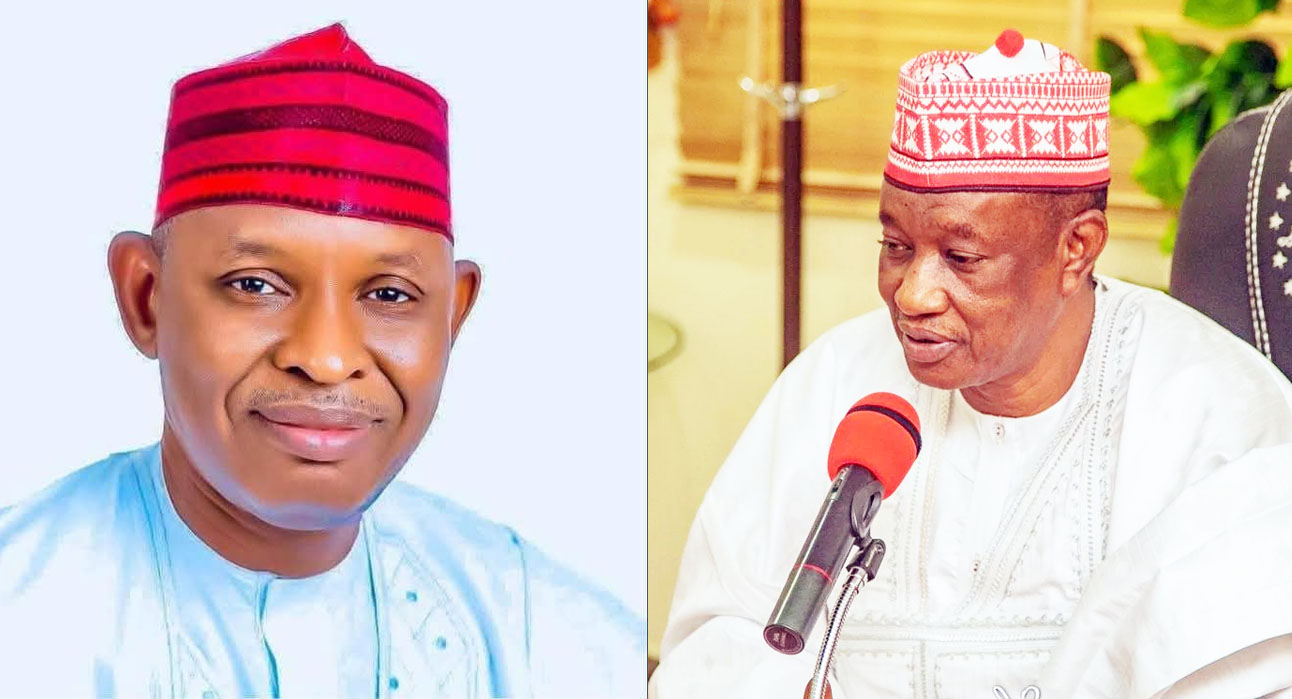
Gov Yusuf Accuses Former Deputy of Attempted Power Grab in Kano
The Governor of Kano State, Abba Kabir Yusuf, has alleged that his former deputy, Comrade Aminu Abdussalam, attempted to remove him from office and take over the leadership of the state government.
Governor Yusuf made the claim during a meeting with a group of praise singers known as “Mawallafan Abba Gida Gida” at the Government House in Kano, where he spoke extensively on internal political developments within his administration and party structure.
He said the alleged move was part of an attempt to destabilise his government, insisting that he was not responsible for any actions that led to the deputy governor’s exit from office.
“Today, the deputy governor who came with us on the same ticket is no longer with us. Nobody offended him. In fact, I have not even seen his resignation letter,” he said.
The governor further alleged that the former deputy’s actions were aimed at replacing him, stating that the attempt did not succeed.
“Whatever made him act that way was an attempt to remove me and take the position, but God did not allow it,” Yusuf added.
READ ALSO:
- Police Debunk Viral Terror Attack Video in Abuja, Arrest Suspect
- Trump Orders JD Vance to Lead Iran War Exit Strategy Ahead of Pakistan Talks
- NBA Warns Lawyers, Courts Against Interfering in Political Party Disputes
Governor Yusuf also questioned internal political decisions within the Kwankwasiyya political structure, suggesting that the former deputy governor was sidelined despite his contributions and aspirations within the movement.
He raised concerns over what he described as inconsistencies in political appointments and succession planning, arguing that some individuals were being favoured over long-standing members of the group.
“The deputy governor who left, hoping to secure that ticket, what did he do wrong? Why not give him the ticket? Is that not a betrayal of him?” he queried.
The governor, however, maintained that his administration remains stable and focused on governance, adding that political distractions would not derail development efforts in Kano State.
He also dismissed suggestions that recent political developments within his camp amounted to betrayal on his part, insisting that his decisions were taken in the interest of the people of Kano.
According to him, critics who accuse him of disloyalty are ignoring the internal challenges that led to recent political realignments.
He argued that key decisions within the political movement were taken without proper consultation, raising questions about internal democracy and inclusion.
Yusuf further maintained that his exit from the New Nigeria Peoples Party (NNPP) was necessary to prevent political uncertainty and protect the interests of millions of Kano residents.
He said efforts to resolve internal disagreements within the party were unsuccessful, forcing his administration to take a different political direction.
“We saw the direction the party was heading and offered advice, but it was ignored. God showed us the way, and we left because we did not want to put millions of Kano residents in uncertainty,” he said.
The governor also accused unnamed political actors of promoting individuals he described as former opponents of the Kwankwasiyya movement, questioning what he called “political betrayal” within the system.
He maintained that his administration remains open to credible individuals interested in serving as deputy governor, following the exit of his former deputy.
Political observers say the remarks highlight deepening tensions within Kano’s political landscape, where internal disagreements and shifting alliances continue to shape governance and party structures ahead of future elections.
The former deputy governor has not publicly responded to the allegations at the time of filing this report.
Gov Yusuf Accuses Former Deputy of Attempted Power Grab in Kano
Politics
2027: ADC Will Not Field Candidates Above 55 Years, Says Factional Chairman
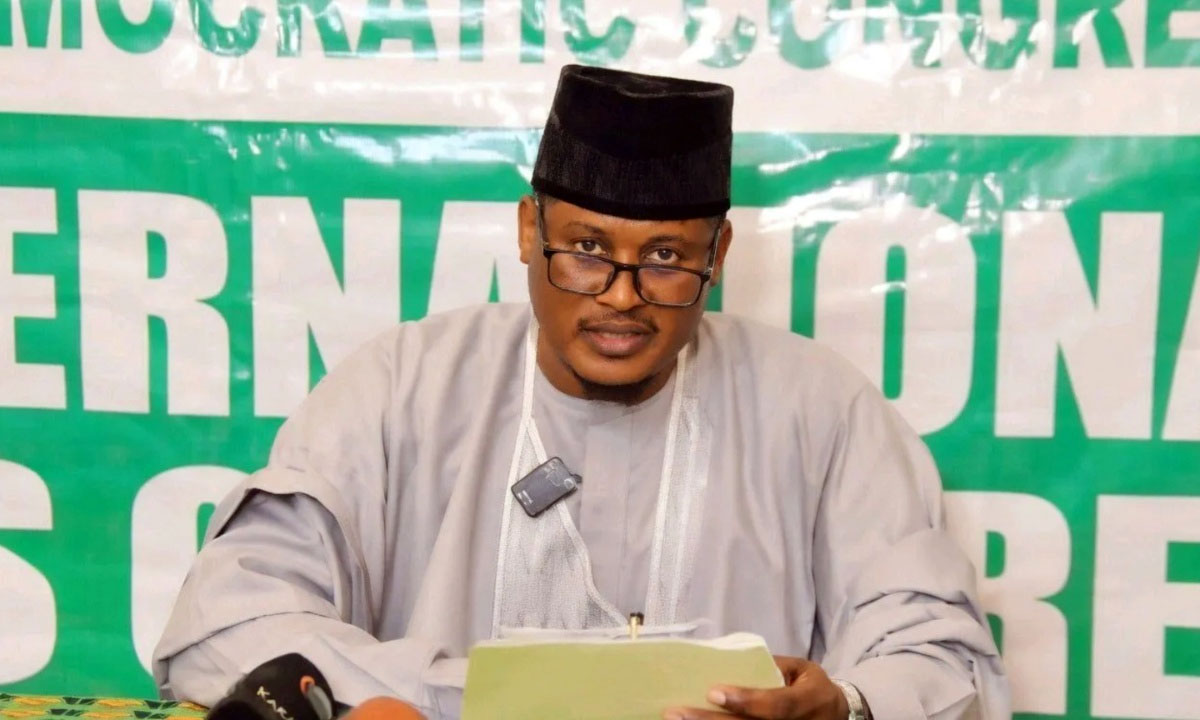
2027: ADC Will Not Field Candidates Above 55 Years, Says Factional Chairman
The factional national chairman of the African Democratic Congress (ADC), Nafiu Bala, has announced that the party will not present any candidate above 55 years of age in the 2027 general elections in Nigeria, saying the policy is aimed at promoting youth inclusion in leadership and reshaping the party’s future.
Speaking in an interview with the BBC Hausa Service, Bala said the proposed ADC candidate age limit is intended to create space for younger Nigerians to take up elective positions across all levels of government.
He said many political actors in the country are already too old to continue in leadership, insisting that the time had come for a generational shift.
“All the new illegal members are 88, 75, 90 years of age. They should allow us youths to step in and lead. My focus is to ensure that anyone over the age of 55 will not be a candidate of the ADC. It is high time the youths are given a chance,” he said.
Bala maintained that the policy would apply to all elective positions, including presidential, governorship, and legislative offices, as part of efforts to reposition the party ahead of the 2027 elections.
The African Democratic Congress has, however, been facing an ongoing internal leadership crisis, with rival factions laying claim to the party’s national structure.
The situation has been further complicated by the Independent National Electoral Commission (INEC), which has reportedly declined to recognise any of the competing factions as the legitimate leadership of the party, deepening uncertainty over its direction ahead of the next general election.
READ ALSO:
- NBA Warns Lawyers, Courts Against Interfering in Political Party Disputes
- Gunmen Wipe Out Family of Eight in Fresh Plateau Attack
- Germany Opens Fully Funded Scholarships for Nigerians, Africans
Addressing allegations that he is being backed by the ruling All Progressives Congress (APC) to destabilize the opposition ahead of 2027, Bala dismissed the claims as false and politically motivated.
“These people, judging by their history in their former political parties, are used to causing conflicts and strife. They are trying to do the same thing in the ADC,” he said.
Bala also reacted to his absence from a reconciliation meeting reportedly convened by former Kano State governor, Senator Rabiu Musa Kwankwaso, saying he was occupied with preparations for the 2027 elections and did not consider the invitation official.
He questioned the legitimacy of the meeting, insisting that party matters should be handled through proper ADC structures rather than informal discussions.
“We are planning for the 2027 elections and have a lot of engagements. I am not someone who has free time to attend any meeting called in someone’s parlour,” he said.
The factional chairman further insisted that the ongoing crisis in the party can only be resolved through strict adherence to the ADC constitution and proper membership procedures.
He urged new entrants into the party to follow due process, warning against attempts to influence party structure through informal channels or illegitimate means.
“The only way forward is for these illegitimate newcomers to go back, study our constitution and follow the proper process of joining the party,” he added.
Bala also responded to criticisms of his leadership, particularly comments about his age, insisting that leadership is determined by competence and divine will rather than background or influence.
Despite the internal wrangling, he reaffirmed his commitment to repositioning the ADC and ensuring greater participation of young Nigerians in politics ahead of the 2027 elections in Nigeria.
2027: ADC Will Not Field Candidates Above 55 Years, Says Factional Chairman
Politics
NBA Warns Lawyers, Courts Against Interfering in Political Party Disputes
NBA Warns Lawyers, Courts Against Interfering in Political Party Disputes
The Nigerian Bar Association (NBA) has warned lawyers and the judiciary against involvement in political party disputes in Nigeria, cautioning that continued court interference in intra-party matters could undermine democratic stability ahead of the 2027 general elections.
In a statement issued on Friday by NBA President Afam Osigwe (SAN), the association expressed concern over what it described as a growing trend of litigation dragging courts into internal party conflicts, despite clear restrictions under the Electoral Act 2022.
The NBA said recent political developments show an increasing misuse of the courts to settle internal party leadership and candidate selection disputes, warning that such actions raise serious constitutional and rule-of-law concerns.
According to the association, relevant provisions of the Electoral Act prohibit courts from interfering in the internal affairs of political parties, except in limited circumstances provided by law. It also stressed that the law restricts the granting of interim or interlocutory injunctions in such cases.
The NBA quoted parts of the law to emphasize that courts are expected to avoid premature intervention and instead allow cases to proceed to accelerated hearing and final judgment where necessary.
READ ALSO:
- Germany Opens Fully Funded Scholarships for Nigerians, Africans
- Kwara Governor Mourns 5 Forest Guards Killed in Nuku Bandit Attack
- Amnesty International Condemns Killing of 24 in Kebbi Bandit Attack
Despite these provisions, the association lamented that some courts have continued to entertain such cases, issuing orders that affect party leadership structures and internal governance decisions.
The NBA also accused some lawyers of engaging in forum shopping and filing what it described as mala fide applications aimed at securing favourable judicial outcomes in politically sensitive matters.
It warned that such practices amount to an abuse of court process and a breach of professional ethics, stressing that lawyers must not act as political actors in pursuit of partisan advantage.
The association further stated that any legal practitioner found guilty of deliberately filing politically motivated suits or seeking ex parte orders in violation of statutory provisions risks disciplinary action before the Legal Practitioners Disciplinary Committee (LPDC).
NBA President Afam Osigwe urged lawyers to uphold professional integrity and avoid being used as instruments of political manipulation, especially in matters where jurisdiction is clearly excluded by law.
The association also called on courts to exercise restraint and reject invitations to intervene in disputes that the law expressly bars them from adjudicating, warning that judicial involvement in such matters could weaken public confidence in the judiciary.
It further urged the National Judicial Council (NJC) to sanction judicial officers who assume jurisdiction in prohibited cases or issue orders contrary to electoral laws.
The NBA also advised the Independent National Electoral Commission (INEC) to remain neutral and avoid actions that could be perceived as interference in internal party politics, stressing the importance of institutional neutrality in preserving democratic credibility.
According to the association, the increasing reliance on courts to resolve internal party conflicts risks turning the judiciary into a political battleground and undermining Nigeria’s democratic process.
The NBA reaffirmed its commitment to protecting the rule of law and ensuring that all stakeholders operate strictly within constitutional boundaries as the country approaches the 2027 elections in Nigeria.
NBA Warns Lawyers, Courts Against Interfering in Political Party Disputes

-

 Africa1 day ago
ECOWAS Recruitment 2026: Over 30 Job Vacancies Open for Nigerians (How to Apply)
-

 metro2 days ago
2026 NYSC Batch A Stream II: Registration, Swearing-In Dates Announced
-

 Politics1 day ago
Court Stops ADC Congress, Orders Status Quo in Leadership Row
-

 Entertainment2 days ago
Saheed Osupa Defends Juju Use Amid Backlash From Islamic Clerics
-
 metro1 day ago
Boko Haram Attack in Borno: Brigadier-General, Soldiers Killed as ISWAP Overruns Military Base
-

 Health1 day ago
Sleeping Positions: How They Affect Your Health and Which Ones to Avoid
-
 metro1 day ago
US Evacuates Embassy Staff in Nigeria, Lists 23 States as ‘Do Not Travel’
-

 Entertainment2 days ago
Peller Sued for ₦400 Million by Former Tour Bouncer