

Politics
2023 presidency: We’ve been and remain kingmakers — Northern Elders
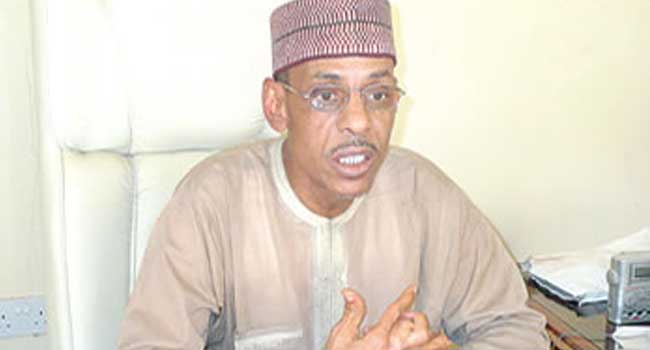
The Northern Elders Forum has said that the North will be a strong factor in determining who emerges as Nigeria’s president in 2023.
The position of the NEF was contained in a speech by its Director, Publicity and Advocacy, Dr. Hakeem Baba-Ahmed.
In the speech read on Saturday during the meeting of the Northern Leaders of Thought at the Arewa House in Kaduna, Baba-Ahmed said the North had always had a say in who becomes the leader of the country.
In the speech, titled: “Rebuilding the North,” he said: “May I start by expressing my profound appreciation for the privilege of delivering this Keynote Address on a date and a venue that have major historical significance for the North and Nigeria. This honour is all the more humbling given the significance of our present surroundings as well as the current state of the North and the country as a whole. This is also a rare event. Although groups and associations have raised voices on insecurity, poverty and the damaging decline of the economy of the North and the setbacks in relations between communities that make up Nigeria, many Northern elders and leaders with personal integrity and other qualities who should stand up to be counted have largely retreated into the discomfort of silence.
“Younger Northerners are angry, frustrated and alienated, with virtually no linkages with elders and leaders, unless they are hired thugs in the service of politicians. Many others are criminals, bandits, informers or kidnappers exploiting the weaknesses of the State, or at margins of hopelessness in a country that they believe promises a lot and delivers nothing. This meeting appears to have been designed to commence the building of bridges that should link generations of Northerners around a vision which gives hope and heals a region lacking a single excuse for its many wounds.”
READ ALSO:
- American holds hostages in synagogue for hours
- 2023: Bagudu Battles Aliero Over Malami, Senate Leader As APC Crises Get Messier
- 2023: Tinubu most popular in Northern Nigeria, will emerge APC candidate in Direct or Indirect Primaries —Jubrin
- I became armed robber after I dropped out in JSS 3 – 16-yr-old who rapes older women confesses
“The effort of the organizers of this meeting, specifically to bring together prominent, elderly and future leaders of the North is particularly commendable. In this room, and in these surroundings, there is the history of people who took over the responsibility to steer the North through the challenging waters of decolonization and finding for it a fitting place in the new Nigeria. Most of them were in their 30s and 40s, but they understood their historic opportunities; the values they were prepared and groomed to defend, and the challenges which they were to face.
“Their team leader, Sir Ahmadu Bello, fell to bullets from cowardly murderers in these very premises. The people who killed him simultaneously launched Nigeria into a different and negative trajectory from which it has not recovered. Today, we can speak as three or four generations of Northerners who have seen the best and now live in the worst of the North. We can lament the loss of great opportunities, but we will also support each other to find the strengths and the courage to ask the right questions and find the right answers.
“We should use this day, at this venue full of history, to signal a turning – point in our circumstances as a people and bring an end to lamentations. We have wasted enough lives, blood, energy and resources drifting and blaming leaders who have reaped hugely from our misfortunes and self-inflicted injuries. It is enough.
“We have no one else to cry to; no one to look up to, to lead us out of terror and poverty and no one willing to use their positions to turn the fortunes of the North around. Our fate will only be designed and determined by us. We may be facing unprecedented challenges, but these are times to prepare to find extraordinary strengths and assets so that our children will be rid of the current nightmares which are our lives today.”
“We do have massive sources of energy and muscle to bring real change to our circumstances. We have the anger of people whose lives have been taken over by armed criminals who know we are basically undefended against them. We have limits on how much we can run away from bullets, rapists and kidnappers, and we are reaching those limits.
“We have memories of a period when life had values; when religious faith meant you tolerate, and not kill those who worship differently from you; when leaders feared God and had respect for the people they led; when being a Northerner meant honesty and hard work, and not a disposable threat; when our young where taught values that prepared them to fear God, respect authority and stand up to bullies and those who were intolerant of our basic identities and values.
“Anger is not the best fuel for change, but in our case today, it is the most potent. If used constructively and responsibly, it can create an environment that will remove its sources and its manifestations. Unfortunately for the North, it is also the only fuel source we have. We have voted people into power who have either turned their backs at us or have usurped the very sources of their power and turned them into personal assets.
“We have a democratic system that progressively benefits only a handful of leaders and politicians, and leaves millions of our people to wonder how it could be the best option available to terrorized, poor people. We have decaying value systems that breed evils such as corrupt leaders, armed criminals and drug pandemics, and encourage cheating and corruption as the only means of getting what we need. We have a huge population that is sinking into poverty and desperation in a harsh and unforgiving world.
“Every indicator suggests that things will get considerably worse in the near future. The cost of living will rise and compound the wretchedness of the poor. Armed criminality will continue to determine how we live and die, even if it could be defeated at some future date. Our political process will feed widespread violence as political competition pumps up every one of our demons to escort individual political ambitions. Our current leaders will continue to recede into their own world, mumbling incomprehensible fiction while they wait out their terms.
“The North faces two distinct choices: atrophy and destruction, or recovery and growth. The first is already visible and in the process; the second is a difficult, yet achievable goal. The most vital requirement that will make the difference between the two is a critical and honest self-evaluation. The North has to understand how cultured, hardworking and intelligent people cannot produce good leaders who can build a strong economy from its huge potential.
“How did corruption assume such magnitude among our communities that even the democratic system and our home-grown social and political structures and strong social values are now securely its hostage, consigning every segment of social life to insignificance unless it is linked to plundered wealth and stolen power? Why is its massive population a liability and not an asset, coming to life only during elections when it is needed to reinforce a shrinking democratic system, and relapsing into drudgery and scrapping an existence thereafter?
“Who and what was responsible for the virtual de-industrialization of the entire Northern region, creating patches of possibly the poorest of humanity within it, and destroying an economy that had shown an impressive potential to grow into the economic powerhouse of the nation and West Africa’s breadbasket?
“How did the North lose its tenuous hold on managing its cultural and religious diversity, setting into motion raptures that leave every community worse off, and creating enemies out of even unborn neighbours? What created the Boko Haram insurgency, and what explains its resilience and the ineffectiveness of our security assets to eliminate it? What turned some Fulani herders long used to hardship and frictions into the monsters that they are today?
“How did the Fulani, famous for learning and administration and living with huge assets with the most minimal demands on resources of the State, become identified by its lowest denominator, the Fulani bandit and kidnapper?
“Who can explain the dramatic deterioration of the most intimate of relations between Hausa and Fulani, and the rising demonization of Fulani among communities with which they are barely distinguishable, or have lived for decades or centuries?
“How did the Northerner become the villain of the rest of the nation, the source of all its recent ills and liabilities, in a country he helped build and sustain with lives, limbs, blood and labour? Above all, does the North have the capacity to re-engineer its reconstruction and sustained development?
“The North does not have the luxury of finding answers to these puzzles while the nation moves on and its problems worsen. Its only choice is to target the major source of its multiple challenges and attempt to deal with it. This, in my view, lies in the quality of its leaders and those that will lead the nation. The North needs a major shift in its elite selection processes, which will allow it to put into power, competent, honest and visionary leaders at all levels.
“What this means is that the overwhelming majority of politicians warming up in our major parties to take over and continue business as usual should be roundly rejected, and others who will not have to buy or steal power because they have credibility and evidence of some integrity will be voted in by voters who will resist the temptation to sell votes for less than a meal. The imperative of affecting major changes in the quality of leadership starting from the 2023 elections is beyond question. This is why the North should support major amendments of the electoral process, and improvements in the capacities of INEC to reduce rigging and vote-buying and violence.
“For most of what the North needs to do, the centre is important. The successful campaign to defeat the damaging narrative that no Northerner should aspire to contest for the Presidency of Nigeria is a credit to committed democrats and those who believe in justice, equity and fairness. It is important to emphasise, however, that this was not a campaign that sought to bestow any favours on the North and shortchange the rest of Nigeria.
“It was essentially meant to avoid restricting the political space, as well as the danger of the emergence of a President who bears all the hallmarks of limiting identities and the stamp of a victory of the part over the whole. Now that a level playing field is being taken up by politicians from all parts of the country, it is equally important to remind ourselves that democracy is essentially about the freedom to choose leaders, and all Nigerians should be free to choose any contestant from any part of the country they want.
“For the North, we cannot say it louder. A Northerner should be voted President only if he is the best. Being Northerner is not enough. All Nigerians need good leaders, but for us in the North, we will demand to see evidence that a candidate does not just want the power to fulfil a personal ambition. We want to see evidence that those who want to lead us in future understand the roots of and solutions to our insecurity and poverty and distances from each other.
“We want to know how irredentism will be handled; how and when major changes in our structures and systems will be made to address popular grievances over the way our country should operate; how our economy can be re-engineered to achieve sustainable development and work for the rich and the poor equally, and how our young will be groomed to become productive, honest and patriotic citizens. We will demand to see an inclusive and competent team that will campaign with the candidate and transit with him into governance. We want a thoroughly Nigerian President who will be as hard on the bandit as he will be on secessionists and insurgents. We want a President with vision and the energy to retrieve a country on the verge of collapse and place it securely on the path of stability, security and growth.
“We are, of course, some distance from next year’s elections, but it will be dangerous to ignore signs that the journey from this point until those elections could place the country in greater danger. We should warn politicians to avoid destroying a country they seek to lead. We must demand that the fight against organized, violent crimes is intensified. We need to improve elite cohesion even in the context of intensely-divisive electoral campaigns. Our leaders should avoid the temptations to roll out policies that will raise levels of desperation among the poor. Activities such as the planned population census which have enough sensitivity and potential to generate massive controversy a few months before the elections should be postponed.
“Key reforms to the constitution and the electoral process should be implemented to improve the quality of elections and signal a commitment to address limitations to our federal structures. Our leaders should raise their levels of empathy for the plight of poor and desperate citizens. To ignore the circumstances which create hundreds or even millions of internally-displaced persons and leave the next administration to handle it will be the height of irresponsibility. Huge resources must be deployed to improve the capacity of our defence and security assets and provide relief to fellow Nigerians or pauperized by criminals.
“Millions of Northerners are justifiably angry and frustrated that they are worse off today than they were before 2015 when they voted for an administration that promised to improve and secure lives. Many think voting for another set of leaders will add no value to their lives. We say turn your anger into an asset by voting in better people into office this time. There are politicians that will continue where the present administration stopped, and, while angry citizens refuse to vote, they will buy votes and get power. So, the most important thing a Northerner will do for himself and the community is to register and vote in 2023. Do not exchange your votes for another four or eight years in a country where your dignity and your life have little value.
“Distinguished participants, please look around these premises, and you will draw inspiration from strong, purposeful leadership, not just of the Sardauna, but the team he was a part of. From Sir Abubakar Tafawa Balewa, Sir Kashim Ibrahim, Aliyu Makaman Nupe, Turaki Ali, Sunday Awoniyi, Ali Akilu and dozens of Northerners who reflected the true diversity of the North and shared a common vision and purpose, there was a North which knew its place in Nigeria and gave all it took to defend it.
“That North is still available to be recreated, but it needs to recognise the place of good leaders, hardworking and honest citizenry, a diversity that demands the highest standards of justice to manage, and a strong sense of destiny as a strong community for all who are part of it. In this hallowed hall, there is powerful history and a great potential to re-invent a region that will be great again. Please make that potential reality, and God in His infinite mercy will help us all.”
Eagle







Politics
Desmond Elliot Apologises to Gbajabiamila, Seeks Return to APC
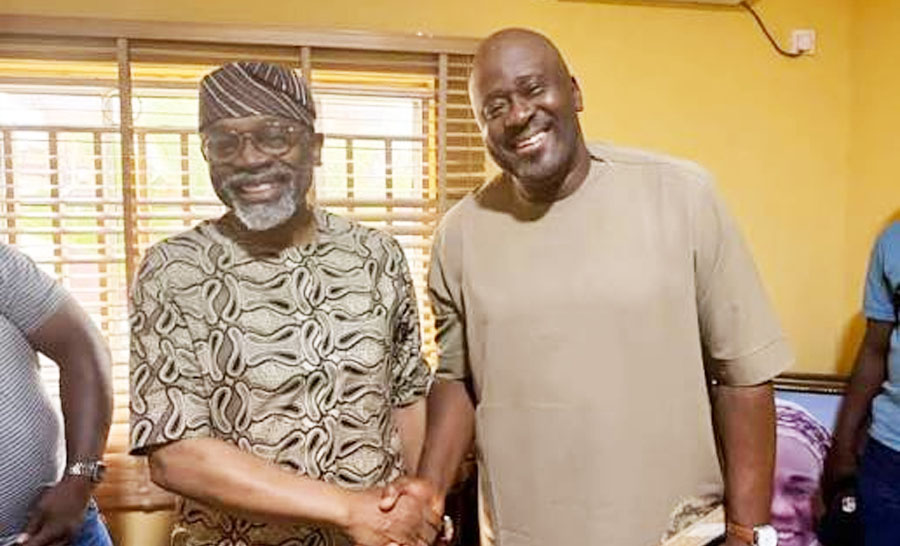
Desmond Elliot Apologises to Gbajabiamila, Seeks Return to APC
Former Lagos State House of Assembly member Desmond Elliot has publicly apologised to former Speaker of the House of Representatives and current Chief of Staff to President Bola Ahmed Tinubu, Femi Gbajabiamila, as he seeks to repair their relationship and return fully to the fold of the All Progressives Congress (APC).
Elliot, who represented Surulere Constituency I in the Lagos State House of Assembly from 2015, made the appeal amid renewed political activity ahead of the 2027 elections and after losing the APC ticket for the constituency in the party’s latest primary.
The former Nollywood actor’s latest appeal is the latest development in a political relationship that has experienced considerable strain in recent years.
Elliot had been regarded as a prominent political associate of Gbajabiamila, who represents Surulere in the broader Lagos political structure. Their relationship, however, came under pressure following political developments surrounding the Lagos State House of Assembly leadership crisis.
In his latest appeal, Elliot asked Gbajabiamila to forgive him for any offence he may have committed and expressed his desire for reconciliation.
The former lawmaker’s move comes after he failed to secure the APC nomination for Surulere Constituency I, effectively ending his bid for another term in the Lagos Assembly under the party.
Barakat Olawunmi Odunuga-Bakare emerged as the APC candidate following the party’s primary election.
The outcome marked a major setback for Elliot, who had sought to continue his legislative career after serving in the Assembly since 2015.
The political fallout between Elliot and sections of the Lagos APC leadership had previously become public during the controversy surrounding the leadership of the Lagos State House of Assembly.
READ ALSO:
- “Beyond 100%”: Governor Dauda Lawal Backs President Tinubu for 2027
- NDLEA Intercepts 44kg UK-Linked Cannabis, Drugs Hidden in Bread, Speakers
- Nwifuru Dismisses Cubana Chief Priest as ‘Attention-Seeker’
In May 2026, Elliot had also publicly apologised to Gbajabiamila, referring to him as his political mentor and acknowledging that he might have offended him.
“To err is human, to forgive is divine,” Elliot said while appealing for forgiveness.
He also denied allegations that he was involved in moves against then-Lagos Assembly Speaker Mudashiru Obasa, whose leadership had become the subject of intense political controversy.
Gbajabiamila had earlier said that he defended Elliot during the crisis and that the controversy had placed his own position as Chief of Staff to President Tinubu under pressure.
According to Gbajabiamila, allegations surrounding Elliot had contributed to a situation in which he was forced to explain his position to the President. He maintained that he had defended the former lawmaker and told Tinubu that Elliot was not part of the group behind the moves against Obasa.
The dispute therefore went beyond a personal disagreement and became intertwined with the wider political contest within the Lagos APC.
Elliot’s latest reconciliation effort comes against the backdrop of the changing political dynamics in Surulere and Lagos as political parties begin positioning themselves for the 2027 general elections.
The former lawmaker’s defeat in the APC primary also means that he will not return to the Lagos Assembly through the party’s ticket for the next legislative term.
The APC primary was described by Gbajabiamila as peaceful, fair and orderly, despite reports of tensions surrounding the contest and Elliot’s concerns about the process.
Elliot had previously obtained the APC nomination form in his bid to return to the Assembly, but he ultimately failed to secure the party’s endorsement.
Following the primary defeat, reports emerged that the former actor had returned to Nollywood, reviving his entertainment career after more than a decade in active politics.
Elliot became a household name in Nigeria through his work as an actor before entering politics. He represented Surulere Constituency I in the Lagos Assembly for three consecutive terms beginning in 2015.
His political career has been closely associated with the Lagos APC political structure, making his relationship with influential party figures particularly important to his future political ambitions.
The latest apology is therefore being viewed not only as an attempt to resolve a personal political disagreement but also as part of Elliot’s effort to rebuild relationships within the ruling party.
For the former lawmaker, reconciliation with Gbajabiamila could potentially help restore his standing within the Lagos political establishment, although his immediate political future remains uncertain following his loss at the APC primary.
The development also comes at a time when political alignments are rapidly evolving ahead of 2027, with politicians across Lagos and other parts of the country reassessing their alliances, party positions and electoral strategies.
While Elliot has expressed a desire to return to the APC fold, the extent to which the reconciliation will translate into a renewed political role remains unclear.
For now, his public appeal to Gbajabiamila marks another attempt by the former lawmaker to close a difficult chapter in their political relationship and rebuild bridges within the Lagos APC.
Desmond Elliot Apologises to Gbajabiamila, Seeks Return to APC
Politics
2027: Sowore Promises ₦500,000 Minimum Wage, Free Education, 24-Hour Electricity
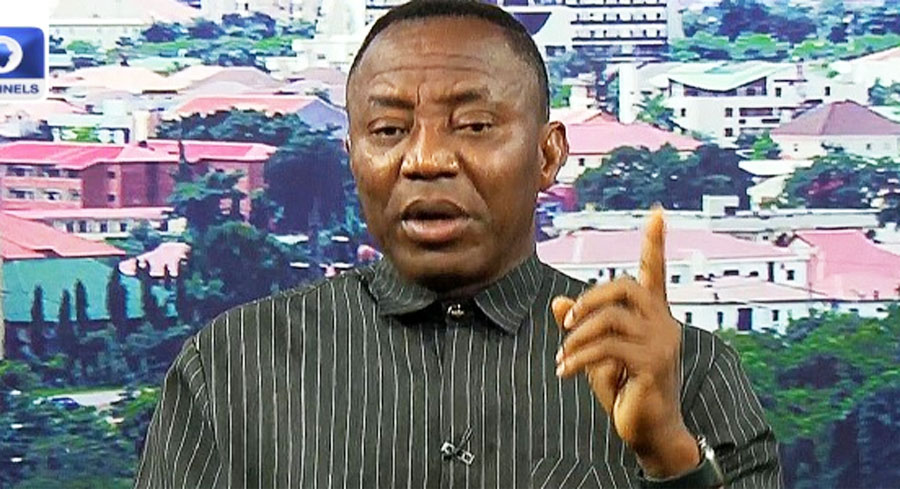
2027: Sowore Promises ₦500,000 Minimum Wage, Free Education, 24-Hour Electricity
African Action Congress presidential candidate Omoyele Sowore has unveiled an ambitious agenda for the 2027 presidential election, promising a ₦500,000 monthly living minimum wage, 24-hour electricity, free education and the construction of one million public mixed-income homes if elected president.
Sowore said the proposals were part of the AAC’s 2027 agenda, which he described as a programme focused on improving living standards, expanding access to essential services and fundamentally changing the way Nigeria’s economy is managed.
At the centre of the proposal is a ₦500,000 minimum wage, which Sowore said would give Nigerian workers a more realistic income in the face of rising living costs.
He argued that workers should not continue to receive wages that are inadequate to meet basic needs while the cost of food, housing, transportation, healthcare and education continues to increase.
Sowore’s proposed wage would represent a substantial increase over Nigeria’s existing statutory minimum wage and would have significant implications for both public-sector finances and private employers if implemented nationwide.
The AAC candidate also promised to deliver 24-hour electricity, making reliable power supply a central pillar of his economic programme.
Sowore argued that Nigeria cannot achieve meaningful industrialisation when businesses and households remain heavily dependent on generators because of unreliable electricity supply.
He said his administration would prioritise the power sector to ensure that electricity becomes a dependable foundation for industrial production, small businesses, job creation and economic growth.
The presidential hopeful also promised free education at all levels, arguing that poverty should not prevent Nigerian children and young people from accessing quality education.
He said his proposed education policy would seek to remove financial barriers that prevent families from keeping their children in school, while improving access to educational opportunities.
READ ALSO:
- “Beyond 100%”: Governor Dauda Lawal Backs President Tinubu for 2027
- NDLEA Intercepts 44kg UK-Linked Cannabis, Drugs Hidden in Bread, Speakers
- Nwifuru Dismisses Cubana Chief Priest as ‘Attention-Seeker’
Housing is another major component of Sowore’s proposed programme.
He promised to construct one million public mixed-income homes, saying the initiative would help address Nigeria’s housing shortage while providing more affordable accommodation for people across different income groups.
He also proposed reforms to the country’s tenancy system, including measures to address the widespread practice of demanding lengthy rent advances from tenants.
Sowore said his government would treat healthcare as a right rather than a privilege, with increased investment in the country’s health system and measures designed to reduce the need for Nigerians to travel abroad for medical treatment.
His economic programme also includes plans to industrialise Nigeria, expand agriculture, improve infrastructure and create more dignified employment opportunities.
Sowore said agriculture would receive greater attention under his proposed administration, particularly through increased local production, processing and value addition.
He has argued that Nigeria should move away from excessive dependence on the export of raw commodities and instead develop industries capable of processing its agricultural and mineral resources locally.
The AAC candidate also promised reforms in the security sector, including improved welfare for security personnel and greater use of technology in combating terrorism, banditry, kidnapping and other forms of criminality.
He proposed the deployment of modern technologies, including drones and intelligence systems, as part of efforts to strengthen security operations.
READ ALSO:
- Driver Flees With Employer’s Car Two Days After Employment
- Boris Johnson Caught in Russian Drone Strike Scare Near Poland Border
- South Africa: Two Women Arrested Over Alleged Rape, Kidnap of E-Hailing Driver
Sowore has positioned his campaign as an alternative to Nigeria’s established political order, arguing that successive governments have failed to adequately tackle poverty, corruption, unemployment, inequality and poor public services.
He said Nigeria’s resources should be used to improve the quality of life of ordinary citizens rather than being concentrated among a relatively small political and economic elite.
The AAC candidate has also said his campaign would seek financial support from ordinary Nigerians, rather than relying heavily on wealthy political patrons.
According to Sowore, a people-funded campaign would allow the party to maintain greater independence and remain accountable to citizens rather than powerful sponsors.
His proposals come as political parties and presidential candidates begin positioning themselves ahead of the 2027 Nigerian presidential election.
Sowore is seeking to build on his previous presidential campaigns and present the AAC as a distinct alternative to the ruling All Progressives Congress (APC) and other established political parties.
The scale of his latest promises is likely to generate debate over their cost, funding and implementation.
A ₦500,000 minimum wage would significantly increase personnel costs for governments and could also place additional pressure on private-sector employers. Its implementation would therefore require careful consideration of productivity, inflation, government revenue and the ability of businesses to absorb higher labour costs.
Delivering 24-hour electricity would similarly require substantial investment in power generation, transmission and distribution, as well as reforms to address longstanding challenges involving gas supply, infrastructure, electricity pricing and distribution efficiency.
The proposed construction of one million homes and the provision of free education would also require significant public funding, planning and institutional capacity.
Sowore’s campaign is therefore placing a combination of higher wages, reliable electricity, free education, affordable housing, healthcare, industrialisation, job creation and security reforms at the centre of its 2027 message.
As the political contest gathers momentum, the feasibility and funding of competing candidates’ promises are expected to become important issues for voters assessing the various options ahead of the election.
2027: Sowore Promises ₦500,000 Minimum Wage, Free Education, 24-Hour Electricity
Politics
“Beyond 100%”: Governor Dauda Lawal Backs President Tinubu for 2027
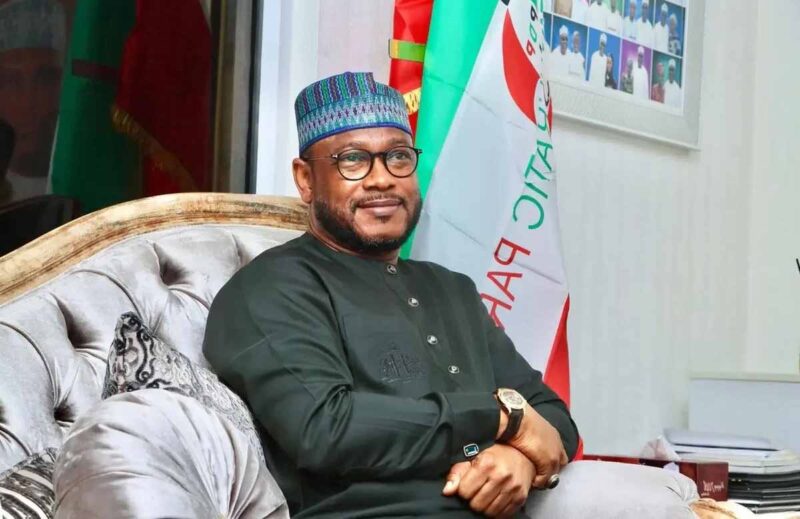
Zamfara leadership commits full support to the re-election bid as Campaign Director-General Abdul’aziz Yari meets with local stakeholders.
-

 metro2 days ago
Woman disguises as Muslim woman in Niqab to steal in Ado-Ekiti market, video sparks outrage
-

 metro2 days ago
Ondo Herbal Drink Tragedy: Survivor Vows Never to Drink Again as Death Toll Tops 30
-

 metro2 days ago
Sokoto Cleric Stabbed Twice in Neck After Juma’at Prayer, Attacker Killed
-
 Business2 days ago
Dangote: ₦525 Refinery Shares Could Rise to ₦10,000
-

 Africa3 days ago
Murder of Nigerian Bishop in South Africa Sparks Outcry Over Unsolved Killings
-

 News3 days ago
AI on the Roads: LASTMA Turns to China to Fix Lagos Traffic
-

 metro2 days ago
MURIC fires back at Peter Obi: Forget Sallah ceremony, free Nigerian Muslims
-

 Community3 days ago
Kaduna Traditional Rulers Set for 100% Pay Rise as Zazzau Emir Backs Proposal