

Auto
Nigeria Targets Additional 70,000 Annual Vehicle Output, West African Export with Hybrid Motors, Chinese Firm EV Deal
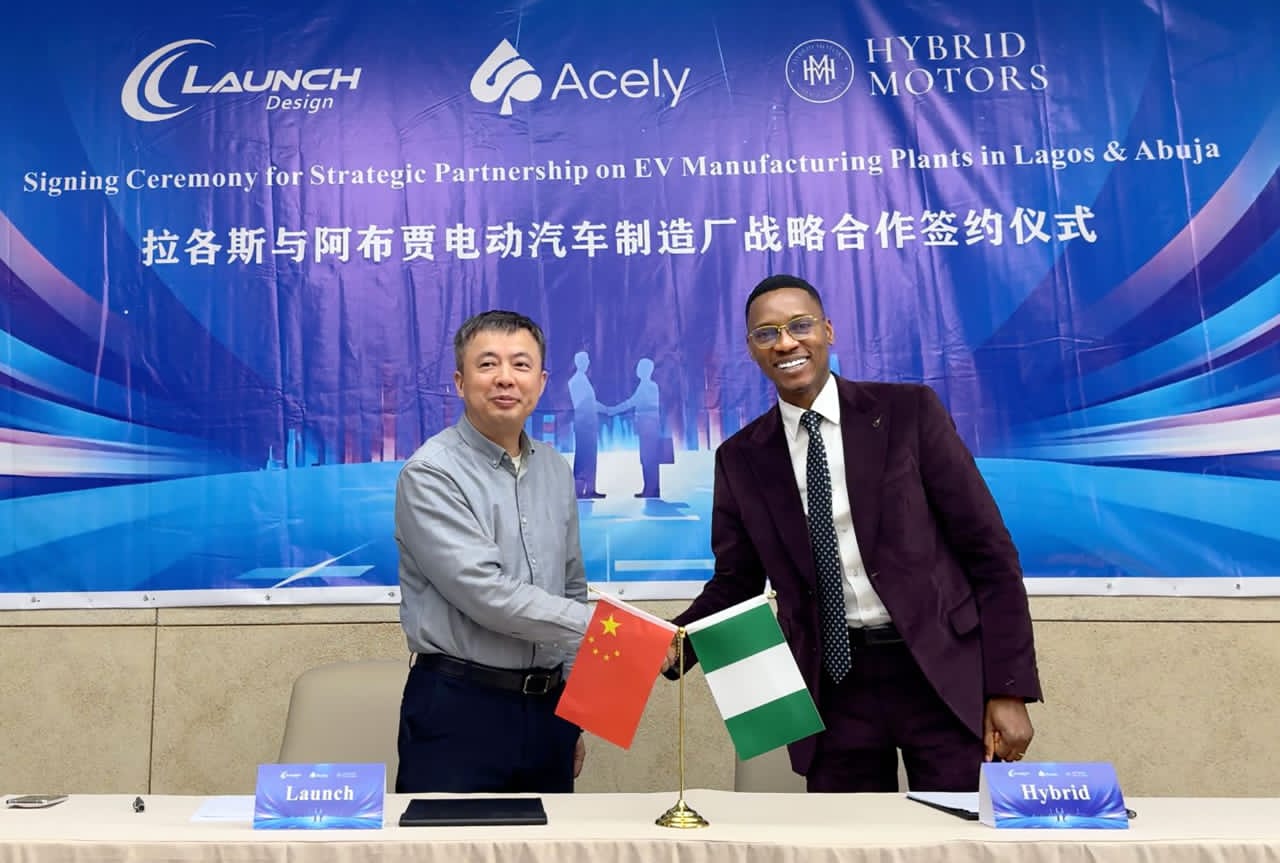
Nigeria Targets Additional 70,000 Annual Vehicle Output, West African Export with Hybrid Motors, Chinese Firm EV Deal
Launch Design Shanghai and Hybrid Motors Nigeria have signed a strategic partnership agreement to establish electric vehicle manufacturing plants in Lagos and Abuja, a move expected to raise Nigeria’s annual vehicle assembly capacity by 70,000 units and strengthen automobile exports to neighbouring West African countries.
The agreement, signed in Shanghai on May 8, 2026, will drive the production of “Acely,” Hybrid Motors Nigeria’s indigenous vehicle brand designed specifically for Nigerian roads, climate and mobility needs.
The collaboration is being positioned as a major boost to Nigeria’s automotive industrialisation drive, with the two firms aiming to transform the country into a regional hub for vehicle production and export.
Under the partnership, the companies will develop two manufacturing facilities with a combined annual production capacity of 70,000 vehicles at full operation.
The Lagos plant, located along the Lekki-Epe corridor, will serve as the main production and assembly centre with an installed capacity of 50,000 units yearly.
Its proximity to the Lekki Deep Sea Port is expected to support large-scale exports to regional markets including Ghana, Benin Republic, Togo and Côte d’Ivoire.
Industry stakeholders believe the export-oriented facility could significantly expand Nigeria’s automotive footprint across West Africa while reducing dependence on imported vehicles within the region.
The second facility, to be located within the Free Zone Business Area of Centenary Economic City in Abuja, will have an annual production capacity of 20,000 units and focus on supplying Northern Nigeria and neighbouring Sahel markets.
The firms said the dual-plant strategy would improve logistics efficiency, lower production costs and create thousands of direct and indirect jobs across the automotive value chain.
Speaking during the signing ceremony, Chief Executive Officer of Hybrid Motors Nigeria, Mr. Jubril Arogundade, described the project as a defining moment for Nigeria’s automotive future.
“This partnership is more than a business agreement; it is a commitment to building Nigeria’s automotive future,” Arogundade said.
“With Acely, we are demonstrating that globally competitive vehicles can be conceived, designed and assembled in Nigeria by Nigerians for both local and international markets.”
He added that the partnership with Launch Design Shanghai would bring advanced automotive engineering and manufacturing expertise into Nigeria, helping the Acely brand meet international standards while retaining local identity.
Chief Executive Officer of Launch Design, Mr. Wang Xun, said the collaboration would contribute to the emergence of a stronger automotive manufacturing ecosystem in Africa.
“Our turnkey engineering capabilities combined with Hybrid Motors Nigeria’s understanding of the local market create a strong foundation for success,” Wang said.
“Together, we are not only building vehicles but helping to establish a sustainable automotive industry for the region.”
The companies said Acely vehicles would focus on local assembly, energy efficiency and advanced electric and hybrid technologies suited to African operating conditions.
Analysts said the project could stimulate local component manufacturing, encourage technology transfer and deepen technical skills development within Nigeria’s automotive sector.
The initiative is also expected to conserve foreign exchange by reducing vehicle imports while positioning Nigeria as a competitive exporter of made-in-Nigeria vehicles within the ECOWAS sub-region.
Both firms noted that the investment aligns with the Federal Government’s National Automotive Industry Development Plan aimed at increasing local vehicle production, attracting investments and accelerating industrial growth.
“With facilities in Lagos and Abuja serving distinct but complementary markets across Nigeria and the wider region, we are laying the foundation for a new era of mobility that is locally rooted, globally competitive and sustainably driven,” Arogundade added.




Auto
Omoda, Jaecoo Shake Global Auto Market, Hit One Million Sales in Three Years
Omoda, Jaecoo Shake Global Auto Market, Hit One Million Sales in Three Years
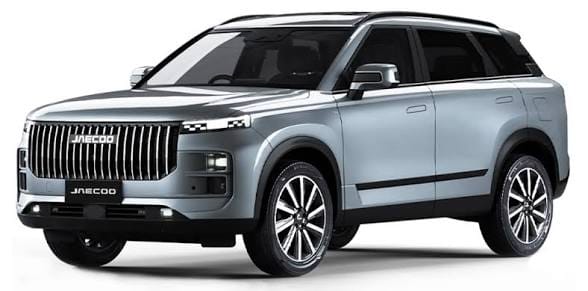
Chinese automotive brands Omoda and Jaecoo are rapidly reshaping the global automobile industry, posting remarkable sales growth and displacing long-established competitors in key markets barely three years after their debut.
Owned by Chinese auto giant Chery, the sister brands have emerged as two of the world’s fastest-growing vehicle marques, recording more than one million cumulative sales across 64 countries by April 2026 while making significant inroads into mature markets traditionally dominated by legacy manufacturers.
Their most striking success has come in the United Kingdom, one of Europe’s most competitive and brand-conscious automotive markets. After entering the UK in 2024, the brands recorded 48,087 new vehicle registrations in 2025, accounting for 2.38 per cent of the market.
The performance placed Omoda and Jaecoo ahead of several long-established manufacturers that have spent decades building customer loyalty in the country.
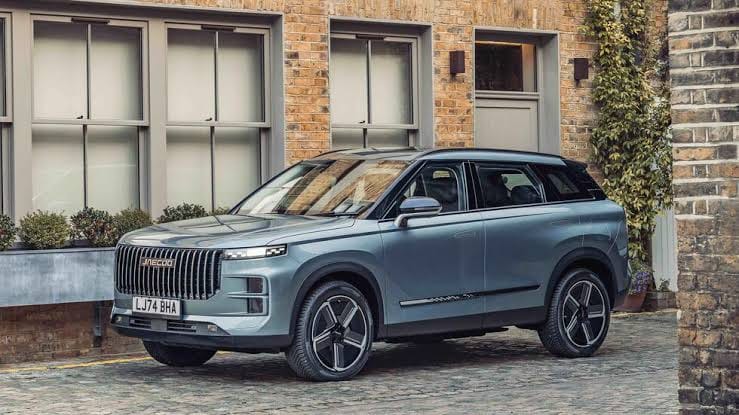
Driving much of the momentum is the Jaecoo 7 SUV, which finished 2025 as the UK’s fourth most popular retail vehicle before going on to become the country’s best-selling new car in March 2026. It has also ranked as the UK’s third best-selling new car so far in 2026.
Within just 19 months of launching in Britain, the two brands had surpassed 80,000 cumulative vehicle sales, underlining their rapid acceptance among consumers.
Their success extends well beyond the UK.
In Europe, Omoda and Jaecoo sold more than 340,000 vehicles in less than two years by June 2026, earning recognition from industry observers as the continent’s fastest-growing automotive brands.
Australia has witnessed a similar trend. Barely a year after their launch in May 2025, the brands crossed the 10,000-unit sales mark, while the Jaecoo J5 emerged as the country’s best-selling small electric SUV in May 2026.
The brands have also recorded notable achievements in Asia and South America. In Thailand, the Jaecoo J5 topped the country’s electric vehicle sales rankings for six consecutive months, while in Brazil, the Jaecoo 7 Hybrid was named the country’s “Hybrid of the Year.”
Industry analysts attribute the brands’ rapid rise to a combination of striking design, advanced technology, generous standard features and competitive pricing that offers consumers strong value compared with many established rivals.
Safety credentials have also strengthened consumer confidence. Both the Jaecoo 7 and the Omoda 5 have earned five-star ratings from Euro NCAP, Europe’s independent vehicle safety assessment authority, helping to reassure buyers who may be unfamiliar with the brands.
Although many traditional manufacturers still enjoy stronger heritage and decades of brand recognition, industry observers say buying decisions are increasingly being driven by value, technology, design and safety rather than brand familiarity alone.
That shift has created opportunities for newer entrants such as Omoda and Jaecoo, whose rapid global expansion suggests that the automotive landscape is undergoing a significant transformation.
For emerging markets such as Nigeria, where Chinese automobile brands are steadily gaining acceptance, the performance of Omoda and Jaecoo offers another indication of the growing influence of Chinese manufacturers in the global automotive industry.
Auto
High Power Bills Force BUK to Halt Electric Vehicle Charging on Campus
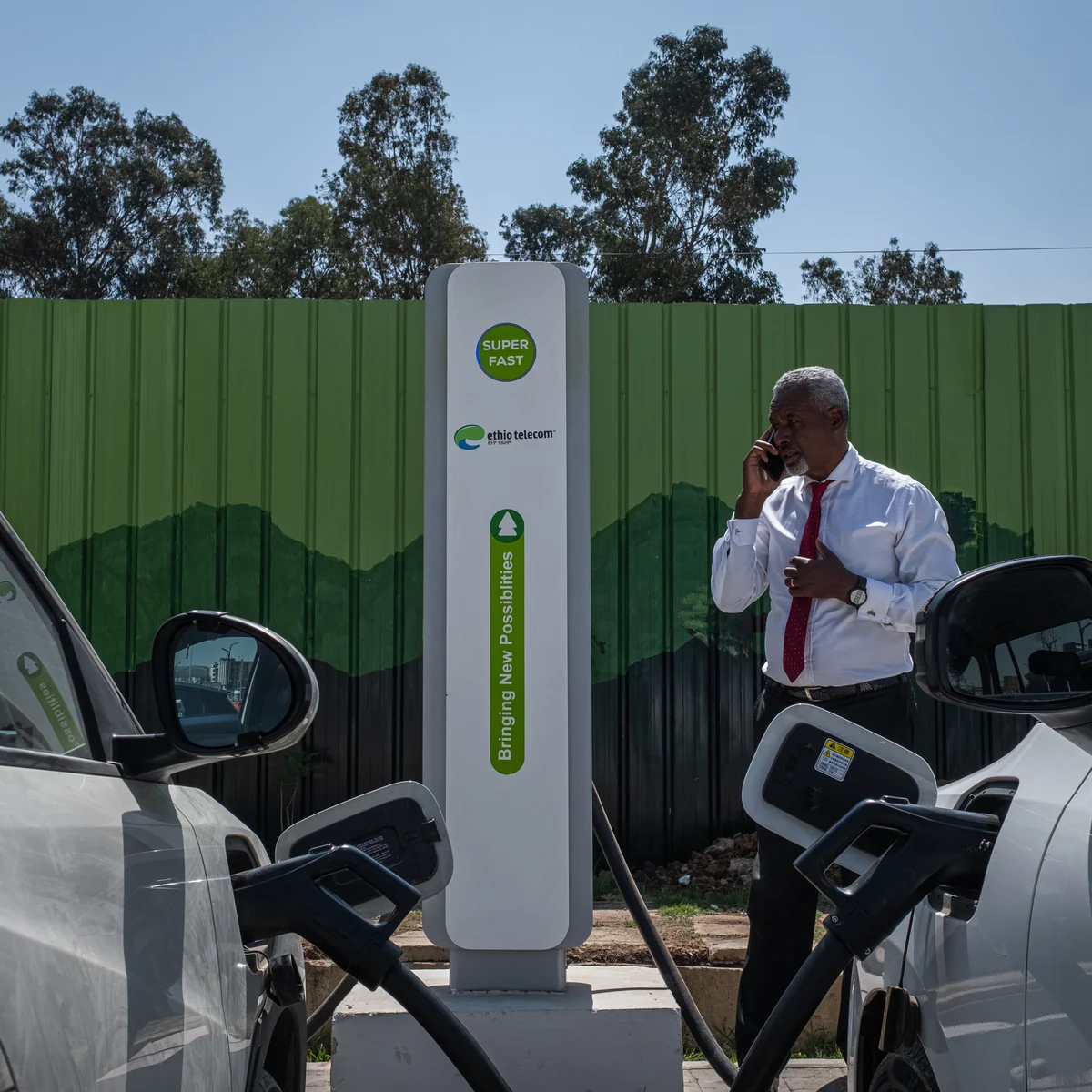
High Power Bills Force BUK to Halt Electric Vehicle Charging on Campus
Rising electricity costs have forced Bayero University, Kano, to ban the charging of privately owned electric motorcycles and other electric vehicles across its campuses.
The university said the growing practice of using its electricity supply to charge private electric vehicles had contributed significantly to a sharp increase in its power bills, creating an additional financial burden for the institution.
The directive, which takes immediate effect, was contained in a statement issued on Tuesday by the university’s Director of Public Affairs, Lamara Garba.
According to the statement, the management has observed the “indiscriminate charging” of privately owned electric motorcycles and other electric vehicles using the university’s electricity supply.
It said the development was no longer sustainable at a time when the institution was seeking to manage its resources prudently.
READ ALSO:
- Explosion kills ISWAP bombmakers, foreign IED experts in Borno
- Alleged Coup Mastermind Suggested Approaching Wike for Funding, Court Documents Show
- Adeleke challenges EFCC over freezing of Osun government account
“The Management of Bayero University, Kano has observed with concern the indiscriminate charging of privately owned electric motorcycles and other electric vehicles using the University’s electricity supply across its campuses.
“This practice has contributed significantly to the sharp increase in the University’s electricity bills, thereby placing an enormous financial burden on the institution,” the statement said.
The university consequently directed all staff, students, commercial motorcycle operators and other users of electric motorcycles to stop charging their vehicles with the institution’s electricity.
It warned that anyone who violated the directive would face disciplinary action in accordance with the university’s rules and regulations.
“Management expects full compliance with this directive. Any person found violating this ban will be liable to appropriate disciplinary action,” the statement added.
To enforce the ban, the university directed provosts, deans, directors, heads of departments and heads of units to monitor compliance in their respective areas and report any violations to the appropriate authorities.
It also announced that a monitoring team would conduct regular patrols across the campuses to ensure strict adherence to the directive.
The institution urged all affected persons to cooperate with the measure, saying it was part of broader efforts to reduce energy costs and promote the prudent use of university resources.
High Power Bills Force BUK to Halt Electric Vehicle Charging on Campus
Auto
FRSC Boss: Tinubu’s CNG, EV Drive Creating Jobs, Attracting Investment
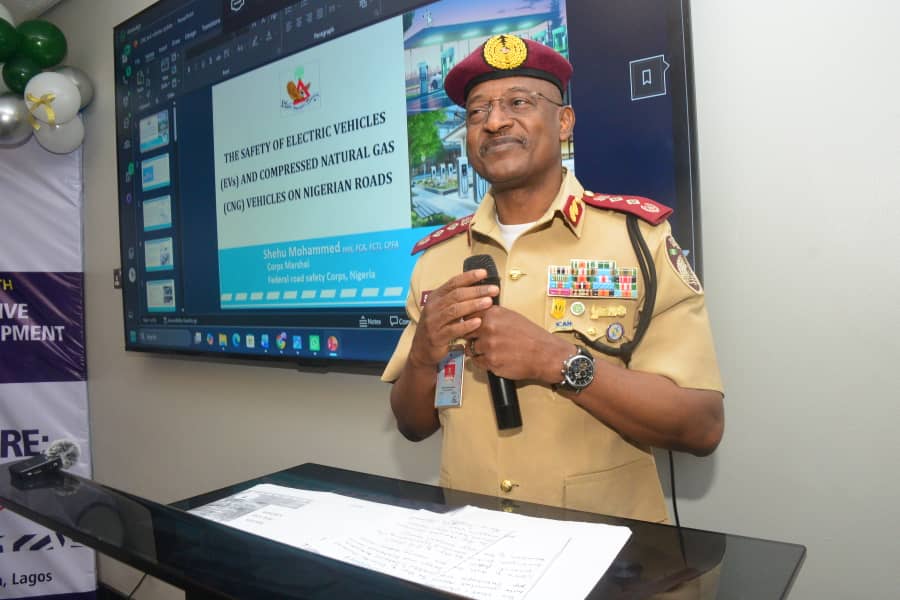
FRSC Boss: Tinubu’s CNG, EV Drive Creating Jobs, Attracting Investment
President Bola Tinubu’s ambitious transition to Compressed Natural Gas (CNG) and Electric Vehicles (EVs) is already attracting fresh investments, creating new employment opportunities and laying the foundation for a cleaner, safer and more sustainable transport system, the Corps Marshal of the Federal Road Safety Corps (FRSC), Shehu Mohammed, has said.
Speaking at the 2026 Nigeria Auto Industry Summit (NAISU) organised by the Nigeria Auto Journalists Association (NAJA), Mohammed described the Presidential CNG and EV Initiative as a game-changing policy capable of reshaping Nigeria’s automotive and transportation landscape while stimulating industrial growth and youth employment.
The FRSC boss said the initiative aligns with the United Nations Sustainable Development Goals (SDGs), particularly those promoting climate action and sustainable transportation, while commending President Bola Tinubu for the bold reforms and for assigning the corps a strategic role in the programme’s implementation.
“This initiative has brought in so many investments. We have assembly plants producing electric vehicles and CNG vehicles, companies manufacturing CNG cylinders and conversion kits, and new technology that is creating opportunities for our youths,” he said.
According to him, the initiative is expected to generate thousands of jobs while positioning Nigeria as a leading destination for green mobility investments in Africa.
“Really, it is a massive investment coming into Nigeria, and it is producing massive jobs for the unemployment challenge we have,” he added.
Mohammed also linked the administration’s transport agenda to ongoing infrastructure projects, including the Lagos-Calabar Coastal Highway and the Sokoto-Badagry Super Highway, noting that the projects would improve connectivity and support a safer, more efficient transport network.
READ ALSO:
- Lanre Shittu Motors Leads Drive to Steer Lagos Students Away from Crime, Donates books to public Schools
- UNIOSUN ranks third among state universities in latest Webometrics ranking
- State police: Shari’ah Council urges caution, wider consultations
He expressed confidence that the reforms would help Nigeria achieve the United Nations target of providing “a safe, accessible, affordable, reliable and sustainable transport system for all Nigerians by 2030.”
On road safety, the Corps Marshal stressed that reducing road crashes and fatalities requires collective action rather than relying solely on the FRSC.
“Road safety should not be left to the FRSC alone. It is a collective responsibility involving government, communities and every Nigerian,” he said.
While noting that the corps has sustained public enlightenment campaigns for over three decades, Mohammed said greater participation from state governments, local councils, traditional institutions and community leaders is essential to changing road users’ behaviour.
He disclosed that the FRSC has expanded its awareness campaign beyond motor parks to grassroots town hall meetings, enabling the agency to engage drivers, passengers and community stakeholders more directly.
“When you see a bad driving culture, stop the person and caution him. Let him be embarrassed. Road safety is everyone’s responsibility,” he said.
The Corps Marshal expressed concern over persistent traffic violations such as speeding, overloading and the dangerous practice of conveying passengers alongside goods and livestock, warning that such behaviours remain major causes of fatal crashes.
He also urged passengers to challenge reckless drivers, particularly those who exceed speed limits, saying public intervention could save lives.
Mohammed commended NAJA and the media for their sustained support for the FRSC’s road safety campaigns and called for deeper collaboration with journalists to achieve the global target of cutting road traffic crashes, injuries and fatalities by 50 per cent before 2030.
Speaking on the legacy he hopes to leave, the FRSC boss said his priority is to build a technology-driven, people-focused organisation anchored on professionalism, collaboration and excellent service delivery.
“The legacy I want to leave is partnership, collaboration and bringing out the best in FRSC personnel to serve Nigerians and further enhance the image of the corps,” he said.
FRSC Boss: Tinubu’s CNG, EV Drive Creating Jobs, Attracting Investment
-
 Education2 days ago
Nigerian Young Academy, LASU to Host 16th International Conference on Convergent Research
-
 News2 days ago
Trump smuggled out of Turkey in catering truck over Iran threat
-

 Politics3 days ago
Keep Religion Out of Nigeria’s ‘Dirty Politics,’ Gumi Tells Jingir
-

 metro3 days ago
Ex-Aiye Confraternity Leader Arrested in Lagos, Confesses to Multiple Killings in Mushin
-
 metro3 days ago
‘I Acted Out of Patriotism’ — Army Colonel Ma’aji Breaks Silence, Explains Why He Plotted Coup Against Tinubu
-

 News3 days ago
South Africa Visa Applications Double From Nigerians Despite Xenophobia Concerns – Envoy
-
 News2 days ago
Tinubu Vows to Secure Nigeria, Declares Unity Non-Negotiable Amid Worsening Insecurity
-
 metro3 days ago
How Enugu Abduction Led to Recovery of 4 AK-47 Rifles, 133 Ammunition – Army