

Politics
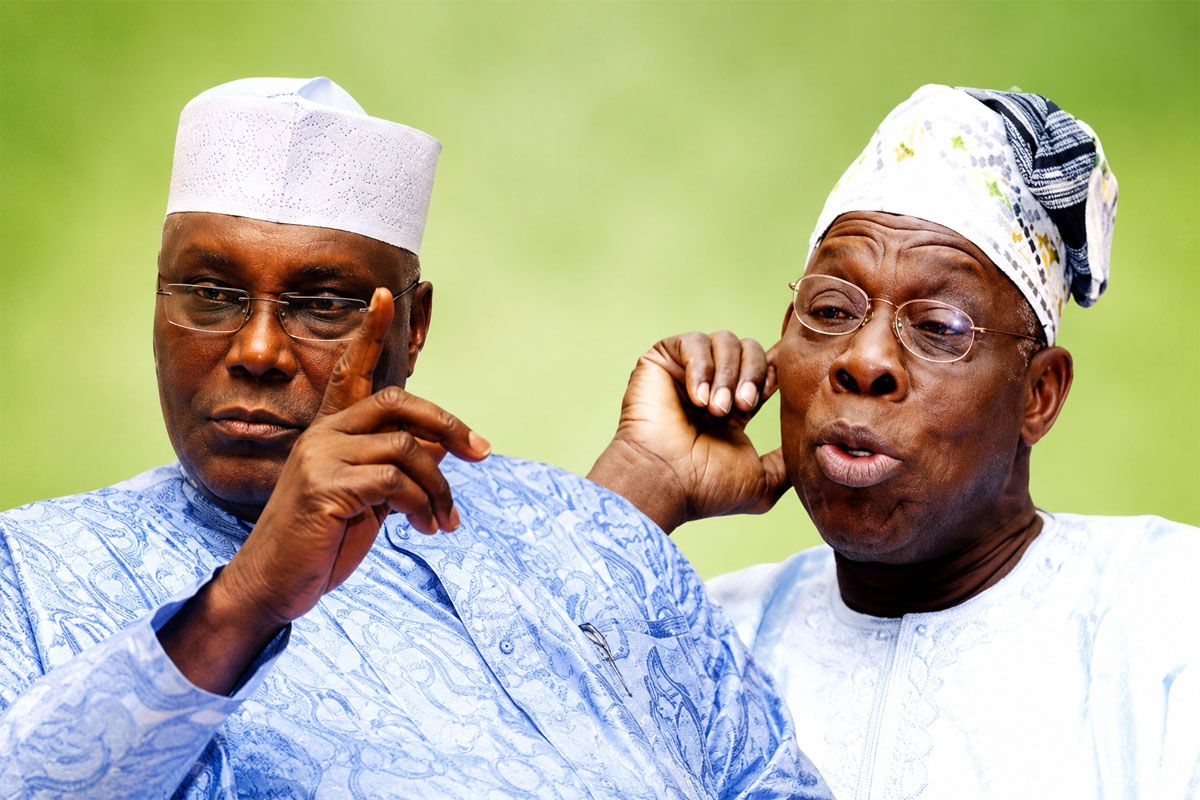
2027 election: Atiku accuses Obasanjo of reviving false allegations to favour preferred candidate
2027 election: Atiku accuses Obasanjo of reviving false allegations to favour preferred candidate
Former Vice President and presidential candidate of the African Democratic Congress (ADC), Atiku Abubakar, has accused former President Olusegun Obasanjo of reviving what he described as false allegations against him to create political advantage for his “kinsman” ahead of the 2027 general election.
The fresh exchange marks another chapter in the long-running political rivalry between the two former allies, whose relationship has remained strained since the closing years of the Obasanjo administration.
The latest dispute was triggered by Obasanjo’s claim that Atiku gave the late former Speaker of the House of Representatives, Ghali Umar Na’Abba, ₦5 million to initiate impeachment proceedings against him during his first term in office.
Obasanjo made the allegation while reflecting on political developments leading to the 2003 general election. According to the former president, Atiku allegedly held a private meeting with Na’Abba, encouraged him to ensure he served only one term as president, and later provided funds to commence impeachment proceedings.
The former president also claimed that the alleged meeting and payment were documented and reported to him by his then Chief of Staff, whom he described as a trained intelligence officer.
However, Atiku has strongly denied the allegations, describing them as baseless, politically motivated and designed to influence public perception ahead of the 2027 presidential election.
In a statement issued by his Senior Special Assistant on Public Communication, Phrank Shaibu, the former vice president said the accusations were nothing more than an attempt to rewrite history for political purposes.
READ ALSO:
- Alleged Coup Plot: How Attack on Aso Rock, Airports Was Planned — Court Documents
- Gumi Questions FG’s Refusal To Dialogue With Bandits, Boko Haram, Cites Niger Delta Precedent
- Police deny IGP Olatunji Disu issued shoot-on-sight order for illegal firearm carriers
According to Atiku, the timing of the allegations raises questions, coming at a period when political consultations and alignments ahead of the next general election are gathering momentum.
He argued that the claims were intended to damage his credibility while giving an unfair political advantage to a preferred presidential hopeful whom he referred to as Obasanjo’s “kinsman.”
Although Atiku did not identify the individual, he maintained that Nigerians would not be deceived by what he described as recycled accusations that had resurfaced more than two decades after the events in question.
The former vice president also questioned why no criminal investigation or prosecution was initiated during Obasanjo’s administration if there had been credible evidence that he bribed the former Speaker.
According to him, the federal government at the time controlled all relevant security and anti-corruption agencies and had sufficient authority to investigate or prosecute anyone found guilty of such an offence.
He argued that the absence of any legal action undermines the credibility of the latest allegations.
Atiku further criticised Obasanjo for making allegations involving the late Na’Abba, saying it was inappropriate to rely on the name of someone who is no longer alive to confirm or deny the claims.
He described the development as contrary to African values, arguing that the dead should not be drawn into political controversies because they cannot defend themselves.
The former vice president also revisited the political disagreements that strained his relationship with Obasanjo while they were in office.
He insisted that their fallout was rooted in his opposition to the controversial third-term agenda, which sought constitutional changes that would have allowed Obasanjo to remain in office beyond the two-term constitutional limit.
Atiku said he resisted the proposal through lawful and democratic means because he believed protecting Nigeria’s constitutional democracy was more important than personal political interests.
According to him, the latest allegations appear to reflect lingering resentment over his opposition to the third-term bid rather than a genuine effort to establish historical facts.
The ADC presidential candidate also stated that Obasanjo is constitutionally free to support any candidate of his choice ahead of the 2027 election, but urged him to do so openly instead of reviving allegations that cannot be independently verified because the principal witness, Na’Abba, is deceased.
He added that he would not allow himself to be distracted by prolonged exchanges over events that occurred more than two decades ago while millions of Nigerians are grappling with pressing national challenges.
According to Atiku, the country’s priority should be addressing rising inflation, economic hardship, insecurity, unemployment, poverty and governance issues rather than reopening old political disputes.
The renewed war of words comes as political parties continue consultations, coalition talks and strategic realignments ahead of the 2027 general election, with several leading politicians expected to declare their presidential ambitions in the coming months.
Political observers believe exchanges between prominent figures such as Atiku and Obasanjo are likely to shape public discourse as preparations for the next election gather pace.
2027 election: Atiku accuses Obasanjo of reviving false allegations to favour preferred candidate





Politics
‘They Created Hunger, Poverty’: Tinubu Fires at Opposition as 2027 Re-election Campaign Begins
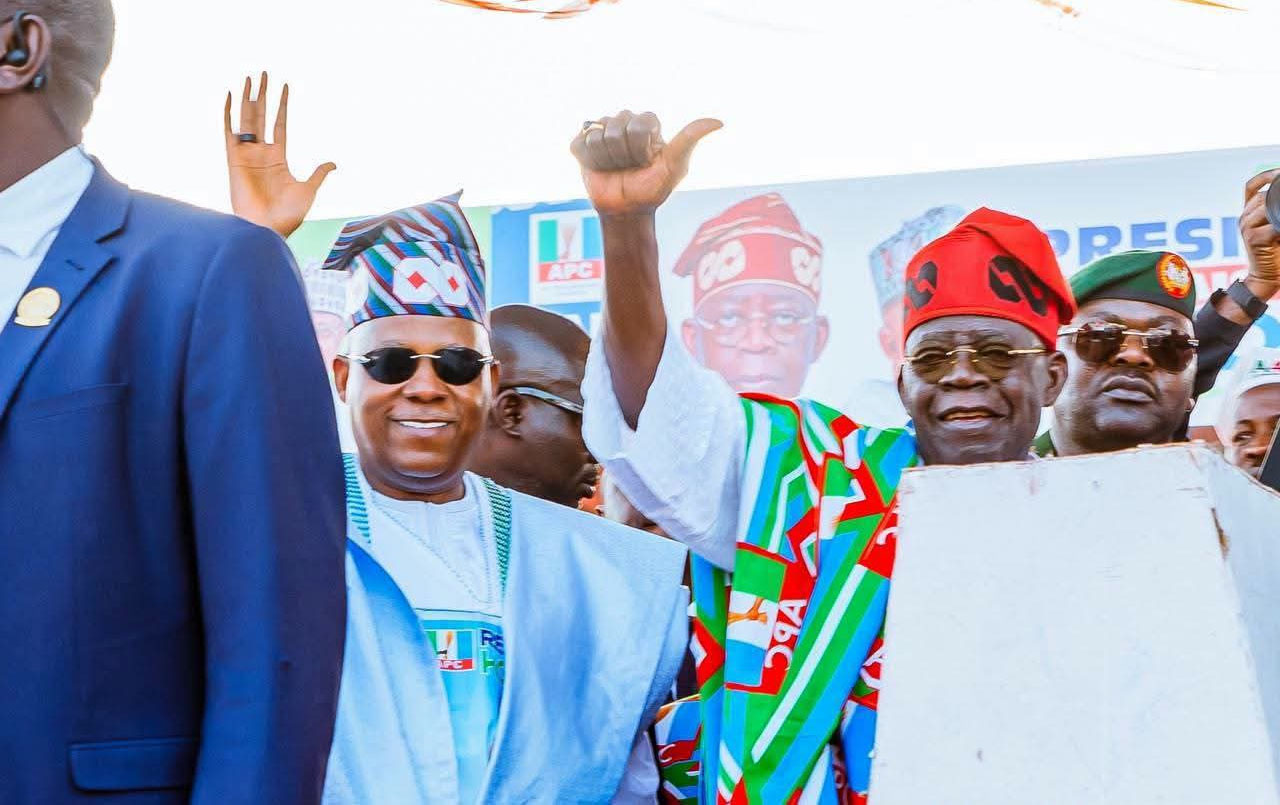
President Bola Ahmed Tinubu has blamed opposition politicians for the hunger and poverty confronting Nigerians, insisting that his administration is working to address the economic challenges as he formally launched his campaign for a second term in office.
Tinubu made the remarks on Saturday, October 24, 2026, during the All Progressives Congress (APC) presidential campaign flag-off rally at the Kaduna Township Stadium, where he urged Nigerians to renew his mandate in the 2027 presidential election.
The President’s comments come amid persistent public concerns over rising food prices, petrol costs, transportation expenses and declining purchasing power, with the economy expected to remain a major issue in the contest for the presidency.
Addressing supporters at the rally, Tinubu challenged opposition politicians who have criticised his administration over hunger and poverty, arguing that they were responsible for creating the problems they now accuse his government of failing to resolve.
“I hear my opponents talking about hunger and poverty. Who created it? They did. They created hunger, they created poverty. We are trying to eradicate them,” the President said.
Tinubu defended his administration’s economic policies, maintaining that his government was taking steps to improve the country’s finances, promote development and create conditions for greater prosperity.
He also commended APC governors for their efforts in their respective states and promised Nigerians improved economic opportunities if he secured a second term.
“To you, the children of our country, we promise prosperity in our second term. You will not regret going to the polls,” he told the gathering.
The President urged eligible voters to obtain their Permanent Voter Cards (PVCs) and participate in the forthcoming election. He also called on APC supporters to vote for the party’s candidates at the presidential, governorship and legislative levels.
READ ALSO:
- Bill Clinton condemns anti-Muslim prejudice, cites Qur’an’s message of coexistence
- MURIC Applauds Army as Mogadishu Cantonment Mosque Reopens After Week-Long Closure
- Atiku Condemns Attack on Edo Comedian Over Refusal to Support Tinubu
Tinubu further defended his administration’s decision to remove the petrol subsidy, insisting that the country would not return to the previous arrangement.
“Fuel subsidy is in our past: no more corruption, no more falsification of invoices, no more lies, no more smuggling of fuel,” he said.
The removal of the petrol subsidy, announced shortly after Tinubu assumed office in May 2023, remains one of the most consequential and controversial economic decisions of his administration.
The government has argued that the policy would reduce public expenditure, eliminate distortions in the petroleum market and free up resources for development. However, the increase in petrol prices following the reform has contributed to higher transportation and distribution costs, putting additional pressure on households and businesses.
The administration’s economic reforms, including changes to the foreign exchange system, have also generated debate over their long-term benefits and immediate effects on living standards.
Opposition politicians have repeatedly questioned the government’s management of the economy, arguing that the reforms have imposed significant hardship on Nigerians without delivering sufficient relief.
Former Vice-President Atiku Abubakar, the presidential candidate of the African Democratic Congress (ADC), criticised Tinubu’s attempt to blame opposition parties for the country’s economic difficulties.
Atiku argued that the APC had governed Nigeria since 2015, first under former President Muhammadu Buhari and subsequently under Tinubu, and should therefore accept responsibility for the country’s economic conditions during its period in power.
He maintained that Nigerians were experiencing significant hardship under the current administration and urged the President to address the concerns of citizens rather than blame political opponents.
The exchange highlights the growing political contest over responsibility for hunger, poverty and the cost-of-living crisis as parties position themselves ahead of the 2027 elections.
At the Kaduna rally, Vice-President Kashim Shettima also urged Nigerians, particularly voters in the North, to support Tinubu’s re-election bid.
Shettima recalled Tinubu’s previous support for northern presidential aspirants, including Atiku in 2007, Nuhu Ribadu in 2011 and Muhammadu Buhari in the 2015 and 2019 elections. He argued that Tinubu had demonstrated political support for northern interests and called on voters to reciprocate.
Kaduna State Governor Uba Sani also appealed to northern voters to back the President, pointing to federal infrastructure projects, education initiatives and security interventions.
The rally attracted prominent APC figures, including Senate President Godswill Akpabio, House of Representatives Speaker Tajudeen Abbas, APC National Chairman Nentawe Yilwatda, campaign Director-General Abdulaziz Yari, ministers, lawmakers and governors.
The event marked the beginning of Tinubu’s campaign for another presidential term, with the President asking Nigerians to give his administration additional time to pursue its economic and development agenda.
However, the debate over the causes of Nigeria’s economic hardship is likely to remain central to the election campaign. While the APC is defending its reforms and promising improved prosperity, opposition parties are demanding greater accountability for the impact of government policies on food affordability, employment, household incomes and living standards.
As the 2027 election approaches, voters will have to assess the competing claims of the ruling party and the opposition against their own experiences of the economy and the policy proposals presented by the candidates.
‘They Created Hunger, Poverty’: Tinubu Fires at Opposition as 2027 Re-election Campaign Begins
Politics
2027: Shettima Urges North to Repay Tinubu’s Support With Re-election
2027: Shettima Urges North to Repay Tinubu’s Support With Re-election
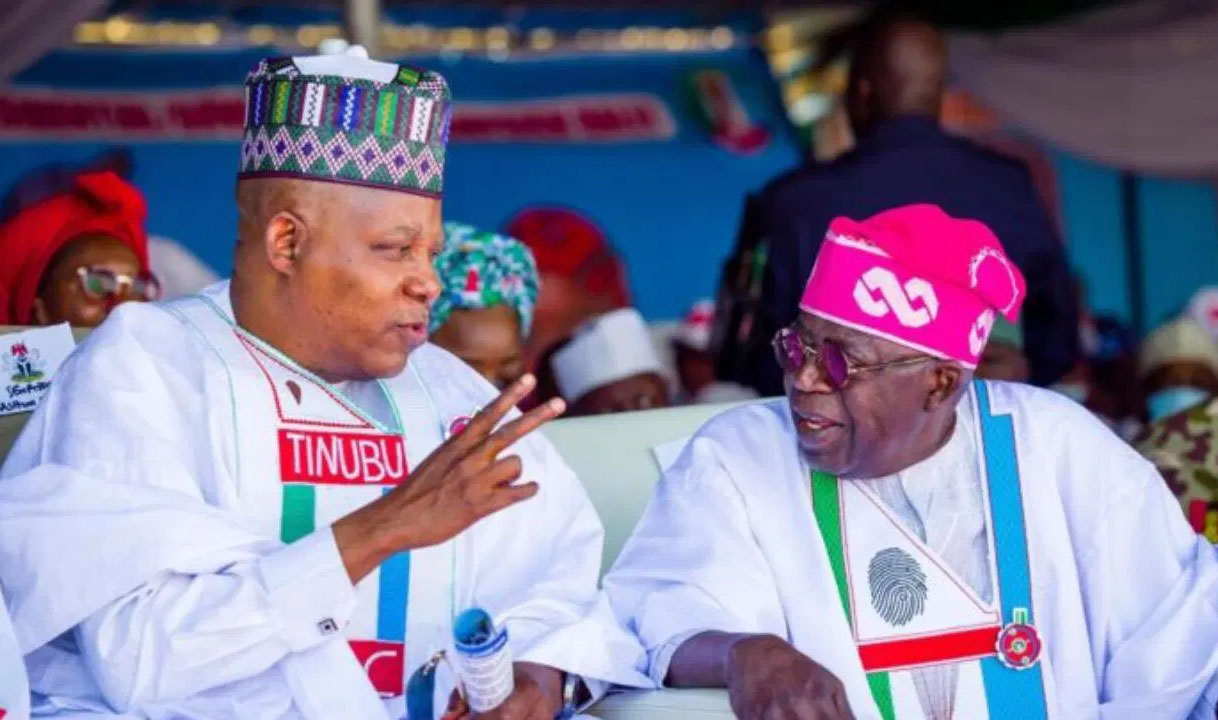
Vice-President Kashim Shettima has called on northern voters to rally behind President Bola Tinubu’s re-election bid in 2027, arguing that the region owes the President a political debt for his longstanding support for northern leaders, including the late President Muhammadu Buhari.
Shettima made the appeal on Saturday at the All Progressives Congress presidential campaign launch in Kaduna, where he urged voters to support Tinubu and other APC candidates across the country in the forthcoming general elections.
According to the Vice-President, Tinubu’s political history demonstrates a consistent willingness to support leaders from the North, making it imperative for the region to reciprocate by backing his administration for another four-year term.
“We have come to ask you to renew a second time for the APC from top to bottom,” Shettima said.
He cited Tinubu’s role in supporting political figures from the North, including former Vice-President Atiku Abubakar, whom he said the President had provided a platform to contest the presidency in 2007 following his departure from the Peoples Democratic Party.
Shettima also recalled Tinubu’s support for Buhari during the 2015 and 2019 presidential elections, describing the former Lagos State governor’s loyalty as evidence of honour and political commitment.
“And you can bear witness that in 2015 and 2019, President Tinubu stood solidly behind the late President Muhammadu Buhari, throughout his first and second term victories. This is a mark of honour and our faith in a man of honour,” he said.
Beyond appealing to the North on the basis of political loyalty, Shettima defended the Tinubu administration’s performance, highlighting projects and institutional developments he said demonstrated its commitment to national growth and the development of Kaduna State.
He said the administration had promised to restore Kaduna’s status as a leading centre of learning and pointed to the establishment of the Federal University of Applied Sciences in Kachia, the transition of the institution in Zaria to a federal university of education and the establishment of a state vocational institute in Rigachikun as evidence of progress.
The Vice-President also listed major infrastructure projects, including the Ajaokuta-Kaduna-Kano gas pipeline, the Kano-Maradi railway, the Lagos-Kano rail corridor and the Abuja-Kaduna-Kano road, as part of the administration’s development agenda.
He further highlighted ongoing work on the Sokoto-Badagry highway, describing the project as a strategic investment that could expand agricultural production and unlock economic opportunities across the country.
According to Shettima, the highway would improve connectivity, open up agricultural communities and strengthen the movement of goods and services, with potential benefits for farmers and businesses.
His appeal in Kaduna combined a call for political reciprocity with a defence of the administration’s record, as the APC seeks to consolidate its support base ahead of the 2027 general elections.
The Vice-President urged northern voters to consider Tinubu’s past political alliances and the administration’s stated achievements in deciding whether to renew the President’s mandate.
Politics
Atiku Condemns Attack on Edo Comedian Over Refusal to Support Tinubu

Former Vice-President and African Democratic Congress (ADC) presidential candidate Atiku Abubakar has condemned the alleged attack on Edo State-based comedian Osagie Daniel Idedia, popularly known as Porkupyne, reportedly over his political views and refusal to support President Bola Ahmed Tinubu.
Atiku called on security agencies to investigate the incident, identify those responsible and ensure that anyone found culpable is brought to justice.
The comedian was reportedly attacked on Friday night, October 23, 2026, in Benin City, Edo State. He sustained serious injuries and was taken to hospital, where he was reported to be receiving treatment.
The incident attracted public attention after a video showing the comedian lying on a hospital bed with visible injuries circulated on social media on Saturday.
In a statement shared on his X account on Saturday, Atiku described the assault as politically motivated, alleging that Porkupyne was targeted because of his support for the ADC presidential candidate and his criticism of the Edo State Government.
“I condemn in the strongest possible terms the brutal attack on comedian Osagie Daniel Idedia (aka Porkupyne), in Benin City, Edo State,” Atiku said.
READ ALSO:
- US Declares Two Nigerians Wanted Over $3.1m Medicare Fraud, Drug Offences
- Tibet in Mourning: 7.0 Quake Kills 16, Injures 76 as Rescue Teams Race Against Time in Nagqu
- Tope Alabi Threatens Pastor With Lawsuit Over Toluwanisings’ Death Claims
He alleged that the comedian was attacked because he supported his political ambition and demanded good governance and accountability in Edo State.
Atiku also accused President Tinubu, Edo State Governor Monday Okpebholo and the leadership of the All Progressives Congress (APC) of creating an environment in which opposition supporters could be intimidated.
He challenged Okpebholo to explain the circumstances surrounding the incident and demonstrate that his administration would not protect anyone responsible for political violence.
The former vice-president urged the police to investigate possible political involvement in the assault and establish whether anyone sponsored or facilitated it.
He also called on Amnesty International and foreign diplomatic missions in Nigeria to monitor the treatment of opposition supporters, independently document alleged politically motivated attacks and demand accountability as the country approaches the 2027 general elections.
Atiku maintained that Nigerians should be free to support any political party or candidate without fear of intimidation or physical assault.
He demanded justice for Porkupyne and called for measures to protect citizens exercising their right to political choice and peaceful dissent.
The attack also drew condemnation from comedian Gbadamosi Jonathan, popularly known as MC Edo Pikin, who expressed concern over Porkupyne’s condition in a video shared on social media.
Meanwhile, the Edo State Police Command said it had begun investigating the incident.
The command’s spokesperson, ASP Eno Ikoedem, said Commissioner of Police Patrick Daaor had ordered an immediate and thorough investigation to establish the circumstances surrounding the assault, identify those involved and ensure that anyone found responsible faced the law.
The police condemned violence and assured the public that the matter would be investigated.
However, the alleged political motive behind the attack has not been independently established, and the police have not publicly confirmed who carried out the assault or whether it was connected to the comedian’s political views.
The Edo State Government had not publicly responded to Atiku’s allegations at the time of the latest reports.
The incident has renewed concerns about political tolerance and the safety of citizens expressing dissent as political activities gather momentum ahead of the 2027 general elections.
Atiku Condemns Attack on Edo Comedian Over Refusal to Support Tinubu
-

 News1 day ago
EFCC Opens Recruitment for Nigerians, Sets Age Limits for Four Job Categories
-
 Opinion3 days ago
Saudi Executions: Truth Behind Viral Kissing Claim
-
 Politics3 days ago
‘People Are Hungry’ Is Not a Manifesto, Nya-Etok Tells Atiku, Obi
-

 News3 days ago
FG Moves Against Filling Stations Short-Changing Nigerians With False Measurements
-
 News1 day ago
41 Days in Bandits’ Den: Five Islamic Clerics Still Held After Tinubu Re-Election Prayer Trip
-
 Politics3 days ago
Obasanjo Blames Tinubu’s Economic Policies for Rising Poverty
-
 Politics1 day ago
2027: Remi, Seyi Tinubu Reportedly Differ Over APC Youth Mobilisation
-
 metro1 day ago
Police Arrest Suspect Eight Months After Retired Teacher’s Killing in Ogun