

metro
27-year-old female kidnapper nabbed in Ogun

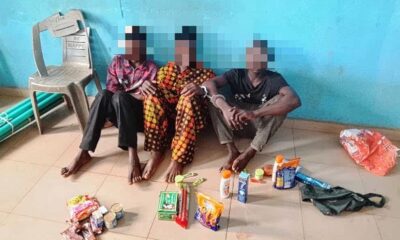
Ogun State Police Command has arrested a 27-year-old woman, Mariam Ayila for kidnapping of 13- year- old girl Sofiat Yusau. The suspect was arrested on Tuesday, December 20, 2022, following a report lodged at Agbara divisional headquarters by one Ismail Yusau, who reported that, he sent his daughter on errand to Agbara market at about 11:00a.m of the day, only to receive a strange call hours after from an unknown person, who informed him that his daughter had been kidnapped, and that if he didn’t send the sum of N250,000 as ransom, he will never set his eyes on the girl again.
Upon the report, the Divisional Police Officer (DPO), Agbara division, Chief Superintendent of Police (CSP), Abiodun Salau, mobilised crack detectives, who embarked on technical and intelligence-based investigation, according to the police report.
READ ALSO:
- Opposition parties ganging up against Buhari – Lai Mohammed
- Four soldiers arrested in Gambia after failed coup
- Labour Party fires CSO for linking Obi to IPOB
- NSCDC Put state commandants on alert as agency uncovers plot to attack INEC facilities
“Their efforts yielded positive results when the suspect was traced to her hideout at Atan Ota area, where she was promptly arrested and the little girl was rescued unhurt.
“Preliminary investigation revealed that the suspect had earlier kidnapped a young girl at Itele Ota area on December 19, 2022, and ransom paid to her before she released her victim,” the police said.
MEANWHILE, the Commissioner of Police, Lanre Bankole, has directed that the suspect be handed over to the Anti kidnapping unit of the state’s Criminal Investigation and Intelligence Department (SCIID) for further investigation and prosecution.
guardian











metro
2027: Ekiti Driver Takes ₦3.5m Loan to Back Tinubu’s Re-election Bid
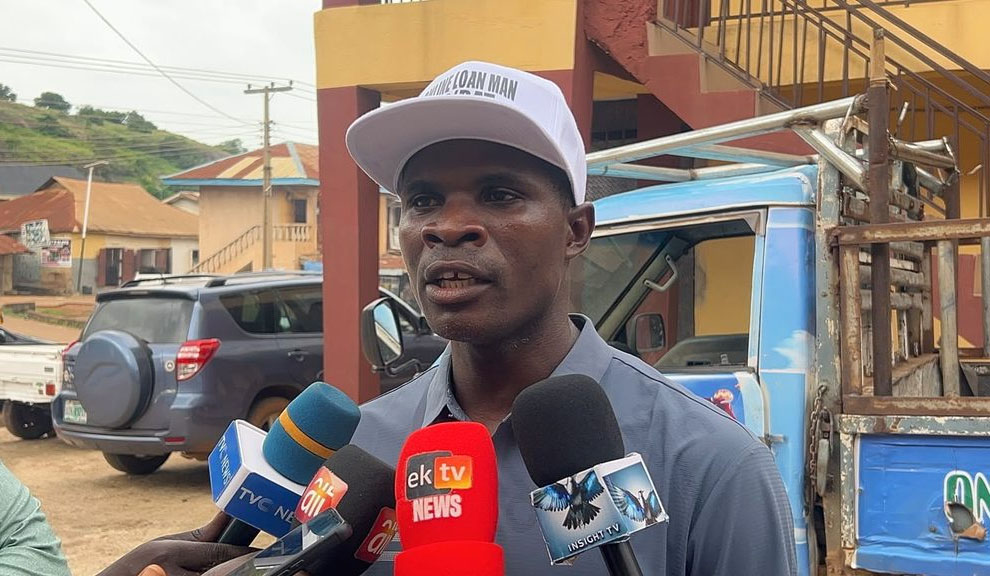
An Ekiti State commercial driver has revealed that he borrowed ₦3.5 million to support the 2027 re-election ambitions of President Bola Ahmed Tinubu, Senate Leader Opeyemi Bamidele and Ekiti State House of Assembly member Steve Fatoba.
The driver, Adeleye Adeniyi, popularly known as “Online Loan Man for BAO”, made the disclosure in a video interview shared by Ekiti State Television (EKTV), attracting attention over his decision to take a loan to support political candidates.
Adeniyi said the money was intended to demonstrate his support for the three politicians ahead of the 2027 general election. He also displayed a cardboard cheque bearing the name of Wema Bank, detailing how he planned to distribute the funds.
Under the proposed arrangement, Tinubu would receive ₦2 million, Bamidele ₦1 million and Fatoba ₦500,000, bringing the total to ₦3.5 million.
“I am supporting Mr President, Asiwaju Bola Ahmed Tinubu, for his second-term ambition. I have borrowed money. I want to use this money to support him because he’s doing a very great job,” Adeniyi said.
He also pledged to campaign for Tinubu, expressing his intention to mobilise support for the President’s re-election bid.
“Like I said again, I am fully ready to go out to campaign for him. And I’m going to use this song to back him up. On your mandate, we shall stand,” he said.
READ ALSO:
- 2023 Election: Tinubu’s Camp Dares Obi to Produce Evidence He Won Presidential Poll
- ‘Mad People’: Presidency Fires Back at Amaechi Over Tinubu Re-Election Remarks
- ‘What Happens on Day 31?’ Atiku Slams Tinubu’s 30-Day Fuel Discount as Election-Laced Package
Adeniyi urged Nigerians to support Tinubu for another term, saying he believed the President would deliver more benefits to citizens if re-elected.
He also expressed support for Bamidele and Fatoba, citing what he described as their contributions to development. He praised Ekiti State Governor Biodun Oyebanji as well, referring to improvements he associated with the administration in healthcare, education, electricity and rural infrastructure.
The driver said Bamidele’s involvement in development projects had strengthened his confidence in the senator’s leadership. He expressed the hope that the lawmaker would continue to advance in his political career.
Adeniyi’s latest declaration follows a similar gesture reported in February 2026, when he reportedly obtained a loan through the digital lending platform OPay to brand a vehicle in support of Oyebanji’s re-election campaign.
The earlier incident brought him public attention and reinforced his reputation as a supporter willing to make personal financial commitments to political campaigns.
His latest pledge extends that support to Tinubu and two other politicians as political activities gather momentum ahead of the 2027 elections.
However, the driver’s statement and the displayed cardboard cheque do not independently establish that the loan has been disbursed or that the politicians have received the money. The proposed allocations therefore remain a stated commitment rather than a confirmed donation.
The disclosure has also drawn attention to the financial risks individuals may face when borrowing money to support political causes, particularly when repayment obligations remain regardless of the eventual election outcome.
2027: Ekiti Driver Takes ₦3.5m Loan to Back Tinubu’s Re-election Bid
metro
Fresh Kidnap at Cocoa Institute: Gunmen Seize Three Workers in Oyo
Fresh Kidnap at Cocoa Institute: Gunmen Seize Three Workers in Oyo
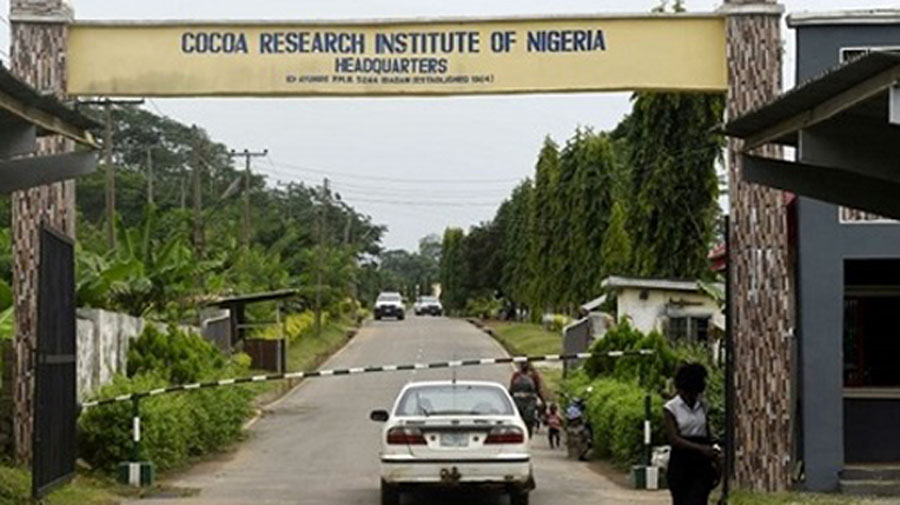
Gunmen have reportedly abducted three workers of the Cocoa Research Institute of Nigeria (CRIN) in Ibadan, Oyo State, triggering another security operation as police intensify efforts to rescue the victims and arrest those responsible.
The incident occurred on Friday, October 9, 2026, while the workers were inspecting crops on a farm within the institute’s premises, according to the Oyo State Police Command.
The Police Public Relations Officer, DSP Olayinka Ayanlade, confirmed the abduction, saying the command had launched a manhunt for the suspected kidnappers and was working to secure the victims’ safe release.
Police operatives are reportedly pursuing leads to identify and apprehend the perpetrators. The command has also urged members of the public with credible information that could assist the investigation or rescue operation to contact the authorities.
The latest attack has heightened concerns about the safety of staff members at the federal agricultural research institution, following previous reports of abductions involving people connected to the institute and its surrounding communities.
READ ALSO:
- ‘Mad People’: Presidency Fires Back at Amaechi Over Tinubu Re-Election Remarks
- ‘What Happens on Day 31?’ Atiku Slams Tinubu’s 30-Day Fuel Discount as Election-Laced Package
In March 2026, gunmen reportedly abducted four cocoa farmers in the area around the institute, prompting security operations. Subsequent reports indicated that the victims were eventually freed following efforts by security personnel.
In another incident in May, two CRIN staff members were reportedly abducted after armed men invaded the institute’s premises. Police later announced the arrest of two suspects in connection with that case.
The latest incident has renewed calls for stronger security around the institute and neighbouring farming communities, where workers may need to conduct field inspections away from the main administrative facilities.
The Cocoa Research Institute of Nigeria, a federal institution involved in research on cocoa and other industrial crops, plays an important role in agricultural development and the improvement of farming practices.
The abduction has raised fresh questions about the protection of agricultural researchers and field workers, particularly those whose duties require them to work on farms and other locations vulnerable to criminal attacks.
As of Friday, police reports identified three victims in the latest incident. The rescue operation and search for the suspected kidnappers were ongoing, with no further details about the victims’ identities or the circumstances of their possible release immediately confirmed.
Fresh Kidnap at Cocoa Institute: Gunmen Seize Three Workers in Oyo
metro
Anambra Tragedy: Mother, Teenage Daughter Crushed as Three-Storey Building Collapses

Anambra Tragedy: Mother, Teenage Daughter Crushed as Three-Storey Building Collapses
A mother and her 14-year-old daughter have died after a three-storey building under construction collapsed onto their residence in Okpoko, Ogbaru Local Government Area of Anambra State, amid allegations that warnings about the structure’s safety were ignored.
The victims were identified as Mrs Happiness Ugoagu and her daughter, Confidence, who were reportedly asleep in their home when the neighbouring building came crashing down at Anata Anaba, Okpoko.
The incident occurred on Wednesday night, October 7, according to eyewitness accounts, although an initial report by the state government described it as a Thursday morning incident.
The collapse trapped the mother and daughter beneath the debris, while other people caught in the rubble were reportedly rescued and taken to hospital.
The victims’ son, Chimobi Ugoagu, said he was outside the house when the building collapsed, while his mother and sister were inside. He alleged that residents had repeatedly warned the builder about the potential danger posed by the structure, but their concerns were not heeded.
READ ALSO:
- ‘Mad People’: Presidency Fires Back at Amaechi Over Tinubu Re-Election Remarks
- ‘What Happens on Day 31?’ Atiku Slams Tinubu’s 30-Day Fuel Discount as Election-Laced Package
- Ronaldo Breaks Silence on Portugal Row as Pelé, Maradona Comparison Sparks Meme Frenzy
Residents also claimed that the building stood on waterlogged land and that an engineer had initially advised limiting the structure to two storeys because of the ground conditions. They alleged that construction continued to three storeys despite the reported warning.
Anambra State Commissioner for Physical Planning and Urban Development, Chijioke Ojukwu, visited the scene and described the incident as unfortunate. He said the building was illegal and that authorities had previously issued a stop-work notice.
Ojukwu also blamed the collapse on the alleged use of substandard construction materials and ordered the demolition of the structure. He said the government was investigating other unapproved buildings under construction in the area.
Emergency responders, residents and local government officials took part in rescue and recovery operations. The Anambra State Emergency Management Agency deployed an excavator to assist with clearing the debris, while the National Emergency Management Agency dispatched a team to support the response.
The remains of the mother and daughter were subsequently recovered and evacuated to a morgue.
Ogbaru Local Government Chairman Nnamdi Ifejika expressed condolences to the bereaved family, describing the deaths as a devastating loss. He also called for greater attention to building safety and urged residents to report structures they believe could endanger lives.
The exact technical cause of the collapse had not been independently established in the available reports. The circumstances surrounding the construction, the reported stop-work notice and the allegations that safety warnings were ignored remain issues for the relevant authorities to investigate.
The tragedy has renewed concerns about building safety, compliance with planning regulations and enforcement of construction standards in Nigeria, particularly where buildings are erected on potentially unstable or waterlogged ground.
Anambra Tragedy: Mother, Teenage Daughter Crushed as Three-Storey Building Collapses
-
 metro2 days ago
[UPDATED] 20 NYSC Prospective Corps Members Freed After Seven Days in Captivity
-

 Politics3 days ago
‘No Decent Wages, No Credible Elections’ — Sowore Threatens 2027 Boycott
-

 metro3 days ago
Seven Years With Parkinson’s: Man Seeks N65m for Brain Surgery in Türkiye
-

 Politics3 days ago
2027: Obi Makes U-Turn, Vows to Restore Fuel Subsidy If Elected
-

 Africa1 day ago
FBI Raids Ghana Scam Centre, Detains Over 130 in $10m Fraud Probe
-

 metro2 days ago
Yayi, Adebule, Muslim Leaders, Others for Imodi-Ijebu Turbaning, ₦1bn Fundraiser
-
 metro1 day ago
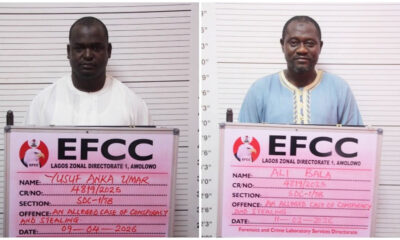
EFCC Re-Arraigns Two Over Alleged £110,000 Money Laundering, ₦500m Fraud
-

 Politics3 days ago
2027: Galadima Alleges APC Offering N50m, N200m to Lawmakers to Step Aside