

International
3 Palestinian young varsity students shot in US
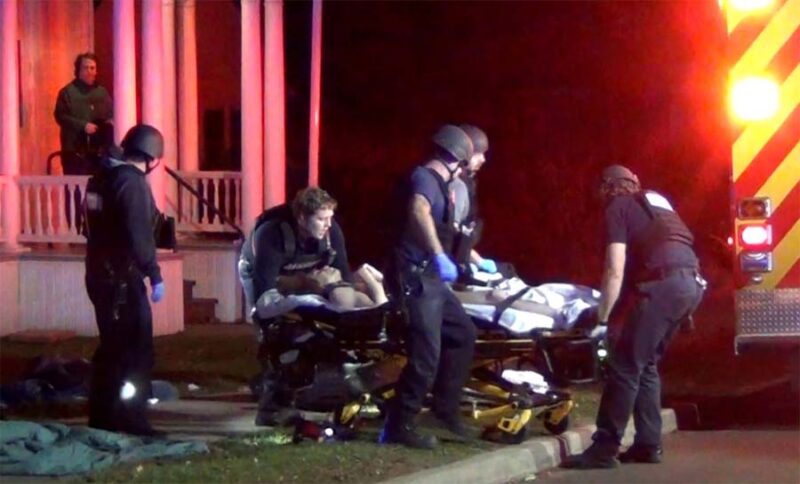
3 Palestinian young varsity students shot in US
Three young men of Palestinian heritage were shot and critically injured near the University of Vermont while in Burlington for a Thanksgiving holiday celebration, authorities said Sunday.
Authorities believe the attack was motivated by hatred.
Police are looking for the shooter who carried out the attack near the UVM campus around 6:25 p.m. Saturday, according to Burlington Police Chief Jon Murad.
Two of the guys are in stable condition, while the third has “much more serious injuries,” according to Murad. The three, all 20 years old, were walking to the home of one of the victim’s relatives when they were confronted by a white man armed with a revolver.
Murad stated that all three individuals are of Palestinian ancestry and conveyed his heartfelt condolences to the men and their families. Two are citizens of the United States, and one is a legal resident. Two of the men were dressed in the traditional black-and-white Palestinian keffiyeh scarves.
Murad stated that there is no other evidence to imply a motivation.
“In this charged moment, no one can look at this incident and not suspect that it may have been a hate-motivated crime. And I have already been in touch with federal investigatory and prosecutorial partners to prepare for that if it’s proven,” he said in a news release.
He added, “The fact is that we don’t yet know as much as we want to right now. But I urge the public to avoid making conclusions based on statements from uninvolved parties who know even less.”
READ ALSO:
READ ALSO:
- Freedom of Expression: ECOWAS Court orders amendment to Nigeria Press Council
- Lone accident claims police inspector’s life in Kebbi
- Four persons struck dead by thunderstorms, lightning strike
Earlier Sunday, the American-Arab Anti-Discrimination Committee released a statement saying that the victims were Palestinian American college students and that there is “reason to believe this shooting occurred because the victims are Arab.”
It said a man shouted and harassed the victims, who were conversing in Arabic, then proceeded to shoot them.
The FBI said it is aware of the shootings.
“If, in the course of the local investigation, information comes to light of a potential federal violation, the FBI is prepared to investigate,” Sarah Ruane, an FBI spokesperson based in Albany, New York, said in a statement.
The White House said that President Joe Biden was briefed on the shooting and will continue to receive updates as law enforcement gathers more information.
The Council on American-Islamic Relations said in a statement that it has offered a $10,000 reward for information leading to an arrest or conviction of the person or people responsible for the shootings.
The Institute for Middle East Understanding provided a statement on X, formerly known as Twitter, that it described as being from the families of the victims.
“We are extremely concerned about the safety and well-being of our children,” it said. “We call on law enforcement to conduct a thorough investigation, including treating this as a hate crime. We will not be comfortable until the shooter is brought to justice.”
In response to the shooting, U.S. House Minority Leader Hakeem Jeffries encouraged people to “unequivocally denounce the startling rise of anti-Arab hate and Islamophobia in America.”
“No one should ever be targeted for their ethnicity or religious affiliation in our country,” the New York Democrat said in the statement posted on X. “We will not let hatred win.”
Sen. Bernie Sanders, the Vermont Independent, also denounced the shooting.
READ ALSO:
- Tinubu inherited government that was almost in a coma – Ogun governor
- Tinubu’s presidency, God-ordained – Oba of Benin
- Bellingham scores as Madrid return to top of La Liga
“It is shocking and deeply upsetting that three young Palestinians were shot here in Burlington, VT. Hate has no place here, or anywhere. I look forward to a full investigation,” Sanders said in a statement.
Burlington Mayor Miro Weinberger said that any indication that the shooting could have been motivated by hate is “chilling.”
Gov. Phil Scott called it a tragedy, calling on the state’s residents to unite and “not let this incident incite more hate or divisiveness.”
The Vermont-New Hampshire chapter of Jewish Voice For Peace, which has urged an end to the Israel-Hamas war, released a statement saying it was “appalled by the shooting.”
“We are in solidarity with the students, their families and all those affected by this clear act of hate,” the organization said Sunday. “We are in solidarity with all Palestinian people in occupied Palestine, around the world, and here in Vermont — and we are committed to creating a Vermont that is safe and welcoming for all.”
The American Jewish Committee, an advocacy organization for Jewish people worldwide, also said via X it was “horrified” by the attack and urged “law enforcement to investigate this act as a possible hate crime.”
Demonstrations have been widespread and tensions are escalating in the U.S. as the death toll rises in the Israel-Hamas war. A fragile cease-fire between Israel and Hamas was back on track Sunday as the militants freed more hostages and Israel released 39 Palestinian prisoners, all young men. It’s the third exchange under a four-day truce deal.
3 Palestinian young varsity students shot in US
(AP)










International
Trump Links French Protests To Islam ‘Taking Over’ France
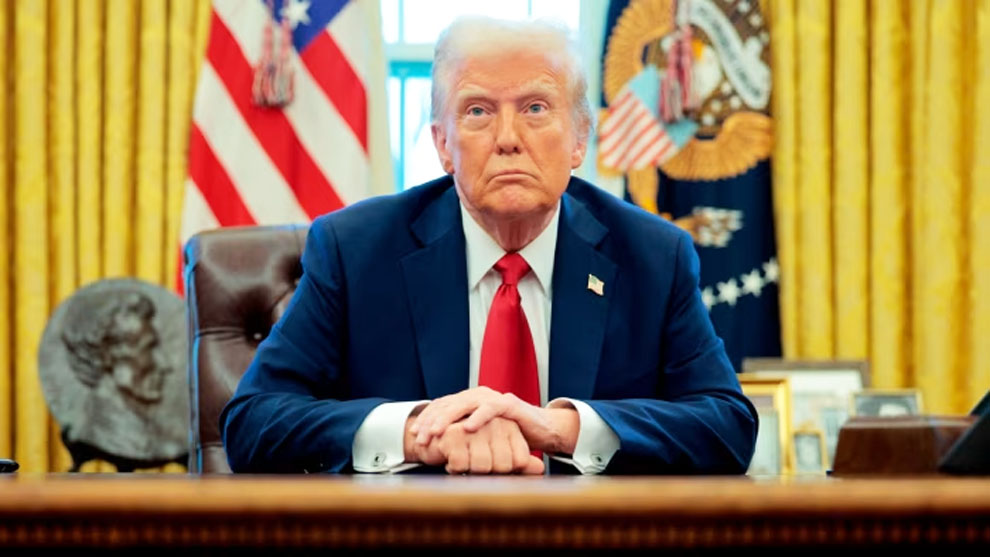
Trump Links French Protests To Islam ‘Taking Over’ France
US President Donald Trump has linked the ongoing student protests in France to what he described as “out of control” mass migration and an alleged attempt by Islam to take over the country.
Trump made the claim Tuesday in a post on his Truth Social platform, rejecting the view that the protests are primarily about education and school conditions.
The protests have spread across France since late September, with students, teachers and parents demanding better-funded schools, more teachers, improved infrastructure and action over overcrowded classrooms.
More than 250,000 people took part in demonstrations across the country on Tuesday, according to French authorities, while organisers put the turnout at about 450,000.
Trump wrote that the unrest was “nothing less than out of control mass migration” and claimed: “This isn’t about schools, this is about Islam wanting to take over a once great Country!”
READ ALSO:
- Troops Take Down Zamfara Bandit Kingpins Baban Love, Mai Zamani, Three Others
- FG Gives N250m To Families Of 37 Miners Who Died In NSCDC Custody
- Tompolo’s PBAT Movement Suspends Campaign Over Ondo Military Crash
However, there has been no established link between the protests and religious or identity-based demands. The grievances publicly cited by student groups have centred on teacher shortages, overcrowded classrooms, deteriorating school buildings and inadequate resources.
The demonstrations have nevertheless escalated in some areas, with clashes between protesters and police reported in cities including Paris, Strasbourg, Rennes and Toulouse.
French authorities said hundreds of people were arrested Tuesday, while hundreds of students, school staff and police officers have reportedly been injured during the unrest.
The protests have also become part of a wider debate over France’s public finances, government spending and political direction ahead of the country’s next presidential election.
Trump’s comments add an international political dimension to the crisis, as the US president continues to make migration in Europe a major focus of his political messaging.
French Foreign Minister Jean-Noël Barrot said France was working to present its own account of the unrest rather than allowing foreign governments and political actors to define the narrative around the protests.
For now, the central demands of the protest movement remain focused on education, even as the unrest has become increasingly entangled with broader political disputes over immigration, public spending and France’s future.
Trump Links French Protests To Islam ‘Taking Over’ France
International
Kemi Badenoch: I Don’t Want Migrants Turning UK Into Nation Of ‘Little Ghettos’

Kemi Badenoch: I Don’t Want Migrants Turning UK Into Nation Of ‘Little Ghettos’
UK Conservative Party leader Kemi Badenoch has warned against the emergence of what she described as “little ghettos” of separatist migrant communities in Britain, arguing that newcomers must integrate and respect the country’s culture and values.
Badenoch made the remarks while opening the Conservative Party’s annual conference in Birmingham, where she set out her vision for rebuilding the party and Britain.
Speaking about immigration and integration, the Conservative leader said she wanted Britain to remain a “high-trust” society in which people coming into the country accept the social expectations and responsibilities that come with living there.
“I don’t want lots of little ghettos of separatist communities where they are recreating the place that they came from. That will ruin the United Kingdom,” Badenoch said.
She added that Britain was “not a dormitory” or “a hotel” and argued that migrants who come to the country, including those who come primarily to work, should respect British culture and values.
Badenoch stressed that she was not advocating race-based citizenship, saying Britain had never operated such a system. However, she argued that British culture, norms and expectations remained important to maintaining social cohesion.
READ ALSO:
- Trump Approves Firing Squad Execution For Fort Hood Shooter Nidal Hasan
- Nigeria Climbs Africa Investment Ladder, Overtakes Four Nations
- Ogun Crash: Nine Die As Bus Collides With Truck On Ijebu-Ode-Ore Road
“It is not just about the values and the principles,” she said, arguing that the way people conduct themselves and the expectations they share also form part of British culture.
The remarks form part of Badenoch’s broader attempt to establish a tougher Conservative Party position on immigration, integration and national identity as the party seeks to regain political ground.
She has also acknowledged failures by previous Conservative governments to deliver promised reductions in immigration. In her newly published policy document, The Right Way, she argues that the party needs clearer principles and a more consistent approach to government.
The Conservatives are also proposing tougher conditions for migrants seeking permanent settlement in the UK, including changes to the rules governing indefinite leave to remain.
Badenoch’s comments have drawn attention because of the sensitivity surrounding immigration and multiculturalism in Britain, with critics arguing that language about migrant communities risks stigmatising minority groups.
Her supporters, however, say the emphasis on integration rather than race is intended to reinforce a shared national identity and social cohesion.
The debate comes as immigration remains a major political issue in the UK, with the Conservatives facing pressure from Reform UK over migration while the Labour government continues to face questions over legal and irregular immigration.
Badenoch, who became Conservative leader in November 2024, used the conference to present her party as a political alternative focused on economic growth, stronger national security, reduced bureaucracy and stricter immigration policies.
Her comments on migrant communities are expected to remain a significant part of the Conservatives’ political message as the party seeks to redefine its approach to immigration, integration and British identity.
Kemi Badenoch: I Don’t Want Migrants Turning UK Into Nation Of ‘Little Ghettos’
International
Trump Approves Firing Squad Execution For Fort Hood Shooter Nidal Hasan
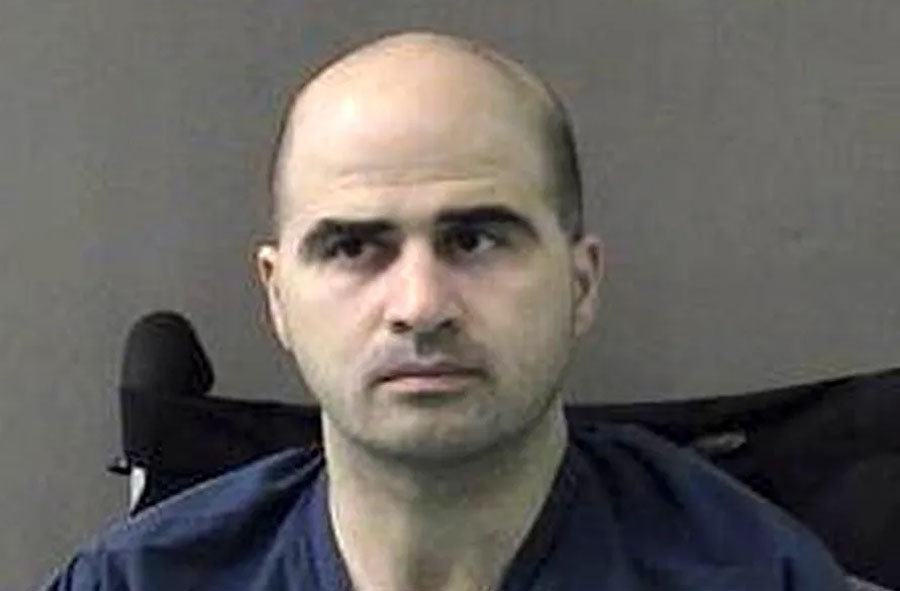
Trump Approves Firing Squad Execution For Fort Hood Shooter Nidal Hasan
President Donald Trump has approved the execution by U.S. Army firing squad of former Army Major Nidal Malik Hasan, who was sentenced to death for the 2009 mass shooting at Fort Hood, Texas, that left 13 people dead and 32 others wounded.
The Pentagon announced the decision on Monday, saying Defense Secretary Pete Hegseth had recommended the firing-squad execution and Trump approved it.
Pentagon spokesman Sean Parnell said the Secretary of the Army would determine the date and location of the execution.
Hasan, a former Army psychiatrist, opened fire at a medical facility at Fort Hood on November 5, 2009, shortly before he was due to deploy to Afghanistan.
The attack killed 12 active-duty soldiers and one retired serviceman, while 32 others were wounded. Hasan was shot and seriously injured by a responding civilian police officer and has been partially paralysed since the attack.
READ ALSO:
- Nigeria Climbs Africa Investment Ladder, Overtakes Four Nations
- Ogun Crash: Nine Die As Bus Collides With Truck On Ijebu-Ode-Ore Road
- Gunmen Open Fire At Lagos Bus Stop, Kill NURTW Member, Injure Three
A military jury convicted Hasan in 2013 of 13 counts of premeditated murder and 32 counts of attempted premeditated murder and sentenced him to death.
During his court-martial, Hasan represented himself and did not call witnesses in his defence. He acknowledged that he carried out the shooting and argued that his actions were intended to protect Muslims whom he believed were being targeted by U.S. military operations.
Hasan has remained on military death row at the U.S. Disciplinary Barracks at Fort Leavenworth, Kansas, while pursuing legal challenges to his conviction and sentence.
Trump’s approval does not mean the execution will take place immediately. Further legal and administrative procedures remain, and Hasan could seek relief through the federal courts, potentially delaying the execution.
If carried out, Hasan’s execution would be an extraordinary event in the history of the U.S. military justice system.
The U.S. military has not carried out an execution since 1961, when Army Private John Bennett was hanged. The last known U.S. military execution by firing squad took place in 1945.
The decision also comes amid renewed debate in the United States over methods of execution. The Trump administration has expanded the available methods for carrying out federal executions, while recent difficulties surrounding lethal injection have intensified scrutiny of capital punishment.
Hasan’s case has remained one of the most prominent military death-penalty cases in the United States since the Fort Hood attack nearly 17 years ago.
The Army is now expected to determine when and where the execution will take place, subject to the remaining legal process.
Trump Approves Firing Squad Execution For Fort Hood Shooter Nidal Hasan
-

 metro2 days ago
Tragedy Strikes FMC: Medical Director Loses Two Daughters—A Doctor and a Pharmacist—Within 48 Hours
-
 metro2 days ago
Transporters Urge IGP Disu to Arrest Illegal Highway Tax Collectors
-
 metro2 days ago
Army, DSS, Amotekun Kill ISWAP Commander Planning Attacks in Southern Nigeria
-
 Politics2 days ago
2027: Soludo Govt Accuses Peter Obi Of Plot To Destroy APGA
-
 metro2 days ago
Kidnappers torture abducted corps members, slash ransom to N100m
-

 News2 days ago
BREAKING: Many Feared Dead as Helicopter Crashes in Ondo Community
-

 metro3 days ago
Ojudu Reveals How Tinubu, He Narrowly Escaped Death In Third Mainland Bridge Crash
-

 metro2 days ago
Grand Chief Imam of Oyoland Urges Rabitah 1964 to Regulate ‘Yorubaland’ Islamic Titles