

Business
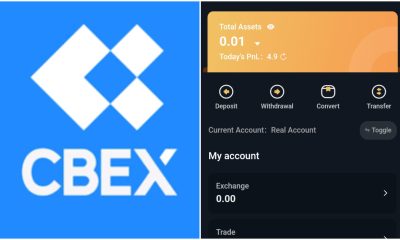
5 facts about trending digital trading platform, CBEX

5 facts about trending digital trading platform, CBEX
Investors have been left counting their losses after digital trading platform, China Beijing Equity Exchange (CBEX) crashed on Monday, April 14.
Many distraught investors took to social media, especially X and TikTok, to bemoan their losses, which was estimated at N1.3 trillion.
Following reports of the platform’s crash, some investors on Tuesday broke into CBEX’s office in Oke Ado area of Ibadan, Oyo State and looted furniture, electronics and other valuables.
Facts about CBEX and its operations:
1. CBEX is a digital trading platform that promised investors 100% profit within 30 days, by trading digital assets. Its purported goal was to create a secure, transparent environment for transactions.
2. CBEX reportedly attracted around 300,000 users, majority of whom are Nigerians, despite not being registered with Securities and Exchange Commission (SEC), making its operations illegal under the Investment and Securities Act (ISA) 2025. CBEX’s CEO, Yahaya Ibrahim claimed the platform was a registered Canadian crypto exchange, but no evidence supported this, and operations were primarily Nigerian-focused.
READ ALSO:
- Titanic: Found ladies watch for auction at £50,000
- Gunmen rape woman to death, husband brutally attacked in Nasarawa
- EFCC arraigns Chinese Lao Liu for false information
3. Around April 9, investors reportedly faced withdrawal failures as funds in their wallets vanished. CBEX attributed the withdrawal issues to a “security breach” and demanded additional deposits for “verification”. The verification options included $200 fee for $2,000 wallet balance and $100 for $1,000 wallet balance.
4. The crash reportedly affected over 300,000 users, with estimated losses exceeding $840 million (N1.3 trillion), devastating investors, some of whom lost life savings or loans. Cryptocurrency expert and security analyst, Taiwo Owolabi said available data indicated that the funds were moved to a TRX address: (TDqSquXBgUCLYvYC4XZgrprLK589dkhSCf). He noted that a total volume stolen so far in USDT is $847 million and likely to increase.
5. The Securities and Exchange Commission (SEC) has continued to warn the public against investing in unregistered platforms like CBEX, citing risks of fraud and lack of investor protection. Prior to CBEX’s crash, SEC stated that ISA 2025 signed by President Bola Tinubu makes it an offence for any entity to operate an online forex trading platform or provide related services without prior registration with the commission.
“By virtue of this Act, it is an offence in Nigeria for any entity that is not registered by the commission to carry out the business of online foreign exchange trading platforms or related services.
“Any business entity with the plan of setting up a business in any of these areas is advised to visit the HOD DRM Department of the commission for further direction on how to register with the commission to avoid sanctions,” SEC said.
5 facts about trending digital trading platform, CBEX








Business
Dangote Draws Battle Lines as Fuel Import Fight Heads Back to Court
Dangote Draws Battle Lines as Fuel Import Fight Heads Back to Court
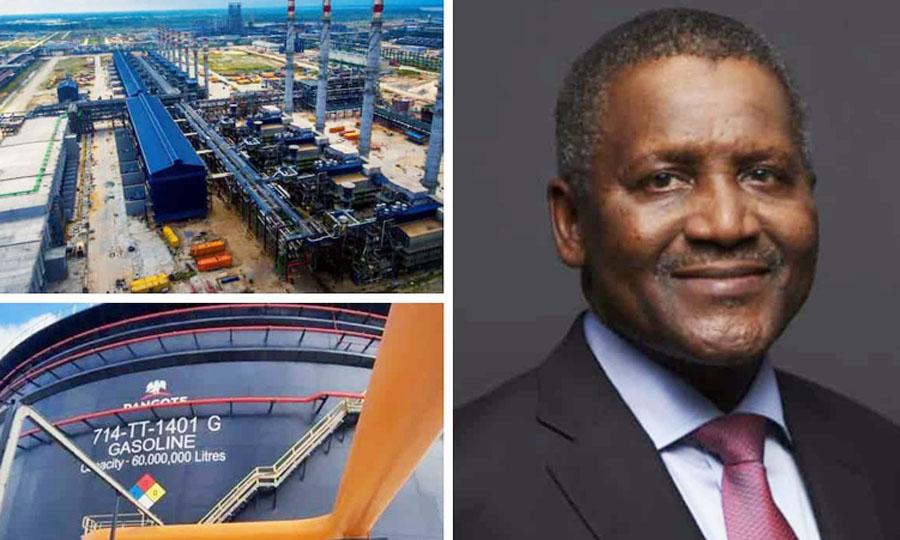
Aliko Dangote, President of Dangote Industries Limited, has said he is prepared to face legal challenges as the dispute over fuel imports, domestic refining and import licences intensifies in Nigeria.
Dangote spoke amid renewed litigation involving the Dangote Petroleum Refinery and the Nigerian Midstream and Downstream Petroleum Regulatory Authority (NMDPRA) over the continued importation of refined petroleum products into Nigeria.
The latest development followed a Federal High Court ruling in Abuja directing the NMDPRA to continue granting, extending or renewing fuel import licences for Matrix Energy, A.A. Rano and AYM Shafa, provided the companies meet the relevant legal and regulatory requirements.
Justice Inyang Ekwo ruled that the regulator’s handling of the companies’ applications did not comply with provisions of the Petroleum Industry Act (PIA). The court also held that the NMDPRA has a responsibility to promote competition in the midstream and downstream petroleum sectors.
The ruling did not give the three companies unrestricted authority to import petroleum products. Their operations remain subject to applicable regulatory and statutory requirements.
READ ALSO:
- Tinubu Returns After 30 Days in Europe, Says ‘I’m Healthy and Ready to Work’
- NMDPRA Moves Against Fuel Pump Fraud, Threatens Licence Revocation
- $2.1m Land Suit: Court Orders Wike’s Son to Produce American Passport
The judgment has added fresh momentum to a wider dispute over whether Nigeria should continue granting petrol import licences as domestic refining capacity expands.
The Dangote Refinery, which has a stated capacity of 650,000 barrels per day, has challenged the continued issuance or renewal of some import licences in a separate case.
The refinery’s position is that continued imports should be restricted where domestic refining capacity is available to supply the local market. The case remains before the court.
The NMDPRA, however, has continued to approve import permits, citing the need to safeguard petroleum supply and energy security.
The regulator approved permits covering about 830,000 metric tonnes of petrol for several marketers for the fourth quarter of 2026. The beneficiaries included Matrix Energy, A.A. Rano, AYM Shafa, NIPCO, Pinnacle Oil and Gas and Bono Energy.
The development has intensified debate over competition in Nigeria’s downstream oil sector, particularly as the Dangote Refinery expands its contribution to domestic fuel supply.
Dangote’s comments also came as his business interests face other legal challenges outside Nigeria.
In Kenya, a court has ordered the preservation of the existing status quo over land earmarked for Dangote’s proposed 700,000-barrel-per-day refinery in Lamu, following a dispute involving residents who claim ancestral rights over part of the proposed project site.
Dangote has maintained that he is prepared to defend his investments through the legal process.
The businessman has also said Africa could largely eliminate its dependence on imported refined petroleum products by 2030, as new refineries come on stream across the continent.
In Nigeria, the continuing dispute places domestic refining, fuel imports, competition, petroleum regulation and energy security at the centre of an increasingly significant legal and commercial battle.
The competing positions have not been finally resolved, with the various court cases still ongoing.
Dangote Draws Battle Lines as Fuel Import Fight Heads Back to Court
Business
NNPC Profit Rises to N7.2tn Despite Revenue Decline

NNPC Profit Rises to N7.2tn Despite Revenue Decline
The Nigerian National Petroleum Company Limited (NNPC Ltd) recorded a N7.2 trillion profit after tax in 2025, representing a 33.3 per cent increase from the N5.4 trillion it reported in 2024, despite a significant decline in revenue.
NNPC Group Chief Executive Officer, Bayo Ojulari, disclosed the figures on Tuesday while presenting the company’s audited financial results for the 2025 financial year in Abuja.
The company recorded N34.5 trillion in revenue in 2025, down from N45.1 trillion reported for 2024. Despite the revenue decline, profit increased as NNPC attributed the stronger bottom-line performance to improved operational efficiency and financial discipline.
Ojulari said lower international crude oil prices and reduced petroleum product sales, following changes in the downstream petroleum market, put pressure on revenue during the year.
However, improved operational performance helped cushion the impact, allowing NNPC profit to rise to N7.2 trillion.
The company also reported N22.33 trillion in taxes, royalties and other remittances to the Federal Government, representing a 39 per cent increase compared with the previous year.
The results also showed stronger production performance across the company’s upstream operations.
According to NNPC, crude oil and condensate production reached an average peak of 1.77 million barrels per day in 2025, the company’s highest level in five years.
READ ALSO:
- Hamzat Clarifies Lagos Traffic ‘Lifestyle’ Remark After Backlash
- US Judge Blocks Trump From Tying Counterterrorism Grants to Election Rules
- School Attack: 13-Year-Old Student Kills Teacher, Injures Two
Domestic gas supply also rose to a three-year high of 7.2 billion standard cubic feet per day, reflecting increased gas production and supply to the Nigerian market.
NNPC said the financial performance demonstrated the impact of efforts to improve asset management, increase production and strengthen efficiency across its businesses.
The company’s latest results come as Nigeria continues to seek higher crude oil production, increased domestic gas supply and greater investment across the petroleum value chain.
NNPC, which became a commercial company under the Petroleum Industry Act (PIA) in 2022, has been pursuing a strategy focused on increasing oil and gas output, expanding gas monetisation and strengthening its downstream operations.
The company said its future growth strategy would require continued investment in infrastructure, workforce development and operational capabilities.
NNPC also highlighted investments in digital capabilities and artificial intelligence as part of efforts to improve efficiency and strengthen its workforce.
More than 1,000 newly recruited professionals joined the company in 2025 and underwent a one-year internship and training programme before being deployed across its operations.
The company also reported that women now occupy more than 23 per cent of its leadership positions, compared with an industry average of 17 per cent.
The 2025 results come against the backdrop of major changes in Nigeria’s petroleum sector, including the removal of petrol subsidy and increased private-sector participation in fuel supply.
NNPC said the improved profitability had strengthened its capacity to invest in operations, contribute to government revenue and support Nigeria’s energy security.
The company’s performance will continue to be closely watched as Nigeria seeks to raise oil production, expand gas utilisation and increase the economic contribution of the oil and gas sector.
NNPC Profit Rises to N7.2tn Despite Revenue Decline
Business
Crude Oil Prices Ease After Monday Spike, Fuel Price Cuts Loom

Crude Oil Prices Ease After Monday Spike, Fuel Price Cuts Loom
Global crude oil prices eased on Tuesday after a sharp rally triggered by renewed uncertainty over the possibility of a ceasefire between the United States and Iran, offering some relief to an oil market that has remained highly sensitive to geopolitical developments.
Brent crude, the international benchmark, fell to about $105.04 per barrel, while US West Texas Intermediate (WTI) declined to $92.24 per barrel, according to Reuters. The prices had risen sharply earlier amid concerns over possible disruptions to Middle East oil supplies.
The latest movement is particularly significant for Nigeria, where changes in international crude prices are increasingly reflected in the domestic petrol market following the removal of petrol subsidy and the operation of a largely market-driven downstream petroleum sector.
Nigeria has in recent weeks witnessed significant fluctuations in petrol prices as international crude prices rose on the back of Middle East tensions.
Dangote Petroleum Refinery, which has become a major source of domestic petrol supply, raised its gantry price to N1,350 per litre earlier in September before subsequently reducing it by N25 to N1,325 per litre as crude prices eased.
The impact has also begun to filter through to some retail outlets. Recent checks showed petrol selling at varying prices across the country, with some marketers reducing pump prices by between N20 and N25 per litre in response to lower wholesale costs.
In Abuja, for instance, MRS reportedly reduced its pump price from N1,395 to N1,370 per litre, while other marketers also adjusted their prices downward.
However, the latest fall in crude prices does not necessarily translate into an immediate or uniform reduction at filling stations.
This is because the price motorists pay is influenced by several factors, including the cost of crude, refining and wholesale prices, transportation and logistics, exchange-rate movements, and the margins of individual marketers.
Nigeria’s dependence on crude oil makes developments in the international petroleum market particularly important to the domestic economy.
Although the Dangote refinery has substantially increased local refining capacity and reduced reliance on imported petrol, international crude prices remain an important factor in determining the cost of feedstock and, ultimately, petroleum products.
The recent volatility has therefore kept motorists, transport operators and businesses on alert, with any sustained decline in crude prices potentially creating room for further reductions in petrol prices.
The latest crude movement followed reports of renewed diplomatic tension between Washington and Tehran.
Iran had reportedly proposed a seven-day truce, but US President Donald Trump rejected the proposal, triggering fresh concerns about the outlook for regional stability and oil supplies.
Crude prices surged during Monday’s trading session before retreating as investors reassessed the immediate supply risks and continued to monitor diplomatic efforts.
For Nigerian consumers, the key issue now is whether the downward movement in international crude prices will be sustained long enough to translate into broader and more significant reductions in petrol prices at filling stations.
-

 metro2 days ago
Osogbo Food Bonanza Turns Nightmare as Discount Vendor Vanishes With Customers’ Millions
-

 metro2 days ago
24 Hours in Darkness: Iju Ishaga Residents, Businesses Count Losses as Ikeja Electric Fails to Restore Power
-

 News3 days ago
Agbede Mourns Baba Alado, Says Mushin Has Lost Pillar of Peace
-

 Education2 days ago
FG Releases 2026–2028 Approved Textbooks, Introduces QR Codes for Tracking
-

 Sports1 day ago
Nigeria XI vs Guinea-Bissau: Awoniyi, Lookman, Adams Lead Super Eagles Attack
-
 News1 day ago
Breaking: Tinubu Ends Extended European Vacation, Departs Paris for Nigeria
-

 Politics3 days ago
Why I Can No Longer Defend Peter Obi’s Lifestyle – Okonkwo
-

 metro1 day ago
Hamzat Clarifies Lagos Traffic ‘Lifestyle’ Remark After Backlash