

News
88.4m people in Nigeria living in extreme poverty – Fadeshemi

88.4m people in Nigeria living in extreme poverty – Fadeshemi
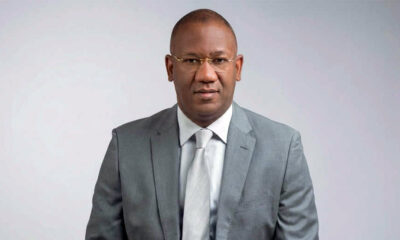
Permanent Secretary, Federal Ministry of Agriculture and Food Security, Mr Temitope Fadeshemi, yesterday said 88.4 million people in Nigeria are living in extreme poverty.
He spoke in Kaduna during the distribution of farm input and empowerment materials to 250 smallholder farmers.
Represented by Director, Department of Extension Services of the ministry, Bashir Abdulkadir, the Perm. Sec. said: “The level of poverty in Nigeria is alarming. An estimated population of 88.4 million in Nigeria is living in extreme poverty.
”The number of men living on less than $1.90 a day in the country reached around 44.7 million, while the count was at 43.7 million for women.
”Overall, 12.9 per cent of the global population in extreme poverty was found in Nigeria as of 2022.
”This is why the Federal Government, through the Federal Ministry of Budget and National Planning, in collaboration with FMAFS, is making conscious efforts at reducing the spate of poverty across the country.”
The gestures of distributing farm input and empowerment materials were extended to the farmers under the National Poverty Reduction with Growth Strategy (NPRGS).
According to Fadeshemi, the event marked a significant milestone in the Federal Government’s collective commitment to uplifting the lives of smallholder farmers and fostering sustainable agricultural practices.
”I am delighted to remind you that NPRGS, in collaboration with the Federal Department of Agricultural Extension Service (FDAE), has diligently enumerated and validated approximately 250 farmers for participation in this transformative programme.
READ ALSO:
- NSCDC arrests five oil thieves, impounds 15,000 litres of diesel
- Court sends Lagos pastor, wife to prison over N33.8m fraud
- Alleged N754.8m fraud: Court adjourns ex-NIMASA DG, Akpobolokemi’s case till Feb. 27
”These farmers are not just the backbone of our agricultural sector; they are the heartbeat that forms the heartbeat of our nation’s prosperity.
”The NPRGS reflects our government’s dedication to addressing poverty at its roots, emphasising the pivotal role agriculture plays in economic growth and development.
”Through initiatives like today’s training and empowerment programme, we are sowing the seeds of positive change, ensuring that smallholder farmers have the knowledge, resources, and support needed to thrive in an ever-evolving agricultural landscape,” he said.
Fadeshemi said that the programme was not merely an investment in agriculture; but an investment in the future of the nation.
He said: “As we equip these farmers with the tools to enhance productivity, improve resilience, and embrace sustainable practices, we are laying the foundation for a more resilient and prosperous agricultural sector.
”I commend the efforts of the FDAE for their meticulous work in identifying and validating deserving farmers for this programme.
”The collaboration between our Ministry and the National Poverty Reduction with Growth Strategy (NPRGS) exemplifies the power of synergy in achieving meaningful impact.
”To the participating farmers, I say this: your role is paramount in shaping the trajectory of our nation’s agricultural success.
”As you undergo this training and empowerment journey, absorb the knowledge, hone your skills, and apply the insights gained to elevate your farms and communities.”
READ ALSO:
- Tinubu govt doesn’t have capacity to solve Nigeria’s problems – LP
- Cote d’Ivoire beat DR Congo to set up AFCON final clash against Nigeria
- EFCC arrests three for currency racketeering
According to the permanent secretary, the success of the farmers is intertwined with the prosperity of the nation, adding” together, we shall create a ripple effect that reaches every corner of our beloved country.
”Let us embrace this opportunity to build a future where smallholder farmers are not just beneficiaries of progress but active contributors to our nation’s growth.
”With determination, collaboration, and a shared vision, we can transform challenges into opportunities and empower our agricultural sector to lead the way towards a more resilient and prosperous Nigeria.
”It is my hope that this program may be the catalyst for a brighter, more bountiful future for all.”
State Coordinator of the ministry, Dr Timkat Nanfa, expressed appreciation to the Federal Government for counting the state worthy to be part of the beneficiaries of the programme.
He urged the participants to make good use of the empowerment, saying inputs will help them in their farm operations and also fight poverty.
He listed the items as; 175 bags of organic fertilizers, 175 sprayers, 65 bags of maize seeds bags and 71 bags of rice seeds.
Others were: 14 tins of tomato seeds, 14 tins of pepper seeds, Okra seeds tins, 1,000 poultry chicks, 40 bags of poultry feeds and 50 bags of fish feeds, among others.
88.4m people in Nigeria living in extreme poverty – Fadeshemi












News
NiMet Predicts Thunderstorms, Rain Across Nigeria Till Wednesday

NiMet Predicts Thunderstorms, Rain Across Nigeria Till Wednesday
The Nigerian Meteorological Agency (NiMet) has predicted thunderstorms and rainfall across several parts of Nigeria from Monday to Wednesday.
The agency, in its weather outlook released on Sunday, also warned that strong winds could occur ahead of thunderstorms in some areas.
For Monday, NiMet expects thunderstorms and light rain over parts of Taraba and Kebbi during the morning. Later in the day, moderate rainfall is expected across several areas in the North-East, Kaduna, Taraba and Kebbi.
In the North-Central region, parts of Niger State could experience thunderstorms and light rain in the morning, while most parts of the region may record thunderstorms with moderate rainfall by afternoon or evening.
The southern states are also expected to experience wet conditions. NiMet forecasts cloudy skies in the morning, with isolated thunderstorms and light rain over parts of Bayelsa, Rivers, Akwa Ibom and Cross River. More thunderstorms and light rain are expected later in the day.
Tuesday and Wednesday Forecast
On Tuesday, the northern region is expected to have patches of cloud in the morning, with thunderstorms and light rain possible in parts of Taraba.
By afternoon or evening, most parts of the region could experience thunderstorms accompanied by moderate rain.
In the North-Central, parts of the Federal Capital Territory, Niger, Nasarawa and Plateau states are expected to receive thunderstorms and moderate rainfall later in the day.
Southern areas, including parts of Ebonyi, Enugu, Abia and the South-South, may also experience thunderstorms and light rain.
NiMet expects more widespread rainfall on Wednesday, particularly across northern and North-Central states. Borno, Bauchi, Gombe, Kaduna, Adamawa and Taraba are among the areas listed for morning thunderstorms and moderate rain.
The agency also forecasts thunderstorms and moderate rainfall across much of the South later on Wednesday.
NiMet advised residents to secure loose objects and take precautions against strong winds. Motorists were urged to avoid driving during heavy rainfall, while residents were advised to disconnect electrical appliances during thunderstorms and stay away from tall trees.
Airline operators were also advised to obtain airport-specific weather information when planning flights.
NiMet Predicts Thunderstorms, Rain Across Nigeria Till Wednesday
News
Working People United Celebrates Oluremi Tinubu at 66, Commends Her Humanitarian Efforts

Working People United Celebrates Oluremi Tinubu at 66, Commends Her Humanitarian Efforts
Civic organisation Working People United has congratulated Nigeria’s First Lady, Senator Oluremi Tinubu, on her 66th birthday, praising her contributions to humanitarian services, education, healthcare and the empowerment of vulnerable Nigerians.
Oluremi Tinubu celebrates her 66th birthday on Monday, September 21, 2026, with messages of goodwill coming from individuals and organisations across the country.
In a congratulatory message issued on Sunday, National Coordinator-General of Working People United, Prince Williams Akporeha, described the First Lady’s years of public service as an important part of her contribution to Nigerian society.
Akporeha said the organisation recognised Oluremi Tinubu’s continued involvement in programmes designed to improve the welfare of children, women, young people and underserved communities.
He particularly highlighted her advocacy and interventions in education, healthcare access, youth development and economic empowerment, saying such initiatives were directed at addressing challenges faced by ordinary Nigerians.
According to the group, the First Lady’s humanitarian activities have focused on providing practical support to communities and creating opportunities for people who might otherwise have limited access to social and economic resources.
Working People United also commended Oluremi Tinubu’s interest in family welfare and children’s development, describing those areas as important to the long-term development of the country.
The organisation said efforts to strengthen access to basic education and healthcare, particularly at the grassroots, remained critical to improving the quality of life of Nigerians.
It also praised initiatives aimed at providing young people with skills and economic opportunities, noting that youth empowerment could help reduce vulnerability and expand participation in the economy.
Akporeha urged the First Lady to sustain her advocacy for vulnerable Nigerians as she begins another year of her life.
READ ALSO:
- ‘Join the Hunt’ — Soludo Urges Igbos to Strategically Align Ahead of 2027
- 18 Suspects Transferred to US Over 2021 Killing of Haitian President Moïse
- My Heart Has Always Been Home With You — Tinubu’s Powerful Message to Oluremi at 66
He said the organisation was joining Nigerians across the country to celebrate Oluremi Tinubu and acknowledge what it described as her commitment to humanitarian service.
Working People United wished the First Lady good health, wisdom, strength and fulfilment as she continues her public responsibilities and supports initiatives focused on the welfare of Nigerians.
The group also expressed hope that her birthday would provide an opportunity to renew attention to issues affecting children, women, young people and low-income families, particularly in education, healthcare and economic empowerment.
Oluremi Tinubu, a former senator representing Lagos Central Senatorial District, has been involved in public service and humanitarian activities for several years.
As First Lady, she has continued her intervention programmes through the Renewed Hope Initiative (RHI), which has focused on areas including education, health, agriculture, social investment and economic empowerment.
Her recent programmes have included support for women, vulnerable households, students, farmers, young people and families affected by economic hardship.
The birthday messages therefore come as the First Lady continues her public engagements and humanitarian programmes across different parts of Nigeria.
Working People United Celebrates Oluremi Tinubu at 66, Commends Her Humanitarian Efforts
International
18 Suspects Transferred to US Over 2021 Killing of Haitian President Moïse
18 Suspects Transferred to US Over 2021 Killing of Haitian President Moïse
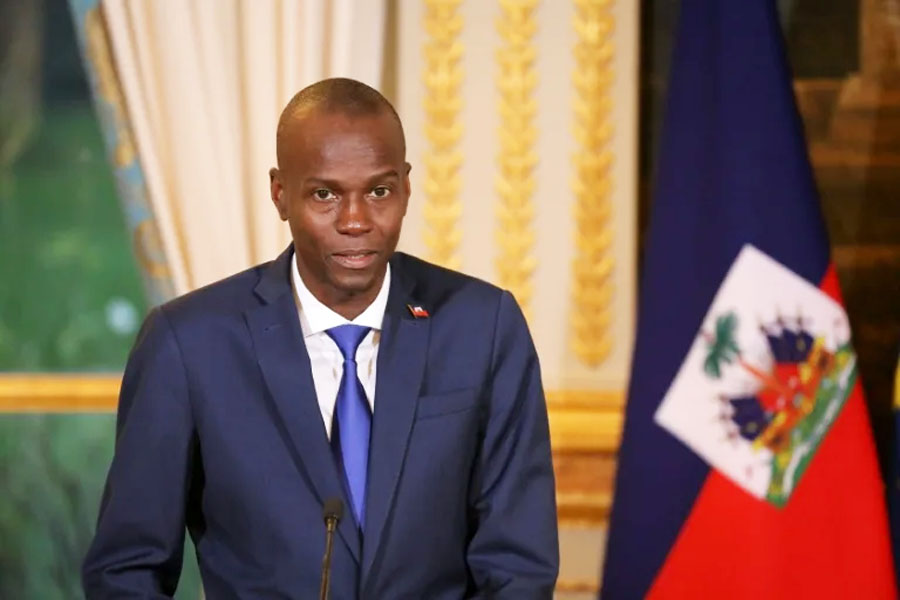
Eighteen suspects accused of involvement in the 2021 assassination of former Haitian President Jovenel Moise have been transferred from Haiti to the United States to face trial.
US officials said the suspects were transported to Florida on Sunday, as American authorities continue their prosecution of people allegedly connected to the plot.
Federal prosecutor Jason Reding Quinones said the suspects were flown from Haiti on a military aircraft to face proceedings in the Southern District of Florida.
He said US authorities had so far indicted 30 people in connection with the assassination and warned that the prosecutions were not over.
Among those transferred was Joseph Felix Badio, a former anti-corruption official with Haiti’s Ministry of Justice who has been identified as a major suspect in the investigation.
Haitian government and police sources said the other suspects included Colombian nationals who were allegedly part of the group involved in the operation.
READ ALSO:
- My Heart Has Always Been Home With You — Tinubu’s Powerful Message to Oluremi at 66
- Tinubu’s UNGA Absence Fuels Questions Over Planned Trump Meeting
- Messi Fires Stunning 75th Career Free-Kick to Reach 930 Goals in Inter Miami Draw
Colombian Nationals Among Suspects
Colombia’s Foreign Ministry confirmed that 17 of its citizens had been transferred from Haiti to the United States.
The ministry said the Colombian government was monitoring the development but had not participated in the decision or process that led to the transfer.
Moise was killed at his private residence in Port-au-Prince on July 7, 2021. Investigators said a group of about 20 Colombian military-trained mercenaries had been hired in connection with the operation.
The president’s security detail came under scrutiny after failing to prevent the attack.
In May, four men were convicted in a Miami federal court over charges connected to the plot, including conspiracy to kill or kidnap Moise and providing material support for the operation. They could face life imprisonment.
US prosecutors said the men were linked to CTU Security, a Florida-based private security company, and had allegedly been attracted by the prospect of lucrative contracts after Moise was removed from power.
The assassination plunged Haiti further into political and security turmoil. The country has since struggled with gang violence and remains without a president, while preparations continue for elections scheduled for December, subject to security conditions.
18 Suspects Transferred to US Over 2021 Killing of Haitian President Moïse
-

 International3 days ago
BREAKING: Bloodbath at Pakistan Mosque as Suicide Blast Kills 21, Injures 103
-

 Politics3 days ago
Yayi Ancestry Row: Stepmother Sets Record Straight as Legal Battle Looms
-

 metro3 days ago
Tinubu Orders Full Probe Into 37 Miners’ Deaths in NSCDC Custody
-

 Entertainment2 days ago
“She Wanted to Stay Single”: Rema Opens Up About Rejection That Inspired Hit Song ‘Oh No’
-

 metro2 days ago
Niger Miners’ Deaths: Families Demand Compensation, Justice for Victims
-

 metro2 days ago
Mambilla: ICC Raises Questions Over $500,000 Payment to Atiku’s Former Wife
-

 metro2 days ago
Oyo Police: Student Who Died by Suicide Was Charged With Assault, Not ₦8,000 Debt
-

 Auto1 day ago
Abuja Demand Rises as Jetour Brings X70 Plus Experience to FCT