
Business
Nigeria’s inflation rate falls from 34.8% to 24.48%

Nigeria’s inflation rate falls from 34.8% to 24.48%
For the first time in many years, Nigeria’s inflation rate drastically dropped by 10.32 percentage points between December 2024 and January 2025.
The National Bureau of Statistics announced this on Tuesday, saying the headline inflation rate fell to 24.48 per cent in January 2025 from 34.8 per cent in December 2024.
The sharp fall, the NBS said, was achieved after the rebasing of the Consumer Price Index (CPI).
The NBS said in the statement addressing the CPI report for January the rate reflects an updated price reference period (base year) of 2024 and a weight reference period of 2023.
The NBS said, “The rebased All Items index in January 2025 was 110.68, while the headline inflation rate on a year-on-year basis stood at 24.48 per cent in January 2025.
“This means that the general prices of goods and services in Nigeria increased by 24.48 per cent compared to January 2024.”
NBS also said that the food inflation rate fell to 26.08 per cent in January 2025 from 39.84 per cent in December 2024.
“The rebased Food Index in January 2025 was 110.33, while the food inflation rate on a year-on-year basis stood at 26.08 per cent in January 2025.
“This means that the general prices of food items in Nigeria increased by 26.08 per cent compared to January 2024.”
Recall, in October 2024, the Statistician General of the Federation and Chief Executive Officer (CEO) of NBS, Adeyemi Adeniran, announced plans to rebase the Gross Domestic Product (GDP) and Consumer Price Index (CPI) to reflect current realities and account for structural changes in the economy.
According to the Bureau, the rebased CPI produces estimates that reflect the current inflationary pressure and consumption pattern of people living in Nigeria.
It added, ”With the reviewed CPI basket and adaptation of enhanced methods of compilation and computation, the CPI figures provide the needed information for the government, firms, and households to make informed decisions on matters related to price levels and changes in prices.”









Business
Official, Black Market Rates Diverge as Naira Starts Week on Stable Note
Official, Black Market Rates Diverge as Naira Starts Week on Stable Note
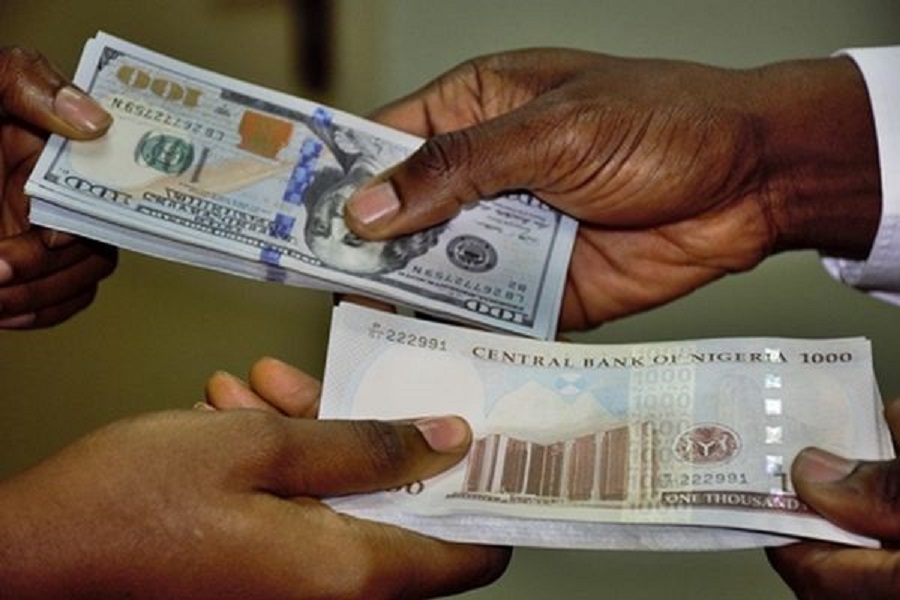
The Nigerian Naira began the new trading week on Monday, April 13, 2026, with slight movements against the United States Dollar across both the official and parallel foreign exchange markets, reflecting continued cautious stability in the currency environment.
In the Nigerian Foreign Exchange Market (NFEM), the official trading window, the Naira opened at about ₦1,358.84 per $1, before recording mild intraday fluctuations that pushed it briefly to around ₦1,362.08, before easing back toward the opening range.
The performance indicates a relatively stable session, supported by ongoing liquidity management efforts and sustained interventions by the Central Bank of Nigeria, which has continued to monitor dollar supply and demand in the banking system.
Analysts say the official market remains largely driven by inflows from oil exports, non-oil earnings, and diaspora remittances, all of which help moderate volatility in the NFEM window.
Parallel Market Remains Higher Amid Strong Demand
In contrast, the parallel market—commonly referred to as the black market—recorded significantly higher exchange rates as demand for dollars persisted among importers, traders, and individuals outside the official FX window.
READ ALSO:
- Kwankwaso Reveals Details of Kwankwasiyya’s ADC Power-Sharing Formula
- ADC Crisis: Supreme Court to Hear David Mark’s Appeal April 14
- FG Boosts Power Generation to 4,300MW in Two Weeks — Adelabu
Reports from currency dealers in commercial hubs such as Lagos, Abuja, and Kano indicate that the Dollar traded between ₦1,460 and ₦1,485 during the morning session.
The wide gap between the official and parallel market rates continues to reflect structural pressures in Nigeria’s foreign exchange system, including limited liquidity access and high demand for foreign currency for imports, travel, and education-related payments.
Market Outlook and Sentiment
Financial analysts note that market sentiment remains cautious, with traders closely watching upcoming macroeconomic indicators, crude oil price movements, and possible policy signals from monetary authorities.
Experts also point out that the stability in the NFEM suggests that recent reforms and tightening measures in the foreign exchange market may be gradually improving transparency and liquidity management, even though pressure persists in the informal market segment.
For many Nigerians, fluctuations in the exchange rate continue to directly impact the cost of imported goods, fuel-related logistics, and overall inflation expectations, making daily FX movements a key economic indicator.
As of early Monday trading, market activity remained steady, with expectations that the Naira will continue to trade within a relatively narrow range unless triggered by major external shocks or policy adjustments.
Official, Black Market Rates Diverge as Naira Starts Week on Stable Note
Railway
FG pushes high-speed train, expands rail links to seaports
FG pushes high-speed train, expands rail links to seaports
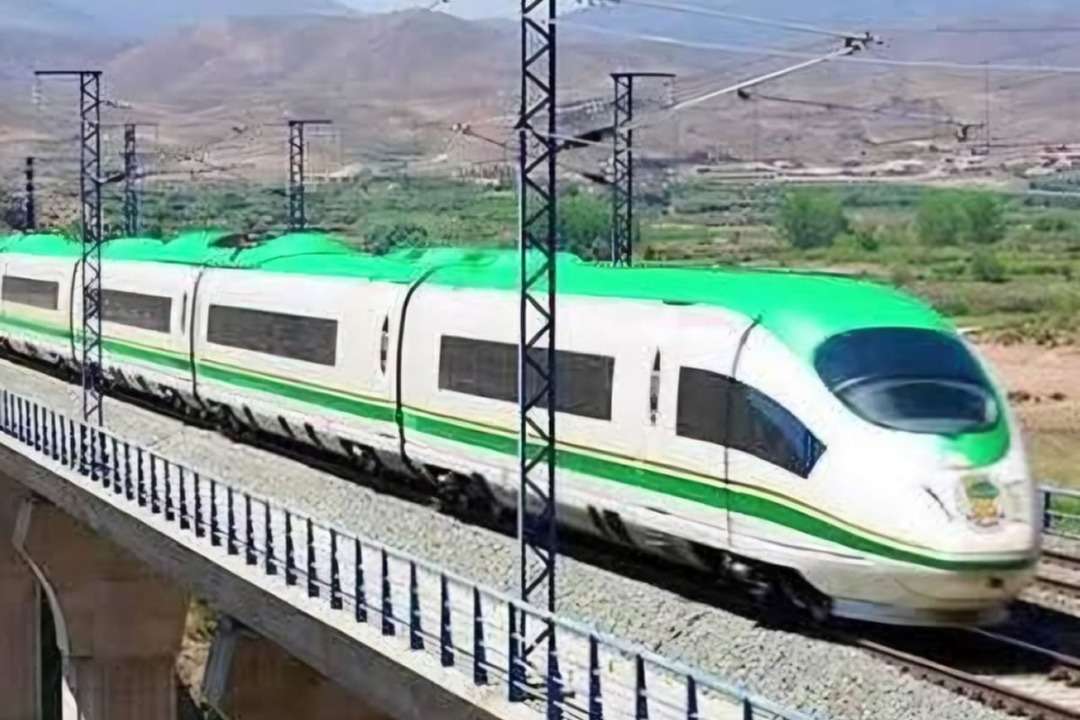
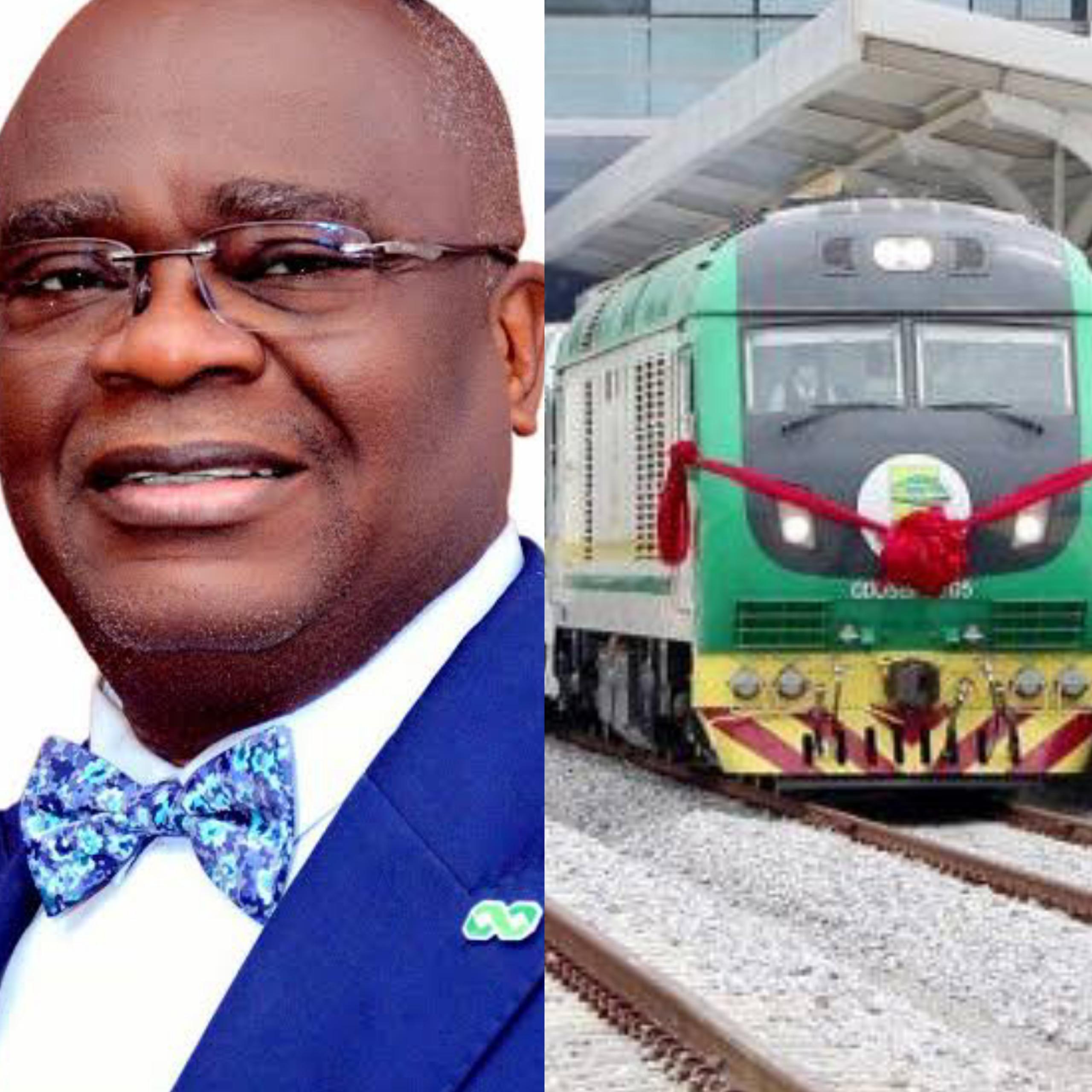
The Federal Government has intensified efforts to modernise Nigeria’s rail system, setting up a high-speed rail committee and approving the expansion of rail connections to key seaports to boost cargo movement and ease logistics bottlenecks.
Managing Director of the Nigerian Railway Corporation (NRC), Kayode Opeifa, disclosed this at the quarterly stakeholders’ engagement of the Nigerian Ports Consultative Council.
In a statement by the NRC’s Chief Public Relations Officer, Callistus Unyimadu, Opeifa said the Office of the Secretary to the Government of the Federation had constituted a committee on high-speed rail development to drive initiative.
He disclosed that the Federal Government was seeking private sector participation in this regard.
The NRC boss also emphasised that seamless rail-port integration remained critical to unlocking the full benefits of ongoing maritime reforms.
Opeifa warned that investments in port infrastructure, including deep seaports, would continue to yield limited returns without efficient rail connectivity to move cargo inland.
He noted that while collaboration between the corporation and port authorities had improved—particularly under the administration of Bola Ahmed Tinubu—significant gaps remain in cargo evacuation from ports, especially in Lagos and along the eastern corridor.
He identified persistent bottlenecks in rail freight operations and called for targeted interventions to improve efficiency, stressing that a shift towards rail-based cargo movement is essential for a more reliable and cost-effective logistics system.
Highlighting ongoing and planned projects, Opeifa said the Federal Government has approved the extension of the Lagos–Ibadan standard gauge rail line to Apapa and Tin Can Island ports. He added that the Warri–Itakpe line would be linked to Warri Port, while the eastern narrow gauge is set to connect the Port Harcourt Port at Onne.
He further disclosed plans to link the Lagos–Kano western line to Baro Port, as part of a broader strategy to integrate all major ports into the national rail network.
On project updates, the NRC boss said the Kaduna–Kano rail corridor is nearing completion, while efforts are underway to connect existing rail lines directly to ports to reduce congestion and improve cargo evacuation.
He also revealed plans for a new rail line to the Lekki Deep Sea Port, expected to pass through Ijebu-Ode and Sagamu to Kajola, where it will link with the Lagos–Ibadan line. The project, he said, is likely to commence this year.
Describing rail connectivity to ports as a key driver of economic growth, Opeifa urged stakeholders, including truck operators, to support the initiative, noting that road transport would continue to play a complementary role in last-mile delivery.
He also called for the expansion of freight yards across both narrow and standard gauge lines to enhance cargo handling capacity and overall efficiency.
The stakeholders’ meeting brought together key players in the maritime and rail sectors to align strategies and strengthen collaboration towards building a more integrated and efficient national transport system.
Business
NNPC Remits N1.804 Trillion to Federation Account in February

NNPC Remits N1.804 Trillion to Federation Account in February
The Nigerian National Petroleum Company Limited (NNPC) has remitted N1.804 trillion to the Federation Account in February 2026, marking a significant jump from the N726 billion recorded in January, according to its latest Monthly Financial and Operational Report Summary.
The sharp increase highlights improved oil and gas revenue performance in Nigeria, stronger production output, and ongoing fiscal reforms aimed at boosting transparency and accountability in the petroleum sector.
NNPC Ltd reported that its total revenue increased to N2.68 trillion in February, up from N2.57 trillion in January, driven by higher crude oil sales, improved gas earnings, and operational efficiency gains across its assets. The company also recorded a profit after tax of N136 billion, reflecting improved financial performance despite fluctuations in global crude oil markets and domestic operational challenges.
According to the report, Nigeria’s crude oil and condensate production averaged 1.51 million barrels per day (bpd) in February 2026. NNPC attributed the output stability to improved asset reliability, faster resolution of evacuation constraints, and enhanced coordination with upstream operators across key oil fields.
READ ALSO:
- JUST IN: FG Publishes List of 48 Individuals, Groups Linked to Terrorism Financing in Nigeria
- 2027: Oyo APC Governorship Aspirant Saheed Oladele Resigns From Party
- 42-Year-Old Married Woman Declared Missing Found in Hotel with Man
The rise in remittances follows major fiscal policy changes introduced by President Bola Ahmed Tinubu in February 2026, including an Executive Order mandating full remittance of oil and gas revenues to the Federation Account. The directive also suspended the retention of management and frontier exploration fees previously deducted by NNPC Ltd and established an inter-agency committee led by the Minister of Finance to enforce compliance.
Officials say the reforms are designed to strengthen public revenue management in Nigeria, reduce leakages, and improve transparency in the oil sector.
The company said improved output was supported by infrastructure upgrades, better asset management, and stronger collaboration with industry stakeholders. It also highlighted progress on the Ajaokuta–Kaduna–Kano (AKK) gas pipeline project, noting that construction works are advancing toward early gas delivery to Abuja, a key milestone for Nigeria’s domestic gas expansion strategy.
The performance aligns with broader recovery trends in Nigeria’s oil industry, supported by efforts to curb crude theft, improve pipeline security, and enhance upstream efficiency. Data from the Nigerian Upstream Petroleum Regulatory Commission (Nigerian Upstream Petroleum Regulatory Commission) also indicates fluctuations but overall resilience in production levels, as the sector continues stabilisation reforms.
Analysts say sustained growth in NNPC remittances will depend on consistent crude production, stable global oil prices, and continued enforcement of fiscal transparency measures. As of the time of filing this report, NNPC Ltd has not provided additional breakdowns beyond its monthly financial summary.
NNPC Remits N1.804 Trillion to Federation Account in February

-
 metro3 days ago
JUST IN: FG Publishes List of 48 Individuals, Groups Linked to Terrorism Financing in Nigeria
-

 metro2 days ago
BREAKING: Troops Arrest 15-Year-Old Linked to Killing of Gen Braimah in Borno
-

 metro3 days ago
42-Year-Old Married Woman Declared Missing Found in Hotel with Man
-

 Politics3 days ago
2027: Oyo APC Governorship Aspirant Saheed Oladele Resigns From Party
-
 metro3 days ago
ADC Threatens Civil Disobedience To Force INEC Chairman To Resign
-

 metro2 days ago
Fayose Warns Makinde May Query Olubadan Over Absence at Ibadan Coronation Event
-
 metro1 day ago
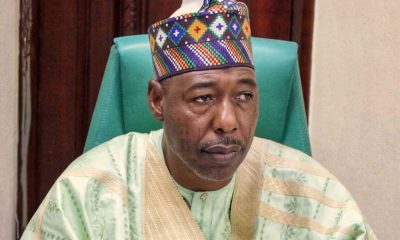
Zulum Defends NAF Airstrike, Says Jilli Market Closed Five Years Ago
-

 Politics2 days ago
Lagos 2027: APC Succession War Intensifies as Tinubu Reportedly Backs Hamzat