

News
Tinubu: Nigeria to Build on Economic Reforms, Cut Inflation Further in 2026 (Full Speech)
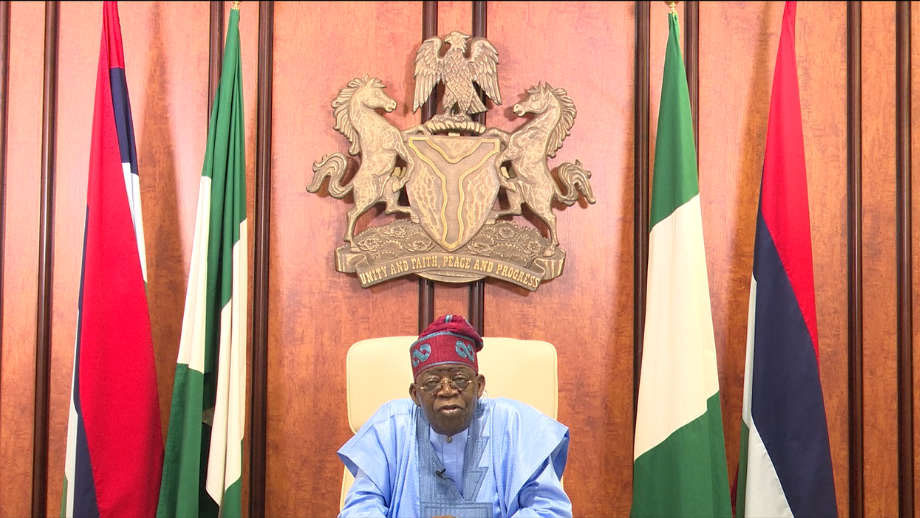
Tinubu: Nigeria to Build on Economic Reforms, Cut Inflation Further in 2026 (Full Speech)
President Bola Ahmed Tinubu has said his administration will prioritise consolidating Nigeria’s recent economic gains in 2026, with a renewed focus on building a resilient, inclusive and growth-oriented economy that delivers tangible benefits to Nigerians.
In his New Year address, Tinubu said Nigeria closed 2025 on a strong footing despite global economic headwinds, recording robust quarterly GDP growth, improved trade balances, greater exchange rate stability, and a steady decline in inflation to below 15 per cent.
The President noted that the Nigerian Stock Exchange (NGX) outperformed its peers in 2025, posting a 48.12 per cent gain, while the government remains committed to further reducing inflation and ensuring that the benefits of ongoing reforms reach households across the country.
According to him, Nigeria’s foreign reserves stood at $45.4 billion as of December 29, 2025, providing a strong buffer against external shocks to the naira, with expectations of further improvement in 2026.
Tinubu also highlighted renewed investor confidence, disclosing that foreign direct investment (FDI) rose to $720 million in the third quarter of 2025, up from $90 million in the preceding quarter. He said Nigeria’s economic direction has continued to earn positive assessments from global credit rating agencies, including Moody’s, Fitch and Standard & Poor’s.
READ ALSO:
- Terror Attack in Ondo: Armed Men Burn Police Station, Community Deserted
- Kwankwaso Warns Abba Yusuf, Associates Against Defecting from NNPP to APC
- Anthony Joshua Leaves Hospital After Tragic Accident That Killed Two Associates
On fiscal discipline and tax reform, the President said his administration is implementing harmonised tax laws to curb multiple taxation and ease the burden on citizens and businesses. He described 2026 as a critical year for implementing tax reforms aimed at raising revenue sustainably, correcting fiscal distortions, and financing infrastructure and social investments.
Addressing security challenges, Tinubu said economic progress must go hand in hand with peace and stability. He disclosed that Nigerian security forces, working with international partners, carried out decisive actions against terrorist targets in the Northwest in December, with sustained operations continuing across the Northwest and Northeast.
The President reiterated his support for a decentralised policing system, complemented by properly regulated forest guards, to more effectively tackle terrorism, banditry and criminality.
On inclusive growth and social development, Tinubu said the government will accelerate the Renewed Hope Ward Development Programme, targeting the empowerment of at least 10 million Nigerians by supporting 1,000 people in each of the country’s 8,809 wards through agriculture, trade, mining and food processing.
He assured Nigerians that investments in infrastructure, including roads, power, ports, railways, healthcare, education and agriculture, would continue without interruption in 2026.
Calling for national unity, the President urged Nigerians to embrace patriotism and shared responsibility, stressing that nation-building requires collective effort.
“I wish you all a peaceful, productive and prosperous New Year,” Tinubu said, praying for continued peace, security and stability across the country.
See the full speech below:
Fellow Compatriots,
I welcome you all to 2026, with gratitude to God and confidence in our collective resolve that this new year will be a more prosperous one for our nation, our citizens, and all who call Nigeria home.
During 2025, we sustained the momentum on our major reforms. We had a fiscal reset and also recorded steady economic progress. Despite persistent global economic headwinds, we recorded tangible and measurable gains, particularly in the economy.
These achievements reaffirm our belief that the difficult but necessary reforms we embarked upon are moving us in the right direction with more concrete results on the horizon for the ordinary Nigerian.
𝐄𝐜𝐨𝐧𝐨𝐦𝐢𝐜 𝐏𝐫𝐨𝐠𝐫𝐞𝐬𝐬 𝐚𝐧𝐝 𝐎𝐮𝐭𝐥𝐨𝐨𝐤
As we enter 2026, our focus is on consolidating these gains and continuing to build a resilient, sustainable, inclusive, and growth-oriented economy.
We closed 2025 on a strong note. Despite the policies to fight inflation, Nigeria recorded a robust GDP growth each quarter, with annualised growth expected to exceed 4 per cent for the year. We maintained trade surpluses and achieved greater exchange rate stability. Inflation declined steadily and reached below 15 per cent, in line with our target. In 2026, we are determined to reduce inflation further and ensure that the benefits of reform reach every Nigerian household. In 2025, the Nigerian Stock Exchange outperformed its peers, posting a robust 48.12 per cent gain and consolidating its bullish run that began in the second half of 2023.
Tinubu: Nigeria to Build on Economic Reforms, Cut Inflation Further in 2026 (Full Speech)







News
NBS: Nigeria’s Inflation Slips to 15.39% in August
NBS: Nigeria’s Inflation Slips to 15.39% in August
Nigeria’s inflation rate eased to 15.39 per cent in August 2026 as the pace of price increases slowed across the economy, the National Bureau of Statistics has reported.
The latest Consumer Price Index report shows a modest fall from the 15.43 per cent recorded in July.
A sharper improvement was recorded in monthly inflation. The rate dropped from 1.57 per cent in July to 0.71 per cent in August, meaning prices continued to rise but at a much slower pace.
Food inflation also slowed significantly.
The NBS put year-on-year food inflation at 19.57 per cent in August. This was below the 25.30 per cent recorded a year earlier. Monthly food inflation also fell sharply, moving from 5.56 per cent in July to 1.02 per cent in August.
The statistics agency attributed the monthly decline to lower average prices for a range of food products, including palm oil, pepper, onions, cassava flour, beef, yam flour, egusi, ginger, fresh fish, Irish potatoes, chicken and turkey.
The improvement, however, was not shared equally across the country.
Adamawa had the highest annual food inflation rate at 38.85 per cent. Zamfara followed with 37.96 per cent, while Bayelsa recorded 36.20 per cent.
At the other end, Borno recorded negative annual food inflation of -4.04 per cent. Jigawa recorded -0.23 per cent, while Kebbi stood at 3.47 per cent.
For monthly food inflation, Katsina recorded the highest rate at 9.48 per cent, followed by Rivers at 8.86 per cent and Osun at 8.32 per cent.
The latest figures suggest a broad slowdown in price growth, although the wide differences between states show that many households are still facing very different food price pressures depending on where they live.
NBS: Nigeria’s Inflation Slips to 15.39% in August
metro
Fatal NURTW Leadership Clash in Osun Leaves Two Dead; State Orders Park Shut Down
Fatal NURTW Leadership Clash in Osun Leaves Two Dead; State Orders Park Shut Down
As Olalekan Oyeyemi is buried in Osogbo, authorities transfer murder probe to the State Criminal Investigation Department.
News
Peter Obi Rejects Anambra Debt Claims, Challenges Soludo Govt to Produce Evidence
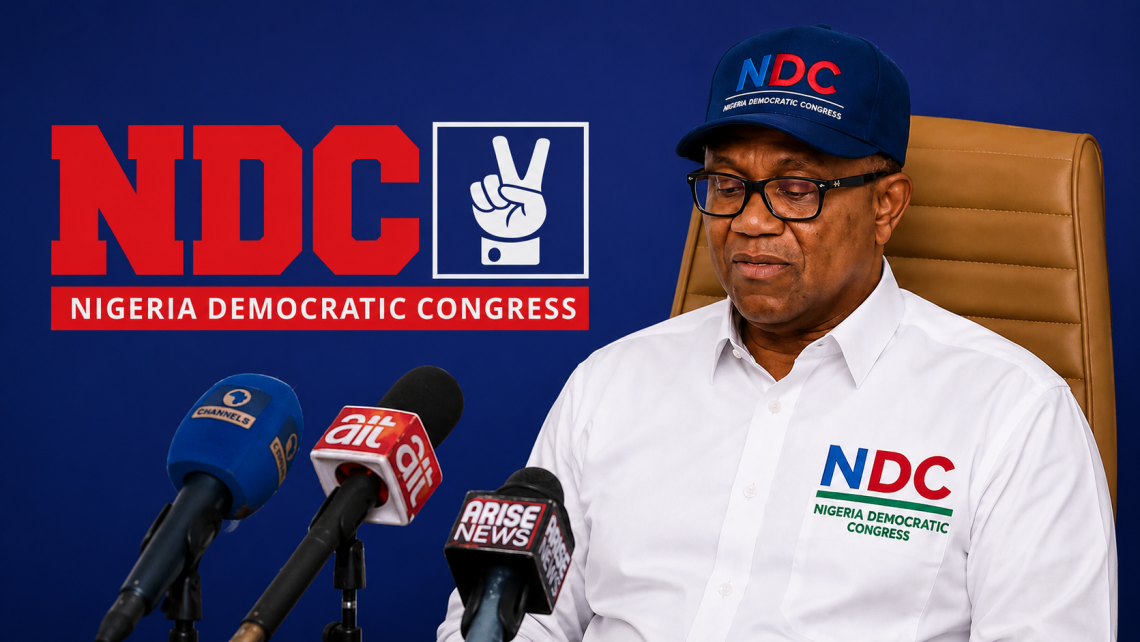
Peter Obi Rejects Anambra Debt Claims, Challenges Soludo Government to Produce Evidence
Former Anambra State Governor and 2027 presidential candidate Peter Obi has rejected claims that he left the state with unpaid financial obligations when he handed over power in 2014, challenging the Anambra State Government to identify any contractor, supplier, worker or pensioner who was owed money by his administration at the time.
Obi made the statement in response to renewed claims by the administration of Governor Chukwuma Soludo that the state is still servicing loans and other financial obligations inherited from previous administrations.
The dispute has opened a fresh political debate over Anambra’s debt profile, the financial obligations inherited by successive governments and the management of the state’s resources before and after Obi left office.
Obi, who governed Anambra between 2006 and 2013 before handing over to his successor in 2014, said he paid what was due during his tenure and left the state in a financially stable position.
He challenged the Soludo administration to provide evidence of any unpaid obligation incurred by his government that remained outstanding when he left office.
According to Obi, if the state government can identify any contractor, supplier, employee, pensioner or other beneficiary who was owed money by his administration at the time of the handover, he would be prepared to address the matter.
The former governor also said his administration left funds in government accounts, including an alleged ₦2.14 billion ecological fund balance, when he handed over power.
However, the claim regarding the ecological fund is from Obi’s camp and would require confirmation from the relevant official financial records.
READ ALSO:
- Peter Obi: Release My UNN Academic Records, I Have Nothing to Hide
- A Son Wouldn’t Have Done Better — Dangote Speaks on Daughters, Succession
- 2027: APC Governors Reject Wike’s Rainbow Coalition, Insist on Party Loyalty
The response followed comments by the Anambra Commissioner for Finance, Izuchukwu Okafor, who said the state was still repaying loans inherited from previous administrations.
Okafor said the Soludo administration had not obtained any commercial bank loan since it came into office in 2022, arguing that the government’s focus had been on reducing the state’s inherited financial obligations.
He said the state’s debt burden had been substantially reduced under Soludo and that the administration had also cleared inherited liabilities relating to contracts, gratuities and pensions.
The commissioner said some loans taken by previous administrations remain subject to repayment and deductions from the state’s federal allocations.
This distinction is at the centre of the current disagreement.
The Soludo administration is not necessarily claiming that Obi personally left unpaid bills to contractors or workers. Rather, the government is pointing to loans and other financial commitments inherited from successive administrations, some of which continue to be serviced.
Obi, on the other hand, is arguing that his administration settled the obligations that were due and payable when he left office and should not be held responsible for liabilities incurred by subsequent governments.
The issue has therefore raised questions about the difference between a state’s overall outstanding debt and debts that were specifically incurred by an individual administration.
Available public debt records have shown that Anambra had outstanding formal obligations around the period Obi left office. However, the political dispute centres on when particular obligations were incurred, which administration contracted them, when repayment became due and whether they should be described as unpaid debts inherited from Obi’s administration.
The Soludo administration has maintained that it inherited financial commitments from previous governments and has been working to reduce them.
The finance commissioner reportedly said the state’s domestic debt was now close to zero and that the government had reduced its overall debt burden significantly.
He also said the Soludo administration had not resorted to commercial bank borrowing since assuming office, presenting the reduction in liabilities as evidence of improved fiscal management.
The government has simultaneously highlighted investments in infrastructure and other projects while maintaining that debt reduction remains an important part of its financial strategy.
READ ALSO:
- Sanwo-Olu Joins Dangote as Historic N2.15tn Refinery IPO Opens on Nigerian Exchange
- Shehu Buba Submits Himself To DSS Over Banditry Allegations
- No Lives Lost as Responders Contain Dual Fire Outbreaks Across Lagos
Obi’s camp, however, has questioned the basis for attributing current financial obligations to his administration.
The former governor has repeatedly presented his tenure as one characterised by fiscal discipline, savings and investment in infrastructure, education, healthcare and other sectors.
His supporters have pointed to the savings and financial reserves accumulated during his tenure as evidence that the state was handed over in relatively strong financial condition.
Critics of the former governor, however, argue that the financial position of a state cannot be assessed solely by looking at cash balances or the absence of unpaid bills because governments can inherit long-term obligations whose repayment extends beyond the tenure of the administration that contracted them.
That distinction is particularly relevant in Anambra, where governments have succeeded one another while continuing to service financial commitments made over several administrations.
The latest exchange has consequently shifted the political conversation from whether Anambra has debt to the more specific question of which administration incurred particular liabilities and whether those obligations were outstanding at the time of each handover.
The dispute also comes at a politically sensitive period, with Obi preparing for the 2027 presidential election under the Nigerian Democratic Congress (NDC).
Questions about his record as Anambra governor are likely to remain part of the political debate as the election approaches, particularly because his administration’s economic management has been a central part of his political narrative.
For Soludo, who is serving as Anambra governor, the emphasis has been on the state’s current fiscal position and the steps his administration says it has taken to reduce inherited liabilities while funding development projects.
For Obi, the priority is to establish that he did not leave unpaid obligations to contractors, workers, pensioners or other beneficiaries when he left office.
The former governor has therefore challenged the state government to publish specific records showing any outstanding obligation attributable to his administration at the point of handover.
The competing claims have yet to be resolved by an independent audit or judicial determination.
What remains clear is that Anambra’s debt debate involves more than a simple disagreement over whether the state owes money. It encompasses loans contracted by successive administrations, repayment schedules, inherited liabilities, outstanding contracts and the question of how political leaders should be held accountable for financial commitments made during their tenure.
As the exchange continues, official debt records, audited financial statements and handover documents could provide the clearest basis for determining the extent of liabilities inherited by each administration.
Until such records are independently reviewed, claims that Obi either left the state completely debt-free or was solely responsible for all of its inherited obligations should be treated with caution.
The latest dispute therefore leaves two competing narratives: Obi’s insistence that he paid what was due before leaving office, and the Soludo administration’s position that Anambra continues to service financial obligations inherited from previous governments, including loans dating back to earlier administrations.
With the 2027 election approaching, the controversy is likely to remain part of the wider political contest over Obi’s record in Anambra and his claims of fiscal discipline in government.
Peter Obi Rejects Anambra Debt Claims, Challenges Soludo Government to Produce Evidence
-
 News2 days ago
SERAP Threatens Legal Action Over ₦126bn INEC Electoral Funds
-
 Politics3 days ago
Five Islamic Clerics Abducted After Tinubu Re-Election Prayer At Yari’s Zamfara Residence
-
 Opinion3 days ago
‘Tinubu Will Win Again in 2027’ — Charismatic Bishops’ Secretary
-
 Politics1 day ago
2027: Northern Lecturers Back Tinubu, ASUU Disowns Endorsement
-

 metro2 days ago
Mother ‘sold daughter’s abuse videos for $300’: Nigeria child pornography case shocks nation
-

 Sports3 days ago
‘Unacceptable’ — Arteta Furious Over Sunderland Penalty in Arsenal Win
-

 News2 days ago
Petrol Subsidy: Presidency Rejects Atiku’s Plan, Says No Going Back
-
 News2 days ago
Nwifuru Dismisses Cubana Chief Priest as ‘Attention-Seeker’