
Politics
1,500 APC members join NNPP in Kano

1,500 APC members join NNPP in Kano
The ruling New Nigeria Peoples Party (NNPP) in Kano State on Sunday welcomed 1,500 defectors from the main opposition, the All Progressives Congress (APC).
The defectors, drawn from various wards in Gwarzo Local Government Area, were officially received at the office of the state Deputy Governor, Comrade Aminu Abdussalam Gwarzo, on Sunday night. They pledged their loyalty to the NNPP and its leadership.
Gwarzo described their decision as a courageous step towards strengthening Governor Abba Kabir Yusuf’s administration and advancing good governance in the state.
“We are happy to welcome our brothers and sisters into the NNPP family. This is a testament to the growing acceptance of our party’s vision for Kano State and Nigeria as a whole,” he said.
READ ALSO:
- Lagos Assembly crisis may consume Obasa, Meranda, new speaker to emerge
- Man arrested in Lagos for beating girlfriend to death
- EFCC witness exposes how Obiano used unlicensed companies in N4bn fraud
He assured them of equal opportunities and full integration into the party structure.
Speaking on behalf of the defectors, Malam Abdullahi Tiga from Lakwaya Ward and Aliyu Sulaiman from Gwarzo Ward attributed their defection to the APC’s inability to meet the aspirations of the people.
They expressed confidence in the NNPP’s leadership and pledged their unwavering support.
Chairman of Gwarzo Local Government Area, Dr. Mani Tsoho, also assured the defectors of fair treatment and opportunities within the council.
Party officials and supporters present at the event reaffirmed their commitment to strengthening the NNPP ahead of future political activities and encouraged more people to join the party.
Spokesperson to the Deputy Governor, Ibrahim Garba Shuaibu, noted that “the mass defection is seen as a significant boost for the NNPP in Kano, further consolidating its influence in the state’s political landscape.”
1,500 APC members join NNPP in Kano











Politics
Peter Obi Can’t Defeat Tinubu in Lagos Again, Not a Threat — Sunday Dare
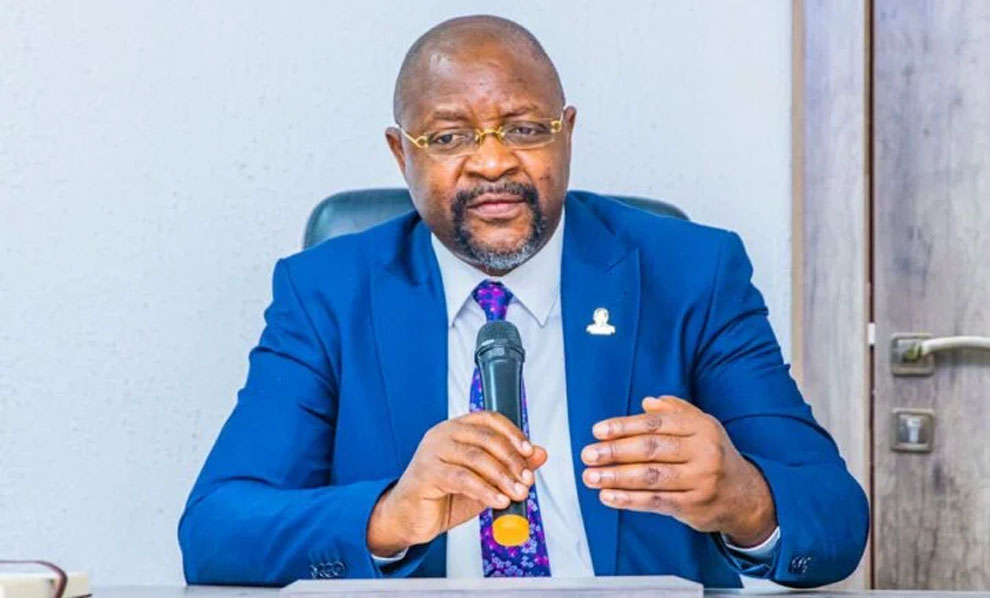
Peter Obi Can’t Defeat Tinubu in Lagos Again, Not a Threat — Sunday Dare
The Special Adviser to President Bola Tinubu on Media and Public Communications, Sunday Dare, has dismissed suggestions that the presidential candidate of the Nigeria Democratic Congress (NDC), Peter Obi, poses a political threat to the Tinubu administration, insisting that the government stands on a “solid ground of performance” ahead of the 2027 general elections.
The Special Adviser to President Bola Tinubu on Media and Public Communications, Sunday Dare, has dismissed suggestions that the presidential candidate of the Nigeria Democratic Congress (NDC), Peter Obi, poses a political threat to the Tinubu administration, insisting that the government is focused on delivering its mandate. Speaking during an interview on the Mic On Podcast hosted by Seun Okinbaloye on Saturday, Dare said the administration was not afraid of Obi, arguing that the government’s performance and policy initiatives had strengthened its position ahead of the 2027 general elections.
“This government is not afraid of Peter Obi. He is not a nightmare to our government. Maybe before, Peter Obi was a threat, but right now, he is no threat because we stand on the solid ground of performance,” Dare said. According to him, the administration has carefully examined the country’s challenges and is implementing policies and programmes aimed at addressing them. “We have been able to interrogate the problems of this country. Decisions are being taken, policies are being unfolded across the country, and we have a scorecard to show,” he added.
READ ALSO:
- NYSC Trust Fund Bill Awaits Presidential Assent as Reps Promise Innovation Hub
- Troops Rescue 36 Benue Indigenes Held Hostage in Cross River
- Argentina complete perfect group stage as Messi rewrites FIFA World Cup history
Dare also criticised Obi’s public interventions, describing some of his comments and interviews as lacking clarity and coherence. “Peter Obi is not a nightmare. Maybe you replace nightmare with nuisance because if you see some of his reactions, they are very pedantic. Sometimes you wonder. You listen to some of his interviews, ask him a question, and he goes in a roundabout direction that does not make sense,” he said.
Dare also addressed the upcoming 2027 presidential election, maintaining that Obi would not be able to repeat his performance in Lagos State, where the former Labour Party candidate defeated Tinubu during the 2023 presidential election. “Peter Obi defeated President Tinubu in Lagos in 2023. This is 2027; he can’t defeat Tinubu again in Lagos,” Dare declared.
In the 2023 election, Obi secured 582,454 votes in Lagos State, edging out Tinubu, who polled 572,606 votes — a margin of 9,848 votes. Tinubu won 11 local government areas while Obi won nine. Despite losing his home base, Tinubu ultimately won the national election with over 8.7 million votes to claim the presidency. His comments come amid growing political activity and early positioning by major parties and prospective candidates ahead of the 2027 general election. The statements also reflect the ruling party’s confidence in its electoral prospects despite the opposition’s efforts to build momentum.
Peter Obi Can’t Defeat Tinubu in Lagos Again, Not a Threat — Sunday Dare
Politics
APC Sweeps Gombe LG Polls, Wins All 24 Chairmanship, 240 Councillorship Seats
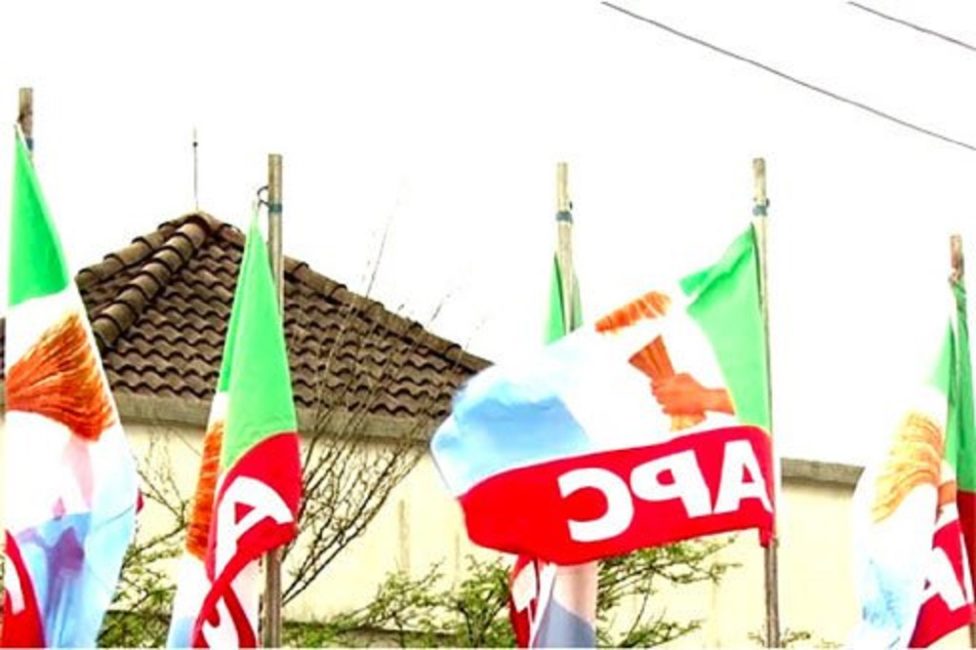
APC Sweeps Gombe LG Polls, Wins All 24 Chairmanship, 240 Councillorship Seats
- The All Progressives Congress (APC) has secured a landslide victory in the Gombe State local government elections, winning all 24 chairmanship positions and all 240 councillorship seats contested across the state’s 11 Local Government Areas and 13 newly created Local Council Development Areas (LCDAs). The ruling party’s clean sweep was announced on Saturday by the Gombe State Independent Electoral Commission (GOSIEC), marking a historic moment as the state conducted its first elections in the expanded 24-council structure.
The All Progressives Congress (APC) has claimed a clean sweep in the Gombe State local government elections, winning all 24 chairmanship positions and the 240 councillorship seats contested across the state. Announcing the outcome on Saturday in Gombe, Chairman of the Gombe State Independent Electoral Commission (GOSIEC), Abdullahi Garba Talasse, declared that the ruling party emerged victorious in every local government area and Local Council Development Area (LCDA) where voting took place .
Talasse described the conduct of elections in the newly established LCDAs as a major step forward for democratic governance in the state. He noted that the creation of the additional councils expanded Gombe’s local government structure from 11 councils with 114 councillors to 24 councils and LCDAs with a total of 240 councillors. This expansion became possible after Governor Muhammadu Inuwa Yahaya approved the creation of 13 Local Council Development Areas to bring governance closer to the people and accelerate grassroots development.
According to the GOSIEC chairman, the electoral commission collaborated with the State House of Assembly to ensure the legal framework required to conduct elections in the new LCDAs was put in place. “We met, made our suggestions to him, and His Excellency graciously approved them. We also visited other states, including Lagos, where elections had already been conducted using LCDAs, and after studying their experiences, we returned and secured the necessary enabling law through the house of assembly,” he explained .
“We did not struggle for the enabling law in vain. Today, we have successfully conducted elections across the 24 councils and LCDAs, which is a significant achievement for the state,” he said .
READ ALSO:
- Uba Sani assures justice for Ummulkhairi’s family, promises support for children
- Tinubu Approves Free CAC Registration for 250,000 MSMEs Nationwide – How to Apply
- Oyo Lifts Curfew in 10 LGAs, Sustains Manhunt for Kidnappers
The GOSIEC chairman linked the opposition parties’ poor performance to their limited participation in the elections. He explained that while multiple political parties participated in the exercise, only the APC fielded candidates in all 24 councils. The African Action Congress (AAC) fielded chairmanship candidates in only three local government areas, while the Democratic Leadership Alliance (DLA) contested six chairmanship positions. The New Nigeria People’s Movement (NRM), Youth Party (YP), and Zenith Labour Party (ZLP) each fielded candidates in three chairmanship races.
For the councillorship elections, the African Congress contested in only eight wards, while the DLA, NRM, YP, and ZLP each sponsored candidates in 11 wards out of the 240 contested. “That explains why some parties recorded zero votes in several areas because they did not participate across all the councils and wards,” he stated.
The absence of major opposition parties, including the Peoples Democratic Party (PDP) and the African Democratic Congress (ADC), was notably conspicuous. The PDP cited lack of transparency in the electoral process as the reason for its boycott, while the ADC claimed it was not notified by GOSIEC to participate in the election. Efforts to obtain reactions from the PDP were unsuccessful as the party chairman neither answered telephone calls nor responded to text messages at the time of filing reports.
The elections were conducted across 114 wards and 2,988 polling units in the state, with Governor Inuwa Yahaya casting his vote at the Yahaya Umaru Polling Unit in Gombe local government area. The governor praised the peaceful and smooth conduct of the polls, noting that the entire exercise was free from major security issues. He described the peaceful atmosphere as proof of the maturity of voters and a sign of the dedication shown by everyone involved in upholding democratic traditions.
Announcing the outcome, the GOSIEC chairman declared that from the results before the commission, APC has won all the 24 chairmanship seats and all the 240 councillorship positions. He commended political parties, election observers, civil society organisations, security agencies, the media, and other stakeholders for their roles in ensuring a peaceful electoral process.
READ ALSO:
- Iran accuses US of unfair treatment at 2026 FIFA World Cup after controversial exit
- US shuts down nearly 400 websites streaming 2026 FIFA World Cup illegally
- Oyeyemi, Nneji Seek Transport Revolution to Slash Business Costs, Boost Economy
He also expressed appreciation to party leaders, government officials, non-governmental organisations, and other visitors from different parts of the country who monitored the exercise, describing their contributions as vital to the successful conduct of the polls. “In conclusion, I thank His Excellency for providing us with the enabling environment. We also appreciate all political parties for their support, as well as the observers, NGOs, and members of the media who have been with us throughout this exercise. May God bless you all, and I wish everyone a safe journey back,” Garba added .
The Gombe State local government elections were hailed as a significant milestone in the state’s democratic evolution. The expansion of the local government structure from 11 to 24 councils represents one of the most ambitious administrative reforms undertaken by the Yahaya administration since assuming office. Governor Yahaya had consistently maintained that the creation of additional LCDAs was necessary to bring government services closer to rural communities and ensure more equitable distribution of resources across the state.
Political analysts have noted that the APC’s clean sweep in the Gombe LG polls reflects the party’s deep-rooted popularity in the state, which has been a stronghold of the ruling party since the 2019 general elections. The party has maintained a firm grip on the state’s political landscape, winning all major elective positions in previous elections. The absence of serious opposition participation further consolidated the APC’s dominance, leaving little room for competitive contestation.
The Gombe State Governor, Inuwa Yahaya, had earlier expressed confidence in the electoral process and urged residents to come out en masse to exercise their civic rights. He emphasized the importance of grassroots participation in strengthening democracy and ensuring that local government councils remain accountable to the people. The governor also assured that his administration would continue to support democratic institutions and processes to deepen governance at all levels.
Voter turnout across the state was reported to be moderate, with many residents expressing satisfaction with the peaceful conduct of the elections. Security was adequately provided across all polling units, with no major incidents of violence or electoral malpractice reported. The presence of security personnel, including the police and civil defence corps, helped maintain order and ensure that voters cast their ballots without intimidation or harassment.
The GOSIEC has been commended for its professionalism and commitment to conducting credible elections despite the challenges posed by the expansion of councils. The commission was praised for ensuring that all necessary logistics, including the deployment of electoral materials and personnel, were effectively managed to ensure a smooth voting process.
Civil society organisations and election observers have called for continued reforms to strengthen the electoral process in Gombe State, including enhancing the participation of opposition parties and ensuring greater transparency in future elections. They also urged political parties to engage constructively with the electoral commission to address any concerns and improve the overall quality of the electoral process.
The successful conduct of the Gombe State local government elections reinforces the importance of local government autonomy and grassroots democracy in Nigeria’s governance framework. As the newly elected chairmen and councillors prepare to assume office, expectations are high that they will deliver tangible development and improved services to their communities.
APC Sweeps Gombe LG Polls, Wins All 24 Chairmanship, 240 Councillorship Seats
Politics
44 Violent Incidents, 13 Deaths: Adeleke Demands Osun CP’s Removal Ahead of August Poll

44 Violent Incidents, 13 Deaths: Adeleke Demands Osun CP’s Removal Ahead of August Poll
- Osun State Governor, Ademola Adeleke, has called for the immediate redeployment of the state’s Commissioner of Police, Ibrahim Gotan, ahead of the August 15 governorship election, citing concerns over alleged bias and lack of neutrality in the discharge of his duties .
The governor made the demand amid rising political tension and growing concerns over security in the state following recent cases of political unrest and violence. Adeleke raised the issue on Friday while receiving a delegation from the Nigeria Police Force sent by the Inspector-General of Police to assess the security situation in Osun .
In a statement issued by his spokesperson, Olawale Rasheed, the governor expressed strong dissatisfaction with the conduct of the state police command, insisting that urgent changes were necessary to restore public trust and ensure a peaceful electoral process . According to Adeleke, the current police leadership in Osun has failed to inspire confidence among residents and political stakeholders. “The Commissioner of Police has demonstrated lack of willingness and capacity to act fairly and without partisan bias,” Adeleke said .
The governor stated that many residents across the state no longer trust the commissioner to oversee security operations in a fair and professional manner, especially as the election draws closer. He argued that impartial policing remains critical to maintaining peace and preventing violence during the election period . “The general consensus among Osun people is that the Commissioner of Police is compromised and should be moved out of the state. Osun seeks fair policing, impartial policing and policing based on respect for rule of law. We are not asking for any favour other than fair protection of lives and properties,” he said .
Adeleke further alleged that the Commissioner of Police had refused to act on repeated reports of attacks, which contributed to the killing of an Accord Party youth leader, Aderogba, in Esa-Oke . The governor disclosed that he had escalated the matter to the Inspector General of Police and reached out to the Presidency over what he described as orchestrated political violence in the state . “I have sent videos and several reports of such frequent gun attacks and killings to the Inspector General of Police. Osun people demand answers,” Adeleke said .
READ ALSO:
- ‘Disconnected From Reality’ – Nigerians Blast Remi Tinubu Over Akara Business Comments
- Shelve State Police Until After 2027 Election, Obi Tells Tinubu
- Rising Cost of Living: FG Signals Fresh Review of N70,000 Minimum Wage
The governor’s call comes amid a surge in politically motivated violent attacks across Osun State. Fatal attacks have been recorded in Osogbo, Ede, Esa-Oke, Ilobu, Ile-Ife, and other towns . A particularly tragic incident involved the killing of a 14-year-old boy, Ezekiel Olapade, who was reportedly shot dead on Sunday, June 21, 2026, at Ilobu Community in Irepodun Local Government Area . According to the Accord Party, political thugs associated with APC shot sporadically around the council secretariat when they sighted an Accord member wearing a party cap, killing the boy while he attempted to rescue his mother who fell into a ditch as they tried to escape the bullets .
The Kimpact Development Initiative (KDI), a civil society organisation, disclosed that its pre-election observation and violence-monitoring activities recorded 44 election-related violent incidents across Osun State between October 2025 and June 2026, resulting in 13 fatalities, several injuries, and the destruction of property . According to the organisation, more than half of the incidents were recorded within the last two months, with 26 of the 44 verified incidents occurring in May and June 2026 alone, representing 59.1 per cent of all verified election-related violence . KDI identified Osogbo Local Government Area, particularly Olaiya, Oke Fia, and Aregbe, as locations recording a high concentration of election-related violence . The group noted that the concentration of incidents so close to the election date should be treated as an early warning signal requiring immediate preventive measures from political actors, security agencies and electoral stakeholders .
The Accord Party has formally demanded the immediate removal of the Commissioner of Police, stating that it has lost confidence in the ability and capacity of the CP to curb violence and politically motivated killings . The party said it has reported attacks to the police and the Department of State Services, but “sadly no arrest has been made let alone prosecuting these criminal elements terrorising the good people of Osun State” . “Our hearts still bleed over the gruesome killing of a 14-year-old boy identified as Ezekiel Olapade who was shot dead on Sunday, 21st June 2026… The Inspector General of Police should as a matter of urgency transfer the Osun State Commissioner of Police, Ibrahim Gotan, for his inability to dispassionately discharge his duties of safeguarding lives and property in the state, and apprehending the known APC thugs perpetrating violence to face the full weight of the law,” the party stated .
A coalition operating under the Network of Osun Civil Society Groups has also urged the Inspector-General of Police to take immediate action, citing concerns over alleged partisanship and unprofessional conduct within the state police command . The group warned that public confidence in the neutrality of security agencies is gradually weakening as the election approaches .
However, other civil society groups have passed a vote of confidence on the Commissioner of Police, passing blame on Adeleke over insecurity in the state . The World Institute for Peace, in collaboration with the Osun Youth and Student Coalition Network and the Initiative for Local Government Development, staged a protest in Osogbo, arguing that allegations of partisanship against Gotan were politically motivated . “We are here to tell the Inspector-General of Police that CP Ibrahim Gotan is doing well in terms of security in the state. We also want to advise the state government to exclude the Commissioner of Police from everything that has to do with politics,” said Lamina Omotoyosi, Executive Director of the World Institute for Peace . A representative of the students, Jelili Olaniyi, added that there was no justification for any move to redeploy the police commissioner, stating that Gotan had been tackling insecurity and political thuggery effectively .
Commissioner of Police Ibrahim Gotan has called on political parties, candidates and other stakeholders to conduct themselves peacefully ahead of the governorship election . Speaking during an interactive session with stakeholders at the State Police Headquarters in Osogbo on Wednesday, CP Gotan said all political actors must work collectively to ensure a peaceful, credible and violence-free electoral process . The police commissioner urged political parties and candidates to notify the police and other relevant security agencies before organising rallies, campaigns, processions or political gatherings across the state . According to him, early notification would enable security agencies to deploy personnel effectively, provide adequate security coverage, manage traffic and prevent clashes during political activities . “Security agencies can only plan effectively when they are informed in good time,” the CP said, stressing the importance of cooperation between political actors and law enforcement agencies . Gotan also condemned the destruction, defacement and removal of opponents’ billboards, banners, posters and other campaign materials, describing such actions as unlawful and capable of provoking retaliation and political tension . He warned against thuggery, gangsterism and the recruitment or sponsorship of political thugs, saying violence and intimidation have no place in a democratic society .
Fresh concerns emerged after two major political parties, the All Progressives Congress and Accord Party, failed to attend a peace meeting organised by the Osun State Police Command in Osogbo . The meeting, held on Wednesday, was part of efforts by security agencies and electoral stakeholders to prevent violence and ensure a peaceful electoral process . The absence of both APC and Accord became the major talking point at the gathering, with several participants expressing worry over what it could mean for the peace process . Adewale Adebayo, governorship candidate of the Allied Peoples Movement, described the development as disturbing . “It is scary that the two political parties that have been fingered at one point or another for killing, maiming, and harassing each other’s supporters are not here. They need to be here to agree to the terms of peace,” Adebayo said .
The Nigeria Union of Journalists, Osun State Council, has condemned the rising wave of political violence, warning that the trend poses a serious threat to peace, public safety, and the democratic process . The union cited the KDI report recording 44 election-related violent incidents and 13 deaths, describing the figures as alarming and requiring immediate intervention by all stakeholders . “The figures should serve as a wake-up call to all stakeholders. No political ambition is worth the loss of human lives,” the union stated . The NUJ called on security agencies to intensify efforts to prevent further violence, maintain professionalism and impartiality, and ensure that those responsible for violent acts are brought to justice regardless of their political affiliations .
44 Violent Incidents, 13 Deaths: Adeleke Demands Osun CP’s Removal Ahead of August Poll
-
 Politics3 days ago
BREAKING: Court Nullifies Judgment Compelling INEC to Register NDC
-

 metro2 days ago
Why men should marry a second wife after 25 years — Morayo Afolabi-Brown’s husband
-

 metro2 days ago
VIDEO: “Your husband’s death is not up to two years, but you’ve sold his properties” — King Mitchy to Mr Ibu’s wife
-

 metro3 days ago
Two sentenced to death by hanging for kidnapping NYSC staff in Ekiti
-
 metro2 days ago
Police kill four kidnappers, rescue five victims in Lagos-Ogun joint operation
-

 News2 days ago
Trump Claims US Military Ended ‘Slaughter of Christians’ in Nigeria
-
 Business22 hours ago
Tinubu Approves Free CAC Registration for 250,000 MSMEs Nationwide – How to Apply
-

 Education2 days ago
PCN Raises Novena University’s Doctor of Pharmacy (Pharm.D) Admission Quota to 120