

Education
US cancels visas for Nigerian, other international students

US cancels visas for Nigerian, other international students
A sudden wave of visa cancellations has left hundreds of international students including many Nigerians reeling with uncertainty across the United States.
“This started off looking like isolated cases, but now it’s coming fast and furious,” said Matthew Maiona, a Boston-based immigration attorney, reflecting growing concerns among legal experts and advocacy groups.
A recent Associated Press review revealed that at least 901 students from 128 colleges have already been impacted by the cancellations.
While many impacted students come from countries like India and China, immigration attorneys report that no region appears to be immune from the sweeping crackdown. In several cases, students were reportedly flagged for minor infractions, such as traffic violations.
Four students in Michigan have filed a lawsuit against the U.S. government, claiming their visas were revoked without explanation. Similar legal actions are emerging across the country, with judges in states including New Hampshire, Wisconsin, and Montana issuing temporary orders to reinstate some students’ legal status.
READ ALSO:
- Buhari’s men pass vote of confidence in Tinubu
- Serial killer surrenders to police in Kano
- FG considers cushioning measures for Trump’s tariffs
- Rivers administrator Ibas denies summoning Fubara, deputy
In a marked change from previous procedures, universities are now discovering these visa terminations through the federal immigration database—sometimes before the students themselves are notified.
This abrupt policy shift is leaving many students in a state of uncertainty, with some just weeks away from graduation or starting jobs.
With no official response yet from the U.S. State Department or the Department of Homeland Security, confusion continues to grow.
Some students are being told to leave the country immediately, while others remain in the U.S. to appeal the decision—hoping to avoid detention or deportation.
In the meantime, many have adopted new routines: carrying immigration documents at all times and preparing for worst-case scenarios.
“It’s scary,” said a Chinese Ph.D. student at UNC Chapel Hill. “You don’t know if you’ll be the next one.”
US cancels visas for Nigerian, other international students







Education
25 Universities, Teaching Hospitals Get Solar Power Under REA Programme

25 Universities, Teaching Hospitals Get Solar Power Under REA Programme
Twenty-five federal tertiary institutions have been connected to solar electricity under the Rural Electrification Agency’s (REA) Energizing Education Programme.
The REA Managing Director, Abba Aliyu, disclosed this during the commissioning of a 3MW captive solar hybrid power project at Yakubu Gowon University, Abuja.
According to Aliyu, the programme covers 22 federal universities and three affiliated teaching hospitals and has deployed more than 100MW of clean energy.
He said the initiative now benefits over 300,000 students and 50,000 academic and administrative staff.
READ ALSO:
- Adunni Ade Reveals Christian Fans Unfollowed Her After Publicly Identifying as Muslim
- Jetour Set to Storm Abuja Show with Rugged Luxury T2
- Fiji Declares National HIV Emergency as Diagnoses Surge Sixteenfold
Aliyu added that the new 3MW facility would power key university facilities, including lecture halls, laboratories, ICT systems, administrative buildings and campus lighting.
Meanwhile, Minister of Power Joseph O. Tegbe said reliable electricity was essential to supporting teaching, research, healthcare and digital services in universities.
He stressed that the long-term performance of the solar projects would be more important than their commissioning.
Vice-Chancellor of Yakubu Gowon University, Prof. Hakeem Babatunde Fawehinmi, also said dependable electricity was critical to the institution’s academic and research activities.
25 Universities, Teaching Hospitals Get Solar Power Under REA Programme
Education
Niger State Urges Local Communities to Protect Newly Completed Public Schools
Niger State Urges Local Communities to Protect Newly Completed Public Schools
Basic education officials deliver modern classrooms to help children learn safely, kicking off an ambitious statewide renovation drive.
State education leaders in Niger State are calling on neighborhood residents and parent groups to take good care of newly renovated primary schools.
On Wednesday, the head of the Niger State Universal Basic Education Board, Dr. Ibrahim A. Liman, reminded communities that public classrooms belong to everyone, warning that state funding can only make a lasting difference when local people watch over these shared spaces.
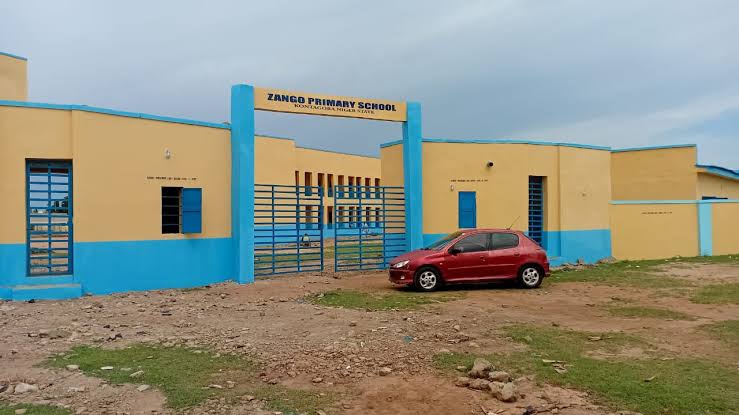
To prepare for handing over the keys, board officials visited Zango Primary School in Kontagora and Richard Lander Primary School in New Bussa. These two locations are the first to finish out of seven model schools currently under construction.
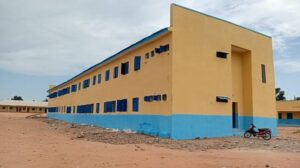
During their visits, team members inspected classrooms to make sure builders followed high safety standards, while encouraging neighbors to keep the grounds secure, tidy, and ready for pupils.
Furthermore, state officials explained that these building projects are part of a larger plan to improve early education across every community. Alongside these new classrooms, the board is starting repair work on about 400 primary schools throughout the state.
In addition to fixing desks and roofs, authorities are upgrading classroom teaching tools and supporting teachers. As a result, children across all backgrounds will have safe, welcoming spaces to learn and grow together.
Niger State Urges Local Communities to Protect Newly Completed Public Schools
Education
LASU, LASUED, LASUSTECH Shut as ASUU Begins Indefinite Strike
LASU, LASUED, LASUSTECH Shut as ASUU Begins Indefinite Strike
Students at three Lagos State-owned universities are facing an indefinite interruption of academic activities after ASUU declared a strike over unresolved demands.
LASU, LASUED and LASUSTECH are affected by the industrial action announced by the union’s Joint Campus Group.
ASUU said it had given the Lagos State Government 14 days from August 31 to address its concerns. According to the union, the deadline expired without a concrete plan or meaningful dialogue.
The union had also issued a final warning on September 10, but said the September 13 deadline passed without talks.
Its main demand is for Lagos State to domesticate and implement the December 2025 Federal Government-ASUU agreement across the three institutions.
ASUU also wants the implementation of welfare provisions, including the Consolidated Academic Tools Allowance for serving and retired academic staff.
The union said the strike would continue until negotiations produce a satisfactory outcome. It also urged students and parents to remain calm.
While the dispute has led to a fresh shutdown in Lagos, another ASUU branch has suspended its strike in Plateau State.
The Plateau State University branch reached an agreement with the state government on issues including the 2025 agreement, outstanding arrears, staff accommodation and other demands. Members are expected to return to academic activities from midnight on September 16.
Meanwhile, ASUU at Taraba State University has issued a fresh 14-day ultimatum to the Taraba State Government. The notice runs from September 14 to September 28 and concerns outstanding provisions of the 2025 Federal Government-ASUU agreement.
LASU, LASUED, LASUSTECH Shut as ASUU Begins Indefinite Strike
-

 International2 days ago
Islamic Council Condemns Attempted Attack on Holy City of Mecca
-

 metro3 days ago
Lagos Power Outage: Ikeja Electric Blames TCN as Businesses, Homes Groan
-
 News2 days ago
Keep Politics Out of My Office — Ogbomoso Grand Chief Imam Warns Politicians, Bloggers
-

 Politics3 days ago
2027: APC Governors Reject Wike’s Rainbow Coalition, Insist on Party Loyalty
-
 metro1 day ago
Niger Mosque Abductions: Terrorists Execute 30 of 500 Captive Muslim Worshippers
-
 International3 days ago
US Court Blocks Trump Visa Rule Limiting Stay of Foreign Students, Journalists
-

 metro3 days ago
A Son Wouldn’t Have Done Better — Dangote Speaks on Daughters, Succession
-

 Entertainment2 days ago
BREAKING: Olu Jacobs Dies at 84, Atiku Mourns Cultural Icon