

International
UK records over 22,000 asylum-seeking Nigerians

UK records over 22,000 asylum-seeking Nigerians
The United Kingdom Home Office received 22,619 asylum petitions from Nigerian nationals between 2010 and 2024.
Nigerians accounted for one in every 30 UK asylum claims over the time, ranking 11th in the Home Office’s recently released year-end asylum and resettlement figures.
According to the Home Office, over two times as many Nigerians (2,841) requested asylum in 2024 than in 2023 (1,462).
Overall, 108,138 people applied for asylum in the UK in 2024, representing a 378 per cent increase from 2010. The majority were first-time claims by South Asian and Middle Eastern nationals.
Iran topped the chart with 75,737, perhaps pushed by the rising persecution of dissidents by the Iranian regime.
Pakistan trailed far behind with 57,621. In 2024, 10,542 Pakistanis sought asylum in the UK, prompted by post-election upheaval, rising inflation, and an increase in blasphemy cases, which human rights groups argue provide strong grounds for protection claims.
Afghanistan has received 54,363 asylum petitions since 2010. In 2024, 8,508 Afghans sought sanctuary in the United Kingdom, a development that experts suggest is a continuation of the Taliban’s ouster of the Karzai administration in 2022.
That year, 11,358 Afghans applied for asylum in the United Kingdom, with 9,710 applications the following year.
Others include Albania (50,944), Iraq (45,711), Eritrea (37,687), Syria (34,997), and Bangladesh (31,744). Asylum seekers from Bangladesh increased from 5,097 in 2023 to 7,225 in 2024. The rise corresponded with the removal of previous Prime Minister Sheikh Hasina.
READ ALSO:
- Driver crushes one-year old boy to death in Ekiti
- Bring your children to compete with mine, MC Oluomo challenges those mocking his spoken English
- Insecurity: Presidency questions push for state police, accuses govs of not doing much
Sudan and India complete the top ten, with 30,897 and 30,179, respectively.
Nigeria’s 22,619 filings are just ahead of Sri Lanka’s 22,059 and surpass Vietnam, China, and Turkey. Brazil, Kuwait, Yemen, Colombia, and Jordan were at the bottom of the list, with each providing fewer than 6,500 claims.
Analysts attribute Nigeria’s rise on the list to tough conditions such as insecurity, bandit assaults, abduction, and a collapse in household purchasing power following the naira’s devaluation in 2023.
In a conversation with our correspondent, Charles Onunaiju, Research Director, Centre for China Studies, Abuja, stated, “We face a difficulty. Nigeria is becoming unfriendly, particularly for young people with limited opportunities, and there is a desperate desire to travel overseas.
According to local reports, young professionals who previously entered the UK on skilled worker visas are increasingly hedging their bets by applying for asylum once there; others arrive irregularly via continental Europe, citing kidnapping threats and communal attacks in their affidavits.
According to the reports, in most cases, petitioners also claim political persecution under Nigeria’s wide cybercrime legislation or discrimination based on sexual orientation—both of which are protected under the Refugee Convention.
According to the Home Office’s website, an asylum seeker must demonstrate a “well-founded fear of persecution” because of their race, religion, nationality, political opinion, or membership in a certain social group.
The Home Office determines the initial decisions, and negative rulings can be challenged in the Immigration and Asylum Chamber.
In theory, the Illegal Migration Act of 2023 makes people who travel through a safe third nation inadmissible.
However, the UK government’s proposed removal process, particularly its contract with former Prime Minister Rishi Sunak to transfer claimants to Rwanda, is still enmeshed in legal obstacles.
As a result, the majority of 2024 and 2025 arrivals will continue to use the existing system.
Dr Aliyu Ilias, an Abuja-based development economist, told The PUNCH that as more Nigerians leave and stay permanently overseas, the country will have less trained labour.
He stated that with most Nigerians confronting both economic headwinds and deteriorating security at home, the British asylum route, however uncertain, still appears to offer a better prospect.
Ilias explained, “It’s definitely a cause of concern because this includes our professionals who are moving, and it takes a whole lot to train these professionals.
“In the medical sector, Nigeria subsidises a lot to get people trained. You cannot get trained as a medical doctor or an engineer abroad for a cheaper cost compared to what we get in Nigeria.
“So, it is total brain drain in the long run, and for the economy, it is reducing our GDP. The appalling part is that most of our Nigerian brothers and sisters who go out do not return. They get permanent residency, and they become valuable to the immediate country.”
UK records over 22,000 asylum-seeking Nigerians











International
Five Arrested Near US-Used RAF Fairford in UK Terror Probe

Five Arrested Near US-Used RAF Fairford in UK Terror Probe
British police have arrested five men near RAF Fairford in Gloucestershire over suspected explosives offences, with the suspects subsequently detained on suspicion of preparing a terrorist act.
The arrests followed a report at about 12:45 a.m. on Sunday, September 27, 2026, concerning three suspicious vehicles that appeared to be travelling towards the air base. Armed officers responded and arrested the five men in the nearby Whelford area.
According to Counter Terrorism Policing, the men were initially arrested on suspicion of offences under the Explosives Act before being further arrested on suspicion of preparing a terrorist act contrary to Section 5 of the Terrorism Act. All five remained in custody as investigators continued gathering evidence.
The incident prompted authorities to declare a major incident, with about 85 households evacuated from Whelford as a precaution.
The evacuated residents were taken to a nearby leisure centre while police established a cordon around the vehicles. The Army’s specialist explosive ordnance disposal team was deployed to examine the vehicles and assess any potential threat.
Counter Terrorism Policing said the investigation was still in its early stages and that officers were working with Gloucestershire Police and other agencies to establish the circumstances surrounding the incident.
Police have not publicly confirmed that an attack on RAF Fairford was planned or that the suspects had entered the military installation. Investigators are examining why the vehicles were in the area and what materials, if any, were associated with them.
READ ALSO:
- Kano Upgrades Five PHCs to General Hospitals, Begins Assessment
- Iran Claims Capture of Second US Underwater Drone in Strait of Hormuz
- Kubwa Explosion: Vehicle Crashes Into Gas Outlet, Damages Nine Shops
The investigation is particularly significant because RAF Fairford is a British military air base used by the United States Air Force. The installation hosts US military personnel and has been used by American aircraft during operations connected with the conflict involving Iran.
The US Air Force said its personnel at Fairford remained vigilant but declined to disclose specific force-protection measures for operational security reasons.
The security operation involved armed police, roadblocks and specialist bomb-disposal personnel. A 400-metre cordon was established around the vehicles while the evacuation was carried out.
Investigators are expected to examine the vehicles, materials and other evidence recovered during the operation as they seek to establish whether there was a planned attack and, if so, its intended target and motive.
The arrests have drawn additional attention because of heightened security around US military installations in Britain. RAF Fairford has become strategically important because of its use by US forces during the conflict involving Iran.
However, British authorities have not publicly linked the five suspects to Iran, any other state or a particular extremist organisation. Any claims about their motive or intended target remain subject to investigation.
The US military has said it remains in close coordination with British authorities and continues to take appropriate measures to protect its personnel and facilities.
British officials have said the incident is believed to be contained, although a substantial security presence is expected to remain in the area while investigators complete their work.
Deputy Assistant Commissioner Vicki Evans, the UK Counter Terrorism Policing senior national coordinator, said investigators were still working to establish what happened.
The five men remain in custody and have not been convicted of any offence. The allegations against them will have to be tested through the British legal process as the UK counter-terrorism investigation continues.
Five Arrested Near US-Used RAF Fairford in UK Terror Probe
International
Iran Claims Capture of Second US Underwater Drone in Strait of Hormuz
Iran Claims Capture of Second US Underwater Drone in Strait of Hormuz
Iran’s Islamic Revolutionary Guard Corps (IRGC) has claimed that its naval forces captured a second U.S. unmanned underwater vehicle in the strategically important Strait of Hormuz, accusing the vehicle of conducting surveillance activities in the waterway.
The IRGC Navy said on Sunday, September 27, that the Remus 600 autonomous underwater vehicle was intercepted during what it described as a complex operation involving intelligence capabilities and electronic warfare.
According to the Iranian military, the vehicle was operating in the Strait of Hormuz for what it described as espionage purposes when it was captured.
The IRGC said the underwater drone has been handed over to specialists who are working to retrieve and examine information stored on the system. (Arab News)
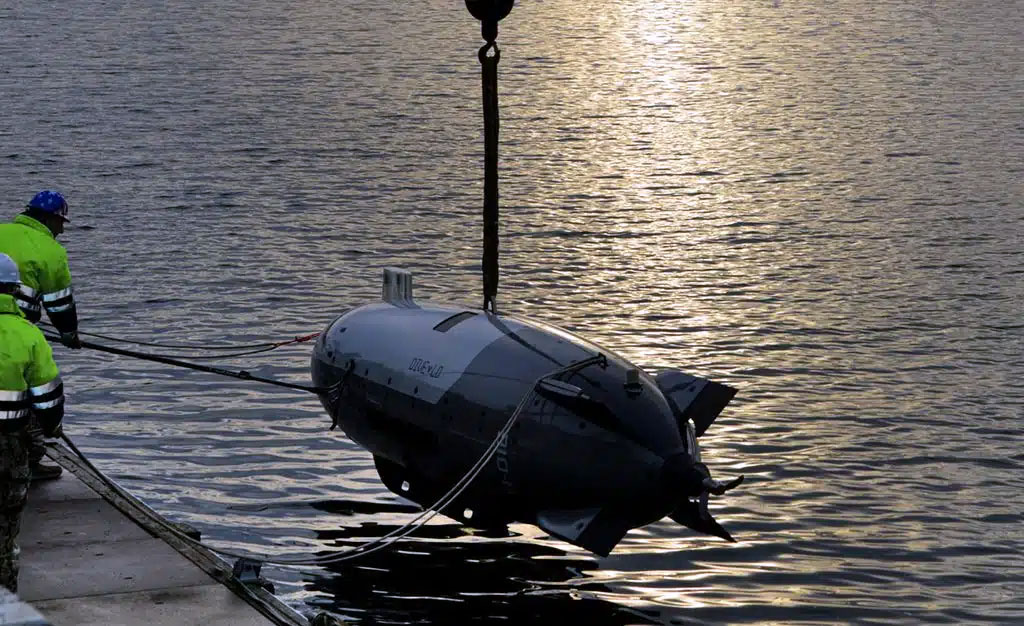
The claim represents the second reported Iranian capture of a U.S. underwater drone in September, following an earlier incident involving a much larger Dive-LD autonomous underwater vehicle.
On September 8, Iran said its forces had captured the Dive-LD at the entrance to the Strait of Hormuz. The IRGC subsequently released images of the vehicle and described it as an advanced U.S. military unmanned submarine.
The U.S. military acknowledged around that time that one of its underwater drones had malfunctioned while operating in regional waters but did not publicly confirm that Iran had captured it. Reuters footage from the incident showed the vehicle identified by Iran as a Dive-LD. (Reuters Connect)
The latest vehicle, the Remus 600, is substantially smaller than the Dive-LD. It is an autonomous underwater system designed to operate without a crew and can be configured for a range of underwater missions.
Available technical information indicates that the Remus 600 can operate at depths of up to about 600 metres and can remain underwater for extended periods, depending on its configuration and operating conditions.
READ ALSO:
- Kubwa Explosion: Vehicle Crashes Into Gas Outlet, Damages Nine Shops
- Newlywed Arrested After Allegedly Excreting 72 Cocaine Wraps at Enugu Airport
- Bauchi Police Arrest Four Over Alleged Gun-Making, Rape
The system can be equipped for missions including seabed mapping, mine detection and intelligence, surveillance and reconnaissance (ISR). Its modular design also allows different sensors and equipment to be fitted according to mission requirements.
Reports indicate that the vehicle is about 3.25 metres long and can operate autonomously for up to about 70 hours on a single charge, although actual endurance depends on mission configuration and conditions. (Seoul Economic Daily)
Iran’s latest announcement comes amid heightened military tensions surrounding the Strait of Hormuz, a narrow waterway connecting the Persian Gulf with the Gulf of Oman.
The strait is strategically important to global energy markets because of the large volume of oil and gas shipments that traditionally pass through it.
The ongoing conflict in the region has severely disrupted commercial shipping through the waterway. Iran has said it considers the strait closed and has warned against what it describes as dangerous or unauthorised activity.
In its latest statement, the IRGC again declared the Strait of Hormuz closed and said it would respond to what it considers dangerous movements or unauthorised passage. (ایرنا)
The United States has not publicly provided a detailed account of the latest alleged seizure, leaving important questions about the circumstances of the incident unresolved.
In particular, it remains unclear when and where the Remus 600 was deployed, what mission it was conducting, whether it was operating under direct U.S. military control at the time and how Iranian forces allegedly took possession of it.
Iran’s assertion that the vehicle was conducting espionage also remains an Iranian military claim and has not been independently established.
The seizure claim nevertheless highlights the growing importance of autonomous underwater vehicles in modern military and maritime operations.
Such systems can conduct surveillance, map underwater terrain, detect mines and gather information without placing personnel aboard a conventional submarine.
The reported Iranian effort to retrieve data from the Remus 600 could also provide Tehran with an opportunity to examine the vehicle’s sensors, navigation systems and other technologies if the equipment is intact.
The significance of any information Iran could obtain from the system would depend on the condition of the vehicle and the amount of recoverable data and technology.
The latest development comes as Iran-US tensions remain high over the Strait of Hormuz, with Tehran and Washington pursuing opposing positions on access to the waterway.
For now, the capture of the Remus 600 remains a claim by Iran, while the absence of a detailed U.S. account means that several aspects of the incident cannot yet be independently confirmed.
Iran Claims Capture of Second US Underwater Drone in Strait of Hormuz
International
Milei Slams UN as ‘Useless’ Over Falklands Dispute

Milei Slams UN as ‘Useless’ Over Falklands Dispute
Argentine President Javier Milei has criticised the United Nations, describing the organisation as “useless” and accusing it of failing to make progress on the longstanding Falkland Islands sovereignty dispute between Argentina and the United Kingdom.
Milei made the remarks on Wednesday, September 23, while addressing the 81st United Nations General Assembly in New York. He used the speech to renew Argentina’s claim to the islands, which Argentina calls the Malvinas, and demand a peaceful resolution to the dispute.
The Argentine president accused the UN of failing to act on resolutions concerning the Falklands and said the organisation had effectively “looked the other way” while the dispute remained unresolved.
Milei pointed particularly to UN General Assembly Resolution 31/49, adopted in 1976, which called on Argentina and the UK to refrain from unilateral actions that could complicate the sovereignty dispute while negotiations continued. The UN has repeatedly called on both countries to pursue negotiations for a peaceful and lasting settlement.
READ ALSO:
- Lagos Arrests Man Over Viral Video of Toddler Being Flogged
- Kwara Police Deny Shooting Motorcyclist at Oyun Bridge, Explain Viral Video
- Police Probe Alleged Self-Kidnapping of Adeleke’s Aide in Osun
The dispute has gained fresh attention amid tensions over offshore oil exploration around the Falkland Islands. Argentina has objected to British-backed oil activities in the area and recently introduced measures aimed at increasing sanctions against companies involved in activities it considers unauthorised.
The UK, however, maintains that the Falkland Islands are British and says the islanders have the right to determine their own future and develop their natural resources. The British government has also rejected Argentine pressure on companies involved in economic activities around the islands.
Milei reaffirmed Argentina’s position that the Falklands are Argentine territory and called for the UK to return to negotiations. He stressed that Argentina’s claim would be pursued peacefully.
The disagreement over the islands dates back decades and led to the Falklands War in 1982, when Argentina invaded the territory and Britain sent military forces to retake it. The conflict ended with Argentina’s surrender after about 10 weeks.
The islands have remained under British administration since then, while Argentina has continued to press its sovereignty claim through diplomatic and international channels.
Beyond the Falklands dispute, Milei used his UN address to criticise the organisation’s broader role in international affairs. He accused the UN of failing to adequately address collective security, human rights, conflict and terrorism, arguing that it had become ineffective in dealing with major global crises.
His latest remarks come as Argentina and the UK remain divided over sovereignty, negotiations and the development of natural resources around the islands. While Buenos Aires continues to demand negotiations over sovereignty, London maintains its position that the Falkland Islanders’ right to self-determination must be respected.
Milei’s intervention has therefore brought the Falklands dispute back into focus at the UN, with the disagreement now also linked to the increasingly contentious issue of offshore oil exploration.
Milei Slams UN as ‘Useless’ Over Falklands Dispute
-

 News3 days ago
Keyamo: ₦70,000 Minimum Wage No Longer Enough as Cost of Living Soars
-

 Sports2 days ago
AFCON 2027 Qualifier: Nigeria Fight Back to Beat Madagascar 2-1 in Uyo
-

 Entertainment3 days ago
Jetour Takes Adventure Beyond the Road, Brings Solar-powered Borehole to Ibeju-Lekki community
-

 News1 day ago
Fake Agency Scandal: Gbajabiamila Says He Never Betrayed Tinubu’s Trust
-

 metro2 days ago
Viral Anti-Obi Video: Lagos Police Move Against Inspector Osumah Frank
-

 metro2 days ago
Ogun Man Arrested Over Alleged Killing of Neighbour After ‘Rough Play’ With Child
-

 metro2 days ago
$155m Left Behind, $750m Liabilities: Anambra Govt Opens Fresh Obi Files
-

 metro1 day ago
Woman Busted With Alleged Alcohol Hidden in Water Pack at Ogun Prison