

International
With possible Iran-Israel ceasefire, Trump’s high-risk strikes may pay off
With possible Iran-Israel ceasefire, Trump’s high-risk strikes may pay off
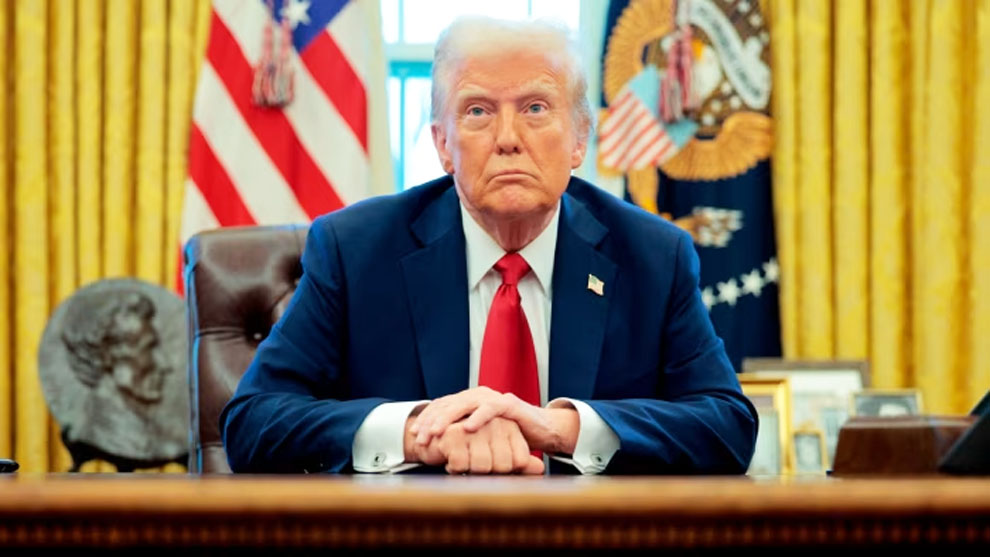
US President Donald Trump took a gamble by inserting the US into the worsening conflict between Israel and Iran, but it may have paid off – at least for now.
Trump announced on Monday evening that the two countries had agreed to a ceasefire that he said could lead to a lasting peace.
If the American president has in fact ended what he labelled the “12 Day War”, it would make for a significant step back from the brink of a conflict that seemed on the verge of engulfing the region, along with pulling America further in after US airstrikes hit Iranian nuclear facilities on Saturday.
“Provided that the Israeli regime stops its illegal aggression against the Iranian people no later than 4 am Tehran time,” Iranian Foreign Minister Abbas Araghchi said in a statement, “we have no intention to continue our response afterwards.”
It may not be called a ceasefire, but as the 04:00 deadline arrived in Tehran the Israeli attacks reportedly came to a halt. The two parties appear to be on the verge of turning down the heat.
This development comes after a tumultuous day in the region, when Iran followed through on its promise to retaliate for Saturday’s US strike.
According to early reports, all the Iranian missiles directed at the massive US base in Qatar were intercepted and there were no American casualties or damage.
During his address to the nation on Saturday night, President Trump warned that there would be an overwhelming American answer to any Iranian attacks on US interests. He promised that there were more targets that could be struck by American forces if needed.
READ ALSO:
- Abuja is safe for citizens, foreigners, says FG
- Edo Assembly invites CP over arrest of monarch
- $7.2bn fraud: EFCC arrests ex-NNPC chief financial officer
For more than 24 hours, the world waited to see what Iran would do. Once Iran had acted, attention swung back to the US president and, after a few hours, he had his first say.
“Iran has officially responded to our Obliteration of their Nuclear Facilities with a very weak response, which we expected, and have very effectively countered,” Trump posted on his social media site.
He said that Iran had gotten it out of their “system” and added that “perhaps Iran can now proceed to Peace and Harmony in the Region”.
While the damage is reported to limited, Trump seemed inclined to hold his fire in the hope that the Iranians would be willing to negotiate in earnest. And, behind the scenes, the White House says he was talking to Qatari mediators and Israeli Prime Minister Benjamin Netanyahu to work out the details of the ceasefire.
Trump’s weekend attack on Iran was a high-risk manoeuvre, but a scenario in which the pay-offs are already coming into view.
A similar dynamic played itself out in January 2020, when Trump ordered the targeted killing of Iranian Revolutionary Guard leader Qasem Soleimani in Baghdad.
Iran launched missiles at military bases in Iraq, injuring more than 100 American soldiers, but the US chose not to escalate. Cooler heads ultimately prevailed.
According to US media, in their latest attack on Monday, Iran fired a number of missiles at American bases equal to the total number of bombs US warplanes dropped during its weekend attack.
That, along with the advance notice Iran provided to the Qatari government prior to the launch, for which Trump said he was grateful, suggests the Iranians are seeking proportionality, not escalation.
For most of the day, Trump was more focused on the price of oil, American media coverage and a suggestion by former Russian President Dimitry Medvedev that an outside nation provide Iran with nuclear weapons.
US officials have stated that this president follows through on his threats, in contrast with some of his predecessors.
If Iran were to launch another round of attacks – and there were American deaths or significant damage – pressure would mount for Trump to respond.
For the moment, however, he is seemingly eyeing an off-ramp to more fighting and both countries appear willing to entertain it.
BBC
With possible Iran-Israel ceasefire, Trump’s high-risk strikes may pay off







International
Trump Links French Protests To Islam ‘Taking Over’ France
Trump Links French Protests To Islam ‘Taking Over’ France
US President Donald Trump has linked the ongoing student protests in France to what he described as “out of control” mass migration and an alleged attempt by Islam to take over the country.
Trump made the claim Tuesday in a post on his Truth Social platform, rejecting the view that the protests are primarily about education and school conditions.
The protests have spread across France since late September, with students, teachers and parents demanding better-funded schools, more teachers, improved infrastructure and action over overcrowded classrooms.
More than 250,000 people took part in demonstrations across the country on Tuesday, according to French authorities, while organisers put the turnout at about 450,000.
Trump wrote that the unrest was “nothing less than out of control mass migration” and claimed: “This isn’t about schools, this is about Islam wanting to take over a once great Country!”
READ ALSO:
- Troops Take Down Zamfara Bandit Kingpins Baban Love, Mai Zamani, Three Others
- FG Gives N250m To Families Of 37 Miners Who Died In NSCDC Custody
- Tompolo’s PBAT Movement Suspends Campaign Over Ondo Military Crash
However, there has been no established link between the protests and religious or identity-based demands. The grievances publicly cited by student groups have centred on teacher shortages, overcrowded classrooms, deteriorating school buildings and inadequate resources.
The demonstrations have nevertheless escalated in some areas, with clashes between protesters and police reported in cities including Paris, Strasbourg, Rennes and Toulouse.
French authorities said hundreds of people were arrested Tuesday, while hundreds of students, school staff and police officers have reportedly been injured during the unrest.
The protests have also become part of a wider debate over France’s public finances, government spending and political direction ahead of the country’s next presidential election.
Trump’s comments add an international political dimension to the crisis, as the US president continues to make migration in Europe a major focus of his political messaging.
French Foreign Minister Jean-Noël Barrot said France was working to present its own account of the unrest rather than allowing foreign governments and political actors to define the narrative around the protests.
For now, the central demands of the protest movement remain focused on education, even as the unrest has become increasingly entangled with broader political disputes over immigration, public spending and France’s future.
Trump Links French Protests To Islam ‘Taking Over’ France
International
Kemi Badenoch: I Don’t Want Migrants Turning UK Into Nation Of ‘Little Ghettos’

Kemi Badenoch: I Don’t Want Migrants Turning UK Into Nation Of ‘Little Ghettos’
UK Conservative Party leader Kemi Badenoch has warned against the emergence of what she described as “little ghettos” of separatist migrant communities in Britain, arguing that newcomers must integrate and respect the country’s culture and values.
Badenoch made the remarks while opening the Conservative Party’s annual conference in Birmingham, where she set out her vision for rebuilding the party and Britain.
Speaking about immigration and integration, the Conservative leader said she wanted Britain to remain a “high-trust” society in which people coming into the country accept the social expectations and responsibilities that come with living there.
“I don’t want lots of little ghettos of separatist communities where they are recreating the place that they came from. That will ruin the United Kingdom,” Badenoch said.
She added that Britain was “not a dormitory” or “a hotel” and argued that migrants who come to the country, including those who come primarily to work, should respect British culture and values.
Badenoch stressed that she was not advocating race-based citizenship, saying Britain had never operated such a system. However, she argued that British culture, norms and expectations remained important to maintaining social cohesion.
READ ALSO:
- Trump Approves Firing Squad Execution For Fort Hood Shooter Nidal Hasan
- Nigeria Climbs Africa Investment Ladder, Overtakes Four Nations
- Ogun Crash: Nine Die As Bus Collides With Truck On Ijebu-Ode-Ore Road
“It is not just about the values and the principles,” she said, arguing that the way people conduct themselves and the expectations they share also form part of British culture.
The remarks form part of Badenoch’s broader attempt to establish a tougher Conservative Party position on immigration, integration and national identity as the party seeks to regain political ground.
She has also acknowledged failures by previous Conservative governments to deliver promised reductions in immigration. In her newly published policy document, The Right Way, she argues that the party needs clearer principles and a more consistent approach to government.
The Conservatives are also proposing tougher conditions for migrants seeking permanent settlement in the UK, including changes to the rules governing indefinite leave to remain.
Badenoch’s comments have drawn attention because of the sensitivity surrounding immigration and multiculturalism in Britain, with critics arguing that language about migrant communities risks stigmatising minority groups.
Her supporters, however, say the emphasis on integration rather than race is intended to reinforce a shared national identity and social cohesion.
The debate comes as immigration remains a major political issue in the UK, with the Conservatives facing pressure from Reform UK over migration while the Labour government continues to face questions over legal and irregular immigration.
Badenoch, who became Conservative leader in November 2024, used the conference to present her party as a political alternative focused on economic growth, stronger national security, reduced bureaucracy and stricter immigration policies.
Her comments on migrant communities are expected to remain a significant part of the Conservatives’ political message as the party seeks to redefine its approach to immigration, integration and British identity.
Kemi Badenoch: I Don’t Want Migrants Turning UK Into Nation Of ‘Little Ghettos’
International
Trump Approves Firing Squad Execution For Fort Hood Shooter Nidal Hasan
Trump Approves Firing Squad Execution For Fort Hood Shooter Nidal Hasan
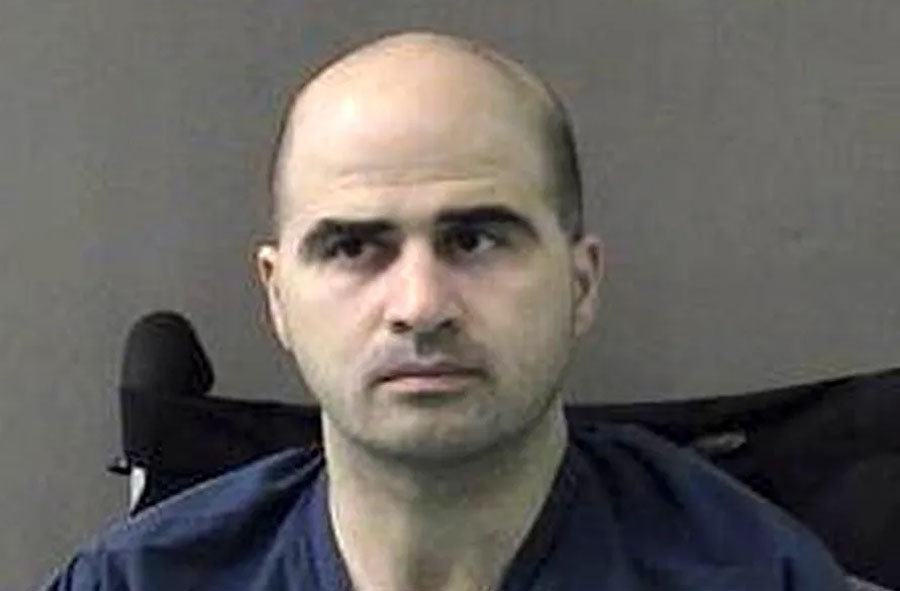
President Donald Trump has approved the execution by U.S. Army firing squad of former Army Major Nidal Malik Hasan, who was sentenced to death for the 2009 mass shooting at Fort Hood, Texas, that left 13 people dead and 32 others wounded.
The Pentagon announced the decision on Monday, saying Defense Secretary Pete Hegseth had recommended the firing-squad execution and Trump approved it.
Pentagon spokesman Sean Parnell said the Secretary of the Army would determine the date and location of the execution.
Hasan, a former Army psychiatrist, opened fire at a medical facility at Fort Hood on November 5, 2009, shortly before he was due to deploy to Afghanistan.
The attack killed 12 active-duty soldiers and one retired serviceman, while 32 others were wounded. Hasan was shot and seriously injured by a responding civilian police officer and has been partially paralysed since the attack.
READ ALSO:
- Nigeria Climbs Africa Investment Ladder, Overtakes Four Nations
- Ogun Crash: Nine Die As Bus Collides With Truck On Ijebu-Ode-Ore Road
- Gunmen Open Fire At Lagos Bus Stop, Kill NURTW Member, Injure Three
A military jury convicted Hasan in 2013 of 13 counts of premeditated murder and 32 counts of attempted premeditated murder and sentenced him to death.
During his court-martial, Hasan represented himself and did not call witnesses in his defence. He acknowledged that he carried out the shooting and argued that his actions were intended to protect Muslims whom he believed were being targeted by U.S. military operations.
Hasan has remained on military death row at the U.S. Disciplinary Barracks at Fort Leavenworth, Kansas, while pursuing legal challenges to his conviction and sentence.
Trump’s approval does not mean the execution will take place immediately. Further legal and administrative procedures remain, and Hasan could seek relief through the federal courts, potentially delaying the execution.
If carried out, Hasan’s execution would be an extraordinary event in the history of the U.S. military justice system.
The U.S. military has not carried out an execution since 1961, when Army Private John Bennett was hanged. The last known U.S. military execution by firing squad took place in 1945.
The decision also comes amid renewed debate in the United States over methods of execution. The Trump administration has expanded the available methods for carrying out federal executions, while recent difficulties surrounding lethal injection have intensified scrutiny of capital punishment.
Hasan’s case has remained one of the most prominent military death-penalty cases in the United States since the Fort Hood attack nearly 17 years ago.
The Army is now expected to determine when and where the execution will take place, subject to the remaining legal process.
Trump Approves Firing Squad Execution For Fort Hood Shooter Nidal Hasan
-

 metro2 days ago
Tragedy Strikes FMC: Medical Director Loses Two Daughters—A Doctor and a Pharmacist—Within 48 Hours
-

 metro2 days ago
Transporters Urge IGP Disu to Arrest Illegal Highway Tax Collectors
-

 Politics2 days ago
2027: Soludo Govt Accuses Peter Obi Of Plot To Destroy APGA
-
 metro2 days ago
Army, DSS, Amotekun Kill ISWAP Commander Planning Attacks in Southern Nigeria
-

 metro3 days ago
Kidnappers torture abducted corps members, slash ransom to N100m
-

 News2 days ago
BREAKING: Many Feared Dead as Helicopter Crashes in Ondo Community
-

 metro2 days ago
Grand Chief Imam of Oyoland Urges Rabitah 1964 to Regulate ‘Yorubaland’ Islamic Titles
-

 metro2 days ago
Ondo Air Tragedy: Soldiers, Families Among 32 Killed In NAF Crash