

Africa
Mali makes law granting president unlimited terms

Mali makes law granting president unlimited terms
Mali’s transitional president, General Assimi Goïta, has enacted a new law granting himself a five-year term in office that can be extended indefinitely, sparking growing concerns over the country’s future direction and the possibility of prolonged military rule.
The legislation, which was officially signed into law by Goïta, allows him to remain in power until at least 2030. According to the law, the transitional president will serve “for a term of five (05) years, renewable as many times as necessary, until the country is pacified.”
The measure was approved last week by Mali’s transitional legislative body, the National Transitional Council, with overwhelming support — 131 of 147 members voted in favour.
Observers say the move solidifies Goïta’s hold on power and marks a further retreat from democratic governance. The military leadership had earlier committed to transferring authority to a civilian government by March 2024 — a deadline that now appears to have been discarded.
General Goïta, aged 41, rose to power through two coups. In August 2020, he ousted President Ibrahim Boubacar Keïta, and less than a year later, in May 2021, he removed the interim civilian leadership. Following the second takeover, Goïta pledged to hold elections in 2022, but that promise has been repeatedly delayed.
READ ALSO:
- BAT rejects Trump’s amazing offer
- 1,000 PDP members shun ADC, defect to APC in Osun
- Adeleke’s moves to join APC not a problem – Ogunbiyi, Osun APC guber aspirant
“The adoption of this text is in accordance with the popular will,” said Malick Diaw, head of the transitional parliament. He described the legislation as “a major step forward in the rebuilding of Mali.”
Still, opponents warn the new law consolidates military dominance and suppresses dissent. In May, the junta dissolved all political parties, prompting alarm among rights groups and international observers. Experts caution that indefinitely extending Goïta’s rule may derail efforts to restore democratic governance and could heighten political instability.
The legislation also permits officials currently serving in the transitional government — including the president, cabinet members, and parliamentarians — to run in future elections.
Meanwhile, Mali’s security situation remains volatile. On Tuesday, militants affiliated with al-Qaeda and the Islamic State carried out coordinated attacks against military positions in multiple towns — the third large-scale assault on security forces in less than a month.
Since taking control, Goïta has shifted Mali’s foreign policy, ending military ties with France, deepening relations with Russia, and pulling out of the regional bloc ECOWAS, which had urged a swift return to civilian rule.
Mali has since joined forces with fellow military-led neighbors Burkina Faso and Niger to establish a new alliance designed to push back against external influence.
Mali makes law granting president unlimited terms










Africa
South Africa: 27 Killed, 26 Injured in Separate Mass Shootings
South Africa: 27 Killed, 26 Injured in Separate Mass Shootings
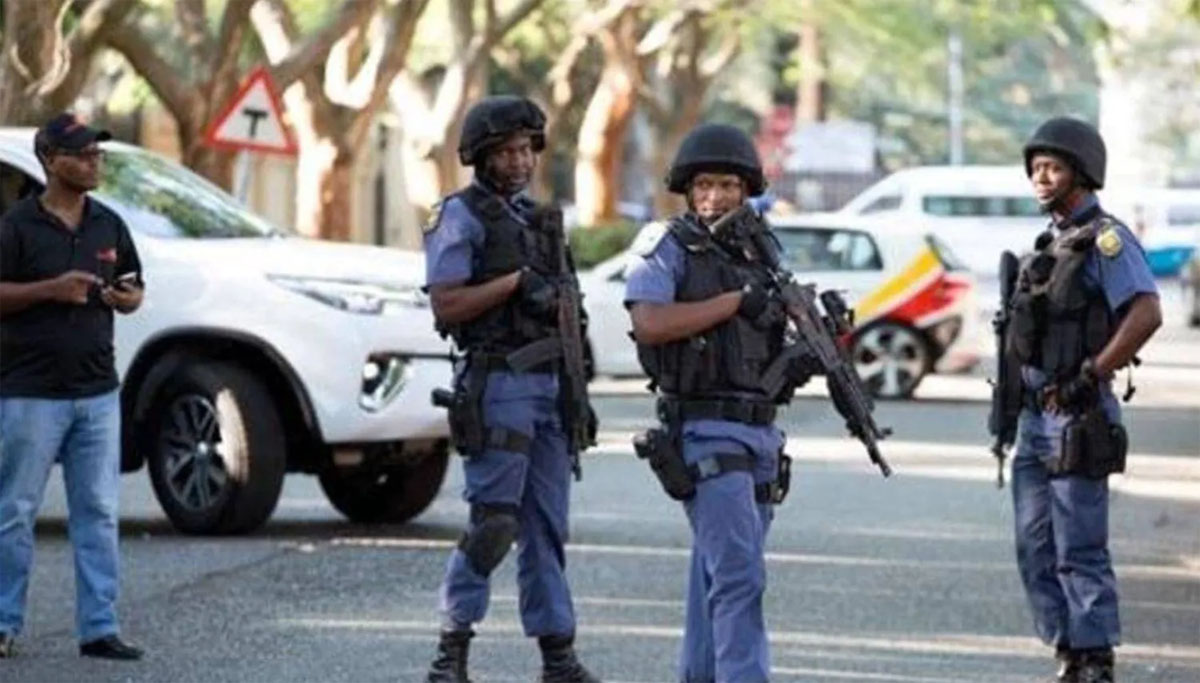
At least 27 people have been killed and 26 others injured in two separate mass shootings in South Africa, with police launching investigations and manhunts for the attackers.
The shootings occurred within hours of each other in Gauteng and Western Cape provinces, with the first attack reported at a tavern in Wedela, southwest of Johannesburg, on Saturday night, followed by another shooting at an entertainment venue in Lwandle, near Cape Town, in the early hours of Sunday.
In Wedela, police said gunmen opened fire on patrons at a tavern at about 9:30 p.m. on Saturday.
The South African Police Service (SAPS) said 17 people were killed in the attack, comprising 13 men and four women.
At least 15 people were also injured and taken to medical facilities for treatment.
According to the police, the attackers were armed with AK-47 rifles and pistols. They allegedly opened fire on people outside the tavern before entering the premises and continuing the shooting.
READ ALSO:
- Abuja Police Arrest Woman, Two Hotel Workers Over Man’s Body Dumped Under Bridge
- Bauchi Police Arrest 26-Year-Old Man Over Rape Of 50-Year-Old Woman
- 2027: Lawal Challenges Wike To Clarify Allegiance Over Rainbow Coalition
The gunmen also reportedly searched some patrons and took their mobile phones before escaping in two unidentified vehicles.
Police have launched a manhunt for the suspects, while investigations are ongoing to establish the motive for the attack and identify those responsible.
A few hours later, another shooting occurred at an entertainment venue in Lwandle, a township near Cape Town.
Police said gunmen entered the venue, which also operates as a shisanyama, a popular South African establishment serving grilled meat, at about 1:46 a.m. on Sunday and opened fire on people inside.
The attack left 10 people dead and 11 others injured.
Five victims reportedly died at the scene, while five others later died after being taken to medical facilities.
Western Cape police commissioner Lieutenant General Sizakhele Dyantyi established a multidisciplinary investigative team led by serious violent crime detectives to investigate the attack and pursue the perpetrators.
No arrests had been announced in connection with either shooting at the time of the latest police updates.
The two incidents came days after another deadly shooting in KwaMakhutha, south of Durban, where 11 people were killed and three others injured at a house party.
The KwaZulu-Natal attack occurred on Tuesday night, September 22, according to police.
Authorities said some of the victims were known to Crime Intelligence in connection with alleged illegal activities, although investigators had not established a definitive motive. Police said a possible conflict between rival groups was among the lines of inquiry.
The three shootings have renewed concerns over gun violence in South Africa, particularly deadly attacks involving groups of armed suspects.
However, authorities have not established any connection between the shootings in Wedela, Lwandle and KwaMakhutha. Investigations into the individual incidents remain ongoing.
South Africa: 27 Killed, 26 Injured in Separate Mass Shootings
Africa
South Africa: Two Women Arrested Over Alleged Rape, Kidnap of E-Hailing Driver
South Africa: Two Women Arrested Over Alleged Rape, Kidnap of E-Hailing Driver
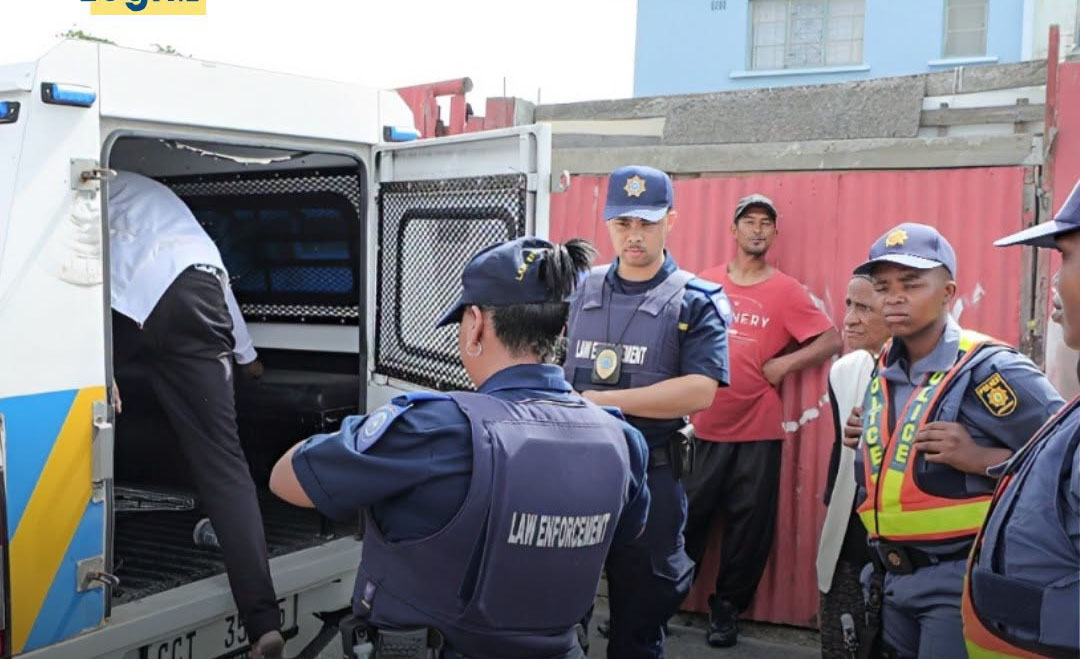
South African police have arrested five suspects, including two women and a teenager, after a 25-year-old e-hailing driver was allegedly kidnapped, sexually assaulted and held for ransom in Cape Town.
The incident occurred in the Steenberg area of Cape Town on Saturday, September 12, 2026, after the driver reportedly went to meet a woman he had previously connected with through his e-hailing business.
Police said the driver’s brother alerted authorities after the suspects allegedly contacted him and demanded R4,000 in cash for the driver’s release.
Following the report, Steenberg police launched an investigation and used a vehicle tracking device to establish the driver’s location.
The tracking information led officers to Southampton Road in Heathfield, where they found and rescued the 25-year-old driver.
According to police, the victim had met one of the female suspects about a week before the incident through his e-hailing business.
The two reportedly exchanged telephone numbers and remained in contact for several days before arranging to meet.
Police allege that when the driver went to meet the woman on Saturday, he was instead kidnapped by the group and taken to another location.
The two female suspects allegedly sexually assaulted the driver while the other suspects were involved in holding him captive.
The five suspects arrested comprise two women aged 23 and 34, two men aged 42 and 48, and a 16-year-old boy.
The teenager is the youngest of the suspects arrested in connection with the case.
The arrests followed the alleged ransom demand made to the victim’s brother. After receiving the report, police acted on information from the vehicle tracking system and were able to locate the driver and bring him to safety.
READ ALSO:
- Four-Storey Building Collapses in Enugu, Workers Trapped Inside
- 27-Year Wait Ends as Construction Begins on New Dutse Emir’s Palace
- Mother ‘sold daughter’s abuse videos for $300’: Nigeria child pornography case shocks nation
The suspects are expected to appear before the Wynberg Magistrate’s Court on Monday, September 14, 2026, where they are expected to face charges relating to the alleged kidnapping and rape.
The case has drawn attention to the safety challenges confronting e-hailing drivers, who regularly meet passengers, customers and other contacts at different locations, sometimes without knowing the people they are meeting.
The incident also highlights the fact that men can be victims of rape and sexual violence. Sexual assault can affect people of any gender, and the circumstances of an alleged attack should be treated with the same seriousness regardless of whether the victim is male or female.
However, the suspects have not been convicted of any offence. The allegations against them will be tested before the court, and they remain entitled to due process under South African law.
Police have not disclosed further details about the alleged sexual assault or indicated whether additional arrests are expected.
Investigations are continuing as authorities work to establish the full circumstances surrounding the alleged kidnapping, sexual assault and ransom demand.
The incident comes amid broader concerns about the safety of e-hailing operators in Cape Town and other parts of South Africa, with driver associations and operators repeatedly calling for stronger measures to protect drivers from attacks and criminal activities while carrying out their work.
South Africa: Two Women Arrested Over Alleged Rape, Kidnap of E-Hailing Driver
Africa
Murder of Nigerian Bishop in South Africa Sparks Outcry Over Unsolved Killings

Murder of Nigerian Bishop in South Africa Sparks Outcry Over Unsolved Killings
Family and community leaders rally for justice after 58-year-old cleric from Ekiti is assassinated in his Johannesburg residence.
To his congregation and loved ones, Nigerian clergyman Bishop Taiwo Michael Fakunle was a pillar of faith and moral guidance. But that sanctuary was violently shattered inside his Kensington home in Johannesburg when two gunmen forced their way inside and opened fire at point-blank range.
Hit more than seven times, the 58-year-old Ekiti native died at the scene, sending shockwaves across the Nigerian expatriate community and turning deep grief into a collective cry for justice.
Leading the push for accountability, the Nigerian Citizens Association South Africa (NICASA) voiced the community’s sorrow and growing frustration with violent crime.
READ ALSO:
- Jetour T2 PHEV Storms Abuja as Jetour Steps Up Nigeria Expansion
- Obi Explains Why He Won’t Step Down for Atiku in 2027
- ASUU Threatens Nationwide Strike Over Unpaid Salaries, Unimplemented Agreement
Association leaders stressed that Bishop Fakunle’s family, church, and compatriots deserve clear answers rather than empty reassurances.
Urging South African investigators to act with speed and transparency, the group warned authorities against letting the tragedy become another forgotten statistic in an endless stack of unsolved homicides.
As detectives at Jeppe Police Station proceed with the murder inquiry, community heads are calling for robust oversight from Nigerian diplomats while urging the public to exercise restraint.
Despite the intense anger surrounding the brazen attack, leaders emphasized that justice must be pursued through legitimate legal channels.
As mourners across South Africa and Nigeria remember the slain bishop, their message to investigators remains clear: the community will not look away until those responsible are brought before a judge.
Murder of Nigerian Bishop in South Africa Sparks Outcry Over Unsolved Killings
-

 metro1 day ago
Osogbo Food Bonanza Turns Nightmare as Discount Vendor Vanishes With Customers’ Millions
-

 International3 days ago
Iran Claims Capture of Second US Underwater Drone in Strait of Hormuz
-

 News3 days ago
Anambra Govt Demands Unreserved Apology From Peter Obi Over Debt Claims
-

 metro3 days ago
Passenger Dies After Jumping From Moving Bus In Lagos
-

 metro2 days ago
24 Hours in Darkness: Iju Ishaga Residents, Businesses Count Losses as Ikeja Electric Fails to Restore Power
-

 Education1 day ago
FG Releases 2026–2028 Approved Textbooks, Introduces QR Codes for Tracking
-

 News2 days ago
Agbede Mourns Baba Alado, Says Mushin Has Lost Pillar of Peace
-

 Politics3 days ago
APC Sweeps Enugu LG Election, Wins All 17 Chairmanship, 260 Councillorship Seats