

Africa
Electoral Malpractice: President Mahama Orders Immediate Recall of Ghana’s High Commissioner to Nigeria
Electoral Malpractice: President Mahama Orders Immediate Recall of Ghana’s High Commissioner to Nigeria
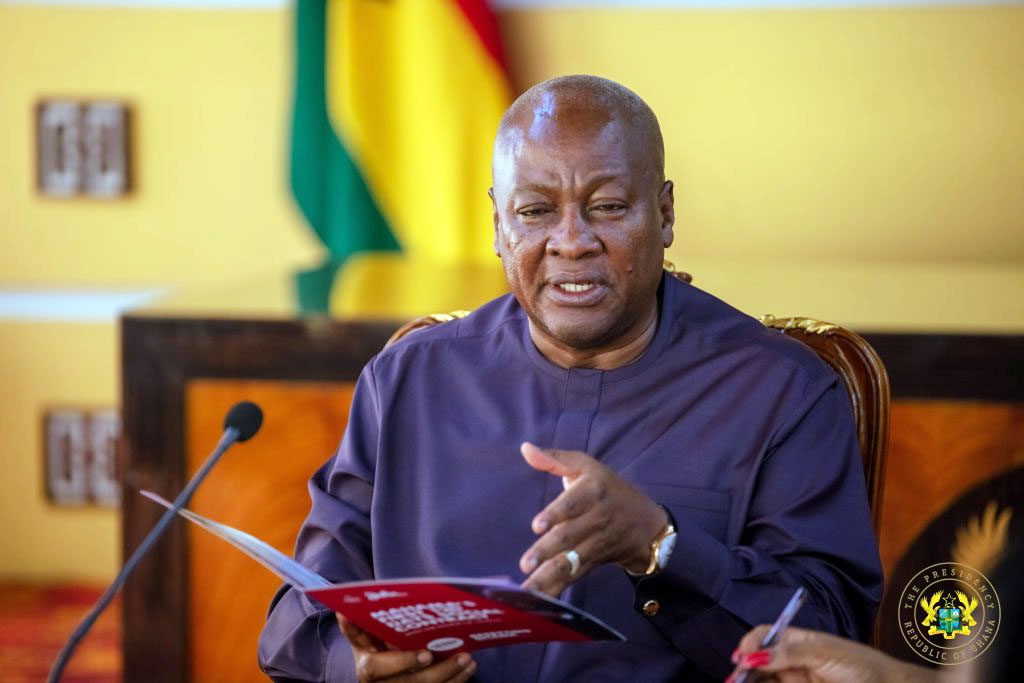
President John Dramani Mahama of Ghana has ordered the immediate recall of Mohammed Baba Jamal Ahmed, Ghana’s High Commissioner to Nigeria, following allegations of electoral malpractice linked to his participation in the National Democratic Congress (NDC) parliamentary primary in the Ayawaso East Constituency. The decision marks a significant development in Ghana–Nigeria diplomatic relations and reflects Accra’s efforts to safeguard diplomatic integrity and public confidence in its foreign service.
The directive, contained in a press statement signed by the Minister of Government Communication, Felix Kwakye Ofosu, was issued on February 7, 2026, and directs the Minister for Foreign Affairs, Samuel Okudzeto Ablakwa, to complete all administrative and diplomatic procedures to effect the recall.
The recall follows allegations that Baba Jamal engaged in voter inducement during the NDC’s parliamentary primary in Ayawaso East, where he emerged victorious with 431 votes amid claims that his campaign team distributed 32‑inch television sets and boiled eggs to delegates. Baba Jamal has defended the distribution of goods as gifts and goodwill gestures, insisting they were not meant to influence the outcome. Meanwhile, the NDC’s General Secretary, Fifi Fiavi Kwetey, described the alleged conduct as a serious breach of party values and announced a full-scale investigation, warning that violations could lead to sanctions, including possible cancellation of controversial internal elections.
READ ALSO:
- Nigeria’s Unity Under Scrutiny: IPOB, US Lawmaker Clash Over Christian Safety
- Historic Nigeria-UK Ties: Tinubu to Meet King Charles III in Landmark State Visit
- Gospel Artiste, Three Crew Members Found Dead in Lagos Studio
What sets Baba Jamal’s case apart, and what appears to have prompted Mahama’s swift action, is his status as a serving public official and Ghana’s top diplomat in Nigeria. The presidency stressed that although similar allegations were made against other aspirants, Baba Jamal’s dual role as a diplomat and candidate raised questions about the integrity and ethical standards expected of public office holders. President Mahama’s move reflects a broader emphasis on accountability and transparency in public service — a key component of his government’s Reset Agenda, which includes strengthening foreign service standards and performance accountability.
The recall takes place against the backdrop of historically close ties between Ghana and Nigeria, two influential West African neighbours with deep cultural, economic, and political links. Earlier diplomatic efforts, including President Mahama’s official visits to Nigeria to discuss regional security and cooperation, underscored a shared commitment to peace, diplomacy, and mutual interest within ECOWAS. Analysts say President Mahama’s decision may resonate both domestically and internationally as a demonstration of Ghana’s commitment to upholding ethical conduct among its diplomats, even if it means recalling a key envoy from a strategic post like Nigeria. The recall also signals caution in balancing internal political developments with bilateral diplomatic responsibilities.
Domestically, the decision could bolster Mahama’s credentials among critics who have urged stricter enforcement of codes of conduct for political appointees. In Ghana’s competitive party politics — particularly within the ruling NDC — perceptions of fairness, accountability, and adherence to ethical standards are increasingly central to public confidence. The controversy also highlights broader debates about election integrity, campaign conduct, and the role of public officials seeking partisan office, issues that could shape political campaigns leading up to future general elections.
Electoral Malpractice: President Mahama Orders Immediate Recall of Ghana’s High Commissioner to Nigeria








Africa
Tinubu Urges ECOWAS to Condemn Afrophobic Attacks in South Africa
Tinubu Urges ECOWAS to Condemn Afrophobic Attacks in South Africa
President Bola Tinubu has called on the Economic Community of West African States (ECOWAS) to present a united front against Afrophobic attacks in South Africa, urging the regional bloc to escalate the matter to the African Union and reminding South Africa of the sacrifices made by other African nations during its liberation struggle.
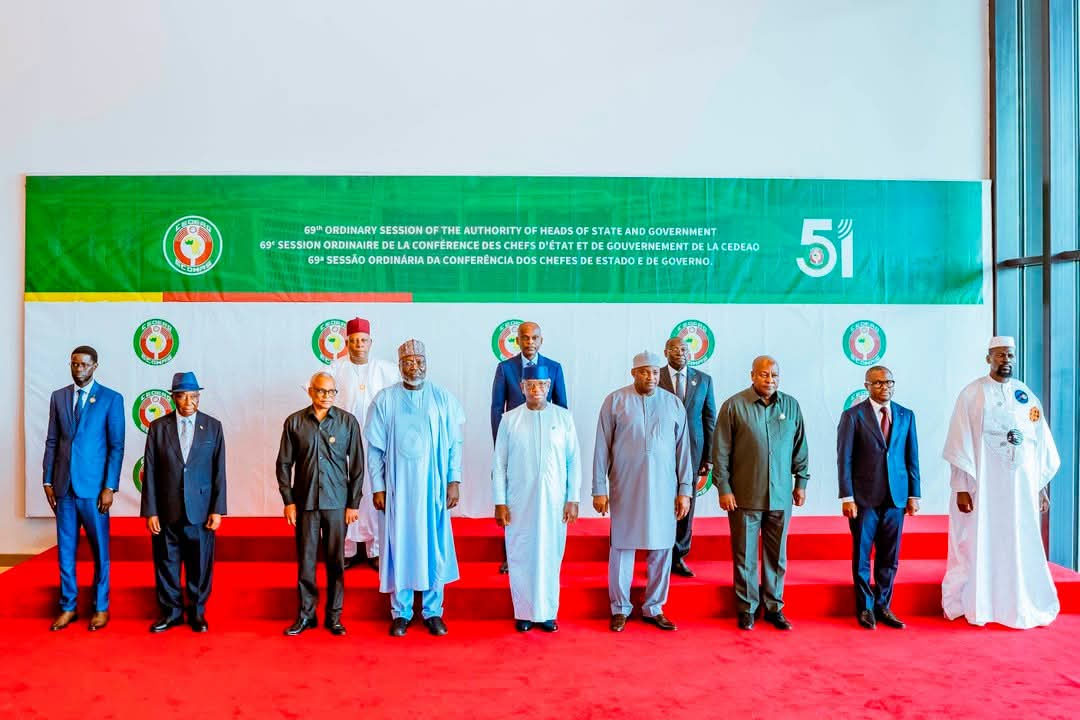
President Tinubu, represented by Vice President Kashim Shettima, made the appeal during the 69th Ordinary Session of the ECOWAS Authority of Heads of State and Government held on Sunday in Lungi, Sierra Leone. The summit, hosted by Sierra Leone’s President Julius Maada Bio, brought together regional leaders to deliberate on political, economic, and security issues affecting West Africa. The gathering provided a platform for leaders to address pressing concerns, including the rising wave of xenophobic violence targeting African migrants in South Africa, which has drawn widespread condemnation across the continent.
The President condemned, in the strongest terms, the recent attacks on Nigerian citizens and other Africans in the Republic of South Africa. “As already stated by His Excellency, the President of Ghana, ECOWAS should present a united voice in this condemnation,” Tinubu said through Vice President Shettima. He further urged the regional body to table the matter before the next session of the Authority of Heads of State and Government of the African Union, saying this would “send a clear message that this type of intolerance is totally unacceptable under any guise.” Tinubu reminded South Africa that the freedom it currently enjoys was the result of the sacrifices and liberation efforts of African countries, including Nigeria, which played a significant role in the anti-apartheid struggle. He disclosed that the Nigerian Government had already evacuated over 1,490 of its citizens from harm’s way in seven batches and was prepared to engage further on the matter. The evacuations, which began in June following the outbreak of violence, were completed with the arrival of 305 returnees in Lagos on July 15, bringing the total number of evacuees to 1,490. The attacks have strained diplomatic relations between Nigeria and South Africa, with Nigeria’s Minister of Foreign Affairs, Bianca Odumegwu-Ojukwu, previously hinting that Nigeria could consider retaliatory measures.
READ ALSO:
- Boko Haram Abducts Pastor’s Wife, Three Children in Borno
- 139 Million Nigerians in Poverty Despite Three Years of Tinubu’s Reforms – World Bank
- APC Chieftain Tells Atiku to Quit 2027 Race, Citing His Past Stance on Zoning
Beyond the security concerns, Tinubu reaffirmed Nigeria’s commitment to the principles enshrined in the ECOWAS Protocol on Democracy and Good Governance and other regional frameworks. He also assured that Nigeria remained committed to the setting up of the Counter Terrorism Force and the strengthening of the ECOWAS Standby Force “with a view to enhancing counter-terrorism cooperation, intelligence sharing, joint security operations, and preventive diplomacy to safeguard peace and stability across our region.” President Tinubu further warned against the temptation to tamper with constitutional term limits, stating that “the most effective tool against unconstitutional changes of government and mass protests that is capable of undermining good order is for us to enthrone good governance that delivers more tangible benefits to our citizens.” The President also declared Nigeria’s support for the newly developed ECOWAS Compact for the Future of Regional Integration, describing it as a framework that would strengthen cooperation among member states. He said the compact reflects the region’s commitment to rebuilding public trust in institutions and ensuring that regional integration remains relevant despite emerging geopolitical challenges.
Earlier, President Julius Maada Bio and the Chairman of ECOWAS explained that the summit was organised to reflect on where ECOWAS has come from and where the community must go next. Bio stated that West Africa must enter a new era with confidence, strategic clarity, and stronger determination to shape its own destiny, noting that “dependency narrows the very freedom that challenging partnership is meant to strengthen.” The President of the ECOWAS Commission, Omar Touray, reiterated the resolve of the regional body to strengthen governance and accountability across institutions and deepen policy coordination among member states. He said the commission had reintroduced democratic governance and electoral support mechanisms while strengthening regional responses to security and humanitarian challenges.
A major highlight of the summit was the signing of the Inter-Governmental Agreement for the African Atlantic Gas Pipeline project by the authority. The pipeline, estimated to cost $25 billion, is designed to transport up to 30 billion cubic metres of natural gas annually from Nigeria through 13 West African countries to Morocco, connecting to the European gas network. A dedicated ceremony will subsequently be held in Morocco, during which Morocco and Mauritania will jointly sign the agreement in the presence of Nigeria’s president. United Nations Deputy Secretary-General, Amina Mohammed, also addressed the summit, stressing that the international body has an obligation to support the region in combating terrorism and all forms of crime against humanity. “The United Nations Security Council must clearly hear the voice of Africa and stand behind the solutions that Africa offers,” she said, underscoring the importance of African-led solutions to the continent’s challenges.
Tinubu Urges ECOWAS to Condemn Afrophobic Attacks in South Africa
Africa
16 soldiers killed as terrorists attack military base in Niger Republic
16 soldiers killed as terrorists attack military base in Niger Republic
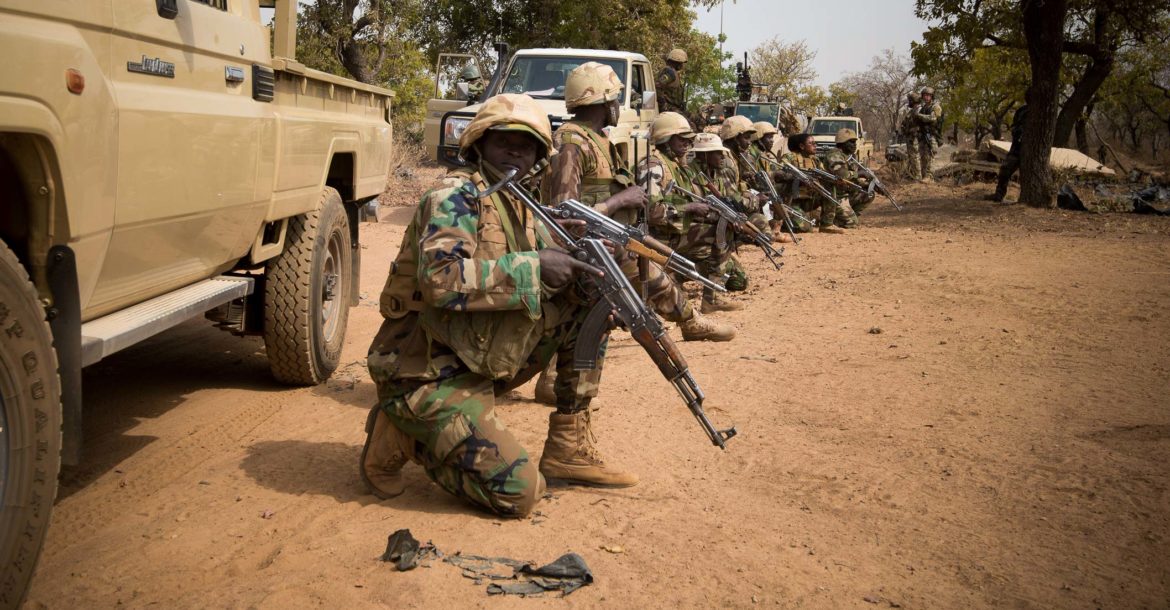
At least 16 soldiers have been killed and 23 others injured following a deadly terrorist attack on a military deployment in western Niger Republic, underscoring the persistent security crisis facing the Sahel nation despite ongoing military operations against armed extremist groups.
The attack occurred on Friday in the Téra area of Tillabéri Region, a volatile zone near the borders with Mali and Burkina Faso that has witnessed repeated assaults by militant groups linked to Al-Qaeda and the Islamic State.
According to information released by Niger’s state authorities, heavily armed assailants launched an attack on troops stationed in the area, triggering an intense gun battle that resulted in significant casualties among government forces.
Military officials said 16 soldiers lost their lives, while 23 personnel sustained injuries, including nine reported to be in critical condition. Authorities also stated that 15 suspected terrorists were killed during the confrontation.
Following the attack, security forces launched extensive clearance operations across the surrounding communities to track down fleeing attackers, recover weapons and restore security in the affected area.
Officials said military patrols and aerial surveillance have been intensified as part of efforts to prevent further attacks and reassure residents living in border communities that have repeatedly come under threat from extremist groups.
The Tillabéri Region remains one of the most dangerous parts of Niger due to its location within the Liptako-Gourma tri-border area, where militants affiliated with Jama’at Nusrat al-Islam wal-Muslimin (JNIM) and the Islamic State Sahel Province (ISSP) have carried out numerous attacks against security forces and civilians.
READ ALSO:
- Choirmaster Jailed 25 Years for Raping Teenager During Deliverance in Anambra
- New York Mayor Says He Is Exploring Possible Arrest of Netanyahu During UN Visit
- He Was Not Like That Before — Father Says 2-Year-Old Changed After Kidnapping
For more than a decade, Niger Republic has battled a growing insurgency fuelled by jihadist groups operating across the wider Sahel, with violence spreading across remote border regions despite regional and international counterterrorism efforts.
The security situation has remained a major challenge since the country’s military seized power in July 2023, promising to restore stability and strengthen national security. However, attacks on military positions and civilian communities have continued, raising concerns over the effectiveness of ongoing counterterrorism operations.
The latest assault comes amid broader instability across the Sahel, where neighbouring Mali, Burkina Faso and Niger continue to face coordinated attacks by armed extremist groups despite increased military cooperation under the Alliance of Sahel States (AES).
Security analysts warn that militant groups have continued to exploit porous borders, difficult terrain and weak state presence to launch cross-border attacks, recruit fighters and expand their operational networks across the region.
Humanitarian organisations have also expressed concern that the prolonged insecurity has displaced thousands of people, disrupted farming activities and worsened food insecurity in several communities across western Niger.
Authorities have assured citizens that military operations will continue until those responsible for the latest attack are neutralised, while investigations into the incident remain ongoing.
The latest attack highlights the continuing security challenges confronting Niger Republic and the wider Sahel, where governments are under increasing pressure to contain extremist violence and restore lasting peace.
16 soldiers killed as terrorists attack military base in Niger Republic
Africa
Ghanaian TikToker Jailed One Year Over False Ritual Claim Against President
Ghanaian TikToker Jailed One Year Over False Ritual Claim Against President
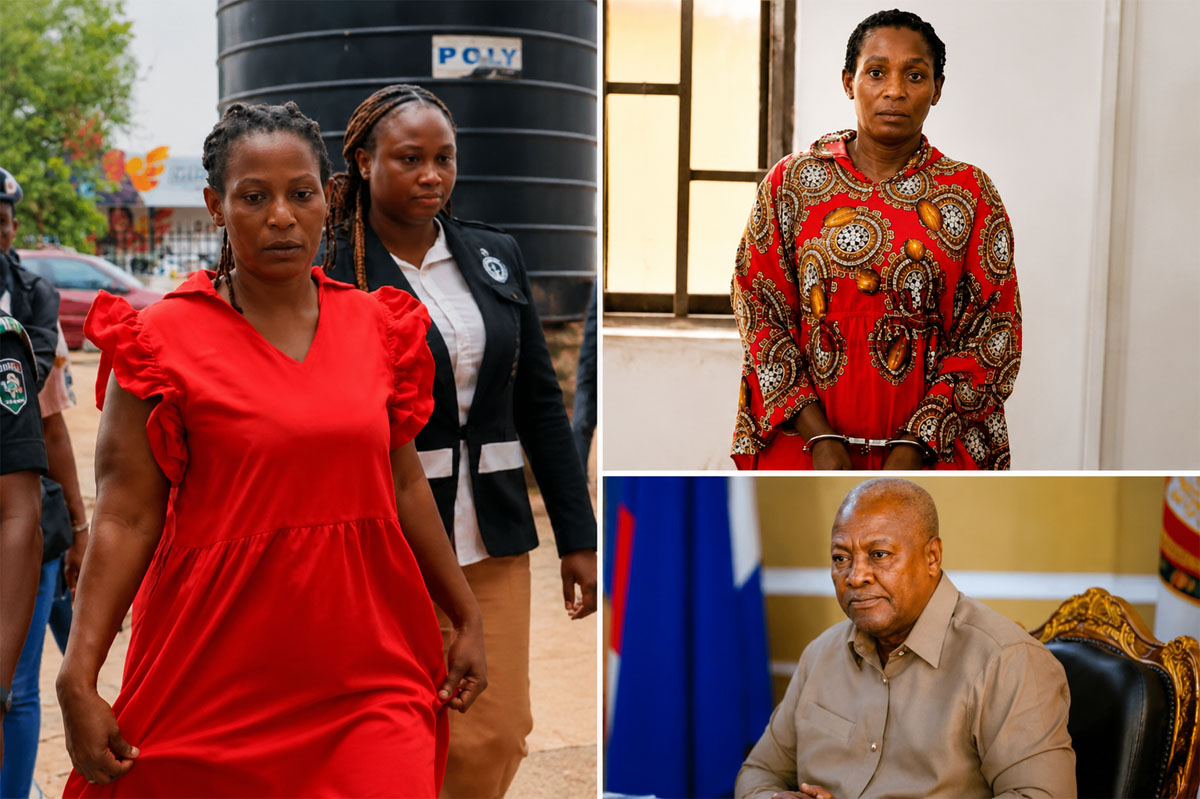
A Ghanaian TikToker, Camilla Alhassan has been sentenced to one year in prison after pleading guilty to charges of offensive conduct and publication of false news over videos she posted about President John Dramani Mahama. Camilla Alhassan, 43, was convicted on Thursday, July 16, 2026, by the Accra Circuit Court for sharing a series of videos alleging, without evidence, that President Mahama sacrificed 32 cows as part of a ritual to help him win the 2024 general election.
Prosecutors told the court that Alhassan, who has more than 70,000 followers on TikTok, published several videos between late June and early July 2026 containing false and offensive allegations against the President and First Lady Lordina Mahama. According to the prosecution, the widely circulated videos included claims that President Mahama performed ritual sacrifices involving 32 cows to secure victory in the 2024 polls. She also alleged that the government’s distribution of sanitary pads to flood victims was an attempt to conceal what she claimed he had done.
Court documents revealed that Alhassan made further unsubstantiated allegations, including claims that President Mahama had committed sexual offences, fathered a child as a result of excessive alcohol consumption, and was responsible for the deaths of former Presidents John Evans Atta Mills and Paa Kwesi Amissah-Arthur. She also made offensive remarks and threats against the lives of the President and First Lady, statements the police said were considered capable of disturbing public peace and undermining national cohesion. Alhassan was arrested on July 9, 2026, through an intelligence-led operation after police intercepted the TikTok videos. She initially appeared before the Accra Circuit Court on July 10, where she pleaded guilty to both charges.
READ ALSO:
- Man Uses Hot Pressing Iron on Daughter’s Private Part for Bedwetting
- I Spent N2.2m for Habila’s Strange Illness, Says Umahi
- Falana threatens to sue FG over judges’ luxury housing scheme in Abuja
Before sentencing, Alhassan claimed she was pregnant, which led the court to defer sentencing pending a medical examination. However, a medical examination conducted at the Police Hospital confirmed that she was not pregnant. During the sentencing hearing on July 16, her lawyer, Kwadwo Gyamfi Bonsu, said the court struck out the charge of electronic abuse, holding that it lacked jurisdiction to determine that offence. The court convicted her on the charge of offensive conduct and sentenced her to one year’s imprisonment with hard labour. According to her lawyer, the defence pleaded for a more lenient sentence, but the judge ruled that the increasing prevalence of similar offences warranted a custodial sentence to serve as a deterrent. Under the law, offensive conduct is a misdemeanour carrying a maximum sentence of three years, but the court imposed one year after the defence pleaded in mitigation.
The Ghana Police Service has indicated that steps are being taken to prosecute Alhassan on a separate charge of false communication under the Electronic Communications Act, 2008 (Act 775), before the High Court. The police have cautioned the public against using online platforms to spread false information, issue threats, or publish unlawful content, reminding citizens that while freedom of expression is guaranteed, that right must be exercised responsibly.
The sentencing has sparked significant debate in Ghana about misinformation on social media and the balance between criminal sanctions and freedom of expression. Senior lawyer Kofi Bentil, Vice-President of IMANI Africa, argued that Alhassan should not have been criminally prosecuted over comments she made about President Mahama. He stated that the statements in question could amount to defamation but the appropriate response should not be criminal prosecution. This is not the first time an influencer has been jailed in Ghana. In September 2025, popular TikToker David Kwodwo Prah Afful, known as “Kwame Nkrumah II,” was sentenced to seven months in prison after being convicted of making death threats against President Mahama and members of parliament. President Mahama had previously stated that his government was considering ways to “sanitise” social media, instructing authorities to track down and arrest those spreading misinformation and disinformation.
Ghanaian TikToker Jailed One Year Over False Ritual Claim Against President
-
 International2 days ago
Iran Had Detailed Intel on Trump’s Location Before Secret Turkey Escape
-
 News3 days ago
Tinubu Vows to Secure Nigeria, Declares Unity Non-Negotiable Amid Worsening Insecurity
-
 News2 days ago
FG to Attach 300 NYSC Corps Members to CNG Workshops for Skills Training
-

 metro3 days ago
Nigeria Needs Competent, Ethical Young Leaders, Says HAVEK Leadership Academy
-
 metro2 days ago
Seven Miners Killed in Plateau Mining Pit Collapse, Renewing Urgent Calls for Safety Reform
-

 News3 days ago
Ronaldo Marries Georgina Rodriguez in Intimate Portugal Wedding Ceremony
-

 metro3 days ago
Osun guber: Adeyanju petitions US, UK, Canada to sanction Fadahunsi over ‘kill accord’ comment
-
 International3 days ago
Pentagon Confirms 153 Civilians Killed in US Military Operations in 2025