

Politics
Akpabio Mocks ADC Collapse as Lawmakers Defect in Droves
Akpabio Mocks ADC Collapse as Lawmakers Defect in Droves
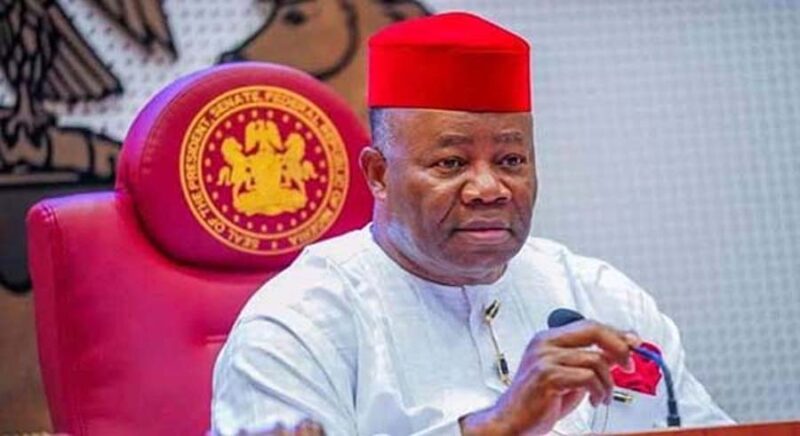
Senate President Godswill Akpabio has sparked fresh political debate after declaring the African Democratic Congress (ADC) “dead,” following a wave of high-profile defections in Nigeria’s National Assembly.
Speaking during plenary, Akpabio reacted to the growing list of lawmakers abandoning the ADC for other parties, including the National Democratic Congress (NDC) and the Labour Party Nigeria. Among the defectors is Victor Umeh, who formally resigned from the ADC, citing internal party crisis and “unending litigation.”
“Maybe all those defecting from ADC should just compile everything in one paper and bring it… because I think ADC is dead,” Akpabio said, drawing laughter and reactions from lawmakers.
He also mocked the frequency of party switching, questioning the trend of repeated defections within short periods. “How many times can you defect in a month? Once. But some have done three times,” he joked, suggesting a more coordinated system where lawmakers submit bulk defection notices instead of individual announcements.
READ ALSO:
- US Jury Convicts Man for Strangling Wife in Argument Over Laundry Detergent
- Bolaji Abdullahi: Peter Obi Ignorant of ADC Manifesto, Focused on Ticket
- Cultists Storm Lagos Wedding, Kill Bride’s Father, Hypeman
Akpabio further highlighted the case of Enyinnaya Abaribe, noting his movement from the All Progressives Grand Alliance (APGA) to ADC, and now to the Labour Party. The remark underscored a growing pattern of political realignment in Nigeria, as politicians shift alliances ahead of future elections.
The crisis within the ADC extends beyond the Senate. In the House of Representatives, no fewer than 16 lawmakers have also defected to the NDC and Labour Party. Those affected include Yusuf Datti, Uchenna Okonkwo, Thaddeus Attah, George Ozodinobi, and Lilian Orogbu, reflecting deepening instability within the party.
In his resignation letter, Umeh stressed that ongoing divisions and court battles made his continued stay in the ADC untenable. “I remain committed to making my contributions towards the development of our dear nation, but this time through the NDC,” he wrote.
Political observers say the wave of defections highlights leadership struggles in ADC, lack of internal cohesion, and uncertainty over the party’s future. The development is seen as part of a broader Nigeria political realignment ahead of 2027 elections, with lawmakers repositioning for stronger platforms.
Although the ADC leadership has yet to issue an official response, analysts warn that continued defections could significantly weaken the party’s national relevance and reshape the balance of power in the National Assembly.
Akpabio Mocks ADC Collapse as Lawmakers Defect in Droves








Politics
Yayi Ancestry Row: Stepmother Sets Record Straight as Legal Battle Looms

Politics
No Office of the First Lady Under My Presidency, Vows Omoyele Sowore
No Office of the First Lady Under My Presidency, Vows Omoyele Sowore
The AAC candidate pledges to slash governance costs by ₦4 trillion, abolish gubernatorial security votes, and end unconstitutional spending.
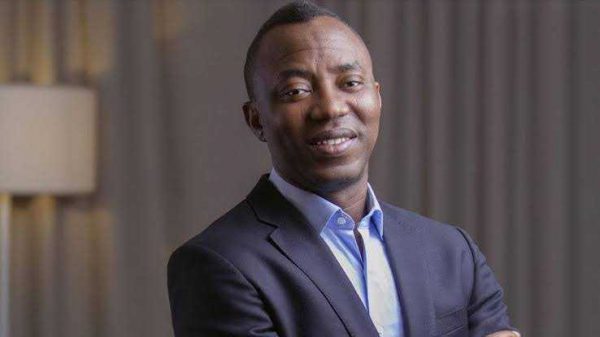
African Action Congress (AAC) presidential candidate Omoyele Sowore has pledged to eliminate the Office of the First Lady if he wins the 2027 presidential election, describing the ceremonial post as an unconstitutional drain on national resources. Sowore emphasized that Nigeria’s 1999 Constitution provides no legal standing or budgetary allocation for the spouse of the head of state.
Consequently, Sowore clarified that while entering the State House will not alter his marriage, his administration will refuse to assign official duties, staff, or public funds to his spouse.
Instead, he promised to champion women’s voices across all levels of government by appointing qualified female leaders to legitimate, constitutional offices rather than maintaining a ceremonial platform.
He condemned the continued allocation of taxpayer revenue to unofficial positions, arguing that such expenditures divert critical capital from infrastructure and social welfare.
Furthermore, the AAC candidate outlined a comprehensive austerity framework intended to slash the cost of governance by approximately ₦4 trillion. Central to this strategy, Sowore vowed to initiate constitutional amendments to outlaw discretionary security votes for state governors, a long-debated pool of funds historically shielded from public accounting.
Ultimately, he insisted that transferring these discretionary funds directly into state treasuries will help governments pay public sector wages consistently and fund vital public services.
No Office of the First Lady Under My Presidency, Vows Omoyele Sowore
Politics
Otti: I Won’t Become Political Godfather After Leaving Office
Otti: I Won’t Become Political Godfather After Leaving Office
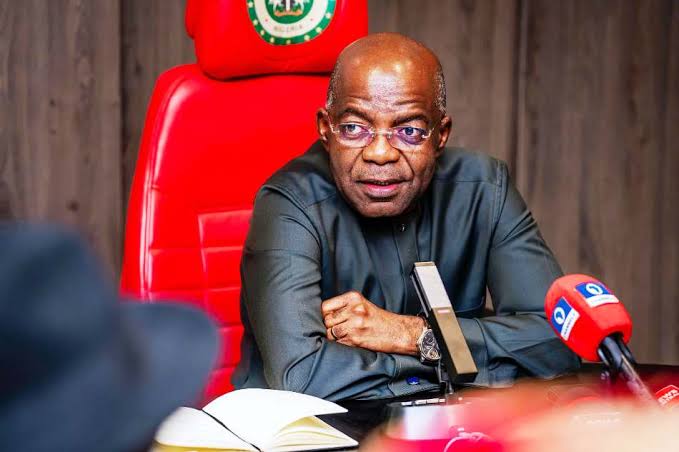
Abia State Governor Alex Otti has said he will not become a political godfather or impose a successor on the state after completing his second term in 2031.
Otti spoke in Umuahia on Thursday while receiving former Social Democratic Party governorship candidate Ngozi Johnson-Chukwunenye and her supporters into the Labour Party.
The governor said he would prefer a successor to emerge based on merit and competence rather than what he described as a “sit-tight” approach to political leadership.
“I don’t want to be a godfather, and I don’t tolerate godfathers” Otti said, adding that political stakeholders should consider those capable of doing the job before supporting a candidate.
He also reiterated that he does not plan to seek another elective position after his second term, saying younger people should be given opportunities to take up leadership roles.
Otti Highlights Youth Leadership Programme
The governor said his administration was already preparing young people for future leadership through initiatives such as the Abia Leadership Academy.
According to him, more than 1,080 people aged between 16 and 25 had recently graduated from the academy.
Otti said the programme was intended to help prepare a new generation of leaders rather than encourage prolonged political control by individuals.
Meanwhile, he said his administration would continue extending its development projects beyond Aba and Umuahia into other parts of the state.
He said the government initially focused on the two major cities before moving into the hinterland with additional projects.
Otti: I Won’t Become Political Godfather After Leaving Office
-

 International3 days ago
Islamic Council Condemns Attempted Attack on Holy City of Mecca
-
 News3 days ago
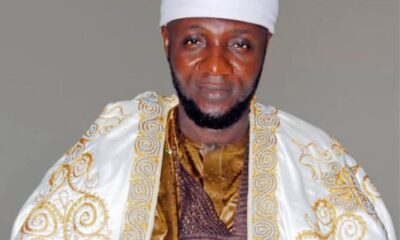
Keep Politics Out of My Office — Ogbomoso Grand Chief Imam Warns Politicians, Bloggers
-

 metro2 days ago
Niger Mosque Abductions: Terrorists Execute 30 of 500 Captive Muslim Worshippers
-

 Business2 days ago
Fuel Prices Climb to ₦1,500 per Litre Across Nigeria, Sparking Calls for Urgent Action
-

 News3 days ago
Blue Line Rail, Hospitals Get Boost as Lagos Approves ₦200bn Bond and Budget Reordering
-

 Entertainment3 days ago
BREAKING: Olu Jacobs Dies at 84, Atiku Mourns Cultural Icon
-

 News2 days ago
OAU Investigates Death of Final-Year Student as Police Begin Probe
-

 News19 hours ago
ECOWAS Biometric Card Expands as Seven Countries Begin Rollout