

Entertainment
Hausa Is ‘Looser,’ Igbo ‘More Tortuous’ – Wole Soyinka Ranks Nigeria’s Three Major Languages
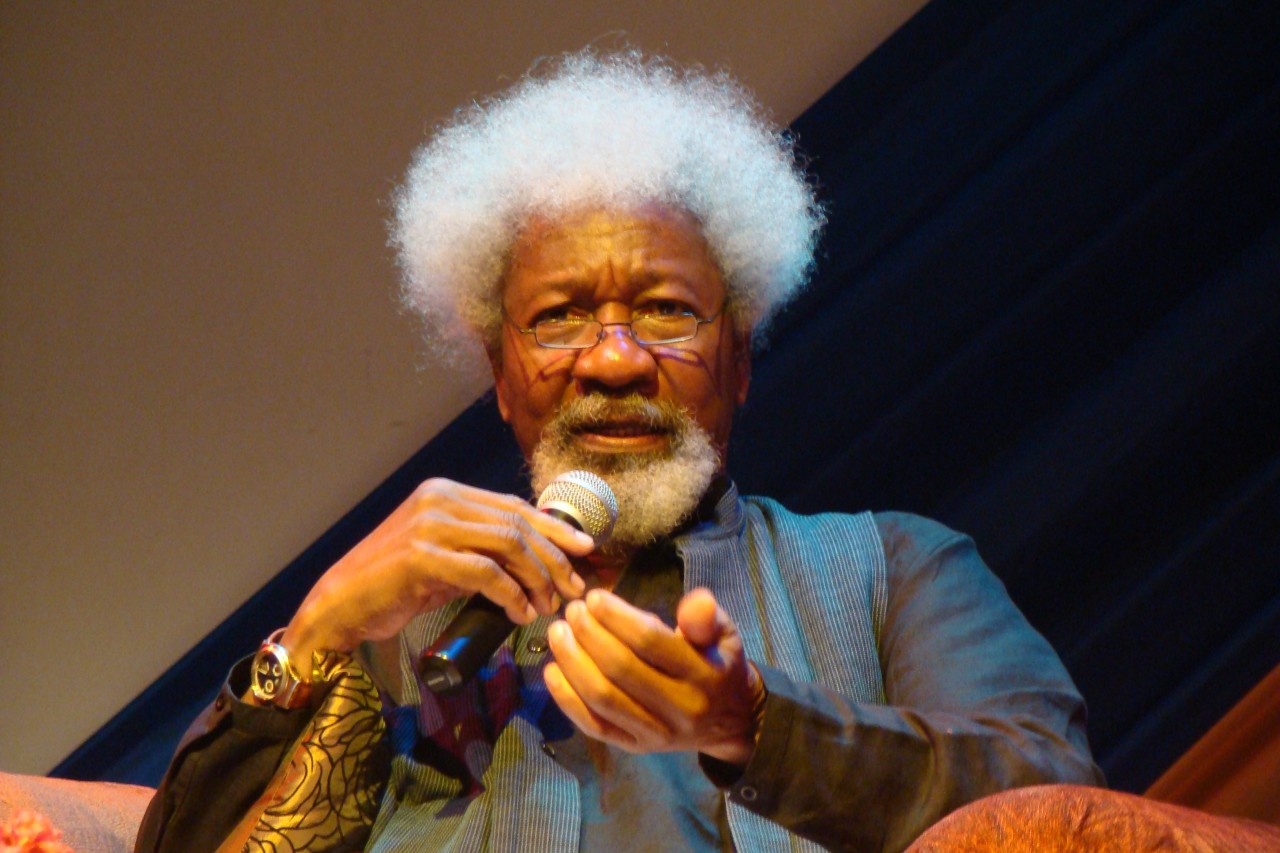
Hausa Is ‘Looser,’ Igbo ‘More Tortuous’ – Wole Soyinka Ranks Nigeria’s Three Major Languages
A resurfaced Oxford University video featuring Nobel Laureate Prof. Wole Soyinka has reignited global conversation about the complexity and beauty of Nigeria’s indigenous languages. In the clip, filmed during a media session with filmmaker Tunde Kelani, Soyinka delivers a characteristically witty yet authoritative take: Yoruba is a very difficult tonal language that he “wouldn’t recommend for my favourite scholar at all.” Far from dismissing the language, however, Soyinka praises its unmatched musicality—placing it above Hausa and Igbo in melodic richness—while warning that its three distinct tones can turn a simple butcher into a royal ruler with one slip of the tongue.
Drawing on his academic background in linguistics, Soyinka offered a comparative breakdown of Nigeria’s three major languages. He described Hausa as “looser” in its tonal demands, making it relatively more straightforward for learners. On Igbo, he noted that while it carries its own complexities, it occupies a middle ground. “Igbo, I think I would say, is a little bit more tortuous than Yoruba,” Soyinka stated. Yoruba, he concluded, is the most challenging due to its three tones (high, mid, and low), but also the most musical. “Nothing compares with the musicality of Yoruba,” Soyinka emphasized. “Yoruba sings, and some people are tone-deaf. It’s not their fault.” This musical quality is not metaphorical. Linguistic scholars confirm that Yoruba’s tonal system is so precise that talking drums (dùndún) can accurately replicate human speech patterns—a phenomenon rare among world languages. One academic study notes that the do-re-mi sol-fa heuristic is the preferred method for teaching Yoruba tones because “in a culture where drums can speak, it is unsurprising that a musical model filled a void” in Western linguistic concepts.
READ ALSO:
- Birthday Drama or Mischief? Funke Akindele Clears Air Over Pasuma ‘Snub’
- JAMB Declares Viral 394 UTME Result Fake, Warns Public
- 2027: NDC Invites Obi, Kwankwaso, Sets Two-Week Deadline for Defection
To illustrate the real-world consequences of tonal errors, Soyinka referenced his own 2011 satirical play, Alápàtà Àpáta. The plot hinges on a single tonal slip. A retired butcher named Alaba commissions a signboard reading “Alápàtà Àpáta” (Butcher of the Rock). However, due to a sign painter’s error and subsequent mispronunciation, the community reads it as “Alápàtá” —a title implying a royal or authoritative status, interpreted as “Ruler of Apata.” “A seemingly minor linguistic shift triggers a chain of comedic misunderstandings,” one analysis notes. The butcher, seeking only quiet retirement, suddenly finds his community attributing political power to him. Through this narrative, Soyinka explores how tone can be misinterpreted to create false authority, social hierarchy, and public distortion of reality—a sharp satire on corruption and perception in society. What began as a simple professional identifier evolves into rumors of political power, demonstrating the ease with which perception can be manipulated.
The resurfaced Oxford clip has sparked lively debate across social media platforms. Among Yoruba speakers, there is widespread pride in the language’s tonal complexity. Many describe their mother tongue as inherently “singing,” with accents that rise and fall like melody. Yoruba doesn’t just communicate meaning—it carries emotion, attitude, and cultural nuance in every syllable, aligning perfectly with Soyinka’s characterization. Some non-native speakers argue that exposure to Afrobeats and Nigerian music provides an accessible entry point to understanding Yoruba tonality. Global stars like Burna Boy, Wizkid, and Davido incorporate tonal phrasing into their lyrics, offering passive learning opportunities for international fans. Others acknowledge the steep learning curve, sharing anecdotes of embarrassing tonal mix-ups, from ordering the wrong food to accidentally complimenting someone’s livestock instead of their appearance. Linguists and language educators have also weighed in, noting that tonal languages require a different cognitive framework than non-tonal languages like English. One Cambridge-published study confirms that “the representation of tone has consequences for coarticulation”—meaning tones fundamentally shape how consonants and vowels are produced. This structural interdependence is what makes Yoruba both beautiful and demanding. Many commenters across ethnic lines have noted that all Nigerian languages arguably “outshine English in simplicity” when it comes to logical consistency. English, with its irregular spellings and arbitrary exceptions, presents a different kind of challenge—one that native English speakers rarely acknowledge when critiquing African languages.
Soyinka’s comments, delivered with humor, reflect a lifelong engagement with language as both artistic medium and philosophical subject. His works frequently draw on Yoruba oral traditions, proverbs, and tonal wordplay. The Alápàtà Àpáta example demonstrates how a purely linguistic observation can become a full theatrical exploration of power, perception, and truth. The video, originally from an Oxford University media session in collaboration with Tunde Kelani, has been widely shared on Instagram, X (Twitter), and other platforms, reintroducing Soyinka’s linguistic insights to a new generation of Nigerians and global audiences. As of this report, the clip continues to generate thousands of comments, shares, and reactions, proving that Soyinka’s observations remain as relevant and provocative as ever.
Hausa Is ‘Looser,’ Igbo ‘More Tortuous’ – Wole Soyinka Ranks Nigeria’s Three Major Languages












Entertainment
Shimmer and Style: Zendaya, Selena Gomez, and Colman Domingo Light Up the Emmys Red Carpet
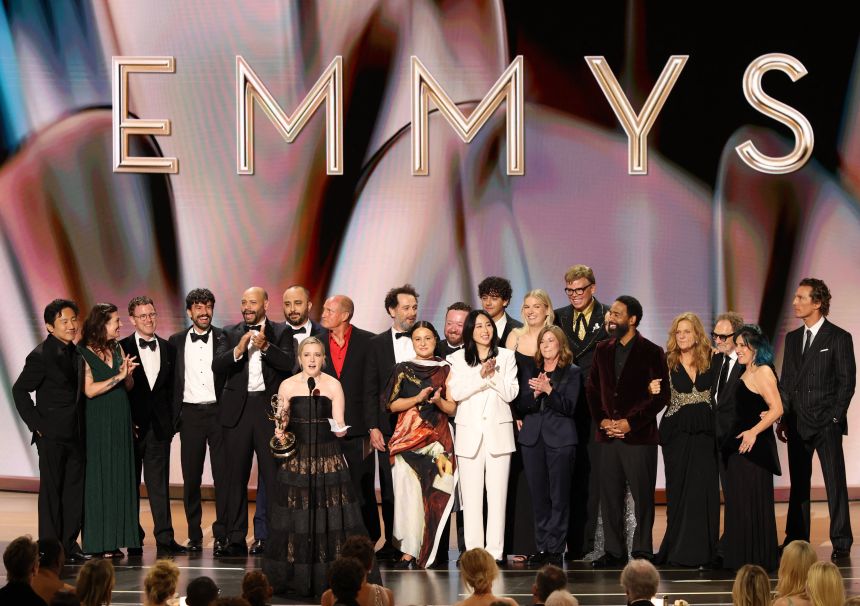
Shimmer and Style: Zendaya, Selena Gomez, and Colman Domingo Light Up the Emmys Red Carpet
From custom metallics to soft pastels and playful statuette cosplay, television’s top stars bring high fashion to Los Angeles
Top television stars gathered in Los Angeles on Monday evening for the annual Emmy Awards, showcasing an array of creative outfits and modern styles.
The ceremony, often described as television’s version of the Oscars, brought actors together at the Peacock Theater to celebrate the year’s best performances and share memorable fashion choices with fans worldwide.
READ ALSO:
- No Lives Lost as Responders Contain Dual Fire Outbreaks Across Lagos
- ‘I Was Never the Chosen One’ — Dembele Responds to Mbappe
- Plateau Attacks: Gunmen Kill Passengers, 13 Dead Across Three LGAs
Shimmering gold and silver fabrics were popular choices throughout the arrival walk. Zendaya chose an embroidered silver gown by Prada paired with diamond earrings, while Selena Gomez appeared in a fitted, floor-length gold dress by Louis Vuitton.
The host for the night, Mariska Hargitay, wore a bright red gown with a trailing design, attending alongside her daughter in matching styles that paid tribute to her mother, actor Jayne Mansfield.
Other guests chose calm, lighter colors such as soft lavender, sky blue, and gentle green. Actors Elle Fanning and Sarah Pidgeon selected simple, elegant slip dresses that focused on subtle beading and clean silhouettes.
Menswear also showed fresh variety, with Colman Domingo combining a tailored jacket with a colorful waist sash. Adding humor and fun to the red carpet, actor Meg Stalter appeared dressed as the winged Emmy trophy itself, bringing a lighthearted touch to the celebration.
Shimmer and Style: Zendaya, Selena Gomez, and Colman Domingo Light Up the Emmys Red Carpet
Entertainment
Celine Dion Makes Emotional Stage Comeback After Six Years
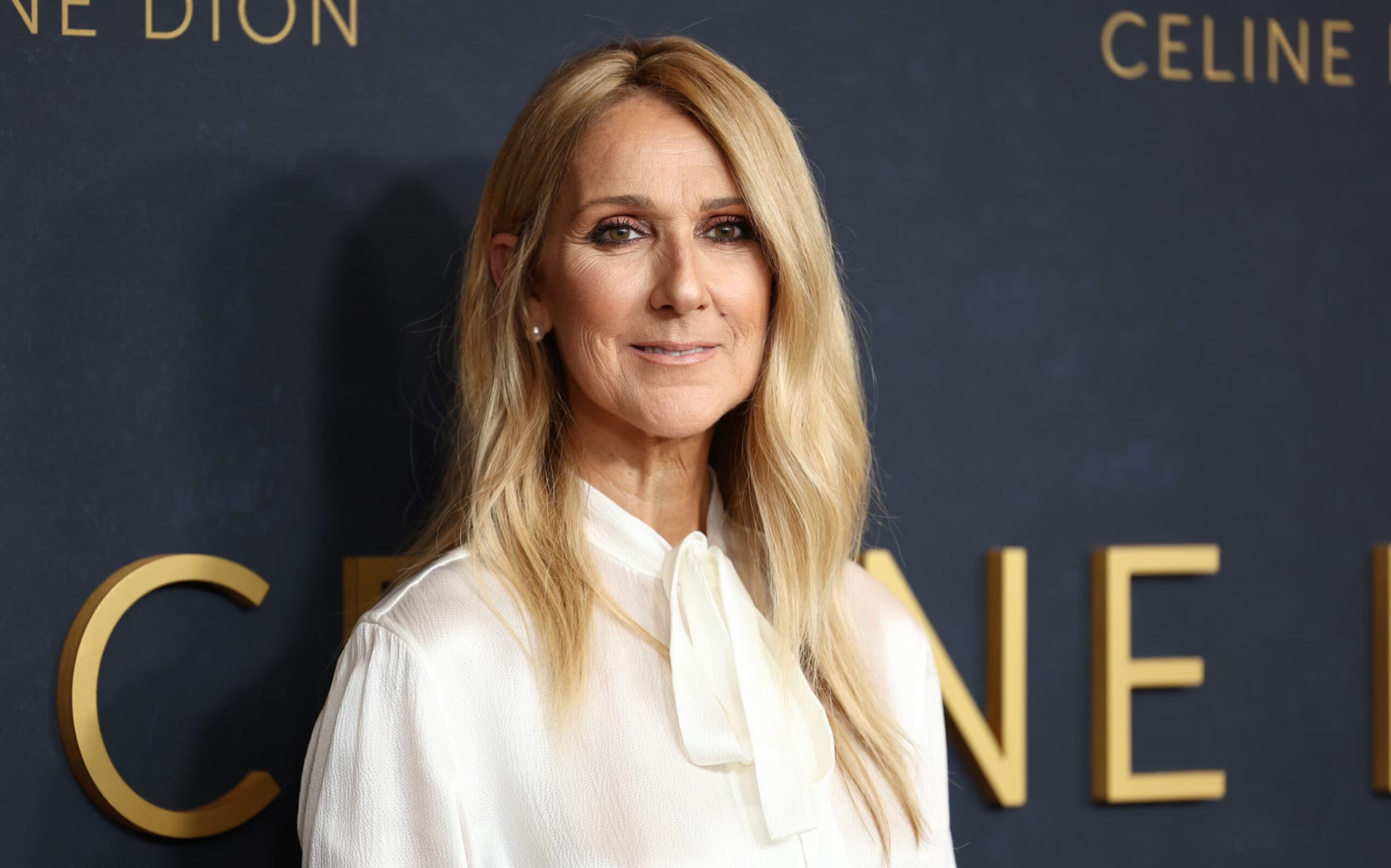
Celine Dion Makes Emotional Stage Comeback After Six Years
Canadian music superstar Celine Dion has made an emotional return to the concert stage after more than six years away, breaking down in tears as she reunited with thousands of fans during the opening night of her highly anticipated Paris residency.
The 58-year-old singer performed at the Plenitude Arena in Nanterre, near Paris, on Saturday, September 12, 2026, marking her first full concert since March 2020.
The comeback came after years of uncertainty surrounding Dion’s career following her diagnosis with stiff-person syndrome (SPS), a rare neurological disorder that causes muscle stiffness, spasms and other debilitating symptoms.
Dion revealed her diagnosis publicly in December 2022, explaining that the condition had affected her ability to walk, sing and perform.
The illness forced her to cancel concerts and eventually abandon the remaining dates of her Courage World Tour, leaving fans unsure whether she would ever return to the stage for a full concert.
But on Saturday night, Dion answered that question emphatically.
She opened the Paris show with her French-language song “On Ne Change Pas” and quickly became emotional as the significance of her return sank in.
The singer struggled to hold back tears before continuing with the performance, while the audience responded with loud cheers and applause.
Dion thanked her fans for standing by her throughout her difficult years away from the stage and recalled the promise she had made to return.
“I made a promise to come back and to be back on stage. Here I am singing for you, and singing for me,” she told the audience.
She also acknowledged the difficult journey that preceded her comeback, describing the road back to live performance as longer and harder than anticipated.
For Dion, the Paris concert was not simply the start of another series of shows. It represented the culmination of years of treatment, rehabilitation and determination to regain enough strength to perform again.
READ ALSO:
- DSS warns Osun churches, mosques, markets over alleged terrorist attack plot ahead of 2027
- ‘Tinubu Will Win Again in 2027’ — Charismatic Bishops’ Secretary
- Fake miracles, bogus grants: How clerics allegedly fleece Nigerians of millions
Reports on her preparations said the singer worked on her physical and vocal condition with a combination of therapy, medication, immunotherapy, Pilates and ballet training as she prepared for her return.
Her return to the stage comes two years after another major public comeback.
In July 2024, Dion performed “Hymne à l’amour” from the Eiffel Tower during the opening ceremony of the Paris Olympics, delivering an emotional performance that marked her first public singing appearance in several years.
That performance was widely seen as a sign that she was determined to return to music despite the challenges posed by her condition.
Saturday’s concert, however, was a much greater undertaking because it required Dion to perform an entire set before a packed arena.
She performed several of the songs that have defined her career, including “My Heart Will Go On,” “All By Myself” and “Because You Loved Me,” while also showcasing her French-language repertoire. (Reuters)
The concert launched a sold-out Celine Dion Paris 2026 residency, which has generated enormous interest among fans around the world.
The residency was initially announced in March with 10 performances scheduled for September and October. Additional dates were later added following overwhelming demand, bringing the current series to 26 concerts, with performances extending into 2027. (Reuters)
Dion’s official website announced the initial Paris engagement as a limited series beginning on September 12, 2026. (Celine Dion)
The demand for tickets was extraordinary. Reports said millions of fans attempted to gain access to the ticket sale, while the shows quickly sold out.
The singer’s return also sparked celebrations across Paris, with fans gathering outside her hotel and at other locations to express their excitement ahead of the concert.
Paris itself embraced the comeback, with fan events and activities organised around the residency, including a large karaoke celebration featuring Dion’s songs.
For many fans, the significance of the concert went beyond entertainment.
Dion’s absence from the stage had been closely linked to her health struggles, making her decision to undertake a demanding concert residency a major personal and professional milestone.
Her stiff-person syndrome diagnosis had brought an abrupt interruption to a career that had already established her as one of the world’s most successful recording artists.
The condition is rare and can cause progressive muscle stiffness and painful spasms. Dion’s health challenges eventually became so severe that she was forced to step away from touring.
READ ALSO:
- ‘Unacceptable’ — Arteta Furious Over Sunderland Penalty in Arsenal Win
- US Blockade Tightens As CENTCOM Redirects 100 Commercial Ships From Iranian Ports
- Five Islamic Clerics Abducted After Tinubu Re-Election Prayer At Yari’s Zamfara Residence
Her 2024 documentary, I Am: Celine Dion, also gave audiences a closer look at the impact of the condition on her life and career.
Despite the setbacks, Dion continued to work toward a return.
In April 2026, she released “Dansons,” a new French-language song written by renowned French songwriter Jean-Jacques Goldman, adding to the momentum surrounding her comeback.
Her connection with France has also remained particularly strong throughout her career. Dion has achieved major success with both French and English-language music and has repeatedly described France as an important part of her artistic journey.
That connection was evident during Saturday’s concert, which featured a substantial amount of French-language material.
The emotional reaction from the audience underscored Dion’s enduring popularity.
As she sang, fans joined in, applauded and celebrated the return of an artist many had feared they might never see perform a full concert again.
The comeback also reaffirmed Dion’s status as one of the best-selling music artists of all time, with a career spanning decades and global hits that have reached audiences across generations.
Among her most recognisable songs is “My Heart Will Go On,” the theme song from the blockbuster film Titanic, which became one of the defining recordings of her career.
Dion’s Paris return now opens a new chapter in a career that appeared uncertain just a few years ago.
While she continues to manage stiff-person syndrome, her first full concert in more than six years demonstrates her determination to remain connected with audiences and continue performing.
For the thousands who watched her return in Paris, the tears, cheers and standing ovations represented more than the comeback of a global music star.
They marked the return of an artist who spent years battling a rare neurological condition, stepped away from the stage and ultimately kept her promise to come back.
Celine Dion is back on stage — and her emotional Paris comeback has given fans around the world a powerful reminder of her enduring voice, resilience and connection with her audience.
Celine Dion Makes Emotional Stage Comeback After Six Years
Entertainment
Veteran Nollywood Actress Cries Out for Financial Help Over Cervical Cancer Battle
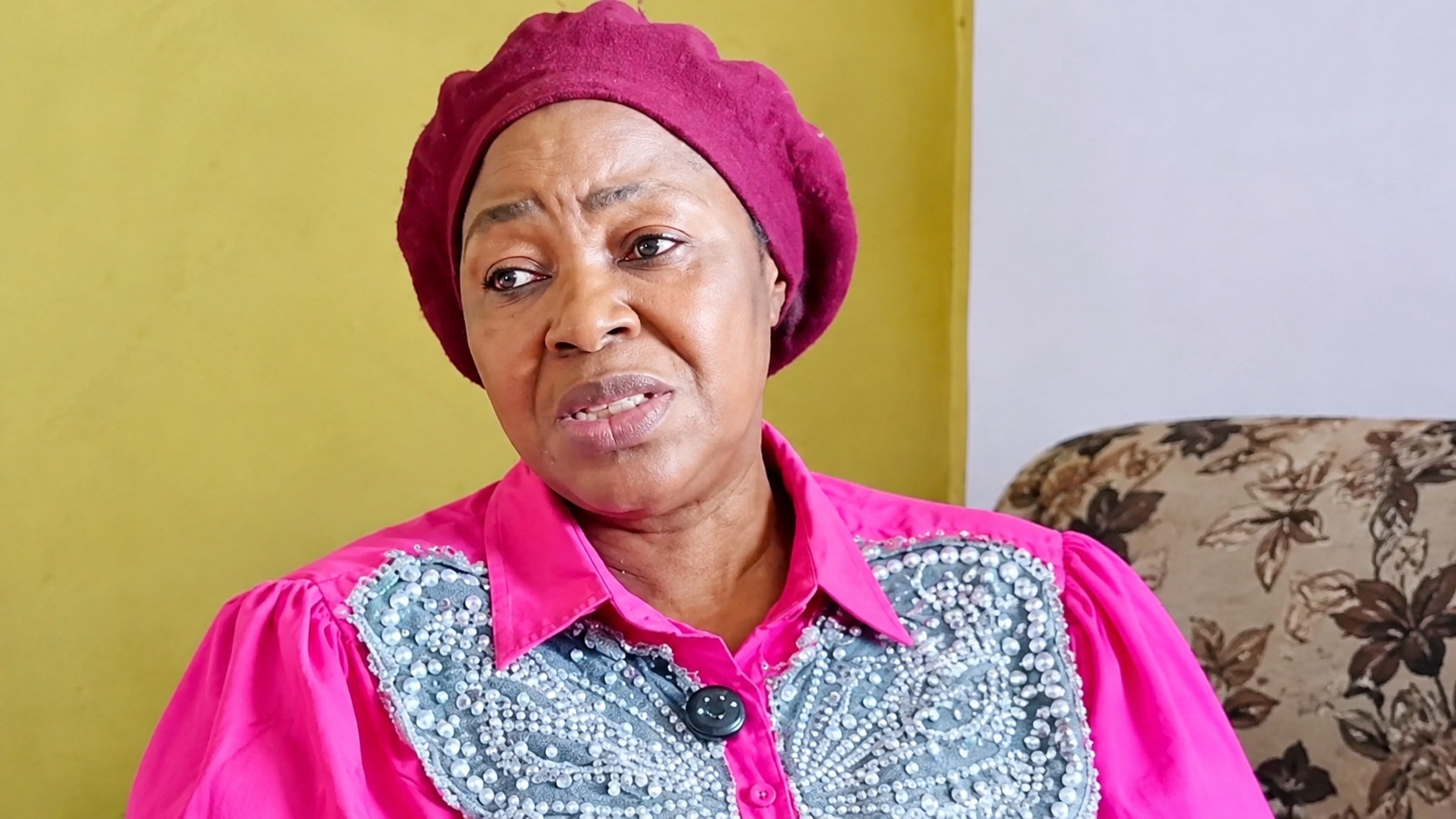
Veteran Nollywood Actress Cries Out for Financial Help Over Cervical Cancer Battle
Veteran Nollywood actress, Omotunde Ogundimu, has appealed to Nigerians and well-meaning individuals for financial assistance as she continues her battle with cervical cancer, a condition she says has subjected her to severe pain and prolonged treatment.
The actress, who has reportedly been battling the disease since 2024, made the emotional appeal as she struggles to raise the funds required to continue her medical treatment.
Ogundimu, known for her roles in several Nigerian movies and television productions, expressed concern over her worsening financial situation, saying the cost of treatment had become difficult for her to bear.
According to the actress, she is currently going through considerable physical and financial challenges and needs support to continue receiving medical care.
The veteran actress appealed to Nigerians to come to her aid, stressing that her immediate priority is to regain her health and overcome the illness.
Her plea has generated concern among fans and members of the Nigerian entertainment industry, with many expressing sympathy and calling for support for the actress during the difficult period.
Ogundimu seeks support to continue treatment
The actress’ disclosure has once again drawn attention to the enormous financial burden often associated with prolonged cancer treatment in Nigeria.
READ ALSO:
- MURIC Raises Alarm Over Alleged Religious Imbalance in NDA 78RC Admission
- Agunbiade fires back at Deji Yesufu: Don’t mistake Boko Haram for Islam
- Breaking the Cycle of Collective Guilt: When a Ruling Party Voice Backs Peter Obi
Cancer patients frequently require a combination of medical consultations, laboratory investigations, medications and other forms of treatment, which can place considerable financial pressure on patients and their families.
For Ogundimu, the challenge has reportedly persisted since her diagnosis and treatment began in 2024.
The actress is therefore seeking assistance from individuals, organisations, colleagues in the entertainment industry and other well-meaning Nigerians who may be able to contribute towards her continued treatment.
Fans rally around veteran actress
Following her appeal, messages of concern and encouragement have continued to emerge from members of the public who expressed their desire to see the veteran actress recover.
Ogundimu’s situation has also renewed discussions about the challenges confronting veteran actors, particularly those who may no longer have regular acting jobs but require substantial financial resources when faced with serious health conditions.
The actress’ appeal is coming at a time when several Nigerian entertainers have publicly sought financial assistance to cope with major medical challenges.
As Ogundimu continues her treatment, her supporters have urged Nigerians to offer whatever assistance they can and to keep her in their prayers.
Newstrends.ng wishes Omotunde Ogundimu strength and a successful recovery as she continues her battle with the disease.
Veteran Nollywood Actress Cries Out for Financial Help Over Cervical Cancer Battle
-

 News3 days ago
SERAP Threatens Legal Action Over ₦126bn INEC Electoral Funds
-

 Politics3 days ago
Five Islamic Clerics Abducted After Tinubu Re-Election Prayer At Yari’s Zamfara Residence
-

 Opinion3 days ago
‘Tinubu Will Win Again in 2027’ — Charismatic Bishops’ Secretary
-

 Politics1 day ago
2027: Northern Lecturers Back Tinubu, ASUU Disowns Endorsement
-

 metro2 days ago
Mother ‘sold daughter’s abuse videos for $300’: Nigeria child pornography case shocks nation
-

 Sports3 days ago
‘Unacceptable’ — Arteta Furious Over Sunderland Penalty in Arsenal Win
-

 News3 days ago
Petrol Subsidy: Presidency Rejects Atiku’s Plan, Says No Going Back
-

 International3 days ago
US Blockade Tightens As CENTCOM Redirects 100 Commercial Ships From Iranian Ports