

Education
BUK, Northwest University students demand prompt payment of NELFUND upkeep allowances

BUK, Northwest University students demand prompt payment of NELFUND upkeep allowances
Students of Bayero University Kano (BUK) and Northwest University Kano have called on the Nigerian Education Loan Fund (NELFUND) to expedite the payment of outstanding monthly upkeep allowances, saying prolonged delays are affecting their welfare, academic activities and ability to meet essential daily expenses.
The students said many beneficiaries are still awaiting several months of the ₦20,000 NELFUND monthly upkeep allowance, despite assurances that the outstanding payments would be processed.
The appeal comes amid growing concerns among student beneficiaries over delays in the disbursement of upkeep funds, which many depend on for transportation, feeding, accommodation and the purchase of books and other academic materials.
The President of the BUK Students’ Union Government (SUG), Abdulmudalib Kalli-Sherrif, said nearly 30,000 students at the university are benefiting from the NELFUND student loan scheme, which provides support for institutional charges and approved monthly upkeep expenses.
He explained that about four months of unpaid allowances accumulated because of a mismatch between BUK’s academic calendar and NELFUND’s payment schedule after the university’s academic session was extended.
“About four months’ backlog was created due to the mismatch of the calendars of BUK and NELFUND, which extended the session. NELFUND has updated its system and assured us that students will receive the outstanding allowances soon,” Kalli-Sherrif said.
He added that some beneficiaries had started receiving payments, with students in Batch A recently credited with ₦20,000, while others were still waiting for their outstanding allowances.
Kalli-Sherrif commended the Federal Government for introducing the NELFUND student loan programme, describing it as an important intervention that has reduced the financial burden of higher education for many students and their families.
READ ALSO:
- Tinubu tells 2027 rivals: We’ll wrestle ourselves to the finishing line
- Oshiomhole Just Revealed the Real Reason Obi Defeated Tinubu in Lagos
- Lawyers Sue Tinubu, AGF, Edo Gov Over Alleged Threat to Peter Obi’s Life
At Northwest University Kano, beneficiaries also expressed concern over delays in the payment of their upkeep allowances and appealed for a more reliable and transparent disbursement process.
A beneficiary and Building Technology student, Haruna Sani, said he recently received ₦20,000 but was still expecting payments for about two months.
“I received ₦20,000 last week, but I am still expecting payment for about two months. We were assured that the outstanding allowance may be paid soon,” he said.
Haruna urged NELFUND and relevant authorities to consider a more flexible arrangement for tuition support, especially for students who paid their institutional charges before their loan applications were approved.
He noted that some students who used personal or family funds to pay their fees before benefiting from the scheme were still waiting for refunds.
Another beneficiary, Hussaina Bashir of the Department of Educational Foundations, said delayed upkeep payments had made it difficult for some students to buy textbooks, course materials and other essential academic resources.
She appealed to NELFUND to ensure that approved allowances are released promptly and consistently so students can plan their academic and personal expenses.
The spokesperson for the Northwest University Kano SUG, Umar Ibrahim, said the union had received complaints from beneficiaries across different faculties.
He said the delayed payments were affecting not only students but also small businesses operating around the university, as many students had less money available for food, transportation and other daily needs.
Ibrahim called for the immediate payment of outstanding allowances and urged the Federal Government to review the ₦20,000 monthly upkeep stipend in view of rising living and transportation costs.
The Dean of Student Affairs at Northwest University Kano, Ibrahim Musa, confirmed that the institution had received complaints from students but clarified that the university does not disburse the allowances.
According to him, NELFUND pays approved upkeep funds directly into beneficiaries’ bank accounts, while the university may only become aware of successful payments after students receive transaction alerts.
Musa said the institution had engaged relevant authorities over the complaints and was informed that the delays were linked to the release and processing of funds for onward disbursement.
The development has renewed calls for stronger coordination between NELFUND, tertiary institutions and relevant government agencies to ensure that approved student loans, upkeep allowances and tuition-related refunds are processed without unnecessary delays.
Parents of beneficiaries have also welcomed the student loan initiative but expressed concern that delayed upkeep payments and refunds could place additional financial pressure on families.
One parent, Zulai Abubakar, said many families borrowed money or made significant sacrifices to pay school fees before their children were approved for the NELFUND loan.
She urged tertiary institutions to process refunds promptly after receiving institutional payments from the Fund.
Another parent, Muyideen Akorede, described the programme as a commendable intervention but warned that prolonged delays in refunds and upkeep payments could weaken public confidence in the scheme.
Fatima Sani, also a parent, said many students depend on the monthly allowance for transportation, feeding and the purchase of academic materials, adding that delayed payments could affect their ability to participate fully in academic activities.
The NELFUND student loan scheme was introduced to expand access to higher education by providing eligible Nigerian students with financial support for institutional charges and approved living expenses.
Students and parents are now urging NELFUND to improve communication with beneficiaries, provide clearer payment timelines and ensure that outstanding allowances are cleared promptly.
They said timely and predictable disbursement would reduce financial pressure on students and families, support academic participation and strengthen confidence in the government’s efforts to make higher education more accessible and affordable.
BUK, Northwest University students demand prompt payment of NELFUND upkeep allowances






Education
Alausa Warns States as Many Risk Losing $552m World Bank HOPE Education Fund
Education
Regnum Medical University Secures NUC Licence, Set to Boost Nigeria’s Healthcare Workforce

Regnum Medical University Secures NUC Licence, Set to Boost Nigeria’s Healthcare Workforce
Regnum Medical University, Anthony, Lagos, has received its operational licence from the National Universities Commission (NUC), clearing the way for the institution to begin training the next generation of medical and healthcare professionals in Nigeria.
The licence followed the university’s approval by the Federal Executive Council (FEC), marking a major milestone in efforts to expand access to quality medical education and strengthen the country’s healthcare workforce.
The NUC Executive Secretary, Professor Abdullahi Yusufu Ribadu, formally presented the licence to the university’s leadership, including the pioneer Vice-Chancellor, Professor Akin Osibogun; Chairman of the Board of Trustees, Mr Akinbode Agbaoye; and the Proprietor, Mr Chuks Ochonogor.
The university will commence academic activities with degree programmes in Medicine and Surgery (MBBS), Pharmacy (Pharm.D.), Nursing Science (B.N.Sc.), Medical Laboratory Science (BMLS), Physiotherapy (DPT) and Radiography (B.Rad.).
Professor Osibogun, who chaired the institution’s Planning and Implementation Committee before his appointment as pioneer Vice-Chancellor, is one of Nigeria’s most accomplished medical academics and administrators.
A Professor of Community Health, he is a Fellow of the Nigerian Medical Association (FNMA), the association’s highest professional honour, and was named a Distinguished Professor by the University of Lagos in January 2026.
He previously served as Chief Medical Director of the Lagos University Teaching Hospital (LUTH) from 2006 to 2014 and later as President of the National Postgraduate Medical College of Nigeria between 2022 and 2023.
Professor Osibogun is also a Fellow of the National Postgraduate Medical College of Nigeria (FMPCH) and the West African College of Physicians (FWACP), and has been honoured as a Distinguished Fellow of the National Postgraduate Medical College.
The Chairman of the university’s Board of Trustees, Mr Agbaoye, is a former Deputy Executive Secretary of the National Universities Commission, bringing decades of experience in university administration and regulation to the institution.
According to the university, Regnum Medical University is committed to attracting highly qualified medical educators and deploying innovative teaching technologies to produce competent, compassionate and globally competitive healthcare professionals.
The institution said it aims to contribute significantly to improving healthcare delivery in Nigeria by equipping graduates with the knowledge, skills and ethical values required to meet both local and international healthcare needs.
Education
Hoodlums Invade ATBU Female Hostel, Rob Students of Over 50 Phones, Valuables
Hoodlums Invade ATBU Female Hostel, Rob Students of Over 50 Phones, Valuables
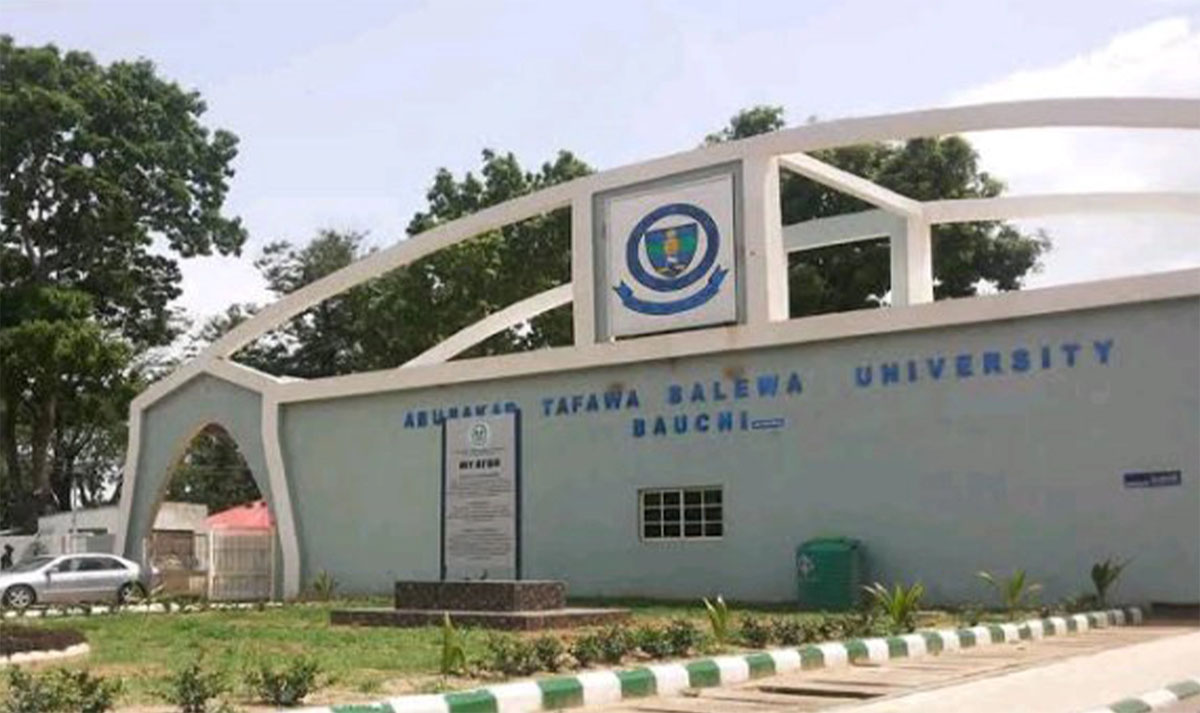
Armed hoodlums invaded the female hostel of Abubakar Tafawa Balewa University (ATBU), Gubi Campus, Bauchi, in the early hours of Monday, robbing students of mobile phones, cash and other valuables during a violent attack that has left students traumatised and heightened security concerns across the institution .
The attackers reportedly stormed the hostel at about 2 a.m., armed with machetes, knives and other dangerous weapons . An eyewitness, who pleaded anonymity, disclosed that the assailants broke into more than 10 rooms within the hostel, terrorising the students and carting away over 50 mobile phones and other valuables .
Recounting the incident, one of the students, Rejoice Duke, said the attackers operated swiftly and methodically, splitting up to cover more ground within the hostel. “At about 2 a.m. this morning, some guys came into the hostel and barged into different rooms. They split up and entered several rooms. They were asking whether you wanted your life or your phone. They made away with valuables, including mobile phones. The whole operation lasted about three minutes before they left,” she said .
Some of the students alleged that the suspects gained access to the hostel by cutting through the barbed-wire fence before using a ladder to climb onto the premises. The Gubi Campus lies near thick bushes and shares boundaries with nearby villages, making it vulnerable to criminal activities .
Some of the victims sustained injuries during the attack, with one female student reportedly suffering serious injuries after refusing to surrender her mobile phone. The eyewitness confirmed that the student who resisted was attacked by the armed hoodlums .
READ ALSO:
- Presidency tells Peter Obi to stop dreaming, insists he lost 2023 presidential election
- Kano Woman Arrested for Severing Boyfriend’s Manhood Over Plan to Marry Another
- PFIPC scandal: How Accountant-General exposed Adeniyi Adeyemi’s fake presidential agency
Expressing fear over what they described as a delayed security response, another student, Fauziya Abdullahi, voiced concerns that the campus remains vulnerable to more severe attacks. “Our main fear is that if they come in here and march us out, we do not want to become another Chibok girls. We do not want to be used for campaigns. We do not want people to say we had a bright future. We want to stay here and live our bright future. We cannot wait 45 minutes for security personnel to drive from town to this place,” she said .
The incident has since dominated discussions within the university community and on social media, with many calling for improved security around the hostel and the arrest and prosecution of those responsible. Students have also taken to various platforms to express their frustration over what they perceive as inadequate security measures on campus .
Confirming the incident, the university’s Director of Information and Public Relations, Zailani Bappa, said the situation was under control. He disclosed that the Vice-Chancellor, Prof. Ibrahim Hassan Garba, had visited the female hostel to sympathise with the affected students and reassure them of the university management’s commitment to their safety . “The incident has been reported to the police. They have deployed personnel to the campus, taken statements from the affected students and commenced investigation,” Bappa said . He added that the university has taken proactive steps with relevant security agencies to strengthen security on campus .
Speaking on the incident, the Bauchi State Police Public Relations Officer, Nafiu Habib, said the suspects had fled before officers arrived at the scene. He added that investigations are ongoing and efforts are underway to track down and arrest those responsible . The police have assured stakeholders that those responsible will be arrested and prosecuted .
Some affected students have urged the institution to replace the stolen items, arguing that its failure to deploy enough security personnel to the campus contributed to the incident. Others appealed to the university management to deploy more security personnel to the Gubi Campus, located on the outskirts of Bauchi metropolis .
The incident comes barely two weeks after students living off campus at Sa’adu Zungur University were reportedly robbed. In April, students residing off campus near the Federal Polytechnic, Bauchi, also experienced a similar attack . The Bauchi State Safe School Implementation Task Force was inaugurated in March this year to strengthen security in schools and prevent such incidents. However, following the recent attacks, many residents are calling for more proactive security measures to better protect students and educational institutions across the state .
Hoodlums Invade ATBU Female Hostel, Rob Students of Over 50 Phones, Valuables
-

 metro2 days ago
NDLEA intercepts ₦10bn worth of cocaine, Loud, opioids in Lagos
-

 Sports2 days ago
Super Falcons recover stolen cash after hotel theft suspect confesses
-

 Railway3 days ago
Oyetola, VP’s aide, Opeifa to drive discussions at 2026 TCAN Transport Summit
-
 metro24 hours ago
Kano Woman Arrested for Severing Boyfriend’s Manhood Over Plan to Marry Another
-

 Politics3 days ago
Why Buhari refused to publicly endorse Tinubu before APC primary – Babachir Lawal
-

 metro2 days ago
Gunshots, Teargas Rock Osun Motor Park as Thugs Defy Adeleke’s NURTW Suspension Order
-

 metro2 days ago
MURIC Tells Adeleke to ‘Pack Your Dancing Kits’ Ahead of Osun 2026 Election
-

 Education2 days ago
Kogi Poly Suspends 7 Lecturers Over Sex-For-Marks, Handout Sales Amid Cultism Crisis