

Politics
Obi Explains Why He Won’t Step Down for Atiku in 2027

Obi Explains Why He Won’t Step Down for Atiku in 2027
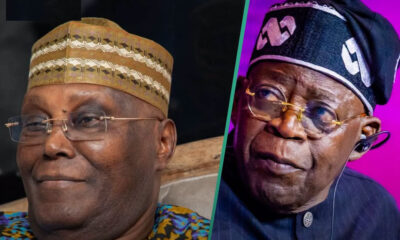
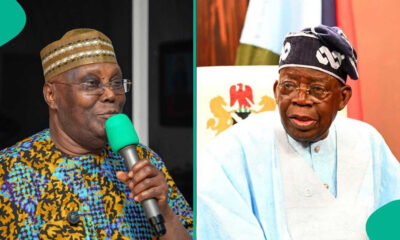
Presidential candidate of the Nigeria Democratic Congress (NDC), Peter Obi, has explained why he is not prepared to step down for his African Democratic Congress (ADC) counterpart, Atiku Abubakar, ahead of the 2027 presidential election, saying any decision on a possible opposition alliance must now be taken by the political parties rather than individual candidates.
Obi said the issue was no longer simply about whether he or Atiku would personally make way for the other, stressing that both politicians are now presidential candidates of separate political parties with their own structures and interests.
The former Anambra State governor made the remarks during an interview with Arise Television, where he discussed the 2027 election, opposition cooperation, the economy, national unity, security and governance.
Asked whether he would step down for Atiku, Obi said the political circumstances had changed because both men now represented different parties.
“Do you know where we are now? Where we are now is that I’m a candidate, my leader Atiku is a candidate of another party, so you are talking about two parties coming together; it’s no longer me or me, as you are now talking about parties coming together,” Obi said.
He explained that with different opposition parties already having their own candidates and political structures, any agreement would have to be negotiated at the party level.
“All those parties have candidates. So, it is a discussion. It is no longer me, as Peter, talking. It is like a situation where two corporations are trying to come together. It is no longer something where the two CEOs go for a drink and say, ‘We are going to work together’. They need to look at how to bring these two corporations together,” he added.
The comments come amid continuing efforts by opposition politicians to forge a single political platform or consensus arrangement capable of challenging President Bola Ahmed Tinubu and the ruling All Progressives Congress (APC) in the 2027 election.
READ ALSO:
- ASUU Threatens Nationwide Strike Over Unpaid Salaries, Unimplemented Agreement
- FG to Give Students 100MB Free Data Daily From October 1
- Two Arrested in London Over Suspected Links to Iran Intelligence
The opposition coalition initially generated expectations that Obi, Atiku and other political leaders could work together after the coalition adopted the ADC as its platform in 2025.
The political arrangement, however, did not result in Obi and Atiku contesting the 2027 presidential election on the same platform.
Obi subsequently emerged as the NDC presidential candidate, while Atiku became the ADC presidential candidate, setting the stage for both former allies to pursue separate presidential bids.
Their separate candidacies have since fuelled speculation over whether either politician could eventually step down in favour of the other as part of efforts to produce a single opposition candidate.
Obi’s latest comments, however, suggest that he does not view the matter as a personal decision to surrender his presidential ticket to Atiku.
Instead, he argued that any possible merger, alliance or consensus arrangement would require negotiations among the political parties involved, including discussions on how their different structures and interests would be accommodated.
The NDC candidate was also asked whether he would accept the position of vice-president if an agreement was eventually reached with Atiku.
Obi denied reports that he had previously rejected an offer to become Atiku’s running mate.
“I don’t know where that was said. I wasn’t even in a position where that was being offered, and I refused,” he said.
The clarification comes amid persistent speculation over a possible Obi-Atiku ticket ahead of the 2027 election.
Obi and Atiku have a history of contesting together. Obi served as Atiku’s running mate on the platform of the Peoples Democratic Party (PDP) in the 2019 presidential election.
Their political paths diverged ahead of the 2023 election, when Obi left the PDP and contested the presidency on the platform of the Labour Party, while Atiku remained the PDP presidential candidate.
The 2027 election will therefore mark another presidential contest involving both politicians, although this time they are seeking the presidency under separate opposition platforms.
Beyond the question of opposition unity, Obi used the interview to outline some of the economic policies he would retain if elected president.
Asked to identify one policy of the Tinubu administration he would keep, Obi named the floating of the naira.
“There’s one – the floating of the Naira. I’m not going to defend it. But I’m going to put productivity to make it more valuable to the people,” he said.
READ ALSO:
- Lagos Woman Jailed for Dumping Refuse in Drain During Rainfall
- Peter Obi’s Benue Convoy Blockade Raises Questions Ahead of 2027
- Honda shakes up Nigeria operations, dissolves HAWA, retains HMN
The naira float was introduced by the Tinubu administration in 2023 as part of broader foreign-exchange reforms designed to allow greater market determination of the currency’s value.
The policy has remained one of the most debated aspects of the administration’s economic programme, particularly because of its impact on the exchange rate, inflation, import costs, businesses and household purchasing power.
Obi’s position indicates that he would not necessarily reverse the floating exchange-rate regime if elected but would seek to strengthen the productive capacity of the economy.
He said his focus would be on increasing productivity so that the naira could become more valuable rather than attempting to defend the currency without addressing the underlying strength of the economy.
The former Anambra governor has consistently advocated a shift from what he describes as a consumption-driven economy towards greater production, agriculture, exports and investment.
His latest position suggests that his economic strategy would focus on expanding domestic production and improving the country’s ability to generate wealth rather than relying heavily on imported goods and oil revenues.
Obi also warned against allowing tribalism and ethnic politics to dominate the 2027 presidential election.
“Our election should not be driven by tribalism,” he said.
According to him, Nigerians should assess political candidates based on their competence, character, policies and ability to address the country’s problems rather than their ethnic or regional backgrounds.
He also sought to reassure Nigerians in the North that his political ambitions were not directed against the region.
“I am committed to the future of the North. I believe the North has so much to offer Nigeria. As a country, we can make more money from agriculture than we do from oil,” Obi said.
The NDC candidate also addressed historical grievances associated with Nigeria’s political past, including attempts to associate him personally with the 1966 military coup.
READ ALSO:
- Fire Scare at Abuja Train Station as Electrical Fault Sparks Blaze, NRC Assures Passengers
- Veteran Nollywood Actress Cries Out for Financial Help Over Cervical Cancer Battle
- MURIC Raises Alarm Over Alleged Religious Imbalance in NDA 78RC Admission
Obi said he was only four years old when the event occurred and urged Nigerians to move beyond historical grievances.
“There were regrettable things that happened in our collective history. I was not personally involved in those sad events, but it is time to show love and pursue unity in Nigeria. We must not dwell on the past. We can only build through love,” he said.
He argued that agriculture could become one of Nigeria’s major sources of economic growth, particularly in the North, where he said the country could generate significant wealth from agricultural production.
His position forms part of his broader argument that Nigeria must increase domestic production, create jobs, expand exports and reduce dependence on oil and imported goods.
Obi also criticised the practice of Nigerian presidents spending their holidays outside the country, saying the President should remain connected to the realities faced by citizens.
The NDC presidential candidate said that, if elected, he would spend presidential holidays within Nigeria and use the opportunity to visit communities facing security and developmental challenges.
“Nigeria’s President must spend his vacation in Nigeria. We cannot continue with this nonsense,” Obi said.
He argued that the President should be able to visit states affected by insecurity, including Borno, Zamfara and Benue, and use such visits to engage directly with residents, traditional rulers, state officials and other stakeholders.
“Nigeria’s President should go to Zamfara, to Borno, to Anambra, to anywhere. As President of Nigeria, I will visit other countries, but I will not take my holidays there,” he said.
When asked about the security implications of spending holidays in areas affected by insurgency and banditry, Obi maintained that security concerns should not prevent the President from being physically present in troubled parts of the country.
He argued that presidential visits to areas affected by insecurity should go beyond brief official engagements and should involve sustained interaction with communities.
Obi said the President should spend enough time in affected states to understand the challenges confronting residents and engage the relevant stakeholders.
“He should go to Benue and say, ‘I’m here for the next three days; I want to see these stakeholders in the state,’” he stated.
The former Anambra governor also criticised what he described as brief presidential visits to crisis-hit areas, arguing that spending more time with affected communities would enable the President to better understand the security and developmental challenges confronting them.
His comments come as security, the economy, cost of living, national unity and opposition cooperation are expected to feature prominently in the 2027 presidential campaign.
For now, Obi remains the NDC presidential candidate, while Atiku remains the ADC presidential candidate. Their separate candidacies mean that any eventual opposition alliance would require negotiations involving the political parties and their respective structures.
Obi’s latest remarks therefore leave open the possibility of further discussions among opposition parties while rejecting the idea that the 2027 contest should be reduced to a personal decision by him to step aside for Atiku.
The outcome of the ongoing opposition negotiations could determine whether the parties eventually field separate candidates or reach a consensus arrangement ahead of the 2027 presidential election.
Obi Explains Why He Won’t Step Down for Atiku in 2027






Politics
ADC Raises Alarm as Court Delays Release of Lifu’s Judgment Despite Payment
ADC Raises Alarm as Court Delays Release of Lifu’s Judgment Despite Payment
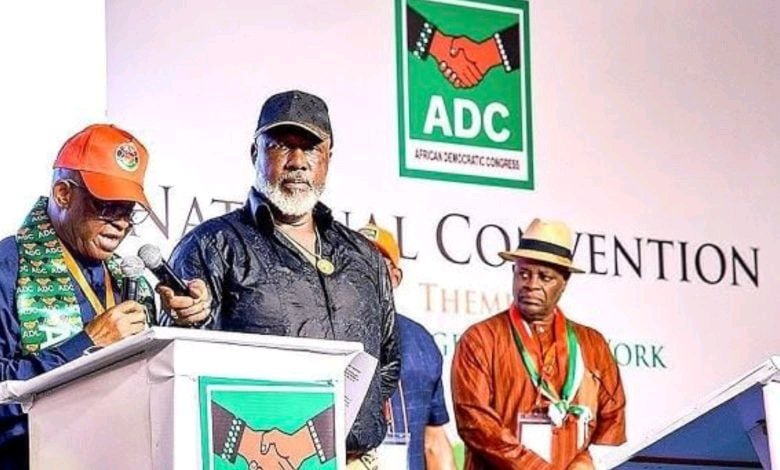
The African Democratic Congress (ADC) has raised fresh concerns over the handling of its leadership crisis, accusing the Federal High Court in Abuja of delaying the release of the Certified True Copy (CTC) of a judgment that nullified the Senator David Mark-led leadership of the party.
The party’s Presidential Campaign Council said the continued delay had denied affected parties access to the full details of the judgment, despite the payment of the prescribed fees for obtaining certified copies.
In a statement issued on Monday, November 9, 2026, the Director of Strategic Communication of the ADC Presidential Campaign Council, Phrank Shaibu, said lawyers representing some of the defendants had formally applied for the certified judgment but were yet to receive the document.
According to the council, counsel to the third defendant submitted an application on November 5, the day Justice Peter Lifu delivered the judgment, while counsel to the first defendant filed another application on November 6.
The council maintained that both applications carried the Federal High Court’s official ‘PAID’ stamp, indicating that the required fees had been settled.
Shaibu questioned why the certified judgment had remained inaccessible despite the judge’s reported declaration in open court that copies were ready.
He argued that the delay was particularly troubling because the judgment directly affected the leadership and future of the opposition party, as well as the political interests of its members.
The ADC campaign council maintained that without the certified copy, affected parties could not properly establish the precise orders made by the court or fully determine the appropriate legal steps to challenge them.
It described the situation as a denial of access to justice, insisting that litigants should not be subjected to unnecessary difficulties in obtaining official copies of judicial decisions affecting their rights.
The council also recalled its earlier objection to Justice Lifu presiding over the case, saying its National Secretary, Ogbeni Rauf Aregbesola, had previously raised concerns about the judge’s impartiality.
It further questioned the timing of the judgment, which was delivered days after the ADC’s campaign activities in Sokoto, alleging that the circumstances surrounding the ruling and the subsequent delay in releasing the certified copy had heightened suspicions among party members.
The ADC had earlier rejected the November 5 judgment and announced plans to challenge it through the appropriate judicial channels.
In the controversial ruling, Justice Lifu nullified the Senator David Mark-led leadership structure and invalidated actions taken by the disputed executive, including decisions connected to the party’s 2027 presidential nomination.
The ruling also recognised the position of Nafiu Bala Gombe in the leadership dispute.
The ADC has vowed to pursue every lawful avenue to challenge the judgment, while demanding an immediate explanation for the delay in releasing its certified copy.
As of Monday, November 9, there was no reported official response from the Federal High Court addressing the campaign council’s latest allegation.
ADC Raises Alarm as Court Delays Release of Lifu’s Judgment Despite Payment
Politics
Tension in Delta as Task Force Members Protest Over Colleague’s Killing at NDC Rally
Tension in Delta as Task Force Members Protest Over Colleague’s Killing at NDC Rally
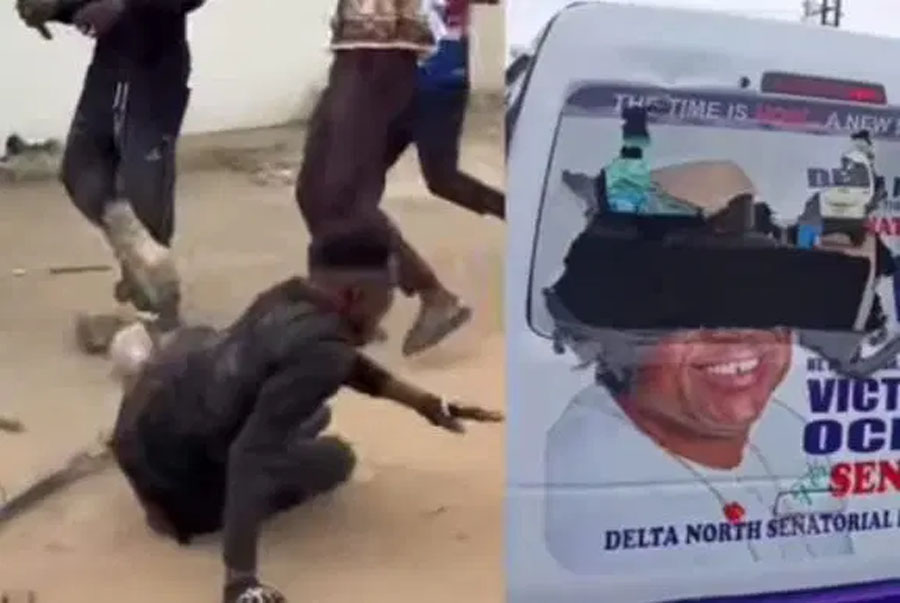
ASABA, DELTA STATE – Tension has heightened in Asaba, Delta State, following a protest by members of a task force over the killing of their colleague during Saturday’s violent political clash involving supporters of the Nigeria Democratic Congress (NDC).
The protest reportedly took place on Monday, November 9, 2026, two days after violence erupted during a political procession organised by the Obedient/OK Movement in support of the party’s presidential candidate, Peter Obi.
According to reports, the task force members took to the streets to express their anger over the death of their colleague, who was reportedly among those affected by Saturday’s violence.
The protest came amid growing tension over the circumstances surrounding the deadly confrontation, which left one person dead and several others injured.
The incident occurred along Nnebisi Road, Asaba, at about 12:15 p.m. on Saturday, November 7, during the political procession.
The Delta State Police Command confirmed the death and disclosed that five other people sustained varying degrees of injuries.
The police said they had received intelligence suggesting a possibility of violence before the procession and subsequently invited the organisers to a security meeting.
According to the command, the organisers were advised against holding an open-road procession and encouraged to conduct their political activities at a designated venue where adequate security could be provided.
However, the police alleged that the organisers ignored the advice and proceeded with the procession.
Following the violence, the command announced that it had commenced a full-scale investigation to establish the circumstances surrounding the clash and identify those responsible.
The Delta State Government also condemned the incident, describing the loss of life as unacceptable and calling on the police to ensure that anyone found culpable was brought to justice.
The development has further heightened concerns over political violence and public safety in Delta State as political activities gather momentum ahead of the 2027 general elections.
The circumstances surrounding Monday’s protest, including the full identity of the deceased task force member and the extent of the protesters’ demands, were not immediately clear.
Tension in Delta as Task Force Members Protest Over Colleague’s Killing at NDC Rally
Politics
Hamzat, GRV Clash Over Housing, Transport, Governance at Lagos Debate
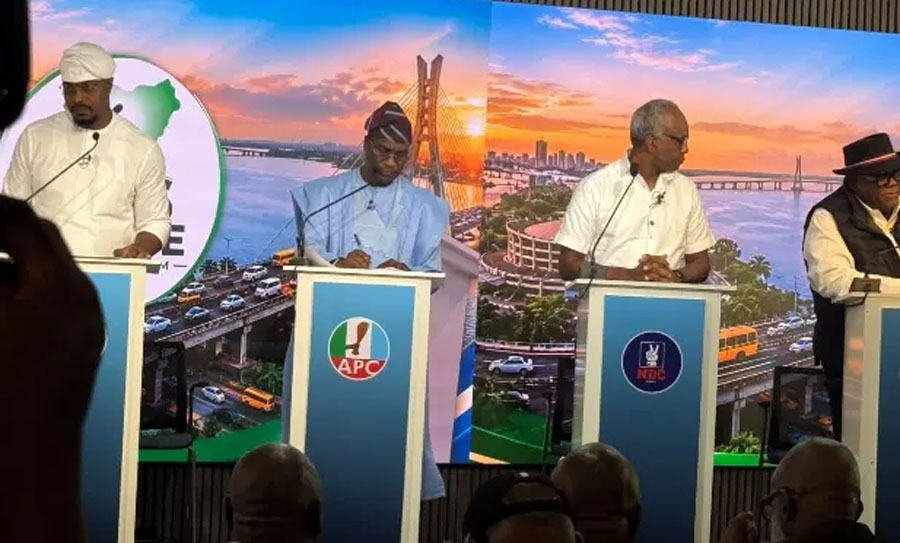
The Lagos State Deputy Governor and All Progressives Congress (APC) governorship candidate, Obafemi Hamzat, and his African Democratic Congress (ADC) counterpart, Gbadebo Rhodes-Vivour, have presented contrasting development plans for Lagos State ahead of the 2027 governorship election.
The two candidates outlined their policy priorities during the 2026 Lagos State Governorship Debate held in Lekki on Sunday, November 8, with particular attention to housing, transportation, infrastructure, security, healthcare, waste management and accountable governance.
Hamzat, who described the debate as a job interview, relied heavily on his experience in public service, arguing that his professional background and previous appointments had prepared him for the responsibility of governing Lagos.
He said his experience as a teacher, case manager in New York and systems manager, alongside his years in the Lagos State Government, had equipped him with the knowledge required to manage the state’s affairs.
The APC candidate recalled his time as Commissioner for Science and Technology, during which he said he led the development of the state’s residents and structural database.
He also highlighted his tenure as Commissioner for Works and Infrastructure, citing his involvement in the delivery of major infrastructure projects, including a cable bridge described as the first of its kind in West Africa and the second in Africa.
Hamzat said effective governance required a leader who understood the people, the state and the responsibilities attached to public office.
Presenting his development blueprint, tagged Jacob’s Promise, he said it was structured around seven pillars, seven broad areas of action and 100 pledges.
He identified respect for citizens, hard work and truthfulness as the principles that would guide his administration, adding that government should prioritise actual delivery over public announcements.
READ ALSO:
- ‘My History Is Traceable’: Atiku Fires Back at Tinubu Over University Funding
- Job Seeker Steals Bugatti CEO’s £2m Car After Finding Keys Inside
- Netanyahu Faces Political Setback as Israeli President Picks Rival to Form Government
According to him, residents should evaluate candidates based on their experience, the substance of their programmes and their ability to translate promises into tangible results.
In contrast, Rhodes-Vivour argued that Lagos needed a different approach to governance, accusing successive administrations of prioritising the interests of wealthy residents and privileged communities over those of ordinary people.
The ADC candidate said his political activities and manifesto had consistently focused on improving the living conditions of ordinary Lagos residents.
He maintained that the state needed an integrated development strategy capable of addressing interconnected challenges in housing, transportation, healthcare, education, waste management and urban planning.
On housing, Rhodes-Vivour promised to deliver 100,000 housing units within his first four years if elected.
He proposed funding social housing through luxury taxation, developing the eastern foreshore and intergenerational areas, and decentralising housing development across the state.
He also promised to expand Lagos’ railway network, saying his administration would connect the state’s rail lines within two and a half years through a private-sector-driven arrangement.
He said the proposed approach would be transparent, equitable and cost-effective, with the objective of improving connectivity and opening up more communities for development.
Rhodes-Vivour further argued that the state’s high internally generated revenue should translate into improved living conditions and better public services for residents.
He cited communities such as Makoko while criticising what he described as development policies that displaced ordinary residents in favour of elite interests.
The ADC candidate also pledged to address traffic congestion, flooding, waste management and the activities of street touts, popularly known as agberos.
OTHER CANDIDATES PRESENT THEIR VISIONS
The debate also featured governorship candidates of other political parties, including Funso Doherty of the Nigeria Democratic Congress (NDC) and Deji Doherty of the Peoples Democratic Party (PDP).
Funso Doherty criticised the state’s revenue and taxation system, arguing that Lagos residents continued to face multiple levies without receiving public services commensurate with the revenue generated by the government.
READ ALSO:
- 2027: Tinubu Challenges Atiku to Explain How He Financed University
- Afenifere Crisis: ‘There Is Only One Afenifere’, Secretary Insists Amid Breakup Allegations
- Illicit Donations: Adeboye Orders RCCG to Refund Billions Traced to Church Projects
He maintained that Lagos was operating below its potential despite its substantial internally generated revenue.
The NDC candidate, who said he had spent about 30 years in the private sector, promised a new direction for the state, particularly in healthcare and essential public services.
He urged residents to hold his party accountable if elected.
Deji Doherty, on his part, highlighted the need to improve electricity supply and create more economic opportunities for residents.
He said his experience as a technocrat and industrialist had informed his decision to seek the governorship position.
On housing, the PDP candidate cautioned against making unrealistic promises, arguing that the cost of land and building materials must be considered before setting ambitious construction targets.
He also raised concerns about gaps in primary healthcare delivery, particularly in some island communities.
DEBATE AHEAD OF 2027 ELECTION
The Lagos governorship debate was organised by the Nigeria Debate Consortium, a coalition of media organisations comprising Channels Television, TVC News, The PUNCH, TheCable and Vanguard.
The exercise is part of a series of debates scheduled ahead of the 2027 general elections, aimed at giving candidates a platform to explain their programmes and respond to questions on issues affecting Nigerians.
The organisers said the debate was designed to promote issue-based political engagement, democratic accountability and informed electoral choices.
The participating candidates were expected to address major concerns affecting Lagos residents, including the economy and cost of living, transportation and infrastructure, flooding and the environment, healthcare and social welfare, security and accountability.
The February 6, 2027 governorship election will determine who succeeds Governor Babajide Sanwo-Olu as the next governor of Lagos State.
Hamzat, GRV Clash Over Housing, Transport, Governance at Lagos Debate
-

 Sports3 days ago
BREAKING: Flamingos Make History, Defeat Japan 2–1 to Win First FIFA U-17 Women’s World Cup
-
 News3 days ago
Power Outage: Tegbe Gives Nigerians 72-Hour Timeline as FG Moves to Restore Electricity
-

 News2 days ago
One Killed, Five Injured as Violence Disrupts Obi-Kwankwaso Rally in Delta
-

 Sports2 days ago
Messi Breaks MLS Record, Becomes First Player To Win Back-to-Back Golden Boots
-
 Politics2 days ago
‘My History Is Traceable’: Atiku Fires Back at Tinubu Over University Funding
-

 metro2 days ago
[ICYMI] Lagos Summons DisCos, Regulators Over Persistent Power Outages, Seeks 24-Hour Electricity
-

 metro2 days ago
Zamfara: Bandits Allegedly Burn 13 Family Members Alive After Locking Them Inside Room
-

 Auto1 day ago
Four-day Abuja International Motor Fair begins tomorrow Nov 10