

metro
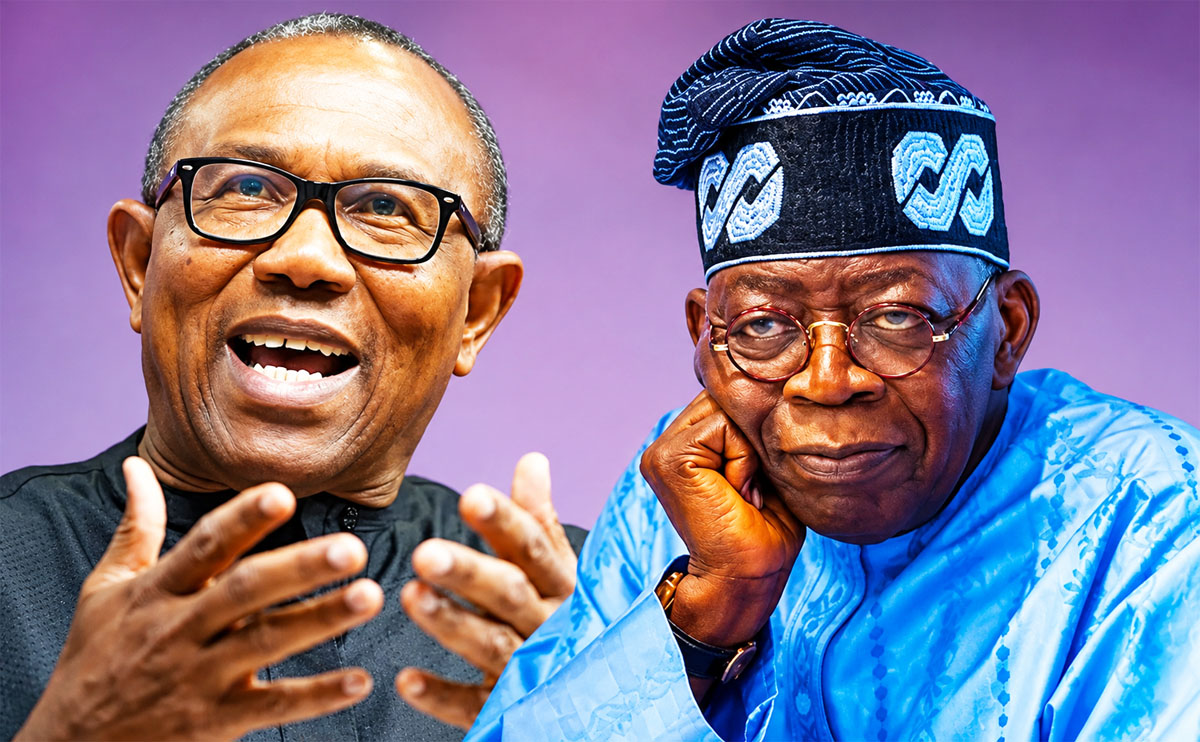
Lawyers Sue Tinubu, AGF, Edo Gov Over Alleged Threat to Peter Obi’s Life
Lawyers Sue Tinubu, AGF, Edo Gov Over Alleged Threat to Peter Obi’s Life
Obident Lawyers Forum seeks court orders compelling security agencies to provide maximum protection for NDC presidential candidate and other 2027 candidates
Lawyers operating under the aegis of the Obident Lawyers Forum have filed a suit at the Federal High Court in Abuja seeking an order compelling President Bola Tinubu to direct security agencies to provide adequate protection for the presidential candidate of the Nigerian Democratic Congress (NDC), Mr Peter Obi, ahead of the 2027 general election. The legal practitioners informed the court that their appeal has become imperative so as not to make Peter Obi a victim of political assassination before and during the 2027 electioneering process. The request was contained in a suit marked FHC/ABJ/CS/1648/2026, instituted against President Tinubu, the Attorney General of the Federation (AGF), the Inspector-General of Police (IGP), the Director-General of the Department of State Services (DSS), and the Governor of Edo State as defendants. The plaintiffs, represented by Barristers Okere Kingdom Nnamdi and Joseph Enemona Ameh, instituted the fundamental rights suit on behalf of Peter Obi, in which they prayed the court to issue an order that Peter Obi has the fundamental right to freedom of movement without any hindrance.
The plaintiffs predicated their request on two key developments. First, a recent live podcast wherein the NDC’s presidential candidate had raised the alarm that he “may not be alive to contest next year’s presidential election”. Second, a statement credited to Edo State Governor Senator Monday Okpebholo to the effect that Obi’s life and security would not be guaranteed in Edo State if he enters the state without getting approval from the governor. In an affidavit deposed in support of the suit, the plaintiffs argued that the NDC presidential candidate has constitutionally guaranteed rights to life and to live, dwell, exist and carry out his lawful duties without any fear, discrimination, threat of assassination, intimidation or any form of harassment as guaranteed by the Constitution. They submitted that Obi has the fundamental rights to move across the 36 states of Nigeria and the Federal Capital Territory, “attend and host his political campaign rallies… without fear of assassination, threat to his life, bullying, harassment, assault, intimidation and victimization whatsoever”.
READ ALSO:
- No Sin in Politics: Wike Welcomes Fubara Back to Political Fold
- How Friends Beat Jos Model Ibrahim Mbaya to Death Over Missing iPhone 12
- Oyo Receives Two Surveillance Aircraft Worth ₦7.7 Billion to Strengthen Security Operations
The applicants lamented that “Mr Peter Gregory Obi has been subjected to serious psychological torture and trauma by the numerous threats to his life”, adding that this is detrimental to his constitutional rights. They further submitted that no person or authority or any arm of the Government of the Federal Republic of Nigeria, or any authority, person(s) individual or groups, agents/agencies of the Federal Government or Government of any sub-regional State, has the powers to restrict or refuse any citizen from entering and exiting any part of Nigeria to carry out his lawful activities as guaranteed in the 1999 Constitution of the Federal Republic of Nigeria. The deponent argued that “the threats by the Edo State Governor Senator Monday Okpebholo that Mr Peter Obi’s life and security are not guaranteed in Edo State, and that Mr Peter Obi should not step into Edo State without getting a clearance from him are empty not backed by law, anti-democratic, illegal, unlawful and tantamount to executive rascality, infantile-politicking and power-drunkenness”.
Among the reliefs they are seeking in the suit, the plaintiffs asked the court to declare that Peter Gregory Obi, the 2027 Presidential Candidate of the Nigerian Democratic Congress (NDC) , has the fundamental right to life and the right to live without any fear, discrimination, threat of assassination, intimidation or any form of harassment whatsoever, as guaranteed in section 33 (1) of the 1999 Constitution of Nigeria. In addition, they urged the court to declare that Peter Obi must not be subjected to politically motivated coercion, threat to life, bullying, harassment, assault, intimidation and victimization whatsoever by any arm of the Government of the Federal Republic of Nigeria, or any authority, person, individual or groups, agents/agencies of the Federal Government or Government of any sub-Regional State, on the grounds of his political ideology, ethnicity and religion; or for any reason whatsoever. They also sought “A declaration that Mr Peter Gregory Obi the 2027 Presidential Candidate of the Nigerian Democratic Congress (NDC) has the fundamental rights of free ingress and egress into any of the 36 States of the Federal Republic of Nigeria and the FCT, and can freely move around, enter, visit, stay, reside, inhabit and organize, attend and host his political campaign rallies, consultations, seminars, groups meetings and carryout his lawful activities in any part of Nigeria, without fear of assassination, threat to his life, bullying, harassment, assault, intimidation and victimization whatsoever, by any Arm of the Government of the Federal Republic of Nigeria, or any authority, person(s) individual or groups, agents/agencies of the Federal Government or Government of any sub-regional State, as guaranteed in sections 39, 40, 41 and 42 of the 1999 Constitution of the Federal Republic of Nigeria”.
The plaintiffs further prayed for “A declaration that the President of the Federal Republic of Nigeria and Commander in Chief of The Armed Forces of the Federal Republic of Nigeria has the constitutional mandate/responsibility to provide adequate security of life and property to the citizens, which is the fundamental reason/purpose/objective of every government; and the President has the constitutional responsibility as Commander in Chief to direct the 3th, 4th and 5th Respondents and Heads of all Security Agencies in Nigeria to provide maximum security protection/intelligence to Mr Peter Gregory Obi and all other presidential candidates”. They also urged a declaration that the laws setting up the security agencies mandate and empower the 3rd, 4th, and 5th respondents to provide adequate security to the citizens of the Federal Republic of Nigeria against all criminal activities aimed at depriving citizens of their properties or lives. The plaintiffs asked the court to make an order “compelling, directing and mandating the President of the Federal Republic of Nigeria and Commander in Chief of the Armed Forces of the Federal Republic of Nigeria to direct the 3th, 4th and 5th Respondents and Heads of all other Security Agencies in Nigeria to provide maximum security protection/intelligence to Mr Peter Gregory Obi, the 2027 Presidential Candidate of the Nigerian Democratic Congress (NDC) and all other 2027 presidential candidates”. Additionally, they sought “An order compelling, directing and mandating the 3th, 4th and 5th Respondents to immediately provide maximum security personnel to Physically Protect and Provide Security Intelligence to Mr Peter Gregory Obi, the NDC 2027 Presidential candidate”.
The suit references a recent podcast interview with media personality Chude Jideonwo, wherein the NDC presidential candidate had expressed fears for his safety. In the interview, Obi stated: “Not even a candidate. I might not even be alive. I’m telling you”. He alleged that the current Nigerian government has been frustrating his activities and targeting opposition figures, saying “Every single thing I do for a living, this government is frustrating. Deliberately so. So, there is even a possibility that, if they have the opportunity, I will not be alive”. Obi, however, clarified that he was not making direct accusations against President Bola Tinubu’s government because the government does not act openly. “It’s not an accusation. I know. I get frustrated every day because you do things that you think would be normal – it is not normal anymore. They (the government) won’t come directly and say, ‘Oh, we’re doing this,’ but you can see their hand in everything,” he said. Giving instances of alleged attacks against him, Obi referenced an incident at an airport where officials allegedly locked his car, despite other vehicles being parked in the same area. He also alleged that some people now avoid publicly associating with him for fear of becoming targets of the government, and that some supporters had discouraged him from attending family events.
The suit also references a statement credited to Edo State Governor Senator Monday Okpebholo. The governor had earlier given a warning on July 18, 2025 during a political event in Uromi, Esan North East Local Government Area of the state. In a video that later resurfaced, the governor was heard warning Obi against coming into the state without prior notice, saying: “The man wey say he no get shishi, I am sending a direct message to him, there is a new sheriff in town. He cannot come to Edo State without telling me because his security will not be guaranteed. Whatever happens to him in Edo State, he will take it. I am serious about this”. The governor later defended his remarks during an appearance on Channels Television, insisting that he intended to ensure the opposition figure’s safety, citing security concerns. The Edo State Government had earlier distanced itself from alleged threats against opposition figures by Emmanuel Eghogho, an aide to Governor Okpebholo. The governor’s aide was captured in a viral video on social media alleging that members of the opposition, including Peter Obi, would be arrested and handed over to the Commissioner of Police for onward transfer to Abuja. Reacting to the development, the Commissioner for Information and Strategy, Kassim Afegbua, said at a news conference in Benin that the state had nothing to do with Mr Eghogho’s public outburst. He stressed that the controversial remarks credited to Mr Eghogho did not represent the administration’s position, stating: “We want to distance ourselves from that statement because it is not the position of the Edo State Government, but the voice of an individual that is answerable to existing laws of the land”.
Meanwhile, no date has been fixed for the hearing of the suit. The legal action comes as political activities ahead of the 2027 general election gradually gather momentum, with opposition figures outlining their policy alternatives to the administration of President Bola Tinubu.
Lawyers Sue Tinubu, AGF, Edo Gov Over Alleged Threat to Peter Obi’s Life







metro
Oyo Govt Draws Battle Line With Soun, Rejects Suspension of Ogbomoso Balogun
Oyo Govt Draws Battle Line With Soun, Rejects Suspension of Ogbomoso Balogun
The state government insists Dr Saka Adegbite Balogun remains the recognised Balogun of Ogbomosoland, citing the Chiefs Law, while the palace reportedly maintains that the chief was suspended over an oath-of-allegiance dispute.
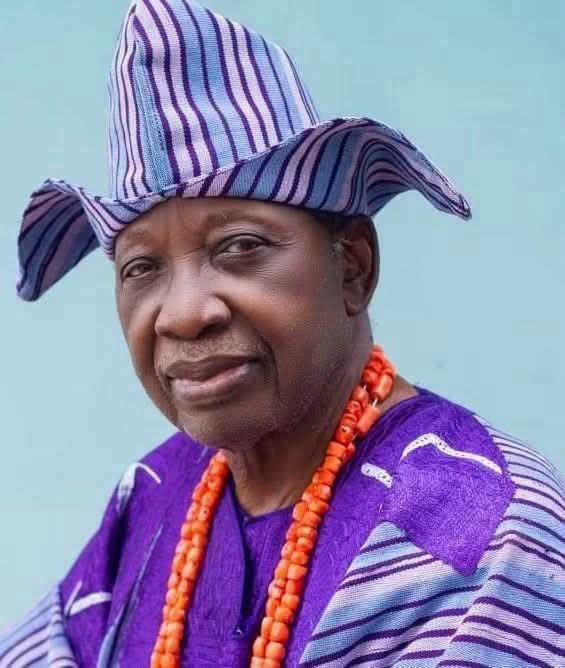
The Oyo State Government has challenged the purported suspension of Dr Saka Adegbite Balogun as the Balogun of Ogbomosoland by the Soun of Ogbomoso, Oba Ghandi Afolabi Olaoye, insisting that the action is inconsistent with the state’s chieftaincy law.
The government reaffirmed Dr Balogun as the duly recognised holder of the traditional title and urged members of the public to disregard reports suggesting that he had been removed from office.
The position was contained in a press release dated October 23, 2026, and signed by the Commissioner for Local Government and Chieftaincy Matters, Hon. Ademola Ojo.
In the statement, the government said it had taken note of media reports concerning the reported action against the Balogun by the paramount ruler of Ogbomosoland.
Citing Section 26(1) of the Chiefs Law of Oyo State, Cap. 28, 2000, Ojo maintained that the authority to appoint, suspend or depose a recognised Part II chieftaincy holder rests exclusively with the state governor.
He consequently questioned the legality of the action attributed to Oba Olaoye, arguing that it was contrary to the existing legal framework regulating traditional council operations in the state.
The commissioner stated, “By virtue of the provision of CAP 28, Section 26(1) of the Chiefs Law of Oyo State (2000), the power to appoint, suspend and depose a Part II Recognised Chieftaincy holder is vested exclusively on the Executive Governor of the State.”
He described the reported action against Dr Balogun as an aberration under the law, stressing that the state government continued to recognise him as the Balogun of Ogbomosoland.
“In the light of this, Dr Saka Adegbite Balogun is the duly recognised Balogun of Ogbomosoland,” the commissioner declared.
The government therefore called on members of the public to disregard any purported removal of the chief.
The intervention has brought the disagreement over the Balogun title into sharper focus, raising questions about the respective powers of traditional rulers and the state government in the administration of recognised chieftaincy matters.
Reports preceding the government’s statement indicated that Oba Olaoye had issued an indefinite suspension order against Dr Balogun in a letter dated October 20, 2026.
The monarch reportedly based the decision on the chief’s alleged failure to sign an oath of allegiance to the throne, which the palace considers a requirement for the proper assumption and exercise of responsibilities attached to the title.
However, the state government’s position centres on the statutory authority it says governs the suspension or removal of a recognised Part II chieftaincy holder.
The Balogun’s family also reportedly faulted the palace’s action, claiming that it received the suspension letter without prior communication, a query or an opportunity for dialogue.
According to a report by Nigerian Tribune, the family, through the secretary of the Balogun Chieftaincy House, Balogun Olajire Raufu, appealed to the state government to intervene in the dispute.
The family also alleged that Dr Balogun and his entourage had been denied access to the palace on two occasions during traditional homage proceedings. These claims have not been independently established in this report.
The dispute has therefore exposed a disagreement over both the circumstances surrounding the suspension and the authority to take such action against a recognised chief.
While the Soun’s reported decision was linked to the oath-of-allegiance issue, the Oyo State Government has maintained that the status of a recognised Part II chieftaincy holder is governed by the provisions of the state’s Chiefs Law.
The government’s statement, however, did not indicate that a court had ruled on the dispute, nor did it announce any separate judicial determination of the competing positions.
For now, the state government’s position is that Dr Saka Adegbite Balogun remains the duly recognised Balogun of Ogbomosoland, despite the reported suspension by the Soun.
The palace’s reported explanation and the government’s intervention leave the dispute unresolved, with any further clarification or legal action potentially determining the next stage of the disagreement.
Oyo Govt Draws Battle Line With Soun, Rejects Suspension of Ogbomoso Balogun
metro
IKEDC Blames National Grid for Two-Week Power Crisis in Ishaga, Oke-Ayo

IKEDC Blames National Grid for Two-Week Power Crisis in Ishaga, Oke-Ayo
Residents battle water scarcity, intense heat as electricity supply dwindles to minutes
Residents of Ishaga and Oke-Ayo communities in Iju-Ishaga, Lagos State, have endured about two weeks of erratic electricity supply, with the Ikeja Electric Distribution Company (IKEDC) attributing the situation to reduced power allocation from the national grid.
The prolonged power shortage has disrupted daily activities, leaving residents struggling to cope with the intense heat and difficulties accessing water, particularly in households that depend on electricity to pump water.
In response to a formal complaint by a journalist and resident of Oke-Ayo, Abdulfatai Ayobami Ibrahim, the manager of IKEDC’s Iju Undertaking said the reduction in electricity supply across the company’s network was caused by a shortfall in power allocated to it from the national grid.
The manager explained that electricity distribution companies could only distribute the volume of power made available to them through the transmission network, adding that any reduction at the generation or transmission stages directly affected electricity supply to consumers.
According to the manager, IKEDC is engaging relevant stakeholders, including the Transmission Company of Nigeria (TCN), to secure an improved allocation and restore normal electricity supply as soon as possible.
In a public notice issued by the company, IKEDC apologised for the inconvenience caused by the reduced supply hours, assuring customers that it was working with relevant stakeholders to improve power availability.
The company also said it remained committed to distributing the available electricity as efficiently and equitably as possible across its network, while promising to keep customers informed of significant developments.
However, residents of Ishaga and Oke-Ayo have continued to face the consequences of the erratic supply, which, according to Ibrahim, has become particularly distressing over the past two weeks.
In his complaint to the manager, Ibrahim said electricity sometimes returned for barely five to 10 minutes before going off again, while on other occasions, supply was restricted to between two and three hours in the early morning, usually between 1am and 5am.
He explained that the situation had become increasingly unbearable, with residents sometimes spending the entire day without electricity.
Giving an account of the immediate situation when he submitted the complaint, Ibrahim said the last electricity supply to his community had been in the early hours of the previous day, with power cut off shortly after 8am. He said supply had not returned since then.
The journalist noted that the problem extended beyond the absence of electricity, as many households relied on power to pump water for domestic use.
He said prolonged outages had consequently made access to water difficult for affected families, compounding the hardship associated with the prevailing heat.
Ibrahim expressed concern about the impact of the situation on families, children, elderly residents and other vulnerable members of the community, particularly in the absence of clear information about when electricity supply would improve.
Seeking clarification, he asked IKEDC to explain the cause of the persistent outages, whether they were connected to technical faults, load allocation, maintenance activities or other operational challenges.
He also requested details of the measures being taken to address the situation and when residents could reasonably expect an improvement in supply.
Responding, the manager reiterated that the current challenge was linked to reduced electricity allocation from the national grid rather than an issue the distribution company could resolve independently.
He explained that the electricity supply chain comprised generation, transmission and distribution, noting that distribution companies depended on the quantity of electricity supplied through the transmission network.
“Whenever there is a reduction in power supply from the generation or transmission level, it directly affects the quantity of electricity available for distribution to our customers,” the manager explained.
He added that the company was engaging relevant stakeholders to improve its allocation and ensure better electricity supply to customers.
IKEDC also appealed to customers to exercise patience and understanding, while expressing regret over the inconvenience caused by the development.
Despite the explanation, the responses did not provide a specific timeline for the restoration of improved electricity supply in Ishaga and Oke-Ayo or identify a date by which residents could expect relief.
Ibrahim urged the company to sustain communication with affected communities and take practical steps to ensure that available electricity was distributed in a manner that would ease the hardship being experienced by consumers.
He stressed that although electricity distribution could be affected by technical and operational challenges, prolonged outages without timely and adequate information often left consumers frustrated and uncertain.
The journalist said transparent communication between electricity distribution companies and the communities they serve was essential to building public trust and keeping consumers informed about developments affecting their daily lives.
The power crisis in the affected communities comes amid wider concerns over electricity availability, with IKEDC’s explanation pointing to constraints in the volume of power allocated to its network from the national grid.
For residents of Ishaga and Oke-Ayo, however, the immediate concern remains when electricity supply will become more stable and when households struggling with heat and water shortages will receive relief.
As of the time of the exchange, IKEDC had said it was engaging TCN and other relevant stakeholders to improve supply, but had not announced a definite timeline for a return to normal electricity distribution in the affected communities.
IKEDC Blames National Grid for Two-Week Power Crisis in Ishaga, Oke-Ayo
metro
School Bus Driver Turns Kidnapper, Collects ₦503,000 Ransom, Rapes 14-Year-Old Delta Student
School Bus Driver Turns Kidnapper, Collects ₦503,000 Ransom, Rapes 14-Year-Old Delta Student
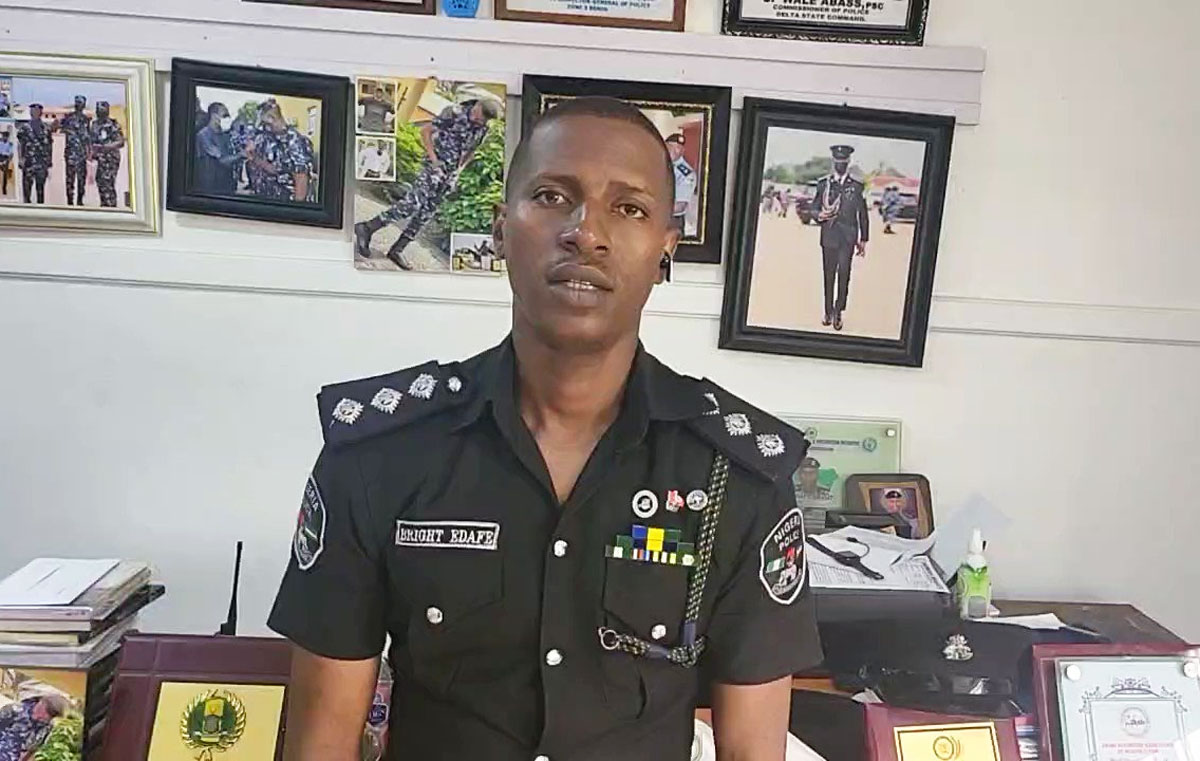
SAPELE, DELTA STATE — The Delta State Police Command has arrested a 28-year-old school bus driver, Onome Lucky Ughagha, for the horrific kidnapping and sexual assault of a 14-year-old female student in Sapele, after extorting a ransom from her desperate father.
According to a statement by the Command’s Public Relations Officer, SP Bright Edafe, the nightmare unfolded on October 20, 2026, when the victim’s father reported that his daughter was abducted while preparing for school .
Police investigations revealed that Ughagha, who was entrusted with the safety of the minor, contacted the father and demanded a ransom of ₦503,000, threatening to kill the girl if the money was not paid . Following the payment, the suspect allegedly abandoned the traumatized teenager along Oton Road in Sapele, where she was reunited with her family .
Medical examinations later indicated that the minor had been sexually assaulted . The suspect had abandoned the school bus and fled the scene, prompting an intense manhunt by operatives of the Sapele Area Command .
Acting on credible intelligence, police traced Ughagha to his hideout in the Ajimele area of Sapele, where he was arrested on October 23, 2026 . During preliminary interrogation, the suspect reportedly confessed to his involvement in the crime .
The school’s principal and vice-principal have been invited for questioning as investigations continue . Ughagha is currently being transferred to the State Criminal Investigation Department (SCID) in Asaba for further investigation .
Delta State Commissioner of Police, Samuel Erale, condemned the incident, reaffirming the command’s commitment to protecting children from violence and exploitation . He assured the public that the investigation would be thorough and urged school authorities and transport operators to exercise greater vigilance in safeguarding children .
School Bus Driver Turns Kidnapper, Collects ₦503,000 Ransom, Rapes 14-Year-Old Delta Student
-

 News3 days ago
EFCC Opens Recruitment for Nigerians, Sets Age Limits for Four Job Categories
-
 News3 days ago
41 Days in Bandits’ Den: Five Islamic Clerics Still Held After Tinubu Re-Election Prayer Trip
-
 Politics3 days ago
2027: Remi, Seyi Tinubu Reportedly Differ Over APC Youth Mobilisation
-
 Politics3 days ago
Igbo Presidency: Soludo Tells South-East to Back Tinubu for Future Power Shift
-
 Politics2 days ago
2027: APGA Chairman Says South-East Must Back Tinubu to Secure Igbo Presidency
-
 metro3 days ago
Police Arrest Suspect Eight Months After Retired Teacher’s Killing in Ogun
-

 metro2 days ago
Borno: Troops Kill 15 Terrorists in Midnight Air Strike
-

 Entertainment2 days ago
Tope Alabi Threatens Pastor With Lawsuit Over Toluwanisings’ Death Claims