

Education
ASUU Threatens Nationwide Strike Over Unpaid Salaries, Unimplemented Agreement

ASUU Threatens Nationwide Strike Over Unpaid Salaries, Unimplemented Agreement
The Academic Staff Union of Universities (ASUU) has threatened to reactivate its suspended nationwide strike if the Federal Government and state governments fail to urgently resolve outstanding issues affecting university lecturers.
The union warned that it could withdraw its members’ services “without any further notice”, citing the incomplete implementation of the December 2025 ASUU-Federal Government agreement, payment of the remaining 3.5 months of withheld salaries and the non-remittance of billions of naira deducted from lecturers’ salaries.
The warning followed an emergency meeting of ASUU’s National Executive Council (NEC) held at the University of Abuja.
In a statement issued in the early hours of Friday, ASUU President, Professor Christopher Piwuna, said the union could no longer guarantee industrial peace in the nation’s public universities unless urgent steps were taken to address the outstanding issues.
ASUU said the December 2025 agreement was reached after more than eight years of negotiations and struggles over the welfare of university lecturers and the broader condition of Nigeria’s public university system.
According to the union, however, the agreement has not been fully implemented by the Federal Government and several state governments.
“Unless immediate and concrete steps are taken to FULLY and COMPREHENSIVELY address issues bordering the welfare and well-being of Nigerian academics, ASUU-NEC will not accept any blame for calling out its members on a nationwide strike action within the shortest time possible,” the union warned.
The latest development raises the possibility of another disruption to academic activities in Nigeria’s public universities if the Federal Government and affected state governments fail to reach an understanding with the union.
ASUU has been pushing for full implementation of the agreement across federal and state-owned universities, arguing that inconsistent implementation has created disparities in the treatment of lecturers.
READ ALSO:
- FG to Give Students 100MB Free Data Daily From October 1
- Two Arrested in London Over Suspected Links to Iran Intelligence
- Lagos Woman Jailed for Dumping Refuse in Drain During Rainfall
The union commended Abia State Governor Alex Otti and the governments of Bauchi, Ekiti, Ogun, Benue, Yobe, Adamawa, Kebbi, Katsina and Borno for beginning implementation of the agreement.
It also disclosed that Kano, Edo, Plateau, Taraba, Gombe and Bayelsa states had pledged to commence implementation in September or October.
ASUU, however, warned other state governments to take action before their universities were plunged into what it described as an “industrial crisis of monumental proportions.”
The latest position follows earlier warnings by ASUU branches in several universities over the slow or incomplete implementation of the agreement and the payment of outstanding entitlements.
The union had previously directed branches in a number of universities to begin processes that could lead to industrial action, with some branches issuing ultimatums to their respective university authorities and state governments.
One of the major issues in the latest ASUU warning is the payment of withheld salaries arising from the union’s prolonged strike under the previous administration.
ASUU said the Tinubu administration had paid four of the 7.5 months of salaries withheld from its members during the dispute but insisted that the remaining 3.5 months must be released.
The union acknowledged President Bola Ahmed Tinubu for paying part of the withheld salaries but said withholding the balance meant the matter remained unresolved.
“We have consistently acknowledged President Bola Ahmed Tinubu for paying four (4) out of the withheld salaries. However, leaving out the unpaid balance does not give his government the full credit of a labour-friendly administration,” ASUU said.
The issue of withheld salaries has remained a major source of disagreement between the government and university lecturers since the prolonged 2022 ASUU strike.
The union has maintained that its members should not be left to bear the financial consequences of the dispute after returning to work.
READ ALSO:
- Peter Obi’s Benue Convoy Blockade Raises Questions Ahead of 2027
- Honda shakes up Nigeria operations, dissolves HAWA, retains HMN
- Fire Scare at Abuja Train Station as Electrical Fault Sparks Blaze, NRC Assures Passengers
ASUU also raised concerns over the alleged non-remittance of several deductions made from lecturers’ salaries.
The union said pension contributions, cooperative deductions and union check-off dues running into billions of naira had remained unremitted for several months.
It warned that failure to remit the deductions was placing additional financial pressure on university employees and undermining confidence in the existing industrial relations framework.
According to ASUU, the combination of unpaid salaries, unremitted deductions and incomplete implementation of the 2025 agreement could worsen tensions across the university system.
“In no mistaken terms, ASUU posits that the non- or haphazard implementation of the 2025 FGN-ASUU Agreement by federal and state governments is a recipe for industrial crisis in Nigeria’s public universities,” the union stated.
The latest nationwide warning is coming against the backdrop of separate disputes between ASUU branches and university authorities over salaries and other entitlements.
At Nnamdi Azikiwe University, Awka, the university’s ASUU branch recently commenced an indefinite strike over the non-payment of the full August 2026 salary to its members.
The branch said the action was based on ASUU-NEC’s standing position that branches could withdraw their services when salaries were not paid within the required period.
At Sule Lamido University, Kafin Hausa, the ASUU branch also threatened industrial action over outstanding salary-related demands and issues connected with the implementation of the agreement.
The developments have heightened concerns among students, parents and university authorities over the possibility of disruptions to lectures, examinations and other academic activities.
ASUU has, however, continued to indicate that it prefers dialogue and negotiation to industrial action, provided governments demonstrate a willingness to resolve the outstanding matters.
The union said it had given the Federal Government and state governments sufficient opportunities to address the outstanding issues but warned that continued delays could force it to take further action.
ASUU said its decision to suspend its previous nationwide strike was based on commitments made by the government and the expectation that the outstanding issues would be resolved.
It now wants the government to demonstrate concrete progress on the 2025 agreement, the payment of the remaining 3.5 months of withheld salaries and the remittance of deductions from lecturers’ salaries.
“ASUU-NEC resolved to notify all concerned that the Union may activate its suspended strike action without any further notice if the critical issues raised in this release are not speedily addressed,” the union said.
The warning means the Federal Government and state governments now face renewed pressure to resolve the dispute before it escalates into another nationwide university strike.
For students and other stakeholders in the education sector, the outcome of the ongoing engagement between ASUU and the government could determine whether Nigeria’s public universities maintain uninterrupted academic activities or face another round of industrial action.
The union has therefore urged the authorities to act quickly, stressing that it would not accept responsibility for the consequences if unresolved salary, welfare and agreement-implementation issues eventually lead to the reactivation of its suspended strike.
ASUU Threatens Nationwide Strike Over Unpaid Salaries, Unimplemented Agreement










Education
FG Releases Eight-Month Arrears After SSANU Strike Threat

FG Releases Eight-Month Arrears After SSANU Strike Threat
The Federal Government has released eight months’ salary arrears owed members of the Senior Staff Association of Nigerian Universities (SSANU), less than 48 hours after the union issued a 14-day ultimatum threatening an indefinite strike.
SSANU had issued the ultimatum over the implementation of the 2026 FGN/SSANU Agreement and demanded payment of outstanding entitlements, warning that failure to act would lead to a “total, comprehensive and indefinite strike action.”
The union’s demands included payment of outstanding Consolidated University Teaching and Tertiary Institutions Salary Structure (CONTTA) arrears calculated from January 1, 2026.
It also demanded payment of two months’ salaries withheld during the 2022 industrial action, as well as one-year arrears arising from the approved 25 per cent and 35 per cent salary increases.
READ ALSO:
- Yobe: 9-Year-Old Boy Burns Stepmothers, Brothers To Death In Revenge Attack
- 2027: Donald Duke Pledges To Bring Petrol Price Down To N300 Per Litre
- Olu of Warri Denies N2.7tn Pipeline Deal, Demands Evidence From Dokubo
Confirming the release, SSANU National President, Mohammed Haruna Ibrahim, said members would begin receiving alerts reflecting the payment.
Ibrahim commended the Minister of Education, Tunji Alausa, for intervening in the matter and facilitating the release of the funds.
However, the payment does not resolve all of the union’s outstanding demands. SSANU has maintained that the government must settle the remaining arrears and ensure full implementation of the 2026 agreement.
The development has nevertheless eased an immediate threat of disruption in the Nigerian university system, coming just days after the union warned of a nationwide industrial action.
SSANU has urged affected members to liaise with their respective university managements to ensure that the released funds are properly and promptly paid.
The latest development comes amid continuing concerns over university workers’ salaries, arrears and welfare, as well as the implementation of agreements between the Federal Government and university-based unions.
FG Releases Eight-Month Arrears After SSANU Strike Threat
Education
Why JAMB Is Taking UTME To Canada — Registrar Explains

Why JAMB Is Taking UTME To Canada — Registrar Explains
The Joint Admissions and Matriculation Board (JAMB) has explained why it is taking the Unified Tertiary Matriculation Examination (UTME) to Canada, saying the move is aimed at expanding access to Nigerian tertiary education rather than making money.
JAMB Registrar, Professor Segun Aina, said the board is working to establish a UTME examination centre in Ottawa, Canada, from 2027 to enable eligible Nigerians living in Canada and other parts of North America to sit the examination without travelling to Nigeria solely for the exercise.
The planned centre followed Aina’s visit to the Nigerian High Commission in Ottawa, where discussions were held on arrangements for conducting the examination.
JAMB said the initiative is part of its effort to make the Nigerian university admission system more accessible to Nigerians in the diaspora, particularly those seeking admission into universities and other tertiary institutions in Nigeria.
“For Nigerians in Canada, the UTME is coming closer to home,” the board said while announcing the plan.
However, the decision has generated questions over the likely number of candidates who would use the centre and whether establishing an examination facility in Canada would be financially viable.
Responding to such concerns, Aina said the number of candidates was not the primary consideration for establishing foreign examination centres.
READ ALSO:
- FULL LIST: NAF Releases Names Of 25 Victims Killed In Ondo Crash
- Supreme Council For Sharia Secretary-General Nafiu Baba-Ahmed Dies
- Former NADECO Leader Ralph Obioha Dies At 80
He explained that JAMB currently conducts the UTME in about 10 foreign countries as a service to improve access to education, adding that the board also conducts examinations in correctional service centres for the same reason.
According to the registrar, Nigerians relocate abroad for different reasons, while children of Nigerian public servants posted overseas may also need to sit the UTME without returning to the country specifically for the examination.
Aina said the absence of a JAMB examination centre in North America had previously made it difficult for prospective candidates in the region to participate in the UTME locally.
He added that JAMB does not necessarily need to acquire or rent a permanent building or employ a new workforce to establish the Ottawa centre.
The registrar explained that the board works with Nigerian diplomatic missions in countries where it conducts overseas examinations, using temporary spaces within high commission premises and relying on diplomatic mission staff to assist with the exercise.
Aina also said no money had been spent on the proposed Canadian centre so far.
He explained that his visit to Canada coincided with a conference and that he used the opportunity to initiate discussions with the Nigerian High Commission about the proposed examination arrangement.
JAMB‘s spokesperson, Fabian Benjamin, also defended the initiative, saying more than 100 prospective candidates in Canada had already indicated interest in sitting the examination there.
The proposed Ottawa centre is expected to serve eligible Nigerians in Canada as well as those in other parts of North America who wish to gain admission into Nigerian tertiary institutions.
JAMB said the move would reduce the barriers faced by Nigerians abroad and strengthen their connection with the country’s education system.
The board also said the initiative would provide an opportunity to showcase Nigerian tertiary education internationally and create more pathways for Nigerians in the diaspora to pursue higher education in Nigeria.
The proposed JAMB Canada centre is expected to commence operations with the 2027 UTME.
Why JAMB Is Taking UTME To Canada — Registrar Explains
Education
World Teachers’ Day: Ogun Residents Demand Better Pay, Equipped Schools for Teachers
World Teachers’ Day: Ogun Residents Demand Better Pay, Equipped Schools for Teachers
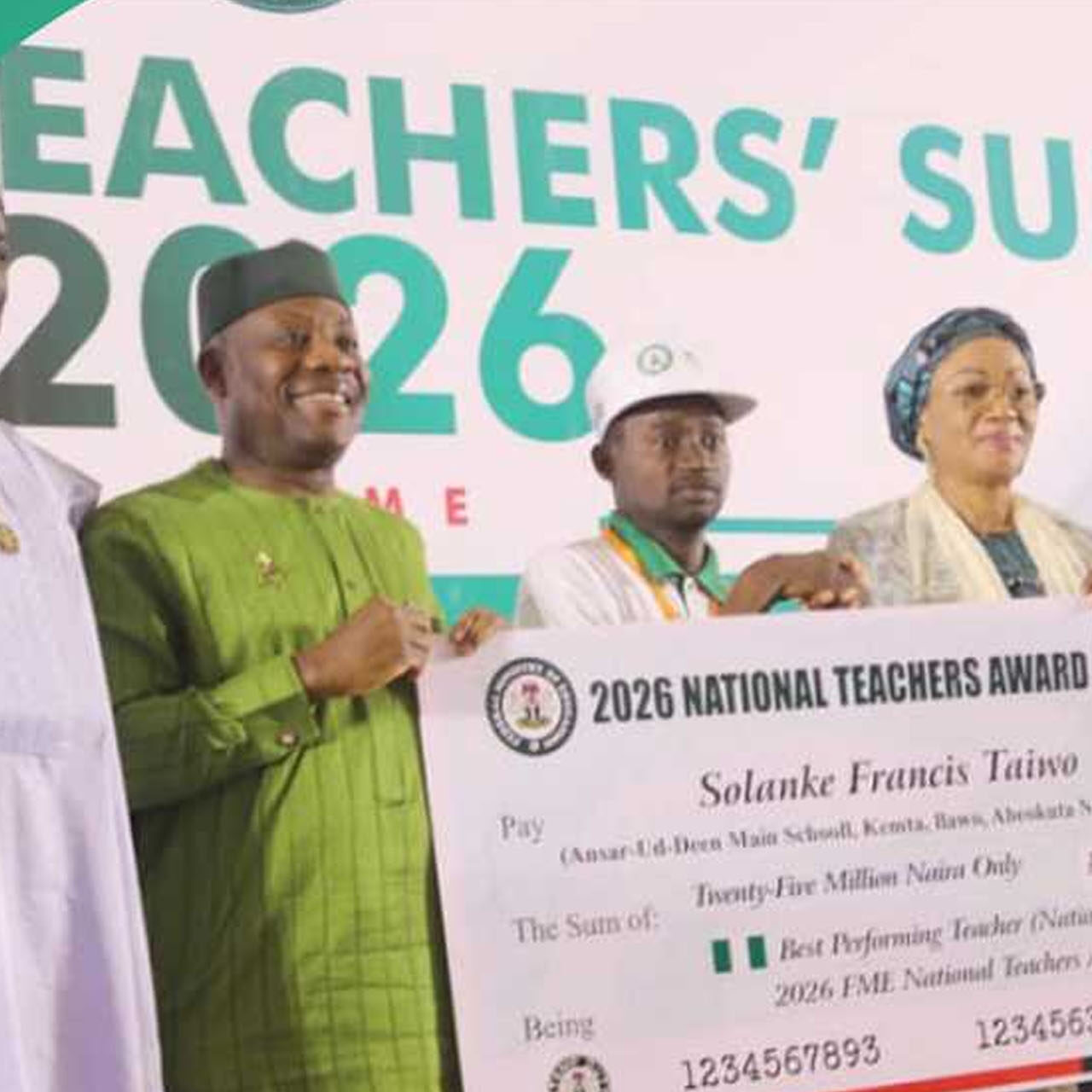
As Nigeria marked the 2026 World Teachers’ Day, residents of Ogun State have called on the government to improve teachers’ welfare, increase remuneration and provide adequate facilities in public schools, insisting that celebrating educators must translate into tangible improvements in their working conditions.
The demand was made by callers on Eagle 102.5 FM’s Frontline programme on Monday, October 5, during a discussion on teachers’ welfare and their contributions to education and community development. The programme featured the Chairman of the Ogun State Teaching Service Commission (TESCOM), Apostle Abiodun Sanyaolu.
Contributors stressed that teachers remain central to the development of children and the nation’s human capital, arguing that their responsibilities deserve better financial rewards, improved working conditions and a more conducive teaching and learning environment.
A caller from Ilese-Ijebu described teachers as the foundation of society, noting that their influence extends beyond the classroom to shaping children’s character, knowledge and future prospects.
Describing teachers as “the pillar of everything in life,” the caller urged the government to prioritise their welfare, arguing that educators must be adequately supported to deliver on their responsibilities.
“The welfare of the teachers is very, very important. The government should look at it and make sure that teachers are given a good welfare system so that they will be proud of doing what they are doing,” she said.
She also called for increased investment in school facilities, warning that constructing classrooms without providing the necessary equipment and learning materials would leave schools ill-equipped to deliver quality education.
“It’s not just only the structure alone. They should put in the necessary things that are supposed to be in the school,” she added.
The caller’s remarks highlighted the need for a comprehensive approach to educational development, encompassing not only physical infrastructure but also the resources required by teachers and students for effective teaching and learning.
Another contributor, Olu Ogunike, called for better remuneration for teachers, arguing that their salaries and conditions of service should reflect the critical role they play in national development.
“Teaching should be one of the well-paying work in the country,” Ogunike said, stressing that teachers lay the foundation for virtually every other profession.
He argued that the quality of a country’s workforce depended significantly on the quality of its teachers, adding that improved financial rewards would help enhance the status and attractiveness of the profession.
The contributions reflected growing public expectations that governments should match their recognition of teachers with practical measures to improve their welfare and the quality of education.
Speaking on the programme, TESCOM Chairman Sanyaolu described teachers as important stakeholders in community development, noting that their influence extends beyond academic instruction to shaping the moral, social and intellectual development of children.
According to him, every child taught by an educator eventually becomes part of the wider community, making teachers indispensable to the social and economic advancement of Ogun State.
Sanyaolu acknowledged, however, that more work remained to be done in the state’s education sector, despite the reforms and interventions introduced by the government.
“We still have a lot to do. There is a lot that is still ongoing, and we will continue to work to ensure that the gains recorded in the education sector are sustained,” he said.
His remarks underscored the continuing challenge of consolidating improvements in education while addressing concerns about teachers’ welfare, school infrastructure and the resources available for effective learning.
The callers’ demands also highlighted the connection between teachers’ working conditions and students’ educational outcomes.
They argued that better remuneration could boost teachers’ morale, while well-equipped classrooms, adequate learning materials and modern teaching resources would strengthen their ability to deliver quality education.
Similarly, improved welfare could help make teaching more attractive to qualified professionals and encourage greater commitment to the profession, particularly at a time when schools require skilled and motivated educators to prepare young people for the demands of a changing economy.
The 2026 World Teachers’ Day celebration therefore provided an opportunity to reflect on both the contributions of educators and the challenges confronting the profession.
For the contributors on Eagle 102.5 FM’s Frontline programme, the message was clear: public recognition of teachers must go beyond annual celebrations to include improved pay, better welfare packages, adequate school facilities and sustained investment in professional development.
They maintained that supporting teachers was not merely a reward for their service but also a necessary investment in the future of Ogun State and the country at large.

-

 metro2 days ago
Ondo Air Tragedy: Soldiers, Families Among 32 Killed In NAF Crash
-

 metro2 days ago
Gunmen Open Fire At Lagos Bus Stop, Kill NURTW Member, Injure Three
-
 News3 days ago
President Tinubu Mourns 32 NAF Personnel in Ondo Jet Crash, Orders Immediate Probe
-
 metro3 days ago
No Survivors Found in Ondo NAF Plane Crash — Ondo Governor
-

 Politics3 days ago
2027: Ajaero Questions Tinubu, Atiku, Obi’s Economic Approach, Highlights Adebayo’s Ideas
-

 metro2 days ago
Ogun Crash: Nine Die As Bus Collides With Truck On Ijebu-Ode-Ore Road
-
 metro2 days ago
Supreme Council For Sharia Secretary-General Nafiu Baba-Ahmed Dies
-

 International2 days ago
Kemi Badenoch: I Don’t Want Migrants Turning UK Into Nation Of ‘Little Ghettos’