

News
Tinubu orders transfer of EFCC cash recoveries, N242bn unclaimed dividends to NELFUND

Tinubu orders transfer of EFCC cash recoveries, N242bn unclaimed dividends to NELFUND
President Bola Tinubu has directed that eligible liquid funds recovered by the Economic and Financial Crimes Commission (EFCC) be transferred to the Nigerian Education Loan Fund (NELFUND) as part of efforts to strengthen the long-term financing of Nigeria’s student loan programme.
The President also approved the transfer of unclaimed dividends held under the Capital Market Trust Fund and the Dormant Account Trust Fund to NELFUND.
Minister of Education, Dr Tunji Alausa, disclosed the decisions on Wednesday while briefing State House correspondents after the Federal Executive Council (FEC) meeting presided over by Tinubu at the Presidential Villa in Abuja.
The meeting was the Council’s first sitting since June 29.
Alausa said the President had directed the transfer of EFCC recoveries to NELFUND to enable the Fund to meet its growing financial obligations.
“The President has now directed that all funds recovered by the Economic and Financial Crimes Commission be diverted to NELFUND to continue to support its funding,” the minister said.
He clarified, however, that the directive applies specifically to liquid cash recoveries and does not include seized properties or other non-cash assets.
“Not seized properties, or recovered looted funds, but liquid funds, from the EFCC will now be transferred to NELFUND,” Alausa said.
The minister further explained that the government would not transfer money that remains subject to legal disputes. Only funds that have been cleared, are unencumbered and are legally available for use will qualify.
“Every single fund that is still subject to a legal challenge will not be part of the money that will be transferred to NELFUND,” he said.
The directive could provide a significant additional funding stream for NELFUND, which has experienced increasing demand since the Federal Government introduced its student loan programme.
The EFCC has recovered substantial sums from financial crimes over the years. The agency reported recovering more than N566 billion and $411 million in monetary assets between October 2023 and September 2025, in addition to other foreign currencies and non-monetary assets.
However, the entire recovery figure will not automatically be transferred to NELFUND because the President’s directive is limited to eligible liquid and legally cleared funds.
READ ALSO:
- Palace Chaos: Police Say Cultists Targeted Davido, Not Gov Adeleke, in Deadly Osogbo Shooting
- Lagos declares Thursday work-free for 2026 Isese Day celebration
- South African Consulate Denies Visa Restrictions on Nigerians
The government is also targeting Nigeria’s growing pool of unclaimed dividends, currently estimated at approximately N242 billion.
Unclaimed dividends have accumulated over the years due to factors including outdated shareholder information, unresolved estate matters involving deceased investors and difficulties linking some shareholder records with bank accounts.
Alausa said Tinubu had directed Attorney-General of the Federation and Minister of Justice, Lateef Fagbemi (SAN), to work with the Ministries of Finance and Education and the Debt Management Office (DMO) to establish the legal framework for moving the unclaimed funds to NELFUND.
The officials are expected to review the laws governing the relevant trust funds and determine how the transfer can be carried out without violating existing legal provisions.
The proposed transfer does not mean legitimate owners of unclaimed dividends will lose their rights. Eligible shareholders can still make claims through the procedures established by the relevant regulatory authorities.
The move comes as NELFUND continues to expand its support for students in Nigerian public tertiary institutions.
Alausa said more than 1.2 million Nigerian students were already benefiting from the Fund, while NELFUND had disbursed more than N93 billion in student stipends and over N250 billion in institutional fees to public institutions across the country.
The latest figures published on NELFUND’s platform indicate that the programme has continued to grow, with more than 1.39 million students registered and more than 1.69 million loan applications recorded.
The student loan scheme is intended to reduce financial barriers to higher education by providing eligible students with access to funding for institutional charges and upkeep.
Beyond student financing, the Federal Executive Council approved an Entrepreneurship, Innovation and Business Incubation Certification Programme for 14 federal universities.
The initiative is designed to equip students with practical skills in entrepreneurship, innovation, business incubation and enterprise development, while providing digital certification, mentorship and incubation support.
READ ALSO:
- 2027: Peter Obi lost his chance when he left ADC for NDC – Fayose
- Electric Vehicles: Six-point blueprint to drive mass adoption, by Metropolitan CEO
- New Mercedes-Benz Atego’s technology, performance raise benchmark in Nigeria’s truck business
The 14 universities selected for the initial phase are Ahmadu Bello University, Bayero University Kano, Nnamdi Azikiwe University, Obafemi Awolowo University, University of Abuja, University of Benin, University of Ibadan, University of Ilorin, University of Jos, University of Lagos, University of Maiduguri, University of Nigeria, Nsukka, University of Port Harcourt and Usmanu Danfodiyo University.
According to Alausa, the programme had previously been tested at the University of Lagos, where it was found to improve students’ capacity to develop businesses, innovate and create employment.
The Council also approved additional funding for the completion of the long-delayed National Library of Nigeria headquarters complex in Abuja.
The National Library project was initiated in April 2006 with an original two-year completion timeline, but construction stalled in October 2008.
Alausa said Tinubu had directed the government to find funding to revive the project, including support from TETFund.
He also disclosed that First Lady Senator Oluremi Tinubu had directed that gifts received for her last birthday be channelled towards the National Library project, helping to raise about N25 billion.
The total augmentation approved for the project is approximately N155 billion, comprising about N118.309 billion for construction works and roughly N37 billion for furnishing.
The minister said the government expected construction work to resume within the next few months.
The Council also approved the establishment of the Academy for Gifted and Talented Children, transforming the existing Suleja Academy into an autonomous institution with its own governing board and council.
The academy was originally established to identify and nurture gifted Nigerian children but had subsequently operated largely as a conventional federal government college.
Under the new arrangement, the academy will have multiple funding sources, including government appropriations, endowments and donations.
Alausa said the objective was to identify exceptionally talented children across Nigeria and provide them with the specialised education and support needed to develop their abilities.
The Attorney-General has been directed to prepare an executive bill for transmission to the National Assembly to establish the necessary legal framework for the academy.
The decisions announced after Wednesday’s FEC meeting reflect the Federal Government’s broader focus on higher education financing, student loans, entrepreneurship, infrastructure and specialised education.
For NELFUND, the proposed access to eligible EFCC cash recoveries and unclaimed funds could significantly broaden its financing base and provide additional resources to support students as demand for the loan programme continues to rise.
The government will now have to work out the legal and administrative mechanisms for the transfers while ensuring that funds under litigation are excluded and the rights of legitimate beneficiaries of unclaimed dividends remain protected.
Tinubu orders transfer of EFCC cash recoveries, N242bn unclaimed dividends to NELFUND






News
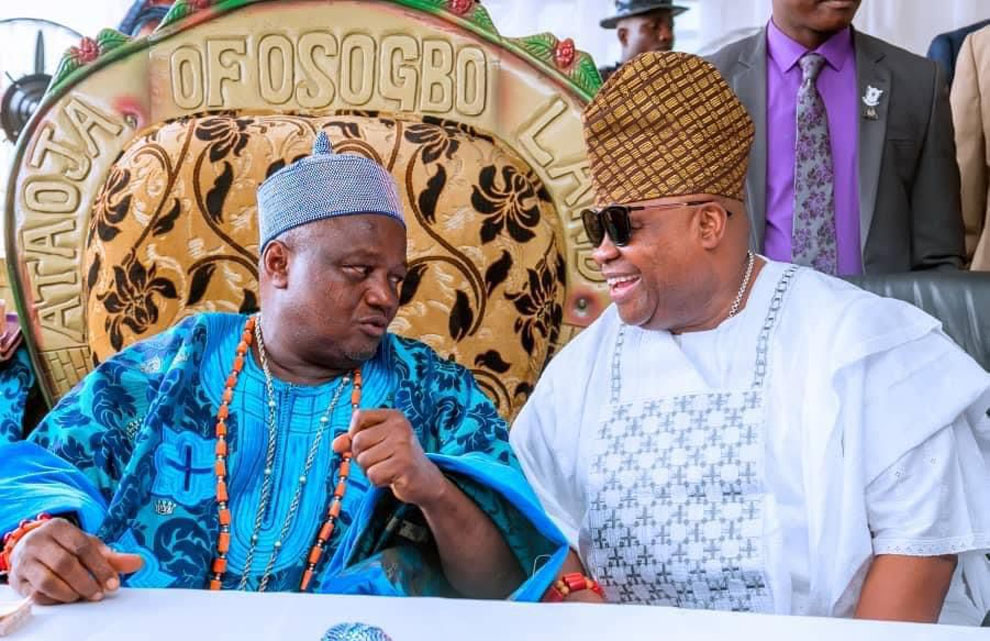
Adeleke Rejects Ataoja Palace Appointment, Reaffirms Oyebode as Osun Iyaloja-General
Adeleke Rejects Ataoja Palace Appointment, Reaffirms Oyebode as Osun Iyaloja-General
OSOGBO — Osun State Governor, Senator Ademola Adeleke, has reaffirmed Mrs Oyebode Mary as the Iyaloja-General of the state, declaring that any purported appointment of another person to the position is invalid.
The governor’s position followed an announcement reportedly emanating from the palace of the Ataoja of Osogbo concerning the appointment of a new Iyaloja-General.
In a statement issued on Friday by his spokesperson, Mallam Olawale Rasheed, Adeleke maintained that the authority to appoint the Iyaloja-General of Osun State rests with the state government.
The governor specifically warned market associations, traders and women across the state against recognising or acting on any announcement of a new Iyaloja-General from any quarter other than the state government.
READ ALSO:
- Flydubai Co-Pilot Attacked Captain With Axe in Attempted Terrorist Act, UAE Says
- Nigerian-Born Ex-Professor Jailed 78 Months Over $1.3m US Student Aid Fraud
- Police Arrest Man Caught Sexually Assaulting 12-Year-Old Girl in Car
According to him, “any announcement from any other quarter including the Osogbo Royal Palace is null and void.”
Adeleke further declared that Mrs Oyebode remains the legally recognised Iyaloja-General of Osun State and continues to enjoy the full backing and recognition of his administration.
The governor urged market leaders and womenfolk across the state to disregard any purported appointment of another person to the position, stressing that Mrs Oyebode remains the duly appointed Iyaloja-General under the authority of the state government.
He also appealed to traditional institutions, organisations and individuals to respect the law and remain within the boundaries of their respective mandates.
Adeleke cautioned against actions capable of creating tension or disturbing the peace of the state, urging all parties involved in the development to exercise restraint.
The governor’s statement could further deepen attention around the authority and processes governing the leadership of market associations in Osun State, particularly amid the conflicting positions attributed to the state government and the Osogbo traditional institution.
Adeleke Rejects Ataoja Palace Appointment, Reaffirms Oyebode as Osun Iyaloja-General
News
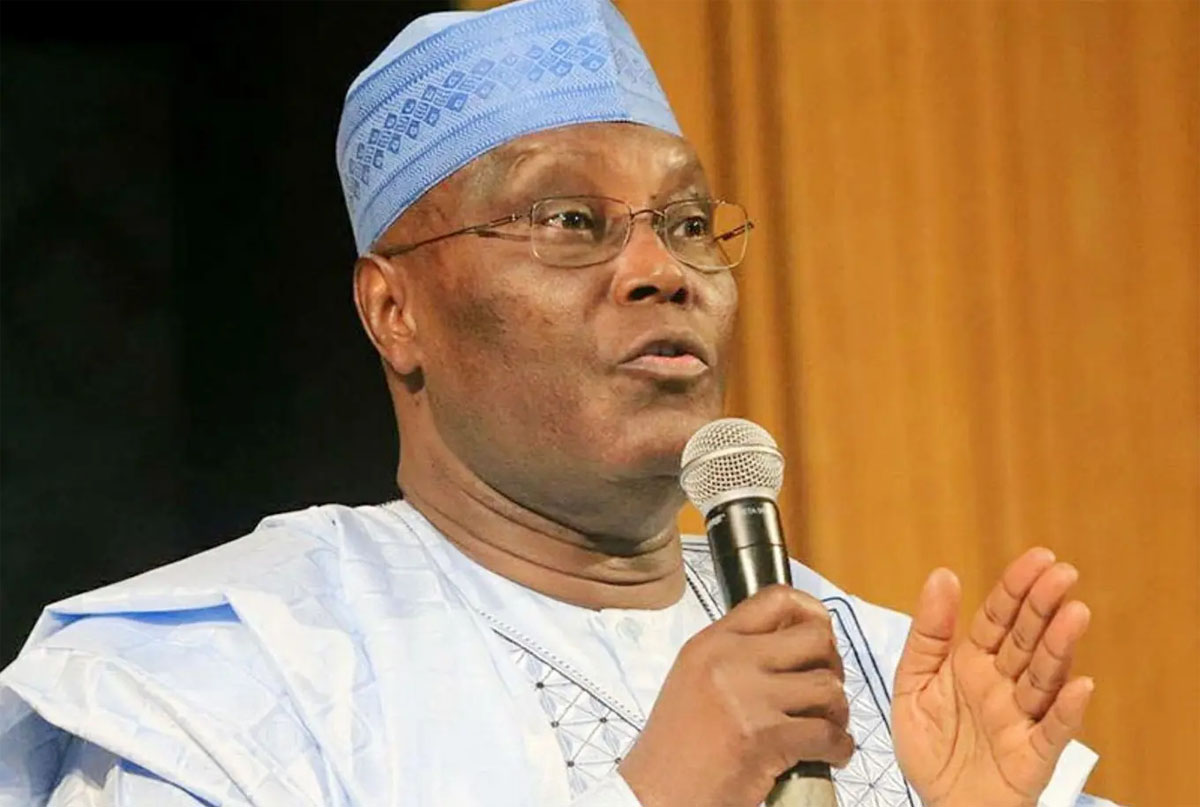
Atiku Challenges Tinubu’s Prosperity Claim, Says Nigerians Can Barely Afford to Live
Atiku Challenges Tinubu’s Prosperity Claim, Says Nigerians Can Barely Afford to Live
Former Vice President and African Democratic Congress (ADC) presidential candidate, Atiku Abubakar, has criticised President Bola Ahmed Tinubu’s claim that Nigeria has entered an era of prosperity, saying millions of Nigerians are still struggling to afford basic necessities.
Atiku made the remarks in his Independence Day address on Thursday as Nigeria marked its 66th anniversary, arguing that the economic gains highlighted by the government have yet to translate into improved living conditions for many households.
Tinubu, in his own Independence Day address, said Nigeria had moved from a period of difficult economic reforms into what he described as an era of shared and widespread prosperity. He said the government’s focus was now on lowering the cost of living, creating jobs, expanding production and improving opportunities for Nigerians.
Atiku, however, disputed that assessment, saying the reality confronting ordinary Nigerians was different from the picture presented by the government.
He argued that a reduction in the rate of inflation does not automatically restore the purchasing power lost by households after years of rising prices.
According to Atiku, the current N70,000 minimum wage can purchase about 50 litres of petrol, compared with about 118 litres that the former N30,000 minimum wage could buy in April 2023.
He also cited the rising prices of basic food items, including bread and eggs, as evidence of the pressure facing families.
READ ALSO:
- Edo Police Arrest 37-Year-Old Man Over Alleged Rape of 70-Year-Old Woman
- Why Ronaldo Left Portugal Camp Ahead of Denmark Clash
- 2027: Amaechi Vows to Resign If Nigeria Fails to Change Within One Year
The ADC candidate said his approach to reducing petrol prices would include a capped and budgeted production subsidy restricted to petrol refined in Nigeria. Under his proposal, imported petrol would not qualify for the subsidy.
He said the arrangement would have a spending limit, with the cost made public and payments independently audited. He argued that such a policy could reduce pump prices while supporting domestic refining and creating jobs.
Atiku also questioned the Federal Government’s reported cash transfers to vulnerable Nigerians, asking how more than 10 million beneficiaries were identified and paid.
He said the government should provide details of the beneficiaries and explain how the funds were disbursed.
The former vice president also raised concerns over Nigeria’s public debt, citing a debt stock of about N166.79 trillion as of the end of June 2026. He criticised the extension of the 2025 budget into 2026 and questioned the management of public resources.
On insecurity, Atiku said Nigerians continued to face threats from armed groups, while farmers in some communities remained unable to access their farms safely.
He also called for greater adherence to the rule of law, raising questions about the continued detention of certain individuals, including Sheikh Sani Khalifa Zaria and former Kaduna State governor Nasir El-Rufai.
On the case of Nnamdi Kanu, Atiku said the legal process should respect his right to appeal and that the grievances surrounding the case should be addressed through lawful means.
He also criticised the reported arrest of Nigerians over the wearing of T-shirts bearing the slogan “Tinubu Must Go”, arguing that political expression should not by itself be treated as a criminal offence.
Atiku further challenged the administration over its handling of the economy, saying Nigerians had endured substantial hardship following the removal of the petrol subsidy and other economic reforms.
He maintained that the benefits promised from the reforms had not yet been sufficiently felt by ordinary citizens.
The ADC candidate urged Nigerians to remain engaged in the political process ahead of the 2027 general election, calling on voters to protect their votes and participate actively in determining the country’s leadership.
Atiku said the central issue was whether government policies were improving the daily lives of Nigerians, particularly in the areas of food prices, transportation, employment, healthcare, security and household income.
His address came shortly after Tinubu told Nigerians that the government had completed the most difficult phase of its economic reforms and was now focused on translating those reforms into broader prosperity.
The contrasting Independence Day messages highlighted the competing assessments of Nigeria’s economic situation ahead of the 2027 elections, with Tinubu defending the direction of his reforms and Atiku arguing that the hardship experienced by many households remains unresolved.
Atiku Challenges Tinubu’s Prosperity Claim, Says Nigerians Can Barely Afford to Live
News
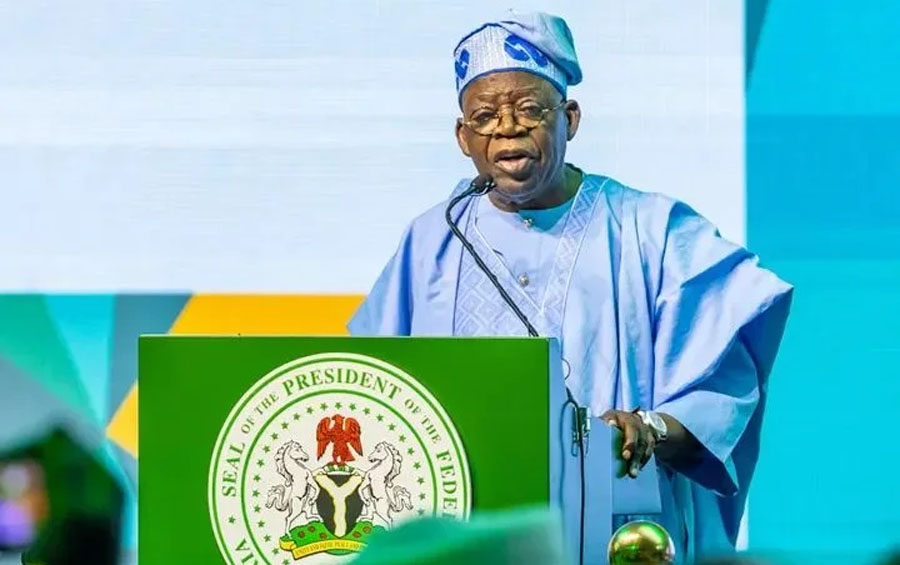
Nigeria at 66: Tinubu Unveils Fresh Push for Lower Costs, Jobs, Prosperity (Full Text)
Nigeria at 66: Tinubu Unveils Fresh Push for Lower Costs, Jobs, Prosperity (Full Text)
President Bola Ahmed Tinubu has declared that Nigeria is entering what he described as an “age of prosperity”, saying the focus of his administration will now shift from economic reforms to lower living costs, job creation, industrial growth and improved living standards.
Tinubu made the declaration in his 66th Independence Day address to Nigerians on Thursday, October 1, 2026, saying his administration had spent the past three years addressing what it regarded as longstanding economic distortions and was now moving towards what he called “shared and widespread prosperity.” (State House)
“The emergency treatment is over. The foundation has been repaired,” the President said, arguing that the country had reached a turning point after a difficult period of economic adjustment.
Tinubu said the next phase would concentrate on translating economic improvements into tangible benefits for Nigerians, particularly by reducing the cost of producing and transporting goods, expanding agricultural production and creating millions of productive opportunities.
According to the President, the government will pursue expanded mechanised irrigation and dry-season farming, improved access to seeds and fertiliser, greater agricultural mechanisation, storage facilities and better transportation infrastructure.
He said investments in roads, railways and ports would also help connect farms and factories to markets and reduce the cost of moving goods across the country.
READ ALSO:
- Israeli Actor, Flight Instructor Among Two Killed In California Plane Crash
- Flood Cuts Off Part of Agbarho-Ughelli Road, Strands Commuters in Delta
- Dangote Draws Battle Lines as Fuel Import Fight Heads Back to Court
Tinubu said the administration’s approach was based on lowering production costs so that savings could eventually be reflected in the prices paid by consumers.
He also placed job creation and industrialisation at the centre of the next phase of his economic programme, saying Nigeria’s large youth population could become an engine of production if provided with the right opportunities, skills, infrastructure and access to finance.
The President said government would use the country’s natural gas resources to support new industries and help businesses revive factories, while expanding digital connectivity and skills development.
“I want to see more Nigerians making things,” Tinubu said, outlining a vision in which Nigerian farms supply cities and factories, local businesses expand their exports and young Nigerians build technology companies and other enterprises.
On social protection, Tinubu acknowledged that millions of Nigerians still face difficulties paying for food, education, healthcare and transportation.
He said government would strengthen support for vulnerable households through the National Social Register, while continuing programmes such as the Nigerian Education Loan Fund (NELFUND) and CREDICORP.
The President also said the Federal Government would continue working with state and local governments to strengthen primary healthcare, basic education and other essential public services.
Tinubu said these interventions were intended to support vulnerable Nigerians while the broader economy expands, rather than serve as a permanent substitute for economic opportunity.
He also defended the administration’s economic reforms, arguing that the measures did not create Nigeria’s longstanding economic weaknesses but were intended to address them.
The President said the Nigerian economy had grown by more than four per cent in 2026, while inflation had fallen from its peak, foreign reserves had been rebuilt and the foreign exchange market had stabilised. He also said oil theft had declined and that Nigeria generated more than $6 billion in non-oil export revenue in 2025, which he described as a record. These figures were presented as part of the administration’s assessment of its economic performance. (State House)
Tinubu acknowledged the hardship associated with the reforms but argued that the government could not reverse in four years problems that had accumulated over several decades.
“We cannot erase in four years what accumulated over generations,” he said, while promising to change the country’s economic direction and steadily reduce poverty.
The President said the administration’s ultimate objective was not merely to manage poverty but to create conditions that would allow more Nigerians to move out of poverty through sustained economic growth and productive employment.
“The age of reform has done its work. Now begins the age of prosperity,” Tinubu declared.
He urged Nigerians to look ahead and support efforts to build what he described as a country of greater abundance and opportunity.
Tinubu concluded his Independence Day speech by calling for national unity and renewed confidence in Nigeria’s future, saying the country had corrected its economic direction and should now move forward without looking back. (State House)
Full Tinubu Independence Day speech
The complete 66th Independence Day address by President Bola Ahmed Tinubu, titled “From Reform to Prosperity,” is available in full on the official State House website. (State House)
Read Tinubu’s full 66th Independence Day address
Nigeria at 66: Tinubu Unveils Fresh Push for Lower Costs, Jobs, Prosperity (Full Text)
-

 Entertainment3 days ago
Phyna Knocks Out Nkechi Blessing in Fourth Round, Wins ₦50m, New Car
-

 metro3 days ago
2027 Hajj: Nigeria Secures 10,000 Extra Slots, Allocation Hits 60,000
-

 metro2 days ago
NYSC Kidnap: Abductors Demand N950m for 19 Prospective Corps Members in Imo
-

 Entertainment2 days ago
Olu Jacobs Laid to Rest in Lagos as Dignitaries, Nollywood Stars Honour Screen Icon
-
 International3 days ago
Trump Threatens Iran With ‘Very Hard’ Response Over Flydubai Attack
-

 Politics2 days ago
2027: Oshiomhole Dares Opposition Over ₦500 Petrol Promise, Says APC Will Take Argument to Nigerians
-
 metro3 days ago
Nigeria Launches 11-Character Digital Postcode System for Every Addressable Building
-
 metro2 days ago
Amaechi: Tinubu’s Policies Made My Mother’s Drugs Unaffordable