

metro
How Nigerian woman smuggled stolen baby into UK
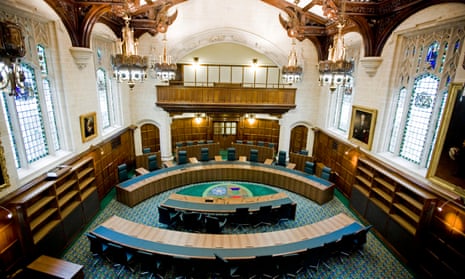
How Nigerian woman smuggled stolen baby into UK
The UK police have arrested a Nigerian woman at Gatwick Airport after she arrived in the country with a young baby girl she lied as her child.
According to a BBC report published on Monday, Susan (not her real name) had been living in West Yorkshire with her husband and children since June 2023.
Before travelling to Nigeria in early June 2024, she had told her doctor in the UK that she was pregnant and wanted to give birth to her baby in her home country.
However, scans and blood tests showed that it was not the case. Instead, they revealed Susan had a tumour, which doctors feared could be cancerous. But she refused treatment.
Susan said her previous pregnancies had been invisible on scans, telling her employer, “My babies are always hidden”.
She also claimed she had been pregnant for up to 30 months with her other children.
When she arrived in Nigeria, she later contacted her local hospital in Britain to say she had given birth.
Sussex Police arrested Susan when she returned to the UK with a baby after doctors contacted child services out of concern.
After her arrest, Susan, her husband, and the child were given DNA tests while the child was taken to foster carers.
DNA tests conducted after she arrived showed the baby had no genetic link with Susan or her husband.
Susan demanded a second test, which gave the same result, and then she changed her story.
She blamed the negative DNA test results on an “IVF treatment” with a donor egg and sperm before moving to Britain in 2023.
Susan provided a letter from a Nigerian hospital, signed by the medical director, saying she had given birth there, as well as a document from another clinic about the IVF treatment to back up her claims.
She also provided photos and videos, which she said showed her in the hospital’s labour suite.
In the photo, no face was visible, and one showed a naked woman with a placenta between her legs, with an umbilical cord still attached to it.
The family court in Leeds sent Henrietta Coker, a social worker with nearly 30 years of experience, to Nigeria for investigations.
Coker visited the medical centre where Susan claimed she had IVF, but there was no record of Susan having a treatment there. Staff told the investigator that the letter was forged.
Coker then visited the place where Susan said she had given birth.
She noted that it was a shabby, three-bedroom flat, with stained walls and dirty carpets.
Coker said she was met by three young teenage girls sitting in the reception room with nurses’ uniforms on.
She asked to speak to the matron and was “ushered into the kitchen where a teenage girl was eating rice”.
Coker then tracked down the doctor who allegedly wrote the letter attesting that Susan had given birth there.
He confirmed that “someone had given birth”, but shook his head negatively when Coker asked him if Susan was the patient after showing him a picture.
“Impersonating people is common in this part of the world,” the doctor was quoted to have told Coker, suggesting that Susan might have “bought the baby”.
The investigator gave evidence to the court in Leeds in March this year, along with Susan, her husband, her employer, and a senior obstetrician.
At an earlier hearing, the judge asked for Susan’s phone to be examined.
Investigators found messages that Susan had sent to someone saved in her contacts as “Mum oft [sic] Lagos Baby”.
About four weeks before the alleged date of birth, Susan wrote a text message which read: “Good afternoon ma, I have not seen the hospital items.”
The same day, Mum oft Lagos Baby responded: “Delivery drug is 3.4 m. Hospital bill 170k.”
The local authority pointed out that the messages were set to “automatic self-destruct mode” and said they represented evidence of a deal to purchase a baby.
Susan tried to explain the messages in court, but the deputy judge of the high court said her attempts were “difficult to follow and impossible to accept”.
Susan and her husband said they wanted the baby returned to them, describing her as “a fundamental part of their family unit”.
But the judge ordered that the child be placed for adoption, and made a “declaration of non-parentage”.
When child is adopted, she will have a new identity and British nationality.







metro
Opeifa Donates Salary to LSSTF as Lagos Gives NRC Two Security Vehicles
Opeifa Donates Salary to LSSTF as Lagos Gives NRC Two Security Vehicles
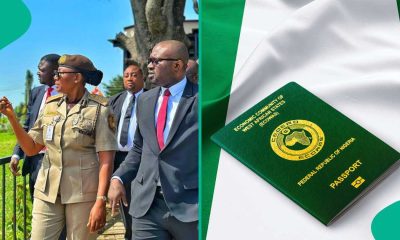
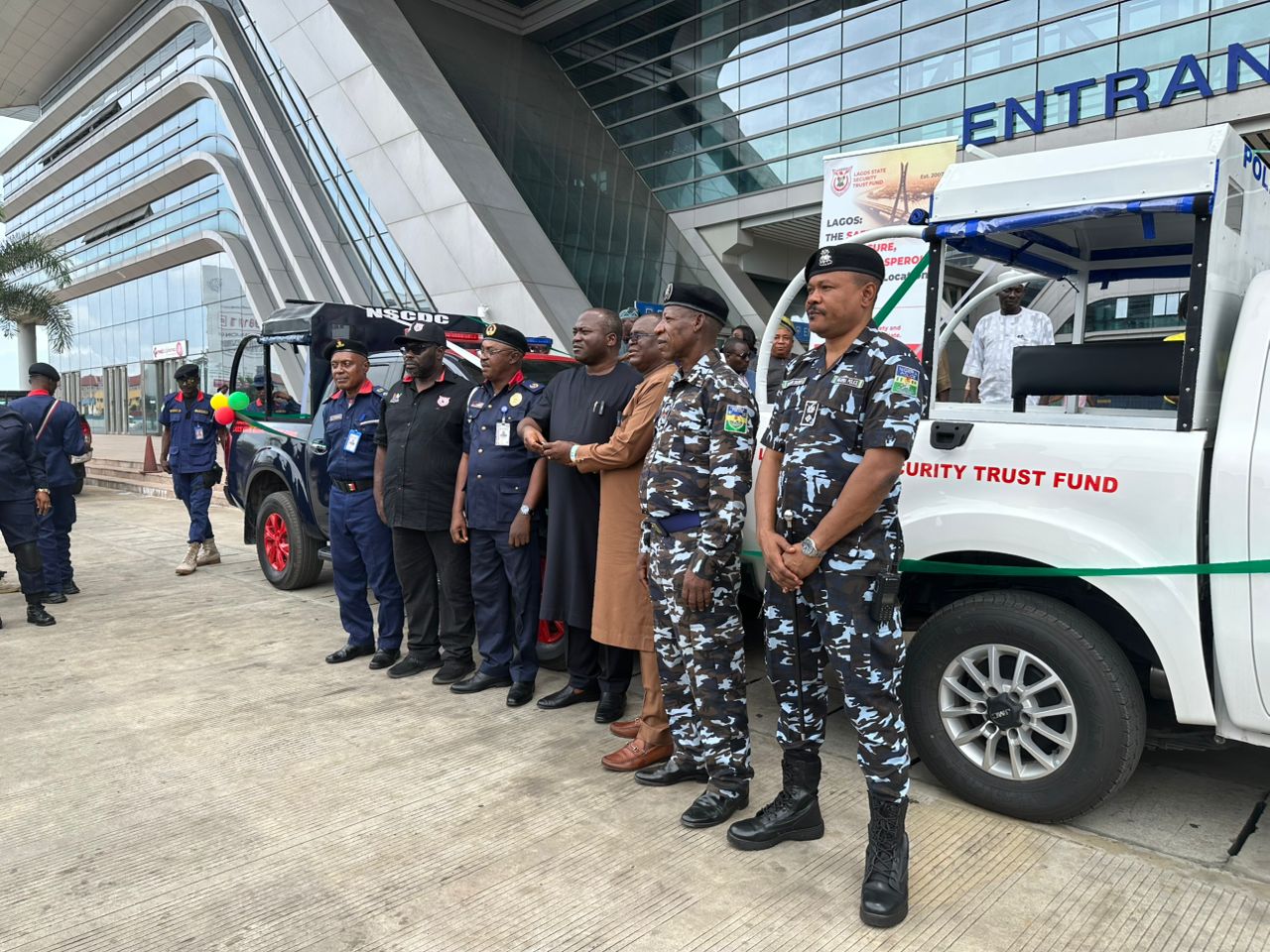
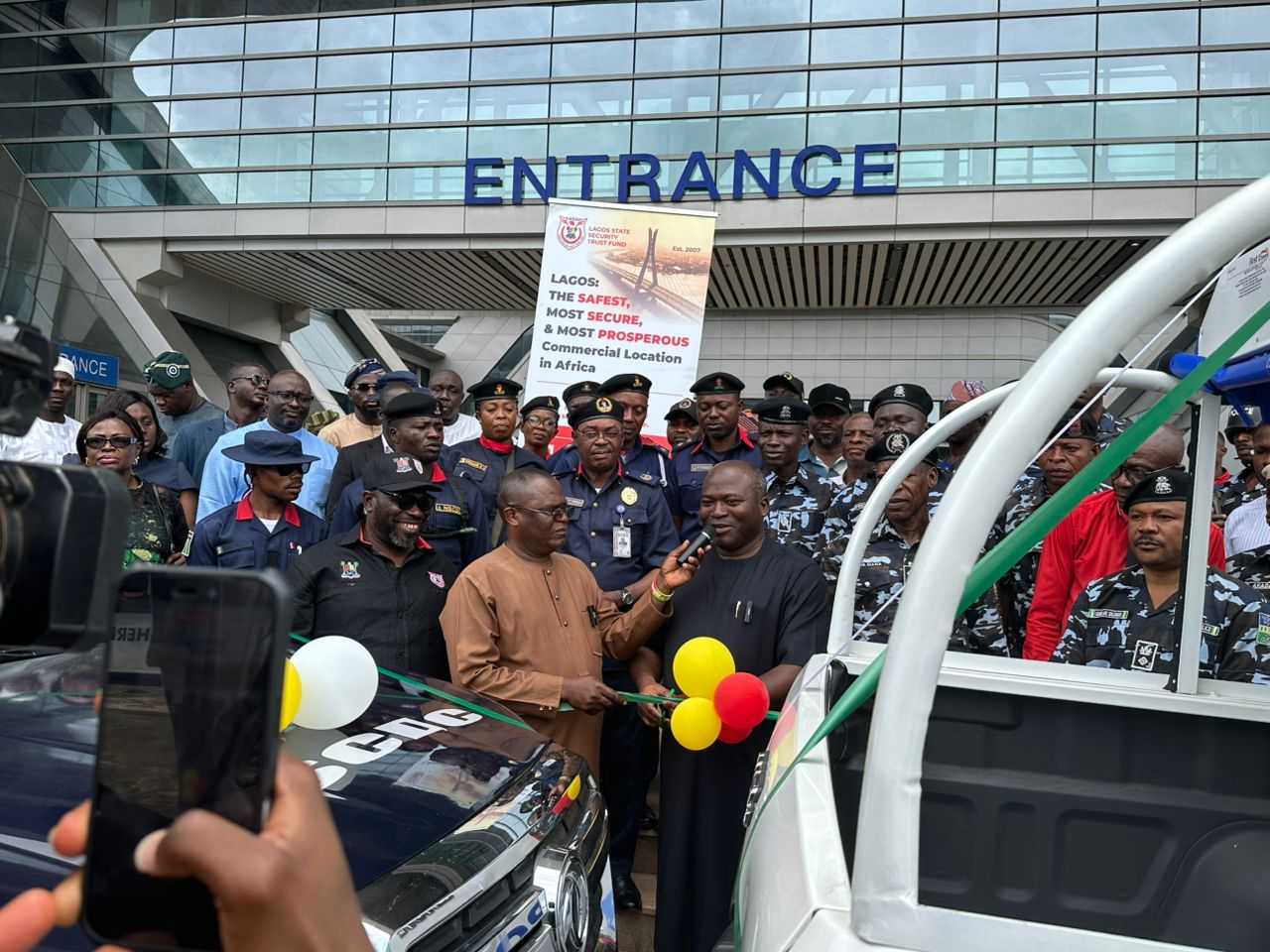
The Managing Director of the Nigerian Railway Corporation (NRC), Dr Kayode Opeifa, has made a personal donation of ₦500,000 to the Lagos State Security Trust Fund (LSSTF), even as the Fund presented two operational vehicles to the Corporation to strengthen security around railway facilities and infrastructure in Lagos.
Opeifa announced the donation during the presentation of the vehicles at the Mobolaji Johnson Train Station, Ebute Metta, Lagos, saying the money would be deducted from his September salary.
He called on individuals, corporate organisations, residents of Lagos and other Nigerians to support the LSSTF financially to enable it to provide the facilities and logistics required to combat crime and improve security across the state.
The NRC boss commended Lagos State Governor, Babajide Olusola Sanwo-Olu, for his continued support for the Corporation, saying the two vehicles would significantly boost the operational capacity of security agencies attached to the railway.
The vehicles were donated by the LSSTF as part of the Lagos State Government’s continued support for security agencies and critical institutions operating within the state.
Presenting the vehicles, the Executive Secretary/CEO of the LSSTF, Dr Ayodele Ogunsan, said the intervention was designed to enhance the capacity of the Nigeria Police Railway Command and the Nigeria Security and Civil Defence Corps (NSCDC) to respond to vandalism, theft and other criminal activities along the railway corridor.
Ogunsan, who was accompanied by the Fund’s Administrative Secretary, Demola Lewis, commended the transformation taking place within the NRC under Opeifa’s leadership and stressed the importance of securing railway infrastructure and improving operational effectiveness.
He urged the security agencies to ensure judicious use of the vehicles, noting that the LSSTF had a monitoring mechanism to ensure that security assets provided by the Fund were deployed strictly for their intended purposes.
Responding, Opeifa expressed appreciation to Governor Sanwo-Olu and the LSSTF for their continued partnership and support for railway security.
He assured the state government that the vehicles would be deployed strictly for railway security operations and would help strengthen the protection of passengers, railway infrastructure and other critical assets.
He also urged other state governments, particularly the 26 states where the NRC has operational presence, to support the protection of railway infrastructure within their jurisdictions, noting that stronger collaboration would facilitate faster responses to vandalism and other criminal activities.
Opeifa further disclosed that the Lagos State Government had indicated its readiness to rehabilitate some roads within the railway compound and install solar-powered streetlights upon completion.
He said work was also ongoing on a major storm-water drainage project designed to channel water from the railway compound towards the Mile 2 lagoon, adding that the intervention had already significantly improved the environment and reduced perennial flooding around the railway premises.
Speaking on behalf of the security agencies, the representative of the Commissioner of Police, Nigeria Police Railway Command, DCP Yahaya Usman, thanked the Lagos State Government and LSSTF for the vehicles.
He assured that they would be deployed responsibly for surveillance, patrol and rapid response along the railway corridor.
The development further reinforces the growing partnership between the Lagos State Government, LSSTF and NRC in securing railway infrastructure, protecting passengers and improving safety within railway communities.
metro
‘Show Them Your Money While Alive’ — Reno Omokri Tackles Lavish Funeral Spending

‘Show Them Your Money While Alive’ — Reno Omokri Tackles Lavish Funeral Spending
Former presidential aide and social commentator, Reno Omokri, has questioned the practice of spending huge sums of money on elaborate burial ceremonies while little or nothing is done to support people when they are alive and battling illness.
Omokri made the observation in a post on his social media account on Sunday, where he argued that resources often deployed to funeral ceremonies could instead be used to improve the quality of life and support people during periods of ill health.
He wrote, “Where is the wisdom in spending so much to throw a party for a person in a coffin, when you did not show them the power of your money when they were coughing with the ill health that killed them?”
The former presidential aide said Africans could rethink the culture of elaborate funeral celebrations, describing the burial industry as one that attracts significant financial expenditure after death.
According to him, greater emphasis should be placed on initiatives that extend people’s lives and improve their living conditions rather than concentrating resources on burial ceremonies.
“As Africans, perhaps we can do better than investing in the industry of death and burials and instead target our money at extending the lives and improving the conditions of the living and on the type of industry that expands our economy,” he stated.
His comments have reignited discussions around Nigeria’s often elaborate burial ceremonies, which in some communities involve large gatherings, expensive clothing, entertainment, food, transportation and other costly arrangements.
While elaborate funerals are deeply rooted in cultural and social traditions across many Nigerian communities, critics have increasingly questioned the financial pressure associated with such ceremonies, particularly when families struggle to meet healthcare and other basic needs while their loved ones are alive.
Omokri’s post had attracted thousands of views and reactions on social media as of Sunday evening, with users weighing in on his call for a shift in priorities from lavish burials to healthcare, welfare and economic development.
‘Show Them Your Money While Alive’ — Reno Omokri Tackles Lavish Funeral Spending
metro
NDLEA arrests herbal tea seller behind Saudi-bound cocaine shipment
NDLEA arrests herbal tea seller behind Saudi-bound cocaine shipment
The National Drug Law Enforcement Agency (NDLEA) has arrested a 34-year-old convicted drug trafficker who allegedly operated under the guise of a herbal tea businessman while masterminding illicit drug shipments, including a 1.2kg cocaine consignment allegedly destined for Saudi Arabia.
The suspect, identified as Dunu Bethel Ebubechukwu, was arrested during a sting operation at Article Market, opposite Trade Fair Market, in the Ojo area of Lagos State, on Friday, September 4, 2026.
According to the NDLEA, his arrest followed an intelligence-led investigation into the interception of a 1.2kg cocaine shipment concealed inside phone chargers at a courier company in Lagos on July 31.
The consignment was allegedly headed for Riyadh, Saudi Arabia.
The agency said operatives from its Directorate of Operations and General Investigation (DOGI) began tracking the person behind the shipment after the cocaine was intercepted.
Following weeks of investigation, the operatives traced the alleged mastermind to Ebubechukwu, who was reportedly operating a herbal tea business as a cover.
The NDLEA said the suspect admitted during interrogation that he had masterminded illicit drug shipments in the past.
He also reportedly discarded his telephone SIM card after learning that the cocaine shipment had been intercepted by the agency.
Further investigation, according to the anti-drug agency, revealed that Ebubechukwu had previously been arrested and convicted for drug trafficking.
The NDLEA said he was first arrested in 2011 at the Murtala Muhammed International Airport (MMIA), Lagos, after allegedly ingesting 900 grammes of cocaine and 130 grammes of heroin while attempting to travel to Austria.
He was subsequently prosecuted, convicted and sentenced to five years in prison.
The agency said he was then known as Dunu Chukwuyenre Enoch but later changed his name to Dunu Bethel Ebubechukwu before allegedly returning to the illicit drug trade.
Following his latest arrest, NDLEA operatives searched his residence at 6 Yemishola Street, Ejigbo, Lagos.
The search reportedly led to the recovery of phone chargers similar to those allegedly used to conceal the Saudi-bound cocaine shipment.
According to the agency, the internal components of the chargers had been removed to create spaces capable of concealing drugs.
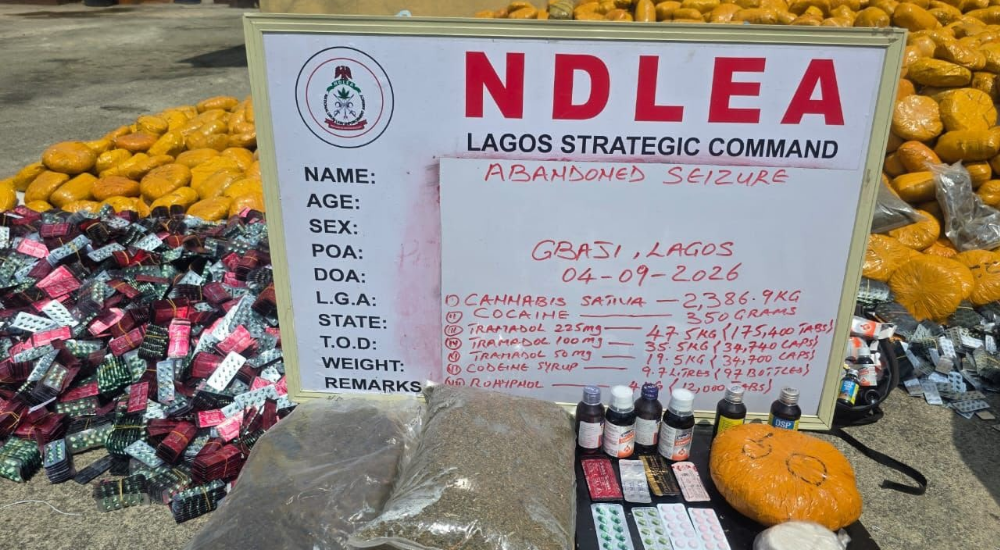
The NDLEA said the arrest was part of a wider nationwide operation during which its operatives recovered large quantities of cocaine, cannabis, tramadol, methamphetamine and other controlled substances across several states.
In Lagos, NDLEA operatives at the airport recovered 966,200 tablets of Tramadol 225mg, valued at more than N1.1 billion.
The tablets were reportedly concealed among thrift trousers contained in a 21-carton consignment imported from Pakistan.
Another operation in Lagos resulted in the recovery of 57.8kg of Loud, a potent strain of cannabis, from cartons of disposable hand gloves imported from Singapore.
The agency said the consignment had remained unclaimed for weeks before NDLEA operatives, alongside officials of the Nigeria Customs Service and other security agencies, conducted a joint examination on Thursday, September 3.
In Ondo State, NDLEA operatives intercepted a 20,000-litre fuel tanker marked MKA 960 XC along the Akoko-Lokoja Expressway.
The driver allegedly refused to stop when the vehicle was flagged down and later abandoned the tanker at a church premises in Ugbe Akoko before escaping into the bush.
A search of the tanker uncovered a concealed compartment containing 165 bags of cannabis weighing 2,145kg, alongside the legitimate fuel cargo reportedly destined for Jos, Plateau State.
At the Tin Can Island Port in Lagos, the agency intercepted another consignment containing 598.08kg of cannabis-laced cookies and gummies, packed in 890 packets inside a 40-foot container.
The seizure was linked to three suspects already in custody over an earlier seizure involving 842.54kg of cannabis-laced cookies.
The suspects were identified as Yashim Dauji, Larry Ifeanyi and Joseph Moji.
In Adamawa State, NDLEA operatives recovered 864,000 opioid pills, including tramadol, from a residence linked to a fleeing suspect identified as Patrick KC Frank.
The agency said Frank’s Honda Civic rammed an NDLEA patrol vehicle before he escaped.
In another operation in Michika, 35-year-old Calistus Ebubechukwu, whom the NDLEA described as a major methamphetamine supplier operating between Lagos and the Mubi-Michika axis, was arrested with 2kg of methamphetamine.
The NDLEA said the series of operations reflected its continued efforts to disrupt drug trafficking networks, intercept illicit consignments and apprehend individuals allegedly involved in the movement and distribution of controlled substances.
NDLEA Chairman and Chief Executive Officer, Brig. Gen. Mohamed Buba Marwa (retd.), commended the officers involved in the operations and urged them to sustain their intelligence-led approach to combating drug trafficking.
Marwa also warned individuals involved in the illicit drug trade against attempting to evade law enforcement by changing their identities or hiding their activities behind legitimate businesses.
He said the agency would continue to track down suspected traffickers and disrupt their operations.
The arrest of Ebubechukwu also highlights the role of intelligence-led investigations in tracing suspected drug trafficking networks after illicit consignments have been intercepted.
In the present case, the 1.2kg cocaine shipment allegedly bound for Riyadh was intercepted weeks before the suspect was arrested, giving investigators time to trace the alleged source of the consignment.
The suspect remains in NDLEA custody as investigations continue into the alleged cocaine shipment and other drug trafficking activities linked to him.
NDLEA arrests herbal tea seller behind Saudi-bound cocaine shipment
-
 metro3 days ago
20-year-old arrested over alleged gang-rape of 19-year-old woman in Ogun
-
 metro3 days ago
Presidency breaks silence on Tinubu’s US FOIA case, denies criminal trial
-
 metro3 days ago
Oyo kidnap rescue: Five security personnel, four civilians killed — DSS DG
-

 News3 days ago
NAF recruitment 2026: Step-by-step guide to applying for BMTC 47/2026
-
 Business2 days ago
BREAKING: OPay Warns Customers Against Viral Shutdown Message, Threatens Legal Action
-
 metro3 days ago
NBA controversy: VDM apologises to security agencies over ‘unknown gunmen’ remarks
-
 Politics3 days ago
Amaechi: Atiku will restore electricity subsidy if elected in 2027
-
 Education3 days ago
LASU: Mother allegedly assaults daughter’s roommate, student rushed to LASUTH with eye injury