

metro
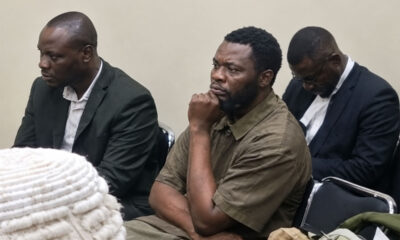
VeryDarkMan Dares Sowore Over Blord’s Kuje Prison Remand

VeryDarkMan Dares Sowore Over Blord’s Kuje Prison Remand
Controversial social media activist VeryDarkMan has fired back at politician and activist Omoyele Sowore following his criticism of the incarceration of cryptocurrency entrepreneur Blord. The case has ignited widespread discussion about identity theft, impersonation laws, and online accountability in Nigeria.
Blord, whose real name is Linus Williams Ifejirika, was remanded at the Kuje Correctional Centre on April 1, 2026, after being charged with criminal conspiracy, impersonation, and unauthorized use of VeryDarkMan’s identity for commercial purposes. Court proceedings have been scheduled to continue with Blord in custody until April 27, 2026.
The legal action arose after Blord allegedly used VeryDarkMan’s image without consent, including on promotional materials and advertisements, falsely presenting himself as a partner or endorser of certain businesses. VeryDarkMan claimed Blord even went as far as forging flight tickets in his name to promote events.
READ ALSO:
- First Lady’s National Community Food Bank Programme Attracts Over ₦66bn
- Muslim Nations Condemn Israel’s New Death Penalty Law for Palestinians
- Lagos Ranks Fourth Most Expensive City for House Rent in Africa — Report
In response to Sowore’s public condemnation of the case, VeryDarkMan took to Instagram to express disappointment that Sowore opted to speak publicly instead of contacting him privately. He warned Sowore against unauthorized use of his identity and threatened legal action if similar actions occurred.
“Dear Omoyele Sowore… because of the respect I have for you, if you had asked me to let it go, I might have,” VeryDarkMan wrote. “But instead, you chose to test your strength… On God, if you cross this path and use my face or name to promote any business without my approval, I, Martins Vincent Otse, will send you to prison… you might end up begging to discontinue the case.”
VeryDarkMan emphasized that the case highlights how wealth and influence do not place anyone above the law, pointing out that Blord—despite being perceived as well-connected—was remanded. This, he asserts, sends a strong message about the consequences of identity theft and impersonation in Nigeria.
Sowore, for his part, condemned the “celebration” of Blord’s incarceration, warning that the law should not be weaponized to target individuals. He pledged to work toward having the case dropped and Blord released, asserting that justice must be fair and impartial.
The dispute has sparked heated debates on social media, with some supporting VeryDarkMan’s strict stance on protecting personal identity, while others echo Sowore’s concerns about legal overreach and fairness. Observers note that the case has also raised questions about digital rights, online reputation management, and enforcement of impersonation laws in Nigeria’s fast-growing tech ecosystem.
As the case continues, it remains a flashpoint for discussions on law, online influence, and accountability, highlighting the challenges that arise when social media personalities, politicians, and entrepreneurs collide in Nigeria’s legal and digital spheres.
VeryDarkMan Dares Sowore Over Blord’s Kuje Prison Remand








metro
Court Orders NDLEA to Produce Enugu Airport Duty List in Abba Kyari Cocaine Trial
Court Orders NDLEA to Produce Enugu Airport Duty List in Abba Kyari Cocaine Trial
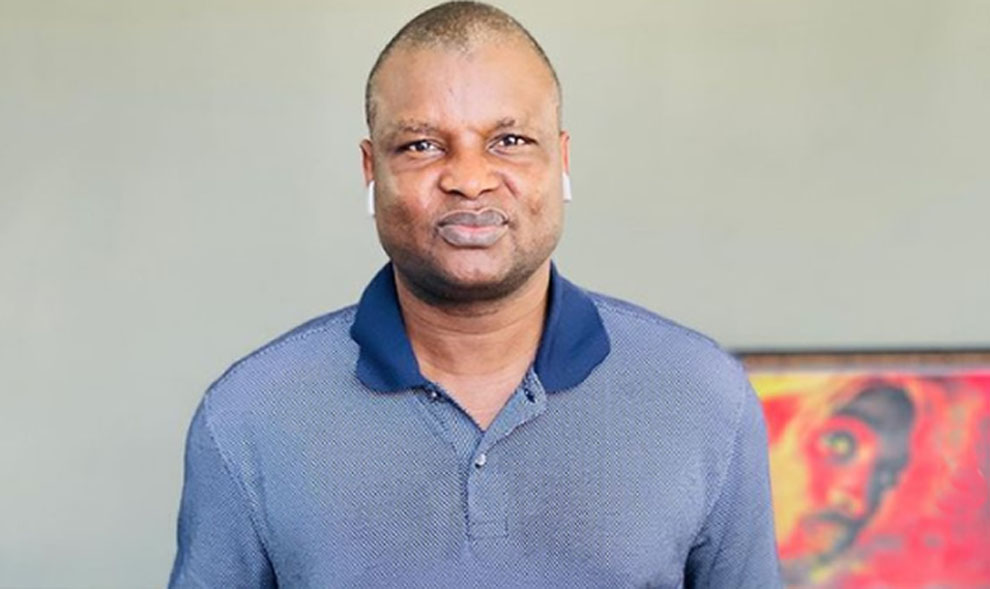
The Federal High Court in Abuja has ordered the Chairman of the National Drug Law Enforcement Agency (NDLEA) to produce the duty roster of personnel deployed to Akanu Ibiam International Airport, Enugu, on January 19, 2022—the day a cocaine consignment central to the Abba Kyari drug trial was intercepted. The ruling marks a significant development in a case that has drawn national attention and raised questions about airport security and inter-agency coordination in Nigeria’s fight against drug trafficking.
Justice Emeka Nwite issued the order on Monday during the continuation of the trial of suspended Deputy Commissioner of Police Abba Kyari and four other suspended officers of the Police Intelligence Response Team (IRT). The defendants are facing charges of alleged tampering with 21.35kg of cocaine and are standing trial on counts of conspiracy and obstruction in the illegal dealing and importation of the substance. They have all pleaded not guilty.
Julius Mba, counsel to Kyari and Inspector Simon Agirgba, told the court that the defence had filed a subpoena duces tecum—a legal order requiring a person or organisation to produce specific documents or evidence. The subpoena directs the NDLEA boss to present certified true copies of the duty roster for personnel deployed to the Enugu airport on the date in question. According to Mba, the document is essential to help the defence establish its case and demonstrate how the cocaine consignment allegedly passed through airport security.
READ ALSO:
- Benue Boat Mishap: Catholic Priest Among Four Dead, Nine Missing
- Rivers Police Arrest OSPAC Operative Over Alleged Killing, Secret Burial
- Adeleke Signs New Law to Regulate Motor Parks Across Osun
The court session also addressed the absence of the defence’s second witness, John Nwonke, who was expected to continue his testimony. Nwonke, who had been subpoenaed to appear, was not in court. His lawyers presented a letter dated October 2 stating that he was ill and unable to attend. The development prompted a sharp exchange between the defence and prosecution.
NDLEA counsel Joseph Sunday strongly opposed the adjournment request, urging the court to foreclose Nwonke’s evidence. He argued that the defence had failed to comply with an earlier order directing the witness to appear on Monday. Sunday also questioned the medical letter, noting that it did not disclose the nature of the illness or the hospital where Nwonke was receiving treatment. He told the court the prosecution was “not aware of any subpoena,” adding: “We don’t conduct trial by ambush.”
In his ruling, Justice Nwite declined to foreclose the witness’s evidence immediately. While he observed that Nwonke’s letter was not convincing enough to justify the adjournment, he adjourned the case until October 7, 2026, in the interest of justice. The judge warned that failure of the witness to appear on that date would lead to the foreclosure of his testimony. He also directed counsel to the first to fifth defendants to submit the names of witnesses they intend to call before the next hearing.
The trial had resumed after an indefinite adjournment in May due to Justice Nwite’s shortlisting for elevation to the Court of Appeal. The defence has been calling witnesses in an effort to establish that NDLEA operatives facilitated the passage of convicted drug traffickers through airport security. In a video played in court in March, convicts Chibunna Umeibe and Emeka Ezenwanne alleged that their photographs were sent ahead to NDLEA officers at the airport to ensure they were cleared without proper screening. The testimony forms part of the defence’s broader argument that the defendants were not the architects of the alleged obstruction.
Kyari and his co-defendants—Sunday Ubua, Bawa James, Simon Agirgba, and John Nuhu—remain at the centre of one of the most closely watched corruption and drug trafficking trials in Nigeria’s recent history. The case has sparked widespread debate about accountability within Nigeria’s law enforcement agencies and the effectiveness of inter-agency cooperation in combating drug crime.
The case was adjourned to October 7, 2026, for further defence proceedings.
Court Orders NDLEA to Produce Enugu Airport Duty List in Abba Kyari Cocaine Trial
metro
No Survivors Found in Ondo NAF Plane Crash — Ondo Governor
No Survivors Found in Ondo NAF Plane Crash — Ondo Governor
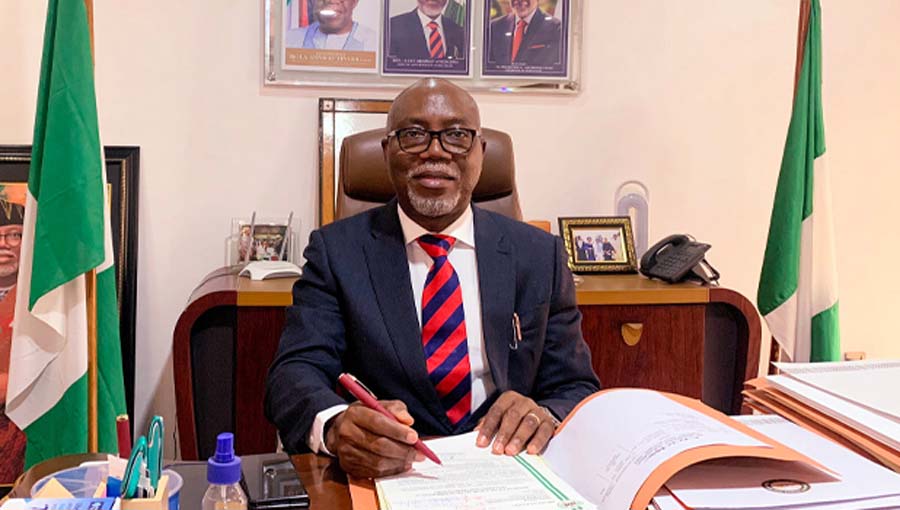
The Nigerian Air Force plane crash in Ondo State has ended in tragedy, with Governor Lucky Aiyedatiwa confirming that no survivors were found at the crash site in Igbokoda. The NAF ATR-42 aircraft went down on Monday morning near the Nigerian Navy Forward Operating Base in Ilaje Local Government Area, killing all 32 people on board—25 passengers and seven crew members. The confirmation came during an interview on Channels Television’s Politics Today, where the governor described the scene as devastating.
Governor Aiyedatiwa said rescue workers recovered debris from the Ondo plane crash site, including wing fragments, identity cards, and military uniforms, which helped confirm that a military aircraft had gone down. “So far, no single life was rescued,” the governor said. “They could not find anybody alive in that aircraft.” His words confirmed the worst fears of a nation that had spent hours hoping for a miracle.
The governor revealed that he received news of the NAF crash at about 10:30 a.m. through the chairman of Ilaje Local Government Area. Initial information was sketchy, with residents across the river reporting a loud sound and vibrations resembling an earthquake. Witnesses later saw the aircraft plunge into a swampy area. Aiyedatiwa said Nigerian Navy personnel initially kept their distance after arriving nearby because they were unsure whether the crash would trigger an explosion or fire. Only after confirming there was no fire or explosion did the Navy personnel move toward the crash site to attempt to rescue those on board.
READ ALSO:
- President Tinubu Mourns 32 NAF Personnel in Ondo Jet Crash, Orders Immediate Probe
- Tragedy Strikes FMC: Medical Director Loses Two Daughters—A Doctor and a Pharmacist—Within 48 Hours
- BREAKING: Many Feared Dead as Helicopter Crashes in Ondo Community
Personnel from the Ondo State Emergency Management Agency (SEMA), local residents, and the Amotekun security network also joined the rescue operation. Aiyedatiwa said he had been in constant contact with officials in Igbokoda and had received updates from his Senior Special Adviser on Security Matters and the Nigerian Air Force. The Air Force is also conducting its own assessment to determine the cause of the crash.
The governor described the incident as a “painful development,” especially because it involved military personnel “sent to protect the territorial integrity of Nigeria.” “Today is a very sad situation,” Aiyedatiwa said. “We are all sad as Nigerians. And it happened in my own state, not just my own state, but even my own local government area.” His voice carried the weight of a tragedy that has struck close to home for the people of Ondo State.
The traditional ruler of Igbokoda, Oba Afolabi Odidiomo, expressed relief that the aircraft did not crash into the town. “I was praying and afraid that this must not be an aircraft because the casualty figure would have been too high,” Odidiomo said. “We first of all thank God Almighty that it did not drop in the town.” He added that the plane crashed in bushes and a waterlogged area across the river, and that the presence of water may have prevented the aircraft from catching fire after impact.
Minister of Aviation and Aerospace Development Festus Keyamo had earlier said the aircraft, with registration number NGR 931, lost contact with air traffic control at about 9:13 a.m. during a routine mission from Benin City to Lagos. Nigerian Air Force spokesman Ehimen Ejodame confirmed that search and rescue operations had been activated in coordination with relevant authorities and emergency response agencies.
Governor Aiyedatiwa has directed SEMA, the Ministry of Health, and relevant security agencies to deploy personnel and resources to support the Air Force and other emergency responders at the crash site. He also ordered security agencies to cordon off the area to prevent unauthorized persons from interfering with rescue operations. The measures reflect the urgency of a situation that has gripped the entire nation.
President Bola Tinubu has ordered the Nigerian Air Force to immediately commence a thorough investigation into the cause of the crash to prevent future occurrences. The President extended his deepest condolences to the families of the victims, the Chief of the Air Staff, Air Marshal Sunday Kelvin Aneke, and all officers, airmen, and airwomen of the Nigerian Air Force.
No Survivors Found in Ondo NAF Plane Crash — Ondo Governor
metro
Benue Boat Mishap: Catholic Priest Among Four Dead, Nine Missing
Benue Boat Mishap: Catholic Priest Among Four Dead, Nine Missing
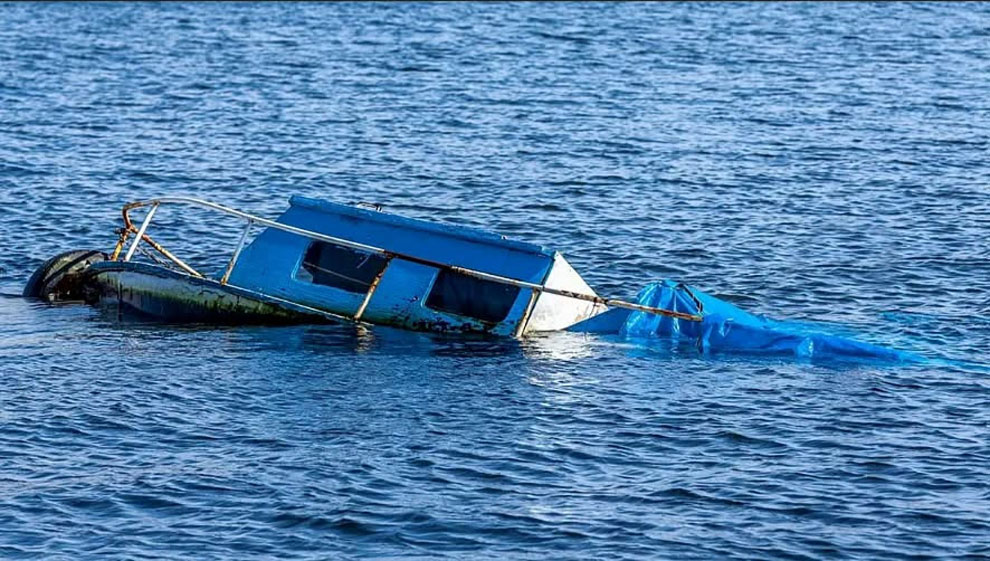
A Catholic priest, Rev. Fr. Moses Tsuagh, is among four people confirmed dead following a boat mishap at the Buruku crossing point in Buruku Local Government Area of Benue State.
The accident occurred on Saturday, October 3, 2026, as passengers were travelling across the Buruku River after attending a burial ceremony. Most of those on board were reportedly from neighbouring Gboko Local Government Area.
The Benue State Emergency Management Agency (SEMA) confirmed that four bodies had been recovered, while nine passengers remained missing as search and rescue operations continued.
SEMA Information Officer, Tema Ager, said the number of people who were aboard the boat was still being established because different accounts had emerged from survivors, relatives and community members.
READ ALSO:
- Rivers Police Arrest OSPAC Operative Over Alleged Killing, Secret Burial
- Adeleke Signs New Law to Regulate Motor Parks Across Osun
- Tragedy Strikes FMC: Medical Director Loses Two Daughters—A Doctor and a Pharmacist—Within 48 Hours
An earlier estimate suggested that more than 200 people may have been on the vessel, while subsequent information put the number of passengers believed to have been involved at about 138. The boat was also carrying numerous motorcycles.
Ager said 125 passengers had been rescued as of Monday, while divers and other rescue personnel continued searching for those still unaccounted for.
The rescue operation is also focused on recovering motorcycles and other belongings that went into the river. Authorities said 38 motorcycles were believed to have entered the water, with five subsequently recovered.
Initial accounts attributed the mishap to engine failure, overloading and difficulties encountered while attempts were made to rescue passengers. Another preliminary account from the state Commissioner for Marine and Blue Economy, Dennis Iyaghigba, said a strong current swept the boat into an abandoned barge, causing it to overturn.
The differing preliminary accounts are expected to be clarified as the authorities complete their investigation.
Following the accident, the Benue State Government suspended the Buruku crossing-point branch of the Nigeria Union of Maritime Workers.
Iyaghigba also ordered the suspension of the line operator and directed the arrest and detention of the boat skipper involved in the incident pending investigation.
SEMA has continued to appeal to passengers using the state’s waterways to observe water safety measures, particularly the use of life jackets and compliance with instructions from maritime officials.
The tragedy has renewed concerns about maritime safety in Benue, including passenger capacity, boat maintenance, enforcement of safety regulations and the need for safer river crossings.
Search and rescue efforts are continuing as authorities work to account for all passengers believed to have been aboard the vessel.
Benue Boat Mishap: Catholic Priest Among Four Dead, Nine Missing
-

 metro2 days ago
NYSC Kidnap: Abductors Demand N950m for 19 Prospective Corps Members in Imo
-

 Politics3 days ago
2027: Oshiomhole Dares Opposition Over ₦500 Petrol Promise, Says APC Will Take Argument to Nigerians
-
 metro2 days ago
Amaechi: Tinubu’s Policies Made My Mother’s Drugs Unaffordable
-
 metro2 days ago
Tension as Kidnappers Threaten to Kill Abducted Oyo Corps Members
-
 metro2 days ago
‘I Thought I Was Dead’ — Hairstylist’s Daring Escape From Kidnappers After Benin-Ore Ambush
-

 metro2 days ago
N500 Petrol, Wage Award: Public Sector Workers Begin Warning Strike
-

 Politics2 days ago
Wike to Amaechi: What Did You Bring to Rivers After 24 Years in Power?
-

 Entertainment3 days ago
Less Than Four Months After Wedding, Jarvis Threatens Peller With Lawsuit Over Second-Wife Plan