

Business
Dangote mounts pressure on Tinubu to ban fuel import
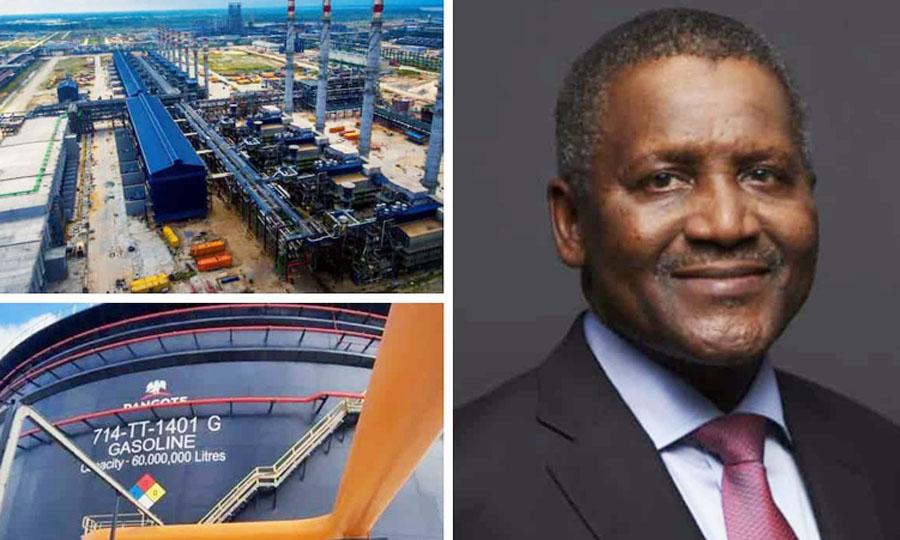
Dangote mounts pressure on Tinubu to ban fuel import
Africa’s richest man, Alhaji Aliko Dangote, has called on President Bola Tinubu to include refined petroleum products in the list of items restricted under the Federal Government’s ‘Nigeria First’ policy a proposal that has sparked sharp criticism from oil marketers and industry analysts.
The policy, announced in May, aims to prioritize local production by banning government agencies from importing goods or services that can be sourced within Nigeria. It mandates that any foreign procurement must be justified and approved by the Bureau of Public Procurement.
Speaking over the weekend, Dangote said refined fuel should be among the restricted imports, as Nigeria now has domestic refining capacity with the Dangote Refinery and other local facilities coming online. He argued that continued reliance on fuel imports undermines local investments and sabotages national economic goals.
Speaking at the just concluded Global Commodity Insights Conference on West African Refined Fuel Markets hosted by the Nigerian Midstream and Downstream Petroleum Regulatory Authority in partnership with S&P Global Insights, Dangote requested in clear terms that petrol, diesel, and other refined petroleum products be added to the items banned by the policy.
According to him, the importation of fuel into Nigeria is killing local refining and discouraging further investments in the sector and even the economy. To remain viable, he urged governments across Africa to take deliberate steps as the United States, Canada, and the European Union have done to protect domestic producers from what he called unfair competition.
Dangote did not mince words when he said that the Nigeria First policy announced by Tinubu should apply to the petroleum products sector. “The Nigeria First policy announced by His Excellency, President Bola Tinubu, should apply to the petroleum product sector and all other sectors,” he stated.
This request by Dangote seeks to place a ban on the importation of petrol, diesel, and other products being produced locally. He argued that local refiners were finding it difficult to sell their products because of what he called dumping. The billionaire businessman alleged that importers were dumping toxic fuel that would never be allowed in Europe.
READ ALSO:
- 2027: South East group raises N200m to buy APC presidential form for Tinubu
- Ohanaeze rejects bill to make Ooni, Sultan co-chairs of traditional rulers council
- Stop playing ethnic card, Arewa group warns Kwankwaso
“And to make matters worse, we are now facing increased dumping of cheap, often toxic petroleum products, some of which are blended to substandard levels that would never be allowed in Europe or North America,” he said.
Dangote mentioned that some of the importers bring into Nigeria fuel or crude oil subsidised in Russia. This, he said, affects local pricing, forcing refiners to drop prices below their costs.
“Due to the price caps on the Russian petroleum products, discounted petroleum products produced in Russia or with discounted Russian crude find their way to Africa, severely undercutting our local production, which is based on full crude pricing. This has created an unlevel playing field in most African countries. Petrol and diesel are sold for about a dollar net of taxes.
“In Nigeria, due to this unfair competition, this price is just about 60 cents, even cheaper than Saudi Arabia, which produces and refines its own oil. This is due to the fact that we are having too much dumping. To remain viable, we urge the governments across Africa to take deliberate steps as the United States, Canada, and the European Union have done to protect domestic producers from unfair competition,” he stated.
The richest man in Africa said this was not to monopolise the sector but to produce local investments. He noted that those who have the resources to invest in Nigeria keep taking their resources outside the country while they criticise local investors.
“Let me take this opportunity to address concerns around monopoly and dominance. The reality is that too many people who have the means and the opportunity to contribute meaningfully to our nation’s growth choose instead to criticise from the sidelines while investing their wealth abroad,” Dangote said.
To prove that his $20bn refinery can satisfy local fuel needs, Dangote disclosed that Nigeria has become a net exporter of petroleum products, having exported approximately 1.35 billion litres of petrol to other countries worldwide in 50 days.
According to Dangote, between June and July 2025, the refinery exported up to 1 million tonnes of petrol, which is approximately 1.35 billion litres when converted.
“Today, Nigeria has actually become a net exporter of refined products. Before I came on the podium, I asked my people how many tonnes of PMS we have actually exported. From June beginning to date, we have exported about 1 million tonnes of PMS, within the last 50 days,” he said.
Marketers tackle Dangote
However, marketers disagreed with Dangote, urging the Federal Government not to consider adding petroleum products to the list of items banned from importation.
READ ALSO:
- You can’t appoint SLGs, Sanwo-Olu tells newly elected LG chairmen
- Famine spreads in Gaza, UN to host two-state solution conference
- Charlie Boy does not deserve a bus stop in Lagos
Speaking with our correspondent on Sunday, the National Publicity Secretary of the Independent Petroleum Marketers Association of Nigeria, Chinedu Ukadike, said independent marketers would not support that idea as it would spell doom for the sector.
“We independent marketers will depart from that request. If the government does that, that means we will not be able to check inflation and monopoly, since it is the only refinery operating in the country now. We should continue to import even as we buy locally.
“I heard that the NMDPRA stated clearly that Dangote cannot produce all the fuel that the country needs. We will appreciate it if the country allows importation to continue since we are not paying subsidy,” Ukadike said.
Reacting to Dangote’s claim that importation would kill businesses and local refineries, Ukadike differed. “Importation won’t kill local businesses or refineries; it will strengthen them. It will ensure local refineries step up their game. I don’t agree with Dangote on this,” he said.
Also, the National President of the Petroleum Products Retail Outlet Owners Association of Nigeria, Billy Gillis-Harry, kicked against the call to ban fuel Importation. He said no one company should be allowed to dominate the downstream sector in a free economy.
While admitting that there is a need to ban the importation of some goods, he said these should not include fuel, stressing that Nigeria needs multiple sources of energy. “I don’t agree with Dangote. We are running a free economy. There’s no reason why any one company should have an overarching value on the entire industry.
“Importation is not killing the economy. Importation is stabilising the sources of petroleum products. Importation of all products is useful. However, those that can be produced in Nigeria, like toothpicks, garri, egusi soup, cassava, and others like that, should be banned.
“But importation of refined petroleum products should not be banned because it helps to ensure that there are multiple sources of energy and replenishment,” Gillis-Harry stated.
Expert reacts
An energy expert at the University of Lagos, Professor Dayo Ayoade, also warned against banning fuel Importation, saying this would promote monopolistic tendencies.
READ ALSO:
- More governors to join APC, says Gov Sule
- 2025 budget funding under pressure as oil output under-performs in half year
- Survivors narrate how bandits killed scores of captives in Zamfara
“No, we cannot have a ban on petroleum imports. It’s not a legal ban. That would not be acceptable because we don’t have diverse sources for petroleum products. We can’t rely solely on the Dangote refineries. That would give a monopoly to a private individual.
“And for the reasons of energy security and national security, that would be completely unacceptable. The government should continue to encourage, liberalise, and ensure other refineries come upstream. NNPC may want to privatise or sell off its refineries, then that’s fine. But we need to have a better base of product market before we now start to say we want to ban imports,” he said.
He queried what the local and international laws say about banning products.
“And you know, when we talk about bans, we have to look at international trade. International trade law does not really sit well with banning things. So, we have to be clever about how we do it. But if the market is ripe, it will be more expensive to bring in things from other countries than our own products, provided they are of sufficient quantity and the quality is fine,” the don submitted.
More refineries
During the NMDPRA conference, Dangote called on the regulator to encourage building more refineries. He charged the agency to withdraw dormant refinery licences from those holding on to them.
The IPMAN spokesman supported Dangote on this, saying, “On that side, I agree with him. You can’t obtain a licence to build a refinery and use it to decorate your house. The nation needs more refineries to do more exports.”
Dangote has repeatedly stated that his refinery has more than enough fuel to satisfy local fuel needs, wondering why some marketers insist on “sabotaging” his investment with importation. He disclosed recently that the refinery would produce hit 700,000 barrels per day capacity in December, an update from the current 650,000 BPD capacity.
On Friday, Dangote announced his retirement as a Director and the Chairman of the Board of Directors of Dangote Cement. According to a statement Friday by the Group Chief Branding & Communications Officer, Anthony Chiejina, Dangote is relinquishing his position as chairman and retiring from the board to focus more attention on the $20bn refinery, petrochemicals, fertiliser, and government relations.
Our correspondent gathered that the refinery is still taking delivery of the 4,000 compressed natural gas-powered trucks for its free fuel delivery scheme scheduled to commence on August 1.
The scheme will see the delivery of petrol, diesel and aviation fuel directly to filling stations and bulk consumers like telecommunication companies.
Dangote mounts pressure on Tinubu to ban fuel import
(Punch)







Auto
FRSC Boss: Tinubu’s CNG, EV Drive Creating Jobs, Attracting Investment
FRSC Boss: Tinubu’s CNG, EV Drive Creating Jobs, Attracting Investment
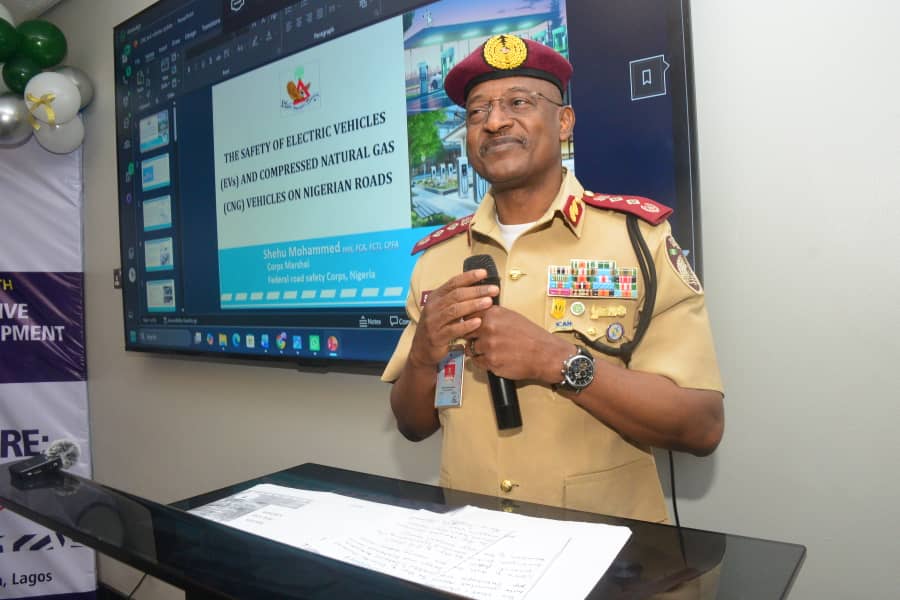
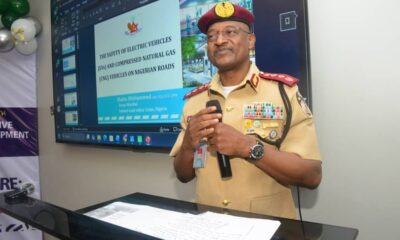
President Bola Tinubu’s ambitious transition to Compressed Natural Gas (CNG) and Electric Vehicles (EVs) is already attracting fresh investments, creating new employment opportunities and laying the foundation for a cleaner, safer and more sustainable transport system, the Corps Marshal of the Federal Road Safety Corps (FRSC), Shehu Mohammed, has said.
Speaking at the 2026 Nigeria Auto Industry Summit (NAISU) organised by the Nigeria Auto Journalists Association (NAJA), Mohammed described the Presidential CNG and EV Initiative as a game-changing policy capable of reshaping Nigeria’s automotive and transportation landscape while stimulating industrial growth and youth employment.
The FRSC boss said the initiative aligns with the United Nations Sustainable Development Goals (SDGs), particularly those promoting climate action and sustainable transportation, while commending President Bola Tinubu for the bold reforms and for assigning the corps a strategic role in the programme’s implementation.
“This initiative has brought in so many investments. We have assembly plants producing electric vehicles and CNG vehicles, companies manufacturing CNG cylinders and conversion kits, and new technology that is creating opportunities for our youths,” he said.
According to him, the initiative is expected to generate thousands of jobs while positioning Nigeria as a leading destination for green mobility investments in Africa.
“Really, it is a massive investment coming into Nigeria, and it is producing massive jobs for the unemployment challenge we have,” he added.
Mohammed also linked the administration’s transport agenda to ongoing infrastructure projects, including the Lagos-Calabar Coastal Highway and the Sokoto-Badagry Super Highway, noting that the projects would improve connectivity and support a safer, more efficient transport network.
READ ALSO:
- Lanre Shittu Motors Leads Drive to Steer Lagos Students Away from Crime, Donates books to public Schools
- UNIOSUN ranks third among state universities in latest Webometrics ranking
- State police: Shari’ah Council urges caution, wider consultations
He expressed confidence that the reforms would help Nigeria achieve the United Nations target of providing “a safe, accessible, affordable, reliable and sustainable transport system for all Nigerians by 2030.”
On road safety, the Corps Marshal stressed that reducing road crashes and fatalities requires collective action rather than relying solely on the FRSC.
“Road safety should not be left to the FRSC alone. It is a collective responsibility involving government, communities and every Nigerian,” he said.
While noting that the corps has sustained public enlightenment campaigns for over three decades, Mohammed said greater participation from state governments, local councils, traditional institutions and community leaders is essential to changing road users’ behaviour.
He disclosed that the FRSC has expanded its awareness campaign beyond motor parks to grassroots town hall meetings, enabling the agency to engage drivers, passengers and community stakeholders more directly.
“When you see a bad driving culture, stop the person and caution him. Let him be embarrassed. Road safety is everyone’s responsibility,” he said.
The Corps Marshal expressed concern over persistent traffic violations such as speeding, overloading and the dangerous practice of conveying passengers alongside goods and livestock, warning that such behaviours remain major causes of fatal crashes.
He also urged passengers to challenge reckless drivers, particularly those who exceed speed limits, saying public intervention could save lives.
Mohammed commended NAJA and the media for their sustained support for the FRSC’s road safety campaigns and called for deeper collaboration with journalists to achieve the global target of cutting road traffic crashes, injuries and fatalities by 50 per cent before 2030.
Speaking on the legacy he hopes to leave, the FRSC boss said his priority is to build a technology-driven, people-focused organisation anchored on professionalism, collaboration and excellent service delivery.
“The legacy I want to leave is partnership, collaboration and bringing out the best in FRSC personnel to serve Nigerians and further enhance the image of the corps,” he said.
FRSC Boss: Tinubu’s CNG, EV Drive Creating Jobs, Attracting Investment
Auto
Lanre Shittu Motors Leads Drive to Steer Lagos Students Away from Crime, Donates books to public Schools
Lanre Shittu Motors Leads Drive to Steer Lagos Students Away from Crime, Donates books to public Schools
Lanre Shittu Motors is expanding its investment in youth development beyond skills acquisition, launching a major education campaign aimed at steering thousands of Lagos secondary school students away from financial crime through value-based learning and character development.
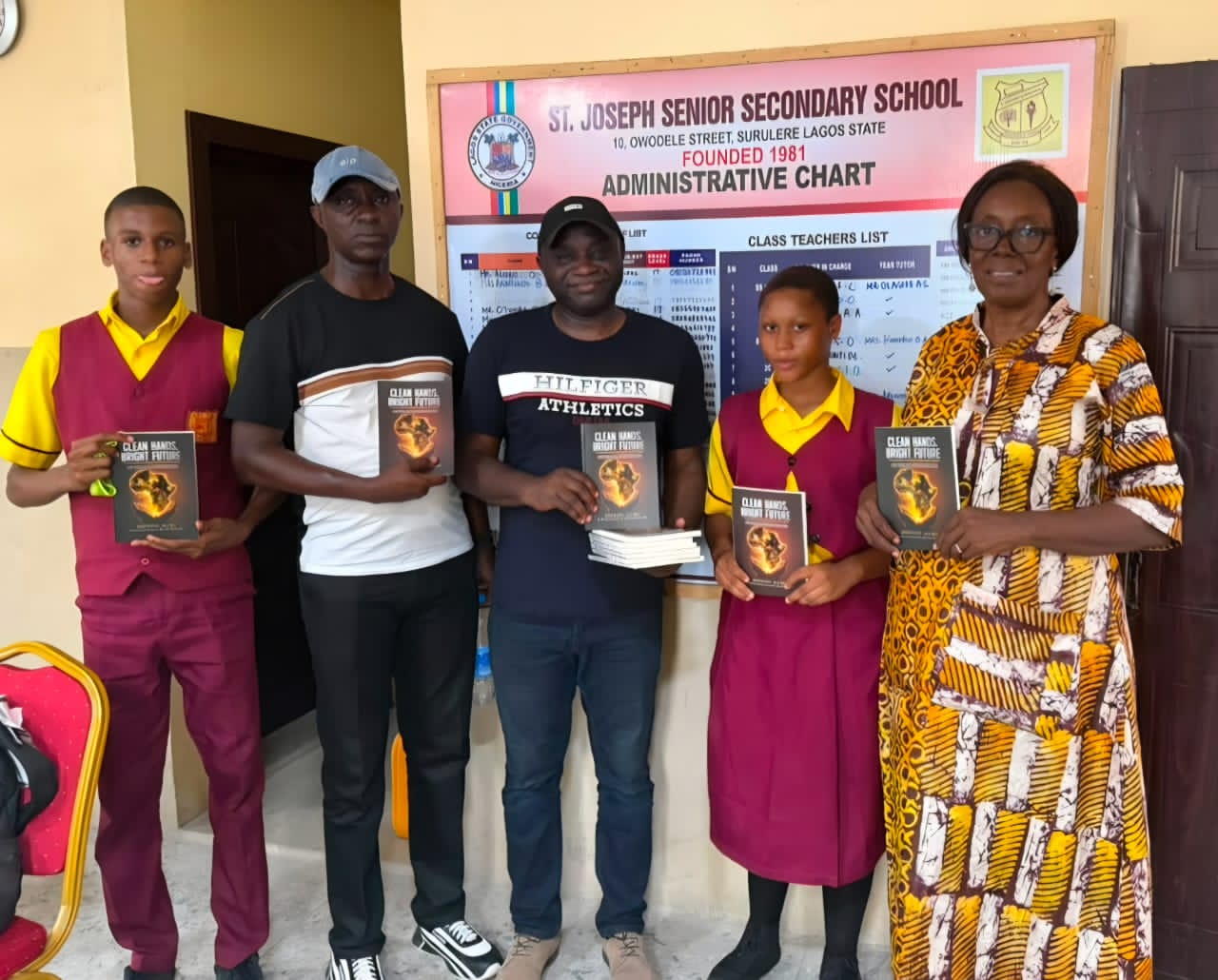
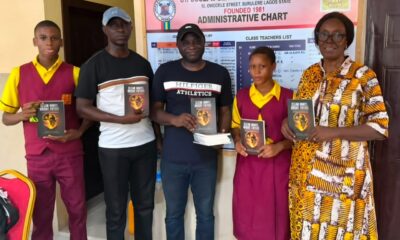
In partnership with the author of Clean Hands, Bright Future: A Youth Guide to Avoiding Financial Crime in Africa, the foremost automotive company has begun distributing the book to 200 public secondary schools across Lagos State, with more than 150 schools already reached in the first phase of the initiative.
The campaign, which began at Kuramo Senior College and Victoria Island Senior Secondary School, seeks to equip students with a clear understanding of the dangers of fraud, cybercrime, identity theft, examination malpractice and other financial crimes, while promoting integrity, hard work, ethical leadership and responsible citizenship.
Author of the book, Mr. Adedayo Aluko, said the project was inspired by the alarming rise in financial crime among young people and the need to intervene early through education.
“The rate of financial crime among youths is becoming increasingly alarming. We believe education is one of the most effective tools to prevent crime. The message of the book is simple: crime does not pay, and with clean hands, every young person can build a brighter future,” Aluko said.
He explained that the initiative goes beyond book distribution, with plans to return to beneficiary schools for interactive enlightenment sessions and career talks to reinforce the message of integrity.
According to him, the book simplifies over 100 forms of financial crimes, helping students understand offences that many young people unknowingly become involved in. Rich illustrations and practical examples were deliberately included to engage students and make the lessons memorable.
Aluko commended Lanre Shittu Motors for supporting the project, describing the Managing Director of the company, Mr Taiwo Shittu, as a long-standing advocate of youth empowerment and education.
READ ALSO:
- UNIOSUN ranks third among state universities in latest Webometrics ranking
- State police: Shari’ah Council urges caution, wider consultations
“Mr. Taiwo Shittu believes there is no shortcut to success. During the flag-off, he personally handed copies of the book to students and encouraged them to embrace hard work, education and skill acquisition as the true pathways to success.
Speaking on the initiative, the LSM MD, Mr. Taiwo Shittu, said the company’s decision to sponsor the distribution reflects its belief that preventing crime begins with shaping values at an early age.
“Young people are the future of our nation. By investing in character development and educating students about the consequences of financial crime, we are helping to build responsible citizens who will contribute positively to society.
“At Lanre Shittu Motors, we believe integrity, education and hard work remain the surest foundations for lasting success,” he said.
Shittu noted that the company’s strong culture of corporate social responsibility was inherited from its founder and his father, the late Alhaji Rasak Olanrewaju Shittu.
 He said the late automotive icon instilled in his children and employees the enduring values of compassion, community service and giving back to society, a legacy that continues to shape Lanre Shittu Motors’ investment in education, youth development and other impactful social initiatives.
Published in May 2026 and endorsed by the Chartered Institute of Bankers of Nigeria (CIBN), Clean Hands, Bright Future, has been described as a practical guide for young people navigating increasing social and economic pressures.
The ongoing distribution programme underscores Lanre Shittu Motors’ commitment to corporate social responsibility and its determination to inspire a generation that chooses integrity over shortcuts and honest enterprise over criminality.
Lanre Shittu Motors has over the years maintained a strong record of investing in youth development through skills acquisition and capacity building initiatives.
The company has consistently provided opportunities for young Nigerians to acquire technical and vocational skills in automotive engineering, vehicle maintenance and related fields through internship, apprenticeship and industry training programmes.
It has also supported educational and youth empowerment initiatives aimed at preparing young people for productive careers, reinforcing its belief that equipping youths with employable skills remains one of the most effective ways to reduce unemployment, discourage crime and promote sustainable national development.
Lanre Shittu Motors Leads Drive to Steer Lagos Students Away from Crime, Donates books to public Schools
Auto
Policy Bottlenecks Threaten Nigeria’s Clean Mobility Drive, LCCI Warns
Policy Bottlenecks Threaten Nigeria’s Clean Mobility Drive, LCCI Warns
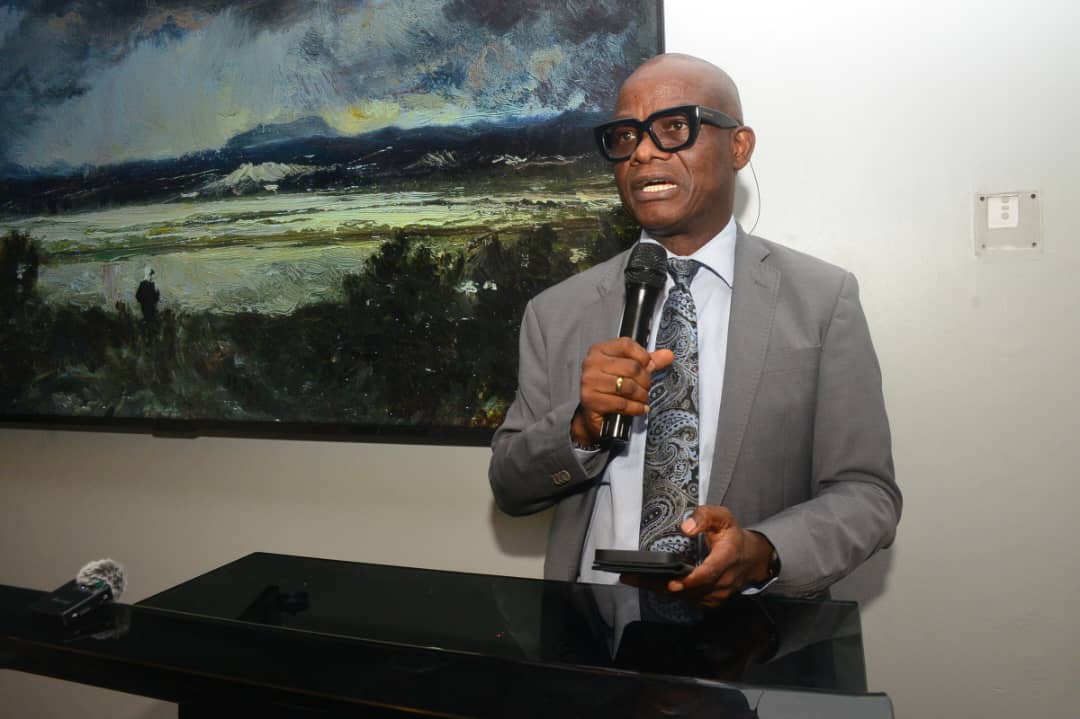
The Chairman of the Auto and Allied Sector Group of the Lagos Chamber of Commerce and Industry (LCCI), Dr. Femi Eguahide, has warned that policy inconsistencies, regulatory bottlenecks and weak coordination between the public and private sectors could derail Nigeria’s clean mobility ambitions, urging the Federal Government to deepen collaboration with industry stakeholders to accelerate the transition to Compressed Natural Gas (CNG) and Electric Vehicles (EVs).
Speaking at the 3rd Nigeria Auto Industry Summit in Lagos on Thursday, Eguahide said the success of the Federal Government’s clean mobility agenda would depend on sustained stakeholder collaboration, policy consistency and the removal of operational challenges slowing investment and implementation.
The summit, organised by the Nigeria Auto Journalists Association (NAJA) under the theme, “Nigeria’s Clean Mobility Future: The EV and CNG Journey Under the Bola Tinubu Administration,” brought together policymakers, regulators, automobile manufacturers, financiers, transport operators, researchers, safety agencies and development partners to chart a roadmap for accelerating Nigeria’s transition to cleaner transportation.
Eguahide acknowledged the Federal Government’s commitment to alternative energy solutions through the Presidential Initiative on Compressed Natural Gas and Electric Vehicles (Pi-CNG & EV), but stressed that translating policy into tangible results would require stronger coordination between government institutions and private investors.
According to him, the automotive industry remains a critical driver of industrialisation, job creation and economic growth, making it imperative for government agencies to work closely with manufacturers, assemblers, financiers and technology providers to create a more predictable and investment-friendly operating environment.
READ ALSO:
- Policy Bottlenecks Threaten Nigeria’s Clean Mobility Drive, LCCI Warns
- Troops arrest three suspects over killing of soldier in Imo ambush, recover stolen rifles
- Kidnapped Lt. Col. Ofor Amobi, civilian rescued after 10-day military operation in Enugu
He said effective policy implementation must be backed by continuous stakeholder engagement capable of resolving challenges surrounding vehicle conversion, local manufacturing, infrastructure development, financing and technology deployment.
Eguahide maintained that Nigeria possesses enormous potential to build a globally competitive clean mobility ecosystem, but cautioned that fragmented policies and institutional inefficiencies could slow the country’s progress if left unresolved.
He therefore urged government agencies to deepen engagement with the organised private sector to develop practical solutions that would accelerate the rollout of CNG refuelling infrastructure, EV charging networks and local automotive production.
Earlier, the Federal Government reaffirmed its commitment to expanding Nigeria’s clean mobility ecosystem through increased investment in infrastructure, local manufacturing and strategic partnerships.
Speaking on behalf of the Executive Chairman and Chief Executive Officer of the Presidential Initiative on Compressed Natural Gas and Electric Vehicles (Pi-CNG & EV), Barrister Ismaeel Ahmed, the Initiative’s Chief Compliance Officer, Engr. Zayyanu Tamberi Yabo, said the programme had evolved into a key pillar of President Bola Tinubu’s transport and energy reform agenda.
According to Ahmed, the Presidential Initiative was established not merely to promote alternative fuels but to build an integrated ecosystem covering infrastructure development, investment, vehicle conversion, local manufacturing, technical capacity building and consumer confidence.
“Our approach from the beginning has been to build the foundations of a sustainable industry rather than pursue isolated interventions,” he said.
He disclosed that certified CNG conversion centres had expanded significantly across the country over the past two years, while new refuelling stations were being developed through public and private sector investments.
Ahmed added that vehicle conversions continue to rise as commercial transport operators and private motorists increasingly embrace CNG because of its lower operating costs.
He also highlighted partnerships with financial institutions, energy companies and automobile manufacturers aimed at improving access to financing and accelerating the adoption of clean mobility technologies.
Despite the progress, he identified infrastructure expansion, consumer financing, local manufacturing capacity, technical training, research, innovation and standardisation as priority areas requiring sustained attention.
In his welcome address, NAJA Chairman Theodore Opara described the summit as a strategic platform for shaping the future of Nigeria’s automotive industry.
He said reforms introduced by the Tinubu administration had created fresh momentum for CNG, electric vehicles and local automotive manufacturing, adding that stronger collaboration among government, industry players and the media would be critical to sustaining the gains.
Also speaking, the Director-General of the Standards Organisation of Nigeria (SON), Dr. Ifeanyi Chukwunonso Okeke, represented by Engr. Olalekan Omoniyi, said strict compliance with internationally recognised standards would determine the success of Nigeria’s transition to EVs and CNG-powered transportation.
He disclosed that SON had developed more than 80 Nigerian Industrial Standards for CNG vehicles and equipment, as well as 87 additional standards and the National Nigeria Guideline (NNG 1214:2024) for CNG vehicle conversions.
The SON boss warned against the proliferation of uncertified conversion centres and substandard equipment, urging mandatory certification for imported and locally assembled EVs, CNG vehicles, conversion kits and charging infrastructure.
Policy Bottlenecks Threaten Nigeria’s Clean Mobility Drive, LCCI Warns
-
 News2 days ago
Oloyede clears air on JAMB’s ₦36m ‘snake swallowed money’ controversy
-

 News2 days ago
475 Police Officers Recalled After Controversial Retirement, Ordered for Mandatory Induction
-

 metro2 days ago
MURIC Hails Oloyede as ‘Game Changer,’ Says He Proved Muslims Can Excel in Public Office
-
 Auto2 days ago
Lanre Shittu Motors Leads Drive to Steer Lagos Students Away from Crime, Donates books to public Schools
-

 Sports2 days ago
Nigeria Shines in Commonwealth Games, Tops Africa with 10 Gold Medals
-
 Education2 days ago
UNIOSUN ranks third among state universities in latest Webometrics ranking
-
 Auto2 days ago
FRSC Boss: Tinubu’s CNG, EV Drive Creating Jobs, Attracting Investment
-

 metro2 days ago
DSS, Vigilantes Ambush, Kill Notorious Bandit Kingpin Idi Abasu Aiki, Over 60 Fighters in Katsina