

metro
FRSC Revives Annual Lecture Series Under CM Shehu Mohammed, Ushering in New Era of Road Safety Leadership
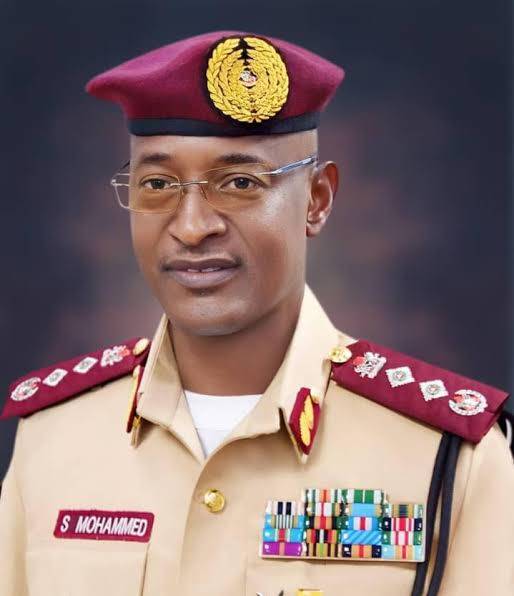
FRSC Revives Annual Lecture Series Under CM Shehu Mohammed, Ushering in New Era of Road Safety Leadership
By Bisi Kazeem
On Wednesday, September 3rd, 2025, the Banquet Hall of the State House, Presidential Villa, Abuja, came alive, not with the formality of ceremony but with the urgency of purpose. It hosted a gathering of some of the finest minds in leadership, law, academia, security, technology, and global road safety, as Nigeria reawakened an important intellectual tradition: the FRSC Annual Lecture Series.
First instituted in 2009, the Annual Lecture Series was designed as a platform for ideas, policy direction, and sustained awareness on the menace of road crashes. Over the years, it attracted distinguished voices, from Chief Emeka Anyaoku, CON, CFR, who spoke on “Capital Waste on Nigeria Roads”, to Prince Michael of Kent and Jean Todt, UN Special Envoy on Road Safety.
These lectures inspired policy shifts and created a knowledge hub for stakeholders across sectors.
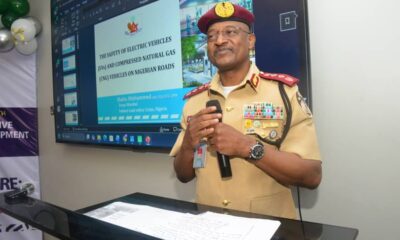
Now, after a brief hiatus, the Lecture Series was reintroduced under the visionary leadership of Corps Marshal Shehu Mohammed, mni, a man who has come to symbolise innovation, pragmatism, and unrelenting commitment to safer highways. Since his assumption of office, Corps Marshal Shehu Mohammed has pursued a reformist agenda that aligns road safety not only with enforcement but with technology, research, and inter-agency collaboration.
Representing President Bola Ahmed Tinubu as Special Guest of Honour, the Vice President underscored the Federal Government’s commitment to safer roads. He called on the Federal Road Safety Corps (FRSC) and other relevant stakeholders to recommit themselves to the implementation of the Nigeria Road Safety Strategy.
He noted that while progress has been made, much work is still required to reduce the burden of road crashes across Nigeria. He implored government and private sector stakeholders to pursue homegrown solutions while collaborating with global partners to ensure safer roads and sustainable transport systems.
The event was graced by ministers, legislators, senior security chiefs, members of the diplomatic corps, and representatives of international organisations — all affirming that road safety is not just a transport issue but a matter of national development.
Under his stewardship, the FRSC has:
Gone paperless by introducing an electronic document management system, enhancing transparency and efficiency within the Corps; Strengthened synergy with sister security agencies, recognising that road safety is inseparable from national security; Deepened partnerships with universities, innovators, and ministries to harness digital solutions for smarter traffic management. Reinvigorated drivers’ training and retraining programmes, ensuring that the culture of safe driving is instilled at the grassroot level of governance, as well as; Championed the integration of road safety into national development discourse, ensuring that every crash prevented is treated not just as an enforcement victory, but as a triumph for public health and economic growth.
These milestones are not isolated achievements. They are stepping stones toward a larger vision, one that places Nigeria firmly in the global conversation about emerging transport systems, safe mobility, and sustainable development.
The theme of this year’s Lecture; “Road Safety Management and Emerging Transportation Trends: Global Partnership for Optimal Performance”is both timely and forward-looking.
The keynote was delivered by Mr. Saul Billingsley, Executive Director of the FIA Foundation, London, one of the most respected global advocates for road safety and sustainable transport. His perspectives have set the tone for a multi sectoral dialogue enriched by distinguished discussants, including: Hon. Justice Monica Dongban-Mensem, CFR, President of the Court of Appeal (bringing the justice system’s perspective on road safety and NGOs), General Christopher Gwabin Musa, OFR, Chief of Defence Staff (on national security and safety management), Dr. Bosun Tijani, Minister of Communications, Innovation and Digital Economy (on digitalization and innovation for highway safety), Prof. Patricia Manko Lar, Acting Vice Chancellor, University of Abuja (on education and research in road safety), and Mazi Afam Osigwe, SAN, President of the Nigerian Bar Association (on the role of law and professional bodies). Together, they will interrogate how Nigeria can translate global best practices into homegrown solutions for safer, smarter roads.
For Corps Marshal Shehu Mohammed, the reintroduction of this Lecture Series is not about prestige. It is about people. It is about the countless lives lost daily to preventable crashes; the families torn apart by grief; the economic toll of injuries and fatalities; and the urgent responsibility of government and citizens alike to reverse the tide. He has risen to this challenge because road crashes remain a leading killer of young people worldwide.
In Nigeria, they claim thousands of lives annually, most of them in the most productive age bracket. Every statistic represents a human story, a dream cut short, and a contribution lost to the nation.
Thus, the FRSC Lecture Series is not just another high-level dialogue. It is a clarion call for a national movement: one that brings the government, private sector, academia, civil society, and citizens into a common resolve. A resolve that says our roads must no longer be corridors of tragedy but avenues of opportunity and growth.
Looking back at the roster of past speakers, ranging from His Excellency John Dramani Mahama, former President of Ghana, to Governor Akinwunmi Ambode of Lagos State, the Lecture Series has consistently set the bar high.
Each edition contributed to shaping Nigeria’s journey toward safer highways. But this 8th edition marks more than a continuation. It signals a rebirth. A statement that the FRSC, under its present leadership, is not only guarding the roads but also guiding the nation’s vision of mobility in the 21st century.
As I earlier stated at the beginning of this article, on September 3rd, 2025, when the Banquet Hall doors opened and the Vice President declared the Lecture Series underway, it was not be just another calendar event, it marked the beginning of a renewed national conversation. One that recognises that every crash prevented is a life saved. One that affirms that safe mobility is the foundation of development. One that ignites a movement for safe roads, bright futures, and a Nigeria where journeys end in joy, not grief.
This 8th edition was more than a continuation. It signalled a rebirth, a statement that the FRSC, under its present leadership, is not only guarding the roads but also guiding the nation’s vision of mobility in the 21st century.
The FRSC Annual Lecture Series is back. And with it, a promise: that Nigeria’s road to the future will be safer, smarter, and shared by all.
DCM Bisi Kazeem fsi (rtd)









metro
Eight Dead, Five Injured as Multiple Vehicles Crash on Niger Highway

Eight Dead, Five Injured as Multiple Vehicles Crash on Niger Highway
MINNA, Niger — No fewer than eight people, including a young child, have lost their lives in a devastating multiple-vehicle accident along the Lapai–Lambata–Suleja highway in Niger State.
Five other people reportedly sustained serious injuries in the late-night collision, which occurred on Wednesday, November 18, 2026, throwing commuters and residents of nearby communities into mourning.
Preliminary accounts from eyewitnesses and survivors indicated that the accident was triggered by a broken-down vehicle allegedly abandoned in the middle of the highway without warning signs, hazard lights or reflective safety indicators.
One of the drivers involved in the crash, identified as Mustapha Zaiyana, reportedly recounted how he narrowly escaped a direct collision after suddenly noticing the stationary vehicle ahead of him on the poorly illuminated road.
Zaiyana explained that he immediately attempted to manoeuvre his vehicle away from the obstruction. However, upon noticing another vehicle approaching from behind at high speed, he was forced to swerve towards the adjoining bush in an attempt to avoid a potentially fatal collision.
The sudden manoeuvres, coupled with poor visibility and the presence of the stationary vehicle, reportedly contributed to a chain-reaction crash involving multiple vehicles.
The impact was devastating, leaving eight people dead, including a minor, while five others sustained varying degrees of injuries.
Emergency responders and sympathisers reportedly rushed to the scene, where efforts were made to rescue victims trapped inside the wreckage. The injured were subsequently evacuated to nearby hospitals for urgent medical attention, while the bodies of the deceased were deposited in a morgue.
The latest tragedy has renewed concerns over road safety along major highways in Niger State, particularly the dangers posed by broken-down vehicles left on busy roads without adequate warning signs.
Motorists and road safety advocates have called for stricter enforcement of safety regulations, including the compulsory use of reflective warning triangles and hazard indicators by drivers whose vehicles develop mechanical faults on highways.
They have also urged the **Federal Road Safety Corps (FRSC)** to intensify night-time patrols and public awareness campaigns to prevent avoidable road crashes.
The circumstances surrounding the accident, including the precise sequence of collisions, would require confirmation from the relevant authorities.
The incident adds to growing concerns about road safety and the need for motorists to exercise greater caution, particularly when travelling at night.
Eight Dead, Five Injured as Multiple Vehicles Crash on Niger Highway
SEO Meta Title: Niger Highway Crash: Eight Dead, Five Injured in Multiple-Vehicle Accident
Meta Description: Eight people, including a child, have reportedly died while five others were injured in a multiple-vehicle crash along the Lapai–Lambata–Suleja highway in Niger State.
Focus Keyphrase: Niger State highway accident
Additional Keywords: Niger highway crash, eight killed in Niger State, Lapai Lambata Suleja road accident, FRSC, multiple-vehicle collision.
Editorial note: The casualty figures, eyewitness account and alleged cause should be independently confirmed with the FRSC or Niger State Police Command before publication.
metro
Cleveland Girl, 11, Gets 7-Year Juvenile Sentence Over Rape, Attempted Murder of 5-Year-Old
Cleveland Girl, 11, Gets 7-Year Juvenile Sentence Over Rape, Attempted Murder of 5-Year-Old
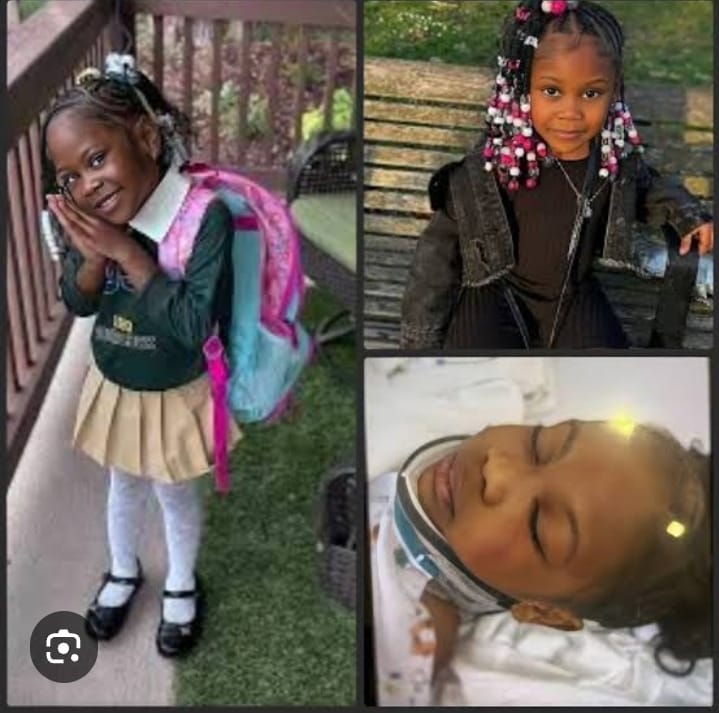
CLEVELAND, Ohio — An 11-year-old girl in Cleveland, United States, has been ordered to spend at least seven years in juvenile custody over the rape, attempted murder and brutal assault of a five-year-old girl in an incident that shocked the community.
The girl, identified in court proceedings only by her initials, M.H., was sentenced on Wednesday, November 18, 2026, by Cuyahoga County Juvenile Court Judge Kristin Sweeney.
She was committed to the Ohio Department of Youth Services (ODYS) for seven years and could remain under juvenile court jurisdiction until she turns 21.
The ruling followed an October 2 decision in which the judge found her delinquent on nine charges, including attempted murder, two counts of rape, two counts of felonious assault, kidnapping and strangulation.
The juvenile court’s finding of delinquency is equivalent to a guilty verdict in adult criminal proceedings.
The disturbing incident occurred on September 13, 2025, when the five-year-old victim was attacked in a field near East 148th Street and St. Clair Avenue in Cleveland.
According to prosecutors, M.H. lured the younger girl to the location, where she was violently assaulted and sexually abused before being left behind. Court testimony revealed that the victim was strangled with her own shirt during the attack.
A family member was subsequently alerted to the child’s whereabouts and rushed to the scene. Cleveland police officers and emergency medical personnel responded and took the severely injured girl to a nearby hospital.
The five-year-old reportedly spent several weeks receiving medical treatment.
The case also involved a male juvenile co-defendant, identified in court proceedings as M.B.
The boy, who was 10 years old during the later court proceedings, pleaded guilty on September 28, 2026, to attempted rape and felonious assault. He subsequently testified against M.H. during her juvenile court trial.
Earlier proceedings revealed that both children had undergone court-ordered competency restoration before they could face trial.
The victim’s mother, Antavia Kennibrew, described the devastating physical and psychological consequences of the attack during court proceedings.
She told the court that her daughter experienced severe behavioural changes after leaving the hospital. According to Kennibrew, the little girl repeatedly expressed distress about her appearance and her perception of the world following the traumatic experience.
The mother had previously appealed for justice and urged the authorities to ensure that the children involved were held accountable.
Cuyahoga County Prosecutor Michael C. O’Malley acknowledged the seriousness of the crime while noting the limitations of Ohio’s juvenile justice system.
He said the severity of the offences could not be overstated and expressed sympathy for the victim and her family as they continued their recovery.
The case has reignited conversations about juvenile justice, child protection and the appropriate response when extremely young children become involved in serious violent offences.
Meanwhile, the male co-defendant’s disposition proceedings are expected to follow separately.
Cleveland Girl, 11, Gets 7-Year Juvenile Sentence Over Rape, Attempted Murder of 5-Year-Old
metro
Honesty Cost Lagos Taxi Driver His Job, Marriage After Returning ₦21,000 Passenger Left in His Cab

Honesty Cost Lagos Taxi Driver His Job, Marriage After Returning ₦21,000 Passenger Left in His Cab
LAGOS, Nigeria — An extraordinary story of honesty and personal sacrifice involving a former Lagos taxi driver, Adebayo Aremu, has continued to attract attention decades after his decision to return ₦21,000 left behind by a passenger reportedly changed the course of his life.
The incident happened in 1992 when Aremu was driving through Lagos with a passenger as a riot erupted. During the chaos, attackers reportedly struck his taxi and smashed its windscreen.
After the incident, Aremu discovered that the passenger had forgotten ₦21,000 in cash and some personal belongings inside the vehicle.
Although the money represented a substantial amount at the time, Aremu decided against keeping it and made arrangements to return the belongings to their rightful owner.
His decision would eventually bring him national recognition but also trigger unexpected difficulties in his personal life.
Aremu’s act of integrity attracted widespread public attention and commendation. He reportedly received gifts, a scholarship offer for his daughter and an opportunity to shake hands with then-military Head of State, General Ibrahim Babangida.
For a brief period, the taxi driver became a celebrated example of honesty in a country where his actions attracted considerable admiration.
However, the public recognition did not translate into the personal and financial transformation his family might have expected.
In a painful twist, Aremu reportedly lost his taxi-driving job, while his second wife eventually left him, believing he had thrown away an opportunity that could have changed their financial circumstances.
Recalling his estranged wife’s reaction, Aremu said she questioned why he had returned the money instead of using the opportunity to improve their situation.
“She said I have been a driver for 15 years and have never been able to get my own car. When I had the opportunity, I just gave it away,” he recalled.
Despite the disappointment and personal difficulties, Aremu maintained that keeping money that did not belong to him was never an option.
His ambition, he explained, had always been simple: to own a taxi of his own and improve his livelihood.
His story eventually attracted international attention, reportedly leading to financial assistance and another opportunity to work as a taxi driver, helping him regain some stability.
Decades later, the experience remains a striking account of the complicated consequences of doing what is morally right, particularly when personal survival and family expectations are involved.
While Aremu’s decision earned him public admiration, his experience also raises a difficult question: Should doing the right thing ever come at the cost of one’s livelihood and family happiness?
Honesty Cost Lagos Taxi Driver His Job, Marriage After Returning ₦21,000 Passenger Left in His Cab
-
 metro2 days ago
Viral Video: Nigerian Army Explains Why Soldiers, DSS Operatives Met Bandits In Kwara Forest
-

 metro4 hours ago
FG’s ₦100,000 Family Grant: Eligibility, How to Apply and Payment Procedure Revealed
-

 International1 day ago
Islam Set to Overtake Christianity as World’s Largest Religion by 2035
-

 Business1 day ago
NNPCL, MRS, Other Marketers Slash Petrol Prices Across Nigeria As Motorists Get Fresh Relief
-

 News1 day ago
Agunbiade Proposes Council of Grand Chief Imams for Yorubaland, Edo, Delta
-

 News2 days ago
Adeleke Rejects Proposed Naming of Osogbo Stadium After Him, Orders Removal of Signpost
-

 Education2 days ago
Panic As Fire Engulfs Nigerian University Hostel, Destroys Students’ Valuables
-

 Auto2 days ago
Dangote Sinotruk Unveils Nigeria’s First Locally Assembled Electric Truck, Targets West African Market