

Politics
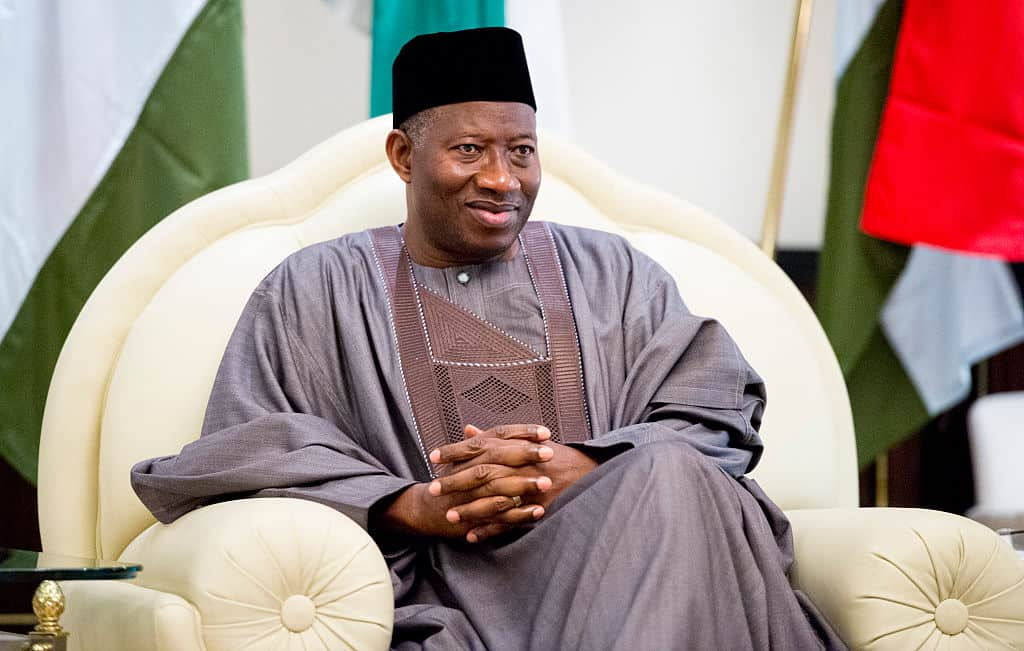
Jonathan free to run in 2027, but Nigerians remember his record – Presidency
Jonathan free to run in 2027, but Nigerians remember his record – Presidency
The Presidency has officially reacted to former President Goodluck Jonathan’s reported decision to contest the 2027 presidential election.
The presidency on Monday night welcomed his return to the political arena but questioned both his eligibility and his record in office.
There were renewed speculations over Jonathan’s political comeback over the weekend after former Minister of Information and National Orientation, Professor Jerry Gana, publicly confirmed that the former president would run on the platform of the Peoples Democratic Party (PDP).
Speaking with journalists shortly after the PDP congress in Minna, Niger State, Gana said Jonathan’s leadership was being demanded by Nigerians who had “seen the difference” under subsequent administrations.
“In 2015, former President Goodluck Jonathan said his ambition was not worth the blood of Nigerians. After him, another President ruled for eight years, and now another has ruled for two years,” Gana stated. “Nigerians have seen the difference, and the difference is very clear. Nigerians are now asking us to bring back our friend, former President Goodluck Jonathan. I can confirm that Goodluck Ebele Jonathan will contest the presidential election in 2027 as PDP candidate, and we should be prepared to vote for him to return as President again.”
Reacting to the development on Monday, Bayo Onanuga, Special Adviser to President Bola Tinubu on Information and Strategy, said the Presidency welcomed Jonathan to the race but noted that the courts would ultimately determine whether a former president who had been sworn in twice could seek a third term in office.
READ ALSO:
- FG, Dangote Refinery, PENGASSAN peace talk end in deadlock
- South Africa’s points deduction not major boost for S’Eagles – Mutiu Adepoju
- Troops foil bandit attacks, recover weapons in Benue
“We welcome Jonathan to the 2027 race, but the court will decide if someone who was sworn in twice as president satisfies the constitutional requirements and is eligible to contest the presidency again,” Onanuga stated.
The Presidency’s statement also criticised Jonathan’s administration, accusing him of leaving the economy in ruins and warning Nigerians not to forget the state of the nation under his leadership.
“The former president’s record led to the downfall of the economy, leaving the country in a challenging situation,” the statement read. “The PDP, after 16 years of bad governance, bequeathed a legacy of economic ruins. Professor Jerry Gana may delude himself that Jonathan can defeat President Tinubu, but Nigerians know better.”
Onanuga cautioned Jonathan to be wary of “sugar-coated cheerleaders” within the PDP who, he claimed, would abandon him midstream as they did in 2015.
While acknowledging Jonathan’s constitutional right to run, the Presidency reiterated that his eligibility remained a legal question and that he would also have to convince Nigerians he had anything new to offer “after his disastrous six years” in power.
The statement recalled that Jonathan inherited $66 billion in reserves in 2010 but left office in 2015 with less than $30 billion in reserves and a depleted Excess Crude Account of $2 billion — despite record oil revenue.
“It is on record that between 2010 and 2013, crude oil sold for an average of $100 per barrel. Yet, by December 2014, the Jonathan-led government could no longer pay federal civil servants. At least 28 states owed workers huge salary arrears,” it stated.
The Presidency further accused Jonathan’s administration of mismanaging foreign exchange allocations and diverting security funds.
In contrast, the statement highlighted President Tinubu’s reforms, including the removal of fuel subsidies and the unification of exchange rates, which it said had stabilised the economy.
“GDP grew by 4.23% in Q2 2025, the highest in four years. Inflation dropped to 20.12% in August 2025, and foreign reserves now stand at $42.03 billion. Investor confidence has been restored,” Onanuga noted.
According to the Presidency, Tinubu’s administration has turned the economy around, embarked on major infrastructure projects such as the Lagos-Calabar Coastal Highway, and improved security.
“President Jonathan and others are welcome to the 2027 race. They broke the economy before, but millions of Nigerians who remember the recent past will not allow them to return and run it down again,” the statement said.
Jonathan free to run in 2027, but Nigerians remember his record – Presidency









Politics
Wike to Amaechi: What Did You Bring to Rivers After 24 Years in Power?

Wike to Amaechi: What Did You Bring to Rivers After 24 Years in Power?
Minister of the Federal Capital Territory, Nyesom Wike, has challenged former Rivers State Governor Rotimi Amaechi to identify the projects and political empowerment he attracted to Evo Kingdom and Rivers State during his 24 years in senior public office.
Wike made the remarks on Friday, October 2, 2026, during an interactive session with leaders and stakeholders of Evo Kingdom in Obio-Akpor Local Government Area of Rivers State.
Amaechi served as Speaker of the Rivers State House of Assembly for eight years, governor of the state for eight years and Minister of Transportation for eight years.
Wike questioned what he described as Amaechi’s record of development and political empowerment, challenging stakeholders to identify tangible projects he said the former governor attracted to the area during his time in office.
“Someone was Speaker of the House of Assembly for eight years, Governor for eight years, and Minister for eight years—that is 24 years in top leadership positions,” Wike said.
He asked the people of Evo Kingdom and Rivers State to identify what Amaechi attracted to the area during those years, adding that he could list projects he personally attracted to the state while serving as Minister of State for Education.
READ ALSO:
- Electric Spark Suspected as Fire Destroys 21 Shops at Abuja’s Kugbo Market
- Ebonyi Widow Alleges Death Threats, Ostracisation Over Late Husband’s Property
- Police Arrest Woman Seen Threatening Officer With Knife Over Cannabis Arrest
Wike also criticised what he described as a leadership style in which political office holders fail to develop successors or empower others to take over from them.
He said leadership should involve human capacity development, creating opportunities for others and building structures that can survive after a leader leaves office.
The FCT minister said his own political ambition was no longer centred on returning to positions he had previously occupied.
“I can’t be a governor again. I’ve been a minister two times. I cannot be chairman of council again. So I am happy. I don’t have anything to lose,” he said.
Wike also said political leaders should leave behind people capable of sustaining whatever structures or achievements they established while in office.
According to him, leadership becomes fragile when everything is built around one individual and collapses after that person leaves the political scene.
The minister further recalled his administration’s restructuring of the traditional institution in Rivers State, saying it gave Evo Kingdom representation on the Rivers State Council of Traditional Rulers.
The latest comments are part of the continuing political exchanges between Wike and Amaechi, who served as governor of Rivers State from 2007 to 2015, with Wike succeeding him in office.
Amaechi, who is now the African Democratic Congress (ADC) vice-presidential candidate, has also recently criticised the administration of President Bola Ahmed Tinubu over its record of infrastructure delivery and the impact of economic policies on Nigerians. (Channels Television)
Wike, meanwhile, has continued to publicly support President Tinubu and has been mobilising political stakeholders in Rivers State ahead of the 2027 general elections. During his latest engagement with the Evo Kingdom stakeholders, he also urged political actors to work together in the interest of the state.
The claims made by Wike about Amaechi’s record of projects and empowerment represent his assessment of his political rival and are part of an ongoing political dispute between the two former Rivers governors.
Wike to Amaechi: What Did You Bring to Rivers After 24 Years in Power?
Politics
2027: Oshiomhole Dares Opposition Over ₦500 Petrol Promise, Says APC Will Take Argument to Nigerians
2027: Oshiomhole Dares Opposition Over ₦500 Petrol Promise, Says APC Will Take Argument to Nigerians
Abuja — Former National Chairman of the All Progressives Congress (APC) and Senator representing Edo North, Adams Oshiomhole, has declared that he is unbothered by opposition promises to crash the pump price of Premium Motor Spirit (PMS) to ₦500 per litre, stating that the ruling party will take the debate directly to the Nigerian people.
Oshiomhole made the assertion during a recent political engagement, according to a report monitored by Newstrends.ng on Friday. The former Edo State governor was responding to recent campaign pledges by opposition figures who have proposed a “Fuel Affordability Plan” aimed at leveraging local refining capacity to bring down the cost of petrol.
“I’m not worried about the promise to sell petrol at ₦500; we’ll take the argument to Nigerians,” Oshiomhole stated, signaling the APC’s readiness to defend its downstream sector policies ahead of the 2027 general elections.
READ ALSO:
- Tinubu Unpopular, Yet 2027 Re-election Still Possible — The Economist
- Less Than Four Months After Wedding, Jarvis Threatens Peller With Lawsuit Over Second-Wife Plan
- 2027: Oshiomhole Dares Opposition Over ₦500 Petrol Promise, Says APC Will Take Argument to Nigerians
The APC chieftain, known for his combative political style, questioned the consistency of the opposition’s stance on fuel subsidies. He reminded Nigerians that key opposition figures, including former Vice President Atiku Abubakar, had previously championed the removal of fuel subsidies during their time in office, arguing that their sudden conversion to affordable pump prices was politically motivated rather than economically sound.
Oshiomhole’s comments underscore the ruling party’s strategy to frame the 2027 election as a choice between what it describes as the “realistic economic reforms” of the President Bola Tinubu administration and what it calls the “populist rhetoric” of the opposition.
While the opposition maintains that its ₦500 per litre proposal is a well-thought-out plan to support local refining and not a return to the old corrupt subsidy regime, Oshiomhole insists that the APC will meet them at the grassroots level to dissect the feasibility of such promises.
Political observers note that the debate over fuel prices remains a highly emotive issue in Nigeria, given its direct impact on transportation, food prices, and the overall cost of living. As the 2027 election cycle gathers momentum, Oshiomhole’s remarks signal that the APC intends to go on the offensive, using the fuel subsidy debate as a key battleground to challenge the opposition’s credibility with the electorate.
2027: Oshiomhole Dares Opposition Over ₦500 Petrol Promise, Says APC Will Take Argument to Nigerians
Politics
Tinubu Unpopular, Yet 2027 Re-election Still Possible — The Economist
Tinubu Unpopular, Yet 2027 Re-election Still Possible — The Economist
President Bola Ahmed Tinubu may be facing widespread dissatisfaction among Nigerians, but a divided opposition, religious considerations, incumbency and low voter turnout could shape the outcome of the 2027 presidential election, according to an analysis by the British publication, The Economist.
In a report titled “Nigerians Dislike Their President, But May Re-elect Him Anyway,” the publication examined the political dynamics surrounding the forthcoming presidential election and questioned why the President appears relatively confident about his chances despite the economic and security challenges confronting the country.
The analysis was published as Nigeria approaches the 2027 presidential election, with The Economist noting that Tinubu’s administration is operating amid a worsening security situation and economic pressures that have affected many households.
The publication specifically examined the situation in Borno State, where insurgency has persisted for years, damaging economic activities and leaving many young people without jobs and businesses struggling.
It noted that while Tinubu secured 54 per cent of the presidential vote in Borno in 2023, recent polling cited from SBM Intelligence suggested that his popularity in the state had fallen behind those of opposition figures Peter Obi and Atiku Abubakar.
The report said some residents of Maiduguri were prepared to express their dissatisfaction at the ballot box.
READ ALSO:
- Less Than Four Months After Wedding, Jarvis Threatens Peller With Lawsuit Over Second-Wife Plan
- 2027: Oshiomhole Dares Opposition Over ₦500 Petrol Promise, Says APC Will Take Argument to Nigerians
- Ughelli Hotel Assault: Police Arrest Key Suspect in Viral Underage Abuse Video
However, The Economist argued that public dissatisfaction alone might not determine the election, pointing to several structural factors within Nigeria’s political system.
One of the major factors identified was the fragmentation of the opposition.
The publication observed that Obi and Atiku had not formed a joint ticket, meaning that voters opposed to the ruling All Progressives Congress could be divided among different candidates.
It quoted Joachim MacEbong of Control Risks as saying that because there was no united opposition ticket, the anti-APC vote was not necessarily being consolidated behind one candidate.
The publication also identified incumbency as another factor in Nigerian elections, noting that sitting governments have access to established political structures and resources that can be mobilised during campaigns.
Religion was also discussed in the analysis, particularly in relation to northern Nigeria.
The Economist noted that Tinubu and Vice-President Kashim Shettima are Muslims, as are the majority of people in the northern region.
It quoted SBM Intelligence chief Cheta Nwanze as saying that the continued Muslim-Muslim ticket “resonates with quite a number of people”.
The report also suggested that religious identity could affect some voters considering Peter Obi, a Catholic, despite his Muslim running mate.
Beyond party politics and religion, the publication highlighted what it described as political cynicism among some voters.
It quoted MacEbong as saying that in communities where citizens have experienced prolonged shortages of security, healthcare and quality education, expectations of government can become increasingly low.
The report cited Borno as an example, saying that some residents might judge the government differently because of the long history of poor public services in the state.
The security situation could also affect voter participation.
According to the publication, turnout in Borno during the 2023 presidential election was below 20 per cent, compared with about 27 per cent nationwide.
It suggested that insecurity could discourage some voters from travelling to polling units during the next election.
In southern Nigeria, particularly Lagos, the report noted that regional identity could also influence voting behaviour, with some residents potentially considering Tinubu as a “son” of the state despite dissatisfaction over economic conditions.
The Economist also acknowledged that Tinubu’s economic reforms, including the removal of the petrol subsidy, have been welcomed by some investors and have contributed to economic adjustments.
However, it said the reforms had yet to translate into noticeable improvements in the daily lives of many Nigerians.
The publication consequently presented the 2027 contest as one in which economic hardship and insecurity could coexist with political factors capable of shaping voter behaviour.
The analysis has generated debate in Nigeria, particularly over whether dissatisfaction with the administration would translate into a consolidated opposition vote.
The 2027 presidential contest is expected to feature Tinubu and several opposition candidates, making the configuration of alliances and the distribution of votes among the major contenders significant factors in the election.
The Economist’s report is an analysis of the factors that could influence the 2027 contest; it is not a poll establishing the eventual winner.
Tinubu Unpopular, Yet 2027 Re-election Still Possible — The Economist
-
 metro2 days ago
Workers to Begin Nationwide Warning Strike Over Petrol Price, Wage Award
-
 metro2 days ago
[UPDATED] Imo Highway Attack: 10 Rescued after Gunmen Abducted NYSC Prospective Members
-

 Entertainment2 days ago
Phyna Knocks Out Nkechi Blessing in Fourth Round, Wins ₦50m, New Car
-
 Politics2 days ago
2027: Amaechi Recalls How APC Defeated PDP, Orders ADC Mobilisation
-
 Business2 days ago
Dangote Sets 40-Month Deadline for $16bn East Africa Refinery in Kenya
-
 News2 days ago
Independence Day: Tinubu Unveils Plan to Cut Living Costs, Expand Jobs
-
 metro2 days ago
2027 Hajj: Nigeria Secures 10,000 Extra Slots, Allocation Hits 60,000
-
 Politics3 days ago
2027: Wike Vows to Resign If Tinubu Loses FCT, Rivers